Jewish resistance in Berlin — the Herbert Baum Group and Rosenstrasse
Berlin: Holocaust & Nazi Resistance Guided Walking Tour
Was there Jewish resistance to the Nazis in Berlin?
Yes. Jewish resistance in Berlin took multiple forms — armed partisan action by the Herbert Baum Group, the extraordinary 1943 Rosenstrasse mass protest by non-Jewish wives and relatives, and the estimated 1,700 Jews who survived underground in hiding ("U-Boote" — submarines) through the war, assisted by networks of non-Jewish Berliners. These stories of resistance and survival are documented at specific Berlin sites.
Was there Jewish resistance to the Nazis in Berlin? Yes — though the conditions for resistance were extraordinarily difficult, and the cost was almost always death. Jewish resistance in Berlin took multiple forms: armed partisan action, open street protest, and the individual acts of survival by those who hid in the city. Understanding these stories is part of understanding the full history.
| Where | Mitte — Lustgarten, Rosenstrasse, Rosenthaler Strasse |
| Cost | Free — all sites are outdoor memorials or free-entry |
| Time needed | Around 1.5–2 hours to see the three main sites on foot |
| Getting there | S-Bahn to Hackescher Markt for Rosenstrasse and Rosenthaler Strasse; walk or U-Bahn to Museum Island for the Lustgarten |
| Best paired with | Jewish Museum Berlin or Topography of Terror |
The context for resistance — why it was so difficult
Before examining specific acts of resistance, it is important to understand the conditions that made Jewish resistance in Germany different from Jewish resistance in other occupied countries.
In Poland, the Soviet Union, and France, Jewish resistance groups often operated within broader anti-Nazi partisan movements. In Germany itself, the conditions were far more constrained:
No territory to retreat to: Partisan movements typically require forests, mountains, or rural support networks to operate from. Germany’s Jews were an urban population, surrounded by an initially supportive (or at least non-hostile) German civilian population. There were no forests where a Jewish resistance fighter could disappear.
Surveillance and informers: The Gestapo’s network of informers (V-Leute) was dense in Berlin. Any suspicious behaviour — a neighbour who stopped going to work, a family that seemed to have too many food purchases — could result in investigation. Jewish Berliners were required from September 1941 to wear the yellow star, making anonymity in public nearly impossible.
Community vulnerability: The reprisal logic used by the Nazis was explicit and documented. For the Herbert Baum Group’s attack on the Soviet Paradise exhibition (May 1942), 500 completely innocent Jewish men were selected at random and shot as a reprisal. This collective punishment logic made organised armed resistance doubly dangerous — any action placed the broader community at risk.
Gradual escalation: The persecution of Jewish Germans escalated over twelve years (1933–1945), which allowed each step to be normalised before the next. By the time deportations to extermination camps began in 1941, the community was already impoverished, isolated, and exhausted from years of cumulative persecution.
These conditions explain why organised Jewish armed resistance in Germany was limited — not because of any lack of courage or will among Jewish Germans, but because the structural preconditions for such resistance largely did not exist.
The Herbert Baum Group — armed resistance in Berlin
Herbert Baum (born 1912 in Mosina, raised in Berlin) was, by the late 1930s, a leader in the illegal Communist underground in Berlin. He had been active in Jewish youth organisations and Communist youth organisations since his teens, had studied engineering, and was employed as a forced labourer at the Siemens electrical works.
After the introduction of the yellow star in September 1941 and the beginning of deportations in October 1941, Baum organised a group of approximately 30 people — mostly young Jewish Communists, some of whom were his former comrades from the youth organisations. The group included both men and women, several of whom were also members of other political underground networks.
The group engaged in:
- Distribution of anti-Nazi leaflets
- Sabotage of machinery at the Siemens factory
- Maintenance of contact with other Communist underground networks
- Planning of more significant resistance actions
The Lustgarten action — 18 May 1942
The largest action the Baum Group planned was against the Nazi propaganda exhibition “Das Sowjetparadies” (The Soviet Paradise), mounted in the Lustgarten square on Museum Island in May 1942. The exhibition was designed to show photographs and objects from Soviet Russia, portraying the Soviet system as primitive and impoverished, and the German invasion as a liberation. It was attended by hundreds of thousands of Berliners in its first days.
On the evening of 18 May 1942, members of the Baum Group entered the exhibition and set fire to sections of it using prepared incendiary materials. The fire caused significant damage to some display areas before fire crews arrived to extinguish it. The exhibition continued after repairs.
The Gestapo identified the perpetrators within days — Baum may have been betrayed by an informer. Herbert Baum was arrested on 22 May 1942. Under torture, he refused to provide information about the broader Communist network. He was murdered by the Gestapo on 18 June 1942, before trial; the official cause was recorded as suicide. His wife Marianne Baum was arrested shortly after and executed by guillotine in August 1942 at Plötzensee Prison.
Other group members were arrested in the following weeks. Most were executed. The youngest member of the group to be killed was 19 years old.
The reprisal: The Nazi regime’s response to the Lustgarten action was collective punishment on a scale designed to warn against any repetition. On 27-28 May 1942, Gestapo and SS units arrested 500 Jewish men at random from Berlin, took them to the Sachsenhausen concentration camp, and shot them. On the same days, an additional 250 Berlin Jews who had previously been arrested for other offences were shot at Sachsenhausen. The reprisals killed 750 people who had no connection to the Baum Group’s action.
This reprisal logic — applied explicitly and publicly — was intended to destroy any base of support for resistance by demonstrating that any action would result in collective death for the broader community.
Sites connected to Herbert Baum
The Lustgarten, Museum Island: The exhibition site is now the open Lustgarten square in front of the Berlin Cathedral, adjacent to the Altes Museum. A memorial plaque on the Museum Island side documents the 1942 action. See the Museum Island guide for the broader context of the site.
Siemens-Schuckertwerke, Gartenfeld (northwest Berlin): The former Siemens factory where Baum worked as a forced labourer is now an industrial heritage site in Spandau. Not easily accessible as a visitor destination, but historically significant.
Herbert-Baum-Strasse, Prenzlauer Berg: A short street in Prenzlauer Berg was named after Herbert Baum in 1990, after German reunification allowed GDR-era street names associated with other causes to be reconsidered.
The Rosenstrasse protest — February/March 1943
The Rosenstrasse protest of February and March 1943 is one of the very few documented cases of a successful public protest against Nazi racial policy in Germany. It is also one of the most discussed events in the history of German civilian response to the Holocaust.
Background — the Fabrikaktion
In late February 1943, the Gestapo conducted the “Fabrikaktion” — the “factory action” — the final mass roundup of Jews still living openly in Berlin. These were primarily Jews who were either in “privileged mixed marriages” (Jewish partners in marriages with non-Jewish spouses, which had provided temporary protection from deportation under Nazi racial law) or Jews working in armaments factories, who had been exempted from earlier deportation sweeps as economically essential.
Approximately 10,000 people were arrested in the Fabrikaktion and taken to several collection points across Berlin. The approximately 1,700 to 2,000 people from mixed marriages were held separately from the others, in the building of the Jewish community welfare organisation at Rosenstrasse 2-4 in Mitte, near the Hackescher Markt.
The protest
Within hours of the arrests, the non-Jewish relatives of those detained — primarily wives, with some parents, siblings, and friends — began to gather outside the Rosenstrasse building. The gathering was not organised in advance; it arose spontaneously as news of the arrests spread.
Over approximately a week (27 February to approximately 6 March 1943), several hundred to perhaps a thousand women gathered repeatedly in the street outside the building, demanding the release of their husbands. The crowd was harassed, ordered to disperse, and on at least one occasion threatened with machine guns. The women dispersed momentarily when threatened with violence and returned.
The critical decision point was with Joseph Goebbels, the Gauleiter of Berlin and Propaganda Minister, who was pursuing his stated goal of making Berlin “Jews-free” (Judenrein). Goebbels faced a calculation: proceeding with the deportation of those held at Rosenstrasse would require either violent suppression of the protest (with attendant publicity risk for the regime) or ignoring the protest (setting a precedent for successful public resistance).
He chose to release the detainees. Approximately 1,700 to 2,000 people were freed from Rosenstrasse by early March 1943. Several dozen who had already been deported to Auschwitz were returned to Berlin. The release was framed officially as a “clerical error” or administrative decision.
Historical debate
The Rosenstrasse protest has been the subject of significant historical debate, primarily focused on the question of whether the protest itself caused the release or whether other factors were primary. Historian Nathan Stoltzfus, in his 1996 book Resistance of the Heart, argues that the protest directly caused the release and represents evidence that the Nazi regime was sensitive to public opinion in ways that limited its ability to act. Other historians, including Wolfgang Benz, have emphasised administrative and logistical factors rather than the protest’s direct causal role.
The debate matters historiographically — it concerns what might have been possible if more protests had occurred. The question of why the Rosenstrasse protest was isolated rather than repeated is addressed in the same scholarship.
The Rosenstrasse memorial
The memorial Block der Frauen (Block of Women) by sculptor Ingeborg Hunzinger was installed in 1995 on Rosenstrasse, at the approximate site of the original events. The bronze sculptural group depicts women in attitudes of grief, resistance, and solidarity. A stone inscription reads: “Die Stärke zivilen Ungehorsams” — “The strength of civil disobedience.”
The memorial is freely accessible at all times. It is located on a quiet side street, understated compared to the major central memorials, and frequently missed by visitors who do not specifically seek it out.
Getting there: From Hackescher Markt S-Bahn station, walk south on Spandauer Strasse, then east on Neue Friedrichstrasse to Rosenstrasse. The memorial is approximately 5 minutes on foot.
Surviving in hiding — the “U-Boote”
An estimated 1,700 Jews survived the war by hiding in Berlin — a practice that required both the determination to survive and the assistance of non-Jewish helpers who took substantial personal risks.
Those who went into hiding did so by various means:
- False identity papers (Ausweis documents, ration cards, registration records) obtained through forgeries or sympathetic officials
- Physical hiding in apartments, cellars, attics, and in some cases forest areas at the city’s edge
- Constant movement between safe locations to avoid any single host being put at extended risk
- For some — living openly with false identities, having either non-Jewish appearance or the nerve to pass as non-Jewish in daily interactions
The people who helped — providing shelter, food, documents, or information — came from diverse backgrounds. They included Communist Party members who had maintained underground networks, Christian churchgoers moved by religious conscience, former employers or colleagues, neighbours, and strangers encountered by chance. Their motivation was individual; no organised German “rescue network” of significant scale existed in Berlin comparable to the Dutch or Danish resistance networks.
The Yad Vashem archive of Righteous Among the Nations (Chassidei Umot HaOlam) recognises several hundred Germans, with a significant number of Berliners among them. The actual number who provided assistance was almost certainly much larger than those formally recognised.
The story of the “submarines” is documented most fully at the Gedenkstätte Stille Helden (Memorial to the Silent Heroes) at Rosenthaler Strasse 39 in Mitte, which is specifically dedicated to telling the stories of those who helped Jews survive underground in Berlin. Entry is free.
Planning a resistance-history walk
The three main sites — the Lustgarten, Rosenstrasse, and the Gedenkstätte Stille Helden — sit within about 15 minutes’ walk of each other in Mitte, making it possible to see all three in a single visit without a car or extra transport. Start at the Lustgarten on Museum Island, walk north across the Spree to Rosenstrasse, then continue to Rosenthaler Strasse for the Silent Heroes memorial. All three are outdoors or free to enter, so there is no need to plan around opening hours except for the Gedenkstätte itself.
None of these sites are heavily signposted for tourists — the Rosenstrasse memorial in particular sits on a quiet side street and is easy to walk past without noticing. The under-the-swastika walking tour or a guided Holocaust-history tour can supply the context that plaques alone don’t fully convey, especially for visitors without prior background reading.
Guided walking tour of Holocaust history and Nazi resistance sites in BerlinFor the fuller picture of how the Nazi state administered persecution from Berlin, the Topography of Terror — built on the former Gestapo and SS headquarters site — is the natural next stop, a short walk or U-Bahn ride south. To place these resistance stories within the broader arc of Berlin’s Jewish community, see the complete history of Jewish Berlin and the Jewish Berlin before 1933 guide, which covers the community these resisters were trying to protect. The Scheunenviertel, Berlin’s historic Jewish quarter, is where many of the Baum Group’s members and Rosenstrasse detainees had lived before 1943.
Why these stories matter to how Berlin remembers
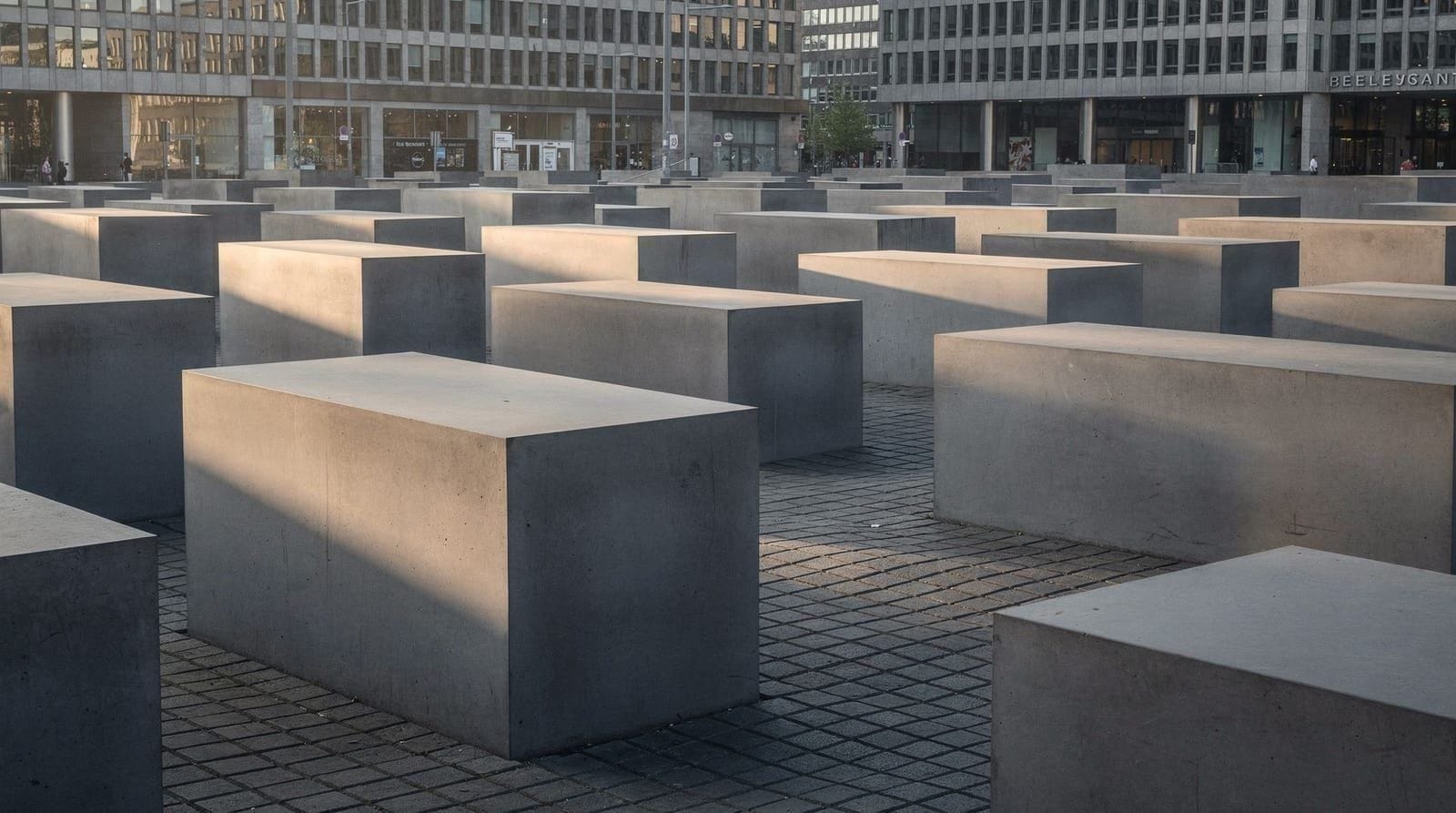
Unlike the large-scale, heavily visited Holocaust Memorial near the Brandenburg Gate, the resistance sites are small, scattered, and easy to miss — which is itself part of their history. The Nazi regime worked hard to suppress evidence that any German Jews had fought back or that any non-Jewish Germans had helped them; the modest scale of these memorials partly reflects how long that suppression took to unwind after 1945. The GDR-era Rosenstrasse sculpture and the more recently opened Gedenkstätte Stille Helden (2008) show two very different eras of German memorial culture responding to the same underlying history.
Frequently asked questions about Jewish resistance in Berlin
Who was Herbert Baum?
Herbert Baum (1912–1942) was a Jewish Communist youth leader in Berlin who organised one of the few Jewish partisan resistance groups in Nazi Germany. Born in Mosina (now in Poland), raised in Berlin, Baum was a leader in Jewish Communist and later Communist youth organisations. After 1941, when Jews were forced to wear the yellow star and deportations began, he organised a group of approximately 30 Berlin Jewish Communists who planned and carried out active resistance actions. He was arrested by the Gestapo on 22 May 1942, tortured, and murdered in custody on 18 June 1942.What did the Herbert Baum Group do?
The group's most significant action was the arson attack on the Nazi propaganda exhibition "Das Sowjetparadies" (The Soviet Paradise) in the Lustgarten in Berlin on 18 May 1942. The exhibition, mounted on the Lustgarten square on Museum Island, was designed to portray Soviet society as impoverished and its citizens as grateful for German "liberation." Baum's group set fire to part of the exhibition, causing significant damage before fire crews extinguished it. The reprisal was severe -- 500 Jewish men unconnected to the group were arrested and shot. The group members themselves were arrested within days, tried, and executed.What was the Rosenstrasse protest?
In late February and early March 1943, the Gestapo conducted the "Fabrikaktion" — the final roundup of Jews still working in Berlin's armaments factories. Those in mixed marriages (Jewish married to non-Jewish spouses) were held separately at a Jewish community building on Rosenstrasse in Mitte. Over approximately a week, the non-Jewish relatives — primarily wives — gathered outside the building in an open protest demanding the release of their husbands. Despite harassment and threats, the protest continued. Goebbels, who as Gauleiter of Berlin was responsible for the "Jews-free Berlin" project, ordered the release of the approximately 1,700 people held there rather than risk wider civil unrest.Where is the Rosenstrasse memorial?
A sculptural memorial, "Block der Frauen" (Block of Women) by Ingeborg Hunzinger, stands on Rosenstrasse in Mitte, near the intersection with Neue Friedrichstrasse, close to the Hackescher Markt. The bronze figures depict women in attitudes of grief and protest. The memorial was installed in 1995 and is freely accessible at all times.Who were the "U-Boote" and how did they survive?
Jews who went into hiding in Berlin rather than being deported were informally called "U-Boote" (submarines) — submerged, invisible, surviving below the surface of the city. An estimated 1,700 survived the full war period hidden in Berlin, assisted by networks of non-Jewish helpers. The helpers took considerable personal risk -- hiding a Jew was a capital offense from 1942 onward. Those who provided shelter, food, and false documents ranged from Communist activists to Christian churchgoers to ordinary neighbours acting from personal conscience.Is there a memorial to the Herbert Baum Group in Berlin?
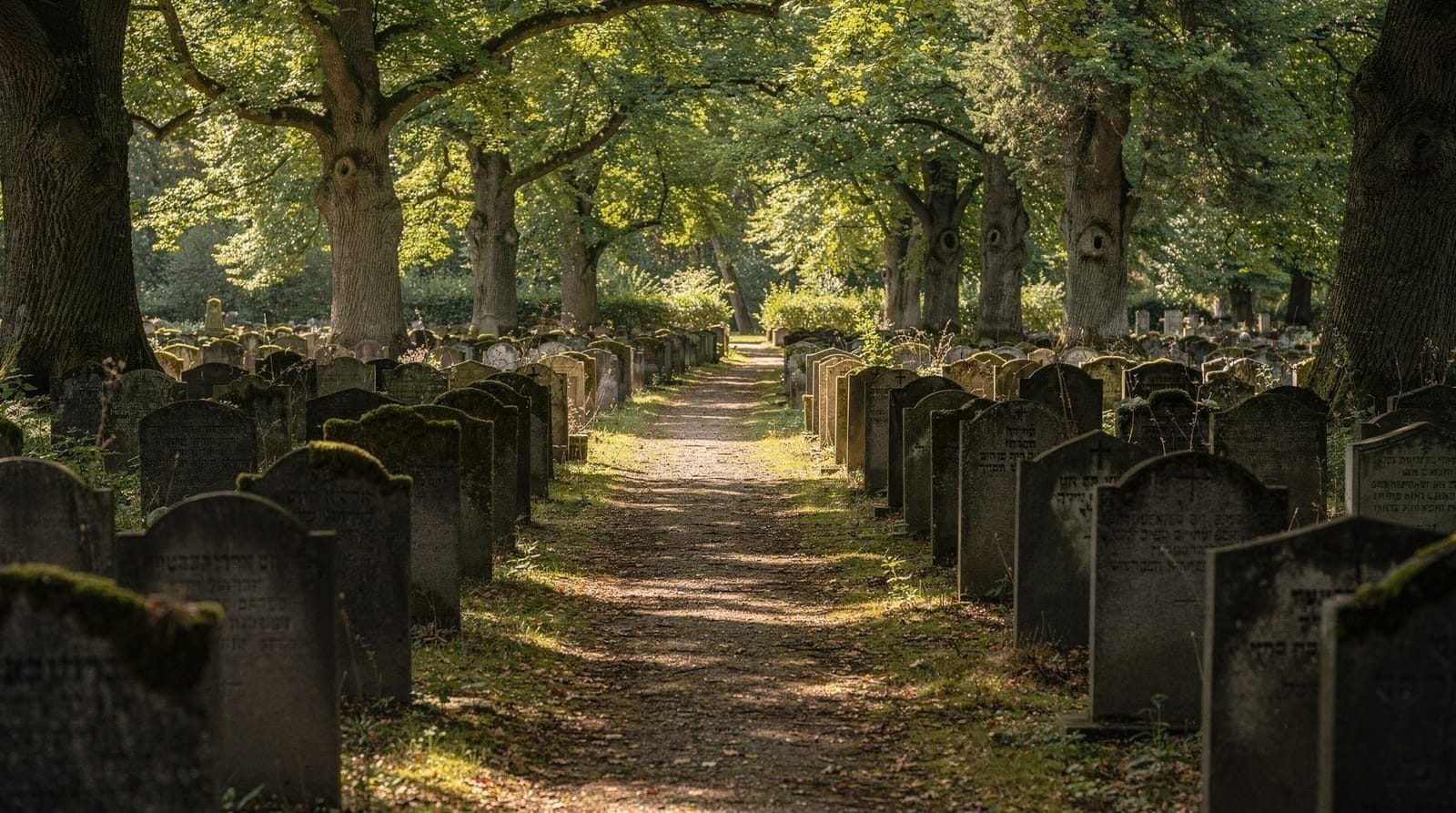
A memorial plaque to the Herbert Baum Group is located at the Lustgarten on Museum Island, near the site of the 1942 attack on the Soviet Paradise exhibition. Additionally, street names in the Mitte district (Herbert-Baum-Strasse) and a plaque at the former Siemens factory where Baum worked as a forced labourer mark his presence. The Jewish Cemetery at Weissensee contains graves of some group members.