Dresden: Baroque splendour and a city reborn from the ashes
Discover Dresden's Baroque palaces, the rebuilt Frauenkirche, world-class art, and the Elbe riverside on an easy 2-hour ICE train ride from Berlin.
From Berlin: Private Guided Dresden Day Trip by Train
Quick facts
- Travel time
- ~2h by ICE from Berlin Hbf
- Train cost
- €30–60 return (DB)
- Best for
- Art, architecture, history
- Days needed
- 1–2 days
- Free highlights
- Altstadt walk, Brühlsche Terrasse
A city that refused to stay buried
Few cities in Europe carry their history quite as visibly as Dresden. Stand at the centre of the Altstadt on a clear morning and you see a Baroque skyline that looks centuries old — and yet much of what you are looking at was either a ruin or rubble as recently as 1990. Dresden was firebombed over three nights in February 1945, and what the Allied air raids left behind was a skeleton city. What followed was one of the most remarkable acts of collective architectural memory in the modern world.
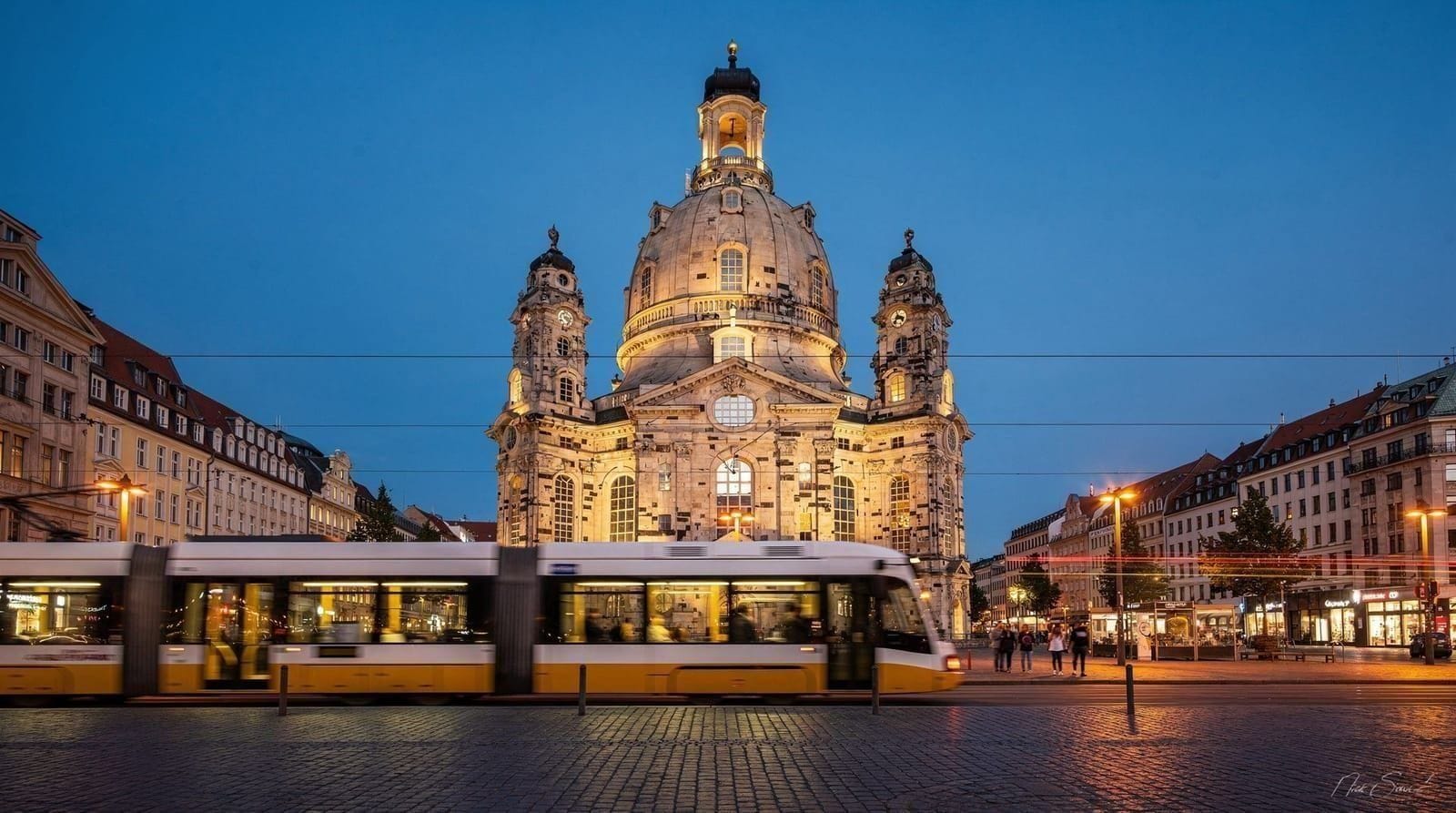
The rebuilt Frauenkirche alone tells the whole story. Begun in 1726, destroyed in 1945, left as a ruin and anti-war memorial through the GDR years, then rebuilt stone by stone between 1994 and 2005 — you can still see the scorched black sandstone blocks worked back into the pale new masonry. They were kept deliberately visible. Dresden did not want a replica; it wanted a scar you could read.
That combination of genuine Baroque grandeur and a layered, sometimes uncomfortable recent history is what makes Dresden one of the most rewarding day trips from Berlin. It is not a theme park of old Germany. It is a real city wrestling with real memory, and it happens to contain some of the finest art and architecture north of Rome.
| Where | Saxony, ~2h by ICE from Berlin |
| Cost | Train around €30–60 return; museums €8–14 each |
| Time needed | 1 full day minimum; 2 days for the museums properly |
| Getting there | ICE direct from Berlin Hbf, roughly every 2 hours |
| Best time | April–June and Sept–Oct for mild weather; December for the Striezelmarkt |
Getting there from Berlin
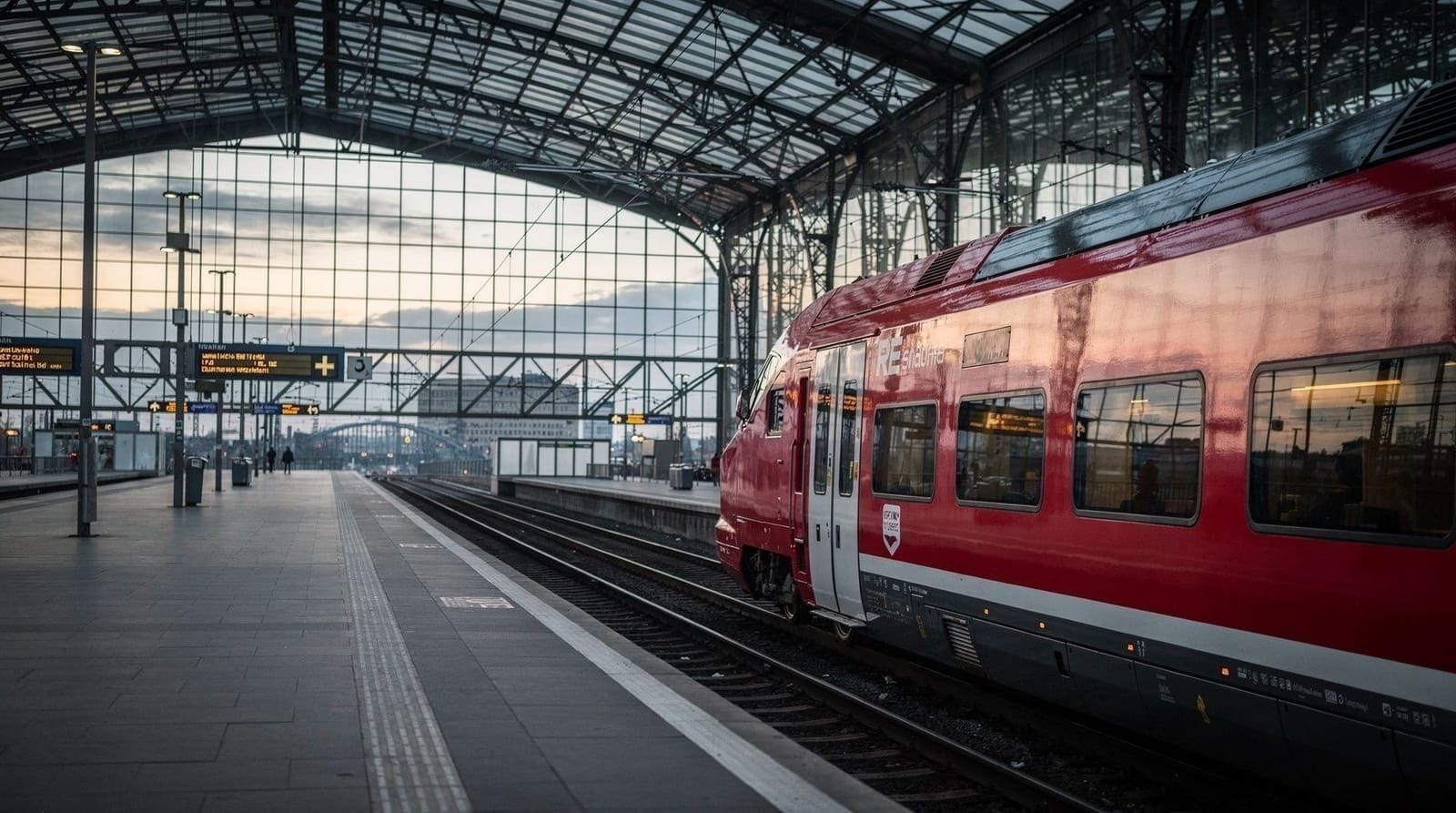
The fastest connection is the ICE direct service from Berlin Hauptbahnhof, which reaches Dresden Hauptbahnhof in around two hours. Trains run roughly every two hours throughout the day. A return ticket booked in advance typically costs between €30 and €60; walk-up prices on busy weekends can be higher, so booking a few days ahead on the DB app or website pays off. The Brandenburg-Berlin Ticket does not cover the Dresden route — you need a full DB ticket or an Interrail/Eurail pass.
Dresden Hbf is a ten-minute walk from the Altstadt, or a single stop on tram line 9. The historic centre is almost entirely walkable once you arrive.
For a detailed breakdown of train options, seat reservations, and ticket types, the day trips by train from Berlin guide covers the logistics thoroughly. The dedicated Berlin to Dresden day trip guide maps out a minute-by-minute itinerary if you want to squeeze the most out of a single day.
The Frauenkirche and the Neumarkt
Start where the city’s resurrection is most visible: the Neumarkt square and the Frauenkirche. The church’s silhouette — that distinctive stone dome, sometimes called the “stone bell” — dominates the square and has become the emblem of modern Dresden.
Entry to the church is free, and the interior rewards a slow look. The oval nave, with its stacked galleries climbing toward the ceiling fresco, is both intimate and theatrical in a way that pure Gothic interiors rarely are. If you want to climb the dome for the panorama over the Elbe valley, there is a modest fee (around €8 in 2026) and it is worth it on a clear day.
The Neumarkt itself has been rebuilt with Baroque-style façades around the perimeter, which remains controversial in architectural circles but gives the square a coherence that makes it pleasant to linger in. Several of the surrounding buildings house restaurants and cafés at street level — pause for a coffee before moving on.
The Zwinger: Europe’s finest Baroque ensemble
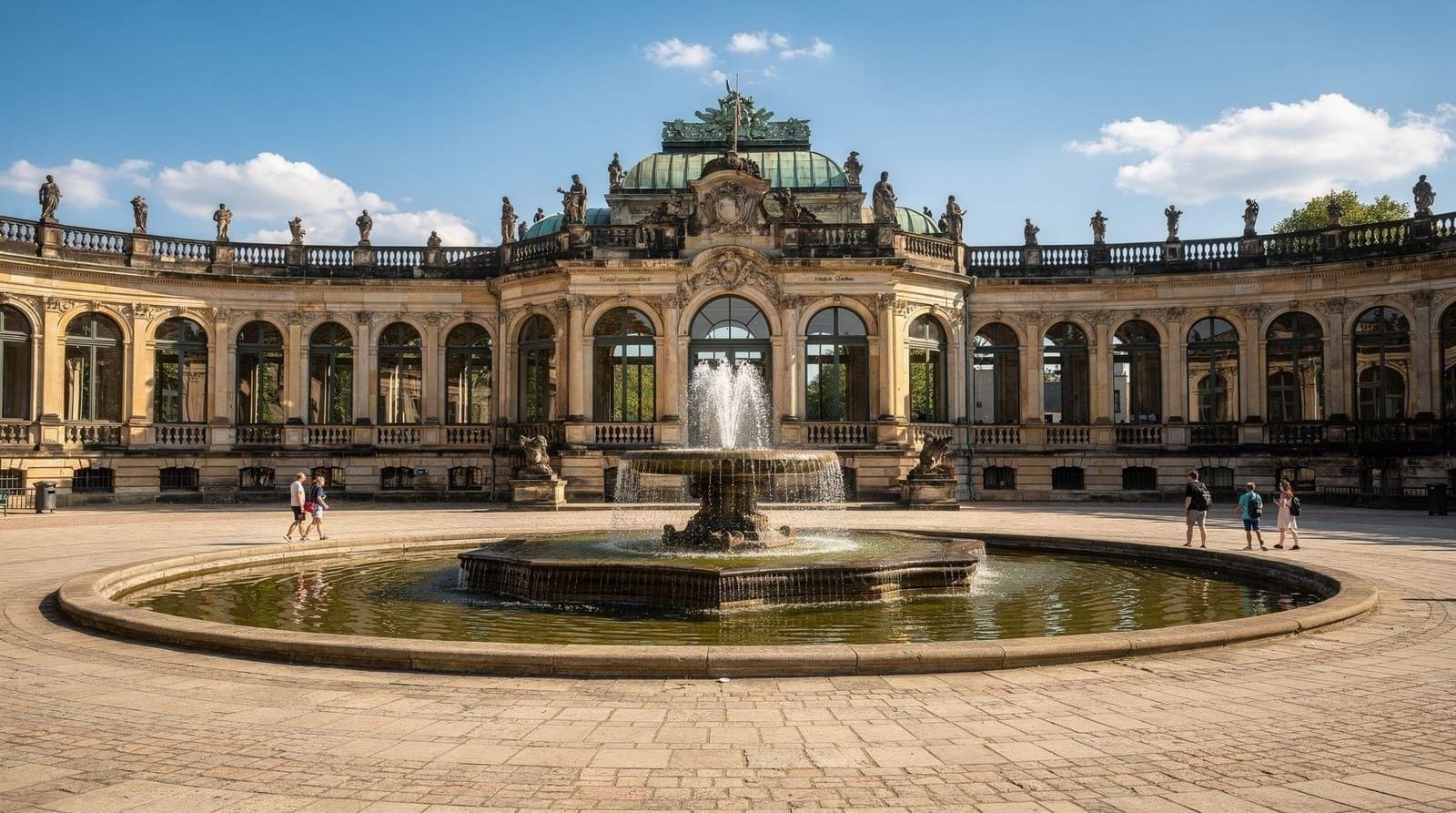
A five-minute walk west from the Frauenkirche stands the Zwinger, and it is genuinely one of the great achievements of European Baroque architecture. Built between 1710 and the 1720s for Augustus the Strong, Elector of Saxony, it was designed as a court orangery and festival ground. The result is a horseshoe of pavilions, galleries, and ornamental gates arranged around a sunken garden with fountains and parterres.
The Zwinger houses three major museums within its walls. The Gemäldegalerie Alte Meister (Old Masters Picture Gallery) is the one most visitors come for, and rightly so — the collection includes Raphael’s Sistine Madonna, Vermeer’s Girl Reading a Letter at an Open Window, and works by Titian, Rubens, Rembrandt, and Velázquez. The Sistine Madonna has hung in Dresden since 1754 and the two putti at the bottom of the canvas are among the most reproduced details in Western art. Seeing the full painting — much larger than most people expect — is one of those museum moments that retunes your sense of scale.
Also within the Zwinger: the Porcelain Collection (Porzellansammlung), displaying Meissen ware and East Asian ceramics that Augustus assembled obsessively, and the Mathematics and Physics Salon, a Wunderkammer of scientific instruments. Combined entry covers all three collections; budget at least two hours if you want more than a sprint through the highlights.
If the Zwinger sparks your interest in Meissen porcelain’s origins, the town of Meissen is only 25 minutes further west by S-Bahn and makes a natural extension of a two-day trip.
The Semperoper and Theaterplatz
Adjacent to the Zwinger, Theaterplatz opens onto the Semperoper, Dresden’s opera house. Gottfried Semper designed the original in 1841; it burned down in 1869; his son Manfred rebuilt it; it was destroyed again in 1945; and it was restored and reopened in 1985, during the final decade of the GDR. The exterior, with its curved Renaissance Revival façade, is one of the most photographed buildings in Germany.
Guided tours of the interior run daily when no performance is scheduled — the tour takes about an hour and gets you into the auditorium, which is magnificent. If you want to see a performance, the Semperoper’s programme includes opera, ballet, and symphony concerts from September through June; tickets can be booked directly on their website well in advance.
The Green Vault (Grünes Gewölbe)
No visit to Dresden’s Residenzschloss is complete without the Grünes Gewölbe, or Green Vault. Augustus the Strong assembled what is arguably the greatest collection of jewelled objects, goldsmith work, and decorative art in Europe, and this is where it is kept.
The museum operates in two sections. The Historic Green Vault recreates the original Baroque display rooms exactly — objects arranged floor to ceiling in mirrored cabinets, lit to make the gems and enamelwork glow. The New Green Vault displays selected masterpieces in a more conventional museum format, allowing close inspection of individual objects. The centrepiece of the latter is the Dresden Court at the Time of the Delhi Moghul Emperor Aurangzeb (1701), a scene of 132 hand-carved figures in gold, enamel, and gemstones that took Johann Melchior Dinglinger eleven years to make. It is almost absurdly intricate.
Entry to the Historic Green Vault requires a timed ticket booked in advance — spots sell out, particularly on weekends. Book via the State Art Collections website (skd.museum) before your trip.
The Elbe riverside and Brühlsche Terrasse
After the concentrated grandeur of the Altstadt museums, the Elbe offers relief. The Brühlsche Terrasse — the broad promenade running along the top of the old city fortifications above the riverbank — was called the “Balcony of Europe” by Goethe, and the view across the river to the vine-covered slopes of the Elbtal valley (a UNESCO World Heritage landscape until a bridge dispute led to delisting) is genuinely lovely.
The riverside path stretches for kilometres in both directions, and on summer weekends Dresden residents fill it entirely. The Neustadt district on the far bank has a more lived-in, alternative character than the Altstadt — good independent cafés and restaurants line the Alaunstraße and surrounding streets if you want lunch away from the tourist concentration.
Planning your trip with a guide
Dresden is rewarding to visit independently, but the density of historical and architectural context can be hard to absorb without someone to decode it. A guided excursion from Berlin takes care of the logistics and unlocks layers of the city that a map cannot provide.
a private guided Dresden day trip by train from BerlinThe private train option keeps the intimacy of a small-group experience and pairs well with first-time visitors who want the Altstadt narrative explained by someone who knows it properly. For those who prefer the flexibility of a car — handy if you want to reach the Elbe valley viewpoints or the Dresden Heath outside the city — there is also:

Where to eat
Dresden has a handful of traditional Saxon restaurants worth knowing. Sophienkeller, built beneath the Taschenbergpalais hotel in the style of an 18th-century tavern, leans theatrical but the Sauerbraten and potato dumplings are genuine. Augustuskeller near the Frauenkirche is more straightforward and reliably good for lunch. If you cross to the Neustadt, Raskolnikoff on Böhmische Straße is a long-running artists’ café with solid food and an idiosyncratic interior.
Combining Dresden with Meissen
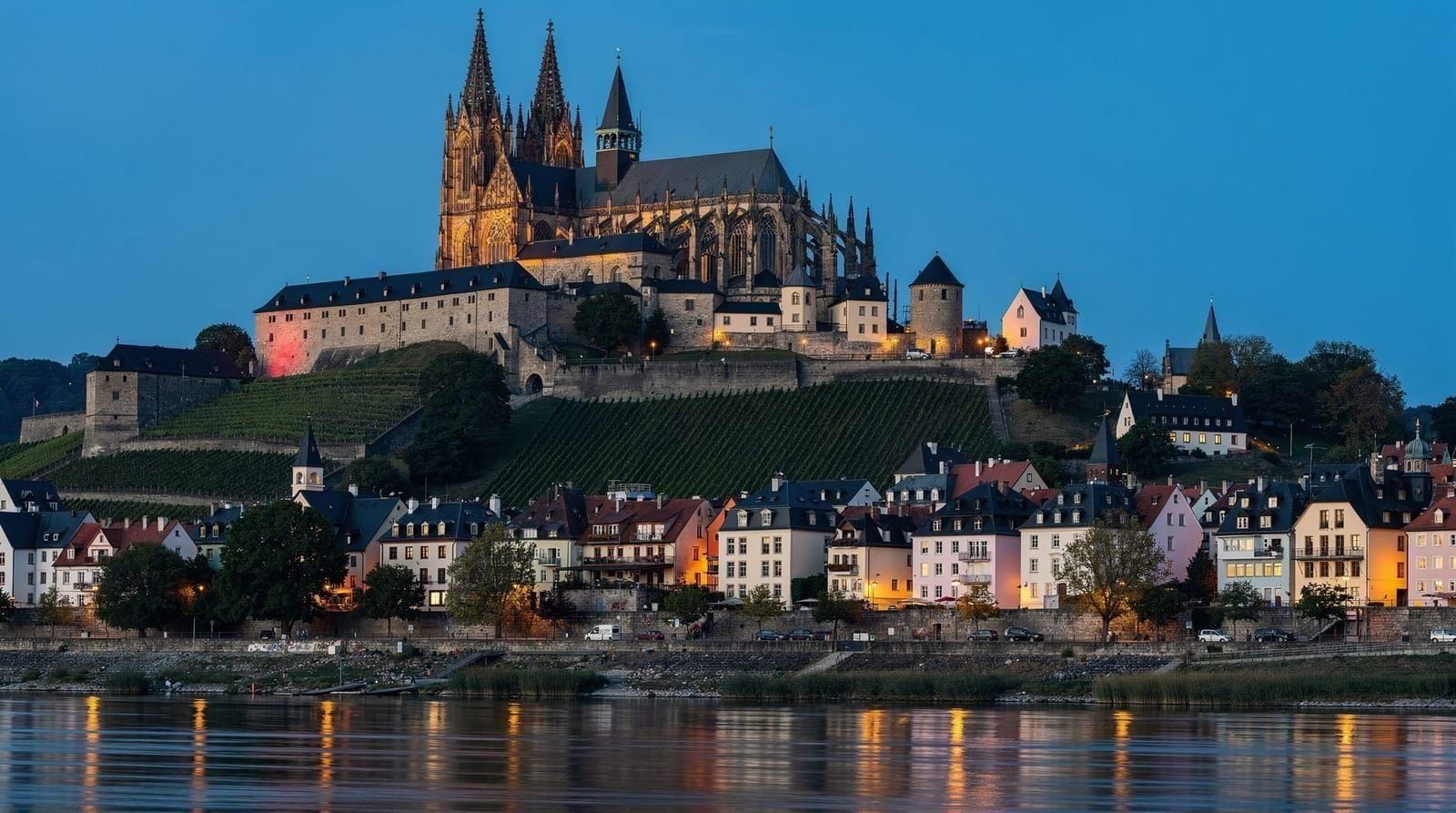
The town of Meissen, 25 km up the Elbe, is one of Germany’s most beautiful small medieval towns and is home to the Meissen Porcelain Manufactory — the place where European hard-paste porcelain was first made in 1710. It is easily reachable by S-Bahn from Dresden in about 30 minutes and makes a compelling second day if you are spending the night. The Berlin to Meissen day trip guide covers how to combine both cities efficiently.
The Berlin–Dresden weekend itinerary maps out a full two-day programme if you want to stay overnight and do both cities properly, including an evening at the Semperoper or a walk along the Elbe at dusk.
One day vs. two days: what to prioritise
Dresden genuinely rewards two days, but a well-planned single day still covers the essentials — it just requires triage.
| 1 day (day trip) | 2 days (overnight) | |
|---|---|---|
| Core sights | Frauenkirche, Zwinger exterior + Alte Meister, Brühlsche Terrasse | All of day 1, plus Grünes Gewölbe, Semperoper tour |
| Museums | Pick one (Alte Meister is the priority) | Two or three, unhurried |
| Extension | Not realistic | Meissen half-day add-on |
| Pace | Brisk, early start essential | Relaxed, evening at the Elbe or Semperoper |
| Best for | First visit, tight schedule | Art and history enthusiasts, photographers |
If forced to choose one museum on a single day, the Gemäldegalerie Alte Meister in the Zwinger is the priority — the Sistine Madonna and the Old Masters collection deliver more per hour than the Grünes Gewölbe’s intricate but slower-paced treasures. The Berlin–Dresden weekend itinerary structures the fuller two-day version.
Practical information
Getting there: ICE from Berlin Hbf to Dresden Hbf, roughly every 2 hours, journey ~2h. Book via bahn.de or the DB app. Advance tickets from ~€19.90 one way with a Sparpreis fare.
Getting around: The Altstadt is walkable. Tram lines 1, 2, 4, 9, and 12 cover the wider city.
Opening hours: Gemäldegalerie Alte Meister: Tue–Sun 10:00–18:00. Grünes Gewölbe Historic: timed tickets, book in advance. Zwinger gardens: open daily, free.
Costs: Alte Meister entry ~€14. Zwinger Porcelain/Math collections ~€8 each. Frauenkirche dome ~€8. Grünes Gewölbe ~€14 per section. Altstadt walks and the Brühlsche Terrasse are free.
Best base: For a day trip, Berlin is the obvious base — the round trip is under 4 hours of travel. The Berlin trip planning guide and best day trips from Berlin are useful starting points for structuring a wider itinerary.
Frequently asked questions about Dresden
Is Dresden worth visiting on a day trip from Berlin?
Yes, decisively. Two hours each way is a reasonable commitment for a city of this calibre, and the main Altstadt sights — Frauenkirche, Zwinger, Semperoper, Brühlsche Terrasse — can be covered comfortably in one full day if you start on an early train. Add the Grünes Gewölbe and you have a rich two-day trip.
How much does the train from Berlin to Dresden cost?
A return ticket typically costs €30–60 depending on how far in advance you book and which service you take. DB Sparpreis advance fares can bring a single leg down to around €19.90. Walk-up flexible tickets are significantly more expensive. The Brandenburg-Berlin Ticket does not cover this route.
Do I need to book the Green Vault in advance?
Yes, especially the Historic Green Vault section, which operates on timed entry and sells out at weekends. Book online via skd.museum before your visit. The New Green Vault section is easier to access without pre-booking.
What is the Frauenkirche and why is it significant?
The Frauenkirche (Church of Our Lady) is a Lutheran Baroque church originally completed in 1743. It was destroyed in the 1945 bombing of Dresden and remained a ruin throughout the GDR period as a deliberate anti-war memorial. It was rebuilt between 1994 and 2005 using a combination of original salvaged stones and new sandstone, with the scorched black blocks intentionally visible in the new masonry. It reopened on 30 October 2005.
Is the Altstadt expensive to visit?
Walking the Altstadt and the Brühlsche Terrasse is free. The Frauenkirche interior is free; the dome climb costs around €8. Museum entry ranges from €8 to €14 per museum. A comfortable day out — train, one or two museums, lunch — typically runs €60–100 per person depending on choices.
What is the best time of year to visit Dresden?
April through June and September through October offer the best combination of mild weather, manageable crowds, and long daylight hours. July and August are busy and can be hot. December is special — Dresden’s Striezelmarkt (one of Germany’s oldest Christmas markets) runs from late November through the 24th and transforms the Altstadt.
Can I visit Meissen on the same day as Dresden?
Yes, if you start early. Take the first or second ICE from Berlin, spend the morning in Dresden’s Altstadt, then take the S1 S-Bahn to Meissen (30 min) for the afternoon. Return to Berlin in the evening. It is a long day but very doable. The Berlin to Meissen day trip guide has the timetable details.
Is Dresden safe for tourists?
Yes. Dresden is a mainstream German city and the Altstadt is very safe. As with any major city, exercise normal awareness with bags in busy tourist areas. The city has a history of far-right political demonstrations (particularly the Monday marches around the February bombing anniversary), which are occasionally disruptive to transport but not a safety concern for tourists.
Should I book a guided tour or go independently?
Independent visits work well if you’re comfortable planning museum timed-entry tickets yourself and want full control over pacing. A guided option — such as a private guided train day trip from Berlin — pays off if this is a first visit and you want the Altstadt’s layered history (Baroque grandeur, 1945 destruction, GDR-era reconstruction) explained properly rather than pieced together from plaques. Either approach works; the guided option mainly saves planning time and adds context.
What should I skip if I only have a few hours?
Skip the Grünes Gewölbe entirely — its timed-ticket system and slower pace don’t suit a rushed visit — and skip a full Semperoper interior tour. Concentrate on the free Altstadt walk (Frauenkirche, Neumarkt, Brühlsche Terrasse) plus the Gemäldegalerie Alte Meister, which is the single most efficient use of museum time in the city.
Top experiences
Bookable activities with verified prices and instant confirmation on GetYourGuide.