Meissen
Meissen gave Europe its first hard-paste porcelain in 1710. Its hilltop castle and cathedral are exceptional. Best combined with Dresden — 30 min apart.
Quick facts
- Distance from Berlin
- ~250 km south
- Travel time from Berlin
- ~1.5h (ICE to Dresden + 30 min S-Bahn/regional)
- Albrechtsburg Castle
- €12 adult (castle), open Tue–Sun
- Meissen Cathedral (Dom)
- €5 adult; combined ticket with castle available
- Porcelain Manufactory tour
- €14 adults, daily from 9:00
- Best combined with
- Dresden (30 min by train)
The town that invented European porcelain — and kept the secret for decades
In 1708, two men locked in a Dresden fortress cracked one of Europe’s most coveted secrets: how to make hard-paste porcelain. Johann Friedrich Böttger — an alchemist imprisoned by Augustus the Strong of Saxony on the grounds that he was close to producing gold — and scientist Ehrenfried Walther von Tschirnhaus achieved it through systematic experimentation with Saxon clays. European courts had been paying fortunes for Chinese and Japanese porcelain for over a century; now Saxony had the formula.
By 1710, Augustus had moved production to the hilltop Albrechtsburg Castle in Meissen, 25 kilometres upstream on the Elbe. The site was chosen for nearby kaolin deposits and defensibility — workers were essentially confined to keep the formula secret. The manufactory relocated to its current purpose-built facility in 1863. The secret eventually leaked. But Meissen kept the reputation, the craft tradition, and the crossed-swords mark applied to its pieces since 1722 — the oldest continuously used trademark in the world.
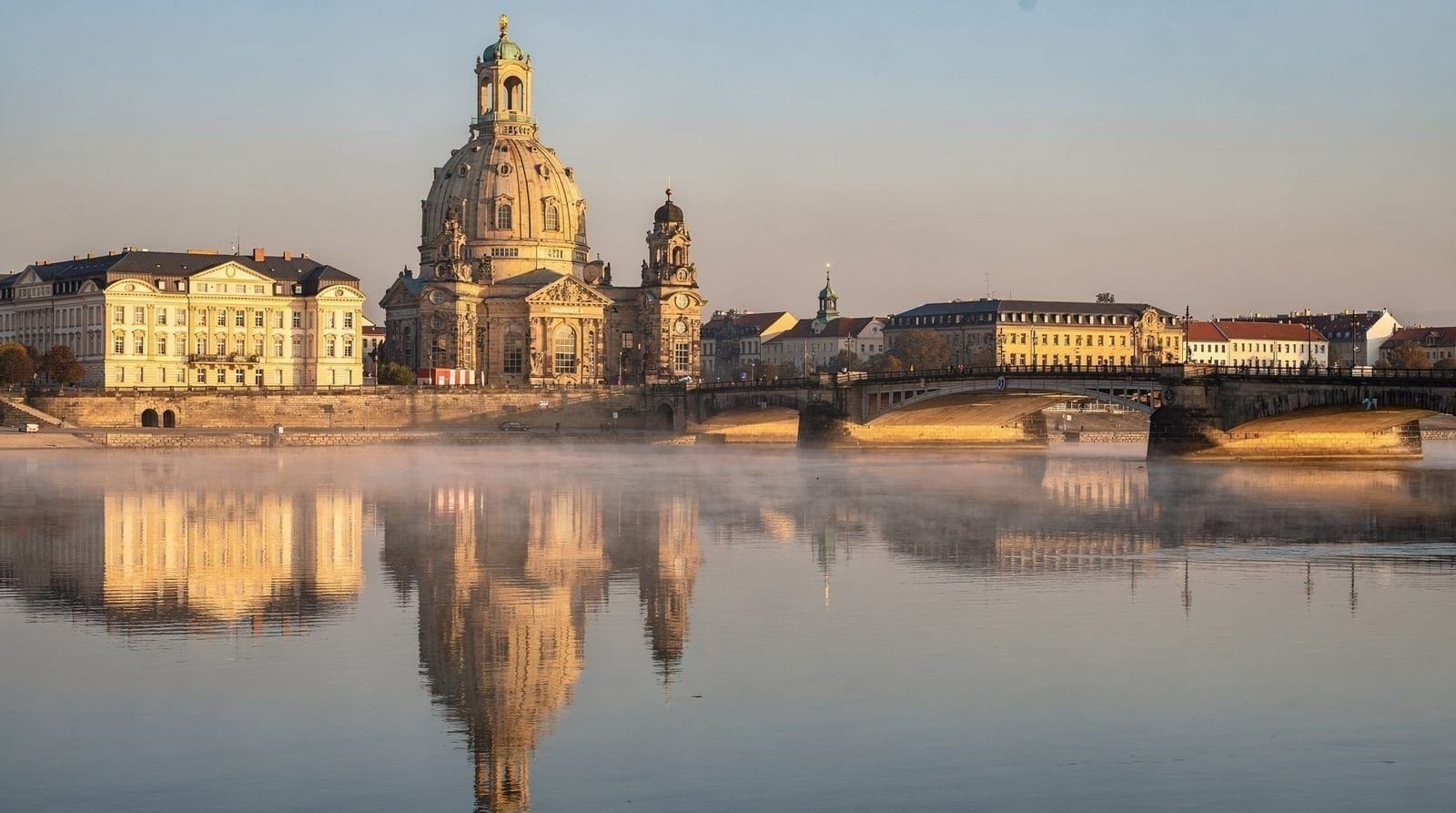
Meissen is 30 minutes from Dresden by regional train or S-Bahn. It is the natural companion to any day trip to Dresden from Berlin, and one of the most concentrated small-town historical experiences in Saxony.
| Where | Saxony, ~25 km upstream from Dresden, ~250 km south of Berlin |
| Getting there | ICE to Dresden (~1h45–2h) + S1/regional train (~30 min) |
| Cost | Castle €12, Cathedral €5, combined ticket €15; manufactory tour €14 |
| Time needed | Half-day standalone; pairs naturally with Dresden for a full day |
| Best time | May–September; avoid December weekends (Christmas market crowds) |
Getting to Meissen from Berlin
Via Dresden (recommended)
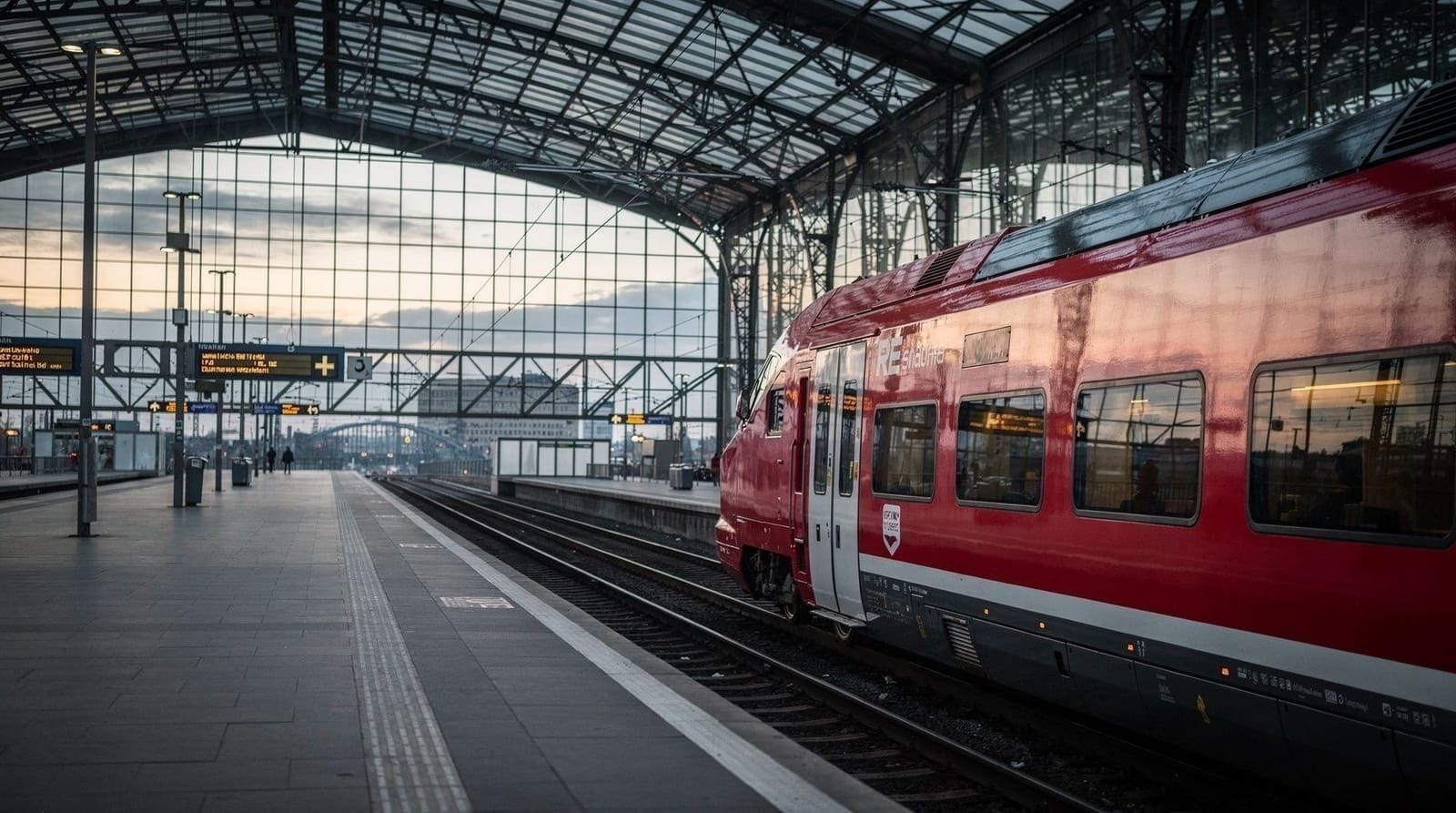
The most practical route is the ICE to Dresden (1 hour 45 minutes to 2 hours from Berlin Hauptbahnhof, from €29 advance), then the S-Bahn line S1 or a regional train to Meissen Triebischtal station. The S-Bahn journey from Dresden Hauptbahnhof to Meissen takes approximately 30–35 minutes and runs frequently.
Alternatively, the regional train to Meissen (the main station, on the east bank of the Elbe) takes a similar time and drops you a short walk from the old town centre via the Elbe bridge.
The combined Dresden + Meissen day is the standard approach for visitors from Berlin: arrive in Dresden mid-morning, spend 2–3 hours there, take the S-Bahn to Meissen for the afternoon, and return to Berlin in the evening. The Berlin to Meissen day trip guide has the full logistics.
Direct from Berlin (not recommended)
There is no direct express train to Meissen from Berlin — all routes require a change, almost always in Dresden. The total journey time door-to-door is around 2–2.5 hours, making it a long half-day from Berlin as a standalone destination. It works better as part of a Berlin–Dresden weekend.
Getting between Meissen train station and the hilltop
The old town and castle are on the west bank of the Elbe. The main Meissen station is on the east bank. Cross the Altstadtbrücke (the pedestrian bridge) and walk uphill — the castle and cathedral are visible from the bridge, rising on their sandstone crag above the town. Walking time from the bridge to the castle entrance: about 15 minutes uphill, or there is a stairway direct from the old town.
Albrechtsburg Castle: Germany’s first castle-palace
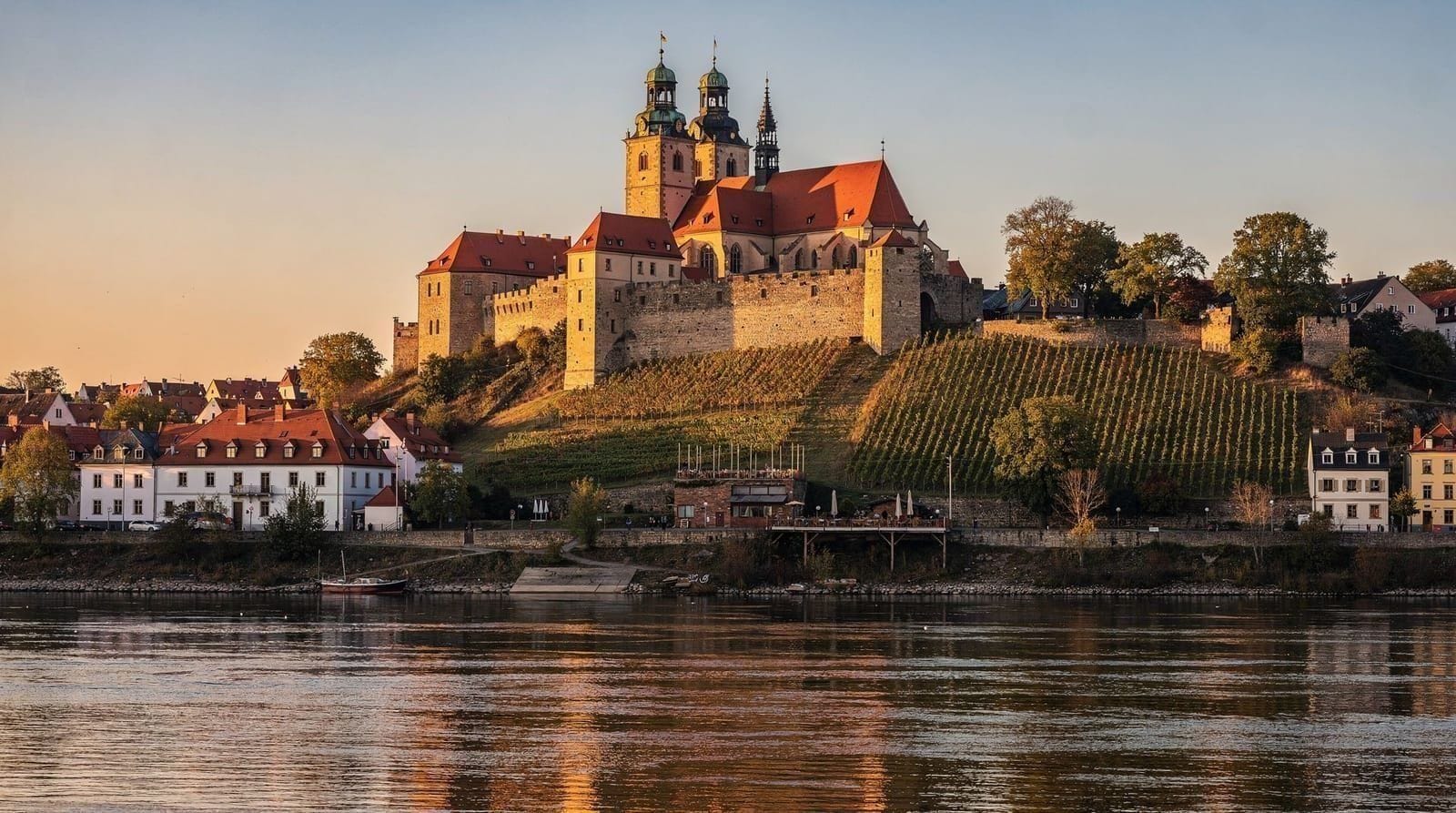
The Albrechtsburg sits on a sandstone promontory above the Elbe, connected to the cathedral on the same plateau and visible for miles down the valley. Built between 1471 and 1524 by Arnold von Westfalen for the Wettin brothers Ernst and Albrecht (Electors of Saxony), it is considered the first purpose-built castle-palace in Germany — a building designed from the outset as a residential palace rather than a military fortification with residential additions.
The distinction matters architecturally. Von Westfalen’s design introduced features that would influence German palace architecture for generations: large windows allowing genuine daylight into grand rooms (unusual in an era when defensive requirements dictated small openings), elaborate ribbed vaulting used decoratively rather than structurally, and a grand spiral staircase — the Wendelstein — that is one of the most elegant pieces of late-Gothic stonework in Central Europe.
The castle’s interior was heavily repainted in the 19th century with scenes from Wettin dynastic history, which gives the rooms a somewhat Victorian character that sits uneasily alongside the Gothic architecture. The paintings are competent but not the main reason to visit. The architecture itself — the vaulted hall ceilings, the Wendelstein staircase, the views from the terrace over the Elbe valley — is.
The castle houses a permanent exhibition on the porcelain manufactory’s years in the building (1710–1863), with examples of early Meissen production and material on how the secret of the formula was guarded and eventually lost. This exhibition is the best place to understand the Albrechtsburg’s unique role in European economic history.
Admission: €12 adults, €9 reduced. The combined ticket with the cathedral (€15 adults) is good value if you plan to visit both, which you should. Open Tuesday to Sunday, 10:00–18:00 (17:00 in winter). Closed Mondays.
Meissen Cathedral: one of Saxony’s finest Gothic interiors
The Meissener Dom shares the hilltop promontory with the Albrechtsburg and is directly connected to it — the two buildings form a single plateau complex above the town. Construction began in the 13th century and continued across several centuries, producing a structure that layers Romanesque, Early Gothic, and High Gothic elements in ways that repay close attention.
The interior is exceptional. The choir contains the earliest Gothic sculpture in Saxony — a series of founder figures (donor portraits of Emperor Otto I, the Empress, and the Meissen margraves) dating from around 1260, displaying a naturalism and emotional directness that was revolutionary for their period. The Georgenkapelle (St George’s Chapel) holds important Wettin dynastic tombs. The treasury includes medieval metalwork, reliquaries, and liturgical objects of the highest quality.
The cathedral has been Lutheran since the Reformation and maintains an active liturgical life. There are regular organ concerts in summer — worth checking the schedule when planning your visit, as the acoustic in the Gothic nave is remarkable.
Admission: €5 adults. Combined ticket with the Albrechtsburg available. Open daily (hours vary by season; Sunday opening limited around services).
The Porcelain Manufactory: the crossed swords mark explained
The Staatliche Porzellan-Manufaktur Meissen moved from the castle to its current site on the edge of the old town in 1863, when production had expanded beyond what the hilltop building could accommodate. The manufactory still operates on the same site, making Meissen porcelain by hand using techniques and forms that have remained largely consistent since the 18th century.
The Erlebniswelt (visitor experience centre) offers daily tours of the working manufactory that show the complete production process: the preparation of the paste, the throwing and casting, the hand-painting that gives each piece its individual character, and the firing process that produces the finished glaze. The painters working on the factory floor are craftspeople who have trained for years — the crossed-swords quality standard requires a level of precision that resists mechanisation.
The museum within the manufactory holds an extraordinary collection tracing Meissen production across three centuries. The 18th-century pieces — particularly the figures and tableware produced under the artistic direction of Johann Joachim Kändler (from the 1730s) — represent the manufactory at its creative peak. Kändler’s Swan Service, produced for the Saxon prime minister Heinrich von Brühl between 1737 and 1741, is among the most ambitious single porcelain commissions ever executed.
Tour admission: €14 adults, €11 reduced. Tours run daily from 9:00, last tour at 17:00. The museum alone is included in the ticket. The factory shop sells current production at manufactory prices — still expensive, but less so than retail.
A word on fakes: the crossed-swords mark has been widely imitated. Genuine Meissen pieces have the mark applied underglaze (before firing, so it cannot be removed). Modern Meissen pieces bear the mark with a specific form of crossing that differs from all historical imitations. The manufactory shop is the one place to buy with absolute confidence.
The old town: Marktplatz and the Elbe waterfront
Between the hilltop castle complex and the porcelain factory lies the Altstadt — a small medieval town centre that was not heavily damaged in World War II and retains much of its pre-20th-century fabric. The Marktplatz is presided over by the late-Gothic Rathaus (Town Hall) and ringed by burgher houses of various centuries. The Church of Our Lady (Frauenkirche) on the square has porcelain bells — made at the manufactory — that chime several times daily, an arrangement installed in 1929.
The Elbe waterfront below the old town is the place to sit after the hilltop exertions. Riverside cafés and restaurants line the bank with views across to vine-covered slopes — Saxony’s wine country begins here. The Sächsisches Staatsweingut (Saxon State Winery), founded in 1525, is one of Germany’s oldest, and local Müller-Thurgau and Riesling appear on most menus.
Wine tasting beyond the waterfront
Saxony is one of Germany’s smallest and least-exported wine regions, and Meissen sits at its historic centre. The Sächsisches Staatsweingut Schloss Wackerbarth, technically in neighbouring Radebeul but easily combined with a Meissen visit via the S-Bahn line to Dresden, is a working Baroque winery offering cellar tours, tastings, and a terraced vineyard walk with views over the Elbe valley — tastings typically run €15–25 for a guided flight of five to six wines. Closer to Meissen itself, smaller family-run vineyards on the slopes opposite the old town (the Meissner Weinberge) occasionally open for tastings by appointment; the tourist information office at the Marktplatz can advise on current openings.
Even without a formal tasting, the Weinbaumuseum Hoflößnitz near Radebeul explains the region’s history in an attractive Renaissance building, and most Elbe-facing restaurants in Meissen’s old town pour local Müller-Thurgau, Riesling, and the distinctive dry Saxon Goldriesling — a grape variety found almost nowhere else in Germany.
Boat trips on the Elbe
Between April and October, the historic paddle steamers of the Sächsische Dampfschifffahrt — one of the world’s oldest and largest operating paddle-steamer fleets — run scenic routes on the Elbe connecting Dresden and Meissen. The journey from Dresden takes around two hours downstream (faster returning upstream is not the case — the river current means the Dresden-to-Meissen leg is quicker), considerably slower than the train but a genuinely pleasant alternative for one leg of the journey if you are not pressed for time. Fares run approximately €20–28 one-way depending on season; the boats depart from the Terrassenufer landing stage in central Dresden and dock directly below Meissen’s old town, a short walk from the Marktplatz.
This is not the practical option for a tightly scheduled Berlin day trip — treat it as an add-on for a Berlin–Dresden weekend rather than a standalone day trip element — but it is worth knowing about, since the view of the Albrechtsburg and cathedral rising above the river as the boat approaches is one of the best vantage points in Saxony.
The Meissen + Dresden combination in practice
Most visitors from Berlin combine Meissen with Dresden rather than treating it as a standalone destination. Two options work well.
Dresden first: Take an early ICE to Dresden (arriving ~10:00). Spend the morning in Dresden’s Altstadt and Zwinger. Take the S1 to Meissen after lunch. Spend the afternoon at the castle, cathedral, and manufactory; return to Berlin from Meissen or Dresden in the evening.
Meissen first: Arrive in Meissen mid-morning, cover the hilltop sites while light is good, then take the S-Bahn back to Dresden for the late afternoon. This avoids afternoon queues at the manufactory and gives you Dresden in the golden evening hours.
Either way, the 07:00–08:00 ICE from Berlin is the comfortable starting point. See the best day trips from Berlin guide for the full logistics.
Practical information
Food: the Marktplatz has cafés and lunch restaurants at moderate prices. Vincenz Richter, a wine restaurant just off the square in a 16th-century building, is the most atmospheric option — book ahead on weekends.
Getting up the hill: the climb from the old town to the castle plateau takes 10–15 minutes and involves steps. There is no cable car or lift. Comfortable shoes are important.
Photography: freely permitted throughout the castle, cathedral (no flash during services), and the manufactory visitor areas. Factory floor photography may be restricted in certain sections.
Porcelain workshop: the manufactory occasionally offers hands-on painting workshops. These must be booked in advance through the manufactory website and are popular — check availability when planning if this interests you.
Time needed: castle + cathedral: 1.5–2 hours. Add manufactory tour: 2.5–3.5 hours total for the hilltop plus factory. With the waterfront and a lunch stop: 4–5 hours for a comfortable Meissen half-day.
Frequently asked questions about Meissen
Why is Meissen porcelain so expensive?
Every piece is produced by hand. The painting in particular requires years of training — painters specialise in specific motifs (flowers, birds, figures, the iconic onion pattern) and work to standards that have remained constant since the 18th century. The crossed-swords mark is applied only to pieces that pass quality inspection; those with minor flaws receive a ground-off or modified mark. The price reflects genuine craft labour, not brand premium alone.
What is the crossed-swords mark?
The Churfürstliche Porzellan-Manufaktur adopted two blue crossed electoral swords as its mark in 1722, taken from the Saxon coat of arms. It is applied underglaze (before the final firing, so it fuses into the glaze and cannot be removed). It is the oldest continuously registered trademark in the world. Variations in the mark’s form indicate the period of production — collectors and dealers use these differences to date pieces.
Can I visit the factory floor?
Yes, on the guided tours. You observe working painters and craftspeople through a viewing area — you do not walk among them. The tours are well-organised and informative, with English-language options available (check the tour schedule on the manufactory website for language availability on specific days).
Is Meissen worth visiting without going to Dresden?
Yes, but the travel ratio (3+ hours round trip from Berlin) is less favourable than closer destinations, so the combined Dresden and Meissen day is the stronger option. As a standalone destination, the castle, cathedral, and manufactory together make it unambiguously worthwhile — they would headline any European small town.
Is there wine tasting available in Meissen?
Yes. Schloss Wackerbarth in nearby Radebeul (on the S-Bahn line between Meissen and Dresden) offers cellar tours and tasting. The waterfront restaurants serve local Elbe valley wines by the glass. Saxony’s wine is rarely exported — this is the most reliable place to try it.
How does the Albrechtsburg relate to the Dresden Residenzschloss?
Both were Wettin dynasty residences. The Albrechtsburg was built first; Dresden’s Residenzschloss became the main electoral court as Dresden grew through the 16th century. By the time Augustus the Strong established the porcelain factory here in 1710, the Albrechtsburg had been abandoned as a residence for over a century — making it available for repurposing.
What is the best time of year to visit Meissen?
May through September: the castle terrace is pleasant, the Elbe waterfront is welcoming, and the vine-covered slopes opposite are in full leaf. December brings a Christmas market with some atmosphere, but crowds spike on weekends and the castle grounds are cold. Avoid public holidays.
Can I walk between Meissen station and the old town?
From Meissen station (east bank): cross the Altstadtbrücke bridge (10 min walk) and continue into the old town. From Meissen Triebischtal (west bank, S-Bahn terminus): shorter walk to the old town and manufactory, slightly further from the Marktplatz. Either works; Triebischtal suits the factory visit, the main station suits the historic centre.
Can I get to Meissen by boat instead of train?
Yes, seasonally. The Sächsische Dampfschifffahrt paddle-steamer fleet runs scenic Elbe routes between Dresden and Meissen from April to October, taking around two hours downstream — much slower than the train but a memorable way to arrive, with the Albrechtsburg and cathedral visible from the water as you approach. Fares run roughly €20–28 one-way; treat it as a weekend add-on rather than a time-efficient day-trip option.
Is there wine tasting near Meissen itself, not just in Dresden?
Small family vineyards on the slopes opposite the old town occasionally open for tastings by appointment — ask at the Marktplatz tourist information office. The larger, more established option is Schloss Wackerbarth in Radebeul, on the S-Bahn line between Meissen and Dresden, offering cellar tours and guided tastings of Saxon wine, including the regionally distinctive Goldriesling grape.