Berlin and Dresden weekend: baroque art, Frauenkirche, and Elbe valley
From Berlin: Private Guided Dresden Day Trip by Train
Berlin and Dresden: a study in contrast
Berlin and Dresden are 190 km apart by rail — two hours on the ICE high-speed train — and they feel like cities from different centuries. Berlin is unfinished, layered, loud, and deliberately impure; Dresden is compact, baroque, consciously beautiful, and carries the memory of one of the most destructive bombing raids of the war. Combining them in a three-day weekend gives you the full range of what German history produced: the Prussian capital rebuilt into a Cold War divided city on one side, the Saxon capital rebuilt after Allied bombing and forty years of GDR-era preservation priorities on the other.
This itinerary uses Berlin as a base for two nights and Dresden for one night, which is the right allocation for a long-weekend trip focused on both cities.
| Where | Berlin (2 nights) + Dresden (1 night) |
| Cost | around €220–280/person incl. train, entries and meals |
| Time needed | 3 days / 2 nights |
| Getting there | ICE train Berlin Hbf–Dresden Hbf, around 2 hours |
| Best time | spring or autumn; book Sparpreis train fares 6–8 weeks ahead |
Day 1: Berlin — central core and Museum Island
Morning: Brandenburg Gate to Museum Island (9:00–13:00)
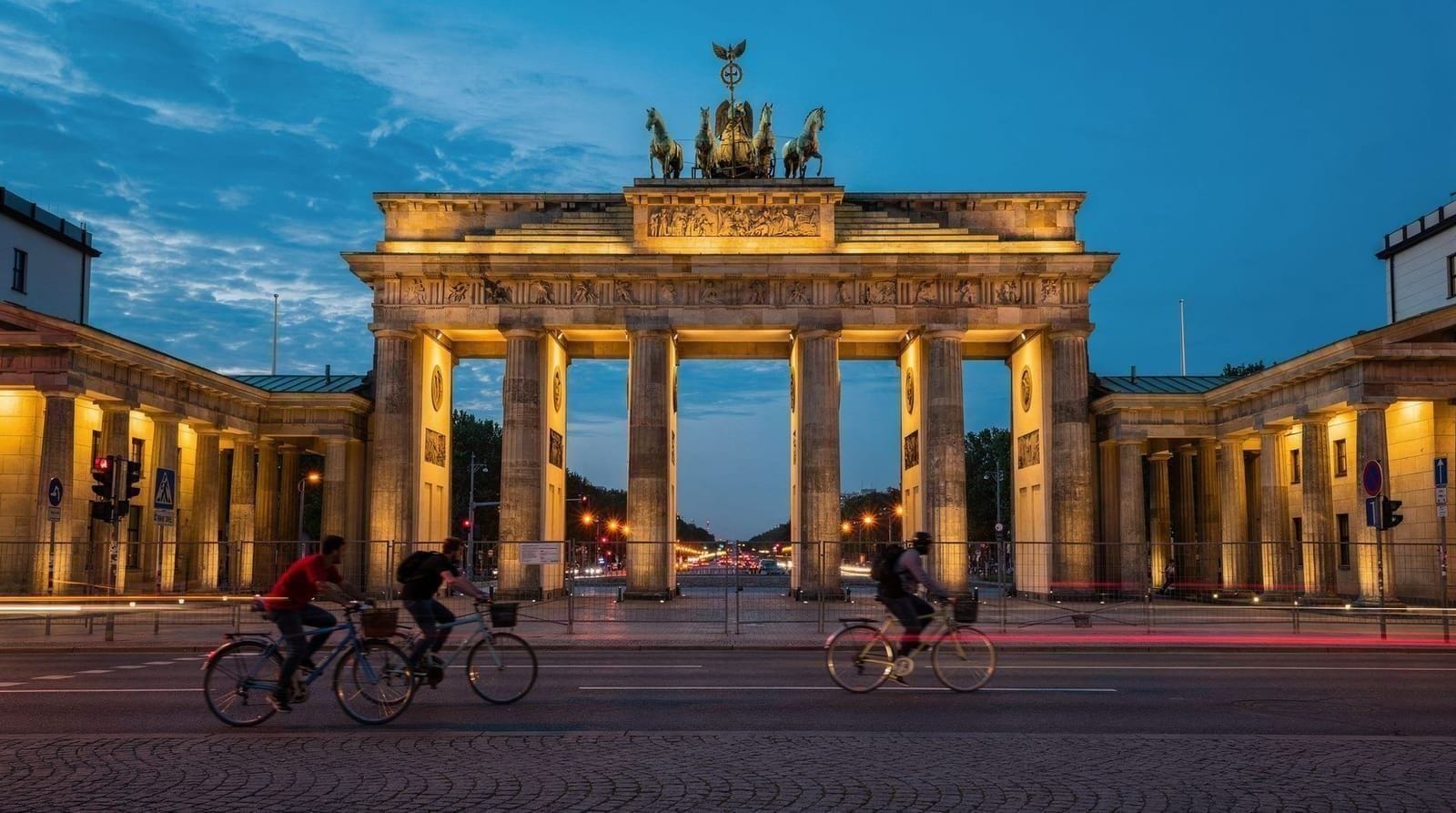
Begin at Brandenburg Gate at 9:00. The neoclassical gate (1788–1791) is one of the few major Berlin landmarks predating the Kaiser era, and its position on what was the inner-German border from 1961 to 1989 gives it a second layer of significance. From the gate, walk south to the Memorial to the Murdered Jews of Europe (underground information centre €6, closed Monday) — 30–45 minutes here is sufficient for a contextualising visit on a tight schedule.
Walk east along Unter den Linden to Museum Island. For a three-day itinerary with a full day in Dresden, choose one Museum Island institution and give it proper time. The Neues Museum (€14) is the most rewarding single visit: the 19th-century building by Friedrich August Stüler was gutted in the war and rebuilt by David Chipperfield in a way that makes the reconstruction itself part of the exhibition. The Nefertiti bust (1345 BCE) is the collection’s defining piece, but the prehistoric German and Egyptian collections surrounding it are excellent.
Note on Pergamon: the main Pergamon Museum building is closed until at least June 2027. The Asisi Pergamon Panorama is open in the same location on Museum Island. If you want to see the Pergamon Altar or the Ishtar Gate, this is not the time — see our Pergamon alternatives guide.

See our full Museum Island guide.
Lunch: Hackescher Markt (13:00–14:00)
Five minutes north of Museum Island. The covered market halls and surrounding streets offer mid-range options in the €12–18 bracket. The Rosenthaler Strasse and Weinmeisterstrasse area has better sit-down restaurants than the market itself.
Afternoon: East Side Gallery and Friedrichshain (14:00–18:00)
Take U5 east from Alexanderplatz to Warschauer Strasse (4 minutes). Walk north to the East Side Gallery (free, 1.3 km, open at all hours) — the 105 murals on the former Berlin Wall are the single most striking outdoor artwork in Germany by scale alone. Allow 45–60 minutes.
If the art element is important to your trip, note that the East Side Gallery is a natural primer for understanding how artists engaged with the city’s political history — a contrast to Dresden’s Gemäldegalerie, which represents six centuries of court acquisition, will come into focus on Day 3.
Walk back south along the Spree bank to Oberbaumbrücke — the double-decked brick bridge connecting Kreuzberg and Friedrichshain, which also stood on the border crossing between East and West Berlin. It is photogenic and historically significant.
See our East Side Gallery guide.
Evening: Dinner in Kreuzberg or Mitte
From Oberbaumbrücke, cross into Kreuzberg and head to Oranienstrasse for dinner — the neighbourhood has a good range of mid-range restaurants (€15–25) in a low-tourist atmosphere. Alternatively, take U1 west to Mitte if you prefer something more central.
Day 2: Dresden — Frauenkirche, Zwinger, and Old Masters
Getting to Dresden (8:00 departure)
From Berlin Hauptbahnhof, take the ICE toward Munich or Leipzig (check which service stops at Dresden Hauptbahnhof — not all ICE trains stop at both Leipzig and Dresden). The ICE to Dresden Hauptbahnhof takes approximately 1 hour 55 minutes to 2 hours 15 minutes depending on the service.
Buy tickets in advance on bahn.de — ICE tickets are cheapest purchased 6–8 weeks ahead with Sparpreis fares, which can be as low as €29.90 one way. Flexible fares run €55–80. The DB Super Sparpreis requires you to travel on specific trains; book an 8:00 or 8:30 departure from Berlin to arrive in Dresden by 10:30.
If you are staying overnight in Dresden (recommended for this itinerary), book accommodation in advance — Dresden is compact and a hotel near the Altstadt (Frauenkirche area) saves significant walking time.
Morning: Frauenkirche and the Neumarkt (10:30–13:00)
Dresden Hauptbahnhof to the Altstadt is a 20-minute tram ride (tram 3 or 8) or 30-minute walk. The tram deposits you on the Altmarkt; from there it is a 5-minute walk to the Neumarkt and the Frauenkirche (Church of Our Lady).
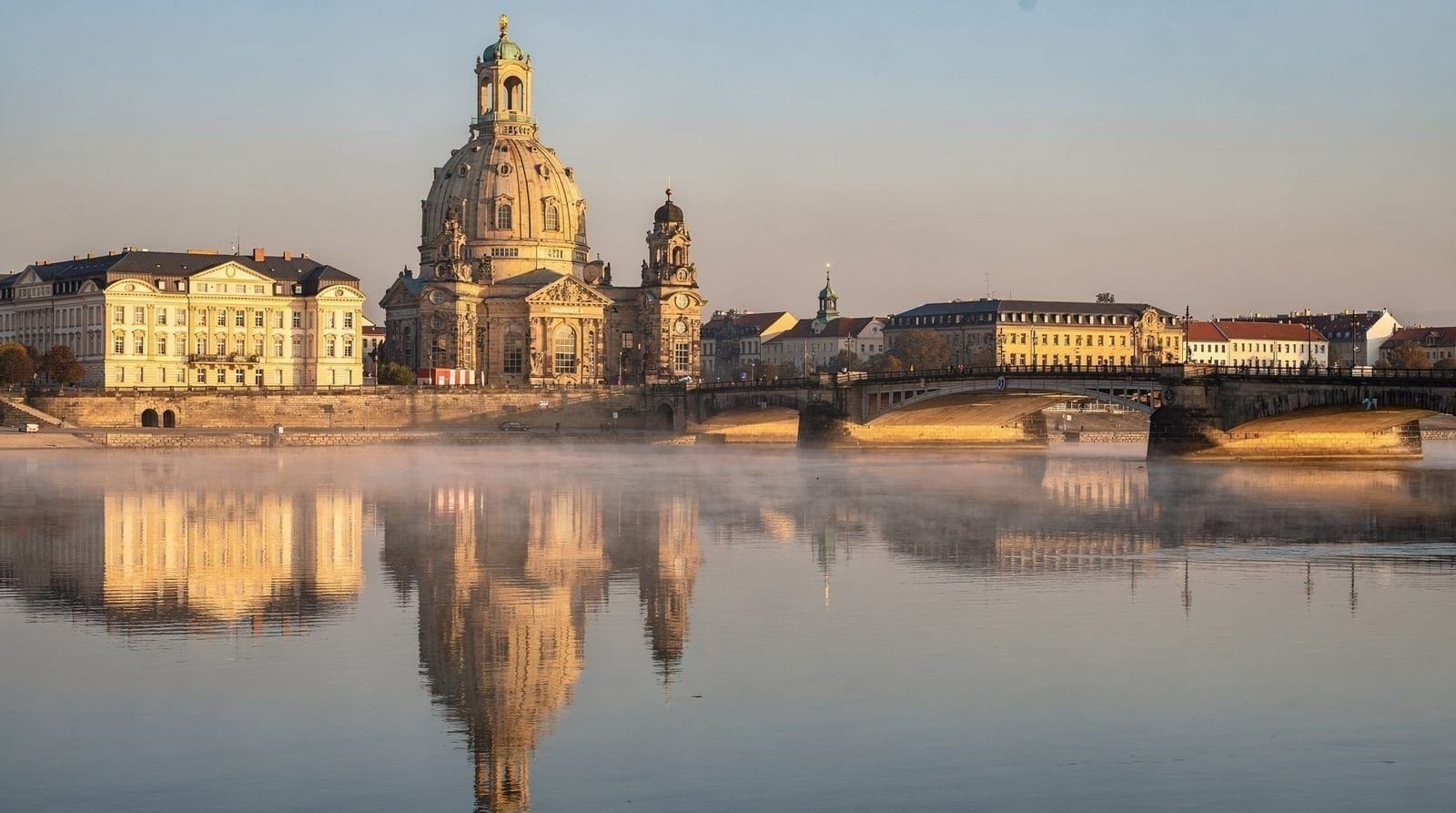
The Frauenkirche was built between 1726 and 1743 and destroyed by firestorm in the Allied bombing of February 1945 — the dome collapsed two days after the attack when the sandstone gave way to the heat. The ruins were left as a war memorial by East Germany; reconstruction was completed in 2005. The exterior sandstone deliberately blends new pale stone with darker recovered original stone, making the reconstruction’s extent visible. Interior entry is free; the dome ascent (€8) is worth it for views over the Elbe valley.
The Neumarkt surrounding the church is the centre of Dresden’s reconstruction project — the baroque square largely destroyed in 1945 is being rebuilt building by building based on historical plans, a project that will take decades to complete. It is unlike anything in Berlin and useful context for understanding what Germany has done differently at different sites of wartime destruction.
See our Dresden destination guide.
Lunch: Altstadt (13:00–14:00)
The Neumarkt and Münzgasse have multiple restaurants; Münzgasse itself is nicknamed “Fressgasse” (eating alley) and is tourist-priced. Better value is on Schössergasse or in the area just west of the Frauenkirche. Budget €14–20 per person.
Afternoon: Zwinger Palace and Gemäldegalerie (14:00–18:00)
The Zwinger (free courtyard entry, museum tickets separate) is a baroque palace complex built for Augustus the Strong in the early 18th century — the most coherent surviving piece of Dresden’s original baroque character. The courtyard with its fountains and ornate gates is the architectural heart of the city.
The Gemäldegalerie Alte Meister (Old Masters Gallery, €14, inside the Zwinger) holds one of the most important collections of European painting in existence. Raphael’s Sistine Madonna (1512) is the most famous work, but the Dutch and Flemish holdings — Vermeer, Rembrandt, Rubens — are extraordinary. For visitors coming from a Berlin context, this is a reminder of what the Saxon court accumulated at the height of its power, before war, and much of it survived in storage during the 1945 bombing.
Allow 2.5–3 hours in the Gemäldegalerie. This is not a place to rush through.

Evening: Brühlsche Terrasse and the Elbe (18:00–20:00)
Walk east from the Zwinger along the Brühlsche Terrasse — the promenade running above the Elbe bank, known as “the balcony of Europe” since the 18th century. The views across the Elbe to the Neustadt district (north bank) are the image most associated with Dresden; at dusk or golden hour the baroque skyline is genuinely exceptional.
The Neustadt on the north bank, accessible via the Augustusbrücke, has a denser restaurant and bar scene than the tourist-focused Altstadt. Take the bridge across for dinner — the Äußere Neustadt around Louisenstrasse has excellent mid-range restaurants (€16–24) frequented by Dresden residents. This area is worth a post-dinner walk.
Return to your hotel or begin the return journey to Berlin if you are doing this as a day trip rather than overnight. If day-tripping: last ICE trains from Dresden to Berlin run around 22:00; check the current timetable.
Day 3: Return to Berlin — Charlottenburg and Tiergarten
Morning travel from Dresden (8:00–10:00)
If staying overnight in Dresden, take an early ICE back to Berlin (8:00 or 8:30 departure, arriving by 10:30). The return ticket should have been purchased alongside the outbound — flexible return fare is worth having since train delays are common on this route.
Morning: Charlottenburg Palace (10:30–13:00)
From Berlin Hauptbahnhof, take U9 north then west, or S-Bahn to Zoologischer Garten and U2 west, to Sophie-Charlotte-Platz (Charlottenburg Palace). The contrast between Charlottenburg and the Dresden Zwinger — built around the same period (early 18th century), under different rulers (Prussian vs. Saxon) — is genuinely interesting after the previous day’s context.
Charlottenburg Palace (€19 combined ticket) is Berlin’s largest surviving baroque palace. The gilded state rooms, the Oak Gallery, and the Porcelain Cabinet are the highlights. The gardens (free) are formal French-style, and the summer orangery at the eastern end of the complex is open seasonally. Allow 90 minutes.
See our Charlottenburg Palace guide.
Lunch: Near the palace (13:00–14:00)
Luisenplatz, adjacent to the palace, has several cafes. The Schlossstrasse street heading north has a wider range of mid-range lunch options (€12–18). The Leibnizstrasse area (10 minutes east by U7) has better-value options.
Afternoon: Tiergarten walk and final orientation (14:00–17:00)
Walk east through the Tiergarten from Charlottenburg — the 210-hectare park connects the palace district to the Brandenburg Gate and the government quarter. The Victory Column (Siegessäule, €4 adults, 285 steps) is at the park’s geometric centre and provides the best aerial view of Berlin’s layout, including the Tiergarten’s distinctive radial paths.
This afternoon walk gives a physical sense of Berlin’s scale and geographic logic that three days of monument-visiting can sometimes obscure: the city is vast, historically layered, and deliberately hard to read from the street.
End at Brandenburg Gate — a natural closing point after two days in Berlin and one in Dresden.

See our Tiergarten guide.
Train logistics: Berlin to Dresden
| Route | Service | Duration | Typical Sparpreis |
|---|---|---|---|
| Berlin Hbf → Dresden Hbf | ICE/IC | 1h55–2h15 | €29.90–44.90 |
| Dresden Hbf → Berlin Hbf | ICE/IC | 1h55–2h15 | €29.90–44.90 |
Buy on bahn.de or the DB Navigator app. Sparpreis fares are non-refundable and tied to specific trains; Super Sparpreis (slightly cheaper) requires earlier purchase. If your Dresden plans are fixed, book early — this route is popular and cheap fares sell out.
Alternatively, FlixBus runs Berlin to Dresden for €5–15 but takes 2.5–3 hours and deposits you at a bus station rather than the central Hauptbahnhof.
For a day trip without overnight, depart Berlin at 8:00, arrive Dresden 10:00–10:30, leave Dresden by 17:30–18:00, return to Berlin by 19:30–20:00. This is rushed but workable if you focus on Frauenkirche and Zwinger and skip the longer Gemäldegalerie visit.
Practical notes
Dresden city transport: The Altmarkt-Neumarkt-Zwinger-Brühlsche Terrasse core is walkable. A day ticket for Dresden’s VVO network (€7.50 adults) covers trams and buses including the route from the Hauptbahnhof. Buy from machines at the station.
Zwinger entry: The palace courtyard is free; the Gemäldegalerie Alte Meister (€14), the Porcelain Collection (€12), and the Royal Cabinet of Mathematical and Physical Instruments (€12) are individually ticketed. A combined ticket (€24) covers all three Zwinger museums.
When to visit: Dresden in spring (April–May) and autumn (September–October) is most comfortable. Summer (June–August) is warm but crowded around the Frauenkirche; the Christmas market season (late November–December) is famous and very crowded. The Dresden music festival runs in May–June.
Cash in Dresden: Dresden is more cash-reliant than Berlin. Carry €50–80 cash for the day — some smaller restaurants in the Neustadt and some tram ticket machines prefer coins or cash.
Berlin versus Dresden: what each day is really for
| Day | City | What it’s for |
|---|---|---|
| Day 1 | Berlin | Modern history — Cold War, the Wall, 20th-century politics |
| Day 2 | Dresden | Baroque art and architecture — pre-war Saxon court culture, WWII reconstruction |
| Day 3 | Berlin | Prussian baroque (Charlottenburg) as a direct counterpoint to Day 2’s Zwinger |
The contrast is deliberate rather than incidental — seeing Charlottenburg immediately after the Zwinger (or vice versa) makes both more legible than visiting either city alone would.
Where to stay in Dresden for one night
Book a hotel near the Altstadt, ideally within walking distance of the Frauenkirche — Dresden’s core sights are compact enough that a well-placed hotel saves real time on a single-night stay. The Neustadt side of the river is a livelier, slightly cheaper alternative if you don’t mind a short tram ride each morning. Avoid hotels near Dresden Hauptbahnhof unless budget is the overriding priority; it’s a 20-minute tram ride from the Altstadt.
Packing for a two-city, one-night trip
Because you’re carrying a bag between two hotels rather than settling in for a full stay, pack light and leave anything you don’t need for Dresden in your Berlin hotel if it offers luggage storage — most central Mitte hotels do. A day bag with just the essentials (camera, water, a layer for the Elbe valley wind) makes the Day 2 sightseeing considerably more comfortable than hauling a full suitcase around the Altstadt. See our Berlin packing guide for a fuller list.
Is this trip better as two nights in Dresden instead?
If baroque art and architecture matter more to you than Berlin’s modern history, flipping the allocation — one night in Berlin, two in Dresden — is a legitimate alternative. It gives you time for the Semperoper, the Residenzschloss’s Green Vault, and a half-day in the Elbe valley towards Saxon Switzerland, none of which fit into the single Dresden day above. This itinerary assumes Berlin is the primary destination and Dresden the add-on; adjust the balance if that’s not your priority.
Frequently asked questions about the Berlin and Dresden weekend
Can I do Dresden as a day trip from Berlin?
Yes, but with limitations. A day trip allows you to see the Frauenkirche, the Zwinger courtyard, and perhaps the Brühlsche Terrasse in four to five hours of active sightseeing. The Gemäldegalerie alone justifies 2.5 hours. If art is the primary purpose, an overnight stay is significantly better than a rushed day trip.
Is the ICE train the best way to get from Berlin to Dresden?
For comfort and speed, yes. The ICE takes approximately two hours and deposits you at Dresden Hauptbahnhof in the city centre. The IC (InterCity) is slightly slower and typically cheaper. FlixBus is cheaper again but slower. Driving takes 2–2.5 hours via the A13/A14 motorway and requires navigating Dresden’s parking.
How much of Dresden was destroyed in 1945?
The Allied bombing raids of 13–15 February 1945 destroyed approximately 1,600 acres of the city centre and killed an estimated 22,700–25,000 people (the casualty figures were inflated by Nazi propaganda and continue to be debated; the 2004 Dresden Historical Commission established 22,700 as the confirmed minimum). The Altstadt was effectively destroyed; the Neustadt north of the Elbe survived more intact. Reconstruction under East Germany prioritised the Zwinger and Semperoper; the Frauenkirche was rebuilt after reunification.
What is the Zwinger and why does it matter?
The Zwinger (1709–1728) was built by Matthäus Daniel Pöppelmann for Augustus the Strong, Elector of Saxony, as a festival and tournament ground. It is the finest surviving example of German baroque architecture and the physical expression of Saxon court ambition in its peak period. The name originally referred to the space between the outer and inner defensive walls of a fortress; the Zwinger was built on this strip.
Is the Gemäldegalerie worth three hours?
For visitors with a genuine interest in European painting, yes. The Raphael room alone justifies the museum. The Dutch and Flemish holdings (Vermeer’s Girl Reading a Letter at an Open Window, Rembrandt self-portraits) are the equal of any museum in the world outside the Rijksmuseum. Visitors with a general art interest rather than a specialist interest can do the highlights in 90 minutes.
Should I buy Berlin and Dresden train tickets together or separately?
Buy them separately on bahn.de, timed to your actual plans — combined round-trip fares don’t offer meaningful savings over two one-way Sparpreis tickets, and separate tickets give you flexibility if your Dresden departure time shifts. Book both legs as early as you can once your dates are fixed.
Can I fit Dresden into a longer Berlin trip instead of a dedicated weekend?
Yes — if you’re already doing a Berlin 4-day or 5-day itinerary, swapping one day for this Dresden overnight works well, since the return leg drops you back into Berlin in time to continue the rest of your trip. It works less well squeezed into a 2-day Berlin visit, where every day is already accounted for.
Top experiences
Bookable activities with verified prices and instant confirmation on GetYourGuide.