Pergamon Museum Berlin 2026: what is closed, what to see instead, and how not to get caught out
Berlin: "Pergamonmuseum. The Panorama" Exhibition Tickets
Is the Pergamon Museum open in Berlin in 2026?
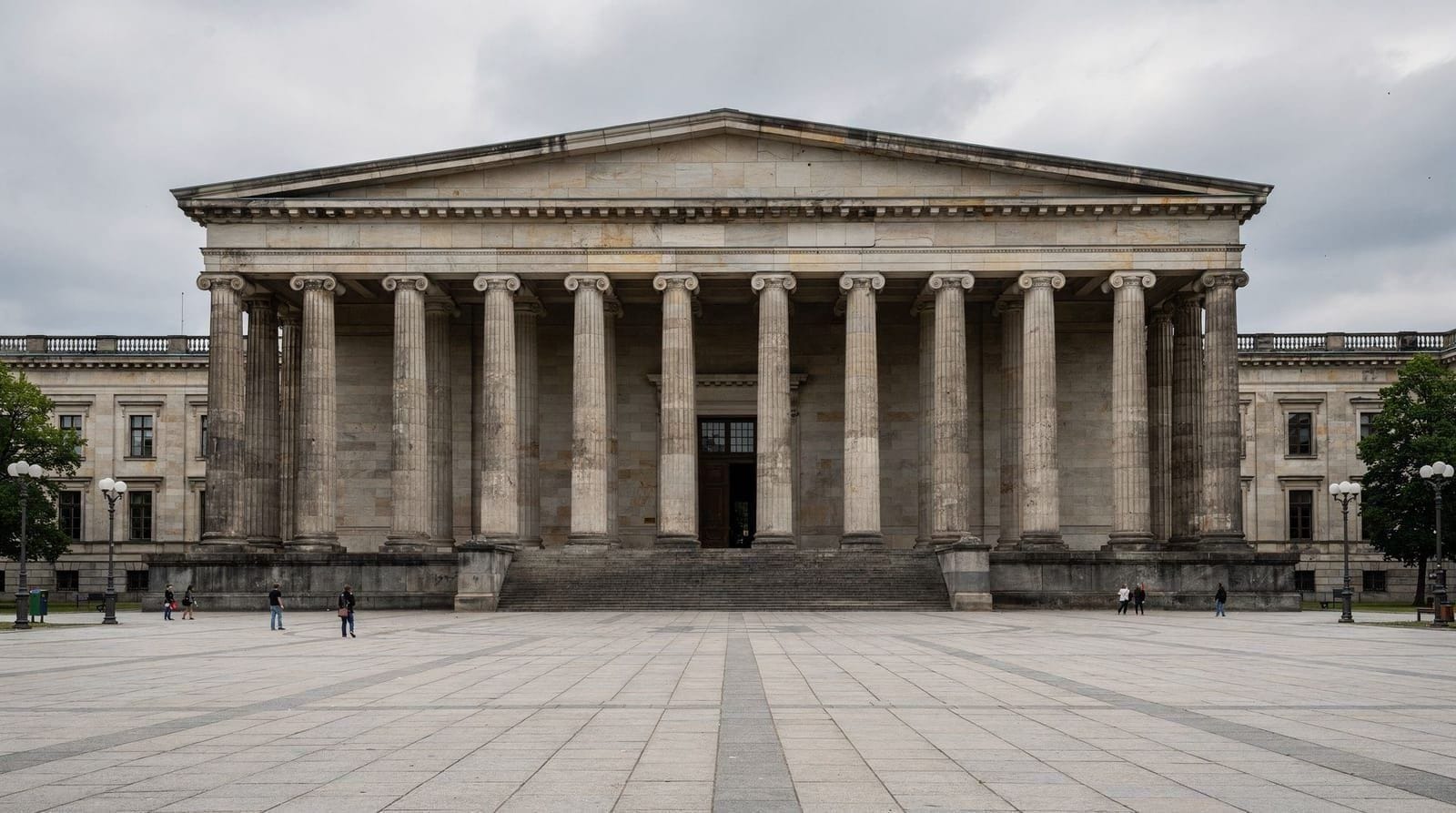
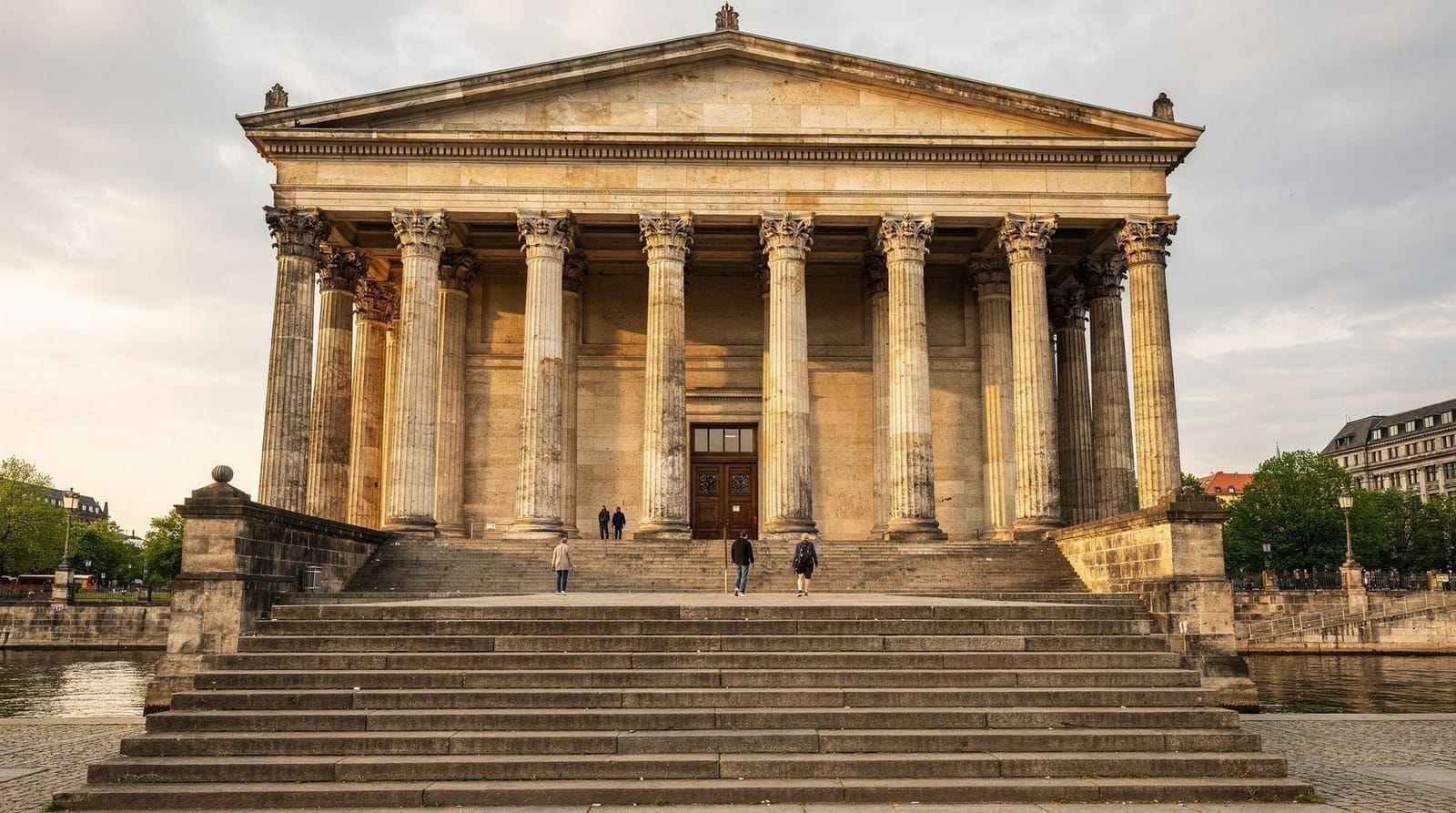
The Pergamonmuseum's main building is closed for renovation and will not reopen until June 4, 2027 at the earliest. This means the Pergamon Altar, Ishtar Gate, Market Gate of Miletus, and the Ancient Near Eastern and Islamic Art collections are all inaccessible. The separate Pergamon Panorama Asisi annexe on Kupfergraben is open, but it is not the same experience and is not covered by the Museum Island day pass.
Quick answer: The Pergamonmuseum’s main building — home to the Pergamon Altar, Ishtar Gate, Market Gate of Miletus, and the Ancient Near Eastern and Islamic Art collections — is fully closed for renovation until June 4, 2027. The Pergamon Panorama Asisi annexe on Kupfergraben is open at €15, but it is not the same experience and is not covered by the Museum Island pass. The other four Museum Island museums are open and excellent.
| Closed until | June 4, 2027 (main building) |
| Still open | Panorama Asisi (€15), plus 4 other Museum Island museums |
| Cost | Museum Island day pass around €22–29 |
| Getting there | U5 Museumsinsel, or S-Bahn Hackescher Markt |
| Full history | See the Pergamon Museum 2026 status guide |
The closure that surprises thousands of visitors every year
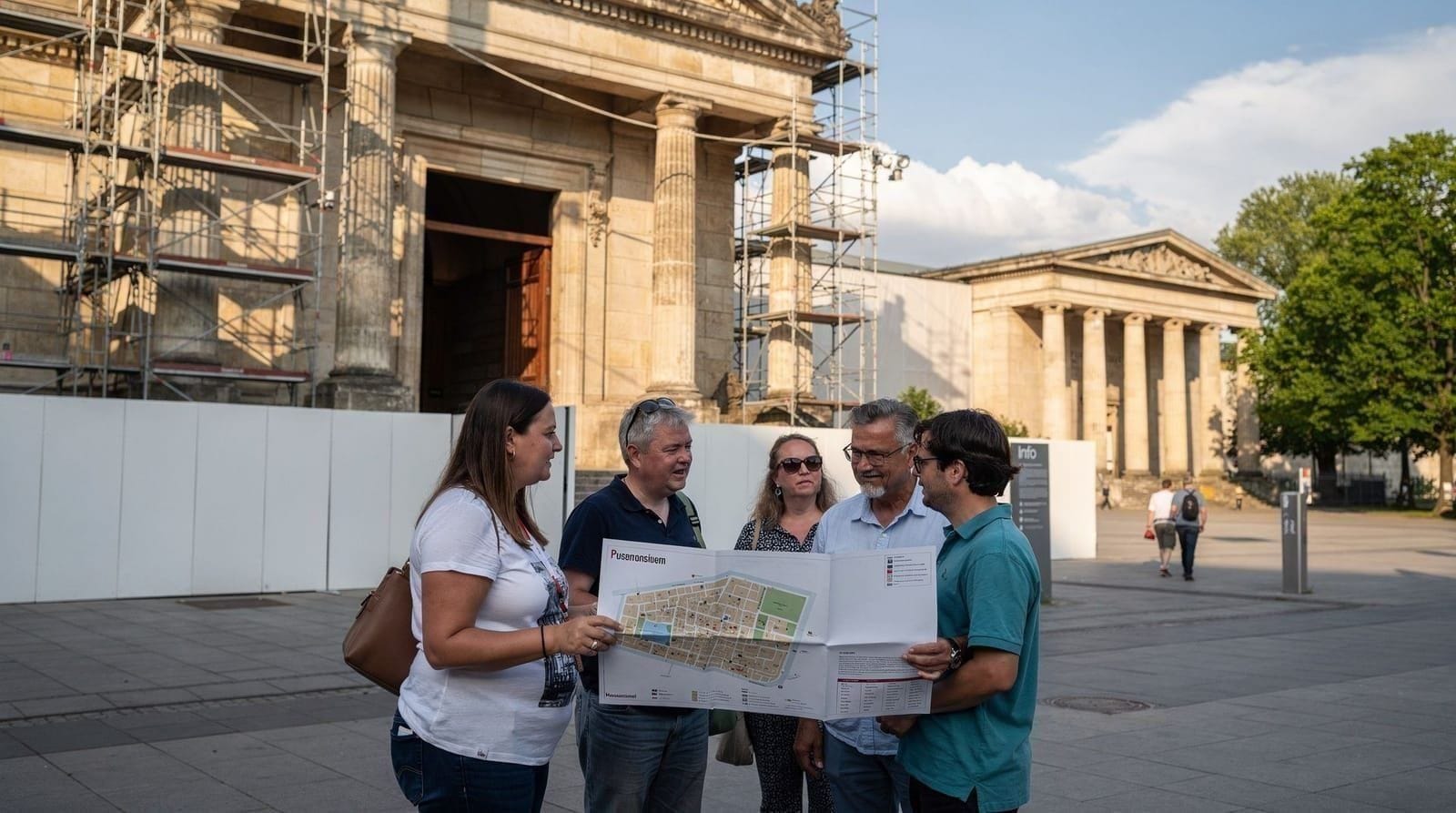
Every week, visitors arrive at Museum Island expecting to see the Pergamon Altar — the massive 2nd-century BC Greek altar that gave the museum its name — and find a building sealed behind hoardings. Some have pre-booked tickets. Some have planned their entire Berlin itinerary around it. Some are finding out for the first time as they stand on Kupfergraben with their luggage.
This is not obscure information, but it is remarkably easy to miss. Travel blogs continue to recommend the Pergamonmuseum without noting the closure. Booking platforms still list “Pergamon Museum” tickets — for the Panorama Asisi annexe or general Museum Island passes — without making it obvious that the main building is unavailable. Search results for “visiting the Pergamon Museum” often surface articles written before 2023. The confusion is structural.
The facts are straightforward. The Pergamonmuseum was Berlin’s most visited museum, attracting roughly two million visitors per year before the closure. Its main building has been fully closed to the public since 2023. The renovation — a multi-decade project that began in phases in 2013 — will not reach the point of partial reopening until June 4, 2027 at the earliest. Full reopening, including the reconstructed Pergamon Altar hall, is projected for 2027–2028 but is not guaranteed on that schedule.
If you are visiting Berlin in 2026, the main Pergamonmuseum building is not accessible. This guide explains exactly what that means, what you can still see, and how to plan a visit to Museum Island that is genuinely worth your time.
What exactly is closed
The following are inside the main Pergamonmuseum building and are completely inaccessible until at least June 2027.
The Pergamon Altar. A reconstructed Greek sacrificial altar from Pergamon in modern-day Turkey, built around 170–150 BC. The monumental frieze — depicting the battle between the Olympian gods and the Giants — runs 113 metres and represents one of the most significant surviving examples of Hellenistic sculpture. The altar was excavated in the late 19th century and reassembled inside a purpose-built hall. That hall is sealed.
The Market Gate of Miletus. A reconstructed Roman city gate from Miletus in present-day Turkey, dating to the 2nd century CE. Standing roughly 17 metres high and assembled inside the museum from thousands of original fragments, it is among the most spectacular architectural reconstructions in any museum in the world. Inaccessible.
The Ishtar Gate and the Processional Way. A reconstruction of the main ceremonial gate into the ancient city of Babylon, built under King Nebuchadnezzar II around 575 BCE and excavated by German archaeologist Robert Koldewey between 1899 and 1914. The vivid blue-glazed brick dragons and bulls, the Processional Way lined with lions in relief — all of it is behind closed doors. This is the collection’s centrepiece for many visitors, and many are unaware it is unavailable until they arrive.
The Ancient Near Eastern collection. More than 250,000 objects covering six millennia of Mesopotamian, Babylonian, Assyrian, and Persian culture. Entirely inaccessible.
The Museum of Islamic Art. A significant collection of Islamic architecture, decorative arts, and artefacts from the 7th through 19th centuries. Partially held in the main building and therefore inaccessible in its full form.
What is not closed: The Pergamon Panorama Asisi, which occupies a separate cylindrical pavilion on Kupfergraben, is open. It is not part of the main museum building and is not affected by the renovation.
The ticket confusion problem: don’t fall for outdated listings
If you search for Pergamon Museum tickets online, you will find options. This requires careful reading.
What is being sold under “Pergamon Museum” branding in 2026 falls into three categories. First, tickets for the Pergamon Panorama Asisi — these are legitimate, the experience is real, but it is the annexe, not the main collection. Second, Museum Island day passes — these are also legitimate and cover the four open institutions, but the Pergamonmuseum building itself remains closed and the pass offers no access to it. Third, combination passes bundling Museum Island access with guided tours — again legitimate, but the Pergamon Altar and Ishtar Gate are not part of what you will see.
There are no legitimate tickets being sold anywhere that will admit you to the Pergamon Altar, the Ishtar Gate, or the Market Gate of Miletus in 2026. These spaces do not exist in accessible form. Any listing that implies otherwise through ambiguous wording — “Pergamon Museum tour,” “visit the Pergamon Museum,” “skip-the-line Pergamon” — refers either to the Panorama Asisi or to the surrounding Museum Island institutions. Read the description of any ticket carefully, and specifically look for whether the listing mentions the Pergamon Altar or Ishtar Gate as included attractions. If it does, it is either outdated or misleading.
The Museum Island Tageskarte (€22 for adults, €12 for concessions) covers entry to all four open institutions on a single day. The Panorama Asisi costs €15 separately and is not included in any Museum Island pass. Budget accordingly.
For a broader look at which Berlin attractions require this kind of ticket scrutiny, see our Berlin tourist traps guide.
The Pergamon Panorama Asisi: what it actually is
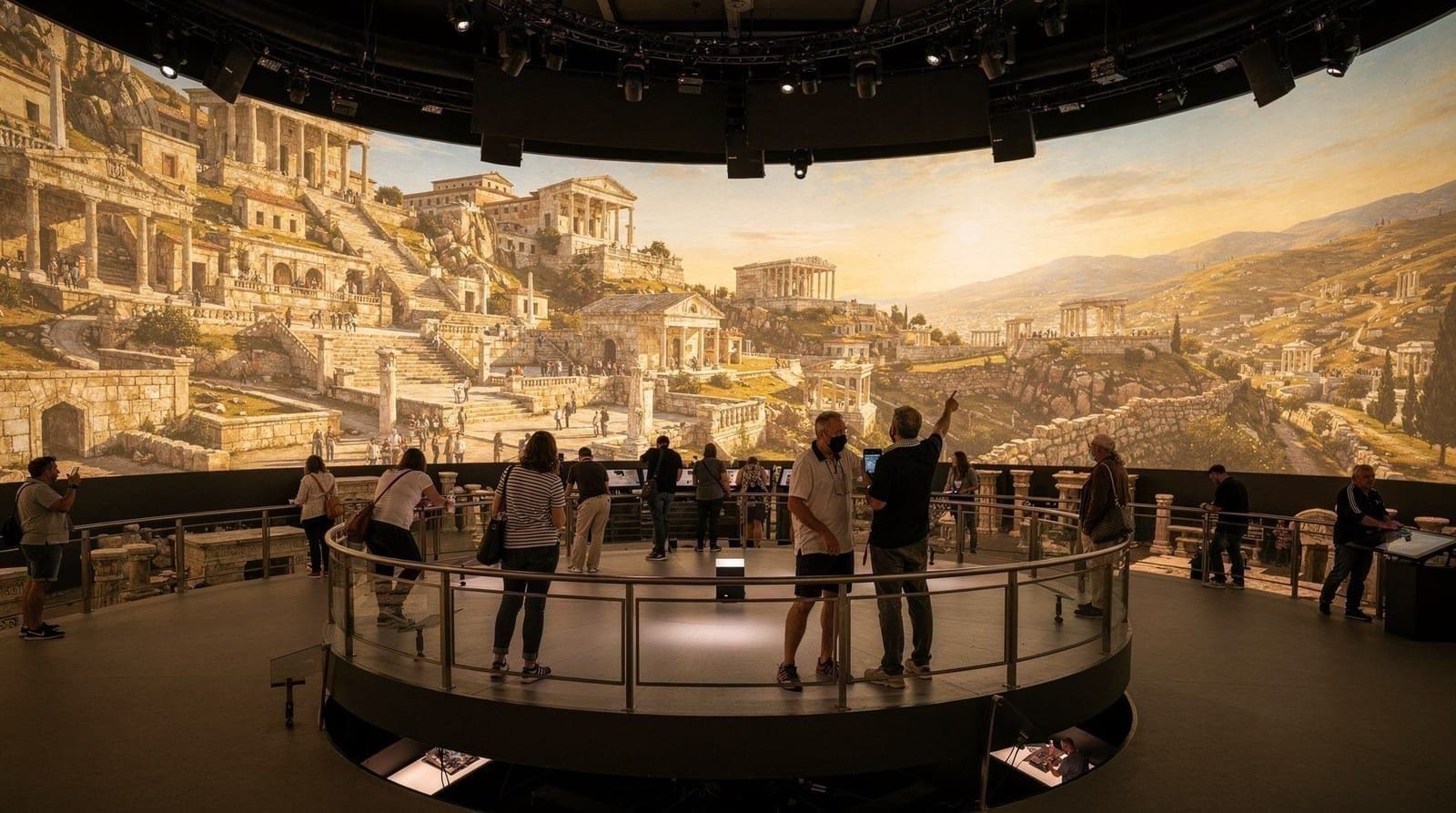
The Pergamon Panorama is a 360-degree monumental painting by German artist Yadegar Asisi. Asisi specialises in large-format panoramas — previous works have depicted ancient Rome, the Western Front, the Amazonian rainforest, and the Berlin Wall — and the Pergamon panorama is among his most accomplished.
The painting, housed in a cylindrical pavilion on Kupfergraben directly beside the main museum building, depicts the ancient city of Pergamon at the peak of its wealth and influence in the 2nd century CE. The scene shows the terraced hillside city from a position within the Sanctuary of Athena — below, the Altar of Zeus; above, the theatre cut into the cliff; in the streets, merchants, soldiers, priests, and ordinary residents going about their day. The atmospheric detail — the quality of light, the textures of stone and fabric, the spatial depth achieved within a flat surface — is genuinely impressive.
The panorama runs alongside a complementary exhibition of artefacts and contextual material that adds meaningful background to what you are seeing. Allow 45–60 minutes for the full experience.
What the Panorama is not: it is not a substitute for seeing the actual Pergamon Altar. The altar is a physical object of enormous scale and historical weight; no recreation reproduces that. Visitors who enter the Panorama expecting to see the original artefacts leave disappointed. Visitors who enter understanding what it is — an artistic interpretation, an atmospheric evocation of a vanished world — generally find it worth the time.
Tickets are €15 for adults and can be booked in advance, which is advisable in summer. For the full timeline of the closure and reopening plans, see the Pergamon Museum 2026 status guide.
Book tickets for the Pergamon Panorama Asisi in advance — the 360-degree monumental experience depicting ancient Pergamon at its 2nd-century CE peakThe four open Museum Island alternatives
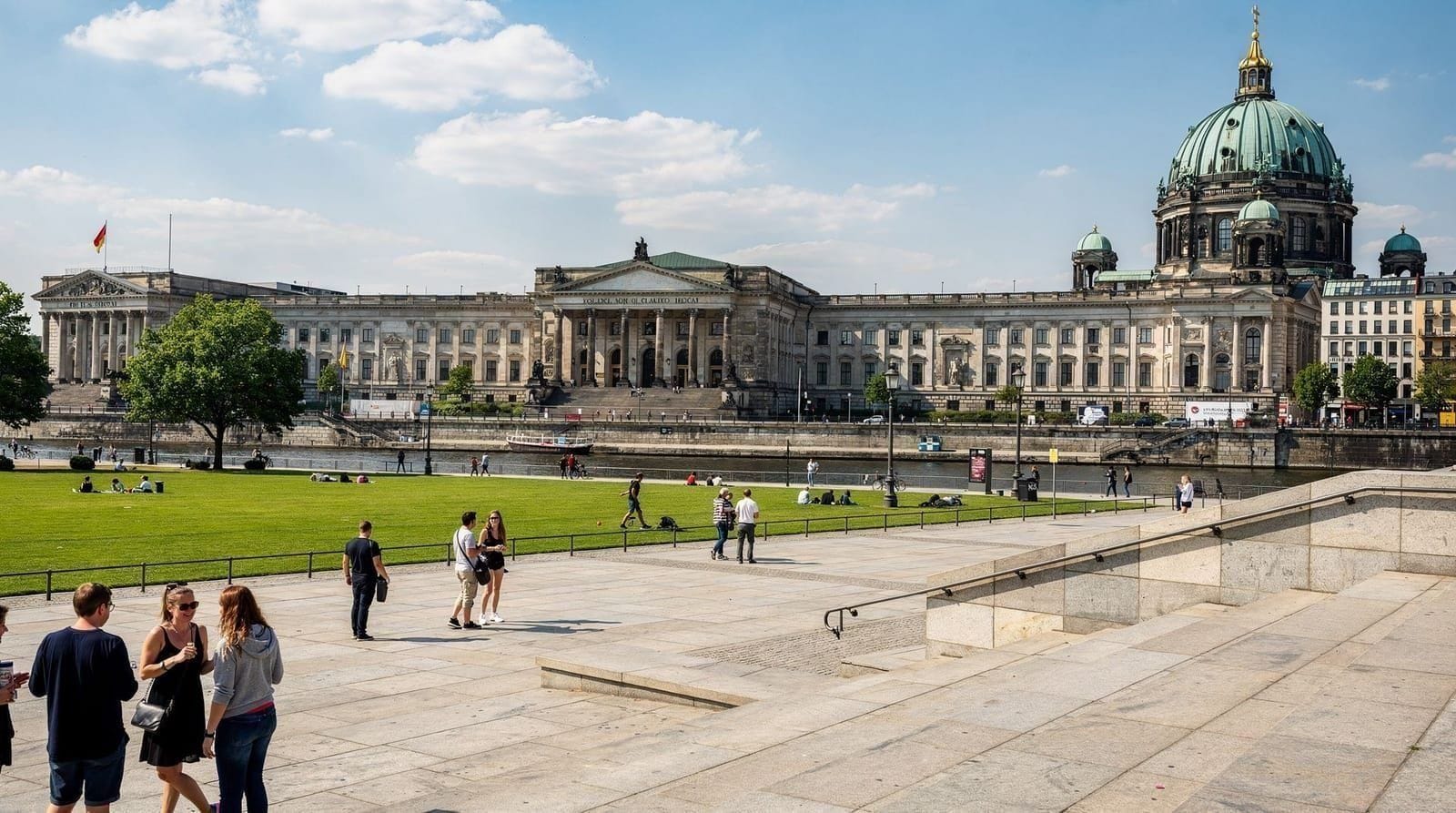
The good news about the Pergamonmuseum closure is that Museum Island is not the Pergamonmuseum. It is five institutions, four of which are fully open, and collectively they represent one of the finest concentrations of museum collections anywhere in Europe. Removing the Pergamonmuseum from the equation is significant — but what remains is still exceptional.
Neues Museum — Egyptian collection and the Nefertiti bust
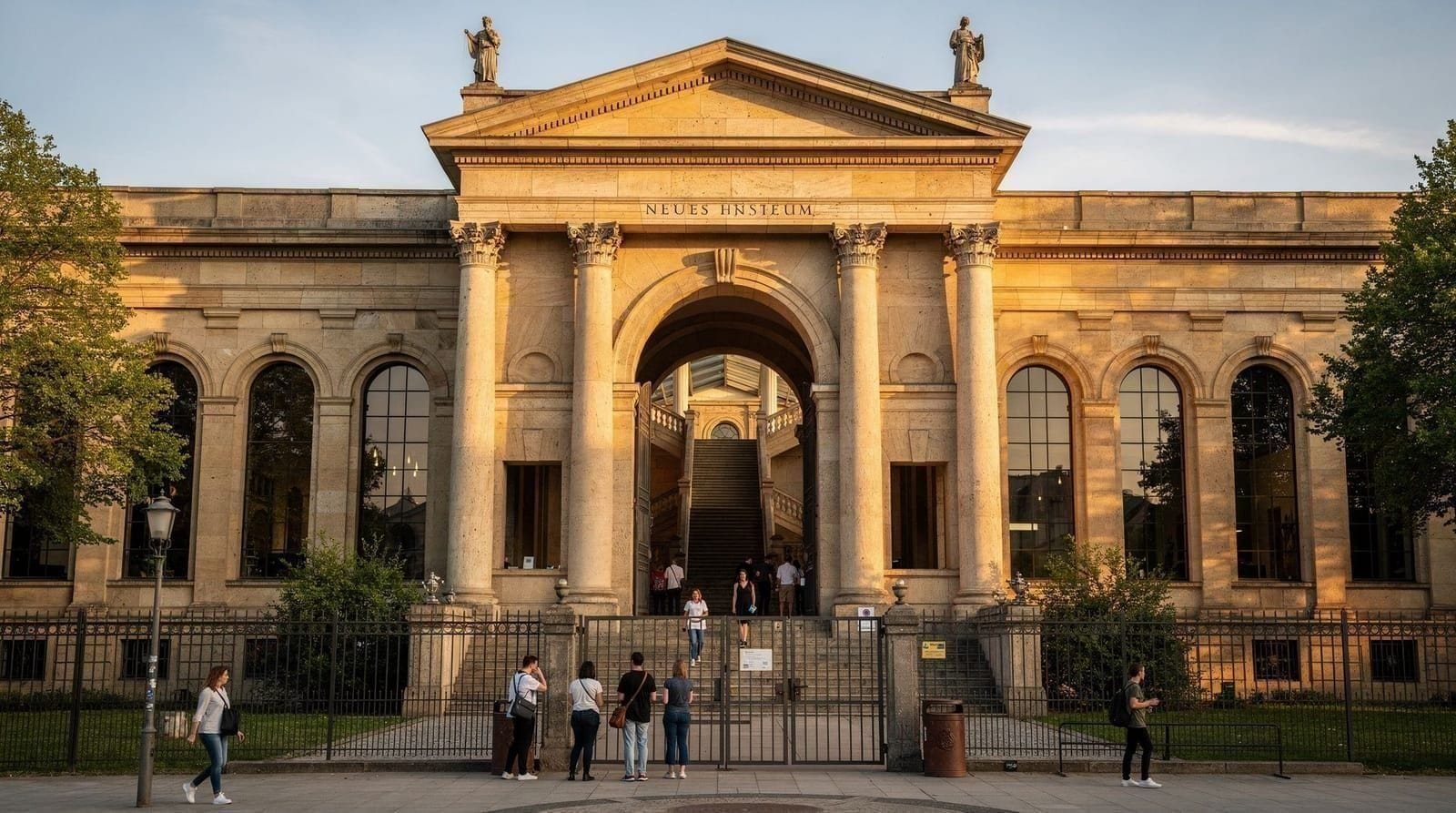
The Neues Museum is the strongest single alternative. The Egyptian collection is among the world’s largest and best-presented, but the visit is defined by one object: the Nefertiti bust, carved around 1345 BCE by the sculptor Thutmose and discovered in 1912 at Amarna. The bust — housed in a dedicated room in the museum’s north wing — is one of the most recognisable works of ancient art in the world, and one of the very few objects that merits the description genuinely extraordinary in person. The naturalism of the portrait, the preservation of the painted surface, the quiet authority of the face — photographs do not fully prepare you for the original.
Tickets are €14 for adults. The museum also holds the collection of prehistoric and early history (Trojan Gold, objects from the Schliemann excavations). Book in advance; the Neues Museum has the most consistent queues on Museum Island, particularly in summer. See the full Neues Museum and Nefertiti guide for ticketing detail and room-by-room highlights.
Altes Museum — Greek and Roman antiquities
The Altes Museum sits at the northern end of the Lustgarten, in a neoclassical building designed by Karl Friedrich Schinkel and completed in 1830. The ground floor holds the permanent antiquities collection: Greek ceramics, Roman portrait sculpture, Etruscan bronzes, ancient jewellery, and architectural elements spanning roughly 1,000 years of Mediterranean civilisation.
The collection covers some of the same historical territory as the Pergamonmuseum’s Ancient Near Eastern holdings, and while the focus is different — Greek and Roman rather than Mesopotamian — the quality of individual objects is very high. The Rotunda at the centre of the building, modelled on the Pantheon in Rome, is among the most impressive interior spaces on Museum Island.
Tickets are €10 for adults. Walk-up tickets are usually available on weekday mornings. See the Altes Museum guide for a fuller room-by-room walkthrough.
Bode-Museum — Byzantine art and medieval sculpture
The Bode-Museum occupies the northern tip of Museum Island — the narrow end of the island where the Spree and the Kupfergraben converge — and is consistently the least crowded institution on the island. This reflects a gap between its quality and its reputation rather than any deficiency in the collection.
The Byzantine collection is the finest north of Istanbul: icons, ivories, mosaics, goldsmithing, and liturgical objects spanning the 4th through 15th centuries. The medieval sculpture galleries — German, Flemish, and Italian wood and stone carving from the 12th through 16th centuries — are extraordinary and almost always quiet. The numismatics collection (coins and medals) is among the largest in the world and is displayed in intelligent thematic groupings.
If you visit one Museum Island institution that you would not have chosen otherwise, make it the Bode-Museum. Tickets are €10 for adults. The dedicated Bode-Museum guide has the full collection breakdown.
Alte Nationalgalerie — 19th-century European painting
The Alte Nationalgalerie is the museum furthest in character from the Pergamonmuseum — not ancient objects but 19th-century painting and sculpture. It is included here because it is excellent, it is part of the Museum Island day pass, and it is frequently underestimated by visitors focused on antiquities.
The collection’s two highlights are Caspar David Friedrich’s Monk by the Sea — an 1810 canvas that remains genuinely unsettling in person — and Adolph Menzel’s Iron Rolling Mill, a monumental 1875 painting of industrial Silesian steelworkers that was among the first European paintings to depict industrial labour without romanticising it. The ground-floor Neoclassical sculpture rooms, including Schadow’s double portrait of the Prussian princesses, are outstanding.
Tickets are €14 for adults. The Alte Nationalgalerie guide covers the full collection and highlights beyond these two headline works.
The Museum Island day pass covers all four open institutions for €22 per adult — significantly cheaper than paying separately. If you are planning to visit more than two museums, the day pass is the better option.
| Institution | Entry | Best for | Crowds |
|---|---|---|---|
| Neues Museum | €14 | Nefertiti, Egyptian collection | Highest — book ahead |
| Altes Museum | €10 | Greek and Roman antiquities | Moderate |
| Bode-Museum | €10 | Byzantine art, medieval sculpture | Lowest on the island |
| Alte Nationalgalerie | €14 | 19th-century painting | Moderate |
| Panorama Asisi | €15 (separate) | Immersive Pergamon reconstruction | Moderate, book ahead |
For orientation across all five buildings and how to sequence a visit, the Museum Island guide is the master reference this page complements.
Book a Museum Island multiple entry ticket — covers all four open institutions including Neues Museum, Altes Museum, Bode-Museum, and Alte NationalgalerieIf you would rather have a guide adapt the visit to what is open and provide context across the collections, a guided walking tour of Museum Island is practical for first-time visitors who want to cover the island efficiently without getting lost in the material.
Book a guided walking tour of Museum Island — covers the open institutions with specialist commentary, useful for getting orientation across five very different collectionsIf you specifically came for ancient Near Eastern history
The closure is hardest for visitors whose primary interest was Mesopotamian civilisation, Babylonian history, or the Persian and Assyrian collections housed in the Vorderasiatisches Museum (which is part of the Pergamonmuseum complex). That material is simply inaccessible in Berlin until 2027. There is no workaround.
If this was your main reason for visiting Berlin and you have flexibility in your travel plans, the most honest advice is to postpone the Museum Island portion and return after June 2027 — when at least partial reopening is expected.
For most visitors, though, postponing an entire Berlin trip over one closed collection is disproportionate. Weigh the Ancient Near Eastern material against everything else Museum Island still offers: the Nefertiti bust alone is arguably as significant an object as anything in the closed galleries, and the Bode-Museum’s Byzantine holdings occupy comparable historical territory — the late antique and early medieval Mediterranean world — from a different angle. A visitor who came specifically for Mesopotamian archaeology will feel the gap keenly; a visitor with broader interest in the ancient world will likely find the open institutions more than compensate.
If you are travelling to other European cities before or after Berlin, the following institutions have significant collections covering comparable historical periods. The British Museum in London holds major Assyrian material from Nineveh, including the famous lion hunt reliefs and the palace reliefs of Ashurnasirpal II. The Louvre in Paris has substantial Mesopotamian holdings including the Code of Hammurabi stele and material from Ur. The Metropolitan Museum of Art in New York, if your travels extend that far, has an exceptional ancient Near Eastern collection spanning 7,000 years.
If you are planning a trip to Greece and are drawn to the Pergamon name, it is worth knowing that the Pergamon Archaeological Museum in Athens and the Acropolis Museum cover Greek antiquities extensively — though they are separate institutions unrelated to the Berlin Pergamonmuseum and its specific Anatolian excavations.
Practical planning — visiting Museum Island without the Pergamon in 2026
Hours. All four open institutions are open Tuesday through Sunday, 10:00–18:00, with extended Thursday hours to 20:00. All are closed on Mondays. Arriving at 10:00 on a Tuesday or Wednesday morning gives the best chance of thin crowds.
Tickets. The Museum Island Tageskarte at €22 per adult (€12 concessions, under-18 free) covers all four open institutions on a single day. Individual tickets range from €10 (Altes Museum, Bode-Museum) to €14 (Neues Museum, Alte Nationalgalerie). If you are visiting two or more institutions, the day pass is better value. Buy in advance at smb.museum, particularly in summer months when the Neues Museum can have walk-up waiting times of 30–60 minutes.
Getting there. From central Berlin, the S-Bahn lines S3, S5, S7, and S9 stop at Hackescher Markt, from which Museum Island is a 8–10 minute walk across the Spree. The U5 line now stops at Museumsinsel directly. Bus lines 100 and 200 also serve the island area from Alexanderplatz and Unter den Linden. There is no practical car parking on or near the island; public transport is the correct approach.
How to sequence a visit. A realistic day on Museum Island covers two to three institutions comfortably. Attempting all four in a single day is possible but tiring. A practical split for two days would be Neues Museum plus Altes Museum on the first day (thematically linked ancient collections) and Bode-Museum plus Alte Nationalgalerie on the second. If you have only one day, prioritise the Neues Museum — the Nefertiti bust alone justifies the visit — followed by whichever of the remaining three most matches your interests.
The Panorama Asisi is worth slotting in as a distinct experience, separate from the Museum Island day. It is in a different building, requires a separate ticket, and takes 45–60 minutes. Booking in advance avoids queues in peak season.
The Pergamonmuseum closure is genuinely unfortunate. The Pergamon Altar and Ishtar Gate are irreplaceable. But Museum Island without them is still one of Europe’s outstanding museum districts, and a well-planned visit in 2026 will not feel like settling for second best.
Frequently asked questions about Pergamon Museum Berlin 2026
Is the Pergamon Museum open in Berlin in 2026?
No. The main building of the Pergamonmuseum has been closed since 2023 and will not reopen until June 4, 2027 at the earliest. The Pergamon Panorama Asisi — a separate building on Kupfergraben — is open, but it does not contain the original artifacts. The other four Museum Island museums (Neues Museum, Altes Museum, Bode-Museum, Alte Nationalgalerie) are fully open.When will the Pergamonmuseum reopen?
The scheduled partial reopening is June 4, 2027. A full reopening of all galleries, including the reconstructed Pergamon Altar hall, is projected for 2027–2028. These dates are subject to change; the renovation has been running since 2013 in phases, with the main building sealed entirely from 2023. Always verify at smb.museum before planning a trip around the reopening.What is the Pergamon Panorama Asisi and is it worth visiting?
The Panorama Asisi is a 360-degree monumental painting by artist Yadegar Asisi housed in a cylindrical pavilion on Kupfergraben, directly beside the main Pergamonmuseum building. It depicts the ancient city of Pergamon at the height of its 2nd-century CE prosperity — streets, temples, figures, and atmosphere reconstructed in extraordinary detail. It costs €15 for adults and is open daily. It is a genuinely impressive artistic experience and worth 45–60 minutes, but it is not a substitute for seeing the original Pergamon Altar or Ishtar Gate.Does the Museum Island pass cover the Panorama Asisi?
No. The Museum Island Tageskarte (€22 for adults) covers the Neues Museum, Altes Museum, Bode-Museum, Alte Nationalgalerie, and the Pergamonmuseum's permanent collection — but the main Pergamonmuseum building is closed. The Panorama Asisi is operated separately and costs €15 on top of any Museum Island pass. You need to buy a separate ticket for it.Can I still see the Ishtar Gate in Berlin?
No, not until 2027 at the earliest. The Ishtar Gate and the Processional Way — the reconstruction of the ceremonial entry to ancient Babylon, dating to around 575 BCE — are inside the main Pergamonmuseum building, which is fully closed. The reconstruction will remain inaccessible until the renovation is complete.What should I visit instead of the Pergamon Museum?
Museum Island has four other excellent institutions all fully open. The Neues Museum houses the Nefertiti bust and Egyptian collection. The Altes Museum covers Greek and Roman antiquities. The Bode-Museum holds the finest Byzantine collection north of Istanbul. The Alte Nationalgalerie features 19th-century European painting including Caspar David Friedrich. A Museum Island day pass covers all four for €22.Are there "Pergamon Museum" tickets being sold online that are legitimate?
Some are and some are not — but the distinction matters. Tickets sold as "Pergamon Museum" on platforms like GetYourGuide may refer to the Panorama Asisi (legitimate, but separate from the main collection) or to general Museum Island passes (legitimate, but the main Pergamonmuseum building is closed). There are no legitimate tickets for sale that grant access to the Pergamon Altar or Ishtar Gate in 2026 because those rooms do not exist in accessible form. Read the description of any ticket carefully before purchasing.Is it worth visiting Museum Island if the Pergamonmuseum is closed?
Yes, strongly. The Nefertiti bust at the Neues Museum is one of the most extraordinary objects in any museum in the world. The Altes Museum's Greek and Roman antiquities collection is exceptional. The Bode-Museum is consistently underrated and almost never crowded. Even without the Pergamonmuseum, a full day on Museum Island is among the best cultural experiences Berlin offers.Which single Museum Island institution should I prioritise if the Pergamonmuseum is closed?
The Neues Museum, for the Nefertiti bust and the Egyptian collection — it is the closest thing Museum Island has to a must-see replacement for the Pergamon Altar's drawing power. If you have already seen it on a previous trip, the Bode-Museum is the best under-the-radar choice, offering the finest Byzantine collection north of Istanbul with almost none of the crowds.
Top experiences
Bookable activities with verified prices and instant confirmation on GetYourGuide.