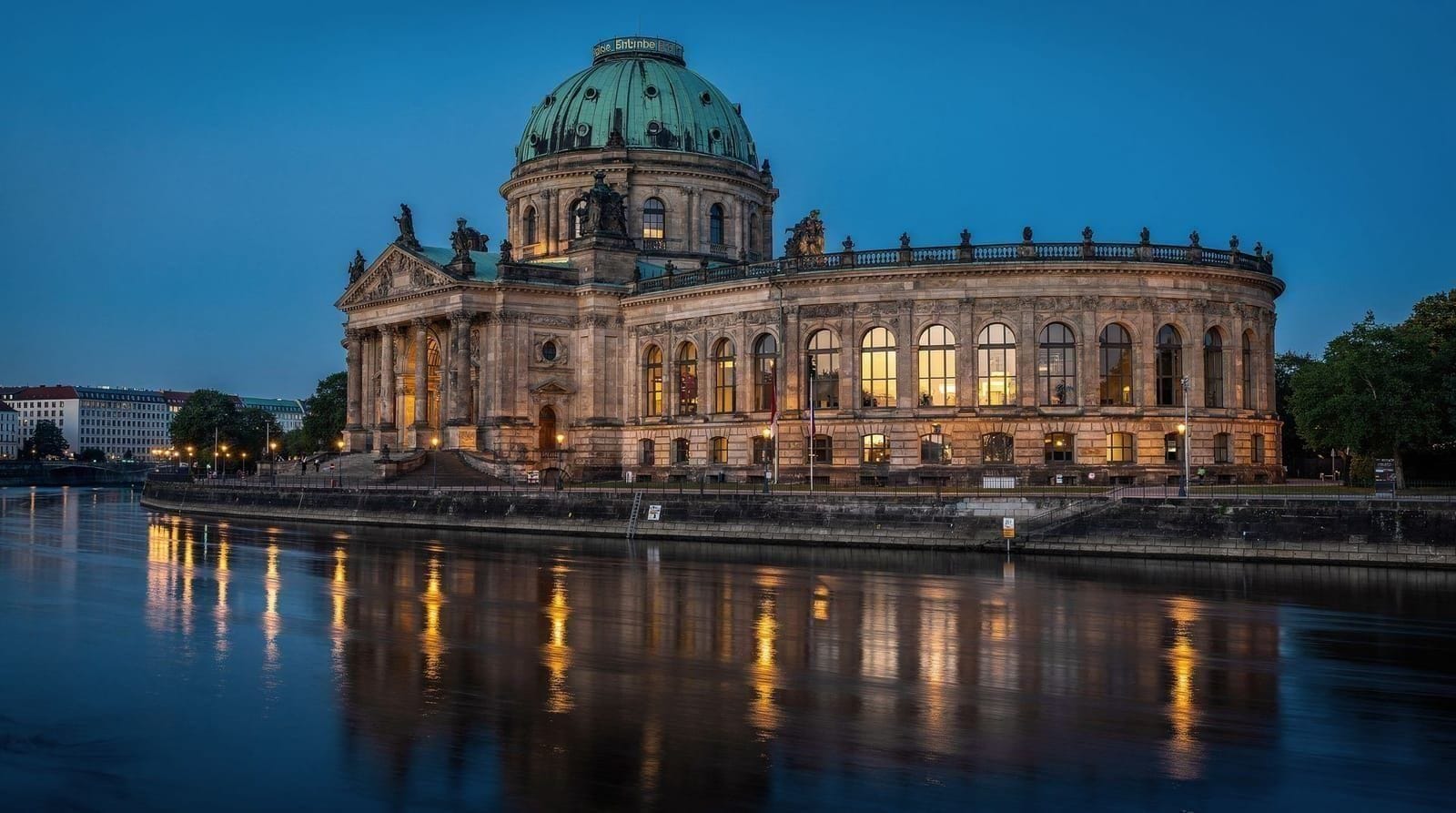
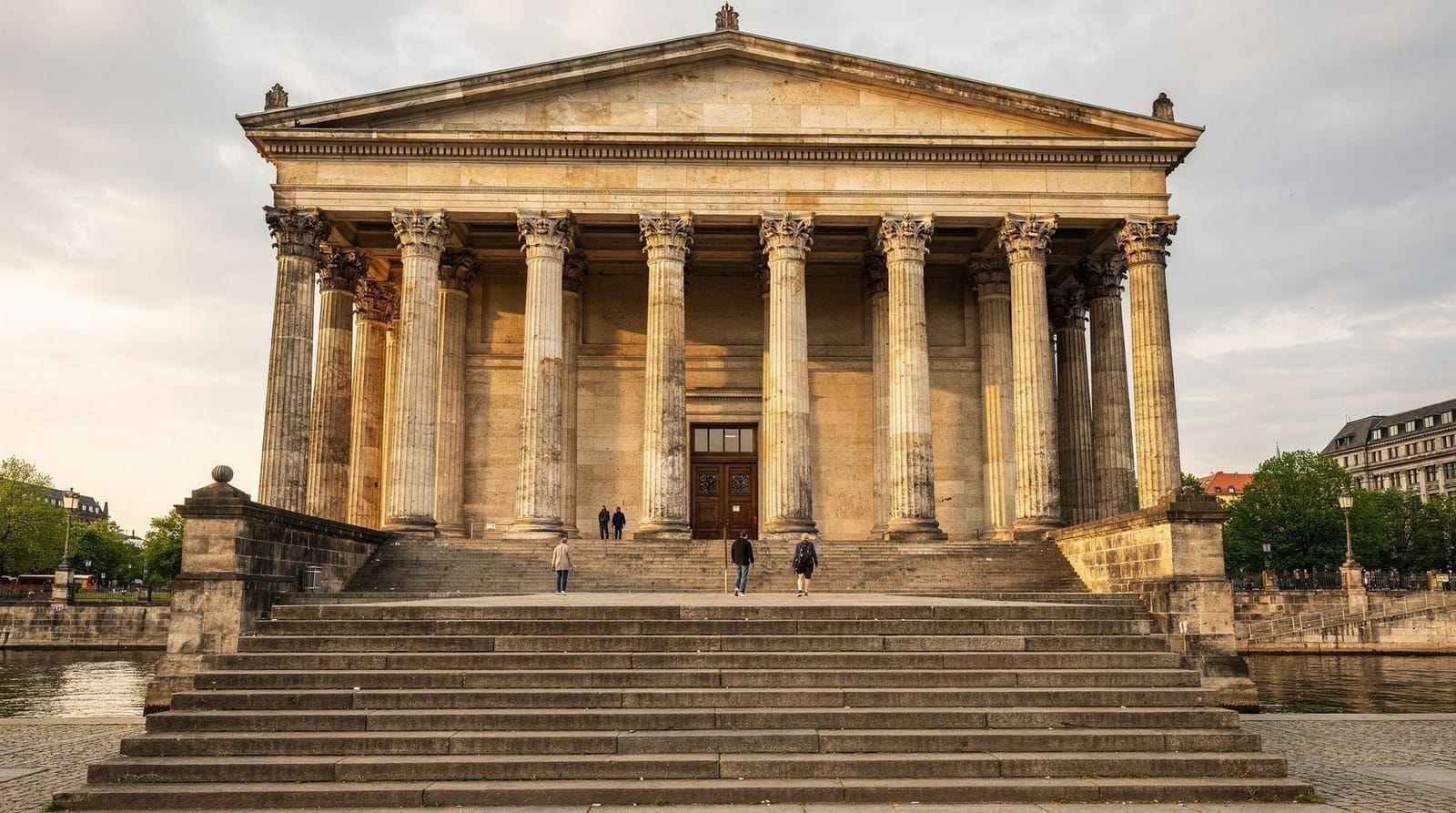
Pergamonmuseum Das Panorama Berlin — Yadegar Asisi's ancient city exhibition
Berlin: "Pergamonmuseum. The Panorama" Exhibition Tickets
What is the Pergamon Panorama in Berlin?
The Pergamon Panorama Asisi is a monumental 360-degree cyclorama by artist Yadegar Asisi depicting the ancient city of Pergamon as it appeared around 129 CE. It occupies a purpose-built cylindrical pavilion at Kupfergraben 2 on Museum Island. It is open during the main Pergamonmuseum building closure and requires a separate ticket (€15 adults) not covered by the Museum Island day pass.
Quick answer: The Pergamon Panorama Asisi is a 360-degree immersive panorama of ancient Pergamon in a purpose-built pavilion at Kupfergraben 2. It is open during the main museum closure. Separate ticket €15 (not covered by Museum Island day pass). Allow 45–75 minutes.
| Where | Kupfergraben 2, opposite the main Pergamonmuseum entrance |
| Cost | around €15 adults, around €10 concessions, free under 14 |
| Time needed | 45–75 minutes |
| Getting there | U5 Museumsinsel, or S-Bahn Hackescher Markt (8 min walk) |
| Best time | weekday mornings or Thursday evenings for fewer crowds |
What the Panorama is and why it exists
The Pergamonmuseum. Das Panorama opened in 2023 in a purpose-built cylindrical pavilion on Kupfergraben, the canal separating Museum Island from the eastern Mitte waterfront. It was created as a substantial partial substitute for visitors who arrive during the main Pergamonmuseum building’s renovation closure, which runs until June 4, 2027.
The pavilion houses two things: a monumental immersive panorama of the ancient city of Pergamon, and a documentary exhibition on the history of the Pergamon excavations and the collections now housed in the closed building.
It is a genuine exhibition rather than a stop-gap — the panorama itself took years to produce and the accompanying scholarly material is thorough. But visitors should be clear about what it is not: it does not provide access to the Pergamon Altar, the Ishtar Gate, the Market Gate of Miletus, or any of the original objects in the main building’s collection.
The panorama: what you see and how it works
The central experience is a cyclorama approximately 30 metres high and 102 metres in circumference — one of the largest panorama paintings of the modern era. Visitors view it from a raised circular platform at the centre of the cylindrical pavilion, with the panorama filling 360 degrees of the surrounding wall.
What it depicts: The ancient city of Pergamon at approximately 129 CE, during a visit by the Roman Emperor Hadrian. Pergamon was at this point one of the most important cities in the eastern Roman Empire — a former capital of the Attalid dynasty, home to one of the ancient world’s greatest libraries, and the site of the famous altar that later gave the Berlin museum its name.
Asisi’s panorama shows:
- The Acropolis of Pergamon with the famous altar to Zeus in its original position — an unenclosed rectangular structure on a raised terrace overlooking the city, with the frieze of the Gigantomachy (battle of gods and giants) visible on its base
- The theatre, carved into the steep hill below the Acropolis — one of the steepest in the ancient world, with near-vertical seating tiers
- The gymnasium complex with its three superimposed terraces
- The agora (marketplace) with colonnaded porticoes
- Residential streets, temples to various deities, workshops, and the city’s road network
- The landscape of the Caicus river valley below the city, with agricultural settlements extending toward the coast
The figure groups spread across the panorama show traders, priests, soldiers, domestic workers, aristocrats, and children going about their daily activities. Asisi’s research team worked with archaeologists and historians to ensure the architectural reconstruction is consistent with current scholarly understanding.
The lighting in the panorama changes during the viewing period — from morning light to midday heat to late afternoon. The shift takes approximately 20 minutes for a full cycle. Sitting on the central platform benches and watching the light change is part of the intended experience.
Yadegar Asisi: the artist behind the panorama
Asisi was born in Vienna in 1955 to an Iranian father and Austrian mother, studied architecture in Dresden and Berlin, and worked as an architect before developing his panorama format. His first major cyclorama opened in Leipzig in 2003, depicting the ancient Roman city of Pompeii.
His Pergamon panorama was originally created for an exhibition in 2011 and has been substantially updated and reinstalled for the 2023 pavilion. It represents the most technically ambitious and architecturally detailed of his historical subjects — Pergamon’s Acropolis topography and the precision required to reconstruct the Altar in context made it a more complex subject than his previous cityscapes.
Asisi has also produced panoramas of the Berlin Wall (displayed in the Asisi Panometer in the former Gasometer at Yadegar Asisi Panorama / Berlin), the Amazon rainforest, and the Great Barrier Reef.
His panorama technique combines large-format photography of hand-built models and real landscapes with digital compositing, printed onto a seamless fabric that wraps the full 360 degrees of the cylindrical wall. The Pergamon version required close collaboration with the German Archaeological Institute to keep the architectural reconstruction defensible rather than purely imaginative — a distinction Asisi is known for insisting on across his body of work.
The accompanying exhibition
The floor below the panorama viewing platform and the entrance level hold a documentary exhibition structured around three themes:
The excavations: The story of Carl Humann’s discovery of the Pergamon Altar fragments in the 1870s, the political negotiations with the Ottoman Empire that permitted export of the finds, and the subsequent decades of German archaeological work at the site. Original photographs, excavation documents, and cartographic material.
The collections: What is in the main building that is currently inaccessible — the Pergamon Altar, the Ishtar Gate, the Market Gate of Miletus — with explanatory models, object photographs, and scholarly commentary on their significance. This section functions as a surrogate display for the closed collections.
The building and its renovation: Technical information about the Pergamonmuseum’s structural problems and the current renovation project, including projected timeline for reopening.
The exhibition is primarily in German with English translations. Audio guide or audio tour handsets are available in multiple languages.
Where the Panorama fits with the rest of Museum Island
Museum Island holds five museums in total, four of which stay open during the Pergamonmuseum’s closure: the Neues Museum, the Altes Museum, the Bode-Museum, and the Alte Nationalgalerie. The Panorama Asisi is not a substitute for any of them individually, but it is the closest thing on the island to experiencing the Pergamon Altar’s original context while the building that houses it is closed. For a full overview of ticketing options across the island, including the day pass that does not cover the Panorama, see the Museum Island day pass guide.
Practical information
Address: Kupfergraben 2, 10117 Berlin. The pavilion is on the waterfront directly opposite the main Pergamonmuseum entrance.
Opening hours: Tuesday–Sunday 10:00–18:00; Thursdays 10:00–20:00. Closed Mondays.
Tickets: €15 adults; concessions approximately €10; children under 14 free. NOT covered by the Museum Island Tageskarte or Berlin Museum Pass. Book online or purchase at the entrance.
Getting there: U5 Museumsinsel, or S-Bahn Hackescher Markt (8 minutes on foot). The pavilion is visible from the Bodestrasse bridge.
Duration: 45–75 minutes for most visitors. The panorama platform is open continuously.
Photography: Permitted in the panorama hall and exhibition.
Accessibility: Fully accessible entrance and lift to the panorama viewing platform.
Book Pergamonmuseum Das Panorama tickets — skip the queue at the pavilion entranceHonest assessment: is it worth €15?
The Panorama Asisi is a genuinely impressive technical and artistic achievement. The scale is disorienting in a productive way — the standard museum experience of viewing objects through glass cases behind velvet ropes is replaced by something closer to physical immersion in a reconstructed environment.
For visitors who specifically came to Berlin to see the Pergamon Altar and found the main museum closed: the Panorama provides real context and the experience of seeing the Altar in its original architectural setting (as reconstructed by scholarship) is arguably more informative than the decontextualised museum version. It does not replace the loss of access to the original object.
For visitors without a pre-existing interest in ancient Near Eastern art: the Panorama is a striking experience, but the €15 admission buys you a shorter visit than any of the four open Museum Island museums at comparable prices. If you are choosing between the Panorama and adding an extra hour at the Neues Museum, the Neues Museum is almost certainly the better use of your time and money.
For visitors with children 8 and older: the Panorama tends to hold children’s attention better than sculpture-heavy museum galleries. The scale is immediately impressive and the “find the people” aspect of examining the figures across the panorama works as an interactive experience.
Combining the Panorama with other Museum Island visits
The Panorama Asisi is 5 minutes on foot from the Neues Museum entrance, making it a natural addition to a Museum Island day. Suggested combinations:
Morning: Neues Museum timed-entry slot (10:00–13:00) Afternoon: Pergamon Panorama Asisi (14:00–15:30), then Bode-Museum (15:30–17:30)
Or:
Morning: Altes Museum (10:00–12:00) Early afternoon: Pergamon Panorama Asisi (12:30–14:00) Afternoon: Alte Nationalgalerie (14:30–17:00)
For a comprehensive Museum Island plan covering all open institutions, see the Museum Island visitor guide.
For background on the main museum’s closure timeline and what it involves, see the Pergamonmuseum 2026 status guide.
Book Museum Island combined entry for the four open buildingsFrequently asked questions about Pergamonmuseum Das Panorama Berlin
Is the Pergamon Panorama the same as the Pergamonmuseum?
No. They are separate facilities sharing a location on Museum Island. The main Pergamonmuseum building — which holds the Pergamon Altar, Ishtar Gate, and ancient Near Eastern collections — is closed until June 4, 2027. The Panorama Asisi is a standalone pavilion with a separate entrance and separate ticket, designed as a partial substitute during the closure.How much do tickets cost for the Pergamon Panorama?
Adult tickets cost €15. Concession rates (students, seniors) are typically €10. Children under 14 are free. The Panorama is NOT covered by the Museum Island Tageskarte or the Berlin Museum Pass — it is a separate commercial exhibition. Purchase tickets at the pavilion entrance or online.How long does the Pergamon Panorama take?
Most visitors spend 45–75 minutes. The panorama itself rewards 20–30 minutes of slow circumnavigation. The accompanying exhibition on the Pergamon excavations takes another 20–30 minutes for visitors who want to understand the historical context of what the panorama depicts.Who is Yadegar Asisi?
Yadegar Asisi (born 1955) is a German-Austrian architect and artist known for creating large-scale immersive panoramas on historical subjects. His previous panoramas include depictions of the Amazon rainforest, ancient Rome, and the Great Wall of China. The Pergamon panorama (originally created 2011, updated version installed 2023) is one of his most technically ambitious works.What does the Pergamon Panorama show?
The panorama depicts the ancient city of Pergamon — modern Bergama in western Turkey — at the height of its prosperity around 129 CE, during a visit by Emperor Hadrian. It shows the city's Acropolis with the Pergamon Altar in its original position, the theatre, gymnasium, agora, temples, and residential streets below. Figures go about daily life across the panorama's full 360 degrees.Is the Pergamon Panorama worth €15?
For visitors who specifically wanted to see the main Pergamonmuseum and found it closed, the Panorama provides meaningful context and partial compensation — understanding what the ancient city looked like before examining the architectural fragments in the main museum (when it reopens). As a standalone experience, it is comparable in price and format to similar panorama installations in other cities and is well-reviewed. Budget-conscious visitors may prefer to allocate the €15 toward one of the four open Museum Island museums.Can I visit the Pergamon Panorama and other Museum Island museums on the same day?
Yes — the Panorama Asisi pavilion is at Kupfergraben 2, a 2-minute walk from the main Pergamonmuseum entrance and about 5 minutes from the Neues Museum. A visit to the Panorama pairs well with an afternoon visit to the Bode-Museum (10 minutes on foot) or the Neues Museum (if you have a morning slot booked).Is the Pergamon Panorama suitable for a quick visit between other Museum Island stops?
Yes, though 45 minutes is a realistic minimum to see the panorama properly rather than rush it. Because it sits directly opposite the main Pergamonmuseum entrance, it slots naturally into a gap between timed-entry slots at the Neues Museum or Altes Museum — treat it as a standalone stop rather than a five-minute add-on.Does the Pergamon Panorama get busy?
It is generally less crowded than the Neues Museum's Nefertiti bust room, since many visitors still do not realise it exists as a separate ticketed exhibition. Thursday evenings (open until 20:00) tend to be the quietest slot, while weekend early afternoons draw the most visitors combining it with other Museum Island stops.
Top experiences
Bookable activities with verified prices and instant confirmation on GetYourGuide.