Alte Nationalgalerie Berlin — 19th-century art, Caspar David Friedrich, and Menzel
Berlin: Museum Island Multiple Museum Entry Ticket
What is in the Alte Nationalgalerie in Berlin?
The Alte Nationalgalerie holds a major collection of 19th-century German and European painting and sculpture, with particular strength in German Romanticism (Caspar David Friedrich), Berlin Realism (Adolph Menzel), French Impressionism, and Neoclassical sculpture. It is housed in a neoclassical temple building on Museum Island and is consistently the least crowded of the three most-visited Museum Island institutions.
Quick answer: The Alte Nationalgalerie holds Germany’s finest 19th-century painting collection, including key works by Caspar David Friedrich and Adolph Menzel. Adult entry €14. Walk-up tickets usually available. Allow 1.5–2.5 hours.
| Where | Bodestrasse 1–3, Museum Island |
| Cost | around €14 adults, under-18s free; Museum Island day pass around €29 |
| Time needed | 1.5–2.5 hours (45–60 min for a focused highlights route) |
| Getting there | U5 Museumsinsel or Hackescher Markt S-Bahn |
| Best time | Weekday mornings, or Thursday evenings when open until 20:00 |
The National Gallery of the nineteenth century
The Alte Nationalgalerie — the Old National Gallery — was the first public museum in Germany dedicated specifically to contemporary and recent art. When it opened in 1876, the works inside were not historical relics but live acquisitions from artists whose careers were still ongoing. Today, the collection captures a specific period — the late 18th through early 20th centuries — with an unusual coherence that purpose-built modern art museums rarely achieve.
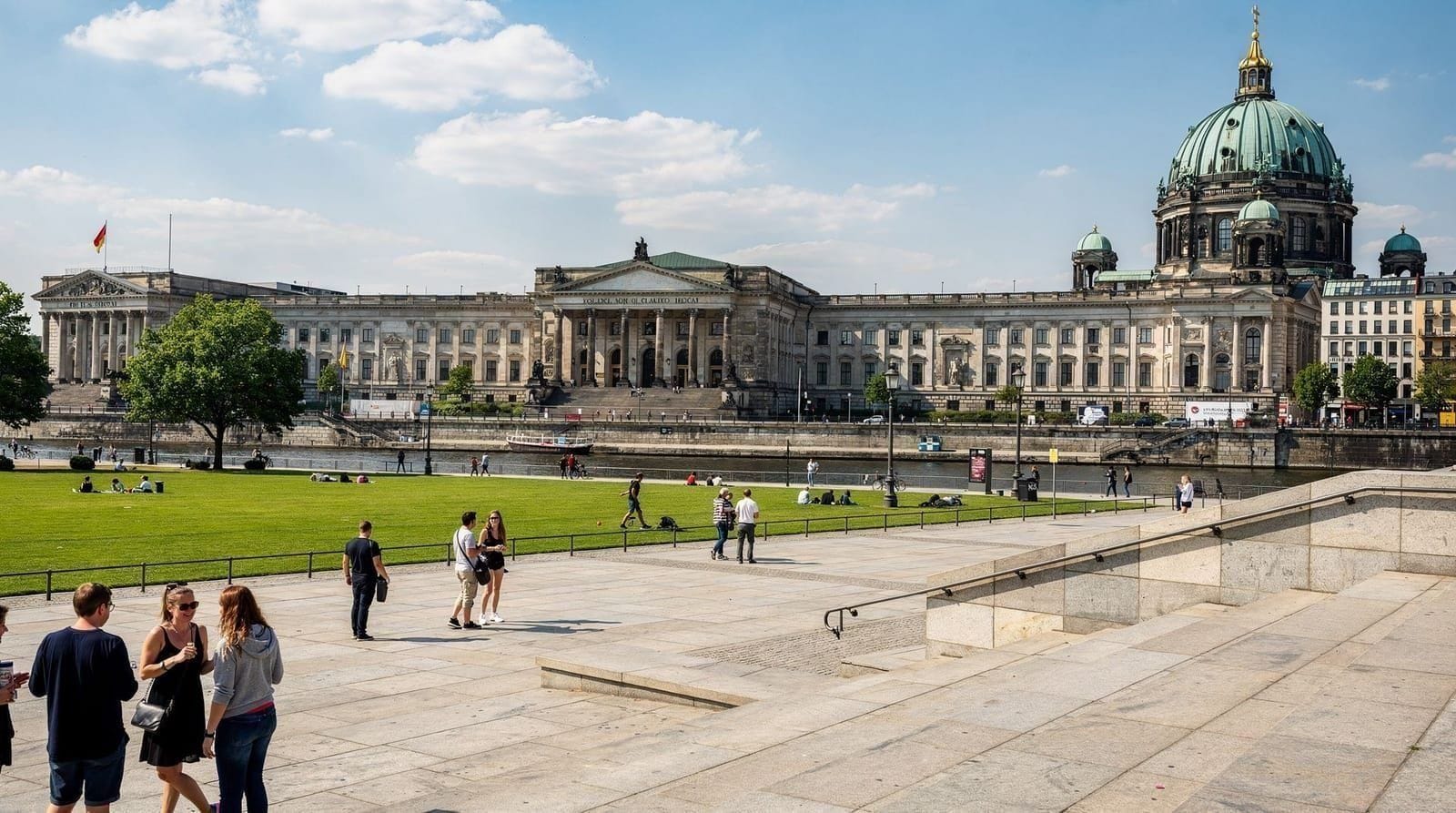
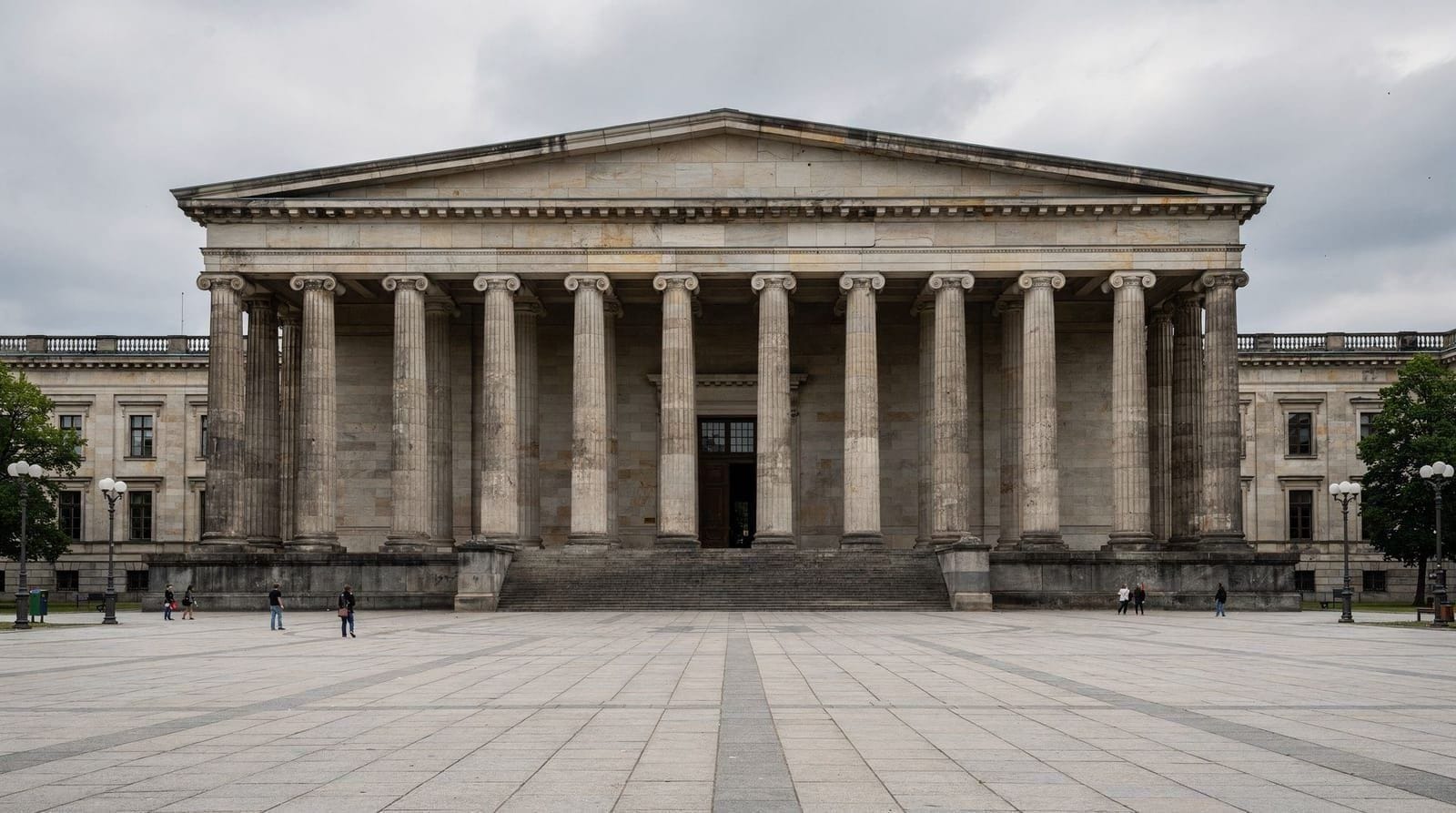
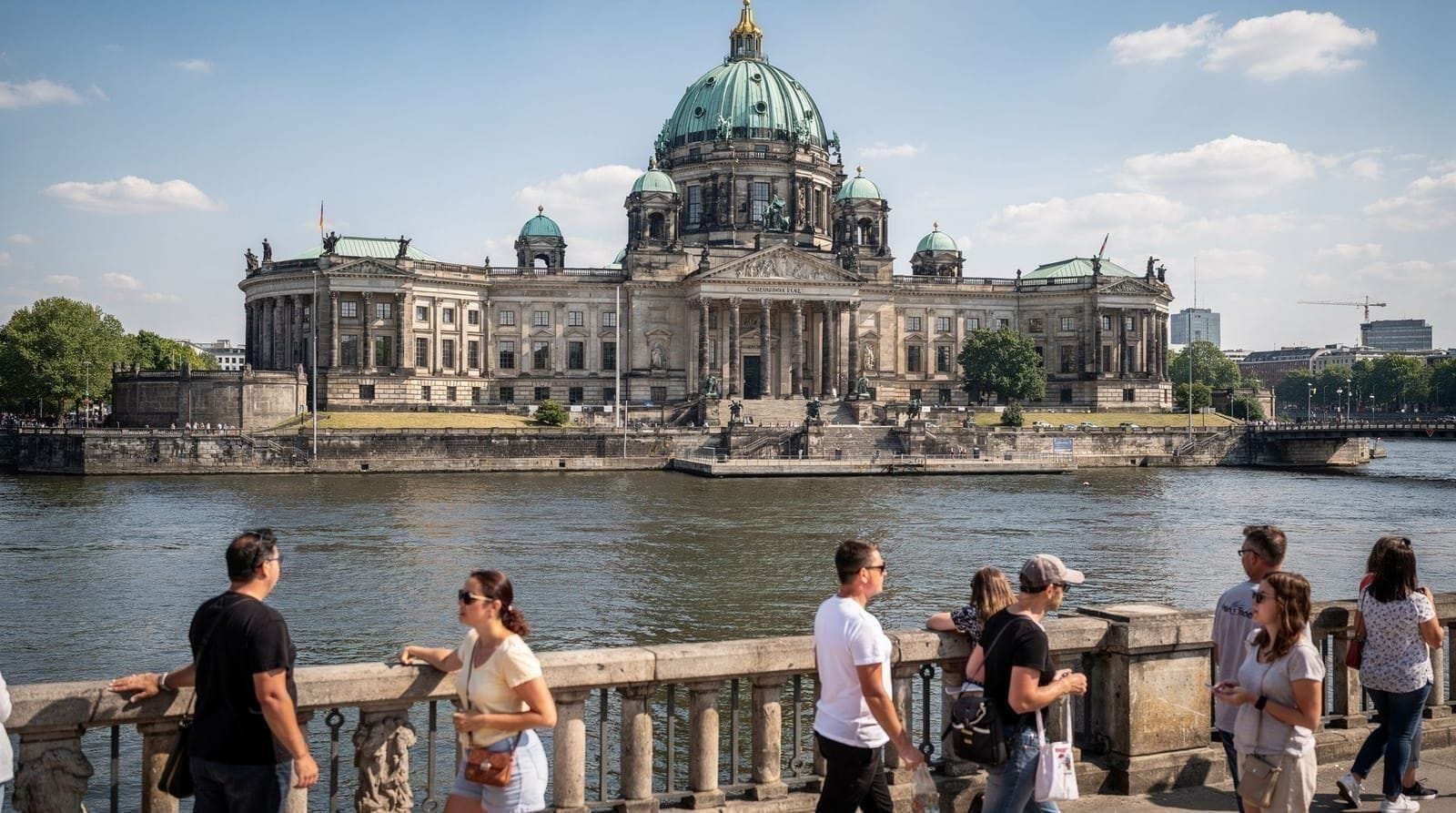
The building enhances this. The raised neoclassical temple on its high podium, approached by a wide staircase flanked by the equestrian statue of Friedrich Wilhelm IV, was designed by Friedrich August Stüler and completed four years after his death. The front colonnade and pediment declare their aspirations to the tradition of Athens and Rome while housing work that was, in 1876, strikingly modern.
Inside, the original 19th-century arrangement — paintings hung in tiers, heavy gilded frames, classification by national school and period — was partially restored during post-reunification renovations. The aesthetic is emphatically Victorian in sensibility, which suits the material well.
Caspar David Friedrich — the centrepiece of German Romanticism
The Alte Nationalgalerie holds more major works by Caspar David Friedrich than any other museum in Berlin, and they are the strongest reason to visit for visitors interested in the history of European painting.
Monk by the Sea (Mönch am Meer, 1809–10). The most important painting in the collection and arguably the most significant German Romantic canvas. A single dark-robed figure stands at the edge of a grey beach beneath an immense, turbulent sky that fills roughly three-quarters of the canvas. There is no horizon in the conventional sense — sea, sky, and the figure’s loneliness merge. When it was exhibited in 1810, it generated immediate debate: the art critic Heinrich von Kleist wrote that viewing it felt like having one’s eyelids cut away. Nothing in the conventional tourist experience of Berlin quite prepares visitors for how unsettling the painting is in person.
Abbey in the Oak Forest (Abtei im Eichwald, 1809–10). Exhibited alongside Monk by the Sea, this companion piece shows a ruined Gothic church in a winter forest at dusk, a funeral procession moving between dead trees. The two paintings were sold to the Prussian Crown Prince together and entered the state collection as a pair.
Other Friedrich works. The collection includes several smaller-scale works — moonlit seascapes, mountain landscapes, figures at windows — that reinforce Friedrich’s central themes: solitude, mortality, the sublime scale of nature against the smallness of human presence.
Adolph Menzel — industrial-age Berlin Realism
Adolph Menzel (1815–1905) was Friedrich’s great German counterpart in terms of historical importance and his polar opposite in temperament. Where Friedrich sought transcendence through landscape, Menzel observed the specific and ordinary with exhaustive precision.
The Iron Rolling Mill (Eisenwalzwerk, 1875). A monumental canvas showing the interior of a Silesian steel works — workers blackened by grime, machinery looming, molten iron casting orange light through industrial haze. It is one of the first major European paintings to represent industrial labour without idealising it. The scale (158 x 254 cm) and the extraordinary density of observation in every corner of the canvas make it the museum’s second outstanding work after Friedrich’s Monk by the Sea.
The Flute Concert of Frederick the Great at Sanssouci (1852). A dramatically different Menzel — the same capacity for precise observation applied to the candlelit interior of a royal music performance. Frederick the Great plays the flute while his court and sister listen. The painting was so popular in the 19th century that reproduction prints hung in middle-class German homes across the country for decades.
Berlin street scenes and working studies. Menzel produced an extraordinary body of small-scale studies of Berlin urban life — building sites, market scenes, soldiers marching, crowds watching ceremonies. Several are in the collection and repay close attention; his draftsmanship is remarkable.
The Neoclassical and Romantic sculpture
The ground floor is given almost entirely to sculpture from the late 18th and early 19th centuries, with a particular focus on the work of Johann Gottfried Schadow and Christian Daniel Rauch — the two most significant German sculptors of the Neoclassical period.
Schadow’s Princesses (Die Prinzessinnen, 1795–97). A double portrait in marble of the Prussian Crown Princess Luise and her sister Friederike, carved when both were teenagers. It is the museum’s most celebrated sculptural work — the two figures shown in natural, informal proximity rather than the stiff ceremonial pose of earlier royal portraiture. The intimacy and psychological warmth of the carving is immediately striking.
Christian Daniel Rauch. The ground floor holds a substantial group of Rauch’s work, including portrait busts of Prussian military and intellectual figures and monumental allegorical works.
The Neoclassical sculpture galleries are often the emptiest rooms in the museum on any given day. This makes them a good choice for the first 30 minutes of your visit — familiarising yourself with the building and the period before the painting galleries begin.
Best time to visit and avoiding crowds
The Alte Nationalgalerie is consistently the quietest of the three most-visited Museum Island institutions, but timing still matters. The first hour after the 10:00 opening is the calmest window, especially on weekdays outside school-holiday periods; tour groups tend to arrive around midday and cluster on the Friedrich and Menzel floors. Thursday evenings, when the museum stays open until 20:00, are usually near-empty after 17:00 and make a good option if your mornings are booked for the Pergamonmuseum status or Neues Museum instead. Sundays draw local visitors and are the busiest single day. If you are combining several sites, checking the Museum Island day pass guide before you arrive can save queueing at each individual ticket desk.
Who should prioritise this museum
Visitors with a specific interest in German art history, or anyone who has already spent a morning with the ancient world at the Altes Museum or the Neues Museum and wants a change of register, get the most out of the Alte Nationalgalerie. It rewards people who like to slow down in front of a handful of major paintings rather than cover ground quickly. If your priority is instead breadth — seeing as much of Museum Island as possible in a short trip — the museum-lovers itinerary sequences all five buildings efficiently and places this one at a sensible point in the day rather than first or last, when energy for close looking is lowest.
The French Impressionist and European works
Upper floors include a selection of French Impressionist paintings — Monet, Renoir, Cézanne, Degas, Sisley — acquired by the National Gallery in the late 19th and early 20th centuries during a period of active European collecting. The French holdings are not the museum’s primary strength but they are of genuine quality and provide useful comparative context alongside the German Realist rooms nearby.
The museum also holds significant works from the Danish Golden Age (C.W. Eckersberg, Christen Kobke), which connects to the broader Northern European Romantic tradition represented by Friedrich.
Practical information
Address: Bodestrasse 1–3, 10178 Berlin (Museum Island). Enter from the island courtyard.
Opening hours: Tuesday–Sunday 10:00–18:00; Thursdays 10:00–20:00. Closed Mondays.
Tickets: €14 adults; children under 18 free. Museum Island Tageskarte (€29) covers all five museums. Book at smb.museum.
Getting there: U5 Museumsinsel (10 minutes on foot), or Hackescher Markt S-Bahn (5–8 minutes on foot). The entrance faces the Neues Museum across the island courtyard.
Audio guide: €5, covering the major Friedrich, Menzel, Schadow, and Rauch works. Recommended for visitors without specialist background in 19th-century German art.
Photography: Free throughout without flash.
Coat check: Free for large bags.
Combining with other Museum Island visits
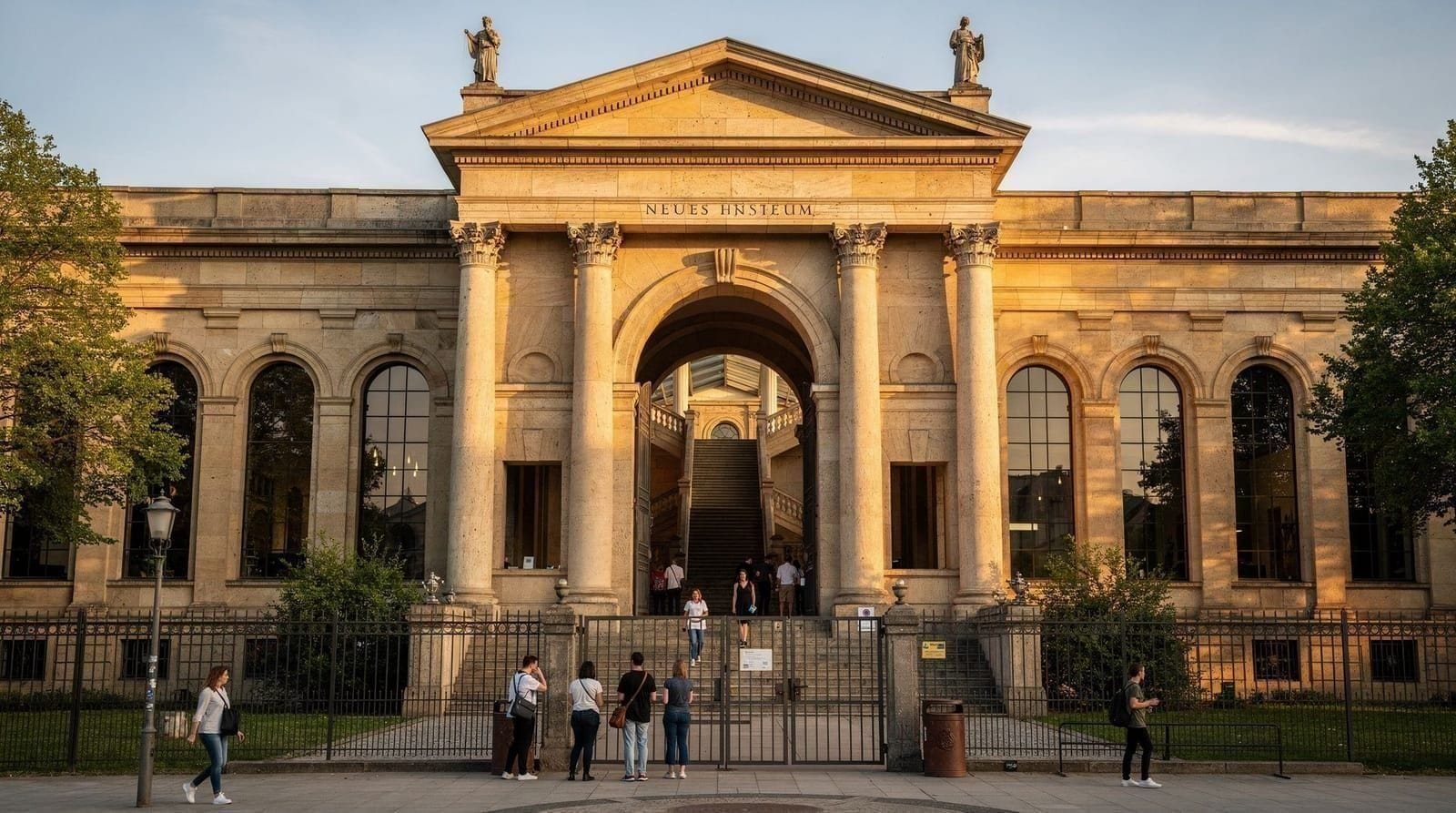
The Alte Nationalgalerie pairs naturally with the Neues Museum on the same day — ancient Egypt in the morning, 19th-century German Romanticism in the afternoon. The shift in sensibility is striking and the contrast is instructive.
For a full Museum Island overview covering all five buildings, see the Museum Island visitor guide. The recommended two-day itinerary places the Alte Nationalgalerie on day two alongside the Bode-Museum.
The Pergamonmuseum main building is closed until June 4, 2027. If you came specifically for the Islamic art or the Pergamon Altar, the Alte Nationalgalerie offers an entirely different but equally significant experience.
Book Museum Island combined entry including the Alte NationalgalerieFor a structured overview of the island’s architecture and history before entering individual buildings, a guided walking tour covers all five facades and the island’s urban history in about 90 minutes.
Book a guided walking tour of Museum Island’s architectureFrequently asked questions about Alte Nationalgalerie Berlin
How much do Alte Nationalgalerie tickets cost?
Adult tickets cost €14. Children under 18 enter free. The Museum Island Tageskarte (€29) covers the Alte Nationalgalerie plus all other Museum Island institutions on the same day. The Berlin Museum Pass (€32 for three days) also covers entry.What are the highlights of the Alte Nationalgalerie?
Caspar David Friedrich's Monk by the Sea and Abbey in the Oak Forest. Adolph Menzel's Iron Rolling Mill and Flute Concert of Frederick the Great. The Neoclassical and Romantic sculpture on the ground floor. The French Impressionist holdings including works by Monet, Renoir, and Cézanne.Who was Caspar David Friedrich and why is he important?
Caspar David Friedrich (1774–1840) was the leading figure of German Romantic painting. His work — characterised by solitary figures contemplating vast, often melancholy landscapes — represents the high-water mark of the Romantic movement's engagement with nature and existential reflection. The Alte Nationalgalerie holds several of his major works, including Monk by the Sea (1810), which shows a single figure dwarfed by an immense dark sky.How long does the Alte Nationalgalerie take?
Allow 1.5 to 2.5 hours. The five floors cover a substantial range of 19th-century art; a selective visit focusing on Friedrich, Menzel, and the ground-floor sculpture is comfortable in 90 minutes. A comprehensive visit including the full Neoclassical and Romantic sections takes closer to 2.5 hours.Does the Alte Nationalgalerie require advance booking?
Less so than the Neues Museum. Walk-up tickets are usually available on weekday mornings and outside peak season. In summer, booking a day or two ahead at smb.museum is recommended. The Museum Island day pass can be purchased online in advance.Is the Alte Nationalgalerie building worth seeing?
Yes. The building — designed by Friedrich August Stüler and completed in 1876 — is a raised neoclassical temple on a high podium approached via a wide staircase. The exterior, with its equestrian statue of Friedrich Wilhelm IV and Corinthian colonnade, is one of the most photographed facades on Museum Island. The interior retains much of its original 19th-century arrangement.Are there French Impressionist works at the Alte Nationalgalerie?
Yes. The collection includes works by Monet, Renoir, Cézanne, and other French painters acquired in the late 19th and early 20th centuries. The French holdings are not as extensive as in dedicated Impressionist museums, but they are of high quality and sit in instructive contrast to the German Realist works nearby.Is the Alte Nationalgalerie good for children?
It is a quieter option than the Pergamonmuseum or Neues Museum, which helps with attention spans, but the collection is text-light on wall labels and geared toward adults. Children drawn to dramatic imagery sometimes respond well to Menzel's Iron Rolling Mill or the theatrical scale of Friedrich's skies, but most families get more mileage from the Neues Museum's mummies or the natural history museum nearby.Can I visit the Alte Nationalgalerie in under an hour if I am short on time?
Yes, with a focused route. Head straight to the second floor for Friedrich's Monk by the Sea and Abbey in the Oak Forest, then Menzel's Iron Rolling Mill on the same level, and finish with Schadow's Princesses on the ground floor on your way out. That core route takes about 45–60 minutes and covers the collection's four most significant works.
Top experiences
Bookable activities with verified prices and instant confirmation on GetYourGuide.