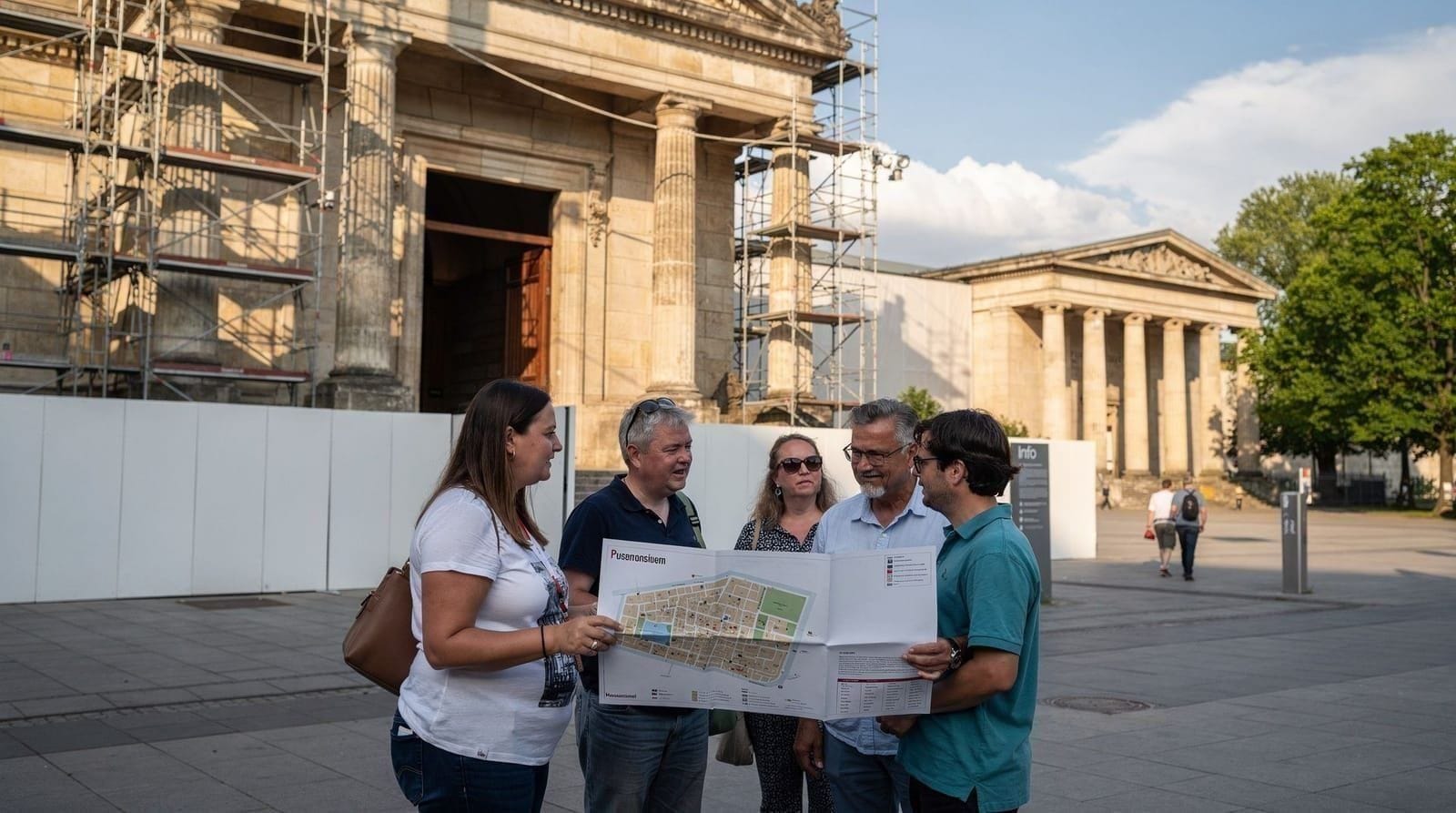
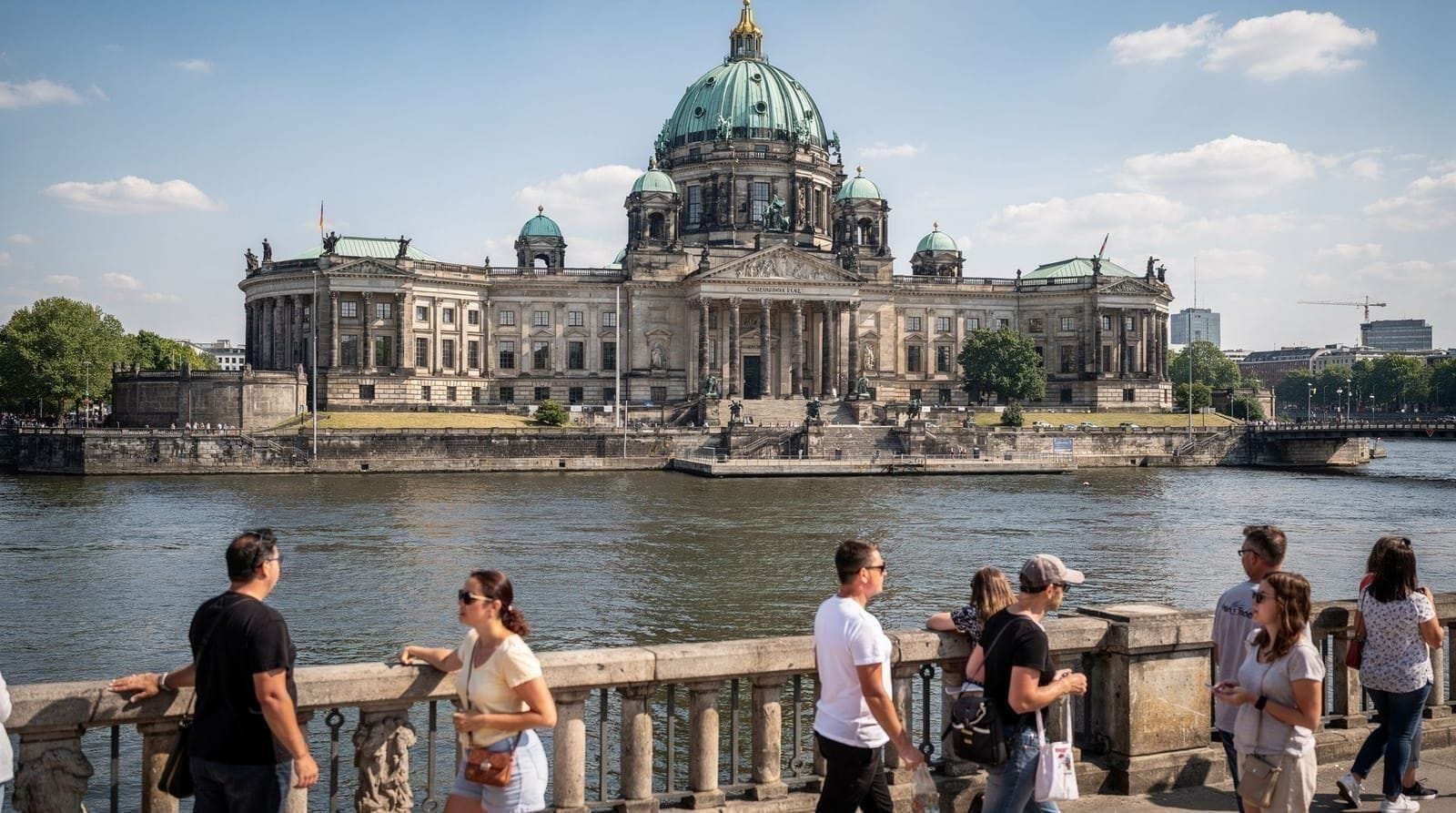
Altes Museum Berlin — Greek and Roman antiquities in Schinkel's rotunda
Berlin: Museum Island Multiple Museum Entry Ticket
What is in the Altes Museum in Berlin?
The Altes Museum holds an extensive collection of Greek and Roman antiquities — pottery, sculpture, bronzes, jewelry, and decorative art from ancient Greece, Etruria, and Rome. Designed by Karl Friedrich Schinkel and opened in 1830, it is the oldest museum building on Museum Island and features a magnificent Rotunda modelled on Rome's Pantheon.
Quick answer: The Altes Museum holds Greek and Roman antiquities in Schinkel’s neoclassical building with a Pantheon-inspired rotunda. Adult entry €12. Book online for peak season, but walk-ups are often available on weekdays.
| Where | Am Lustgarten, Museum Island |
| Cost | around €12 adults, under-18s free; Museum Island day pass around €29 |
| Time needed | 1.5–2.5 hours (45 min for a focused highlights route) |
| Getting there | U5 Museumsinsel or Hackescher Markt S-Bahn |
| Best time | Weekday mornings at opening, or Thursday evenings |
The oldest museum on Museum Island
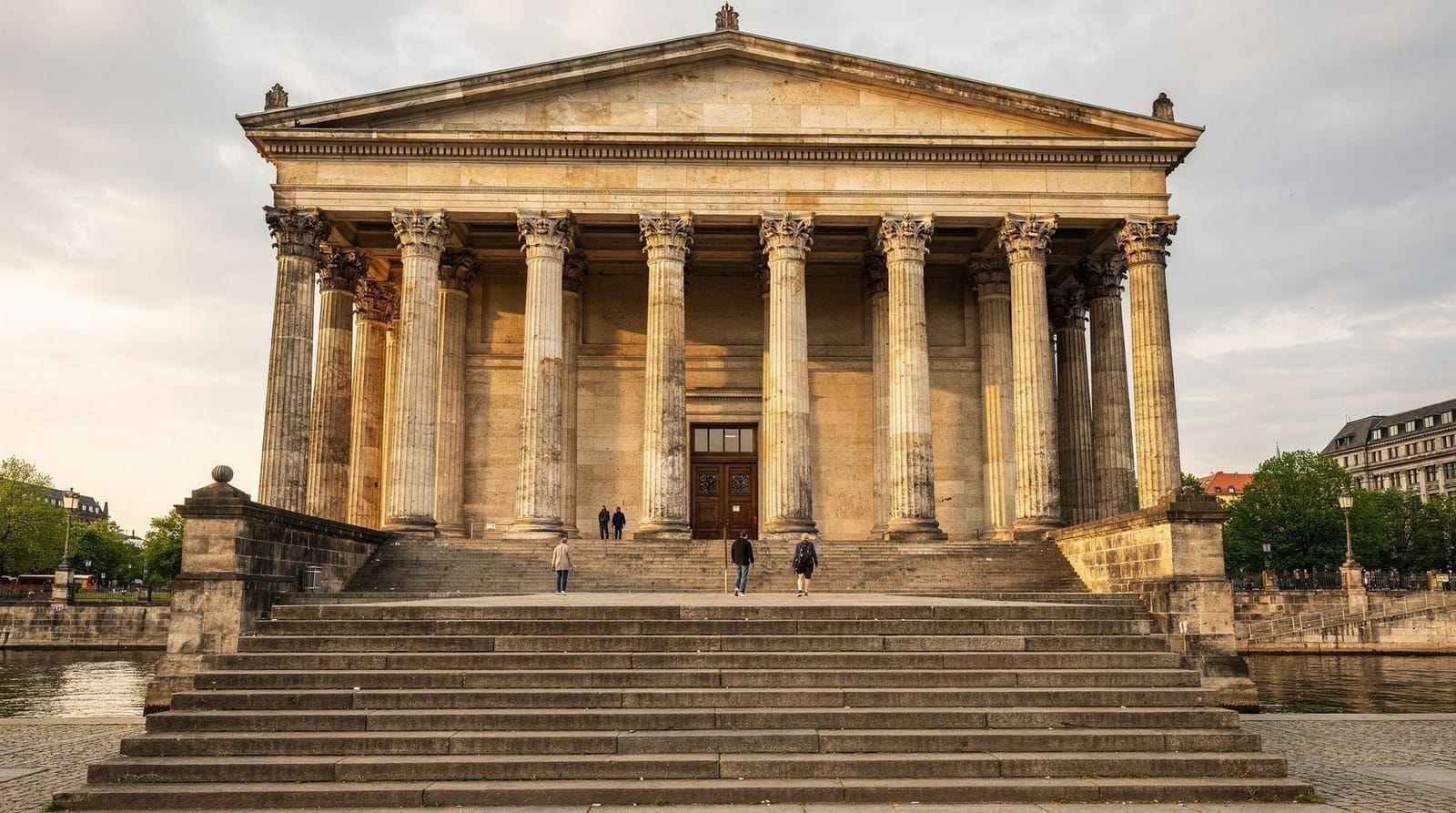
The Altes Museum — literally the “Old Museum” — opened its doors in 1830, making it the oldest museum building on Museum Island and one of the earliest purpose-built public art museums in Germany. It was designed by Karl Friedrich Schinkel, Prussia’s most influential architect, and commissioned by King Friedrich Wilhelm III with a democratic intent: to make royal art collections accessible to the general public.
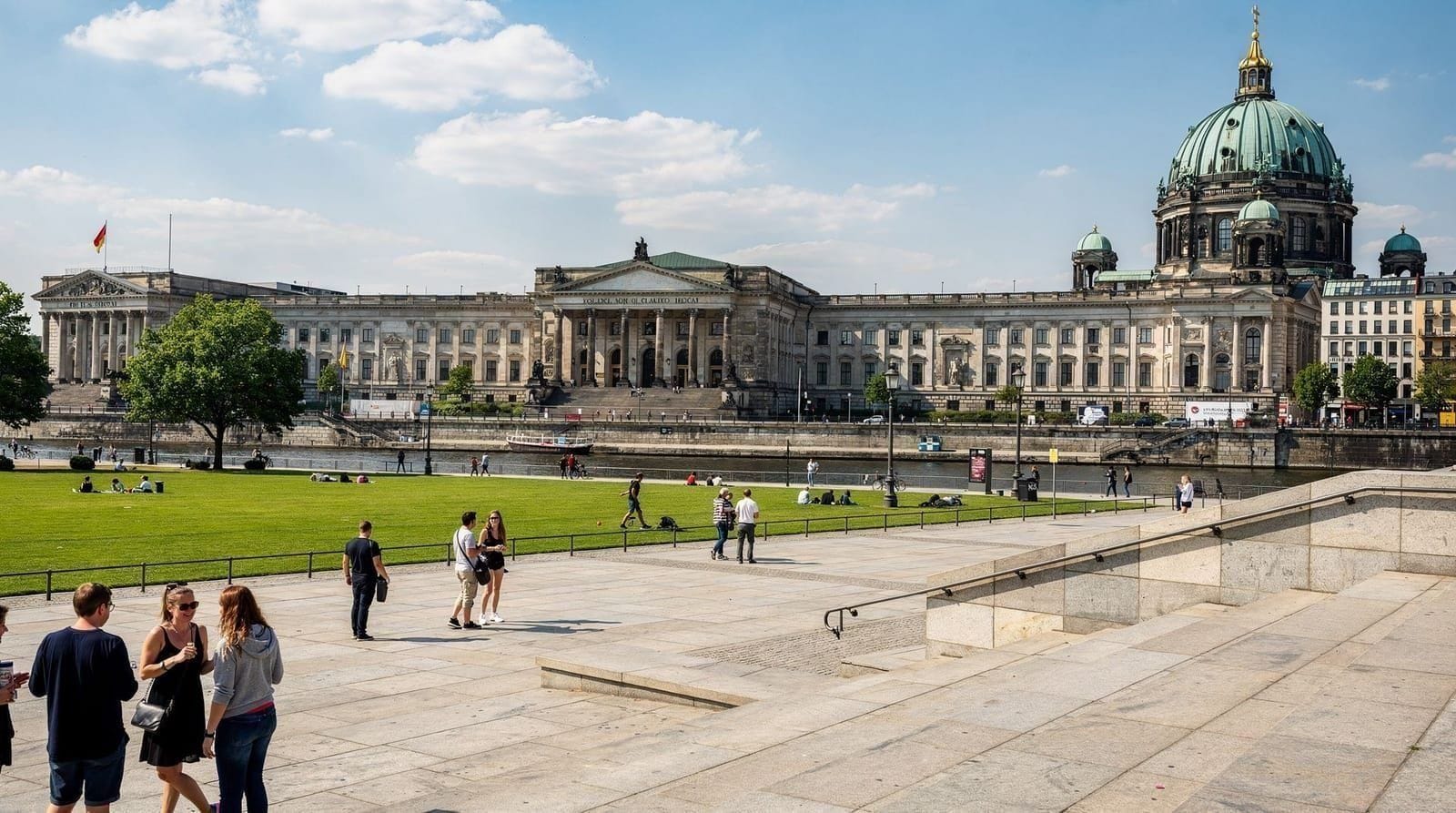
The building faces the Lustgarten, the formal park between the museum and the Berliner Dom. The 18-column Ionic portico stretching the full width of the facade is designed to invite rather than intimidate — a neoclassical statement that the contents belong to citizens, not just royalty.
What happens inside reinforces that statement. The Altes Museum is one of the most accessible major collections of Greek and Roman antiquity in continental Europe. It requires no specialist knowledge to appreciate, and the building’s own architecture is as interesting as many of the objects within it.
The Rotunda
Schinkel placed the Rotunda at the centre of the ground floor as the building’s structural and symbolic heart. It is a circular hall of 22 metres diameter with a coffered dome identical in proportion to the Pantheon in Rome — which Schinkel had visited and explicitly intended to reference.
Around the perimeter stands a ring of large marble sculptures — Roman imperial figures, deities, and mythological subjects. The Rotunda was designed as what Schinkel called a “Heiligtum” (sanctuary) — a meditative space representing classical civilisation’s achievement.
The effect is still striking. The natural light from the oculus above, the scale of the statuary, and the silence of the space (it receives fewer visitors than the Neues Museum and rarely feels crowded) make it one of the more architecturally rewarding rooms in Berlin.
The Greek collection — pottery and bronzes
Ground floor, Greek galleries. The pottery collection spans from Geometric-period pieces (ninth to eighth centuries BCE) through the great black-figure and red-figure periods of the sixth and fifth centuries BCE. The red-figure Attic vases are the strongest part of the collection — scenes of athletics, mythology, symposia, and warfare painted with extraordinary precision on objects two and a half thousand years old.
Notable pieces include several attributed to named Attic painters. The collection is chronologically arranged, which means you can trace the shift from black-figure to red-figure technique across a single gallery.
Bronze originals. A small but significant group of original Greek bronzes — as opposed to Roman marble copies — survives in the collection. Bronze was the preferred medium of Greek sculptors, but its material value meant most originals were melted down in antiquity. Original bronzes from the classical and Hellenistic periods are rarer than works from any other ancient civilisation. The examples here deserve careful attention.
The Etruscan collection
A separate wing on the ground floor holds Etruscan material — the culture of the Italian peninsula that preceded Rome’s political dominance. The collection includes funerary urns, bronze vessels, terracotta figures, and jewelry from the seventh to third centuries BCE.
The Etruscans are among the ancient world’s most misunderstood cultures — often overshadowed by their Roman successors, who absorbed Etruscan religion, art, and urban planning. The museum’s Etruscan wing provides a sense of the sophistication of pre-Roman Italian culture. It tends to be the quietest section of the museum on any given day.
The Roman collection — portraiture and imperial sculpture
The upper floor holds the Roman antiquities collection, with particular strength in portrait busts spanning the late Republic through the Severan period (roughly 50 BCE to 230 CE). Roman portrait sculpture is notable for its psychological realism — a deliberate contrast to the idealized Greek tradition. The progression from Republican warlords to Augustan classicism to the more emotionally intense late imperial style is clearly traceable through the examples here.
The Roman decorative arts section covers silver tableware, glass, terracotta lamps, mosaic fragments, and domestic objects. Less dramatic than the portrait busts, but useful for understanding daily life across the Roman Empire’s different provinces.
Imperial marble sculpture from the first and second centuries CE fills several ground-floor spaces. Many are Roman copies of lost Greek originals — a reminder that the majority of what we know about Greek sculpture comes through Roman replication.
How the Altes Museum compares to the Neues Museum and Pergamonmuseum
If you are choosing between Museum Island’s buildings rather than seeing all five, the Altes Museum is the calmest option and arguably the most architecturally satisfying, but it lacks a single object with the drawing power of Nefertiti at the Neues Museum or the Pergamon Altar. It suits visitors who enjoy classical antiquity generally rather than arriving for one famous piece. Given the Pergamonmuseum’s main building is closed until 2027, the Altes Museum has picked up some of the visitors who would otherwise have gone there, though it still runs noticeably quieter than the Neues Museum on any given day.
When to go for the quietest visit
The Rotunda and the pottery galleries are at their emptiest in the first 90 minutes after the 10:00 opening on weekdays outside school-holiday periods. Midday brings the day’s tour groups, most of whom move through in under an hour. Thursday’s extended hours to 20:00 create a second quiet window after 17:00. If you’re building a Museum Island itinerary around several buildings, putting the Altes Museum first thing works well precisely because it lets you enjoy the Rotunda before the day’s crowds arrive elsewhere on the island.
Practical information
Address: Am Lustgarten, 10178 Berlin. Entrance on the Lustgarten side.
Opening hours: Tuesday–Sunday 10:00–18:00; Thursdays 10:00–20:00. Closed Mondays.
Tickets: €12 adults; children under 18 free. Museum Island Tageskarte (€29) covers all five museums. Book online at smb.museum.
Getting there: U5 Museumsinsel, or S-Bahn Hackescher Markt (5 minutes on foot). The museum faces the Lustgarten directly across from the Berlin Cathedral.
Audio guide: €5, available in German and English. Covers the key objects in the Greek and Roman galleries.
Photography: Free throughout without flash.
Coat check: Free for large bags. Lockers available.
Combining the Altes Museum with other Museum Island visits
The Altes Museum and Neues Museum share a courtyard and can be combined in a single day without difficulty — arrive at the Altes Museum when it opens at 10:00, spend 1.5 hours, then move to your timed Neues Museum slot. This covers classical antiquity (Greece, Rome) and ancient Egypt in one visit.
The Alte Nationalgalerie is across the island courtyard — a 5-minute walk. It provides a thematic transition from ancient art to 19th-century European painting.
For a full Museum Island experience including the Bode-Museum (Byzantine and medieval sculpture) and the Pergamon Panorama Asisi (see the closure guide), allow two days total. The Museum Island visitor guide outlines the recommended two-day sequence.
Book Museum Island combined entry covering the Altes Museum and all four other buildingsThe Lustgarten — before or after your visit
The Lustgarten, the formal park between the Altes Museum and the Berliner Dom, is free to enter and one of Berlin’s pleasant central spaces. In summer it fills with tourists, students, and food trucks; in winter it hosts a Christmas market. It’s worth 15–20 minutes before or after the museum.
The Berlin Cathedral immediately opposite is worth entering if you have an additional €9 (entry includes access to the dome walkway, which offers the best elevated view of Museum Island’s rooftops). The Cathedral’s crypt holds Hohenzollern royal burials.
Across the Schlossbrücke bridge is the Humboldt Forum, the rebuilt Berlin Palace. Its free ground-floor exhibitions on Berlin’s urban history are worth 30–45 minutes if you have time remaining after your museum visits.
What to skip and what not to miss
Don’t miss: The Rotunda (spend time here — sit, look up, look around). The red-figure Attic pottery. The Roman portrait busts from the first century BCE to second century CE. The Etruscan jewelry.
Can skip: The upper-floor Roman decorative arts if time is short. These are well-documented in publication and the objects are less visually arresting than the sculpture galleries.
Common mistake: Spending all available time in the Egyptian Neues Museum next door and giving the Altes Museum 30 minutes at the end of an exhausted afternoon. The classical collection rewards fresh attention.
Frequently asked questions about Altes Museum Berlin
How much does the Altes Museum cost?
Adult tickets cost €12. Children under 18 enter free. The Museum Island day pass (Tageskarte, €29) covers the Altes Museum plus all other Museum Island buildings on the same day. The Berlin Museum Pass (€32 for three days) also covers entry.What is the Altes Museum Rotunda?
The central hall of the Altes Museum is a domed circular room of 22 metres diameter, modelled directly on the Pantheon in Rome. It holds a ring of large Roman marble sculptures and serves as the museum's thematic heart — Schinkel designed it as a "sanctuary" representing the perfection of classical antiquity.How long should I spend at the Altes Museum?
Allow 1.5 to 2.5 hours for a thorough visit. The antiquities collection is substantial but the building's footprint is manageable. If you are combining it with the Neues Museum on the same day, arrive at the Altes Museum early (before 10:30) and move to Neues Museum for your timed slot.Is the Altes Museum better or worse than the Neues Museum?
They serve different audiences. The Neues Museum (Egyptian collection, Nefertiti) is more immediately dramatic and better known. The Altes Museum's Greek and Roman collection is quieter and often under-visited, which makes it more rewarding for those interested in classical antiquity. The building itself is arguably more beautiful.Does the Altes Museum require advance booking?
Less so than the Neues Museum. Walk-up tickets are often available on weekday mornings and outside peak season. In summer, booking online at smb.museum a few days ahead is safer. The Museum Island day pass can also be purchased online in advance.What are the highlights of the Altes Museum collection?
The Rotunda with Roman imperial sculpture. The Greek pottery galleries (black-figure and red-figure vases). The Etruscan collection. The bronze Greek originals and Roman copies. The Roman portrait busts dating from the first century BCE to the third century CE. The collection of ancient jewelry and decorative arts.Is the Altes Museum child-friendly?
Moderately. Children 10 and older who are interested in ancient history will find plenty to engage with. Younger children may find the sculpture-heavy galleries tiring. The Lustgarten park immediately outside is a good break space.Is the Altes Museum crowded?
Rarely. It sits in the shadow of the Neues Museum and Pergamonmuseum in visitor numbers, so even the Rotunda — the building's centrepiece — is usually calm outside midday tour-group waves. Weekday mornings right after the 10:00 opening are the quietest, and Thursday evenings after 17:00, when the museum stays open until 20:00, come close behind.What should I see first if I only have 45 minutes?
Start in the Rotunda, then head to the red-figure Attic pottery in the Greek galleries, and finish with the Roman portrait busts upstairs. That route hits the collection's three strongest sections and skips the decorative-arts rooms, which are the most skippable under time pressure.
Top experiences
Bookable activities with verified prices and instant confirmation on GetYourGuide.