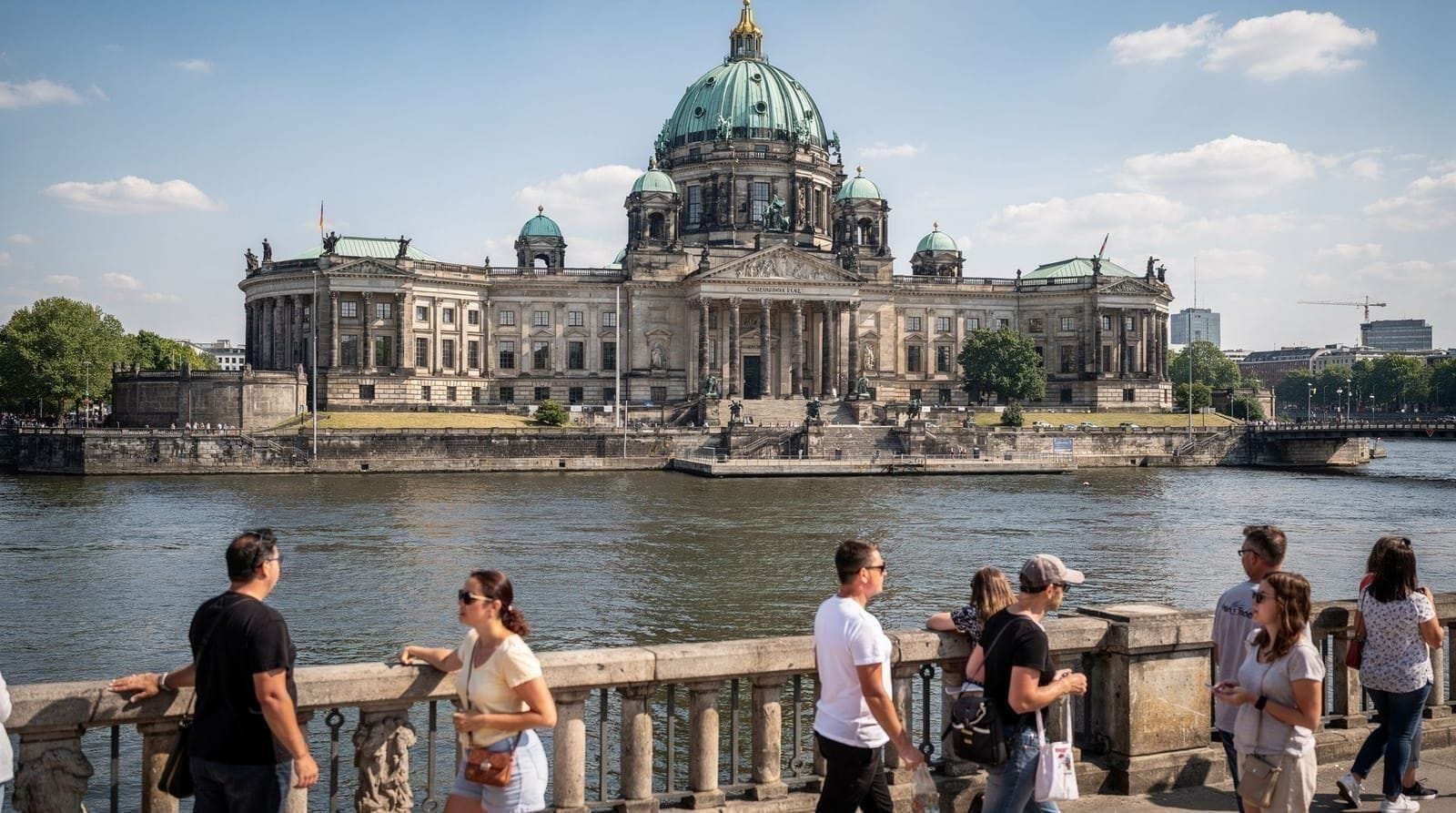
Neues Museum Berlin — Nefertiti bust, Egyptian collection, and timed-entry tickets
Berlin: Museum Island Multiple Museum Entry Ticket
How do I get tickets for the Neues Museum in Berlin?
Book online at smb.museum at least one week in advance in summer — the Neues Museum sells out regularly due to daily visitor caps. Timed-entry slots start at 10:00; choose a morning slot for shorter queues at the Nefertiti bust room. Adult tickets cost €14. The Museum Island day pass (€29) covers all five museums.
Quick answer: Book timed-entry tickets online at smb.museum at least a week in advance — especially in summer. Adult entry is €14. No photography of the Nefertiti bust. Allow 2.5–3 hours.
| Where | Bodestrasse 1–3, Museum Island, Mitte |
| Cost | €14 adult, free under 18; €29 Museum Island day pass |
| Time needed | 2.5–3 hours |
| Getting there | U5 Museumsinsel, or S-Bahn Hackescher Markt + 5 min walk |
| Booking | Advance timed-entry essential in summer |
The Neues Museum: one object among many great ones
Most visitors come to the Neues Museum for one thing: the Nefertiti bust. The painted limestone portrait of Egypt’s famous queen draws enormous crowds, and rightfully so — it is one of the most immediately striking artifacts from the ancient world, a 3,300-year-old object with an uncanny presence.
But reducing the Neues Museum to its headline attraction does the institution a disservice. The Egyptian and papyrus collections that surround Nefertiti are extensive and excellently displayed. The prehistoric collection upstairs contains materials that are genuinely difficult to find anywhere else in Europe. And the building itself — a 19th-century Prussian museum painstakingly reconstructed over decades by architect David Chipperfield after wartime bombing — is one of the most intelligent museum restorations of the modern era.
Plan for more than the bust.
The building’s history
The Neues Museum was designed by Friedrich August Stüler and opened in 1855. It stood as one of the grandest purpose-built museum buildings in Europe until November 1943, when Allied bombing raids largely destroyed the roof and interior. For decades after the war it stood as a ruin — a deliberate decision by East Berlin authorities who could not afford reconstruction and later treated the ruin as a monument in its own right.
When reunification made large-scale investment possible, architect David Chipperfield won the commission for reconstruction. His approach — completed in 2009 — was to neither restore the building to its original state nor abandon its historic fabric. New concrete fills the bombed spaces. Original frescoes survive where they survived. The joins between old and new are visible rather than hidden. The result is a building that is both beautiful and honest about what happened to it.
The archaeological storage vaults beneath the museum, which protected much of the collection during the bombing, are why so many objects survive.
The Egyptian collection and the Nefertiti bust
Room 2.10 — the Nefertiti Room. The bust occupies its own dedicated room on the first floor, displayed on a plinth and lit to emphasise the extraordinary quality of the painted limestone. The right eye was never inlaid — whether this was intentional, or reflects the bust’s role as an artist’s model, is still debated.
The no-photography rule is strictly enforced. Museum staff will approach you immediately if you raise a phone or camera. This is one of the few objects in any museum where the rule is genuinely applied.
Beyond Nefertiti, the first floor holds the Amarna period galleries — objects from the reign of pharaoh Akhenaten (Nefertiti’s husband), who attempted to replace Egypt’s polytheist tradition with solar monotheism, building a new capital at Tell el-Amarna. The fragments of painted pavements, heads in painted limestone, and royal statuary from this period are displayed with context that helps explain what Akhenaten was attempting and why the experiment failed.
Ground floor: the main Egyptian galleries. Sarcophagi, mummies and mummy cases, cult objects, amulets, papyrus scrolls, shabtis, and ceremonial furniture span several thousand years of Egyptian history. The chronological arrangement is clear. German/English bilingual labels throughout. Particularly strong on the late and Ptolemaic periods.
The papyrus collection holds one of the largest archives of ancient papyrus documents outside Cairo. Most are in storage but rotating exhibitions show representative examples.
The prehistory and early history collection
The upper floors house what the German title calls the Museum für Vor- und Frühgeschichte — collections covering European prehistory from the Stone Age through the early medieval period. These galleries are chronically under-visited, which means you can explore them in relative quiet.
The Berlin Gold Hat (Berliner Goldhut): One of four conical gold ceremonial objects from the Bronze Age known to exist, dating to around 1000–800 BCE. The precision of the gold working — thin sheets hammered into elaborate geometric patterns understood to represent a lunar calendar — is astonishing for the period. The object is displayed on a lower floor and deserves more attention than it receives.
Troy materials: The Schliemann collection of materials from Heinrich Schliemann’s 1870s excavations at Troy (Hisarlik, Turkey) is split between Berlin and Moscow — some pieces were seized by the Soviet army in 1945. What remains here is significant and accompanied by good explanatory context.
Migration period and Viking-era objects: Weapons, jewelry, and grave goods from the fourth to ninth centuries CE, largely from finds across northern and central Europe.
Practical information
Address: Bodestrasse 1–3, 10178 Berlin. Enter from Bodestrasse or from the Museum Island courtyard.
Opening hours: Tuesday–Sunday 10:00–18:00; Thursdays 10:00–20:00. Closed Mondays.
Tickets: €14 adults; children under 18 free. Book online at smb.museum. The Museum Island Tageskarte (€29) covers all five museums on one day.
Timed entry: You book a one-hour entry window. Arrival within your window is required; staff will turn away visitors arriving late or early. The window does not limit how long you stay inside.
Getting there: U-Bahn Museumsinsel (U5), or S-Bahn Hackescher Markt then 5 minutes on foot.
Coat check: Free, mandatory for large bags. Lockers available.
Photography: Free throughout the museum except the Nefertiti room. No flash. Tripods not permitted.
Audio guide: €5, available in multiple languages. Covers about 90 key objects. Worth it for the Egyptian section.
Combining the Neues Museum with other Museum Island visits
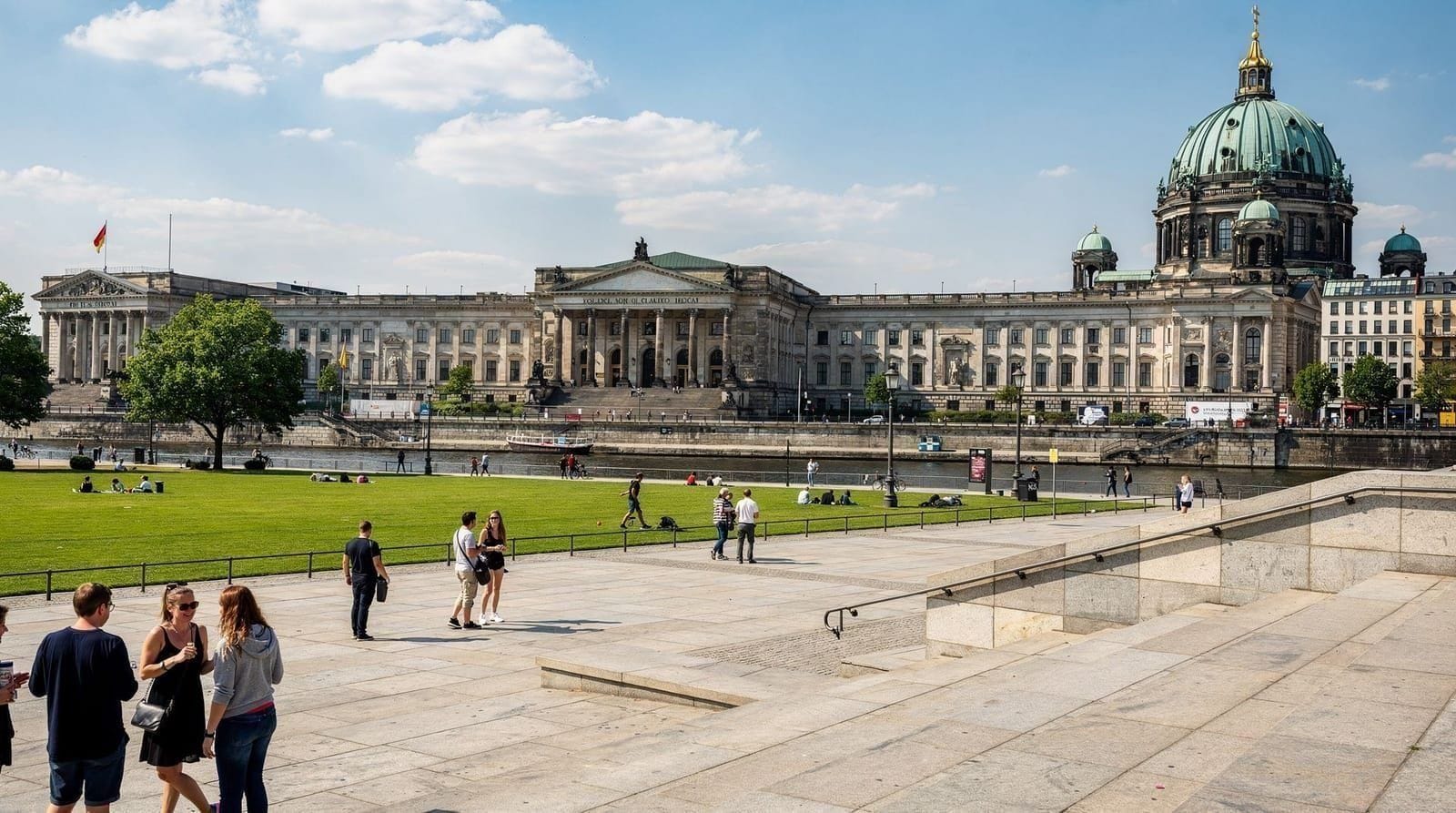
The Neues Museum pairs naturally with the Altes Museum next door — the two share a courtyard (the Lustgarten) and between them cover ancient civilisations from Greece, Rome, and Egypt in a single day.
The Alte Nationalgalerie is a 5-minute walk and provides a complete tonal contrast — from ancient Egypt to 19th-century German Romanticism. Not recommended for the same afternoon unless you have strong stamina.
The Bode-Museum at the island’s north tip takes about 2 hours and is best saved for a second day.
For the Pergamonmuseum: the main building is closed until June 4, 2027. The Panorama Asisi annexe is a separate entry and can be visited on the same afternoon as the Neues Museum — it is across the Kupfergraben canal from the Pergamon entrance.
For a full overview of ticketing and visit-order strategy across all five buildings, the Museum Island guide is the essential companion to this page.
Book a guided tour of the Neues Museum including Museum Island passThe controversy about Nefertiti’s return
Egypt has formally requested the return of the Nefertiti bust on multiple occasions, most recently in 2024. The German position is that the bust was acquired legally under the terms of the 1912 excavation permit and has been in German collections since 1913. Egypt disputes the terms of the original export, arguing the permit did not authorise export of the piece.
The debate is unresolved. The bust remains in Berlin. It’s worth knowing this context before your visit — several of the information panels in the museum acknowledge the dispute in measured terms.
Room-by-room: a realistic visiting order
For a single 2.5–3 hour visit, a workable sequence runs like this: start on the ground floor with the main Egyptian galleries — sarcophagi, mummies and cult objects — while the museum is at its quietest just after opening. Move up to Room 2.10 for Nefertiti once the initial morning rush has thinned slightly, usually 30–45 minutes after opening. From there, continue through the Amarna period galleries on the same floor, which are directly adjacent and rarely crowded even when the Nefertiti room is busy. Finish on the upper floors with the prehistory collection and the Berlin Gold Hat — visitors who leave this for last, tired from the Egyptian galleries, are the ones most likely to skip it entirely, which is a genuine loss given how few crowds compete for space there.
If your schedule only allows 90 minutes, prioritise Nefertiti, the Amarna galleries, and the Gold Hat, and accept that you will miss the deeper Egyptian sarcophagi rooms — better to see three highlights properly than rush all four sections.
What other visitors get wrong
Arriving without tickets: The Neues Museum regularly reaches daily capacity by mid-morning in summer. Walk-ups may find all time slots sold.
Spending too long on the Nefertiti floor: The Egyptian rooms on the ground floor contain objects of equal archaeological importance with far fewer visitors competing for space.
Missing the Gold Hat: It is not on the same floor as Nefertiti. Many visitors skip the prehistory section entirely.
Booking a full-day Neues Museum tour: Several tour operators package 4–5 hour guided Neues Museum tours that are simply too long for the collection. 1.5–2.5 hours with a guide is the realistic optimum; remaining time is better spent at another Museum Island institution.
Book Museum Island combined entry and skip the ticket queueFrequently asked questions about Neues Museum Berlin
Can I photograph the Nefertiti bust at the Neues Museum?
No. Photography of the Nefertiti bust is strictly prohibited and enforced by museum staff. The rule applies to phones and cameras both. You can photograph the rest of the museum's collection freely without flash.How much do Neues Museum tickets cost?
Adult entry is €14. Children under 18 are free. The Museum Island Tageskarte (€29) covers the Neues Museum plus all other Museum Island institutions on the same day. The Berlin Museum Pass (€32 for three days) also covers entry.How long does the Neues Museum take to visit?
Allow 2.5 to 3 hours for a thorough visit. The Egyptian collection on the ground and first floors takes the most time. The prehistory collection on the upper floors is often overlooked but contains remarkable finds, including the Berlin Gold Hat — allow an extra 45 minutes if you want to explore it.Do I need a guided tour for the Neues Museum?
Not essential, but useful. Bilingual German/English signage is good throughout. An audio guide (€5) covers the major Egyptian objects. A guided tour (usually 1.5–2 hours, €25–35 including entry) provides scholarly context on the hieroglyphics, burial customs, and the political story behind Nefertiti's arrival in Berlin.Who was Nefertiti and why is the bust in Berlin?
Nefertiti was the chief consort of pharaoh Akhenaten, who ruled Egypt around 1350 BCE. The painted limestone bust was excavated at Tell el-Amarna, Egypt, in 1912 by a German archaeological team led by Ludwig Borchardt. It was brought to Germany in a legally disputed export — Egypt has repeatedly requested its return. It has been in Berlin since 1913 and on public display since 1923.Is the Neues Museum worth visiting if I am not interested in Egyptology?
Yes. Beyond the Egyptian galleries, the museum holds exceptional prehistoric collections — the Berlin Gold Hat (a Bronze Age gold cone), Iron Age grave goods, and Viking-era artifacts. The David Chipperfield-designed restoration of the bombed wartime ruin is architecturally significant in itself.What is the best time to visit the Neues Museum?
Thursday evenings (late opening until 20:00) tend to be quieter than weekend afternoons. Weekday mornings in October–March are the least busy. Peak season (June–August weekends) should always be pre-booked.What order should I visit the Neues Museum's galleries in?
Start on the ground floor with the main Egyptian galleries while the museum is quietest, move up to the Nefertiti room and Amarna galleries 30–45 minutes after opening, then finish on the upper floors with the prehistory collection and the Berlin Gold Hat. Visitors who leave the upper floors for last, tired from the Egyptian rooms, are the ones most likely to skip them — which is a loss given how few crowds compete for space there.
Top experiences
Bookable activities with verified prices and instant confirmation on GetYourGuide.