Berlin tourist traps — what to avoid and what to do instead
Berlin WelcomeCard: Discounts & Transport Berlin Zones (AB)
What are the biggest tourist traps in Berlin?
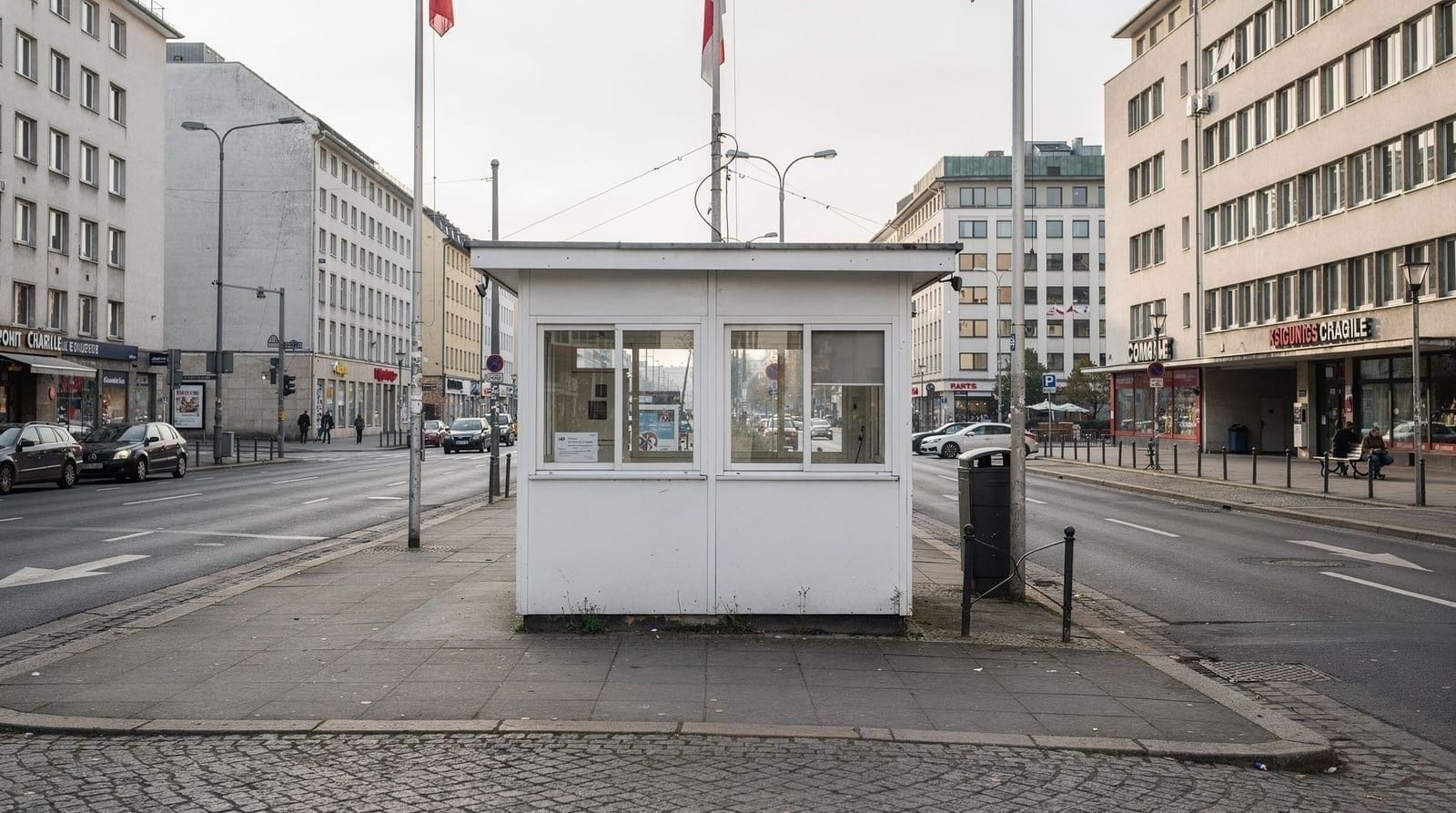
Checkpoint Charlie is the single worst tourist trap — the guardhouse is a replica, the costumed actors charge €10-15 for a photo, and the adjacent museum is overpriced with poor English signage. Souvenir stands near the Brandenburg Gate sell fake Wall fragments and charge €8-12 for currywurst that costs €3-4 two kilometres away. Free Reichstag dome access is being sold by third-party operators for €30-50 when booking directly at bundestag.de is always free.
Berlin’s biggest tourist trap is Checkpoint Charlie — the guardhouse is a replica, the uniformed actors charge €10-15 for a photograph, and the adjacent museum is overpriced with poor English signage. Near the Brandenburg Gate, currywurst costs €8-12 at tourist stands versus €3-4 two kilometres away. And Reichstag dome access — always free when booked directly at bundestag.de — is being resold by third-party operators for €30-50.
| Worst offender | Checkpoint Charlie photo actors, around €10-15 per photograph |
| Biggest overcharge | Currywurst near Brandenburg Gate, around €8-12 vs around €3-4 elsewhere |
| Free but resold | Reichstag dome, always free direct at bundestag.de |
| Where to avoid eating | Hackescher Markt, Pariser Platz, immediate Alexanderplatz area |
| Best value pass | Museum Pass Berlin (around €32/3 days) if visiting 3+ state museums |
Trap vs honest alternative, at a glance
| Trap | Typical price | Honest alternative | Real price |
|---|---|---|---|
| Checkpoint Charlie photo actors | around €10-15/photo | Free info boards + Bernauer Strasse | Free |
| Currywurst at Brandenburg Gate | around €8-12 | Konnopke’s or Curry 36 | around €3-4 |
| ”Skip the line” Reichstag tours | around €30-50 | Direct booking at bundestag.de | Free |
| Hop-on hop-off day ticket | around €30-35 | AB-zone Tageskarte | around €9.90 |
| Undocumented “Wall fragment” | Variable, often inflated | Bernauer Strasse Memorial shop | Modest, documented |
Why Berlin attracts tourist traps more than most capitals
Berlin is unusual among major European capitals in that its most famous attractions are not expensive cathedrals, royal palaces, or art museums behind paywalls. The Brandenburg Gate is free to approach. The Holocaust Memorial is free to walk through. The East Side Gallery is free. The Topography of Terror is free. Bernauer Strasse Wall Memorial is free.
When the most powerful historical sites in the city cost nothing, a commercial vacuum opens up. Tourist traps fill that vacuum by attaching a price to what should be — and often legally is — a free experience.
Berlin’s specific history compounds this. The city was literally divided for 28 years, then reunified almost overnight. The rush to commodify Cold War history began in November 1989, when the first souvenir sellers set up at the Wall within hours of it opening. The counterfeit Wall fragment market, the Checkpoint Charlie photo actors, the replica guardhouse — all of these are part of a commercial layer that grew over genuine history, sometimes obscuring it entirely.
The city has also grown dramatically as a tourist destination. Visitor numbers before 2020 were running at 14 million per year. Businesses in the tourist core of Mitte price accordingly, knowing that a large proportion of their customers will never return and will not check comparison prices. This is rational from a business standpoint and extractive from a visitor standpoint.
Knowing where the traps are does not require cynicism. Most of Berlin’s genuine attractions are superb. The goal is to spend your time and money on the real city rather than the commercial facsimile.
Checkpoint Charlie: the biggest single tourist trap in Berlin
Checkpoint Charlie was one of three crossing points between West and East Berlin, and the only one that foreign nationals — as opposed to German citizens — were permitted to use. In October 1961, US and Soviet tanks faced each other across it for 16 hours in one of the most dangerous confrontations of the Cold War. It was a real place with real history.
What exists at the corner of Friedrichstrasse and Zimmerstrasse today is a different matter.
The guardhouse is a replica. The original Allied checkpoint building was removed in June 1990, nine months after the Wall fell. The replica that replaced it was built for commercial and tourist purposes. It is historically inauthentic — the current structure is not a preserved monument but a prop.
The costumed actors are not official. The men in US military uniforms who offer to pose for photographs at Checkpoint Charlie are private individuals operating a commercial photo opportunity. They charge €10-15 per photograph and have done so since the early 2000s. They have no government affiliation, no connection to the Allied forces, and no relationship to the history of the site. You are not obliged to acknowledge them, interact with them, or pay them. Many visitors do not realise this until they have already handed over money.
The Mauermuseum (Museum Haus am Checkpoint Charlie) is overpriced. At €15.50 per adult, the private museum adjacent to the checkpoint offers an extensive collection of Cold War artefacts, escape devices, and documentation. However, the presentation is chaotic, English signage is inconsistent, and the museum has not significantly updated its displays in years. It is not without value — some of the escape vehicle exhibits are genuinely extraordinary — but €15.50 is too much for what is delivered, especially given the free alternatives nearby.
Free alternatives that are substantially better:
The Bernauer Strasse Wall Memorial is the most comprehensive and honest treatment of the Wall’s history in the city. The outdoor memorial runs along 1.4 km of the former death strip, with preserved sections of original Wall, the “Window of Remembrance” memorial to those killed trying to cross, and a documentation centre with free indoor exhibitions. It is not a replica. It is the actual site. Entry is free.
The Topography of Terror at the former Gestapo and SS headquarters site is one of the best historical documentation centres in Europe. It covers the rise of Nazi terror, the occupation of Europe, and the perpetrators — with original photographs, documents, and artefacts. Free entry. Open daily.
At Checkpoint Charlie itself, the free information boards erected by the city government along the pavement provide a genuine historical account of the crossing point, the 1961 standoff, and the people who attempted to cross. They cost nothing and are more historically accurate than the Mauermuseum.
Hackescher Markt and Mitte restaurant traps
Hackescher Markt is one of Berlin’s genuinely pleasant areas — the Hackesche Höfe courtyard complex is architecturally interesting, and the neighbourhood has real character. The restaurants immediately around the market, however, are predominantly tourist operations.
The identifying features are consistent: menus displayed in six to eight languages in the window, a member of staff standing outside the entrance inviting passers-by in, laminated QR code menus inside (easier to update prices than printed ones), no visible local clientele at lunchtime, and pricing significantly above what an equivalent meal costs two kilometres away.
A pasta dish at a Hackescher Markt tourist restaurant typically runs €14-18. The same dish at a genuinely local Italian in Prenzlauer Berg is €9-12. A schnitzel at a tourist-trap restaurant on Oranienburger Strasse can reach €22. At a neighbourhood restaurant in Neukölln, you are paying €13-15 for a better version.
The practical rule: if you can see the Brandenburg Gate, the TV Tower, or the Museum Island from the restaurant’s window, you are probably paying a tourist premium. Walk ten minutes in any direction and recalibrate.
Neighbourhoods where locals actually eat:
Prenzlauer Berg is twenty minutes’ walk or one U-Bahn stop north of the tourist core. Restaurants around Kastanienallee, Kollwitzplatz, and Helmholtzplatz are oriented toward residents — families, young professionals, the neighbourhood. Prices are reasonable and quality is higher because locals return and have opinions.
Neukölln, specifically the northern Schillerkiez and Reuterkiez areas, has the most concentrated good-value food scene in the city — Turkish, Arabic, Vietnamese, Korean, and German cooking at honest prices.
Kreuzberg around Bergmannstrasse and Marheinekeplatz offers strong food options at neighbourhood prices, though the most tourist-frequented parts of Kreuzberg (Kottbusser Tor, Görlitzer Park) have begun developing their own tourist-facing establishments.
Fake Berlin Wall fragments
The counterfeit Wall fragment market began within days of the Wall’s opening in November 1989. By December 1989, souvenir sellers across the city were selling painted grey concrete as Wall material. Within months, the volume of “Wall” being sold in Berlin exceeded the total volume of concrete in the actual Wall by an estimated factor of several hundred. This is not an exaggeration — it is a frequently cited observation by Berlin historians and economists who studied the post-Wall souvenir economy.
The Wall was 155 kilometres long, 3.6 metres high, and 1.2 metres thick. It contained a finite amount of concrete. The market for Wall fragments has been selling pieces for 35 years. The maths does not work unless the majority of pieces are not from the Wall.
Most souvenir stands selling “Wall fragments” are selling rubble from East Berlin demolition projects — cleared buildings, old infrastructure, renovation sites — painted grey or left as bare concrete. The pieces are not forgeries in a legal sense (no one is claiming a registered trademark); they are simply misrepresented.
Where to buy authenticated Wall material:
The Bernauer Strasse Wall Memorial shop sells small authenticated pieces with documentation certificates, sold through the official memorial foundation. Prices are modest and the provenance is documented.
The Checkpoint Charlie Museum shop also sells documented pieces, though given the museum’s overall commercial orientation, verify the documentation carefully before purchasing.
Both sources will provide a certificate stating the piece’s origin. Without documentation, a piece of grey concrete is a piece of grey concrete.
If you simply want a memento of visiting the Wall, a photograph at Bernauer Strasse is more honest than an undocumented “fragment” purchased at a tourist stand.
Overpriced tour operations targeting tourists
Hop-on hop-off buses
The Big Bus and City Sightseeing hop-on hop-off operations in Berlin charge €30-35 per adult for a one-day ticket. The buses run on fixed routes stopping at designated points — not exactly at attractions but close enough.
The case against them: Berlin’s public transport is outstanding. A standard AB-zone day ticket (Tageskarte) costs €9.90 and covers all U-Bahn, S-Bahn, tram, and bus services in the city. Every major attraction is reachable by public transport in under twenty minutes from the city centre. The hop-on hop-off bus uses the same road network as regular buses and gets stuck in the same traffic, particularly around the Brandenburg Gate and Unter den Linden in peak hours.
The commentary on the hop-on hop-off buses is pre-recorded, available on a headphone set, and superficial relative to a guidebook or a tip-based walking tour with a knowledgeable guide.
The one legitimate use case: visitors who are unable to navigate the U-Bahn/S-Bahn system (older travellers unfamiliar with the network, visitors with young children and prams who find buses easier than stairs) and who find the fixed-route familiarity of a bus tour reassuring. For everyone else, the day ticket is better value. See the full analysis in the Berlin hop-on hop-off guide.
”Skip the line” Reichstag tours
This is the most actively misleading practice in Berlin’s tour market. Multiple operators sell “skip the line” access to the Reichstag dome at prices ranging from €30 to €50 per person. The Reichstag dome is free. It is always free. The German Bundestag (parliament) does not charge admission to the dome.
What these operators are selling is the booking facilitation — making the free reservation on bundestag.de on your behalf and charging you €30-50 for the service. The dome is identical whether you book yourself or through a third party. The booking process at bundestag.de takes approximately four minutes and requires only a name, nationality, and date preference.
The operators are not lying in a simple sense — they do, in fact, get you into the dome. But the access they sell is always and entirely available for free. See the Reichstag booking guide for step-by-step instructions on booking directly. Do it as soon as you know your travel dates — slots fill two to three weeks in advance in summer.
Brandenburg Gate area: overpriced food and photo scams
The area within 500 metres of the Brandenburg Gate is the highest-concentration tourist-trap zone in Berlin. Every category of overpricing is represented.
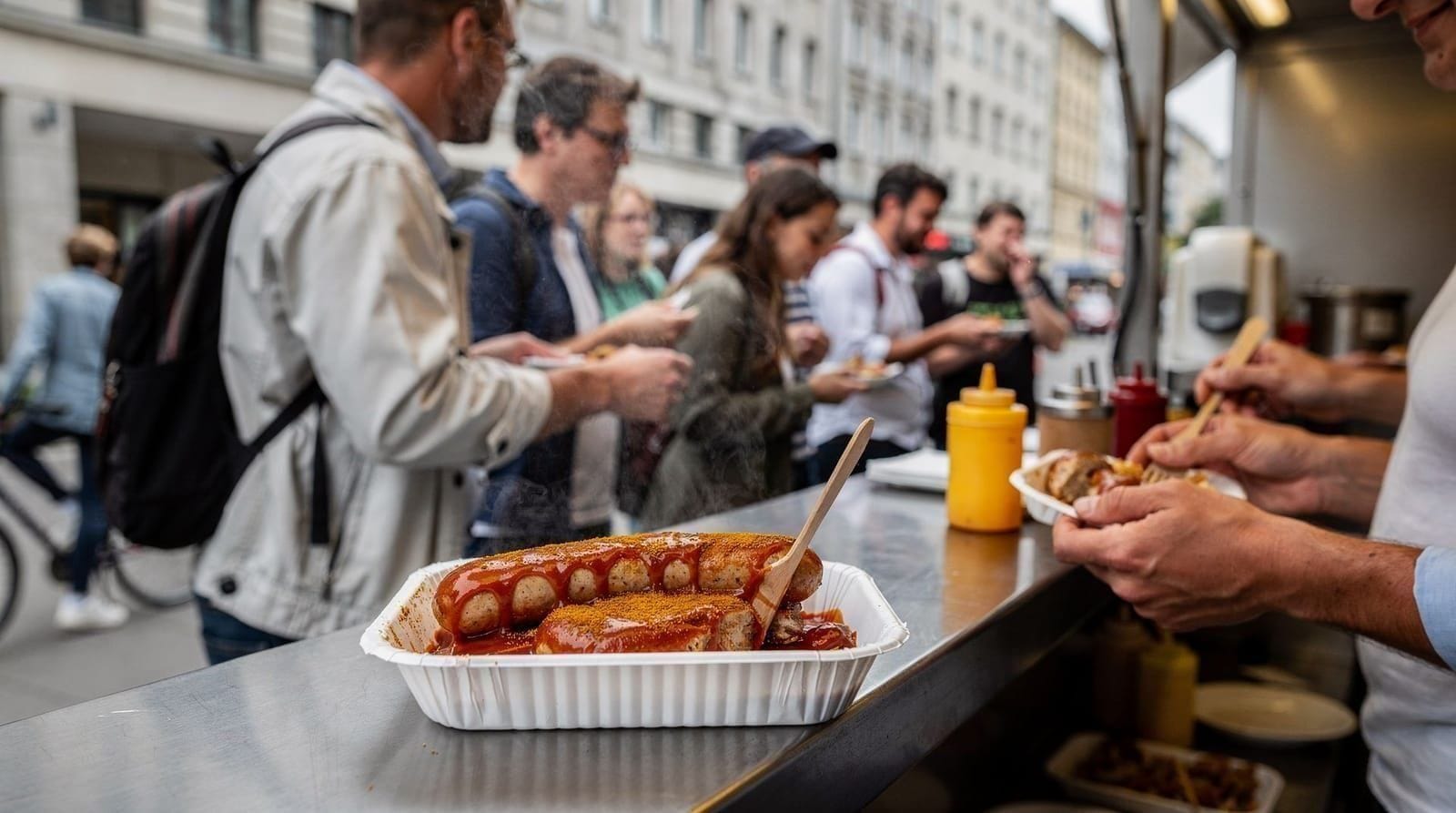
Currywurst and bratwurst stands. Sausage stands clustered near the Brandenburg Gate, the Holocaust Memorial, and along Unter den Linden charge €8-12 for a currywurst portion that costs €2.50-3.50 at a proper Imbiss stand in a residential neighbourhood. The mechanism is simple: captive audience, high foot traffic, and low repeat-visit probability. Konnopke’s in Prenzlauer Berg (under the U2 viaduct at Schönhauser Allee) and Curry 36 in Kreuzberg are the genuine article. Neither is more than fifteen minutes by public transport. The Berlin currywurst guide covers both in detail.
Souvenir stalls. Brandenburg Gate area souvenir stands sell items at two to four times the price of the same items at department stores or proper souvenir shops. A Kaiserreich-style military helmet replica that costs €15 at a souvenir stand on Pariser Platz costs €6-8 at the Kaufhof department store at Alexanderplatz. Branded Berlin merchandise is cheapest at the official Berlin Store outlets and airport shops.
Street performers near Brandenburg Gate. Street musicians are generally legitimate — this is not a scam category. However, the Brandenburg Gate area concentrates performers specifically because foot traffic is highest. Watch your pockets in standing crowds, as pickpockets (not the performers themselves) work the same dense crowds. This is standard European tourist-area advice, not specific to Berlin.
Donation scams and street hustles
Berlin has its own set of non-restaurant tourist extraction operations. These are concentrated in central Mitte, particularly around Alexanderplatz, the Hackescher Markt area, and around Museum Island.
Fake monks. Men in orange or saffron robes approach tourists, hand them a bracelet or trinket, and then solicit a donation — often with considerable social pressure and persistence. This is not an established Buddhist organisation. The practise has been documented across European cities since the 2000s. You are under no obligation to accept the bracelet or make any payment. Return the item immediately if handed one, or simply walk away.
Petition scams. A person approaches with a clipboard and a petition — typically about a charitable cause such as deaf children, environmental issues, or human rights. After signatures are collected, they ask for a cash donation. The cause is often fabricated or the money does not reach any charity. Legitimate petitions do not solicit cash donations on the street. You can decline to engage with a simple “no thank you” and continue walking.
Three-card monte and shell games. Particularly common in summer around tourist-heavy areas. The operator invites passers-by to guess which cup or card hides the target. There are no legitimate wins — accomplices in the crowd who appear to win are part of the operation, intended to establish credibility. Gambling with street operators is illegal in Berlin. If you see a gathering crowd around a cardboard box or folding table with card games or cups, continue walking.
The common thread across all these operations: they depend on social pressure and brief window of opportunity. The most effective response to all of them is immediate, polite disengagement — no eye contact, no hesitation, no explanation. A practiced “nein danke” works in every scenario.
Taxi and rideshare overcharging
A smaller but recurring complaint from visitors involves taxis at the airport and central train stations. Berlin taxis are metered and regulated, but a small number of drivers targeting obviously first-time visitors take deliberately longer routes, or quote a flat “tourist rate” that is well above the metered fare.
The fix is simple: insist on the meter (Taxameter) being switched on, or book through an app — FreeNow (the main Berlin taxi app) shows the estimated fare before you confirm, removing the negotiation entirely. From Berlin Brandenburg Airport (BER) to central Mitte, a metered taxi typically runs around €45-55; if you’re quoted significantly more as a flat rate before getting in, choose a different driver or switch to the FreeNow app. The Berlin Airport BER to city guide covers all transport options from the airport, including the train, which is both cheaper and often faster than a taxi during peak traffic.
What actually represents value in Berlin
Berlin is a city where the most powerful historical experiences are free. This is worth stating plainly because the commercial layer of tourist traps actively obscures it.
Free major memorials and museums:
The Holocaust Memorial (Memorial to the Murdered Jews of Europe) is free. The underground information centre beneath it — which documents individual victims and the historical mechanics of the Holocaust — is free.
The Topography of Terror, on the site of the former Gestapo and SS headquarters, is free and covers some of the most important historical material about the Third Reich anywhere in the world.
The Bernauer Strasse Wall Memorial is free and offers the most honest, comprehensive treatment of the Berlin Wall’s history, the death strip, and the people who crossed it.
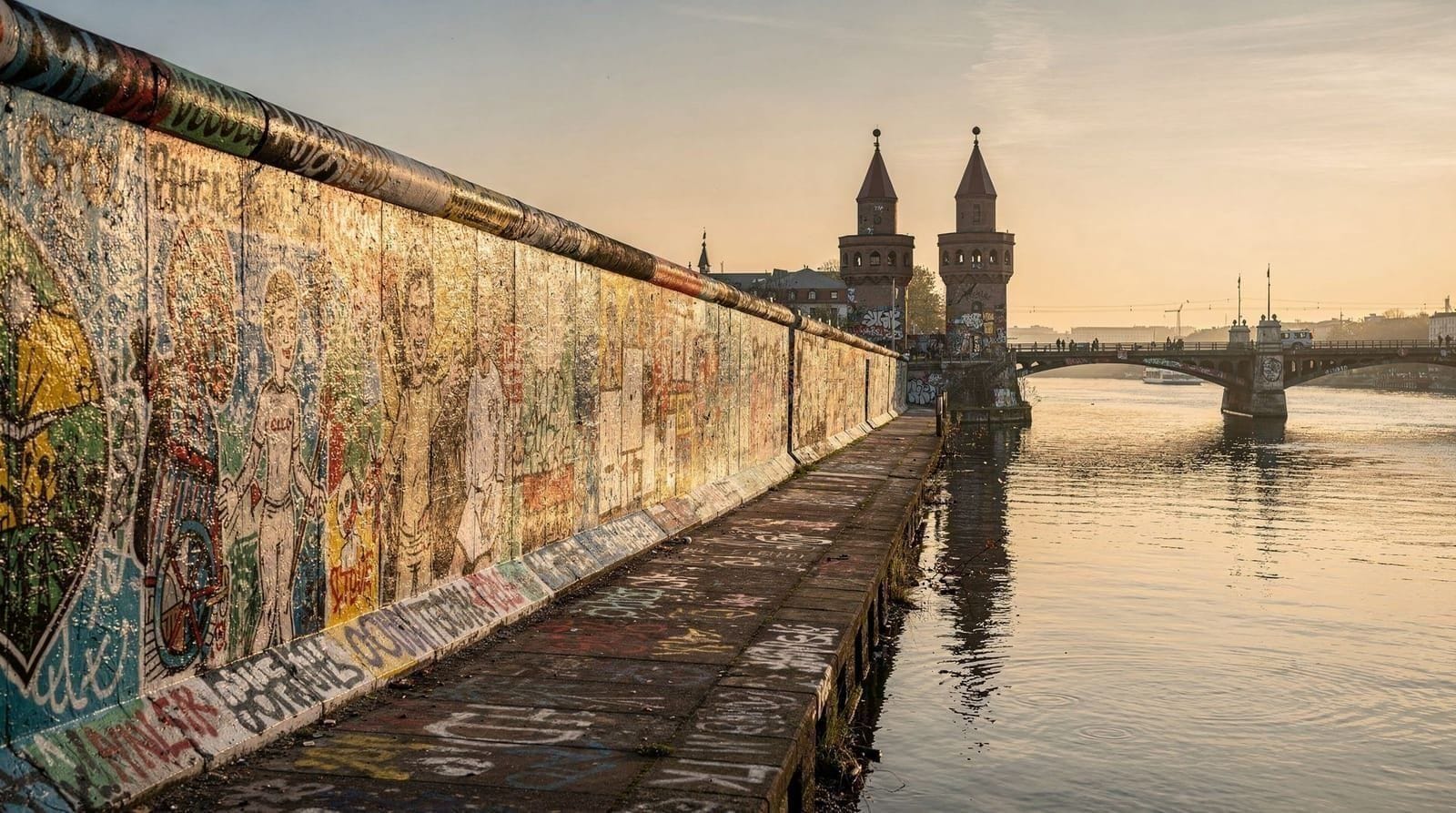
The East Side Gallery — the longest remaining section of the Wall, painted by artists from 21 countries in 1990 — is free to walk along.
The Deutsches Historisches Museum permanent collection is free for under-18s and low-cost (€8) for adults, covering German history from the Middle Ages to the present in one of the best-presented museum collections in Europe.
Free walking tours done right:
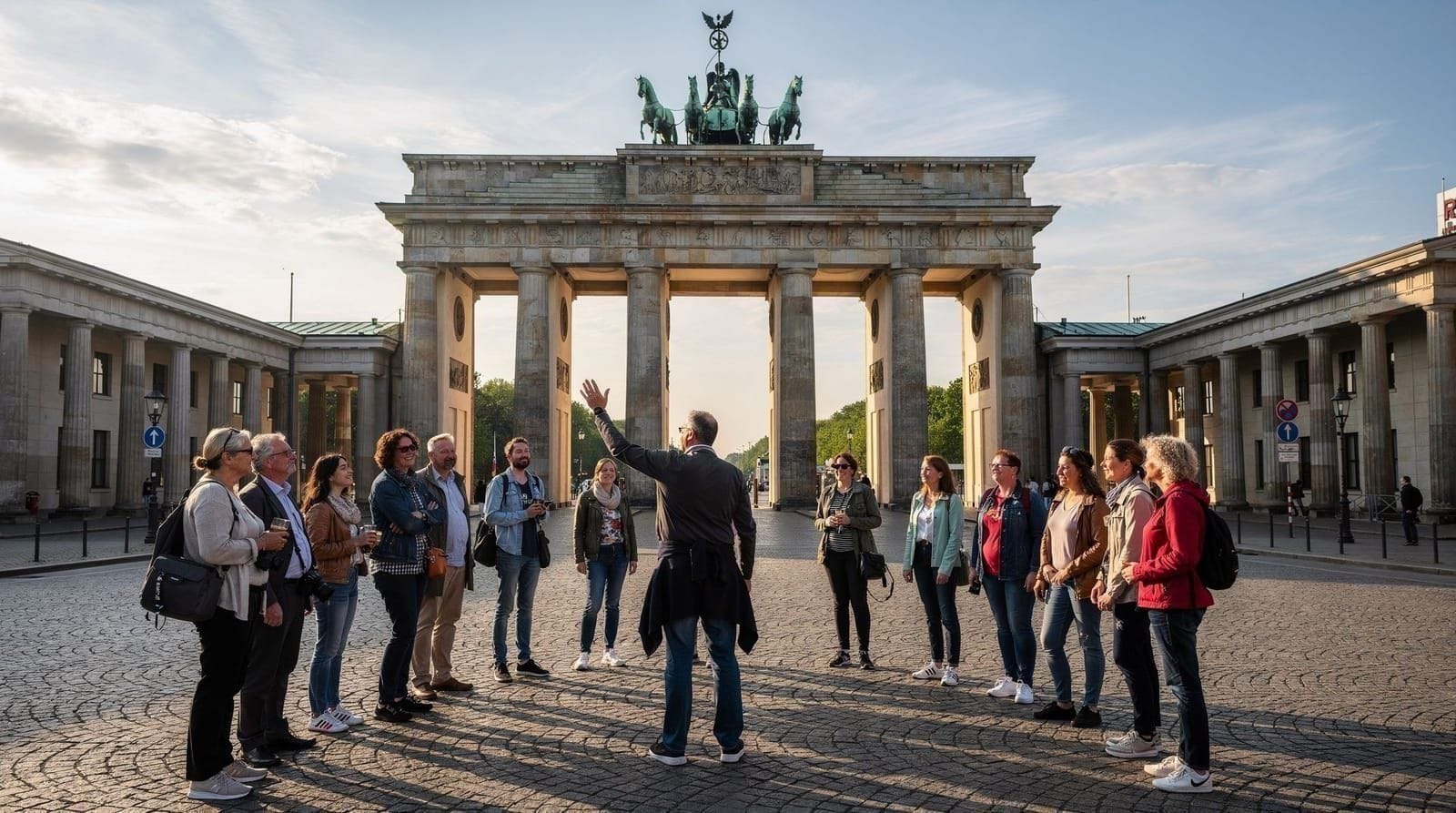
Tip-based free walking tours are genuinely good. Guides work on tips alone — typically €10-20 per person for a 2.5-3 hour tour — which creates real competitive incentives for quality. The central Mitte circuit covers the Brandenburg Gate, Holocaust Memorial, Topography of Terror, and Checkpoint Charlie with knowledgeable contextual commentary. Go on the early morning departure (10am) for smaller group sizes. Sandeman’s, New Berlin Tours, and Brewer’s Berlin Tours all operate from Brandenburg Gate.
Museum Pass Berlin:
If you plan to visit three or more state museums — which includes the Pergamon, Neues Museum, Altes Museum, Gemäldegalerie, and 30+ other institutions — the Museum Pass Berlin at €32 for three consecutive days is genuine value. The Neues Museum alone costs €12, Pergamon (or its current replacement exhibitions while the building is closed) costs €16. Three museum visits in three days exceeds the pass cost. See the Pergamon closed alternatives guide for current options while the Pergamon is under renovation until 2027.
For transport:
The Berlin AB-zone day ticket at €9.90 covers everything within the city rings. The WelcomeCard (€29.90 for 48 hours) only makes financial sense if you are visiting multiple paid attractions — run the calculation against your specific itinerary before buying. The full breakdown is in the Berlin WelcomeCard guide.
Check current Berlin WelcomeCard AB-zone pricing and inclusionsSpotting a trap before you’re in it
A handful of visual cues reliably predict a tourist-trap establishment or operation, regardless of which category it falls into. Learning to read them takes about a day of practice and saves money for the rest of the trip.
Menus in more than four languages displayed outside. Genuine neighbourhood restaurants rarely bother translating beyond German and English. A laminated menu in eight languages, often with photos of the food, signals an operation built around one-time customers rather than repeat local business.
Staff actively inviting passers-by inside. Restaurants with real local demand do not need to solicit foot traffic. A host standing on the pavement gesturing toward tables is optimising for volume over reputation.
Prices quoted only in round numbers with no cents. €15 flat rather than €13.90 is a small but consistent tell of pricing built for quick tourist transactions rather than the more precise pricing locals expect.
Anyone approaching you first. Whether it’s a “free” bracelet, a petition, a “special today only” offer, or a guide claiming the museum is “closed but I can get you in” — legitimate operations in Berlin do not need to intercept pedestrians. The Bebelplatz book-burning memorial and similar free historical sites never have staff soliciting tips at the entrance; if something claims special access for a fee at a free public memorial, it’s not legitimate.
Reviews that are all five-star and all recent. A quick check of a restaurant or tour operator’s review pattern — a cluster of near-identical five-star reviews posted within the same few weeks — is a reasonably reliable indicator of manipulated ratings, common among Mitte’s more aggressive tourist operations.
Frequently asked questions about Berlin tourist traps
Is Checkpoint Charlie worth visiting?
The site itself is worth a brief stop — it was one of the most important crossing points of the Cold War and the location of a real 1961 tank standoff between US and Soviet forces. However, the experience as it exists today is largely a commercial fabrication. The guardhouse is a replica built in 1990 after the original was removed. The costumed actors are not official, not historical, and charge €10-15 for a photograph. The real Cold War history is better communicated for free at the Bernauer Strasse Memorial, the Topography of Terror, and the free information boards at Checkpoint Charlie itself.Are the guards at Checkpoint Charlie official?
No. The costumed men in American military uniforms at Checkpoint Charlie are private individuals who are paid — by you — for photographs. They have no official status, no government affiliation, and no connection to the historical site. The genuine US military left Checkpoint Charlie in 1990. The current actors are part of a commercial photo operation that has been running since the early 2000s. You are under no obligation to interact with them or pay them anything.Where can I buy an authentic piece of the Berlin Wall?
Authentic, documented Wall fragments are sold at the Bernauer Strasse Wall Memorial shop and at the Checkpoint Charlie Museum shop — both provide certificates of provenance. Everywhere else, treat claims of authenticity with strong scepticism. The counterfeit market began within weeks of the Wall's fall in November 1989. Most souvenir stands sell rubble from East Berlin demolition sites, painted grey and presented as Wall fragments. Without documentation, a piece of concrete is just a piece of concrete.Are free walking tours in Berlin actually good?
Yes, genuinely. Tip-based free walking tours are one of the best-value experiences in Berlin. Guides work on tips alone, which creates strong competitive incentives for quality. The major operators — Sandeman's, New Berlin Tours, Brewer's Berlin Tours — all have experienced guides who cover the central Mitte circuit in 2.5-3 hours. Budget €10-20 per person in tips for a good tour. The key limitation is group size, which can reach 40-50 in peak summer — go on the early morning departure if you want a smaller group.Is the hop-on hop-off bus worth it in Berlin?
Rarely. At €30-35 per adult for a day ticket, the hop-on hop-off bus is expensive relative to what it delivers. A standard AB-zone day ticket (€9.90) covers all U-Bahn, S-Bahn, tram, and bus routes in the city. Berlin's public transport reaches every major attraction. The hop-on hop-off bus gets stuck in traffic on the same roads as regular buses, stops at designated points rather than exactly at attractions, and provides recorded commentary that is thinner than a basic guidebook. The one argument for it is if you are genuinely unable to navigate public transport — otherwise, it is poor value.What areas of Berlin have the most tourist traps?
The highest concentration of tourist traps is in central Mitte — specifically around Checkpoint Charlie, the Brandenburg Gate, Museum Island, and Alexanderplatz. Hackescher Markt restaurants are notorious for tourist-targeted pricing. The area around the TV Tower (Fernsehturm) at Alexanderplatz also concentrates overpriced food stands and souvenir shops. As a rule of thumb, if a street has menus displayed in eight languages and a member of staff standing outside inviting you in, the prices inside are aimed at people who will never return.Is the Berlin WelcomeCard worth it?
It depends entirely on your itinerary. The WelcomeCard (€29.90 for 48 hours, AB zone) combines unlimited public transport with discounts at 200+ attractions. The maths only works if you plan to visit multiple paid attractions — Museum Island entry alone is €22 per adult, so one Museum Island visit plus a couple of days of transport puts you close to break-even. If you are spending significant time in free attractions (memorials, parks, street art, markets), the transport-only day ticket at €9.90 per day is better value.