Berlin Wall complete guide — where to see it, what remains, and why it matters
Berlin: East Berlin and the Wall Walking Tour
Where can you see the Berlin Wall in Berlin today?
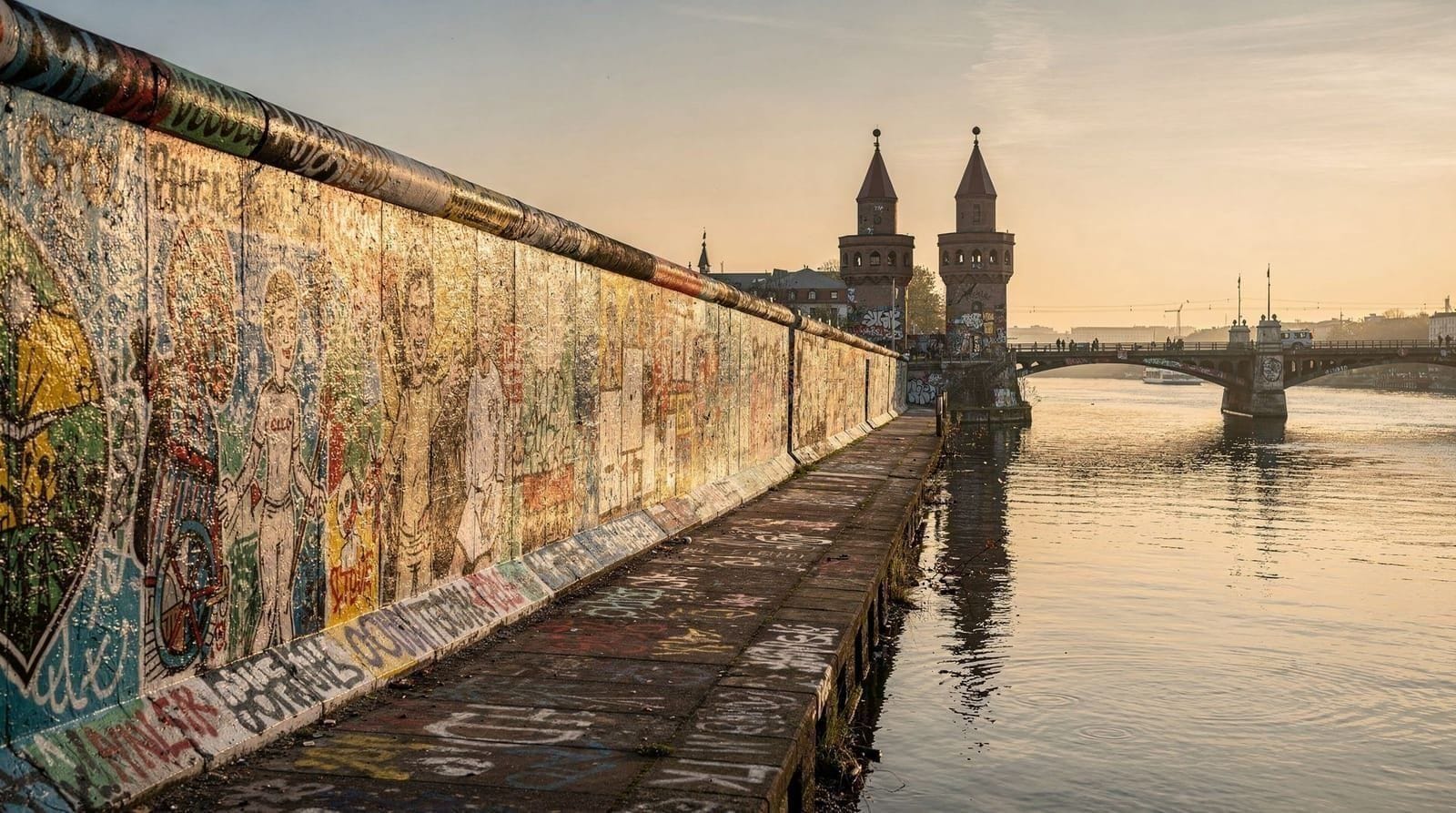
The longest surviving stretch is the East Side Gallery in Friedrichshain (1.3 km). The most historically complete site is the Gedenkstätte Berliner Mauer on Bernauer Strasse. Checkpoint Charlie is nearby but heavily commercialised. Most of the original Wall was demolished in 1990; only about 3 km of the 155 km total remain as protected monuments.
Where can you see the Berlin Wall today? The longest surviving section is the East Side Gallery in Friedrichshain at 1.3 km. The most historically complete and emotionally resonant site is the Gedenkstätte Berliner Mauer on Bernauer Strasse. Checkpoint Charlie nearby is heavily commercialised. Most of the 155 km border system was demolished by 1991; roughly 3 km survives in protected form across the city.
| Where | East Side Gallery (Friedrichshain), Bernauer Strasse (Prenzlauer Berg/Wedding) |
| Cost | Free open-air sites; indoor centres around €8-15 |
| Time needed | Full day for the main sites with travel time |
| Getting there | S-Bahn/U-Bahn to Ostbahnhof, Bernauer Strasse, or Kochstrasse |
| Best time | Early morning at East Side Gallery to avoid crowds |
The Wall you see today is a fraction of what existed
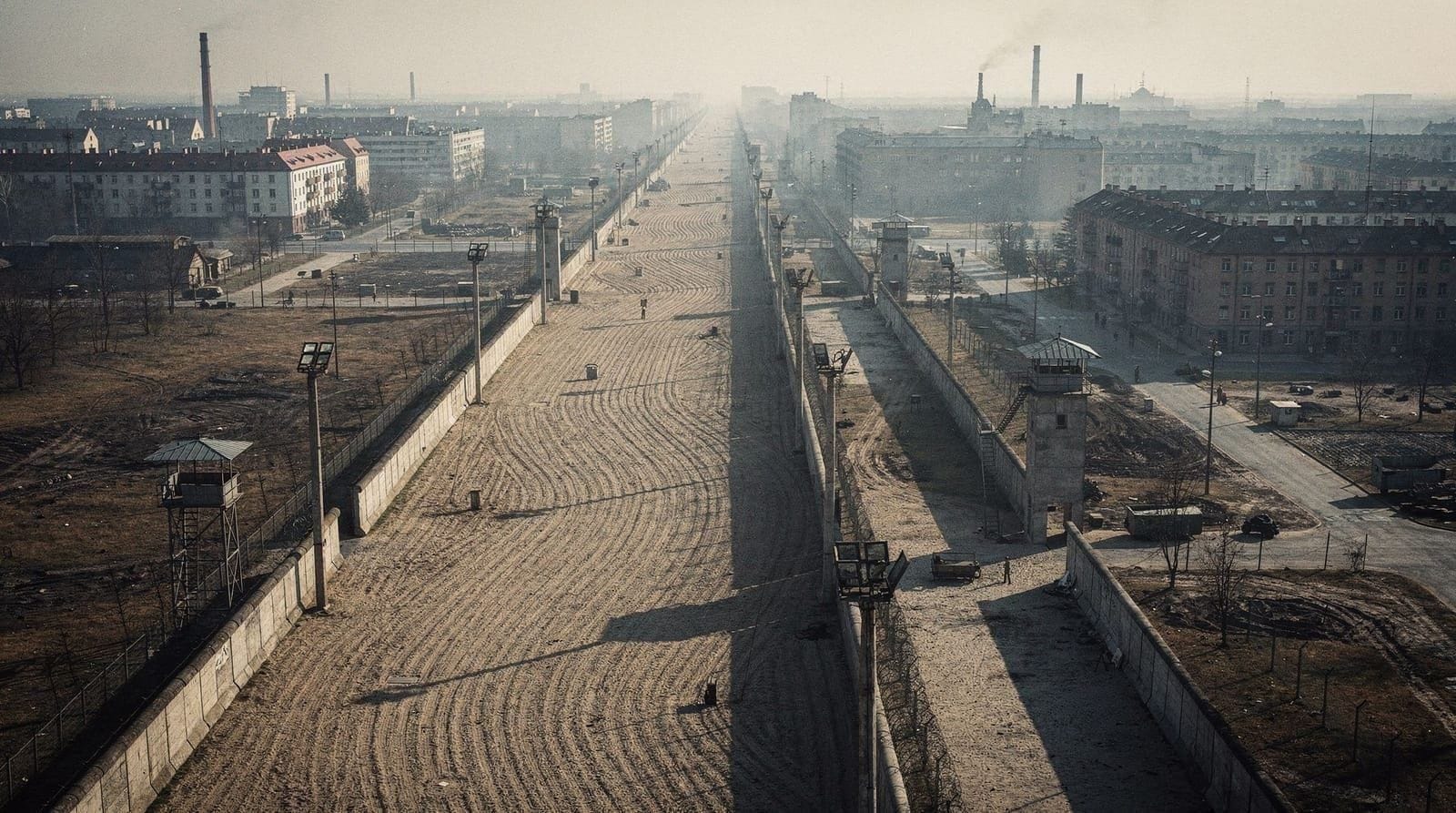
Walking the streets of central Berlin in 2026, it is easy to underestimate how total the division was. The Wall was not a single concrete barrier but a layered border fortification — sometimes 100 metres wide — that cut through the living fabric of the city. Streets were interrupted mid-block. Apartment buildings became part of the barrier (their rear windows bricked up, their residents eventually evicted). The Spree river was a border for stretches. Underground S-Bahn and U-Bahn lines were sealed.
The “death strip” (Todesstreifen) between the two walls was raked to show footprints, patrolled by dogs on wire runs, and covered by automatic shooting devices (SM-70 mines) from 1971 onward. Watchtowers at 300-metre intervals gave guards clear sightlines. The entire system was designed not to keep people out, but to keep East German citizens in.
Understanding this helps explain why the surviving sections feel incomplete. The East Side Gallery shows the outer wall as seen from the east — what East Germans looked at. The Bernauer Strasse memorial reconstructs the full multi-layer system. Mauerpark sits in what was the death strip itself. Each site preserves a different layer of the original structure.
The five most significant surviving sites
1. East Side Gallery, Friedrichshain
The most visited and most photographed section: 1.3 km of the original outer Wall along Mühlenstrasse, painted in 1990 by 118 artists from 21 countries. The murals include some of the most replicated images in post-war art — Dmitri Vrubel’s fraternal kiss between Brezhnev and Honecker, Birgit Kinder’s Trabant driving through the Wall.
The stretch is open 24 hours, free, and runs along the north bank of the Spree near Ostbahnhof. It gets very crowded in summer afternoons. Go early morning for the least obstructed views. Several segments have been repainted due to weather damage; some are controversially restored rather than original 1990 paint.
For detailed guidance on specific murals and history, see East Side Gallery guide.
2. Gedenkstätte Berliner Mauer, Bernauer Strasse
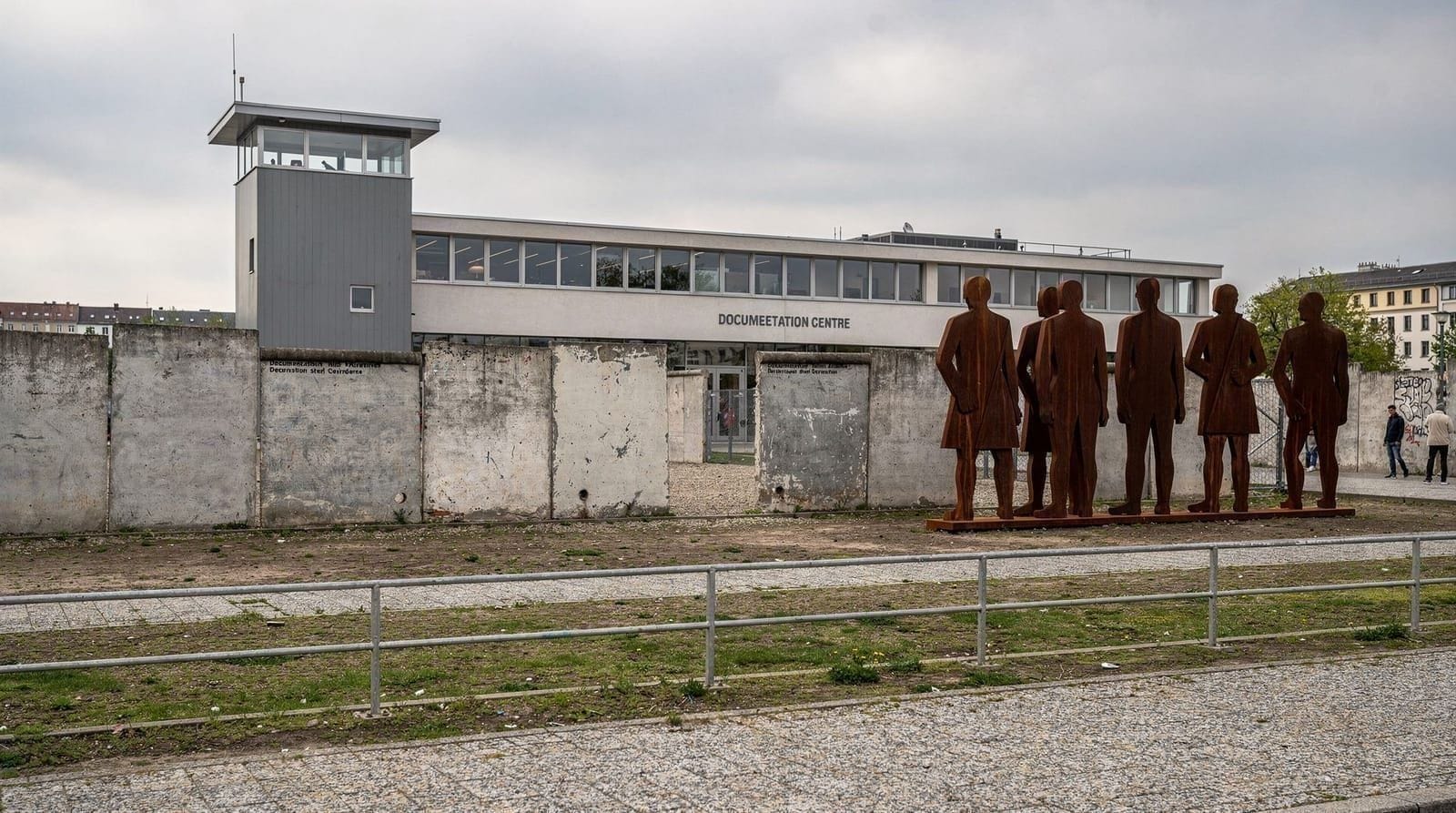
The principal Berlin Wall Memorial. Unlike the East Side Gallery, which shows a single element, the Bernauer Strasse site reconstructs the full border apparatus — outer wall, death strip, inner fence, watchtower, and tunnel system — across a 1.4 km outdoor exhibition running along the former border.
The indoor documentation centre (free entry) is the most serious scholarly resource on the Wall’s history available to the public. The open-air site is always accessible. There is also a preserved section of original Wall with the death strip intact, a reconstructed watchtower, and the Chapel of Reconciliation (Kapelle der Versöhnung) built on the site of a church that stood in the death strip and was demolished by the GDR in 1985.
See the full Berlin Wall Memorial guide for practical planning.
3. Checkpoint Charlie, Mitte
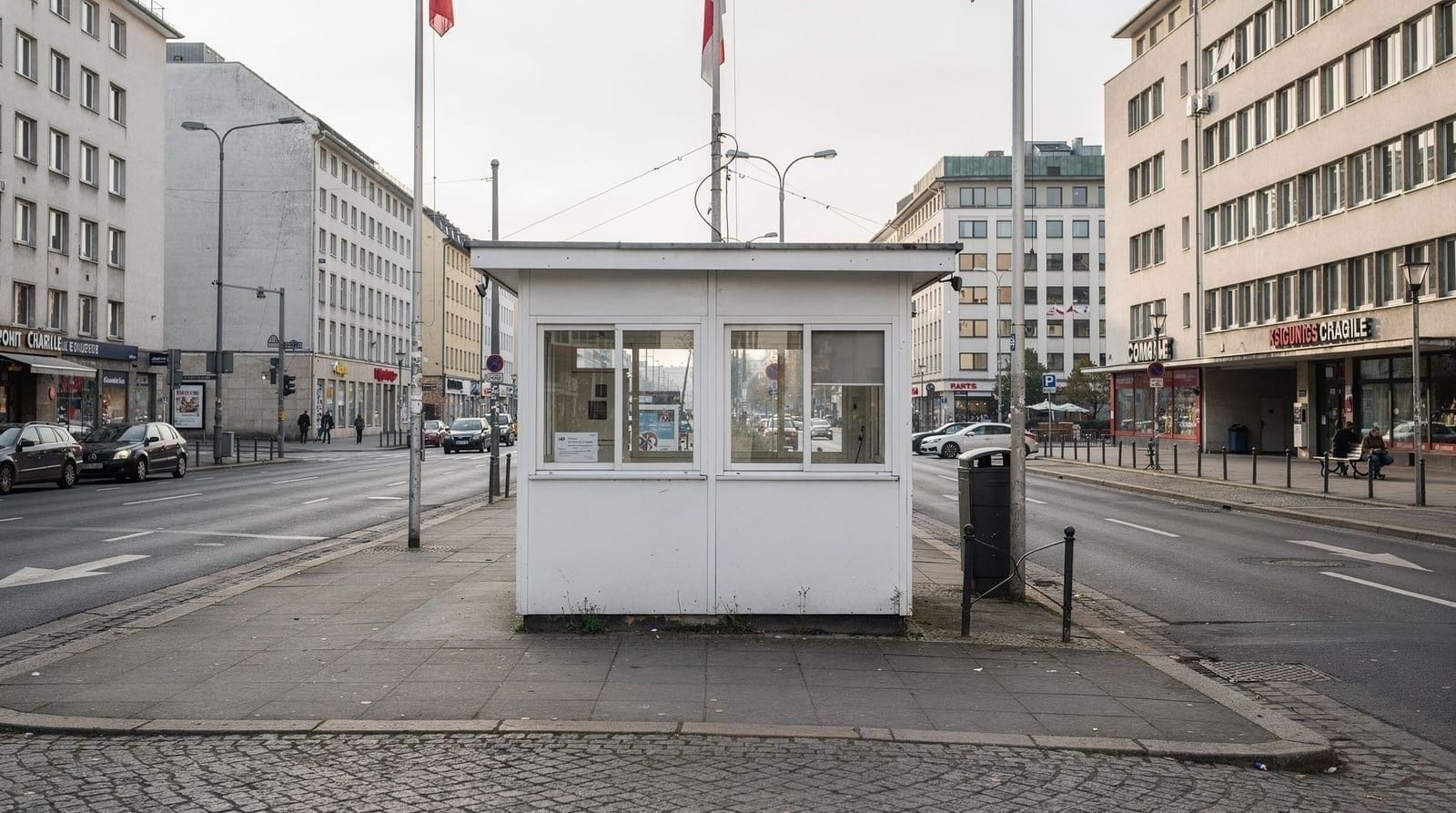
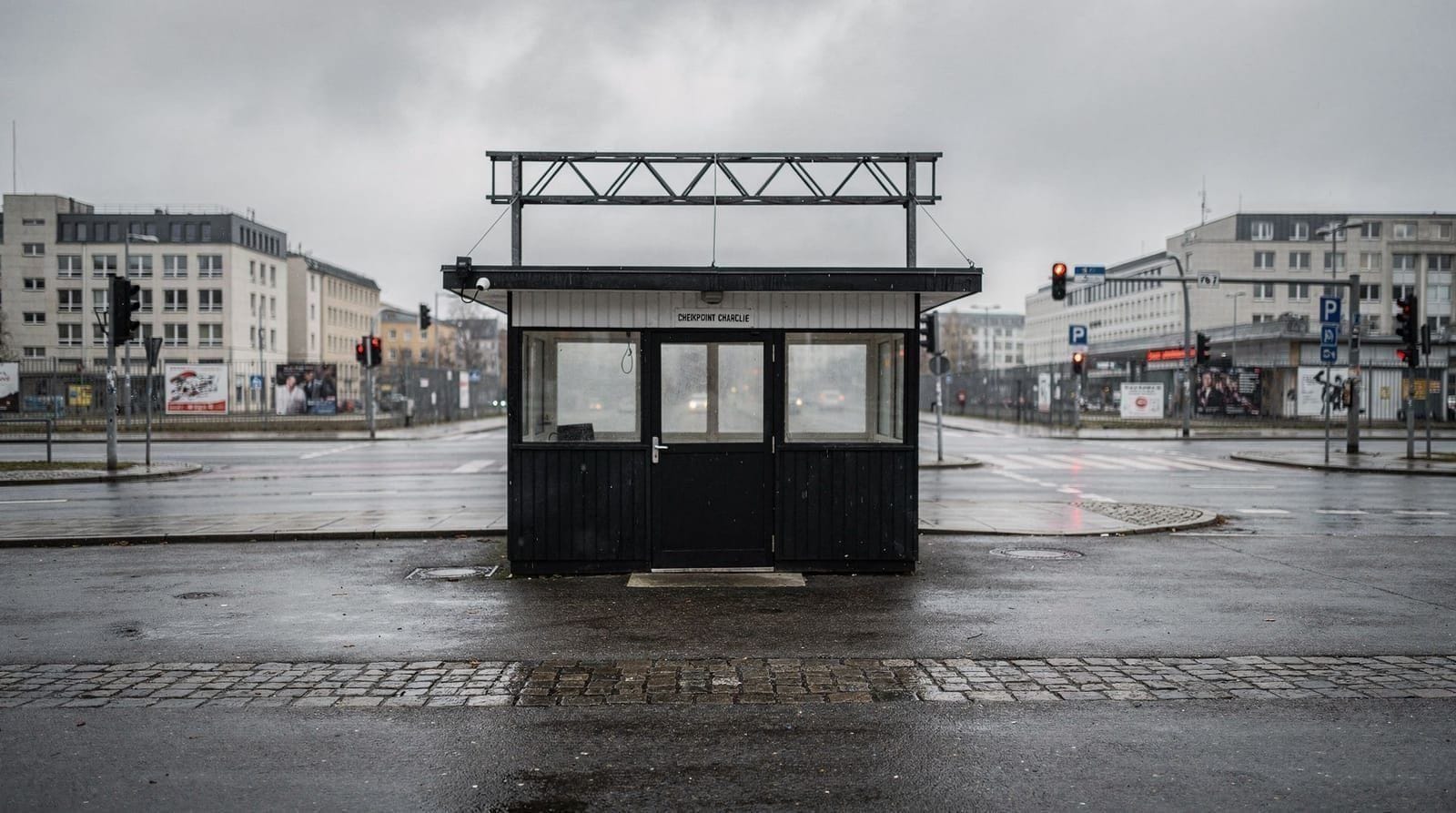
The most famous crossing point, and the most commercially exploited site. The original guardhouse was removed in 1990; the current structure in the middle of Friedrichstrasse is a replica. The surrounding area is dense with souvenir stalls and costumed “guards” charging €10 for photographs.
The Checkpoint Charlie Museum (Mauermuseum) on the east side of the road has genuine historical artefacts including escape vehicles and documents, but is overpriced (€15) and exhibits are in German with limited English signage. For honest assessment, see the Checkpoint Charlie guide.
What remains genuinely worth visiting is free: the open-air Wall sections on Zimmerstrasse just east of the checkpoint, and the historical information boards on site.
4. Mauerpark, Prenzlauer Berg
The name — “Wall Park” — is the clue. Mauerpark occupies the former death strip between Prenzlauer Berg and Wedding, along a section of the Wall where the death strip was unusually wide. The park opened in 1994 and is now best known for its Sunday flea market and open-air karaoke sessions, but the Wall’s physical geography is still readable in the topography.
A surviving section of original Wall (graffiti-covered, not maintained) runs along the western edge of the park. Practical guide: Mauerpark guide.
5. Topography of Terror site, Zimmerstrasse
The section of Wall running along the north edge of the Topography of Terror open-air exhibition in Kreuzberg is one of the few places where the Wall can be seen alongside documentation of the Nazi state apparatus it physically overlaid. The Wall here was built directly over the former headquarters of the Gestapo and SS. Both the Wall section and the Topography of Terror exhibition are free. This pairing of two periods of totalitarianism makes the site exceptionally thought-provoking.
See the Topography of Terror guide for the Nazi history context.
The five sites compared:
| Site | What it preserves | Cost | Time needed |
|---|---|---|---|
| East Side Gallery | Longest surviving outer wall, painted murals | Free | around 1.5 hours |
| Bernauer Strasse Memorial | Full multi-layer border system | Free (indoor centre free too) | around 2 hours |
| Checkpoint Charlie | Replica guardhouse, commercial zone | Free area; museum around €15 | around 1 hour |
| Mauerpark | Death strip topography, graffiti wall section | Free | around 45 minutes |
| Topography of Terror stretch | Wall over former Gestapo/SS HQ | Free | around 45 minutes |
How the Wall was built — the physical system
The Wall went through four major construction phases between 1961 and 1980:
First generation (August 1961): Barbed wire stretched overnight. Within days, workers began laying a basic concrete block wall — improvised and visually crude.
Second generation (1962–1965): Improved concrete blocks, anti-vehicle barriers, and the first death strip raking.
Third generation (1965–1975): A new prefabricated concrete wall with L-shaped base sections, more systematic watchtower placement, and anti-tank obstacles.
Fourth generation (1975–1980): The final and most recognisable form — 12 cm-thick pre-cast concrete segments (UL 12.11), 3.6 metres high, with a smooth rounded pipe along the top to prevent grip. This is the wall that appears in most photographs and the surviving sections seen today. About 45,300 segments were used.
The system also included 302 watchtowers, 105 km of anti-vehicle trenches, and 259 dog-run installations. The death strip was lit by approximately 127 km of lighting during the night.
The 1961–1989 timeline
August 13, 1961: Operation Rose — Wall construction begins at midnight. West Berliners awake to find streets blocked and tram lines cut. Western Allied forces do not intervene; the Wall is technically within East German territory.
August 17, 1962: 18-year-old Peter Fechter is shot while attempting to cross near Checkpoint Charlie and bleeds to death in the death strip over the course of an hour while West Berlin crowds watch. Allied soldiers do not intervene, citing jurisdiction restrictions. The incident becomes an international symbol.
June 1963: US President John F. Kennedy delivers his “Ich bin ein Berliner” speech at Rathaus Schöneberg, pledging Western solidarity. Estimated crowd: 450,000.
June 12, 1987: Ronald Reagan delivers his “Mr. Gorbachev, tear down this wall” speech at the Brandenburg Gate, in front of a Wall section that no longer exists. The speech has symbolic significance beyond its immediate political effect.
November 9, 1989: The Wall falls. See cold war Berlin history guide for the full political context.
July 1990: German reunification treaty signed. Demolition of the Wall accelerates.
Guided tours — what’s worth it
A self-guided walk is easy and free. The information boards at Bernauer Strasse and the East Side Gallery are detailed in English. However, a guided tour adds genuine value for understanding the human stories behind specific Wall sections — escape attempts, the political negotiations, the GDR’s internal logic.
Walking tour of Berlin’s East Wall and Cold War history — English guide, small groupThe most useful format is a 3–4 hour walking tour connecting multiple Wall sites with historical interpretation. Tours that focus only on Checkpoint Charlie and the East Side Gallery miss the Bernauer Strasse documentation centre, which is the most substantive site.
Berlin Cold War, espionage and Wall tour — 3 hours, covers key sitesPractical planning — getting around the Wall sites
The main Wall sites are spread across the eastern half of the city. Public transport connections:
- East Side Gallery: S-Bahn S3/S5/S7/S9 to Ostbahnhof, or U1 to Warschauer Strasse (5 min walk)
- Checkpoint Charlie: U6 to Kochstrasse (exit directly adjacent)
- Bernauer Strasse Memorial: U8 to Bernauer Strasse, or tram M10
- Mauerpark: U2 to Eberswalder Strasse, or tram M10
A logical half-day route: start at Bernauer Strasse (documentation centre + outdoor memorial), then U8 south to Kochstrasse for Checkpoint Charlie, then U6 to Stadtmitte and walk to the Topography of Terror, then bus or S-Bahn to Ostbahnhof for the East Side Gallery.
Allow at least 45 minutes at Bernauer Strasse, 30 minutes at Checkpoint Charlie, 45 minutes at the Topography of Terror, and 1.5 hours at the East Side Gallery.
For a dedicated Cold War itinerary covering these sites plus the Stasi Museum and DDR Museum over three days, see the Cold War Berlin itinerary.
What the Wall looked like from each side
One historical detail that often surprises visitors: the Wall looked completely different depending on where you stood.
From West Berlin: The western face was the outer wall — blank concrete, heavily graffitied from the 1970s onward. West Berliners could approach within centimetres; there was no death strip on the western side. The Wall became a canvas for political art and protest.
From East Berlin: Residents saw only the inner face, hundreds of metres back from the outer wall. The death strip between the inner and outer walls was forbidden territory. The visible “border area” was kept clear and under surveillance. The Wall itself was officially called the “Anti-Fascist Protection Rampart” (Antifaschistischer Schutzwall) by the GDR government.
This asymmetry — one side could touch it, the other could not go near it — shaped how the Wall was experienced and how it is remembered.
The double row of cobblestones
Throughout central Berlin, a double row of cobblestones (Pflastersteine) marks the former path of the Wall. The trail was installed from 1996–2000 and runs approximately 16 km. It is embedded in streets, squares, and courtyards without interruption.
You’ll notice it crossing Potsdamer Platz, running along Niederkirchnerstrasse near the Topography of Terror, and through the government district. It is one of the most understated and effective memorials in the city — easy to overlook, impossible to erase once you’ve seen it.
The Wall in numbers
- Total length of border around West Berlin: 155 km
- Wall segments (fourth generation): 45,300
- Height of final Wall: 3.6 metres
- Watchtowers: 302
- Escape tunnels discovered: 70+
- Successful escapes: approximately 5,000 over 28 years
- Deaths at the Berlin Wall: at least 140 confirmed
Watchtowers and lesser-known surviving fragments
Beyond the five major sites, a handful of scattered fragments reward visitors with more time. A small number of original watchtowers survive outside their memorial contexts — isolated structures standing in what are now residential streets or riverside paths, easy to miss unless you know to look. The surviving watchtowers guide maps the ones still accessible in 2026.
Along the Spree near Wannsee, short sections of the border fence that once ran along the water are occasionally visible from boat tours, though most riverside fortifications were removed early. In Treptow and other outer districts, unmarked concrete fragments occasionally surface in unexpected places — a garden wall, a section incorporated into later construction — remnants of a period when Wall segments were sold or repurposed rather than preserved.
Combining Wall sites with the wider Cold War story
The Wall is one thread in Berlin’s broader Cold War history, and several nearby sites deepen the picture without requiring a separate trip. The DDR Museum reconstructs daily life in East Germany with hands-on exhibits, useful context after seeing the Wall’s physical remains. The Stasi Museum covers the surveillance apparatus that operated alongside the physical border. For a day trip beyond the city, Sachsenhausen adds the earlier layer of totalitarian history that the GDR’s own security state inherited and repurposed.
If you’re building a themed multi-day visit around this material, the Cold War Berlin itinerary sequences these sites into a coherent three-day arc rather than a scattered list of stops.
Frequently asked questions about Berlin Wall complete guide
How long was the Berlin Wall?
The full border system stretched 155 km around West Berlin, including 43.1 km through the city itself. The "wall" was actually a layered system — an outer concrete wall, a death strip, watchtowers, anti-vehicle trenches, and a second inner fence. The iconic precast concrete segments (the "Mauer") ran 106 km.When was the Berlin Wall built and why?
Construction began overnight on 13 August 1961, ordered by SED First Secretary Walter Ulbricht with Soviet approval. The immediate trigger was an exodus crisis — 3.5 million East Germans had fled west via Berlin since 1949, and the GDR economy was collapsing. The wall stopped the haemorrhage within days.When did the Berlin Wall fall?
The Wall fell on 9 November 1989, when East German spokesman Günter Schabowski mistakenly announced that new travel regulations were effective "immediately, without delay." Crowds gathered at checkpoints, guards were overwhelmed, and the gates were opened. Physical demolition began in early 1990 and was largely complete by 1991.How many people died trying to cross the Wall?
The Berlin Wall Memorial documents at least 140 people killed at the Berlin Wall between 1961 and 1989 — though the precise count remains disputed due to GDR secrecy. The most recent systematic research by the Centre for Contemporary Historical Research (ZZF) gives a figure of 140 confirmed deaths in the Berlin sector.Is the East Side Gallery the original Wall?
Yes, the East Side Gallery is an original section of the outer wall (the side facing East Berlin), left standing after reunification. The painted murals were added in 1990 by international artists. Several segments have been replaced or repainted since then due to weather damage and vandalism.Do I need to pay to see the Berlin Wall?
The major open-air sites — East Side Gallery, Bernauer Strasse memorial grounds, Mauerpark, and the scattered watchtowers — are free. The indoor documentation centres at Bernauer Strasse and the Checkpoint Charlie Museum charge entry (€8–15). The DDR Museum on the Spree charges €12.50.How much time do I need to see the Berlin Wall sites?
For the key sites in one day — East Side Gallery (1.5 hours), Bernauer Strasse memorial (2 hours), Checkpoint Charlie area (1 hour) — allow a full day with travel time on the U-Bahn. A dedicated Cold War walking tour covers multiple sites in 3–4 hours with guide context.
Top experiences
Bookable activities with verified prices and instant confirmation on GetYourGuide.