Life in the GDR — daily reality in East Germany and what it means for visitors today
Berlin: DDR Museum Skip-the-Line Ticket
What was daily life like in East Germany (GDR)?
Life in the GDR combined economic scarcity with genuine social provisions — near-universal employment, free healthcare and childcare, subsidised housing and food. It also meant pervasive state surveillance, restricted travel, limited consumer choice, and the ever-present possibility of Stasi monitoring. The experience was neither purely oppressive nor comfortable, and differed substantially by generation, location, and political compliance.
What was life like in East Germany? The GDR offered near-universal employment, free healthcare, and subsidised housing alongside pervasive surveillance, restricted travel, and a consumer economy of persistent shortages. Understanding this context is what makes visiting Berlin’s Cold War sites meaningful rather than merely scenic. This guide gives you the social history you need before you go.
| Where to start | DDR Museum, Karl-Liebknecht-Strasse 1, Mitte |
| Cost | Around EUR 12.50 (DDR Museum); free (Stasi Museum permanent exhibition, Tränenpalast) |
| Time needed | Half a day to cover the DDR Museum and Karl-Marx-Allee |
| Getting there | U-Bahn/S-Bahn Alexanderplatz or Hackescher Markt |
| Best paired with | Stasi Museum for the surveillance side of the story |
Why the GDR experience matters for Berlin visitors
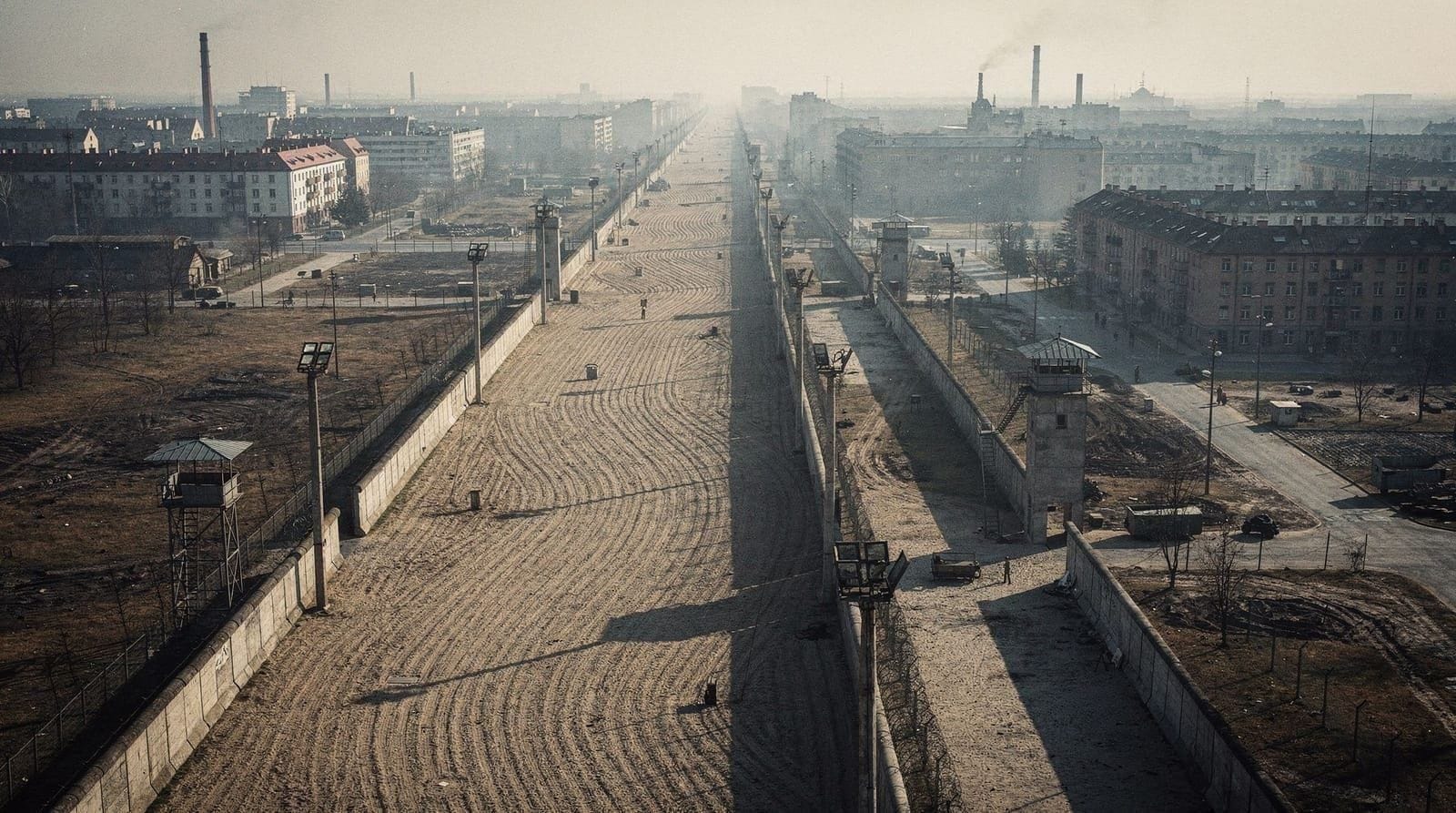
Every significant Cold War site in Berlin — the East Side Gallery, Checkpoint Charlie, the Bernauer Strasse Memorial, the Stasi Museum, the DDR Museum — is ultimately about the experience of people who lived in a state that imprisoned them within its borders and monitored their lives. Without understanding what that state was actually like to live in, the sites risk becoming backdrop for photographs rather than genuine encounters with history.
The GDR lasted 41 years (1949–1990). Over 16 million people lived there. Many of them are alive today. Their experience of the GDR was neither uniformly terrible nor uniformly acceptable — it was complex, conditioned by generation and geography and political compliance, and marked by the specific tensions of a society that claimed to be building a better future while maintaining its existence by force.
The material conditions of GDR life
Housing
Most GDR citizens lived in Plattenbau — prefabricated concrete apartment buildings, erected in massive housing estates from the 1960s onward. The largest was Marzahn in East Berlin, built from the mid-1970s and eventually housing 170,000 people. These buildings were functional, heated, and rent was extraordinarily cheap by any standard (10–50 Ostmark per month, when an average industrial wage was 800–1,200 Ostmark). They lacked any aesthetic distinction and were built to industrial standards of speed rather than quality.
The Altbau (pre-war old apartment buildings) that remained — particularly in Prenzlauer Berg and Mitte — were often in a state of gradual disrepair, since the GDR prioritised new construction over restoration. The crumbling grandeur of unrenovated Prenzlauer Berg in the 1980s is documented in numerous photographs. After reunification, these same Altbau buildings became the most desirable and expensive real estate in Berlin.
Food and shortages
The GDR maintained subsidised prices for basic foods. A kilogram of bread cost 52 Pfennig. Potatoes, milk, and basic vegetables were cheap and available. The problem was variety and reliability. Certain goods — coffee, bananas, oranges, Western consumer items — were either absent from normal stores or available only at Intershops, which accepted only Western currencies (DM, dollars).
Obtaining coffee required connections, ingenuity, or access to Intershop hard currency. In the early 1980s, a GDR-wide coffee shortage led to the introduction of “Mischkaffee” — a blend extending genuine coffee with grain substitutes. The public reaction was intensely negative; the policy was eventually reversed.
Queuing was a constant. If you passed a queue, you joined it first and asked what was being sold later — the queue itself was the signal that something worth having had arrived.
Consumer goods
The Trabant was only the most famous example of a broader reality: consumer goods were available, but choice was extremely limited and waiting times were measured in years. Citizens could register for a colour television, a refrigerator, or a car and wait. Connections (Beziehungen) — personal networks within the system — could shorten waiting times considerably. The ability to obtain things through Beziehungen was one of the primary social currencies of GDR life.
The Exquisit and Delikat shop chains sold higher-quality goods at higher prices (paid in Ostmark). Intershops sold Western goods but accepted only Western currency, which most GDR citizens did not legally possess (holding Western currency was technically illegal until 1974). Relatives in West Germany who sent Westpakete (Western packages) containing consumer goods were a vital network for many families.
Regional variation within the GDR
Life in the GDR was not uniform, and Berlin’s experience differed in important ways from the rest of the country. East Berlin, as the GDR’s capital and showpiece, received disproportionate investment in housing, infrastructure, and retail supply — the shelves in Alexanderplatz’s Centrum department store were noticeably better stocked than equivalent shops in provincial towns like Cottbus or Rostock. Access to Western television and radio was another major regional divide: most of the GDR could receive West German broadcasts, but the area around Dresden, sitting in a broadcast shadow, was informally nicknamed “Tal der Ahnungslosen” — the Valley of the Clueless — for its comparative isolation from Western media.
The surveillance state
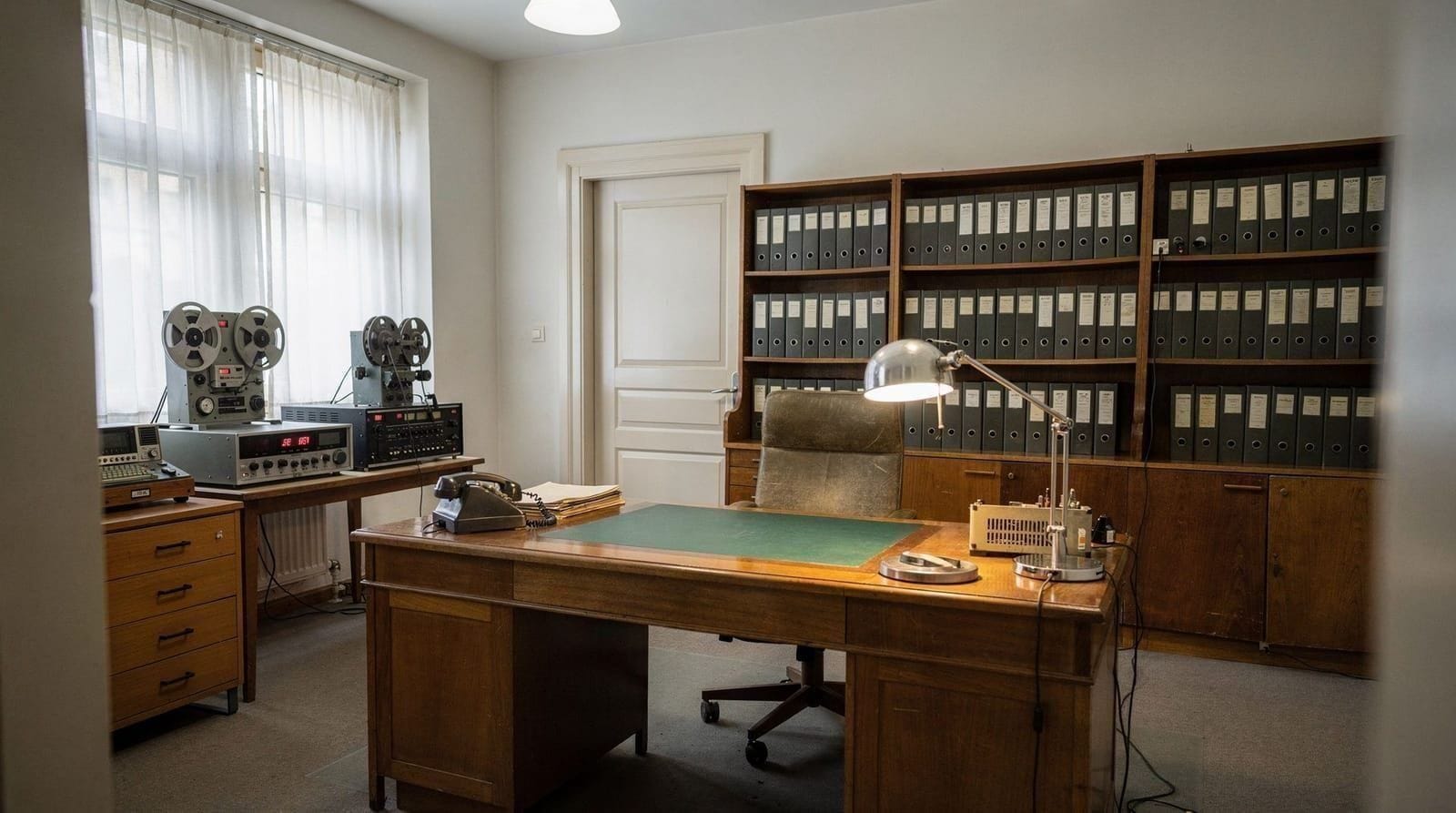
The Stasi (Ministerium für Staatssicherheit) was the instrument through which the SED party maintained political control. It was one of the most comprehensive surveillance operations in history.
At its 1989 peak: 91,015 full-time employees, 174,000 registered unofficial informants (IM), and an estimated further 500,000 “contact persons” providing occasional information. The Stasi maintained files on an estimated six million people — out of a total population of 16 million.
Informants were recruited through a combination of ideological commitment, social pressure, and blackmail. They were present in every workplace, apartment building, sports club, and social group. Many informants were unaware of how their casual comments were being recorded and used. Some were reporting on their own family members.
The practical effect was chronic self-censorship. Most East Germans learned to maintain two distinct registers of speech: what they would say in any semi-public context, and what they would say only in the most private and trusted settings. Even then, there was no certainty. The Stasi intercepted mail routinely, had technology for recording conversations through walls, and placed bugs in apartments of persons of interest.
The consequences of being reported could range from denial of university access or promotion, to interrogation, to imprisonment. The Stasi prison at Hohenschönhausen, now a memorial (see Stasi Museum guide), gives the most direct experience of what interrogation and imprisonment in the Stasi system meant.
The Stasi files were preserved after 1989 by citizen action — crowds occupied Stasi buildings and prevented document destruction. The Bundesbeauftragte für die Stasi-Unterlagen (BStU, Federal Commissioner for Stasi Records) holds 111 km of paper files, 1.8 million photographs, and 39 km of files that were partially destroyed and have been painstakingly reconstructed. Any person who was a GDR citizen can request to see their own file.
Education, work, and political conformity
The GDR operated a comprehensive state education system from pre-school (Kinderkrippe from age 0, Kindergarten from 3) through to university. Childcare was heavily subsidised and widely available — women’s workforce participation was among the highest in the world. University education was free but access was heavily conditioned by political conformity.
The youth organisations — Pioneers (Thälmannpioniere) for children and Free German Youth (Freie Deutsche Jugend, FDJ) for teenagers — were nominally voluntary but in practice near-universal. Participation in FDJ activities was a prerequisite for university access. The Jugendweihe (youth consecration) at age 14 was a secular coming-of-age ceremony that had replaced Christian confirmation; by the 1980s it was participated in by 97% of GDR 14-year-olds.
Religious practice, particularly within the Protestant church, occupied a genuinely unusual position in this system. Unlike most other Warsaw Pact states, the GDR tolerated an organised church presence, and Protestant parishes became one of the few spaces where independent discussion could occur with relative safety, since church buildings were not formally state property. This is why the peaceful protest movement that eventually toppled the regime in 1989 organised so heavily around churches — the Monday demonstrations that began at Leipzig’s Nikolaikirche in September 1989 grew directly out of prayer meetings that had been running quietly for years before they became the visible spearhead of mass protest.
The political structure was called “democratic centralism” — in theory, power flowed from below; in practice, the SED (Sozialistische Einheitspartei Deutschlands) controlled all significant appointments, and political dissent was an act of courage with concrete personal consequences.
Culture and sport in the GDR
The GDR put extraordinary resources into state-sponsored culture and sport. The Kulturpalast in Dresden, the Staatsoper Unter den Linden in East Berlin, the film studio DEFA in Babelsberg — all produced work of genuine quality, though within politically defined parameters. DEFA produced approximately 700 feature films between 1946 and 1992; many are well-regarded by film historians, and several — “Die Legende von Paul und Paula” (1973), “Solo Sunny” (1980) — achieved cult status.
GDR sport is better known and more controversial. The state athlete programme, particularly in swimming and track and field, produced a remarkable Olympic medal haul disproportionate to the country’s size. The systematic doping programme that underpinned many of these achievements — the “State Plan 14.25,” which administered performance-enhancing drugs to athletes often without their informed consent — became public after reunification. Many former GDR athletes have health consequences today.
Literature occupied an unusually central place in GDR public life, in part because of the constraints placed on it. Writers such as Christa Wolf and Heiner Müller worked within and against the boundaries of what the SED considered acceptable, producing work that circulated widely and was read with an attentiveness that citizens of a censored society often bring to texts that seem to speak in code. Some writers who fell too far outside acceptable bounds, including the singer-songwriter Wolf Biermann, were stripped of citizenship and expelled — Biermann’s 1976 expulsion after a concert in West Germany triggered a wave of protest from other GDR artists and intellectuals, an early and significant crack in the cultural consensus the state relied on.
The Ostalgie phenomenon
After reunification in 1990, the GDR’s economic and institutional structures were rapidly dissolved. The Treuhandanstalt (privatisation agency) sold or wound down 8,500 state enterprises; unemployment in the former East rose dramatically. In this context, many former East Germans developed a nostalgic relationship with aspects of GDR life — not the political repression, but the social certainties, specific tastes, and cultural references.
Ostalgie (a portmanteau of Ost/East and Nostalgie/nostalgia) manifested in revivals of GDR food brands (Rotkäppchen sparkling wine, Club Cola, Florena cosmetics), GDR design aesthetics, and popular culture references. The 2003 film “Good Bye, Lenin!” by Wolfgang Becker — in which a son attempts to maintain the fiction of GDR existence for his recently woken East German mother — captured this phenomenon exactly.
Visiting the DDR Museum on the Spree is the easiest way to engage with this material culture. The museum is deliberately accessible and interactive: visitors can sit in a Trabant, open the drawers of a GDR apartment kitchen, and handle everyday objects. It is not a scholarly institution but it is a good introduction.
Skip-the-line access to the DDR Museum — interactive exhibits on everyday GDR lifeWhat remained after 1989
German reunification was not a merger of equals. The GDR’s institutions, currency, and legal system were dissolved; West Germany’s structures extended east. For the 16 million former GDR citizens, this meant navigating a wholesale transition: new employers, new legal frameworks, new currencies, new schools, new administrative systems, all simultaneously.
The physical traces of the GDR in Berlin are substantial and worth seeking out beyond the obvious sites. Karl-Marx-Allee — the Stalinist showpiece boulevard of the 1950s — runs from Frankfurter Allee into central Mitte and is one of the most striking pieces of socialist realist urban design in the world. The Fernsehturm (TV Tower) at Alexanderplatz remains the tallest structure in Germany and was built as a deliberate Cold War statement of GDR achievement — visible from West Berlin.
Ampelmännchen — the distinctive walking-man signal from East German pedestrian crossings — survived reunification as one of the few GDR design elements actively preserved. You’ll see them throughout former East Berlin and now across the unified city. The contrast with the simpler West German version is visible if you cross the former border.
GDR sightseeing tour in a vintage East German van — Karl-Marx-Allee, Plattenbau, and Cold War sitesWhere to experience GDR history in Berlin today
- DDR Museum (Mitte): Interactive, hands-on, excellent for families and first-timers. Entry €12.50. Address: Karl-Liebknecht-Strasse 1. See DDR Museum guide.
- Stasimuseum (Lichtenberg): Actual Stasi HQ, sobering and thorough. Free entry to permanent exhibition. See Stasi Museum guide.
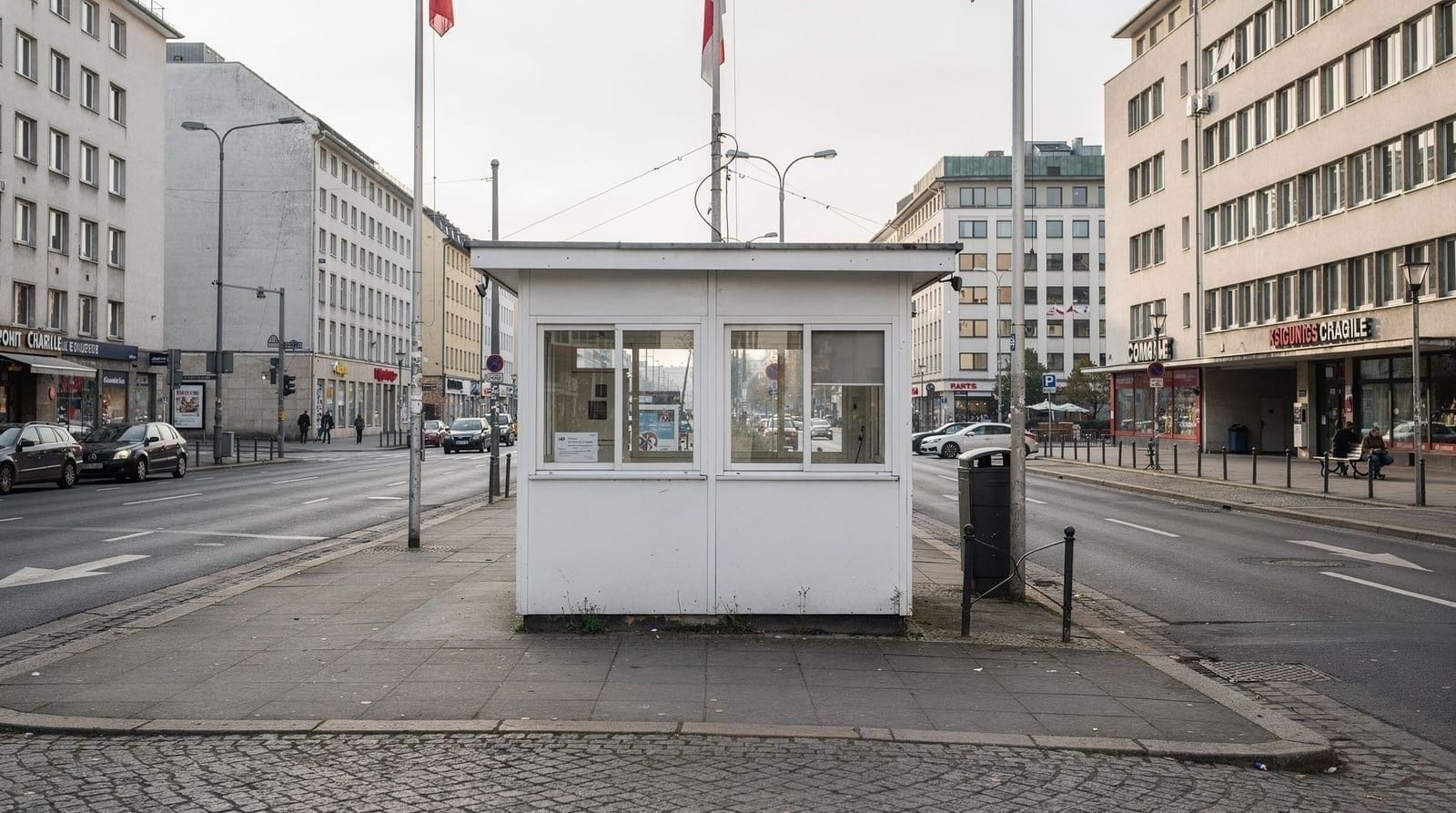
- Tränenpalast (Mitte): Former border crossing at Friedrichstrasse station. Free museum on the experience of division. Highly recommended.
- Karl-Marx-Allee (Friedrichshain/Mitte): Walk the full length of the 1950s socialist boulevard. Free.
- Plattenbau in Marzahn (eastern Berlin): To understand where most GDR Berliners actually lived. Tram M8 from Alexanderplatz.
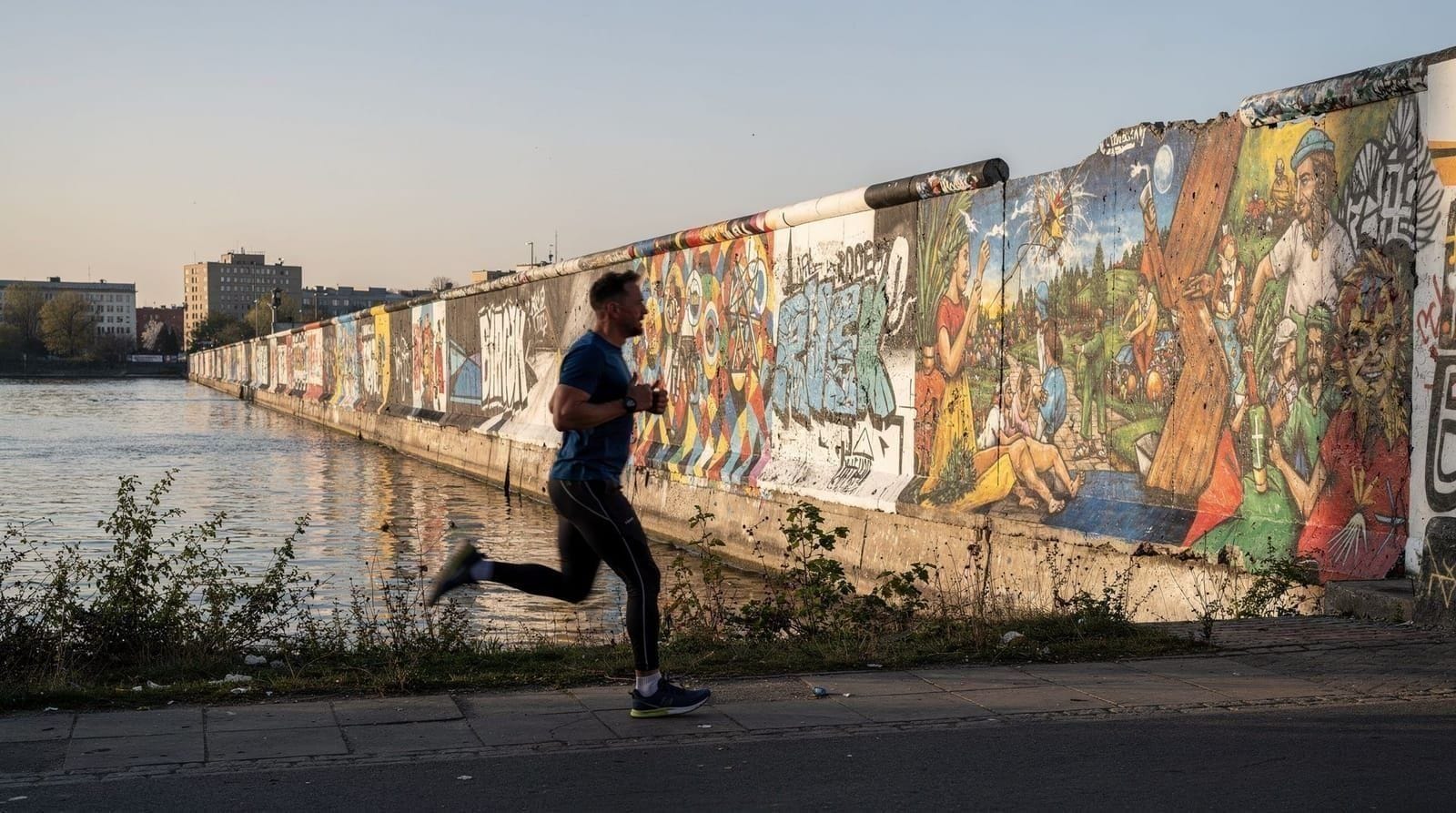
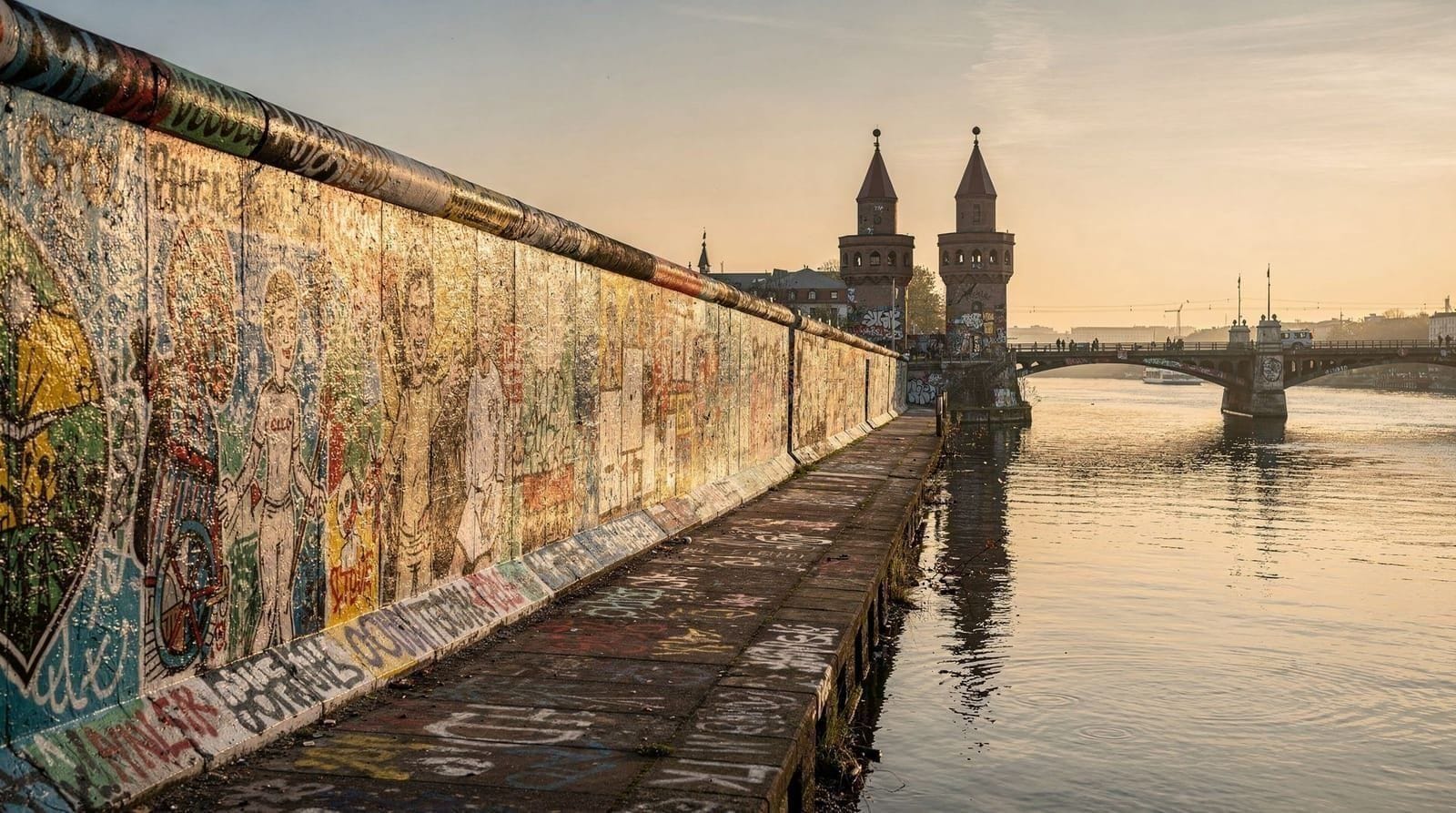
- East Side Gallery (Friedrichshain): The Wall as seen from the East German side. East Side Gallery guide.
Where each GDR-related site fits
| Best for | Cost | Time needed | |
|---|---|---|---|
| DDR Museum | Interactive, family-friendly overview | Around EUR 12.50 | 1.5-2 hours |
| Stasi Museum | The surveillance apparatus itself | Free (permanent exhibition) | At least 2 hours |
| Tränenpalast | The border-crossing experience specifically | Free | 45-60 minutes |
| Karl-Marx-Allee walk | Urban design and monumental scale | Free | 1-1.5 hours |
| Marzahn Plattenbau | Where most GDR Berliners actually lived | Free (self-guided) | Half a day round trip |
For a three-day Cold War-focused itinerary, see the Cold War Berlin itinerary.
Frequently asked questions about Life in the GDR
What did East Germans eat?
The GDR maintained subsidised prices for basic foods — bread, potatoes, and milk were very cheap. But choice was limited and supply unreliable. Queuing (anstehen) was a normal part of daily life. Sought-after goods — coffee, bananas, Western consumer products — were luxuries obtained through connections, at Intershops (hard currency stores), or via relatives in West Germany. The Centrum department stores offered more goods than neighbourhood shops but were still limited by Western standards.What were Trabants and why are they symbolic?
The Trabant (Trabi) was the standard East German car, produced from 1957 to 1991. It had a two-stroke engine, a body made of Duroplast (fibreglass-like material that couldn't be recycled), and a top speed of roughly 100 km/h. To purchase one, citizens had to register and wait — the standard waiting time for a new Trabant in the 1980s was 10–15 years. The car became the enduring symbol of GDR material conditions: functional but primitive, obtainable but only after absurd delay.What was the Stasi and how did it affect daily life?
The Ministerium für Staatssicherheit (Ministry for State Security, or Stasi) was the GDR's secret police and intelligence service. At its peak it had 91,000 full-time employees and 174,000 unofficial informants (IM — Inoffizielle Mitarbeiter), in a country of 16 million. This meant roughly one informant for every 63 citizens. Informants were recruited from workplaces, apartment buildings, social circles, and families. The result was chronic self-censorship — most East Germans assumed that anything they said could be reported.Could East Germans travel internationally?
East Germans could travel relatively freely within the Warsaw Pact — Hungary, Czechoslovakia, Bulgaria, Poland, Cuba, and other aligned states. Travel to Western countries required special permission, which was rarely granted except to pensioners (who were deemed acceptable to lose) or to those on approved party business. The inability to travel freely to Western countries was one of the deepest resentments of GDR citizens.What social provisions did the GDR offer?
The GDR provided free healthcare, heavily subsidised childcare and pre-school (Kindergarten), near-universal employment (unemployment was officially non-existent), subsidised housing (rents were very low), free university education, and paid parental leave. Women's workforce participation was very high by international standards. These provisions were genuine and valued — the loss of some of them after reunification was a source of genuine Ostalgie (nostalgia for the East).What is Ostalgie?
Ostalgie (Ost + Nostalgie, east + nostalgia) refers to a nostalgic feeling among former East Germans for aspects of GDR life — not necessarily for the political system, but for the social certainties, specific products (Rotkäppchen Sekt, Club Cola, Spreewald pickles), and cultural references of their youth. The phenomenon is complex: it coexists with acknowledgment of the surveillance state and political repression, and is often strongest in generations that grew up entirely in the GDR.Where can I experience GDR history in Berlin today?
The DDR Museum on the Spree (Karl-Liebknecht-Strasse 1) is the most interactive entry point — hands-on exhibits on everyday GDR life, an actual Trabant to sit in. The Stasimuseum in Lichtenberg is the most sobering — the actual Stasi headquarters, preserved. The Karl-Marx-Allee is the GDR's monumental boulevard in Friedrichshain. The Tränenpalast (Palace of Tears) at Friedrichstrasse station is a free museum on the border crossing experience.
Top experiences
Bookable activities with verified prices and instant confirmation on GetYourGuide.