DDR Museum Berlin guide — interactive East German life, tickets and tips
Berlin: DDR Museum Skip-the-Line Ticket
Is the DDR Museum Berlin worth visiting?
Yes, for most visitors. It is the most accessible and interactive introduction to GDR life in Berlin — you can open drawers, sit in a Trabant, browse a reconstructed East German apartment, and experience a Stasi interrogation room. It is not an academic museum; the tone is experiential and sometimes playful. Allow 1.5–2 hours.
Quick answer: The DDR Museum is Berlin’s most interactive East Germany exhibit — hands-on, accessible, family-friendly. Tickets are €13.50 adult. Book in advance to avoid queues. Combine with a visit to Museum Island and the Berlin TV Tower for a full Mitte day.
| Where | Karl-Liebknecht-Strasse 1, Mitte — opposite Berliner Dom |
| Cost | Around EUR 13.50 adult, EUR 8 concession |
| Time needed | 1.5-2 hours |
| Getting there | U5 Museumsinsel or S-Bahn Hackescher Markt |
| Booking | Skip-line ticket recommended for summer/weekends, similar price to walk-up |
What is the DDR Museum?
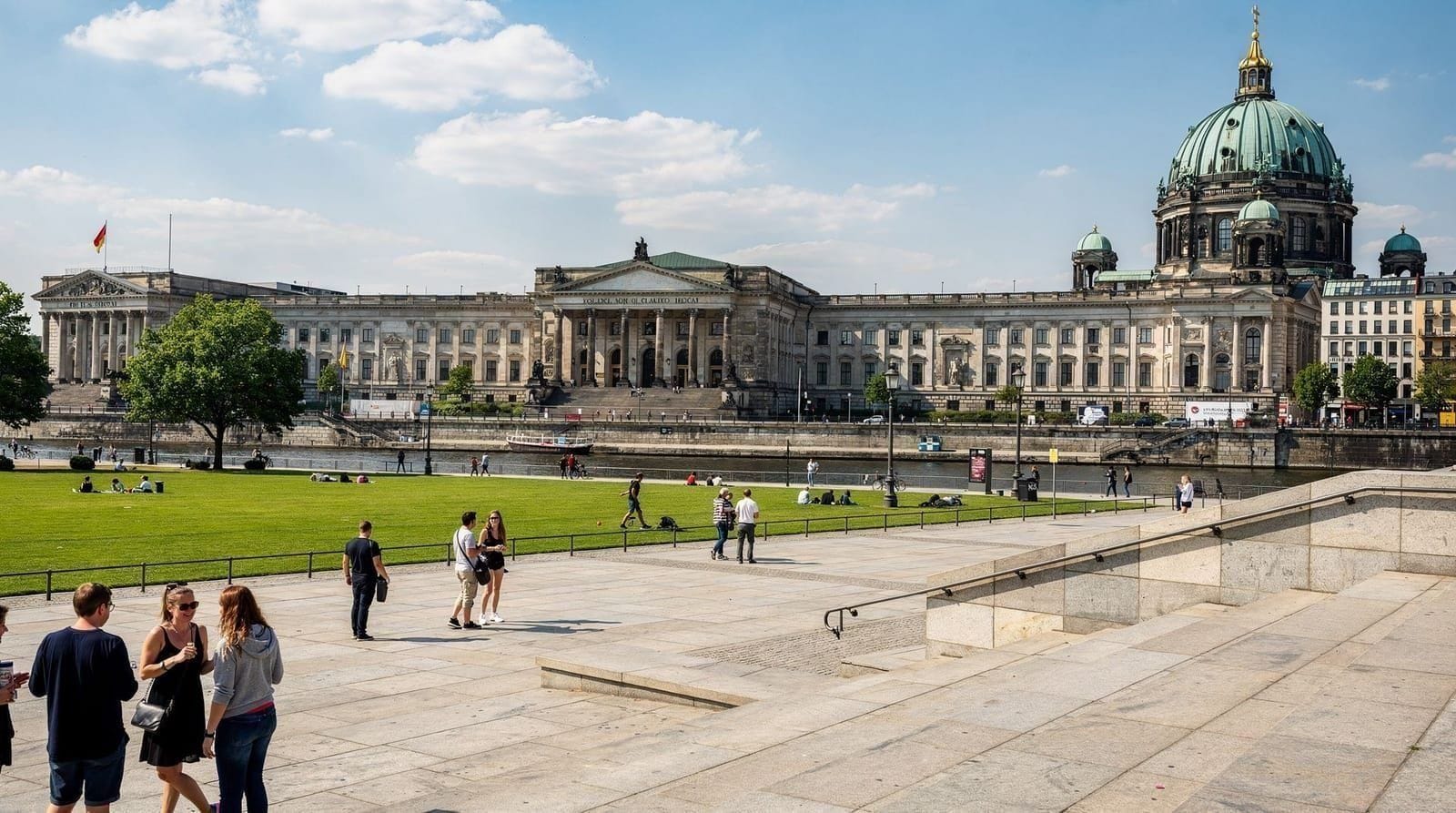
The DDR Museum (DDR stands for Deutsche Demokratische Republik, or German Democratic Republic — the official name of communist East Germany from 1949 to 1990) is a private interactive history museum on the north bank of the Spree, immediately opposite Berlin Cathedral. It opened in 2006 and has become one of the most visited paid museums in Berlin.
The concept is straightforward: instead of static displays and glass cases, you can touch, open, and interact with most exhibits. A reconstructed East German apartment with authentic contents in every drawer. A Trabant automobile you can sit inside and experience via simulator. A 1970s GDR kitchen where you can handle the utensils. A beach cabin from a Baltic resort where nudism was, unusually for a communist state, freely permitted.
The tone is deliberately accessible rather than academic. This is both the museum’s strength and its most common criticism. For first-time visitors to Berlin with limited prior knowledge of the GDR, it is the best single-hour introduction available. For visitors who arrive with existing knowledge of East German history — particularly its repressive elements — some of the museum’s more playful presentation choices may feel inadequate to the subject.
The building itself is unremarkable — a modern structure with no historical connection to the GDR — which is a deliberate contrast with the Stasi Museum’s location inside the actual former Ministry for State Security headquarters. Some visitors find this disconnect between subject and setting reduces the emotional weight of the more serious sections; others find it makes the museum more approachable precisely because it doesn’t ask you to process difficult history inside the walls where it happened.
The exhibits in detail
The museum occupies two floors connected by a central staircase. Navigation is not entirely linear — the layout encourages wandering — but the content divides roughly into the following themes:
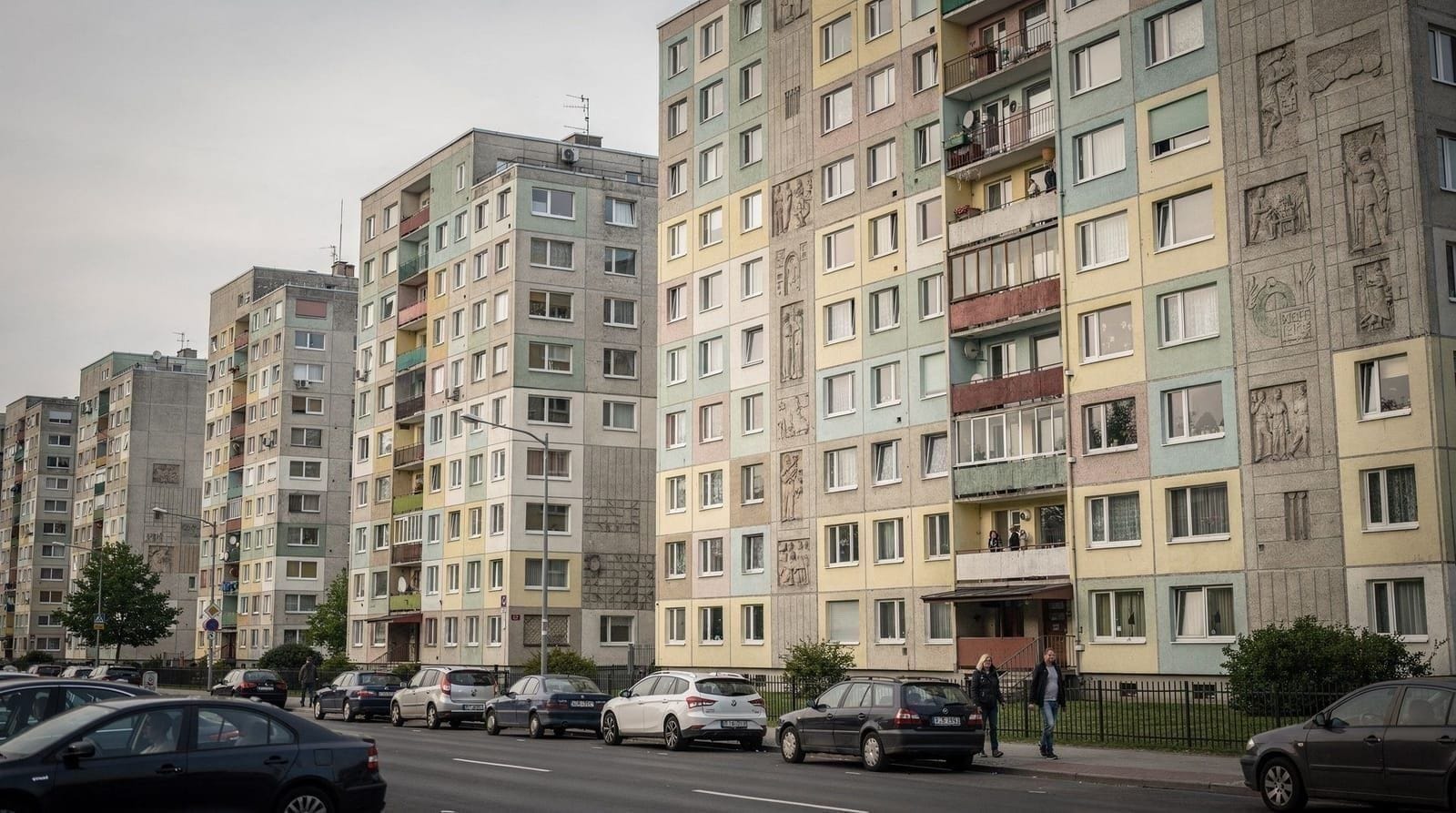
Daily life in the GDR: The most substantial section covers housing, work, leisure, and consumption in East Germany from the 1950s to the 1980s. The reconstructed apartment is the centrepiece: a two-room flat furnished according to the Wohnungspolitik (housing policy) of the 1970s regime. The furniture, appliances, and personal items are authentic period pieces. Every drawer can be opened; the contents (an identity document here, a Pioneer organisation certificate there) are organised to tell a story of ordinary GDR life.
The kitchen section covers food supply and scarcity — the mix of what was available versus what was unavailable, and how people navigated the difference. East German recipes, brand names, and grocery queuing culture are covered.
The Trabant: The museum’s most photographed exhibit is a genuine Trabant 601 (the standard GDR automobile, produced with essentially no design changes from 1963 to 1991) in an enclosed simulator area. The Trabant’s two-cylinder two-stroke engine, plastic Duroplast body, and 18-horsepower output are explained with considerable affection. The waiting list for a new Trabant in the GDR was up to 12 years; most families bought used and maintained them with home ingenuity. The simulator records the experience of driving one.
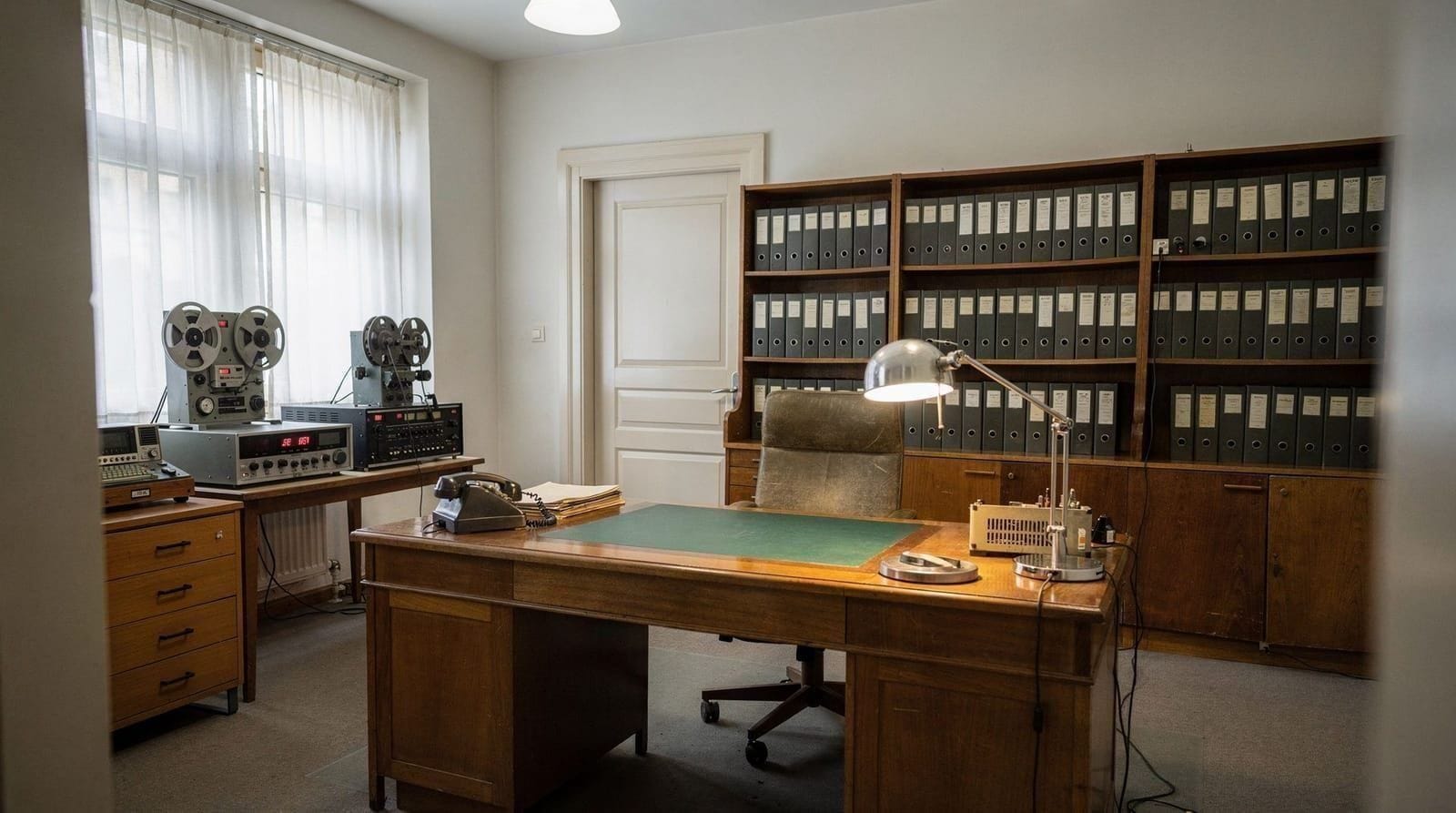
State surveillance: The most sobering section covers the Ministerium für Staatssicherheit (Ministry for State Security, or Stasi) and its surveillance network. At its peak, the Stasi employed approximately 91,000 full-time officers and 300,000 unofficial informants for a country of 16 million people — the densest political police network in history. The exhibits cover how surveillance worked in practice, what a Stasi file looked like, and what happened to people who were identified as threats to the regime.
The museum presents this section with appropriate gravity, though the Stasi Museum in the actual former Stasi headquarters provides considerably more detail for visitors who want depth here.
Recreation, sport, and culture: East Germany invested heavily in mass sport and produced Olympic champions at a rate vastly disproportionate to its population — partly through state doping programmes that are documented here without euphemism. FKK (Freikörperkultur, or free body culture — naturism) was a permitted leisure activity and is covered as a genuine social phenomenon, including the beach cabin exhibit.
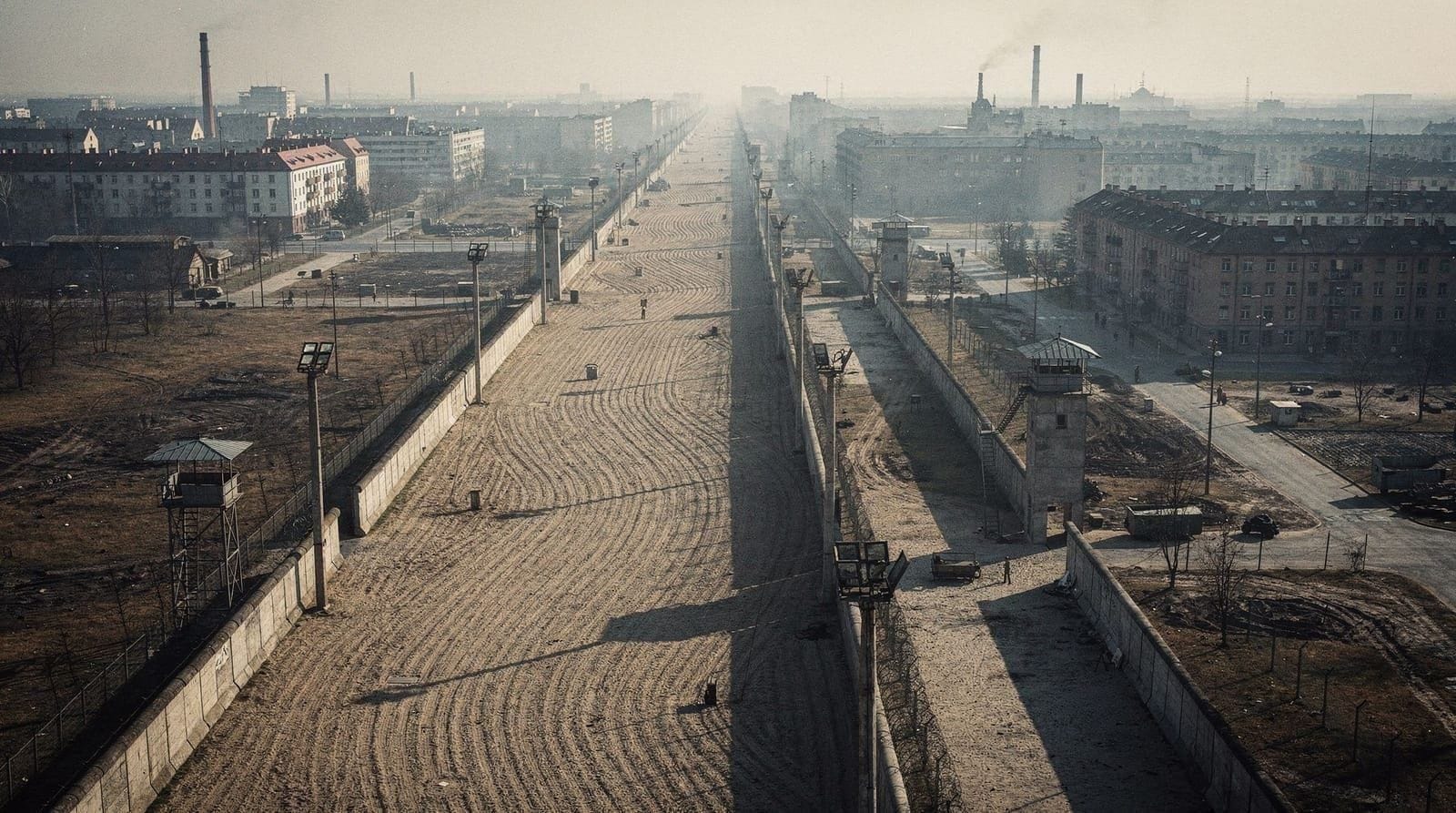
The fall of the Wall: The final section covers 1989 — the Monday demonstrations in Leipzig, the crowds at the Bornholmer Strasse crossing, and the night of November 9 when the Wall opened. This section is less interactive and more documentary, with video footage and newspaper front pages.
How to buy tickets and skip the queue
Walk-up tickets are available at the door for €13.50 adult. The queue for walk-up entry on busy summer weekend days can reach 45–60 minutes.
Book skip-line entry to the DDR Museum — same price, no queueThe skip-line ticket from GetYourGuide costs approximately the same as walk-up entry (€13.50–15 depending on availability) and allows you to enter via a priority lane, typically reducing external waiting to under 10 minutes. For summer visits, this is the straightforwardly better option at no meaningful cost premium.
The museum is open daily from 10 am to 8 pm (10 pm on Saturdays). Last entry is one hour before closing.
What the museum does well — and where it falls short
Strengths:
- The interactive format works exceptionally well for families and for visitors who learn through doing
- The apartment, kitchen, and Trabant sections are genuinely absorbing
- Bilingual text (German and English) throughout makes it fully accessible to international visitors
- It opens at 10 am daily, making it an easy first activity of the day in Mitte
Limitations:
- The museum’s tone occasionally tips from accessible into entertainment — some GDR life aspects are presented with a nostalgic warmth that critics argue underweights the police state context
- The Stasi section, while present, is abbreviated compared to what the subject deserves. Visitors seriously interested in state repression should also visit the Stasi Museum in Lichtenberg
- The museum is small for its popularity; it can feel very crowded on busy afternoons
The DDR Museum is not trying to be a comprehensive historical account — it is trying to give a sensory impression of what daily life in East Germany felt like. On those terms, it succeeds.
DDR Museum vs Stasi Museum vs Hohenschönhausen
| DDR Museum | Stasi Museum | Stasi Prison (Hohenschönhausen) | |
|---|---|---|---|
| Format | Interactive, hands-on | Static exhibits in the actual HQ | Guided tours, often by former prisoners |
| Tone | Accessible, occasionally playful | Sober, institutional | Harrowing, personal |
| Best for | First-time visitors, families | Understanding the surveillance apparatus | Understanding individual repression |
| Cost | Around EUR 13.50 | Free (permanent exhibition) | Check current pricing, guided tour required |
| Time needed | 1.5-2 hours | At least 2 hours | About 1.5 hours (tour only) |
Visitors with a genuine interest in GDR history rather than a quick overview should treat the DDR Museum as the starting point, not the endpoint, and add at least one of the other two.
Combining the DDR Museum with other Mitte sites
The DDR Museum’s location on Karl-Liebknecht-Strasse is excellent for a full Mitte day:
Immediately adjacent:
- Berlin Cathedral (Berliner Dom, €9 entry) — the 19th-century Protestant cathedral with rooftop views, across the Spree
- Museum Island — 3-minute walk across the Spree bridge (Schlossbrücke)
5 minutes by foot:
- Alexanderplatz, with the Berlin TV Tower
- Neptune Fountain and Marienkirche
15 minutes by foot or one U-Bahn stop:
- Nikolaiviertel (Berlin’s medieval quarter, reconstructed)
- Rotes Rathaus (Red City Hall)
A suggested Mitte circuit for first-time visitors: DDR Museum (10 am–12 pm), Museum Island highlights (12:30–4 pm), TV Tower at sunset. This is outlined in the Berlin 2-day itinerary.
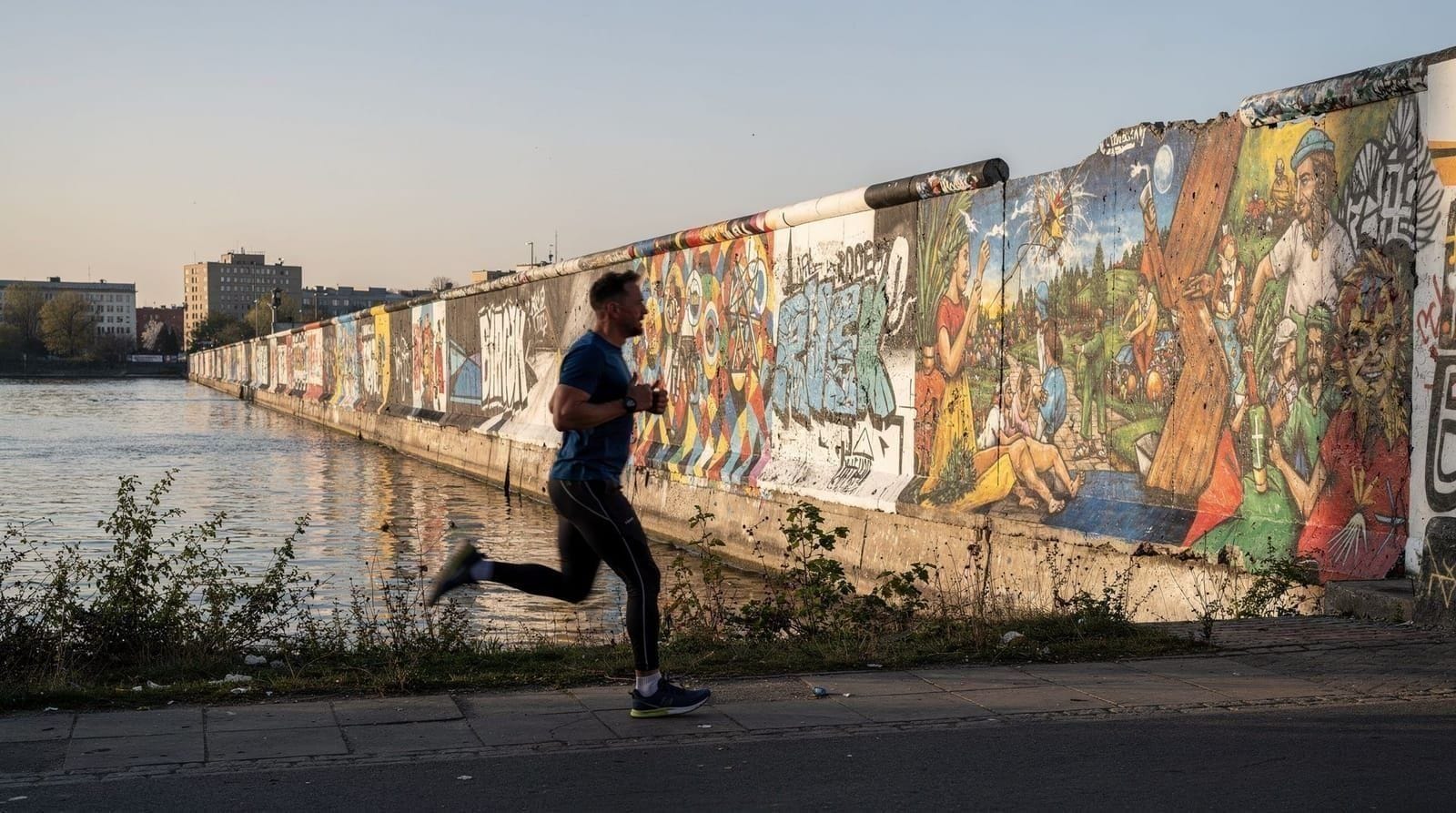
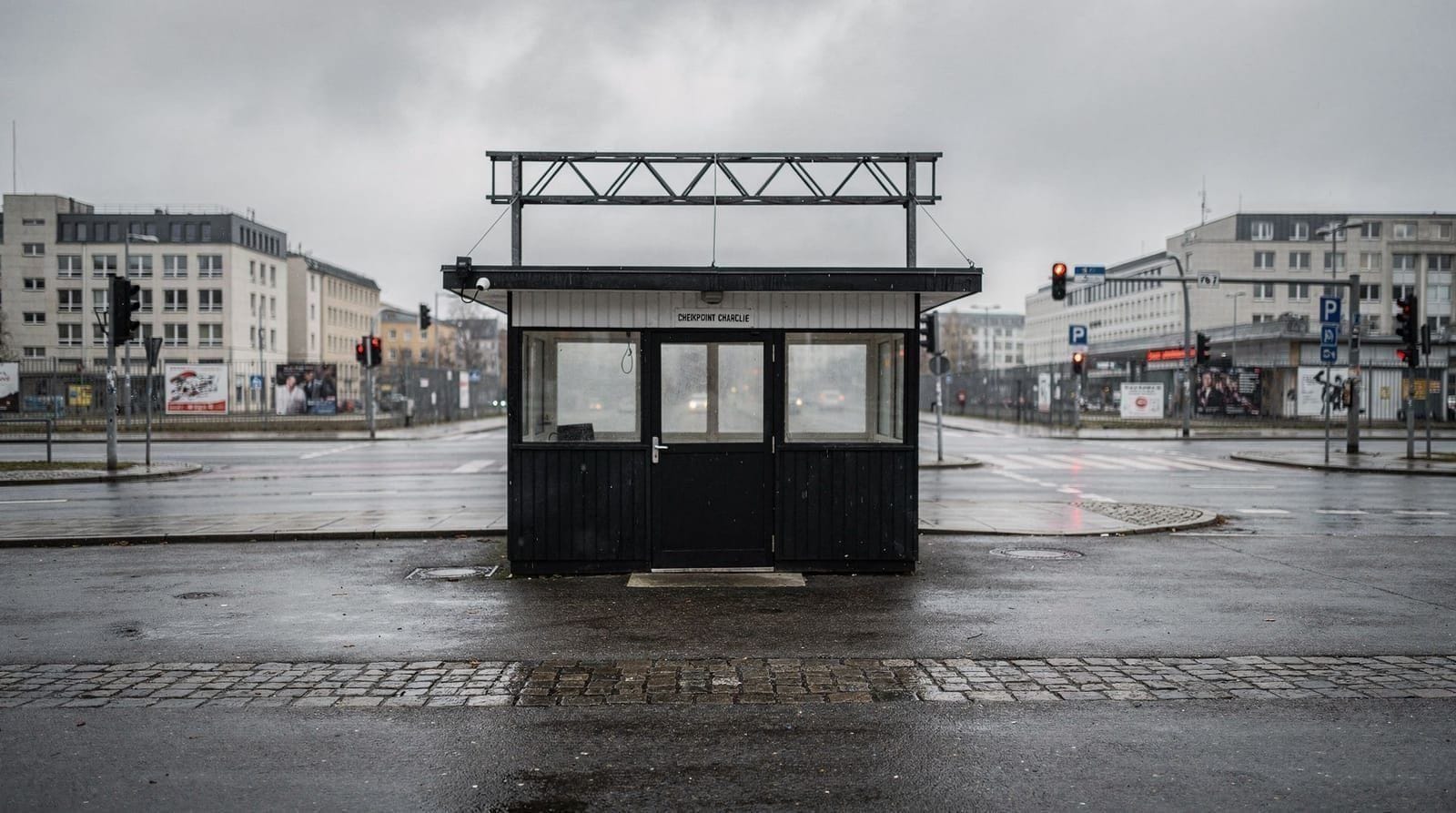
For visitors specifically interested in Cold War history, the Cold War Berlin itinerary pairs the DDR Museum with Checkpoint Charlie, the East Side Gallery, and the Stasi Museum in a logical three-day sequence.
Practical notes
Address: Karl-Liebknecht-Strasse 1, 10178 Berlin (directly opposite Berliner Dom on the north Spree bank)
Opening hours: Daily 10 am–8 pm; Saturday 10 am–10 pm. Closed Christmas Day.
Nearest U-Bahn: U5 Museumsinsel (new station, opened 2020) — 3-minute walk.
Nearest S-Bahn: S3/S5/S7/S75 Hackescher Markt — 10-minute walk.
Photography: Permitted throughout (no flash restrictions noted). The apartment and Trabant sections are heavily photographed.
Accessibility: The museum is fully accessible by wheelchair (lift between floors). The interactive elements are designed to be reachable from seated positions in most cases.
Museum shop: Located at exit; sells GDR-branded items including authentic era objects, Trabant merchandise, and cookbooks. Quality is uneven — the authentic archive reproductions are interesting; the novelty items less so.
Crowds and timing: The museum’s small footprint relative to its popularity means the busiest hours — typically late morning through mid-afternoon on weekends and school holidays — can feel genuinely packed around the apartment and Trabant exhibits, with visitors queuing informally to interact with the most popular drawers and the simulator. Arriving right at 10 am opening, or after 5 pm on evenings when the museum stays open later, gives noticeably more room to actually engage with the hands-on elements rather than waiting behind other visitors.
Frequently asked questions about DDR Museum Berlin guide
How much do DDR Museum tickets cost?
Standard adult tickets are €13.50. Concession (students, seniors, disabled) €8. Children under 6 are free. A skip-line ticket via GetYourGuide costs €13.50–15 and is the same price or only marginally more than walk-up — it saves potentially 30–45 minutes of external queuing at peak times.Do I need to book DDR Museum tickets in advance?
Advance booking is strongly recommended for summer and weekends. The museum is one of Berlin's most visited paid attractions — queues can exceed 45 minutes on busy days. A morning visit (opening at 10 am) or late afternoon visit (after 4 pm) typically has shorter waits. Skip-line tickets are available via GetYourGuide and are the same price or marginally more than walk-up.How long does the DDR Museum take?
Most visitors spend 1.5 to 2 hours. The museum is not large — two floors of interactive exhibits — but the hands-on nature means visitors slow down considerably compared to a conventional history museum. Allow 2 hours if you plan to read all the text panels, which are in German and English throughout.What is the best exhibit in the DDR Museum?
The most popular section is the reconstructed East German apartment — a full-scale two-room flat furnished exactly as a typical 1970s GDR household, with drawers and cupboards you can open to find authentic period items inside. The Trabant driving simulator is the biggest draw for families. The Stasi surveillance section is historically the most substantive.Is the DDR Museum suitable for children?
Yes, explicitly. The interactive format was designed for mixed audiences, and the hands-on approach works very well for children aged 8 and up. The Trabant simulator, the apartment drawers, and the listening-to-banned-records section are all child-friendly. Some sections covering Stasi surveillance methods and imprisonment conditions are more sobering but not graphic.Where is the DDR Museum and how do I get there?
The DDR Museum is at Karl-Liebknecht-Strasse 1, directly on the Spree bank opposite the Berlin Cathedral (Berliner Dom), a 5-minute walk from Alexanderplatz. U-Bahn U5 to Museumsinsel (opened 2020), or S-Bahn S3/S5/S7/S75 to Hackescher Markt (10-minute walk). Very walkable from Museum Island.How does the DDR Museum compare to the Stasi Museum?
The DDR Museum is broader, more interactive, and more accessible — it covers daily life, culture, work, consumption, and surveillance in equal measure. The Stasi Museum (Forschungs- und Gedenkstaette Normannenstrasse) is more specialised and academic, focusing specifically on the Ministry for State Security in its actual former headquarters in Lichtenberg. Serious history visitors should consider both.Is the DDR Museum the same as the Stasi Prison (Hohenschonhausen)?
No. The DDR Museum is a private interactive museum in Mitte. The Stasi Prison (Gedenkstatte Berlin-Hohenschonhausen) is the actual former Stasi remand prison in northern Berlin — a far more harrowing experience with guided tours by former prisoners. Both are worth visiting; they cover different aspects of GDR repression.
Top experiences
Bookable activities with verified prices and instant confirmation on GetYourGuide.