Cold War Berlin history — blockade, airlift, division, and the Wall
Berlin: Original Cold War, East & Communism Wall Tour
Why was Berlin so important during the Cold War?
Berlin was the symbolic and practical fault line between the Western Allies and the Soviet Union. Divided into four occupation zones after 1945, it became the only place where the Iron Curtain ran through a single city. The Berlin Blockade (1948–49), the construction of the Wall (1961), and the fall of the Wall (1989) were three of the defining episodes of the entire Cold War period.
Why did Berlin matter during the Cold War? Berlin was the only city on earth where the Iron Curtain ran through the middle of a single metropolitan area. From 1945 to 1990, it was the operational fault line between NATO and the Warsaw Pact, the symbolic arena of every major superpower confrontation, and the physical location where the Cold War was most concretely visible. Understanding Berlin’s Cold War history is inseparable from understanding the city itself.
| Period | Defining event | Where to see it today |
|---|---|---|
| 1945-1948 | Four-power occupation | Allied Museum, Tempelhof |
| 1948-1949 | Berlin Blockade & Airlift | Tempelhof field, Airlift Memorial |
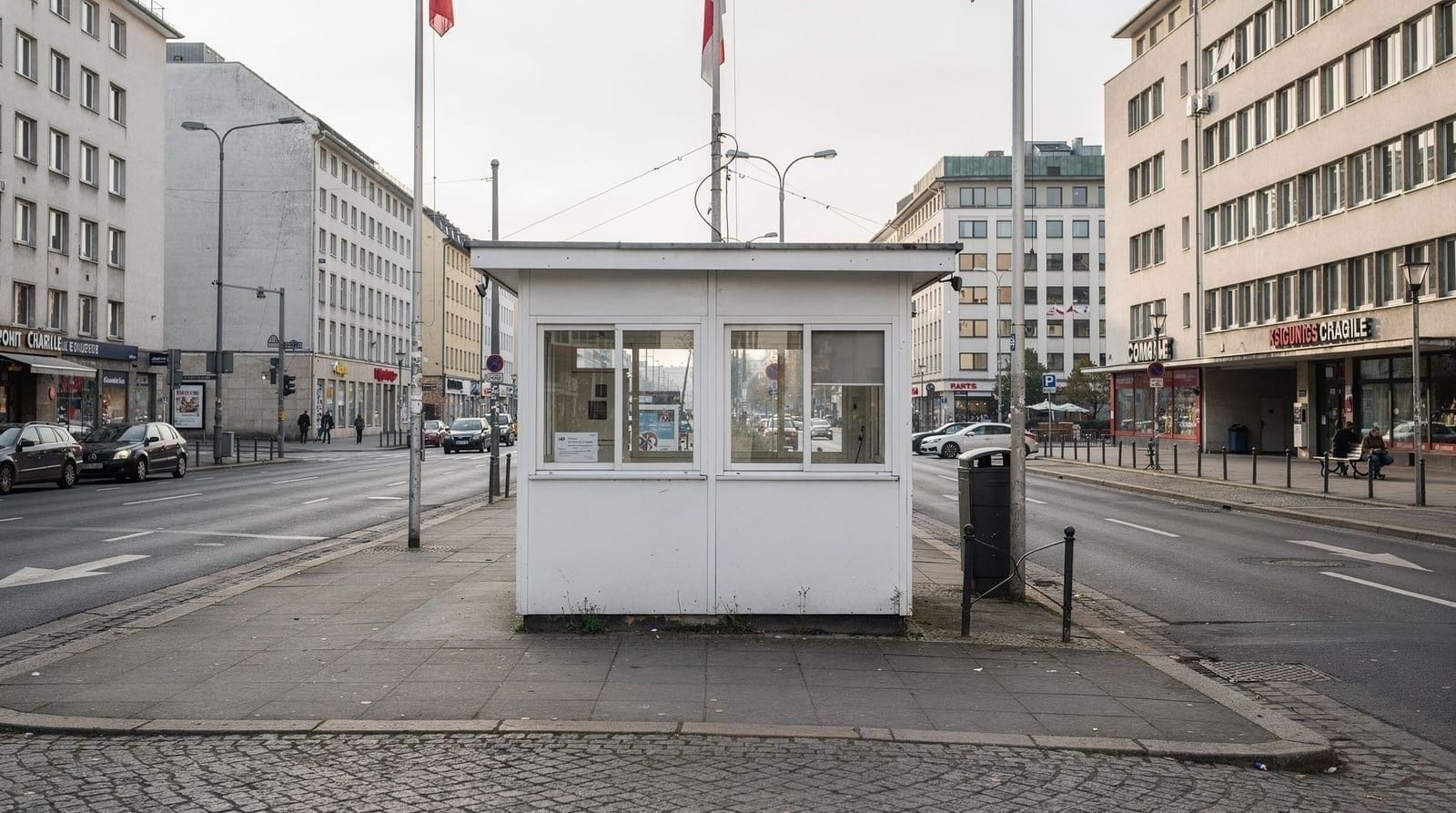
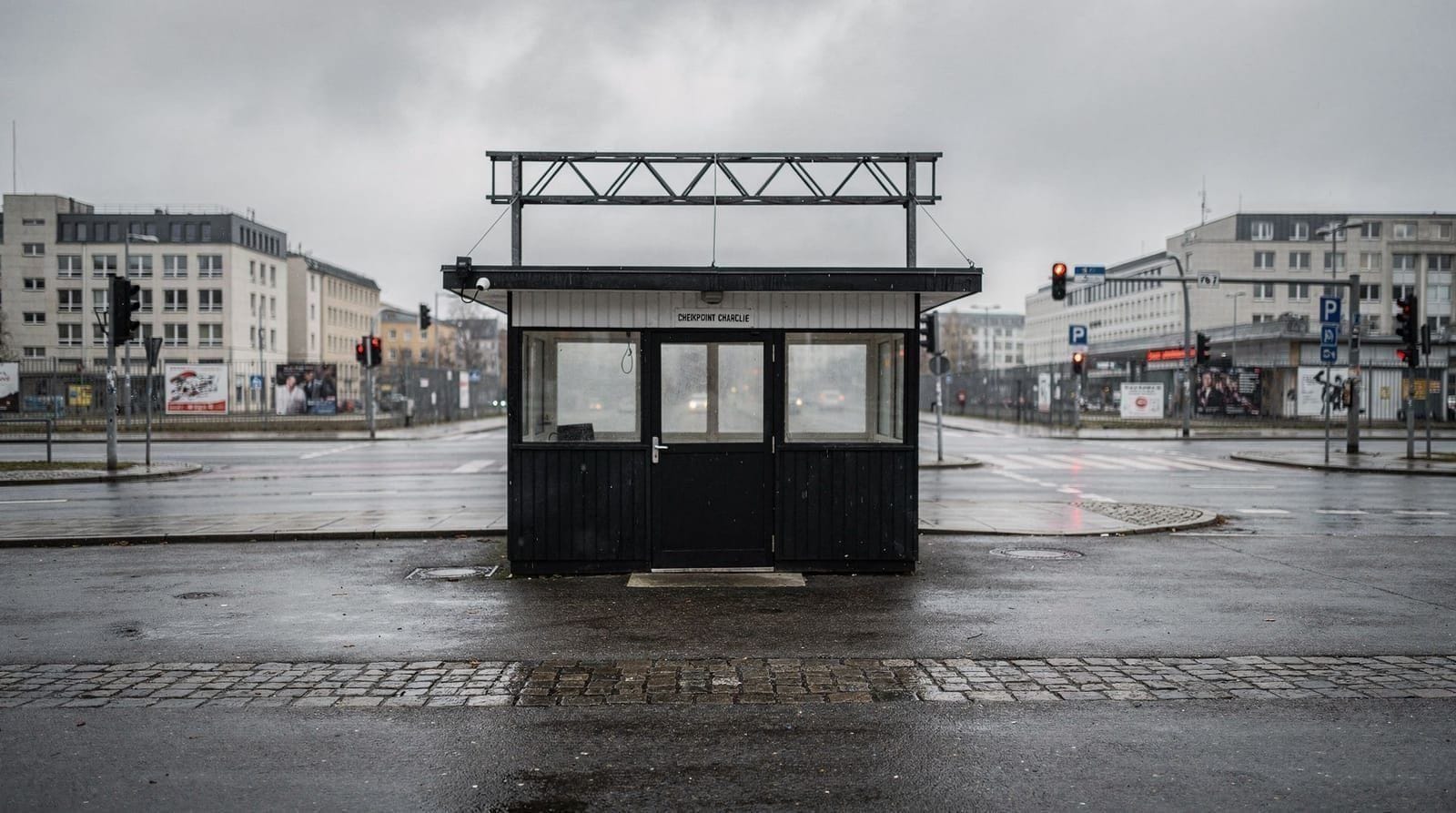
| 1949-1961 | Division deepens, refugee flow | Checkpoint Charlie |
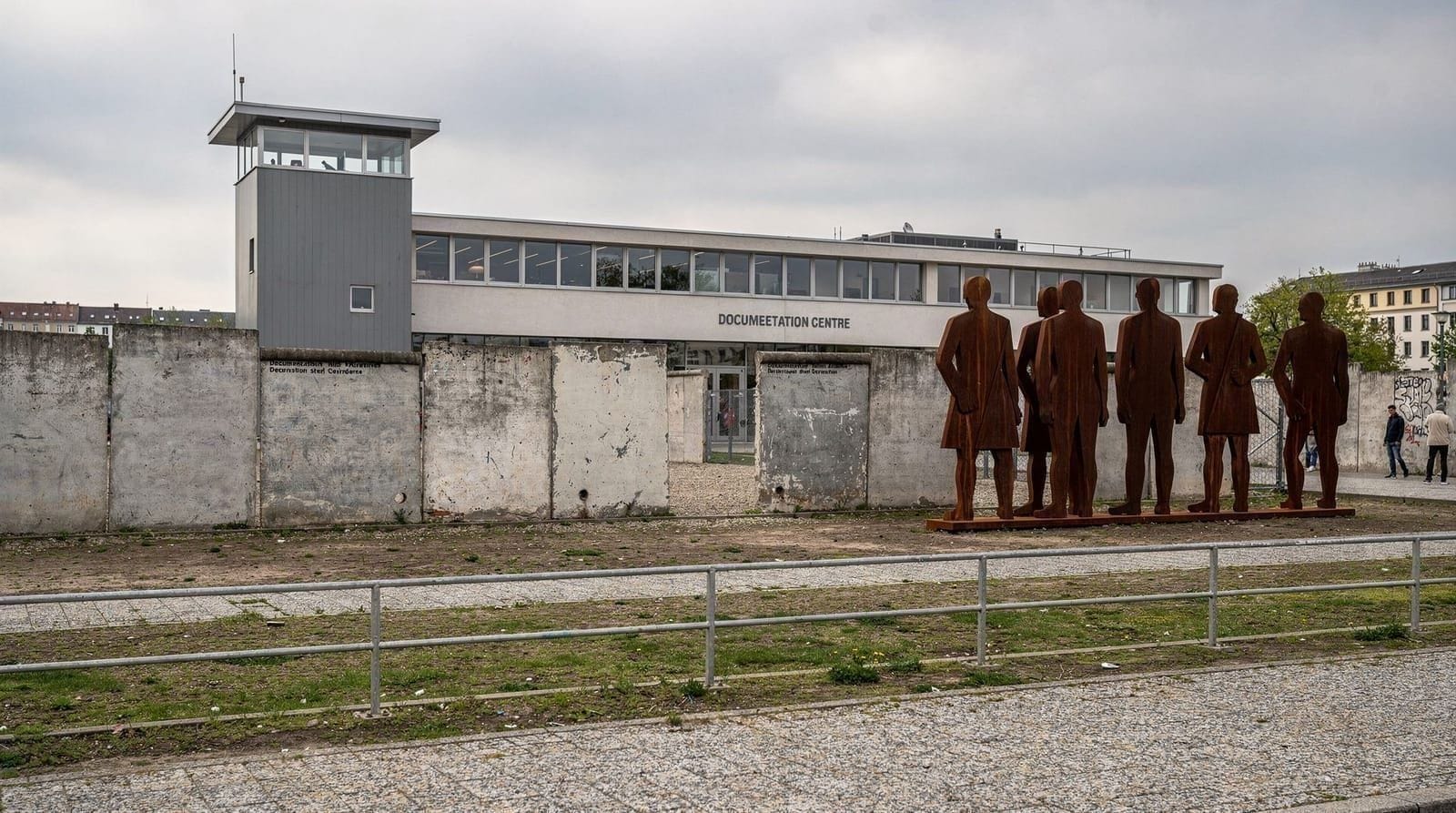
| 1961-1989 | The Wall stands | Bernauer Strasse memorial |
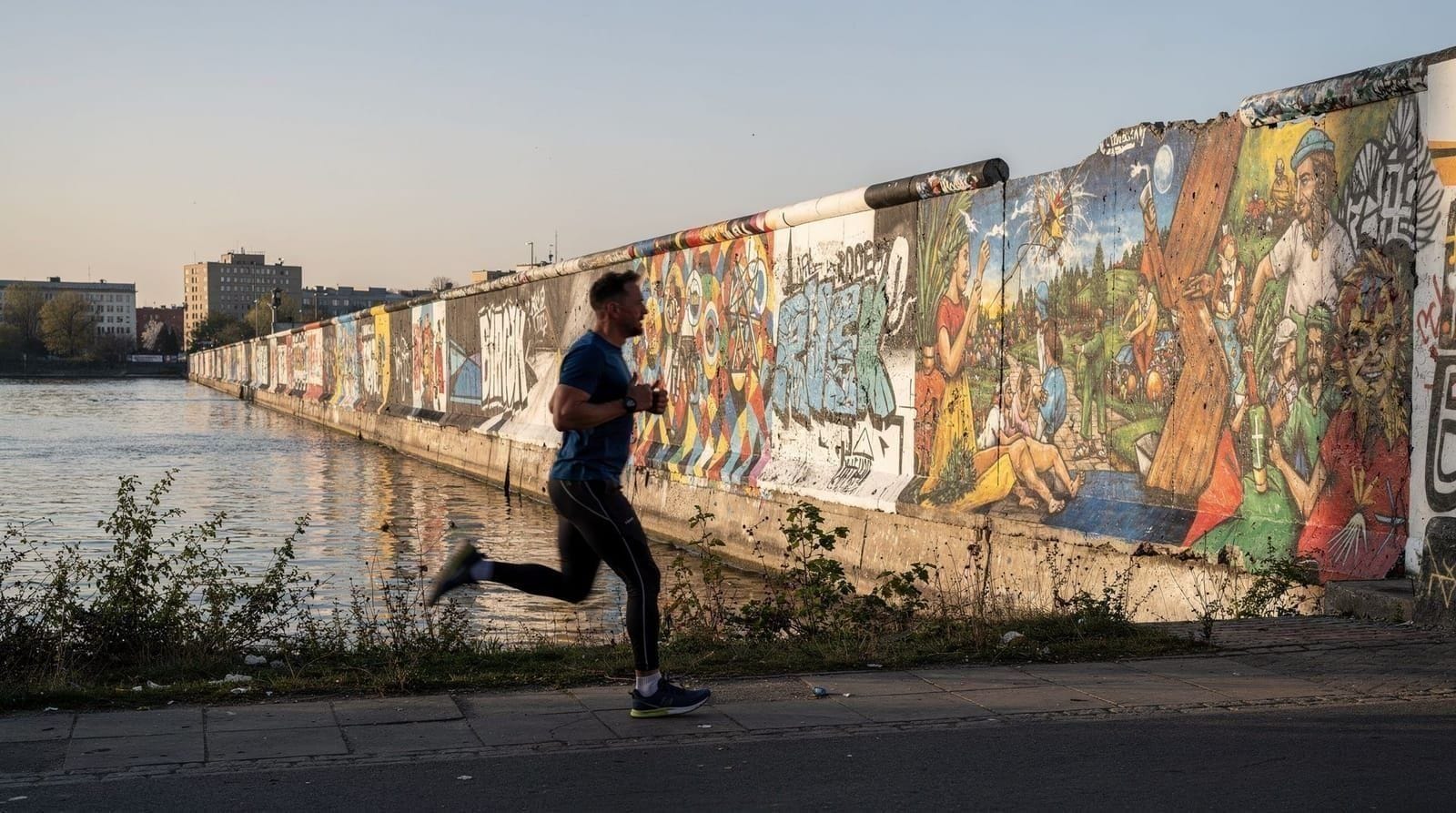
| 1989 | The Wall falls | Bornholmer Strasse, East Side Gallery |
The four-power city, 1945–1948
Germany’s defeat in May 1945 left Berlin in Soviet hands — the Red Army had taken the city in brutal street-by-street fighting from April 16 to May 2. The Potsdam Conference in July–August 1945 formalised what the wartime Yalta agreement had sketched: Germany and Berlin would each be divided into four occupation zones. The Western Allies (US, UK, France) received the western sectors of Berlin; the Soviets kept the east.
This arrangement had a structural vulnerability that became immediately apparent: West Berlin sat 180 km inside the Soviet occupation zone of Germany, accessible from the West only via road, rail, and air corridors that the Soviets had agreed to allow. There was no formal guarantee of these access rights in a binding treaty — only provisional agreements and Soviet goodwill.
The division of Berlin into sectors was initially administrative. People moved freely between zones. In the first years after the war, black markets, population movement, and practical cooperation across sector boundaries were all common. The city was damaged — approximately 40% of its pre-war housing stock destroyed — and reconstruction was the shared immediate concern.
The Berlin Blockade, June 1948 – May 1949
The catalyst for the first Berlin crisis was currency reform. In June 1948, the Western Allies introduced the Deutsche Mark in their zones of Germany and West Berlin. The Soviets, who had been operating their own currency in East Germany, refused to accept the Deutsche Mark as legal tender in Berlin’s eastern sector, and on June 24, 1948, they cut all surface access to West Berlin — road, rail, and canal.
The stated justification was “technical difficulties.” The actual intent was to force the Western powers to choose between abandoning Berlin or conceding the currency issue — and, behind that, to test whether the West would maintain its presence in a city entirely surrounded by Soviet-controlled territory.
West Berlin had approximately 2.5 million residents and food and fuel reserves for 36 days. The Western Allies faced a stark choice: accept Soviet demands, attempt to break the blockade by force (which risked war), or supply the city entirely by air.
General Lucius Clay, the US military governor, proposed the airlift. The Berlin Airlift ran for 323 days, from June 26, 1948 to May 12, 1949. American and British aircraft flew 278,228 missions, delivering 2.3 million tonnes of supplies — food, coal, medicines, machinery. At its operational peak in April 1949, the “Luftbrücke” (air bridge) was landing one aircraft at Tempelhof Airport every 90 seconds. Seventy-eight airmen died in accidents during the operation.
The Soviet Union lifted the blockade on May 12, 1949, when it became clear that the airlift could sustain West Berlin indefinitely. The political consequences were significant: the blockade had failed, the West had demonstrated resolve, and West Berliners had developed a profound sense of identification with the Western Allies — particularly the Americans.
The airlift is commemorated at the Tempelhof field (now a public park) by the Airlift Memorial — a three-pronged monument representing the three air corridors used. The memorial stands outside what was Tempelhof Airport’s terminal, now a public events venue.
Two German states, 1949
The blockade accelerated the political division of Germany. In May 1949, the Western occupation zones merged into the Federal Republic of Germany (Bundesrepublik Deutschland), with a provisional capital at Bonn. In October 1949, the Soviet zone became the German Democratic Republic (Deutsche Demokratische Republik — DDR or GDR), with East Berlin as its capital.
Berlin remained technically under four-power occupation. Neither West Berlin nor East Berlin was formally incorporated into their respective German states — West Berlin was not a federal state of the FRG (though it functioned as one) and East Berlin was not legally the capital of the GDR under four-power agreements (though the GDR treated it as such). West Berliners voted in West German federal elections through indirect representation rather than direct suffrage, a compromise that reflected the city’s unresolved legal status without fully excluding it from West German democratic life. This ambiguous legal status gave the Western Allies grounds to maintain their presence and access rights throughout the Cold War.
The economic contrast between the two halves of the city widened quickly after 1949. West Berlin received substantial West German federal subsidies designed explicitly to keep the enclave viable and attractive — tax incentives, infrastructure investment, and a deliberate policy of making West Berlin a showcase of prosperity visible from the East. East Berlin, by contrast, operated under the GDR’s centrally planned economy, with chronic shortages of consumer goods that became one of the most visible day-to-day markers of the divide, especially once West Berlin’s shop windows became viewable from crossing points.
The June 1953 Workers’ Uprising
On June 16–17, 1953, construction workers in East Berlin went on strike against an increase in work quotas, and the protest rapidly spread into a general uprising against the SED regime across East Germany. Approximately 400,000 workers participated across hundreds of cities and towns. In East Berlin, crowds gathered at SED headquarters on Wilhelmstrasse and at Checkpoint Charlie.
The Soviet Army intervened with tanks. The uprising was suppressed within 24 hours. Officially, the GDR recorded 55 deaths; later research suggests the true figure was higher, with an unknown number of summary executions in subsequent weeks.
In West Germany, June 17 became “Tag der deutschen Einheit” — German Unity Day — marked as a public holiday until reunification in 1990. In East Germany, the uprising was officially described as a “fascist putsch” backed by Western agents. The true events were suppressed in GDR historiography.
The uprising’s suppression had lasting consequences for how the SED regime governed for the following decades: it accelerated the buildup of the internal security apparatus that would eventually become the Stasi, on the reasoning that intelligence and pre-emption were more reliable than reactive force. It also hardened Western perceptions of the GDR as a regime that could only survive through Soviet military backing rather than genuine popular consent — a perception the 1989 events would ultimately confirm.
The Berlin Crisis of 1958–1961
Soviet Premier Nikita Khrushchev issued an ultimatum in November 1958 demanding that the Western powers withdraw from West Berlin within six months and convert it into a “free city” — effectively ending four-power status and leaving West Berlin isolated within the GDR. The deadline passed without action; the ultimatum was renewed in 1959 and 1960.
The crisis intensified the refugee flow through Berlin. With negotiations stalled and the border between East and West Berlin still open, East Germans continued leaving in increasing numbers — 155,000 in 1959, 187,000 in 1960, and in the first half of 1961 alone, over 100,000. Many were educated professionals: doctors, engineers, teachers. The GDR was bleeding its workforce to an extent that threatened economic collapse.
At a Warsaw Pact summit in August 1961, Khrushchev authorised East German First Secretary Walter Ulbricht to close the border. Ulbricht had been requesting this permission for months.
The construction of the Wall, August 1961
Operation Rose began at midnight on August 12–13, 1961. East German soldiers and workers sealed the border simultaneously along its entire length using barbed wire. When West Berliners woke on the morning of August 13, streets they had crossed the day before were blocked. Families separated overnight sometimes could not reunite for years.
The Western Allies’ response was measured — President Kennedy was at his Cape Cod vacation home, Soviet military and political intelligence was monitored carefully, and the conclusion was that the Wall, though deeply unwelcome, was within East German sovereign territory and did not technically violate four-power agreements. The US, UK, and France protested formally but did not intervene militarily.
Kennedy sent Vice President Lyndon Johnson to Berlin in August 1961 to demonstrate Allied commitment. The visible American response to reassure West Berliners was the deployment of 1,500 additional US troops along the Autobahn from West Germany — a deliberate display.
Kennedy’s visit in June 1963 — “Ich bin ein Berliner” — gave the emotional expression to the solidarity that had been demonstrated by the Airlift and the non-response to the Wall. The crowds that greeted Kennedy at Rathaus Schöneberg (approximately 450,000 people, the largest political gathering in West Berlin’s post-war history) reflected both relief and ongoing anxiety.
For the specific history and sites of the Wall, see the Berlin Wall complete guide.
The Cold War city, 1961–1989
After 1961, West Berlin became a strange political object: an island of liberal democracy and consumer capitalism 180 km inside the Warsaw Pact, formally under Allied administration, formally not part of West Germany, sustained by federal subsidies and permanently conscious of its vulnerability.
The city attracted artists, draft dodgers (West Berlin residents were exempt from West German military service), political dissidents, and counterculture movements. The 1970s and 1980s produced a Berlin alternative culture — punk, experimental art, squatter movements — directly shaped by the city’s geopolitical isolation.
East Berlin, meanwhile, was the GDR’s showpiece capital. The Stalinallee (renamed Karl-Marx-Allee after de-Stalinisation) was built in the 1950s as a monumental statement of socialist urban planning. The TV Tower (Fernsehturm) at Alexanderplatz, completed in 1969, was intended as a visible symbol of GDR achievement visible across the Wall from West Berlin.
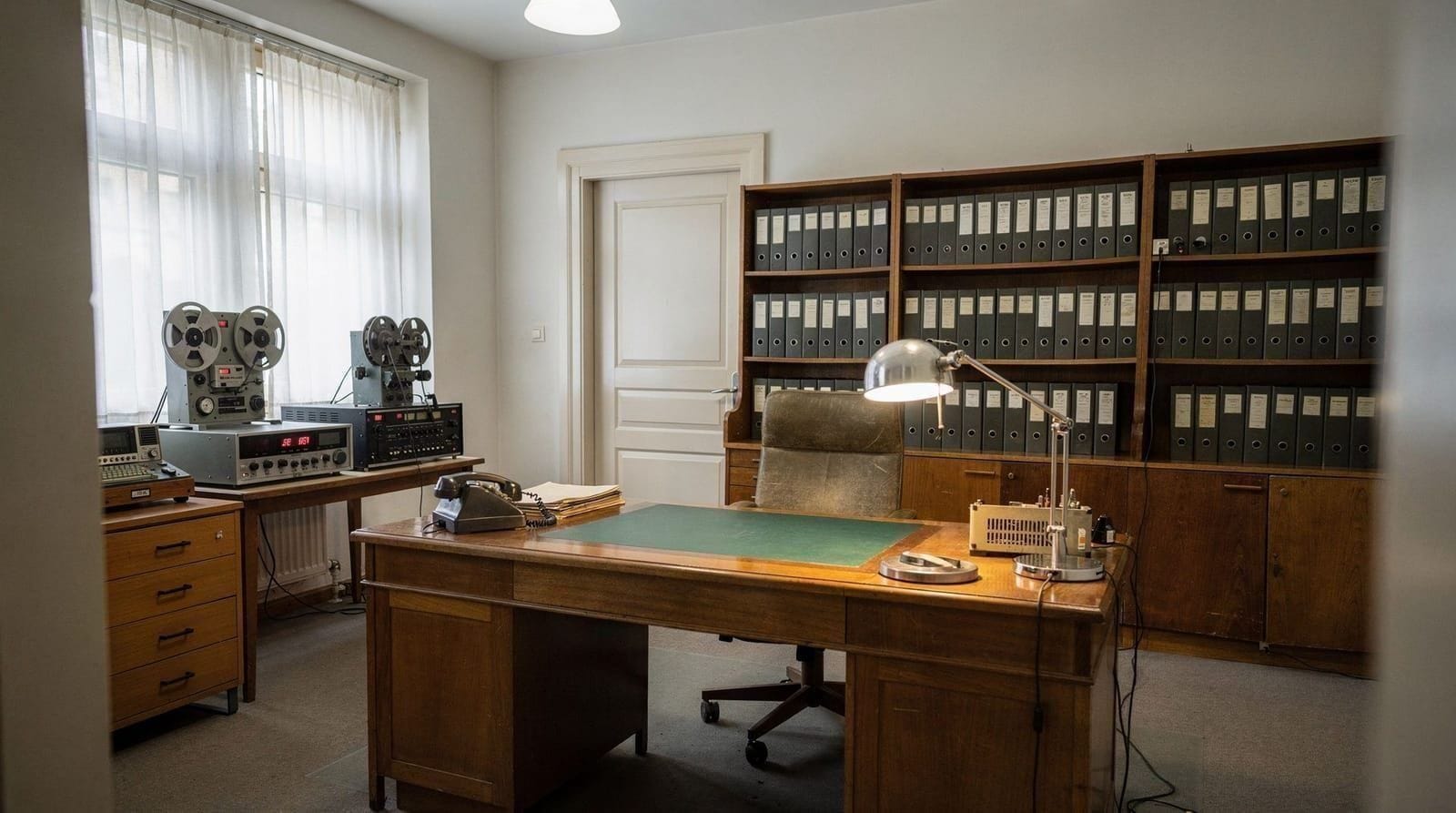
The GDR security apparatus — the Ministerium für Staatssicherheit, or Stasi — maintained comprehensive surveillance of the population. At its peak, the Stasi employed 91,000 full-time officers and 174,000 unofficial collaborators (IM, Inoffizielle Mitarbeiter). One in every 63 East German adults was an informant. This statistic is central to understanding the social texture of the DDR. See the Stasi Museum guide and DDR life in East Germany.
Détente and the Quadripartite Agreement, 1971
The most significant legal development affecting Berlin after 1961 was the Quadripartite Agreement signed by the four powers in September 1971. This agreement formalised West Berlin’s access routes from West Germany, acknowledged Soviet interests without recognising GDR sovereignty, and allowed West Berliners to visit East Berlin more easily. The agreement stabilised the city’s status and reduced the immediate risk of confrontation, while leaving the fundamental division unchanged.
Détente also opened the door to more routine, if still tightly controlled, contact between the two Berlins. West Berliners gained regular access to visit East Berlin and other parts of the GDR for the first time since the Wall’s construction, subject to visa requirements and a mandatory currency exchange. East Germans below retirement age still could not travel west except in exceptional, tightly vetted circumstances — an asymmetry that remained a defining feature of daily life in the divided city right up to 1989.
Original Cold War and communism tour of East Berlin — historical context with a specialist guideThe fall of the Wall, November 1989
The Wall’s fall was triggered not by any planned liberation but by a bureaucratic error. By autumn 1989, the GDR was in political crisis: mass demonstrations had been building since September, hundreds of thousands were leaving through Hungary (which had opened its border with Austria in September), and the SED leadership had replaced Honecker with Egon Krenz in an attempt to stabilise the situation.
On November 9, 1989, at a press conference, SED spokesman Günter Schabowski was asked about new travel regulations. He read from a note he had just been handed — regulations allowing East Germans to apply for exit visas immediately. When a reporter asked when the rules took effect, Schabowski, who had not been in the meeting where the policy was finalised, said: “Immediately, without delay.”
The announcement was broadcast live. Within hours, crowds gathered at border crossings demanding to be let through. Guards who had received no counter-orders eventually opened the gates rather than shoot. The first checkpoint opened at Bornholmer Strasse at 11:30 pm. By midnight, the border was effectively open along its entire length.
Physical demolition began the following weeks. The word Germans use for the people who picked the Wall apart with hammers and chisels is “Mauerspechte” — Wall woodpeckers.
A guided tour for Cold War context
A specialist-guided tour of Cold War Berlin sites gives the political history above a physical anchor. Walking from the Brandenburg Gate (where Kennedy and Reagan spoke) to Checkpoint Charlie to the former GDR Volkspolizei building in 2–3 hours, with a guide who can explain what each site meant to the people who lived through it, is the most efficient way to absorb the period.
Two-hour Cold War walking tour of Berlin — key sites with historical context in EnglishFor a three-day itinerary covering these sites in depth, see the Cold War Berlin itinerary.
Turning this history into a visit
The events above are spread across the whole city, which makes planning a Cold War-focused visit more about sequencing than about any single site. A practical order for a first pass: start at the Brandenburg Gate and Reichstag area for the four-power backdrop, move to Checkpoint Charlie and the nearby Zimmerstrasse Wall section for the division period, then take the S-Bahn or a short taxi to Bernauer Strasse — the single best-preserved stretch of the death strip, with a documentation centre that explains the Wall’s physical construction far better than any book. Finish at the East Side Gallery for the fall of the Wall and its afterlife as an open-air gallery.
For the human and institutional side of the story — surveillance, informants, everyday life under the SED regime — the Stasi Museum and the DDR life in East Germany guide fill in what the physical Wall sites cannot show on their own. Espionage specifically, including spy exchanges and the intelligence war fought alongside the visible political crises, is covered in the Cold War espionage guide.
Frequently asked questions about Cold War Berlin history
When was Berlin divided into East and West?
The four-power division of Berlin was established at the Potsdam Conference in August 1945. The formal administrative split deepened in 1948 with the Soviet blockade and the separate establishment of two German states: the Federal Republic (West Germany) in May 1949 and the Democratic Republic (East Germany) in October 1949. Berlin remained technically under four-power occupation until German reunification in October 1990.What was the Berlin Blockade?
From June 24, 1948 to May 12, 1949, the Soviet Union blocked all surface access to West Berlin — road, rail, and canal — attempting to force the Western Allies out of the city. The Western response was the Berlin Airlift: for 323 days, American and British aircraft flew in all essential supplies. At its peak, one aircraft landed in West Berlin every 90 seconds. The Soviets lifted the blockade when it became clear the airlift could sustain the city indefinitely.Why did the Soviet Union blockade Berlin?
The immediate trigger was the introduction of the Deutschmark in West Germany and West Berlin in June 1948 — the Soviets refused to accept a new currency in their occupation zone. The deeper motivation was to test Western resolve and potentially force withdrawal from Berlin, which sat 180 km inside Soviet-controlled East Germany. The failure of the blockade was a significant early Cold War setback for Soviet policy.Why was the Berlin Wall built in 1961?
Between 1949 and August 1961, approximately 3.5 million East Germans fled to the West, mostly through Berlin — the only remaining permeable border. This represented a catastrophic economic and demographic loss for the GDR. The Soviet Union authorised East German leader Walter Ulbricht to close the border, and the Wall was built overnight on 13 August 1961. Within days, the population haemorrhage stopped.What were the key Cold War crises involving Berlin?
The Berlin Blockade (1948–49), the East Berlin Workers' Uprising (June 17, 1953), the Berlin Crisis of 1958–61 (Soviet ultimatums to end four-power status), the construction of the Wall (August 1961), the Checkpoint Charlie tank standoff (October 1961), and the fall of the Wall (November 9, 1989).How did the Cold War end in Berlin?
On November 9, 1989, East German spokesman Günter Schabowski announced new travel regulations allowing East Germans to cross the border immediately and without conditions. The announcement was a mistake — the regulations were not meant to take effect until the next day — but crowds gathered at checkpoints and overwhelmed guards who had received no counter-orders. The gates were opened; the Wall fell.What happened to Berlin after reunification?
German reunification took effect on October 3, 1990. Berlin became the capital of unified Germany, though the federal government only fully relocated from Bonn in 1999. The Berlin region merged the former West Berlin (land status) with surrounding East German territory. Major physical reconstruction of the former border zone — particularly Potsdamer Platz and the government quarter — continued through the 1990s and 2000s.
Top experiences
Bookable activities with verified prices and instant confirmation on GetYourGuide.