Cold War espionage in Berlin: Glienicke Bridge, tunnels and the spy city
Berlin: Cold War, Berlin Wall, Spies and the East Side Gallery
Where can I learn about Cold War espionage in Berlin?
The German Spy Museum (Deutsches Spionagemuseum) on Niederkirchnerstrasse is the specialist venue, with hands-on Cold War exhibits. For outdoor history, Glienicke Bridge (where U-2 pilot Francis Gary Powers was exchanged in 1962) and the Bernauer Strasse Wall Memorial both connect to real espionage events. Most sites are in the city centre.
Where can I learn about Cold War espionage in Berlin? The German Spy Museum (Deutsches Spionagemuseum) on Niederkirchnerstrasse is the specialist venue, with hands-on Cold War exhibits. For outdoor history, Glienicke Bridge — where U-2 pilot Francis Gary Powers was exchanged in 1962 — and the Bernauer Strasse Wall Memorial both connect to real espionage events. Most sites are within 30 minutes of the city centre.
| Where | Niederkirchnerstrasse (Spy Museum), Lichtenberg (Stasi Museum), Wannsee/Potsdam (Glienicke Bridge) |
| Cost | Around EUR 17 (Spy Museum), around EUR 8 (Stasi Museum), free (Glienicke Bridge) |
| Time needed | Full day for the core sites; add a half-day for Teufelsberg |
| Getting there | U2/S1/S2/S25 to Potsdamer Platz; U5 to Magdalenenstrasse |
| Booking | Museum tickets recommended in advance for summer weekends |
Berlin’s spy city: the reality behind the mythology
Berlin occupied a peculiar and irreplaceable position in the Cold War intelligence world. It was not simply a European capital with some espionage history; it was, for four decades, the single most densely surveilled city on earth. Every major Western intelligence service — the CIA, MI6, the BND, French SDECE — maintained stations here. The KGB, GRU, Stasi, and their satellite agencies operated parallel networks from the eastern side. Both halves of the city were riddled with informants, listening devices, dead drops, and safe houses in ordinary apartment buildings.
The reason was structural. After 1945, Berlin was the only place on earth where the four victorious powers — the USA, Britain, France, and the Soviet Union — were garrisoned in the same city, separated not by hundreds of kilometres of frontier but by street corners and canal bridges. Until August 1961, when the Wall was built, people moved relatively freely between the sectors. Intelligence services could run agents in both directions. A courier could cross on the U-Bahn. A defector could walk across a park.
Even after the Wall sealed the city, Berlin remained uniquely valuable. The proximity of military and diplomatic facilities meant signals intelligence — tapping phone lines, intercepting radio traffic — could reach targets that were inaccessible elsewhere. The US Army Security Agency operated from a compound in Dahlem. British signals analysts worked from a requisitioned villa in Gatow. And atop a rubble hill in the Grunewald forest, NSA and GCHQ built the most sophisticated listening station in Western Europe.
Understanding this geography is the first step to making sense of the sites you can visit today. The history of Cold War Berlin is not abstract ideology; it is concrete buildings, specific bridges, and measurable tunnels. This guide focuses on the espionage dimension specifically — for the broader story of the divided city, see our guide to Berlin divided city history.
The scale of the intelligence presence also shaped ordinary infrastructure in ways that are easy to overlook. Entire office blocks and requisitioned villas across the western and eastern halves of the city functioned as intelligence stations under mundane cover names — trade missions, cultural institutes, military liaison offices. Diplomatic vehicles with recognisable plates were tracked by opposing services as a matter of routine; a car parked too long outside an apartment building could trigger real operational concern on both sides. None of this was exceptional by Cold War standards elsewhere in Europe, but the compressed geography of a single divided city made the stakes and the proximity unusually acute — agents from opposing services could, in principle, be drinking coffee at adjacent tables.
Glienicke Bridge and the prisoner swaps
Glienicke Bridge crosses the Havel river at the south-western edge of Berlin, connecting the Wannsee district to Potsdam. During the Cold War it was one of only two bridges at the border between West Berlin and the Soviet-controlled GDR, and it was used by the East German and Soviet authorities almost exclusively for one specific purpose: the exchange of captured spies.
The bridge’s most famous hour came on 10 February 1962. On one end stood Francis Gary Powers, the CIA pilot whose U-2 reconnaissance aircraft had been shot down over the Soviet Union in May 1960. On the other end stood Rudolf Abel (real name Vilyam Fisher), a KGB illegal who had operated a spy network in New York for nine years before his arrest in 1957. They were walked to the midpoint simultaneously and exchanged. Powers returned to the United States; Abel went home to Moscow.
The 1962 exchange was not the last. In June 1985, 23 Western agents held in Soviet bloc countries were exchanged for four Eastern bloc agents in the single largest Cold War spy swap on record — again on Glienicke Bridge. The following year, in February 1986, Soviet dissident Anatoly Shcharansky crossed the bridge to freedom as part of another exchange. The bridge earned its nickname, the Bridge of Spies, through repeated use.
Today the bridge is freely accessible. There are no entry charges, and you can walk across it at any time. Interpretation panels on both sides (in German and English) explain the exchange history with photographs. The physical bridge itself is the original 1907 steel structure, repainted but structurally unchanged. Allow 30-45 minutes for the visit.
Getting there from central Berlin takes roughly 30-40 minutes. Take the S7 S-Bahn to Wannsee, then either a tram (Tram 93 towards Potsdam) or a taxi for the remaining 3 km. If you combine the bridge visit with Potsdam’s palaces, the journey makes obvious sense; see our Potsdam destination guide for context. The Steven Spielberg film “Bridge of Spies” (2015) depicts the 1962 exchange with reasonable accuracy in its bridge sequences, though it was not filmed here.

The Berlin tunnel: Operation Gold
In the autumn of 1954, the CIA and MI6 agreed on one of the most technically ambitious intelligence operations of the Cold War: boring a tunnel from the American sector into East Berlin to tap the main underground telecommunications cables carrying Soviet and East German military communications.
The western starting point was a warehouse built in 1954-55 in Rudow, in the American sector — a building whose only stated purpose was a radar facility, which was plausible cover since the US Army had several such installations in the city. From its basement, teams worked around the clock for six months digging eastward beneath the border, through soil that risked flooding and collapse, to reach the target cables approximately 300 metres into East Berlin. They lined the tunnel with interlocking steel segments and installed refrigeration equipment to prevent heat signatures from the electronic monitoring gear above from melting the soil.
The tunnel went operational in May 1955. For eleven months, the Western agencies recorded thousands of hours of Soviet military telephone traffic — communications between the Red Army’s headquarters in Karlshorst and Moscow, conversations between GDR military units, discussions of troop deployments and logistics. The intelligence take was considered extraordinarily valuable.
It was also entirely compromised from before the first shovel went into the ground. George Blake, a British MI6 officer who had participated in the planning conference for Operation Gold in London in 1953, was simultaneously working as a KGB source. He informed Moscow of the tunnel’s existence before construction began. The Soviets chose not to immediately expose it — doing so would have revealed Blake, their most valuable British penetration agent. For eleven months they fed the tunnel real but carefully selected communications, some genuine and some misleading.
On 21 April 1956, a Soviet military team “accidentally discovered” the tunnel during what they claimed was routine cable maintenance. The tunnel was publicly revealed and the Soviets turned it into a propaganda triumph, inviting journalists and diplomats to inspect it. The CIA and MI6 withdrew their equipment; the tunnel was opened to the public briefly before being sealed.
Blake was not publicly identified as the source until after his arrest in 1961 — for other reasons — and his subsequent confession. He escaped from Wormwood Scrubs prison in 1966 and lived the rest of his life in Moscow, dying in 2020 at age 98.
The tunnel itself is not accessible to visitors; it was sealed and has since been built over. A small marker in Rudow near Alt-Rudow indicates the approximate location of the western access point, but there is little to see. The German Spy Museum tells the story with a reconstructed tunnel section and genuine communications equipment from the period, which is a more rewarding way to engage with the history than a trip to an unremarkable suburb.
The Stasi and mass surveillance
No account of Cold War espionage in Berlin is complete without spending time on the Ministerium für Staatssicherheit — the Stasi. To call the Stasi a secret police force is accurate but undersells what it was. By the time the GDR collapsed in 1989-90, the Stasi employed approximately 91,000 full-time officers and had a further 174,000 registered unofficial informants (Inoffizielle Mitarbeiter, or IMs) — one informant for roughly every 63 citizens in a country of 16 million people. No other state in history, not even the Soviet KGB at its peak relative to population, achieved anything close to this density of surveillance.
The Stasi’s core methodology was called Zersetzung, which translates roughly as “decomposition” or “corrosion.” Rather than always arresting dissidents and creating martyrs, the Stasi preferred to destroy their targets psychologically. Officers would enter a suspect’s apartment without leaving traces — but move furniture slightly, so the inhabitant would notice. They would interfere with mail, spread false rumours among friends and colleagues, and arrange for small but consistent professional setbacks. Targets frequently suffered breakdowns without ever understanding the cause. The goal was to render a person unable to function as an organised dissident without the costly and internationally visible act of imprisonment.
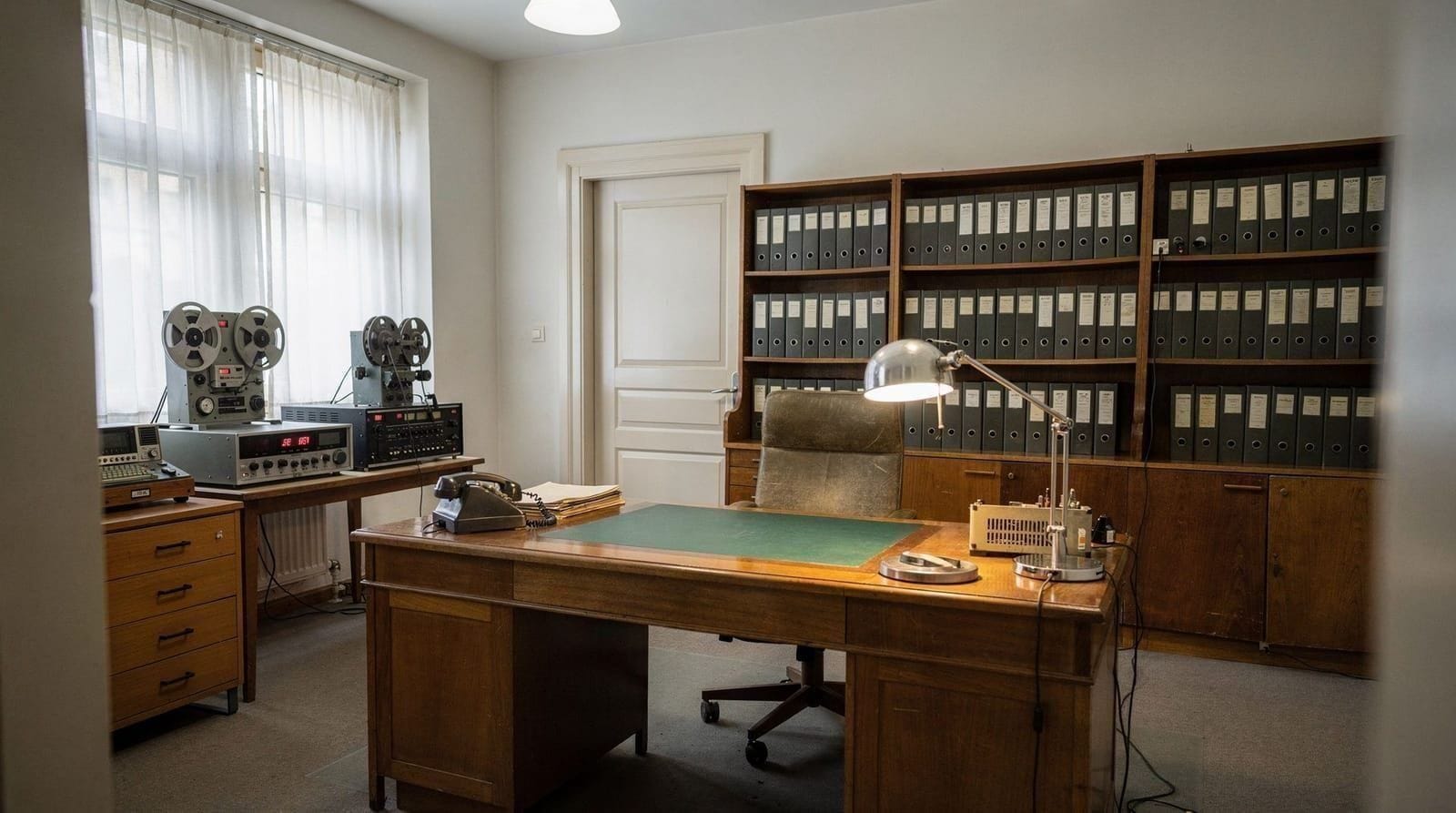
The Stasi Museum in Lichtenberg occupies the actual former headquarters complex of the Ministry for State Security, at Ruschestrasse 103 (Haus 1). The office of Erich Mielke — who ran the Stasi from 1957 to 1989, a tenure of 32 years — is preserved essentially as it was on the day he left. His desk, his conference table, his surveillance monitors, and his personal bathroom are all intact. The museum covers the organisational structure of the Stasi, the IM network, the Zersetzung methods, the file system (the Stasi maintained 111 linear kilometres of files, plus additional materials in the form of films, photographs, and audio recordings), and the events of the peaceful revolution that ended it.
Getting there: U5 to Magdalenenstrasse, then a short walk. Open Tuesday to Sunday; entry costs 8 euros for adults. Allow at least two hours; the exhibition is extensive and in German with reasonable English translation. Our full Stasi Museum guide covers the practical details in depth.

Teufelsberg: the listening station in the forest
In 1963, the US National Security Agency and British GCHQ began construction of a signals intelligence facility on an artificial hill in the Grunewald forest in West Berlin. The hill — Teufelsberg, or Devil’s Mountain — was itself a product of the war: it was formed from approximately 75 million cubic metres of rubble from bombed-out buildings, piled over the ruins of a never-completed Nazi technical university designed by Albert Speer.
The listening station sat at the hill’s summit at an elevation of about 120 metres — high enough, in flat Berlin, to offer unobstructed line-of-sight reception of microwave and radio signals from deep inside East Germany and beyond. At its operational peak in the 1970s and 1980s, the facility employed hundreds of analysts working in shifts around the clock. The distinctive white radomes — the golf-ball-like spherical covers protecting directional antennae — were visible for kilometres in every direction.
The station was decommissioned in 1991 following German reunification and the end of the Soviet threat that had justified its existence. Several redevelopment plans for the hill were proposed over the following decades, none of which came to fruition. Today the site functions as an informal art and cultural space, with graffiti installations, art projects, and guided tours.
Access is possible on weekend guided tours — check the current schedule at teufelsberlin.com, as the operation changes hands periodically and hours vary. Tour costs are typically around 15 euros. Getting there from central Berlin requires either the S-Bahn to Heerstrasse or Grunewald and then a 25-30 minute walk through the forest, or a taxi from the S-Bahn station. The panoramic views from the top — across the flat expanse of Berlin’s western suburbs and into what was formerly East Germany — give a useful physical sense of what the signals equipment was trying to reach.
The Cold War bunkers built beneath various parts of Berlin are a related category of hidden infrastructure. Our guide to Cold War bunkers in Berlin covers what can be visited and what survives underground.
The German Spy Museum — the best starting point
For most visitors, the Deutsches Spionagemuseum (German Spy Museum) on Niederkirchnerstrasse 18 is the most efficient way to get a comprehensive overview of Berlin’s intelligence history before visiting the individual sites. It opened in 2015 and has been expanded since. Despite its somewhat sensationalist marketing, the permanent collection is substantive.
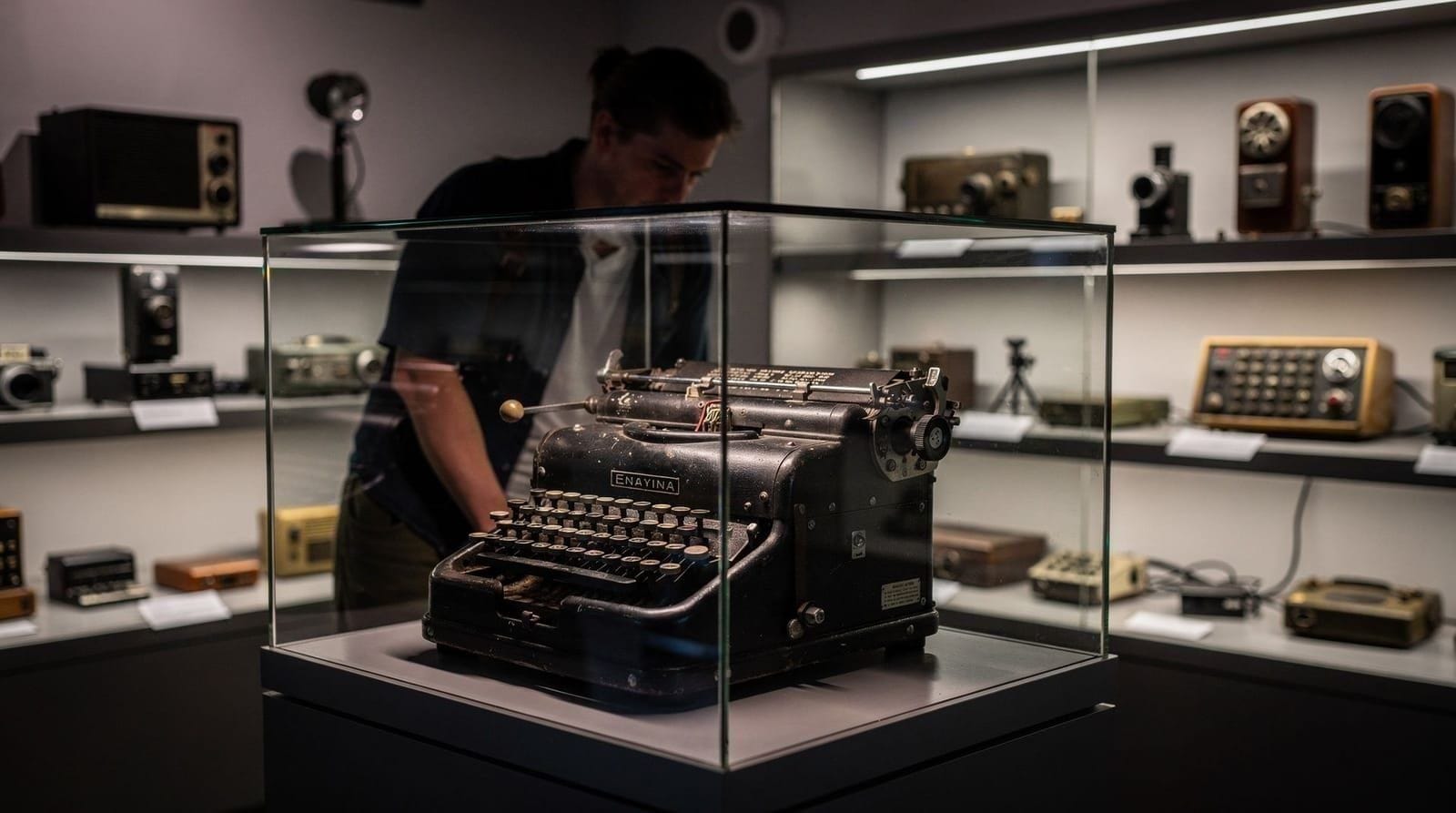
The Cold War section is the museum’s strongest. It covers Operation Gold in detail, with a reconstructed tunnel segment, original cable-tapping equipment, and intelligence documents. A substantial section on the Stasi includes original surveillance equipment, IM recruitment letters, and reconstructed report files. The cipher machine collection ranges from WWI mechanical devices through the Enigma (genuinely authentic examples, not replicas) to Cold War-era electronic encryption systems.
The interactive elements — including a working laser maze that visitors navigate to simulate an infiltration exercise — are popular with families and add a layer of engagement without undermining the historical content. The section on contemporary digital surveillance, covering the period after 1990, is more restrained in its analysis but covers the Snowden revelations and NSA mass collection programs.
Practical details: open daily, including weekends and most public holidays. Tickets cost approximately 17 euros for adults (check the museum’s website for current pricing). The location near Potsdamer Platz means it is easily combined with the nearby Topography of Terror on the same day — the latter covers the Nazi-era Gestapo and SS, which gives the Stasi’s methods useful historical context. See our dedicated German Spy Museum guide for a full breakdown of the galleries.

Which espionage site fits your time budget
| Time needed | Cost | Best if | |
|---|---|---|---|
| German Spy Museum | 2.5-3 hours | Around EUR 17 | You want one comprehensive overview |
| Stasi Museum | At least 2 hours | Around EUR 8 | Surveillance and the IM network interest you specifically |
| Glienicke Bridge | 30-45 minutes | Free | You’re already near Potsdam/Wannsee |
| Teufelsberg | Half a day incl. travel | Around EUR 15 | You want atmosphere and views over the guided-tour content |
| Rudow tunnel marker | 20 minutes | Free | Completism only — there is little to actually see |
If you can only fit one paid site, the German Spy Museum gives the broadest return on time and money; treat the others as additions once that base is covered.
Espionage tradecraft in an ordinary city
What made Berlin distinctive was not just the density of intelligence officers but how thoroughly tradecraft blended into the fabric of an ordinary European city. Dead drops — hidden locations where an agent could leave material for a handler to collect without ever meeting in person — were often unremarkable: a loose brick in a park wall, a specific bench, a hollowed-out tree. Safe houses were rented apartments indistinguishable from any neighbour’s, sometimes held for years without ever being used for an actual meeting, simply to establish a plausible cover history. Cafés near Bahnhof Zoo and along the Ku’damm were known meeting points for informal contact between Western agents and sources crossing from the East, precisely because a foreigner sitting alone with a coffee drew no particular attention in a busy commercial district.
This ordinariness is part of why so few physical traces survive in a form you can visit today — the entire point of good tradecraft was to leave nothing behind. What the German Spy Museum and the Stasi Museum do well is reconstruct this invisible layer through documents, recovered equipment, and testimony, since the city itself has mostly erased the physical evidence through decades of ordinary redevelopment.
Even the everyday act of moving between sectors before 1961 carried operational significance. Couriers and agents exploited the same S-Bahn and U-Bahn lines that ordinary commuters used, since a person in an unremarkable coat carrying an unremarkable bag drew far less attention on a crowded train platform than any more deliberate crossing attempt. This is one of the reasons the construction of the Wall in August 1961 was, from an intelligence perspective as much as a political one, such a decisive rupture: overnight, the informal channels that both sides’ services had relied on for over a decade were closed, forcing a shift toward the more technically elaborate operations — tunnels, signals intelligence, dead drops at fixed border points — that define the sites covered in this guide.
How to plan a self-guided espionage day
A single full day in Berlin can cover the core espionage sites without rushing, if planned logically around transport connections.
Morning (9:00-12:30): German Spy Museum. Allow 2.5-3 hours. The museum opens at 10:00 on most days. Buy tickets online to avoid the queue; weekend mornings attract school groups. Come prepared to read: the Cold War section is text-heavy, with labels in German and English.
Lunch (12:30-13:30): Potsdamer Platz area. The rebuilt Potsdamer Platz has numerous cafes and restaurants within 10 minutes of the museum. Avoid the tourist traps immediately outside; walk one block further for normal pricing.
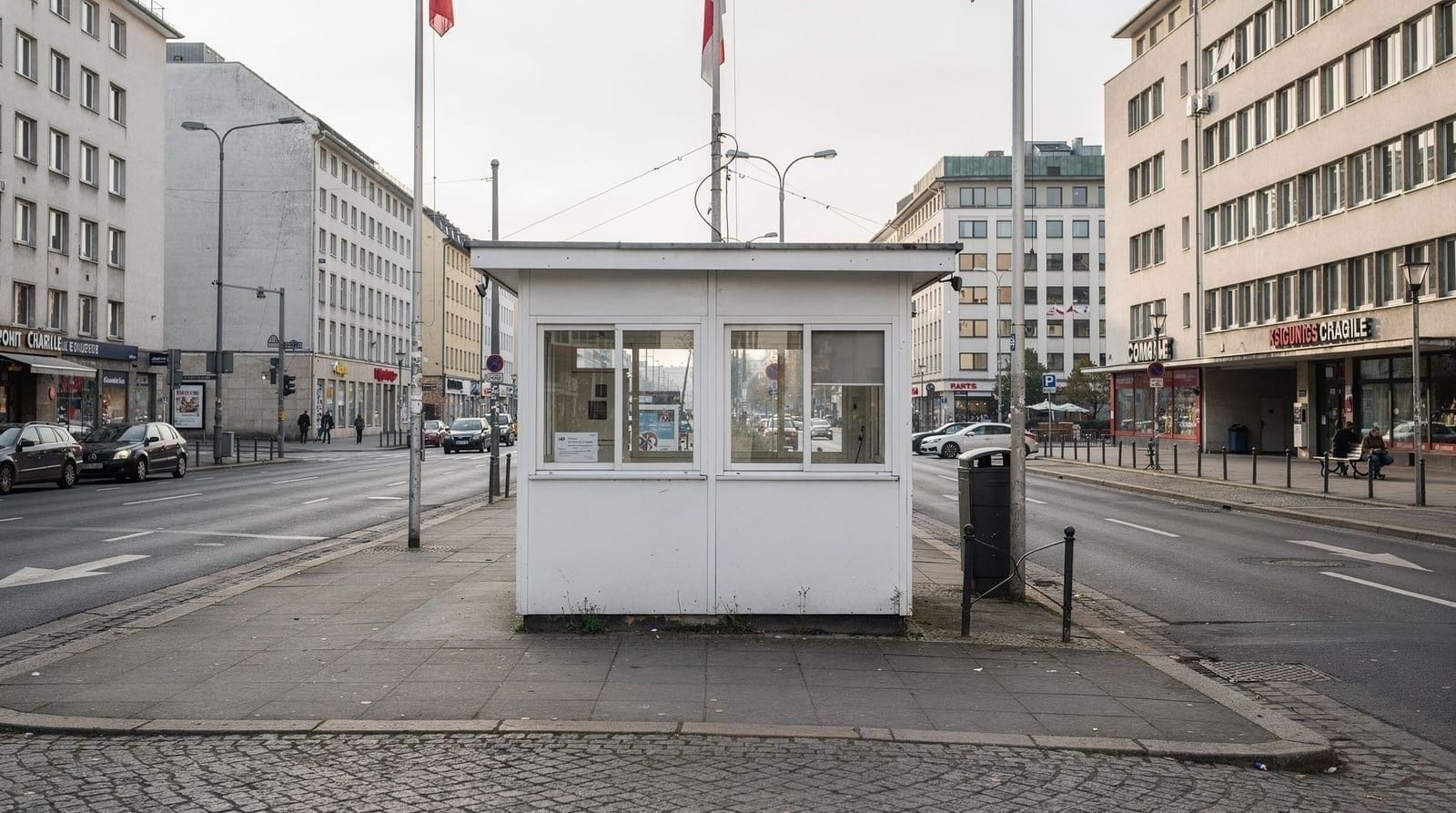
Early afternoon (13:30-15:00): Checkpoint Charlie. The crossing point is a 15-minute walk east along Niederkirchnerstrasse. The free outdoor exhibition panels on the pavement around the former checkpoint cover the standoffs, escape attempts, and the gate’s operational history with real photographs. The Haus am Checkpoint Charlie museum — the indoor museum in the building immediately adjacent — charges 14.50 euros for an exhibition that is extensive but uneven in quality and somewhat chaotic in curation. It is worth it if you want more depth on escape methods specifically; skip it if your time is limited. Our Checkpoint Charlie guide covers both options.
Mid-afternoon (15:00-17:00): Topography of Terror and the Wall line. The Topography of Terror is free and documents the Gestapo and SS headquarters that stood on this site. A surviving section of the Berlin Wall runs along its southern edge. For the full context of the division, see the Berlin Wall complete guide.
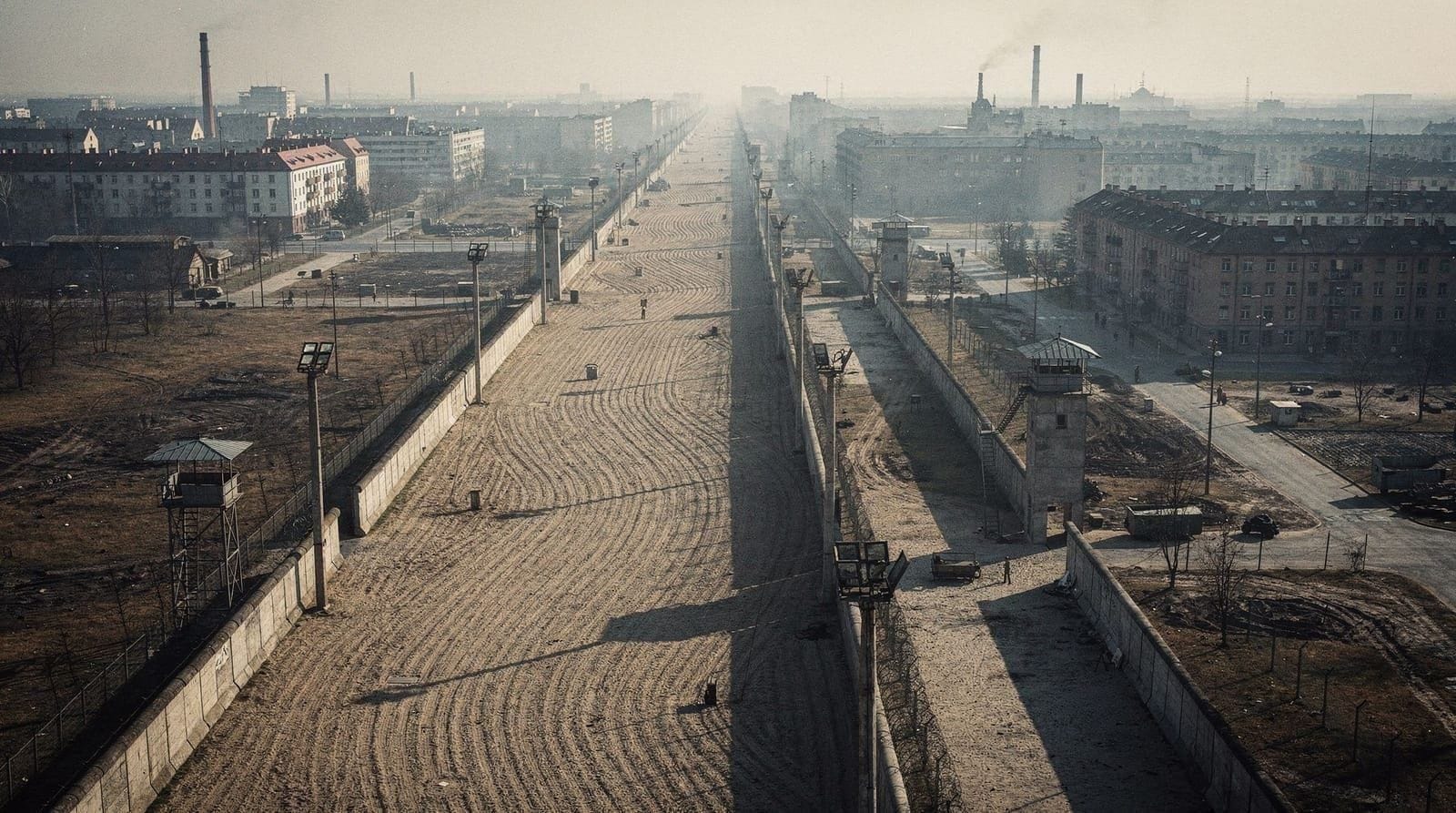
Evening option: Bernauer Strasse. If you have energy remaining, take the U8 to Voltastrasse or tram M10 to Bernauer Strasse. The Wall Memorial here is the most historically intact surviving section in the city, with the death strip, a watchtower, and ground-level markers showing where houses once stood. It is outdoors and free. Our Berlin Wall Memorial Bernauer Strasse guide has the full detail.
Organised tours versus going solo
Self-guiding works well for the German Spy Museum and the individual memorials — the signage at all major sites is reasonable in English, and the museums have audio guides. For Teufelsberg and Glienicke Bridge specifically, a guided tour adds significantly more than the written panels at the sites convey, because the guide can contextualise the physical space against specific operational episodes.
Guided walking tours of the Cold War period typically depart from central Berlin and run 2.5 to 3 hours, covering Checkpoint Charlie, the former intelligence district around Potsdamer Platz, and the Wall line. They are useful for establishing the geography and chronology before visiting individual sites in depth.

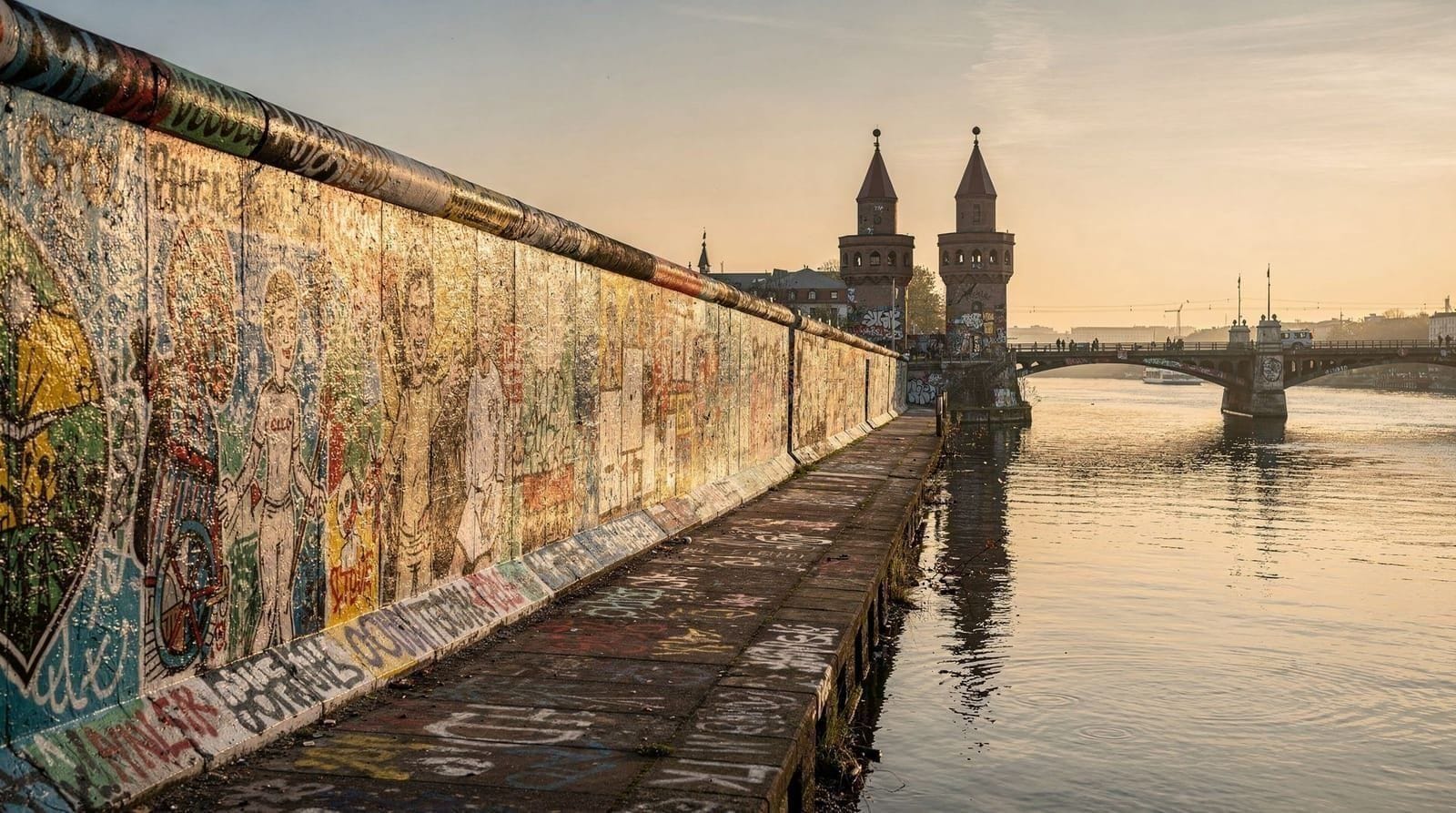
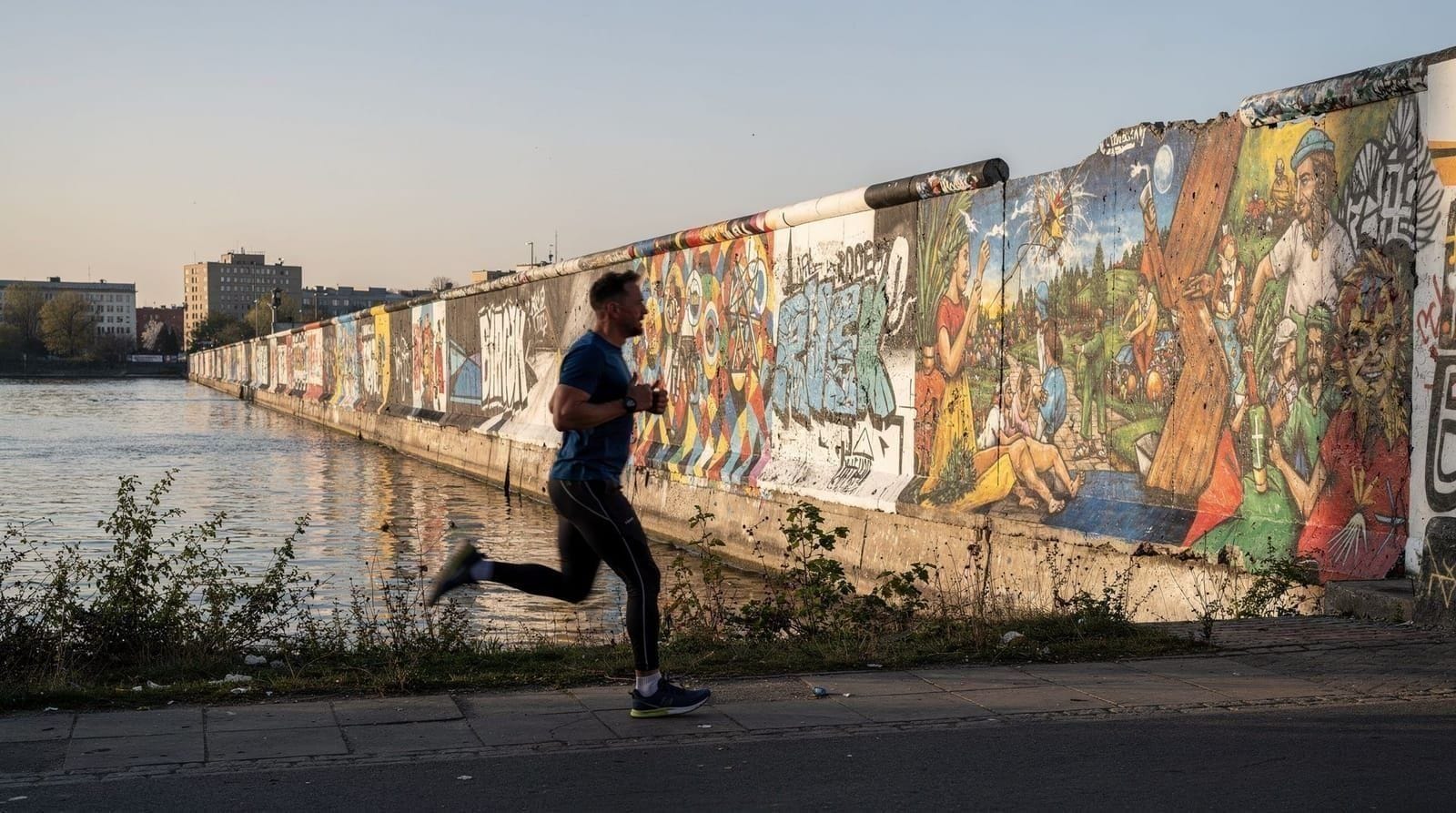
Tours focused specifically on espionage — covering the tunnel site in Rudow, Teufelsberg, and Glienicke Bridge — are rarer but do exist; the Cold War Berlin itinerary links to currently bookable options. The East Side Gallery is worth combining with a Wall tour if you want to see the longest surviving painted section.
Practical information
Getting around. Berlin’s public transport is comprehensive. A day pass (Tageskarte AB zones, approximately 10 euros) covers all U-Bahn, S-Bahn, tram, and bus within the city. The BVG app is the most useful way to plan individual journeys.
German Spy Museum. Niederkirchnerstrasse 18. Open daily 10:00-20:00 (last entry 19:00). Adults 17 euros; book online. U2/S1/S2/S25 to Potsdamer Platz, then 5-minute walk.
Stasi Museum Lichtenberg. Ruschestrasse 103, Haus 1. Open Tuesday-Friday 10:00-18:00, weekends 11:00-18:00. Adults 8 euros. U5 to Magdalenenstrasse.
Checkpoint Charlie area. U6 to Kochstrasse. Free outdoor exhibition available 24 hours. The indoor Haus am Checkpoint Charlie museum charges 14.50 euros.
Glienicke Bridge. S7 to Wannsee, then Tram 93 or taxi to the bridge (~3 km, approximately 7 minutes). Freely accessible at all hours; no entry charge.
Teufelsberg. S-Bahn to Heerstrasse or Grunewald, then a 25-30 minute walk. Guided tours on weekends, approximately 15 euros. Check teufelsberlin.com.
Booking. Most guided tours should be booked in advance during summer (June-August), when demand is high. The German Spy Museum can be busy on weekends; buying tickets online saves 20-30 minutes in the queue.
Combining with the wider Cold War trail. None of the espionage sites above sit in isolation — the German Spy Museum is a five-minute walk from Checkpoint Charlie and the Topography of Terror, the Stasi Museum is a short U-Bahn ride from the East Side Gallery, and Glienicke Bridge sits directly on the route between central Berlin and Potsdam. Treating espionage as a lens on the wider Cold War landscape, rather than a separate checklist, makes for a more coherent day than visiting the sites purely in isolation.
Language. English signage and audio guides are reliable at the German Spy Museum and reasonable at the Stasi Museum, though some original documents on display remain untranslated. Outdoor sites — Glienicke Bridge, the Rudow tunnel marker, and Teufelsberg’s information panels — have bilingual German/English text throughout.
For a structured multi-day plan covering espionage, the Wall, and the broader Cold War history, the Cold War Berlin itinerary lays out a logical sequence. The divided city history guide provides the political context that explains why the spy infrastructure existed in the first place.
Frequently asked questions about Cold War espionage in Berlin
What is Glienicke Bridge famous for?
Glienicke Bridge on the Potsdam-Berlin border was used for Cold War spy swaps between the USA and the USSR. The most famous exchange was in 1962 when U-2 pilot Francis Gary Powers was traded for Soviet spy Rudolf Abel. Further swaps occurred in 1985 and 1986. The bridge is freely accessible and has interpretation panels; guided tours from Berlin explain the context in detail.What was Operation Gold (the CIA tunnel under Berlin)?
Operation Gold was a joint CIA-MI6 project that bored a tunnel from the American sector into East Berlin to tap Soviet and East German military communications cables. The tunnel operated from 1955 to 1956 before Soviet intelligence (tipped off by British double agent George Blake) revealed it. A marker in Rudow indicates the approximate western entrance; the eastern end is inaccessible.Where was the Stasi headquarters in Berlin?
The Stasi (Ministry for State Security of the GDR) had its main headquarters complex in Lichtenberg, in East Berlin. The site is now the Stasi Museum (Forschungs- und Gedenkstätte Normannenstrasse), open to visitors. The office of Erich Mielke, the Stasi chief for most of its existence, is preserved as it was. Entry costs around 8 euros.Is the German Spy Museum worth visiting?
The Deutsches Spionagemuseum near Potsdamer Platz is genuinely educational rather than merely entertaining. It covers tradecraft, cipher machines, the Berlin tunnel, Stasi methods, and contemporary surveillance. Interactive exhibits include a working laser maze. Allow 2-3 hours; tickets cost around 17 euros for adults. It is particularly strong on Cold War Berlin specifically.Can I visit any CIA or intelligence-related sites in Berlin?
No formal CIA facility is open to the public, but the former US Military Liaison Mission building in Potsdam and Teufelsberg — the NSA/British GCHQ listening station built atop WWII rubble in Grunewald — can be visited. Teufelsberg now hosts art installations and guided tours run on weekends; check teufelsberlin.com for current access. The views over the city are extensive.What happened at Checkpoint Charlie during the Cold War?
Checkpoint Charlie was the principal crossing point between West and East Berlin for non-German civilians and military personnel. In October 1961, US and Soviet tanks faced each other across it for 16 hours in a direct military standoff. Multiple East Germans attempted escapes through or near the checkpoint; some succeeded, others died. The site today is heavily commercialised, though a small free outdoor exhibition covers the real history.How long does a Cold War espionage walking tour take?
Organised guided walking tours focused on Cold War espionage typically run 2-3 hours and cover Checkpoint Charlie, the former Gestapo-Stasi area, Potsdamer Platz, and the Wall line. A self-guided circuit combining the German Spy Museum, the Wall Memorial on Bernauer Strasse, and the East Side Gallery takes a full day. Teufelsberg requires a separate half-day.
Top experiences
Bookable activities with verified prices and instant confirmation on GetYourGuide.