Checkpoint Charlie guide — history, what's worth it, and what to skip
Berlin: Skip-the-Line Berlin Wall Museum at Checkpoint Charlie
Is Checkpoint Charlie worth visiting in Berlin?
The free outdoor site with original information boards is worth 30 minutes. The checkpoint replica itself is a commercial set piece, not original. The Checkpoint Charlie Museum (Mauermuseum) has genuine historical content but is expensive (€15) and poorly maintained. The nearby Wall sections on Zimmerstrasse are more historically honest. Skip the paid photograph with fake guards.
Checkpoint Charlie in brief: The free outdoor site with genuine historical information is worth 30 minutes. The checkpoint guardhouse in the middle of Friedrichstrasse is a commercial replica, not the original. The Checkpoint Charlie Museum has real historical artefacts but is overpriced and poorly maintained. The Wall sections on Zimmerstrasse nearby are more authentic. Skip the costumed guards charging for photographs.
| Where | Friedrichstrasse / Zimmerstrasse, Mitte — U6 Kochstrasse |
| Cost | Outdoor site free; museum around €15 |
| Time needed | 30 minutes free site; add 90 minutes for the museum |
| Getting there | U6 to Kochstrasse, exits directly adjacent |
| Best time | Early morning to avoid tour-group crowds and the costumed guards |
What Checkpoint Charlie actually was
From 1961 to 1990, Checkpoint Charlie was the only crossing point in the Berlin Wall designated for non-German civilians (diplomats, Allied military personnel, journalists, and authorised tourists). Its name followed the NATO phonetic alphabet — Alpha at Helmstedt on the Autobahn, Bravo at Dreilinden on the southern motorway, Charlie at Friedrichstrasse in central Berlin.
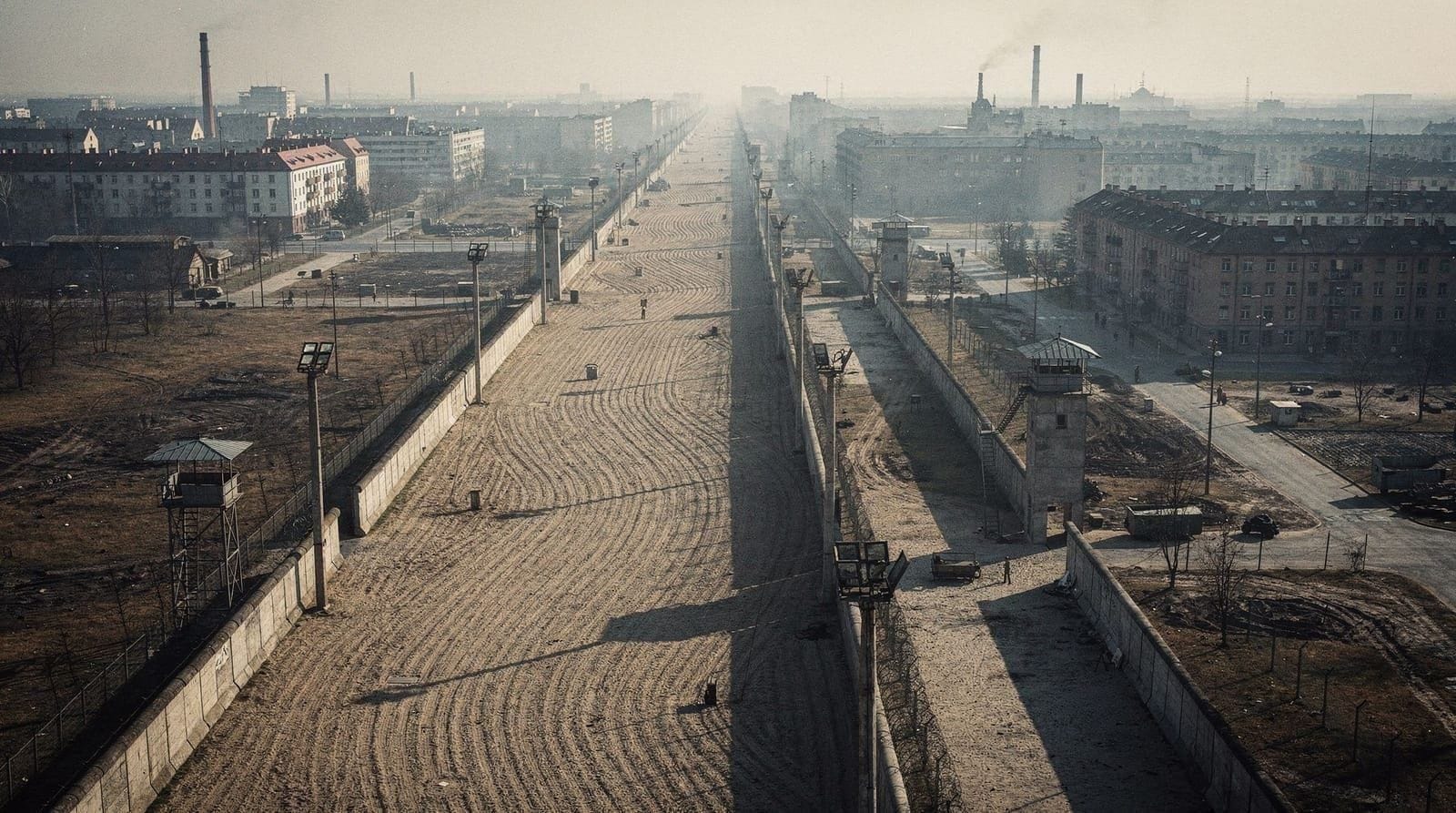
The checkpoint was operated by all four Allied powers. The US Army maintained a permanent guardhouse and patrol. East German border guards controlled the actual crossing procedures from the east. The physical arrangement was a narrow corridor through a triple-barrier system, with Allied and Soviet military zones directly adjacent.
Its strategic significance was acute: any confrontation here directly involved Allied forces. This is why the October 1961 tank standoff — ten US and ten Soviet tanks facing each other at point-blank range for 16 hours — was considered one of the most dangerous moments of the Cold War, with a genuine risk of armed conflict that could have escalated to nuclear exchange. The confrontation ended when both sides withdrew tanks simultaneously, having established the principle that Allied personnel could cross without showing identification to East German guards.
The 1961 tank standoff — what happened
The immediate trigger was a dispute over whether East German guards had the right to inspect the credentials of non-German Allied personnel. The US position was that Allied personnel could cross freely as a matter of four-power rights over all of Berlin; the East German (and Soviet) position was that Allied personnel in civilian clothes entering East Berlin should identify themselves to GDR border guards.
On October 22, 1961, an American diplomat in civilian clothes was stopped and required to show credentials to East German guards. The US Army responded by escorting the next diplomat through in a military vehicle, with armed jeeps and M48 Patton tanks backing up. The Soviets responded by moving T-54 tanks to the eastern side of the checkpoint.
For 16 hours on October 27–28, ten tanks on each side sat approximately 90 metres apart, engines running, in the street that would become Checkpoint Charlie. President Kennedy and Soviet Premier Khrushchev communicated back-channel to find a resolution. The standoff ended when the Soviets pulled back their tanks first, followed immediately by the Americans.
General Lucius Clay, Kennedy’s personal representative in Berlin, characterised it as “the most tense situation in Europe since the blockade.” The principle of Allied access rights was preserved; Checkpoint Charlie remained operational until reunification.
The site today — what you get for free
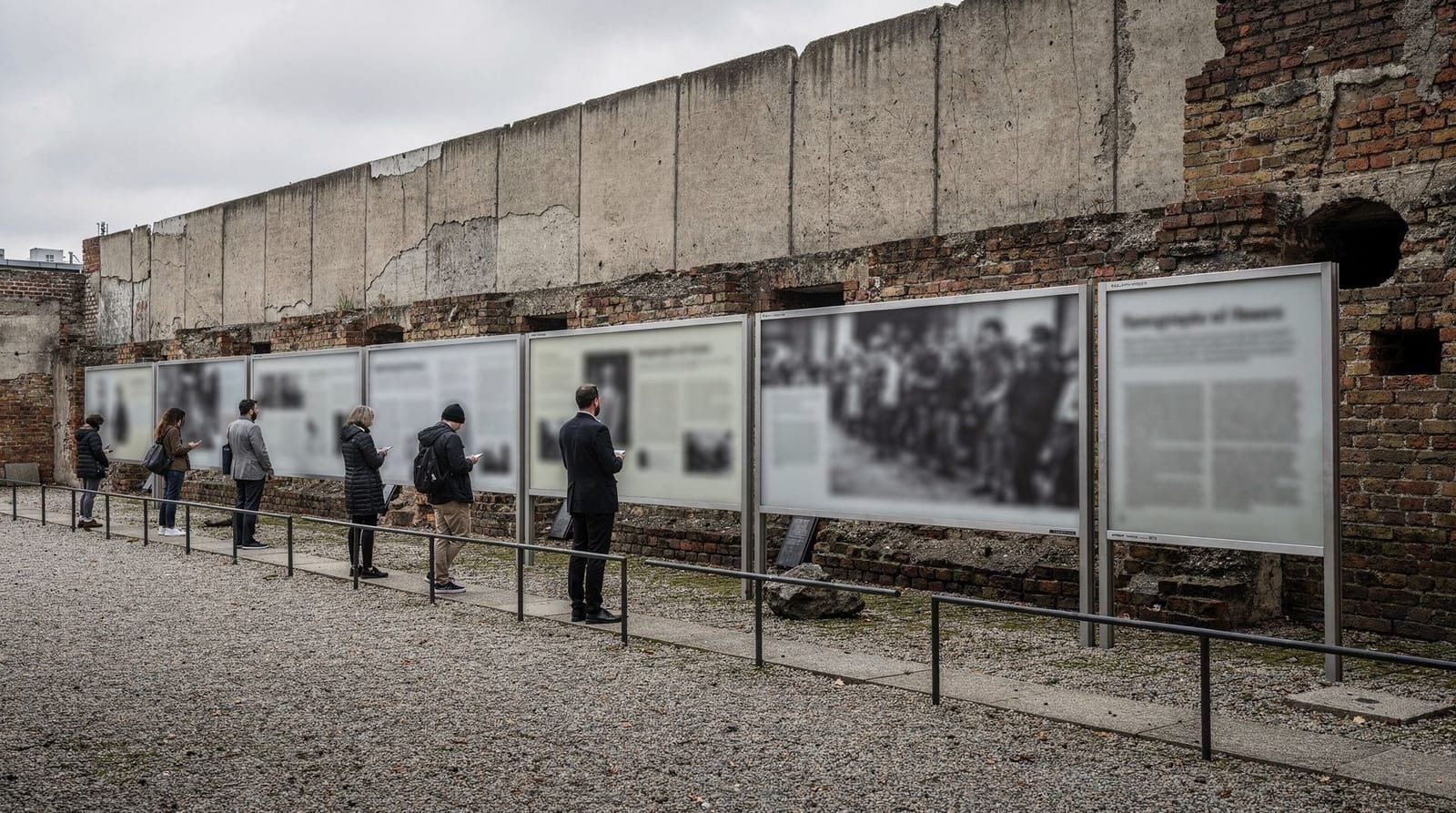
The outdoor open-air installation on Friedrichstrasse is free and covers the essentials in about 30 minutes. Large-format historical photographs show the original checkpoint and the 1961 standoff. Information boards in German and English explain the crossing procedures, the major incidents, and the escape attempts.
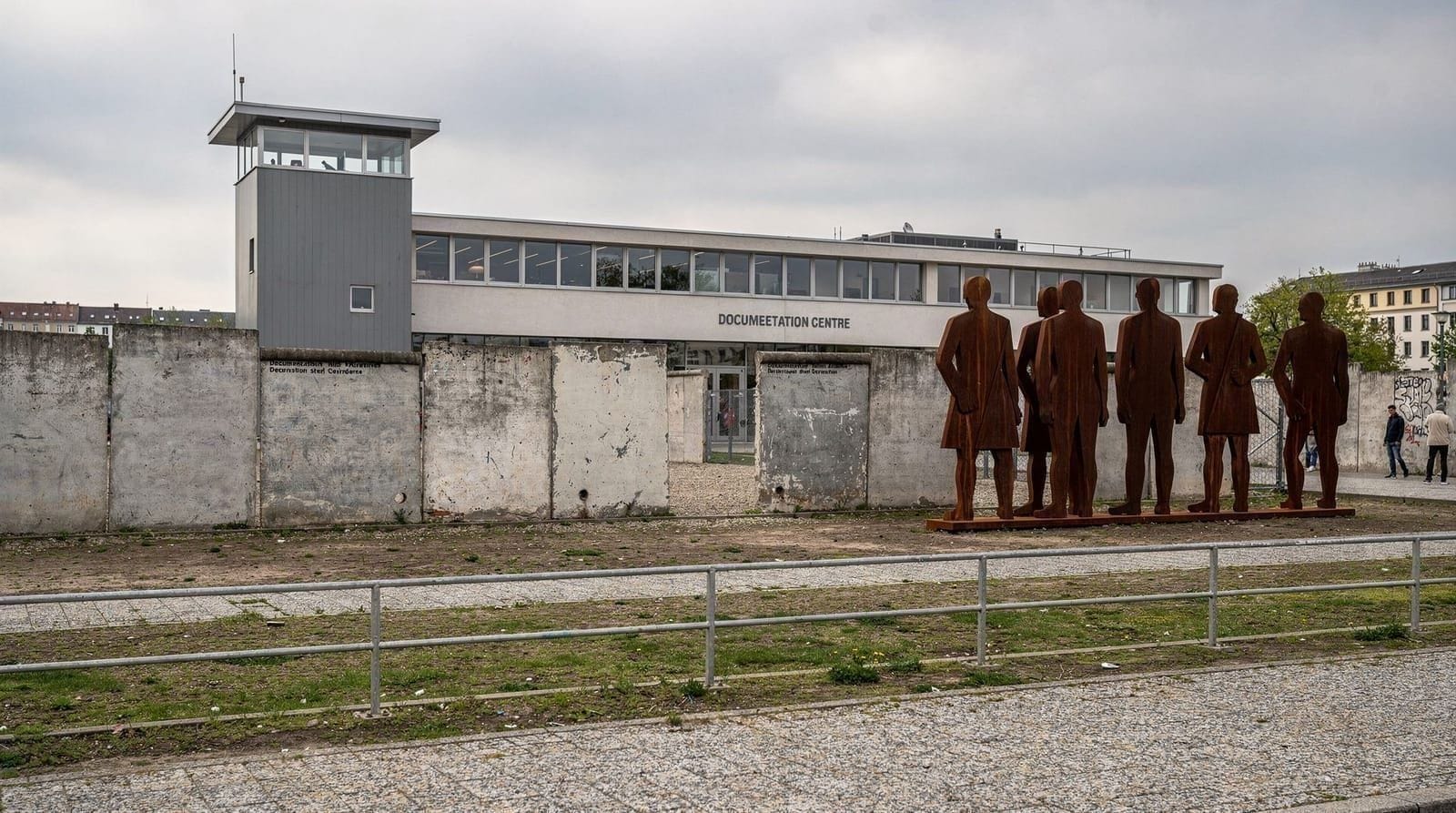
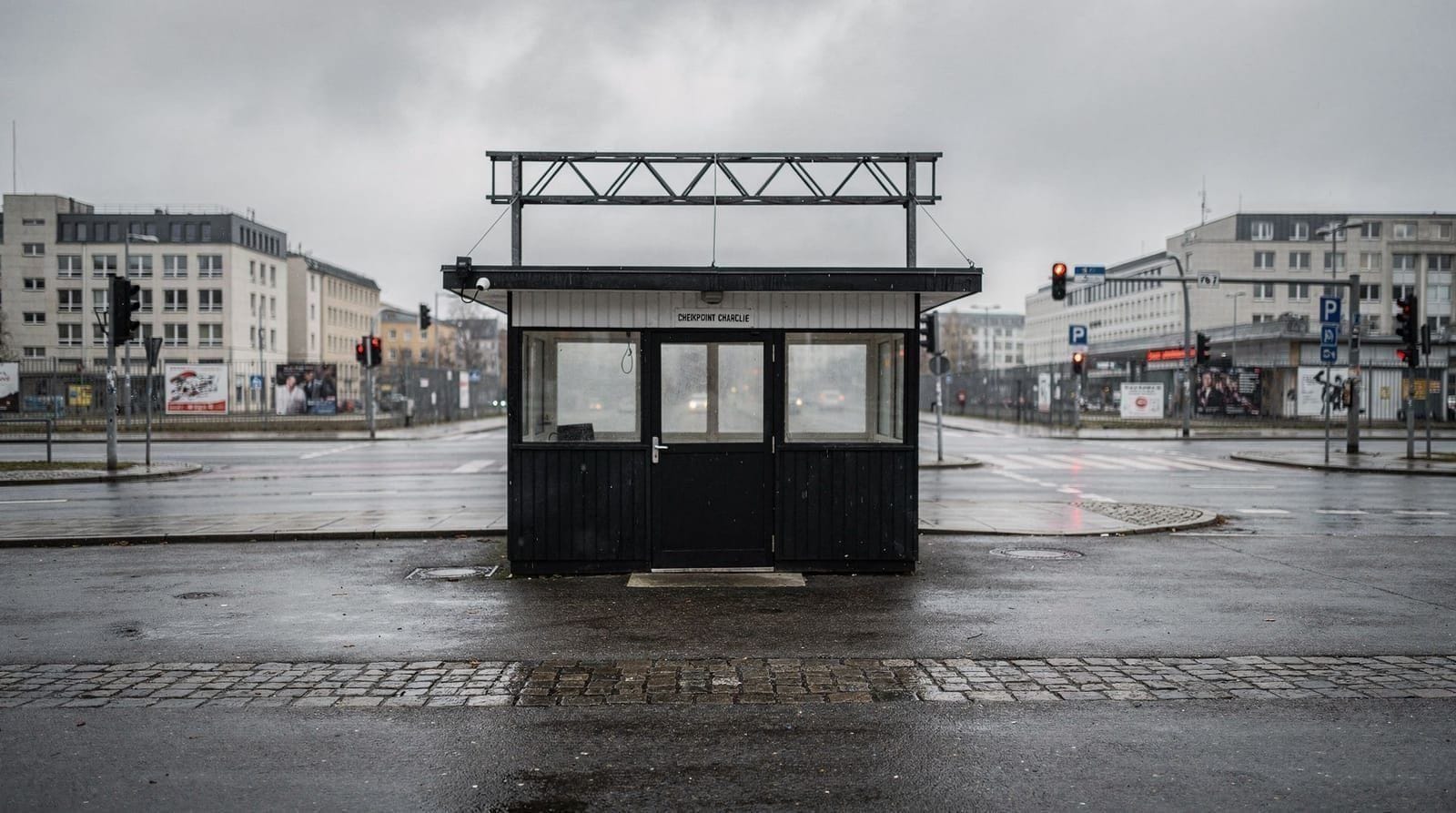
The replica guardhouse in the middle of the road is a useful visual orientation point. It accurately represents the physical appearance of the original Allied structure, even if it is not original. Most visitors photograph it; this is fine as long as you understand what it is.
The most historically substantive free element near the site: the Wall section on Zimmerstrasse, 200 metres east of the checkpoint. This stretch of original Wall, with information boards about escape attempts through tunnels and specially modified vehicles, is more evocative than the crowded Friedrichstrasse junction.
The Checkpoint Charlie Museum (Mauermuseum) — honest assessment
The Mauermuseum was founded in 1962 by civil rights activist Rainer Hildebrandt, who began collecting material about escape attempts almost as soon as the Wall went up. The museum opened in 1963 — one of the earliest institutions documenting the Wall — and has been continuously operated by the Hildebrandt family foundation.
What it has that is genuinely interesting: Escape vehicles are the standout exhibits — a specially modified BMW Isetta with a hidden compartment for a single person, a one-man submarine, the cable car contraption used by eight people in 1979, and numerous others. The documents, ID forgeries, and personal testimonies are primary source material with real emotional weight.
What is problematic: The museum is cramped, poorly lit in parts, and the exhibit design has not been significantly updated. Many labels are in German with small English translations. The price has increased to €15 without corresponding improvements. The museum is run on a commercial basis (family foundation) with limited external accountability; critics have noted for years that revenues are not reinvested in improving visitor experience.
Verdict: If you have a specific interest in escape attempts, the museum is worth the €15 and 90 minutes. For a general history visitor, the Bernauer Strasse documentation centre (free) provides a more rigorous and better-presented experience. The DDR Museum on the Spree (around €12.50) gives better context for everyday life under the GDR system.
Skip-the-line access to the Checkpoint Charlie Museum — avoid the outdoor queueWhere to spend your Wall history budget
| Cost | Best for | |
|---|---|---|
| Checkpoint Charlie outdoor site | Free | Quick orientation, photos |
| Mauermuseum (Checkpoint Charlie) | Around €15 | Escape vehicles, primary documents |
| Bernauer Strasse memorial | Free | Most rigorous, best-preserved death-strip section |
| DDR Museum | Around €12.50 | Everyday life under the GDR, interactive |
If you only have time and budget for one paid Wall-related museum, Bernauer Strasse’s free documentation centre often out-performs the paid Mauermuseum for a general visitor.
The tourist trap elements to avoid
Costumed guards: Actors in US Army uniforms near the replica guardhouse offer photographs for €10. They have no official or historical function. Many visitors interact with them without realising this. Decline politely and move on.
Souvenir stalls: The surrounding streets have some of the highest-density souvenir trading in Berlin. “Original Berlin Wall” fragments for sale here have essentially zero verifiability. A €3 piece of concrete in a plastic frame could be from any demolition site in the former East Germany.
Commercial photography: Several operators offer “authentic” Cold War photograph experiences (uniforms, stamps, etc.). These are entertainment products, not historical reconstructions.
None of this is unique to Berlin, and there is nothing wrong with enjoying a commercial experience if you know what it is. The problem arises when visitors mistake the theatrical for the historical.
The volume of commercial activity around Checkpoint Charlie also means it is one of the more crowded single points on the entire Berlin Wall trail, especially between late morning and early evening in summer. If your priority is a contemplative Wall experience rather than a quick orientation stop, budget your main time at Bernauer Strasse or the East Side Gallery instead, and treat Checkpoint Charlie as a 30-minute waypoint on a longer Cold War itinerary rather than a destination in itself.
Guided tours — when they add value
A guided tour of the Checkpoint Charlie area becomes valuable primarily for the human stories: the specific escape attempts, the individual fates of people who succeeded or failed, the biography of the guards who did or did not shoot. These stories are not well conveyed by the museum’s current exhibits.
Berlin Cold War and espionage tour — includes Checkpoint Charlie with guided historical contextA combined tour that takes in Checkpoint Charlie, the Wall sections on Zimmerstrasse, the Topography of Terror, and Bernauer Strasse in one half-day covers the Cold War geography of the city in context. This works better than visiting each site separately.
Espionage-focused tours in particular tend to add genuine value at Checkpoint Charlie, since the site’s Cold War significance is bound up with intelligence operations as much as with the physical crossing itself — spy exchanges, surveillance, and the broader East-West standoff that the Cold War espionage guide covers in more depth.
What to visit near Checkpoint Charlie
Topography of Terror (10 minutes on foot west): Free, world-class open-air documentation of Nazi state apparatus. The Wall section along Niederkirchnerstrasse runs directly along the site. Do not skip this if you have time.
Jewish Museum Berlin (15 minutes south on U-Bahn U6 to Hallesches Tor): Libeskind building and 2,000-year history of Jewish life in Germany. See Jewish Museum Berlin guide.
Potsdamer Platz (15 minutes west on foot): Former death strip, now commercial development. The cobblestone Wall path is clearly visible. Small section of original Wall preserved near Sony Center.
Holocaust Memorial (20 minutes west on foot): Peter Eisenman’s field of concrete stelae, genuinely moving. Free entry; underground documentation centre below (free). See Holocaust Memorial guide.
For a logical route combining all of these with efficient U-Bahn and walking connections, see the Cold War Berlin itinerary.
Getting there
U-Bahn: U6 to Kochstrasse — exits directly adjacent to Checkpoint Charlie. This is the most convenient option.
Bus: M29 along Friedrichstrasse.
On foot from Potsdamer Platz: 15 minutes east on Zimmerstrasse.
Opening hours for outdoor site: 24 hours, free.
Museum hours: Daily 9 am–10 pm. Last entry 9 pm.
Museum address: Friedrichstrasse 43–45, 10969 Berlin
Following the Wall further
Checkpoint Charlie is one point on a much longer story. The Berlin Wall complete guide covers the full 155-km course of the Wall and where the best-preserved sections survive today, while the where to see the Berlin Wall blog post is a faster read if you only want the highlights. For a longer stretch of preserved Wall with murals rather than fragments, the East Side Gallery is a 20-minute U-Bahn ride east. A handful of original watchtowers also survive around the city; see the surviving Wall watchtowers guide if that specific detail interests you.
Frequently asked questions about Checkpoint Charlie guide
Is the Checkpoint Charlie guardhouse original?
No. The original Allied guardhouse was removed in June 1990 after German reunification. The structure currently standing in the middle of Friedrichstrasse is a replica, installed for commercial and tourism purposes. The sandbags, barriers, and uniformed figures are also part of a commercial staging.How much does the Checkpoint Charlie Museum cost?
The Mauermuseum — Museum Haus am Checkpoint Charlie charges €15 for adults (2026 price). The entry includes all floors. The museum is privately operated and has been criticised for years for not using revenues to improve exhibits, many of which are in poor condition with limited English translations.What was Checkpoint Charlie historically?
Checkpoint Charlie was the primary crossing point for Allied military personnel and foreign diplomats between West and East Berlin during the Cold War, 1961–1990. It was one of three named Allied checkpoints (Alpha at Helmstedt, Bravo at Dreilinden). "Charlie" follows the NATO phonetic alphabet. It was the scene of the October 1961 tank standoff between US and Soviet forces.What can I see for free at Checkpoint Charlie?
The outdoor information boards on Friedrichstrasse covering the checkpoint's history, the original Wall sections on Zimmerstrasse east of the checkpoint, the open-air museum installation along the adjacent block, and the historical photographs mounted on fences around the site. These free elements take about 30 minutes and provide a solid overview.Is the Checkpoint Charlie Museum (Mauermuseum) worth it?
For serious Cold War history enthusiasts, possibly — it contains genuine escape vehicles, forged documents, and artefacts with real historical significance. For general visitors, probably not at €15. The exhibits are cramped, the signage is predominantly German, and the space has not been significantly updated since the 1990s. The Bernauer Strasse documentation centre (free) provides a more rigorous historical experience.Are the uniformed guards at Checkpoint Charlie real?
No. The people in US Army uniforms standing near the checkpoint are commercial operators charging tourists for photographs (€10). They have no official status. Ignoring them is the correct approach.What is the best Cold War site near Checkpoint Charlie?
The Topography of Terror open-air exhibition is a 10-minute walk west on Niederkirchnerstrasse and is free. It covers the Gestapo and SS headquarters that stood on the same site. The Wall section along Niederkirchnerstrasse is one of the most evocative, running along what was Prinz-Albrecht-Strasse.
Top experiences
Bookable activities with verified prices and instant confirmation on GetYourGuide.