Jüdisches Museum Berlin — the complete visitor guide
Berlin: Jewish Museum Berlin Entrance Ticket
What is the Jüdisches Museum Berlin and how do you visit?
The Jewish Museum Berlin is the largest Jewish museum in Europe, housed in a striking zinc-clad building designed by Daniel Libeskind in Kreuzberg. Entry costs €8 (reduced €3). The museum covers 2,000 years of Jewish life in Germany. Allow at least 2.5 to 3 hours for the permanent exhibition.
What is the Jüdisches Museum Berlin? The Jewish Museum Berlin is the largest Jewish museum in Europe, located in Kreuzberg in a building designed by architect Daniel Libeskind that is itself one of the most discussed works of architecture in post-war Germany. Entry costs €8 for adults. The museum traces 2,000 years of Jewish life in German-speaking lands. Allow at least 2.5 to 3 hours.
| Where | Lindenstrasse 9-14, Kreuzberg |
| Cost | Around €8 adult, €3 reduced |
| Time needed | 2.5–3 hrs permanent exhibition |
| Getting there | U1/U3/U6 Hallesches Tor, 5 min walk |
| Best time | Tuesday–Thursday mornings, at opening |
Why the building itself is the first exhibit
Most museums in Berlin are visited for what they contain. The Jüdisches Museum Berlin is unusual in that the building — designed by Daniel Libeskind and completed in 1999 — must be understood before the contents make full sense. Libeskind’s zinc-clad extension of the existing Baroque Kollegienhaus creates a structure so deliberately disorienting that discomfort is part of the design.
The floor plan, when viewed from above, forms a fragmented Star of David. Inside, the floors are not level; walls lean; natural light enters through narrow slashes cut at oblique angles across the zinc facade. Corridors lead to dead ends. Staircases are steep and narrow. None of this is accidental. Libeskind described the building as a “between the lines” structure — the two lines of German-Jewish history, one broken off, the other continuing.
Three axes run through the building, each ending in a different space:
The Axis of the Holocaust leads to a concrete void, 24 metres high, with no heating, no art on the walls, and only a sliver of natural light far above. Called the Holocaust Tower, it cannot be traversed — you enter, stand in the dark, and return. The sound of the heavy door closing behind you is calculated.
The Axis of Exile leads to the Garden of Exile: 49 concrete columns set on a deliberately sloping site, each topped with olive bushes. The columns are slightly off-vertical on the tilted ground, creating a disorienting maze that physically conveys the experience of displacement. The 49 columns represent the founding year of Israel (1948) plus one — the 49th column is filled with soil from Berlin, the 48 others with soil from Jerusalem.
The Axis of Continuity is the main staircase rising into the permanent exhibition — the continuation of Jewish life in Germany despite everything.
Allow 30 to 45 minutes before entering the main collection to move through these three axes and let the architecture work on you.
The permanent collection — 2,000 years in two floors
The permanent exhibition covers Jewish life in German-speaking lands from the early Middle Ages to the present. It is structured chronologically on two upper floors connected by that steep central staircase.
Medieval period (900–1500): The exhibition opens with the Ashkenazi communities of the Rhine valley — Speyer, Worms, Mainz. Jewish settlement in what is now Germany predates the Holy Roman Empire. The section covers the structure of medieval Jewish communities, the Hebrew manuscripts produced in German-speaking regions, and the recurring cycles of expulsion and return that characterised Jewish life under Christian rule.
Early modern period (1500–1800): The emancipation debates of the Enlightenment occupy a significant section. The philosopher Moses Mendelssohn (1729–1786), born in Dessau and central to the Berlin Jewish Enlightenment (Haskalah), appears here as a pivotal figure who sought to reconcile Jewish religious identity with German civic life. His translations of the Torah into German were both celebrated and contested within the Jewish community.
Nineteenth century: The 1800s brought legal emancipation in stages across the German states — full legal equality arrived with the formation of the German Empire in 1871. The exhibition documents the rapid integration of Jews into German professional, intellectual, and cultural life. By 1900, Jewish Berliners were prominent in banking, medicine, law, journalism, and the arts far beyond their proportion of the population (roughly 4 percent of Berlin’s population by 1925).
Weimar Republic and the rise of Nazism (1918–1933): The flowering of Jewish intellectual and artistic life in Weimar Berlin is documented alongside the simultaneous rise of antisemitism that would bring it to an end. Albert Einstein, Walter Benjamin, Billy Wilder, Ernst Toller — the names that made Berlin’s cultural reputation in the 1920s include a significant Jewish proportion.
The Shoah and aftermath: The exhibition does not dwell excessively on the years 1933–1945 — the Topography of Terror and Holocaust Memorial handle this period in more forensic detail. The museum’s focus here is on individual stories: the decisions families faced, the networks of emigration, the experience of those who remained and were deported.
Post-war Jewish life in Germany: A section that surprises many visitors: the significant Jewish community in Germany today — approximately 200,000 people, the third-largest in Western Europe. The exhibition documents the displaced persons camps, the decision of survivors to remain in Germany, the influx of Jews from the former Soviet Union after 1989, and the contemporary Jewish cultural scene in Berlin.
Jüdisches Museum Berlin — entrance ticket with priority accessThe Memory Voids — Menashe Kadishman’s installation
One installation in the permanent collection requires specific preparation. In a void space — one of the six Leerräume that cut through the building — Israeli sculptor Menashe Kadishman’s work Shalekhet (“Fallen Leaves”) covers the floor with 10,000 open-mouthed faces cut from heavy iron discs. Visitors are invited to walk across them.
The sound of the iron discs shifting and clanging underfoot is disturbing in a way that photographs cannot convey. The faces — each slightly different — are meant to represent all victims of war and violence, not specifically Jewish victims. Many visitors find this the most affecting single experience in the building. Go slowly.
ANOHA — the children’s museum
The adjacent ANOHA children’s museum opened in 2021 in a new building connected to the main Libeskind structure. It is designed for children aged 3 to 12 and uses the story of Noah’s Ark as a framework for exploring themes of diversity, cooperation, and coexistence.
ANOHA has its own separate entrance and ticketing. Entry costs €6 for children (adults accompanying children enter at no extra charge). It is a genuine children’s space rather than a sidelined family room, with interactive exhibits, a large model ark, and animals scaled to fill the space. Booking ahead is recommended, particularly for school holidays.
Practical planning
Getting there: U-Bahn U1, U3, or U6 to Hallesches Tor, then 5 minutes on foot. The museum address is Lindenstrasse 9-14, 10969 Berlin. The entrance is on Lindenstrasse, not on the Kollegienhaus side.
When to go: Tuesday to Thursday mornings are quietest. Saturdays and Sundays, particularly afternoons, are busiest. School groups visit heavily on weekday mornings in spring and autumn. For the best experience of the Holocaust Tower and Garden of Exile — spaces that lose their effect when crowded — arrive at opening time.
What to wear: The Garden of Exile is outdoors and exposed. The Holocaust Tower is cold regardless of season. Dress in layers.
Luggage and bags: Lockers are provided in the basement. Large bags must be left there. Photography is permitted in most of the permanent collection but not in temporary exhibitions.
Café Liebermanns: The café serves kosher-certified food. It does not require a museum ticket. If you want a meal after the visit, Kreuzberg’s Bergmannstrasse is 10 minutes walk and has a good range of independent restaurants.
Guided options
The audio guide (€3 extra, available in multiple languages) adds significant context to the architecture particularly. The museum’s own structured tours run at fixed times and are included in a premium ticket. Third-party walking tours that include the Jewish Museum as part of a wider Jewish Berlin itinerary provide the best value for understanding the site in its broader context.
Jewish history of Berlin walking tour — covers Museum, Scheunenviertel, and memorial sitesFor the wider context of Jewish Berlin beyond the museum walls, the Scheunenviertel quarter guide and the complete Jewish history of Berlin give an essential foundation.
The temporary exhibition programme
The Jüdisches Museum has an active temporary exhibition programme alongside the permanent collection. Exhibitions have covered Kafka, the history of Jewish humour, football and Jewish identity, and contemporary Israeli art. Temporary exhibitions carry an additional ticket charge (€8–12) or are included in a combined ticket.
Check the museum’s official website at jmberlin.de for the current programme before visiting. Major temporary exhibitions significantly increase visitor numbers and require additional time.
What the museum does not cover
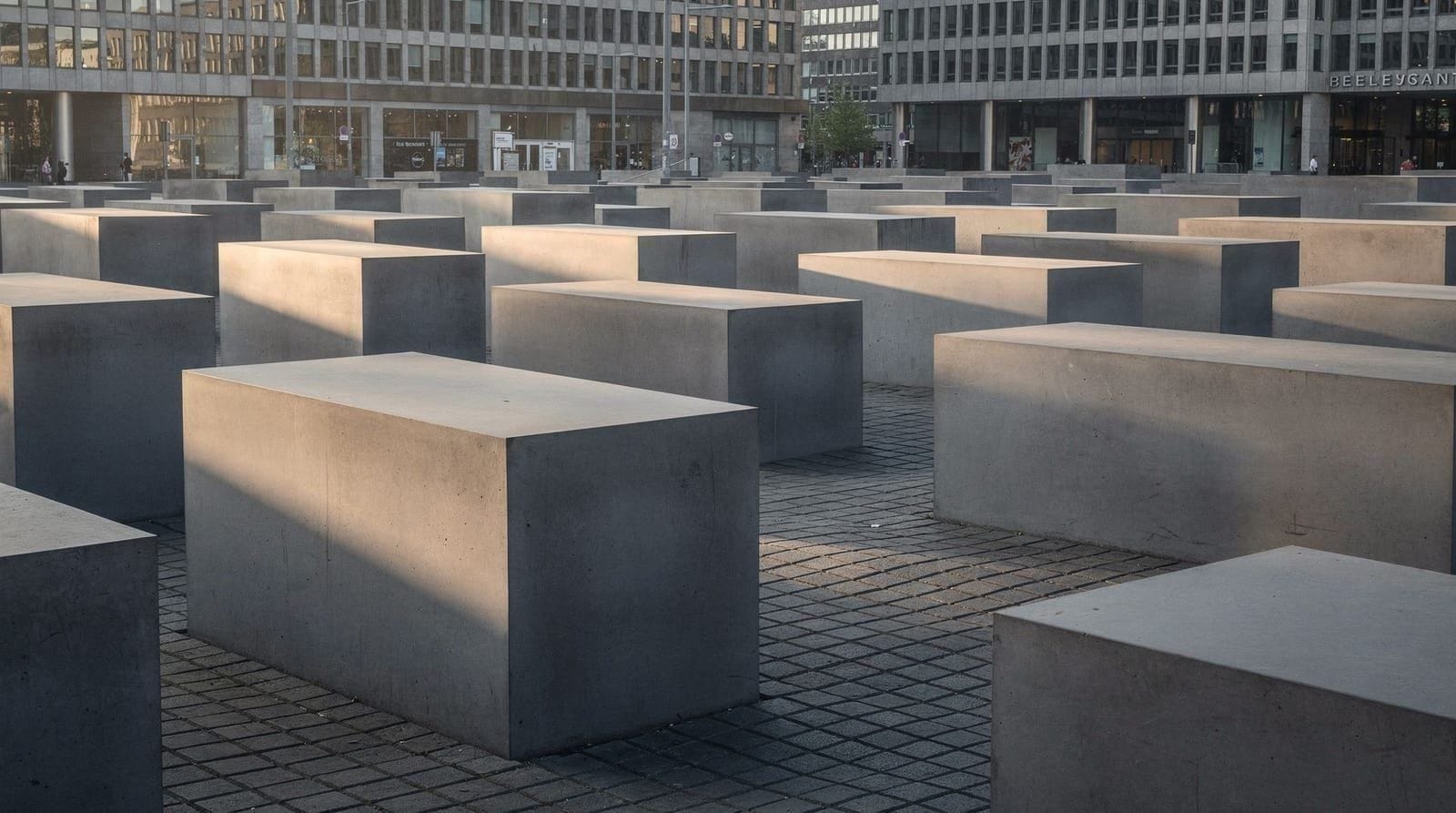
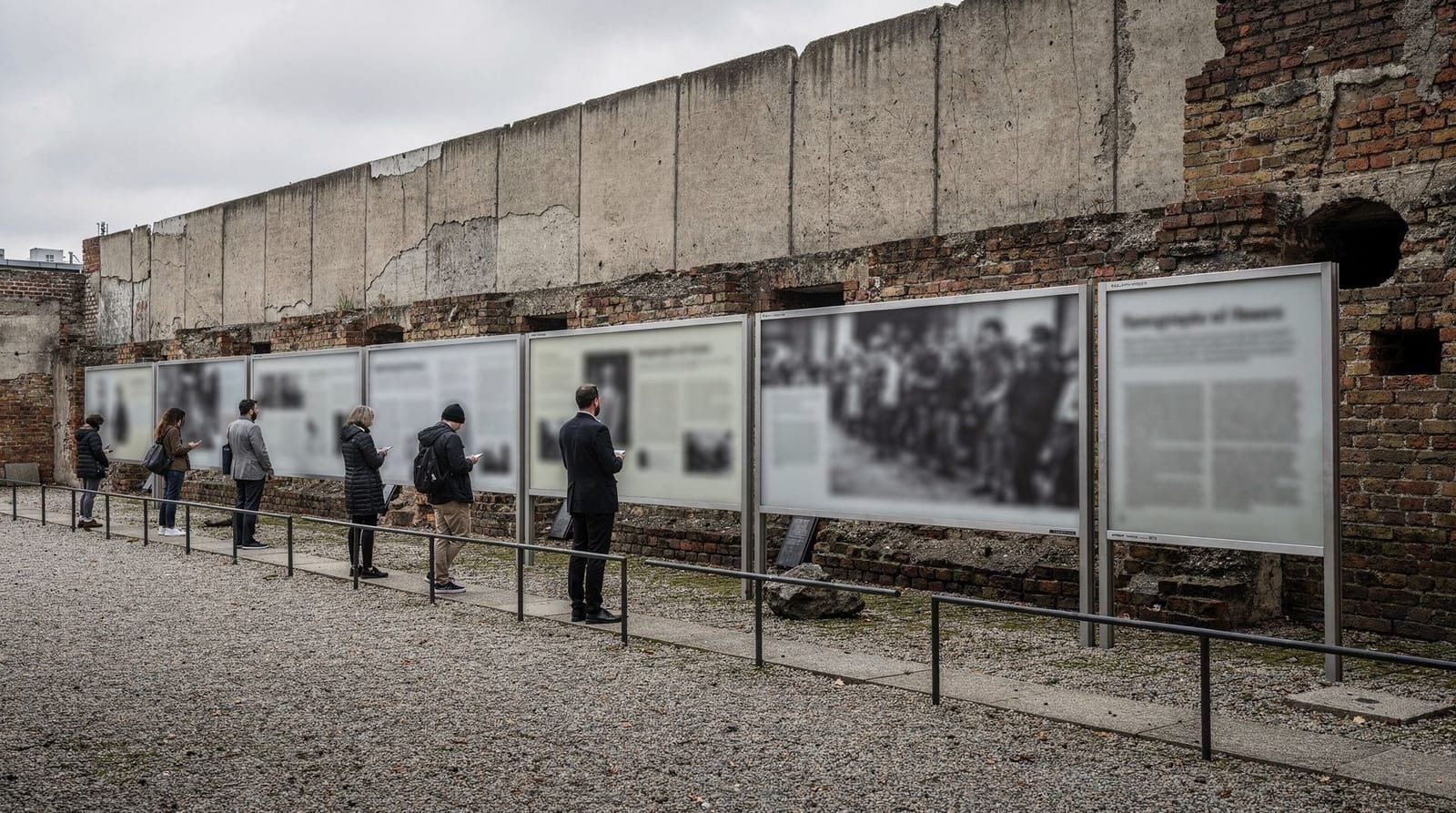
The Jüdisches Museum is a cultural and historical institution, not a Holocaust memorial. The Memorial to the Murdered Jews of Europe — the field of stelae near the Brandenburg Gate — serves a different function. The Topography of Terror documents the Nazi perpetrator organisations. Wannsee Villa documents the planning of the Final Solution. These are all separate visits.
The museum’s framing is 2,000 years of Jewish life and culture, with the Shoah as a devastating rupture within a longer continuity that extends to the present. If you approach it as a Holocaust museum, you will misread it.
Before and after your visit — nearby sites
Topography of Terror (15 minutes walk north): Documents the SS and Gestapo headquarters. Free entry. Connects to the physical geography of Nazi persecution that the Jewish Museum contextualises culturally.
Checkpoint Charlie (10 minutes walk north): Heavily commercialised but worth the brief stop for the Cold War context. For honest advice, see the Checkpoint Charlie guide.
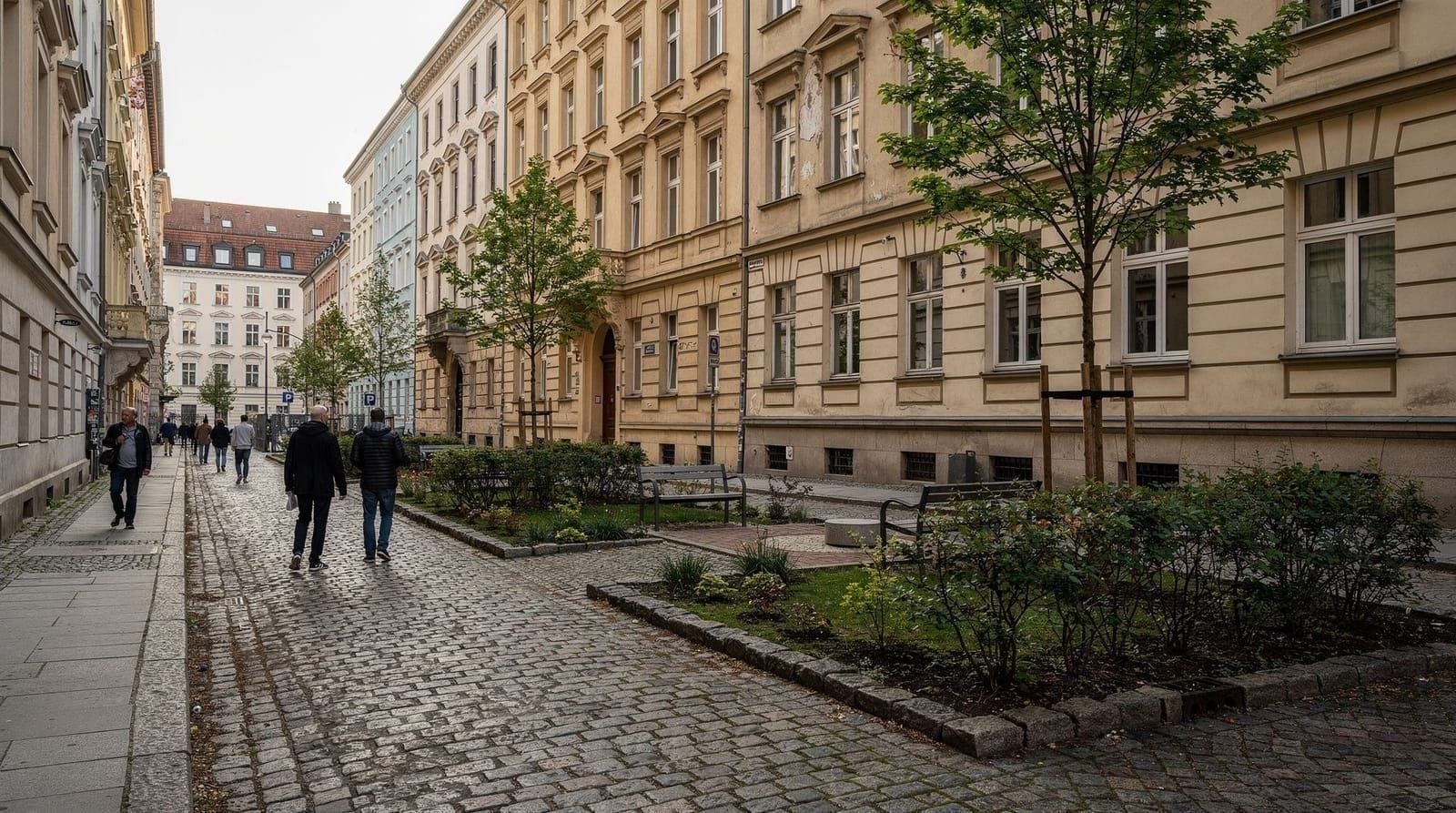
Bergmannstrasse (5 minutes walk): Kreuzberg’s best street for food, cafés, and independent shops. The covered Markthalle on Marheinekeplatz is worth a visit for lunch options.
For a full day combining Jewish history sites, see the Jewish history of Berlin complete guide for a structured itinerary.
Accessibility
The Libeskind building’s deliberately unsettling design — sloping floors, narrow corridors, steep central staircase — sits alongside genuine accessibility provisions: lifts serve all main exhibition floors, and the permanent collection is wheelchair accessible throughout. The Garden of Exile’s uneven, sloped concrete surface is more challenging for wheelchair users and anyone with mobility limitations than the interior spaces; staff can advise on the most manageable route through it. The Holocaust Tower has a narrow, heavy door but a level threshold. Accessible toilets are available near the main entrance. If specific accessibility needs affect your visit, contacting the museum in advance of a visit is worthwhile, since some architectural features are integral to the building and cannot be modified.
Is the ticket price worth it?
At around €8, the Jewish Museum is inexpensive relative to its scale and the quality of both the architecture and the permanent collection — comparable Berlin museums with less depth often charge more. The real cost is time rather than money: doing the museum justice, including the three axes and the Garden of Exile, realistically takes half a day, and a rushed hour will leave the architecture’s disorienting effect only partially registered. Visitors specifically interested in the Holocaust rather than the fuller 2,000-year story may find better value pairing a shorter museum visit with the free Memorial to the Murdered Jews of Europe and Topography of Terror, both of which handle the 1933–1945 period in more forensic detail than this museum attempts.
Frequently asked questions about Jüdisches Museum Berlin
How much does the Jewish Museum Berlin cost in 2026?
Tickets cost €8 for adults and €3 for reduced admission (students under 25, trainees, holders of social benefit cards). Children under 6 enter free. The audio guide costs €3 extra. Book online to avoid queues, particularly at weekends. The museum does not offer free entry days.What are the opening hours of the Jewish Museum Berlin?
The museum is open Tuesday to Sunday, 10:00 to 20:00. On Mondays it is closed. The last entry is at 19:00. The museum is also closed on Yom Kippur. Check the official website for holiday closures before visiting.What does Daniel Libeskind's architecture mean?
Libeskind designed the building around three intersecting "lines" — the Axis of the Holocaust, the Axis of Exile, and the Axis of Continuity. Each leads to a different end point — an enclosed void, the Garden of Exile, or the main staircase ascending into German-Jewish history. The empty voids (Leerräume) cut through the building as unheated, inaccessible spaces representing absence.How long does it take to visit the Jewish Museum Berlin?
Allow a minimum of 2.5 hours for the permanent exhibition on two floors. The architecture itself requires 30 to 45 minutes to understand and experience properly. If you plan to visit any temporary exhibitions, add another hour. A half-day is a comfortable allocation.Is the Jewish Museum Berlin suitable for children?
The museum has age-specific programmes for children from age 6 upward, including a dedicated children's museum (ANOHA — The Children's World of the Jewish Museum) in an adjacent building. The main permanent exhibition deals with difficult history including the Holocaust, which requires parental guidance for younger children.How do I get to the Jewish Museum Berlin?
The nearest U-Bahn stop is Hallesches Tor (U1, U3, U6), from which it is a 5-minute walk along Lindenstrasse. Alternatively, use Kochstrasse (U6) and walk 10 minutes. The museum address is Lindenstrasse 9-14, 10969 Berlin, in the Kreuzberg district.Is there a café or restaurant at the Jewish Museum Berlin?
Yes. The museum café, Liebermanns, serves kosher-certified food including soups, sandwiches, salads, and cakes. It is open during museum hours and does not require a museum ticket to enter. The menu changes seasonally.
Top experiences
Bookable activities with verified prices and instant confirmation on GetYourGuide.