Scheunenviertel — Berlin's historic Jewish quarter in Mitte
Berlin: Jewish Quarter and Holocaust Private Walking Tour
What is the Scheunenviertel and where is it in Berlin?
The Scheunenviertel (literally "barn quarter") is the historic Jewish immigrant neighbourhood of Berlin, located northeast of Hackescher Markt in the Mitte district. From the late nineteenth century into the 1930s it was a dense Yiddish-speaking working-class community. Today it is a gentrified area of galleries, cafés, and boutiques, with surviving synagogues, cemeteries, and Stolpersteine marking the history.
What is the Scheunenviertel? The Scheunenviertel is Berlin’s historic Jewish immigrant quarter, running northeast from Hackescher Markt in Mitte. From the 1880s to the 1930s it was the city’s most densely Jewish neighbourhood — Yiddish-speaking, observant, and working-class. Today the area has been entirely gentrified, with galleries, boutiques, and restaurants filling the courtyards and streets. What remains of the Jewish past is found in specific sites, Stolpersteine underfoot, and the fabric of certain streets.
| Where | Mitte, northeast of Hackescher Markt |
| Getting there | S-Bahn (S3/S5/S7/S9) to Hackescher Markt, or U-Bahn/S-Bahn to Alexanderplatz and walk 10–15 min |
| Time needed | Around 2–2.5 hours on foot for the full route |
| Key sites | Neue Synagoge, Grosse Hamburger Strasse cemetery and memorial, Hackesche Höfe |
| Cost | Free to walk; Centrum Judaicum entry around €7 |
| Best time | Mornings on weekdays, when streets are quieter and light is better for reading Stolpersteine |
The name and its origins
“Scheunenviertel” means “barn quarter.” The name predates the neighbourhood’s association with Jewish life. In the seventeenth century, the area outside the Berlin city walls was where barns and grain stores (Scheunen) were required to be located — the city’s fire regulations prohibited storing hay and straw inside the walls. By the nineteenth century the barns were long gone, but the name persisted for the working-class district that grew up in the open ground northeast of the old city.
The area sits between two Berlin landmarks: the Neue Synagoge on Oranienburger Strasse to the south, and the Hackescher Markt S-Bahn station — now one of Berlin’s busiest transport hubs — at its western edge.
Jewish settlement in the Scheunenviertel — a brief history
Berlin’s established Jewish community in the nineteenth century was largely integrated, German-speaking, and concentrated in the streets south of Oranienburger Strasse. The Neue Synagoge (1866) was their main place of worship — liberal in its religious practice, proud of its German identity.
The Scheunenviertel became associated with a different Jewish population: Eastern European immigrants, mostly Yiddish-speaking, mostly from the Pale of Settlement in the Russian Empire, arriving in waves from the 1880s onward following waves of pogroms in Russia, Poland, and Romania. These immigrants were typically poorer, more traditionally observant, and less integrated into German society than the earlier community.
By 1900, the Scheunenviertel had a character entirely distinct from the surrounding city. Streets such as Grenadierstrasse (now Almstadtstrasse), Dragonerstrasse, and Rosenthaler Strasse were lined with small workshops, kosher butchers, prayer houses (shtiblekh — informal one-room prayer groups), and peddlers. The language heard in the streets was Yiddish. The food was Eastern European Jewish: herring, pickles, gefilte fish, challah. Klezmer music was played at weddings and festivals.
The 1905 Russian Revolution and the subsequent repression sent another wave of Jewish immigrants westward. By the 1920s, the Scheunenviertel was at its most densely populated — a Jewish quarter unlike anything else in Germany, and a world apart from the assimilated German-Jewish bourgeoisie of the western suburbs.
For the broader story of Jewish cultural life in Berlin at its peak — the 1920s — see the Jewish Berlin before 1933 guide.
The 1923 Scheunenviertel Pogrom
One event that predates the Nazi period requires attention. On 5 to 7 November 1923, during the hyperinflation crisis, a mob attacked Jewish residents and businesses in the Scheunenviertel over three nights. Shops were looted, people were beaten, and several were seriously injured. The violence was organised by far-right nationalist groups and required police intervention to stop.
The 1923 pogrom is historically significant as one of the first organised antisemitic attacks in a major German city in the twentieth century — a decade before Hitler’s accession to power. It demonstrated the vulnerability of the immigrant community, which had neither the assimilation protections of the established German-Jewish community nor, in many cases, German citizenship.
Key sites to visit today
Grosse Hamburger Strasse
This is the most historically layered street in the Scheunenviertel. Walking from Oranienburger Strasse northeast along Grosse Hamburger Strasse, you pass:
Number 26 — the deportation assembly point: The building at number 26 was originally a Jewish old people’s home founded in 1844 and later housed a Jewish school. After 1941, the Gestapo converted it into a Sammelstelle — a collection point where Jews summoned for “resettlement” were held before transportation east. Approximately 55,000 Berlin Jews passed through this address. The building was demolished after the war; the site now bears a sculptural memorial group by Will Lammert (1985, GDR period) and detailed information panels. The figures in the sculpture are deliberately stylised rather than individualised — an intentional contrast to the named, individual commemoration of the Stolpersteine movement.
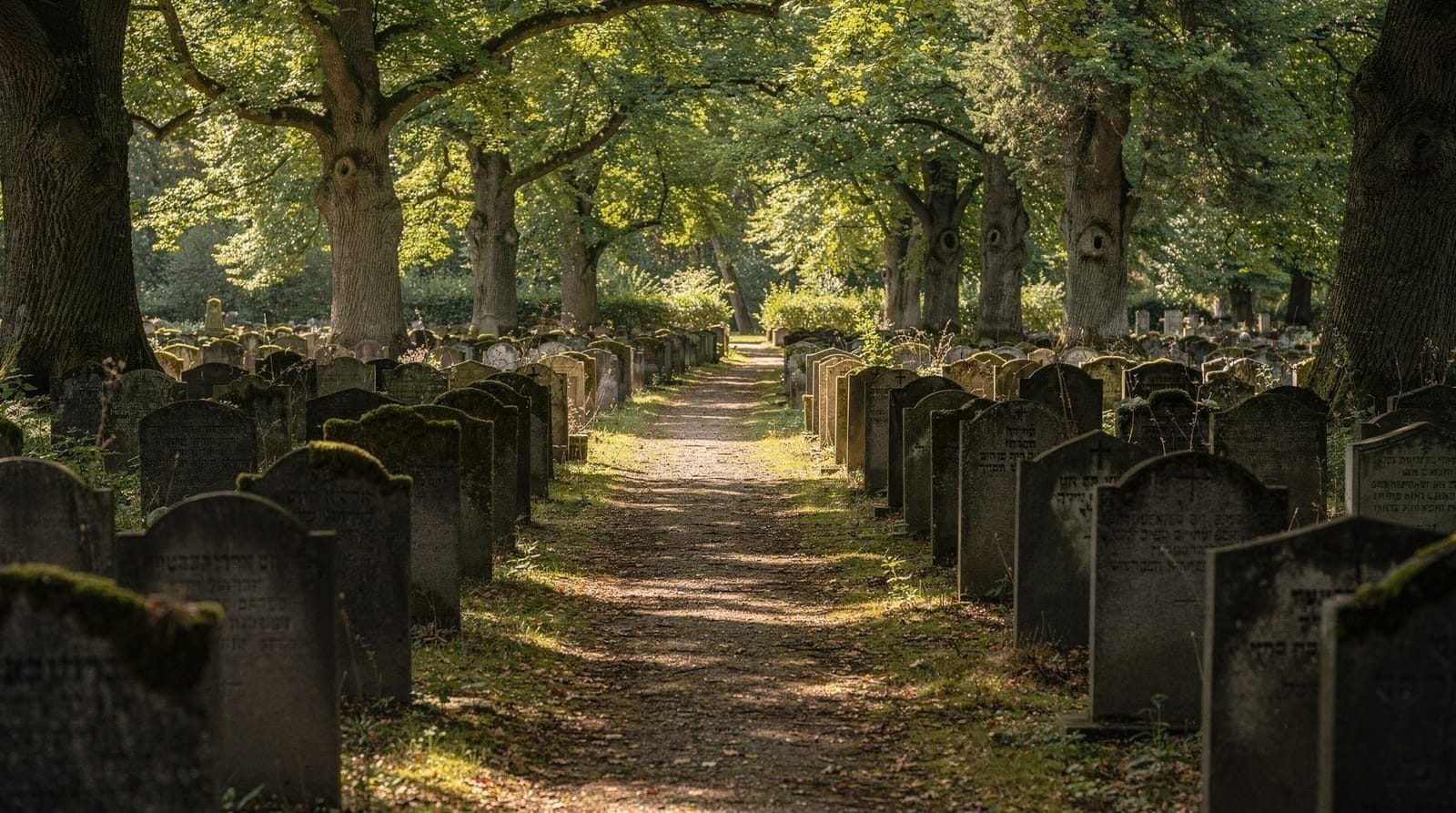
The Jewish cemetery: Immediately adjacent to number 26 is the oldest surviving Jewish cemetery in Berlin, established in 1672. Used until 1827, it contains approximately 2,800 graves, though most have lost their original stones over time. The grave of Moses Mendelssohn — the eighteenth-century philosopher who was central to the Jewish Enlightenment — is marked here. The cemetery was desecrated by the Nazis, who used it as a forced labour site and removed stones. After the war, a section of the GDR government appropriated part of the grounds. Access to the interior is limited; the perimeter wall and entrance gate are visible from the street.
The former boys’ school: A surviving nineteenth-century building on Grosse Hamburger Strasse housed a Jewish school. It is now used as a mainstream Berlin secondary school.
Neue Synagoge — Oranienburger Strasse 28-30
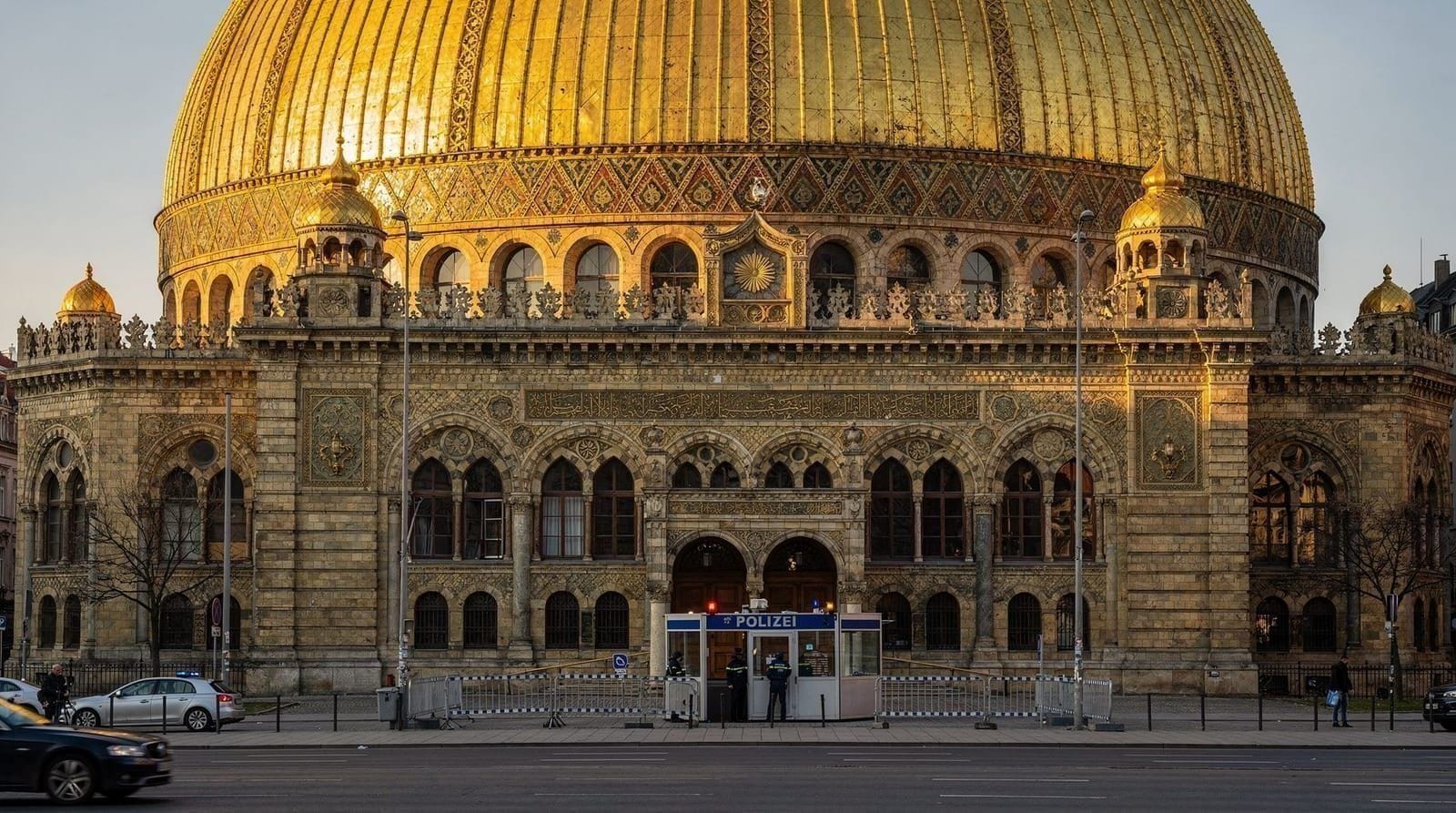
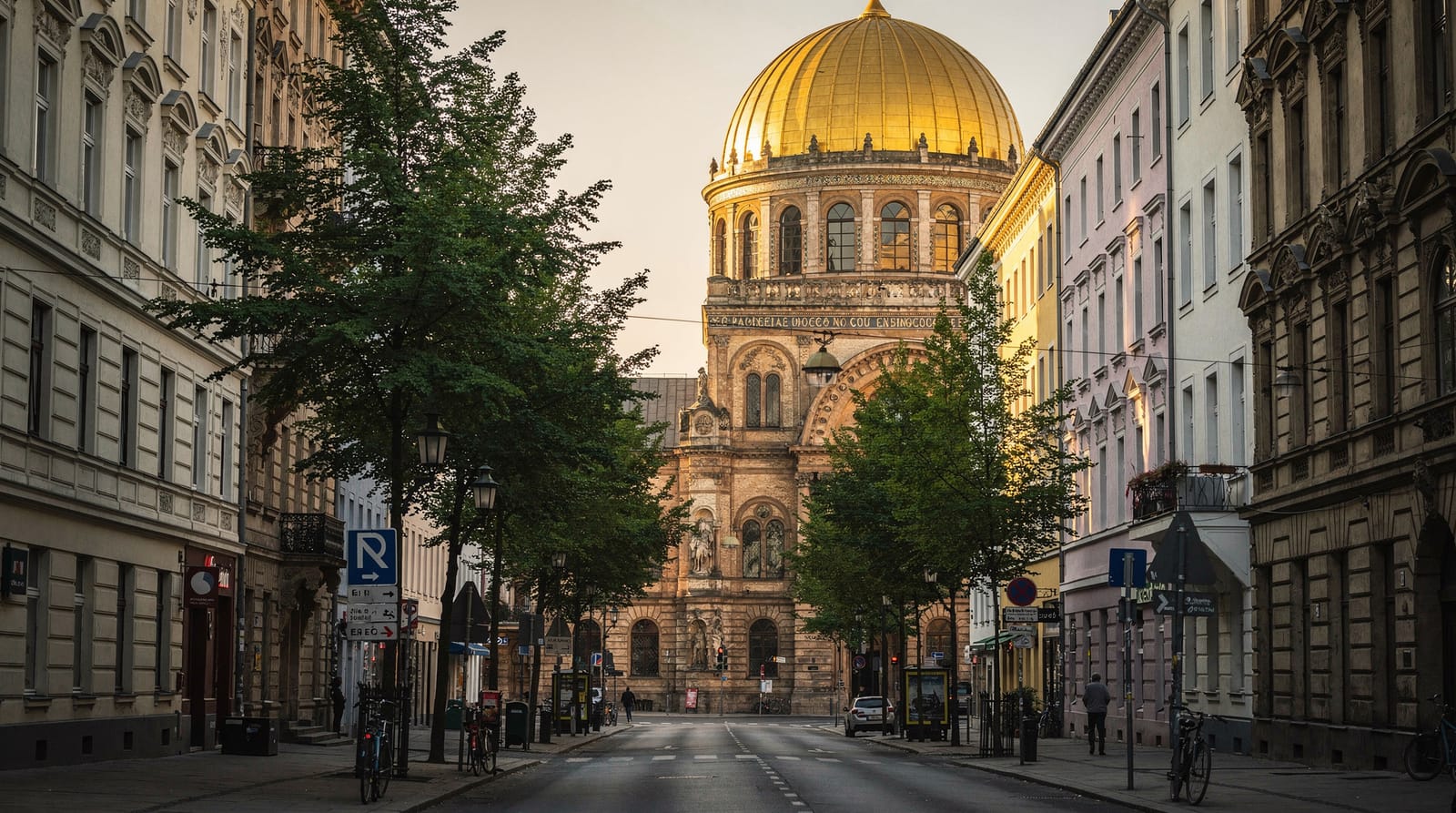
The golden dome of the Neue Synagoge anchors the southern end of the Scheunenviertel. The building, dating from 1866, is the most visible Jewish landmark in Mitte. The Centrum Judaicum museum inside (entry €7) covers both the synagogue’s history and broader Berlin Jewish history.
Hackesche Höfe
The Hackesche Höfe — a series of eight linked courtyards behind the Hackescher Markt — were built between 1906 and 1907 and designed by the architect Kurt Berndt in Jugendstil style. In the 1920s, the courtyards housed a significant number of Jewish-owned businesses, workshops, and cultural venues. Today they contain restaurants, boutiques, a cinema, and a variety theatre. The architecture is well-preserved; the Jewish commercial life is entirely gone. The Höfe are worth walking through as architecture and to understand the spatial type — Berlin’s Höfe (courtyard complexes) — characteristic of this district.
Almstadtstrasse (formerly Grenadierstrasse)
This street, renamed in 1951, was the central artery of the densest part of the Scheunenviertel. In the 1920s it was packed with Eastern European Jewish traders, workshops, and prayer rooms. Today it is a quiet residential street with no outward traces of its former character, except for several Stolpersteine embedded in the pavement.
Walking it slowly while knowing what was once here is a useful corrective to the gentrification that has claimed the main tourist streets. Nothing is staged; nothing is reconstructed. It is simply a Berlin street.
Stolpersteine throughout the Scheunenviertel
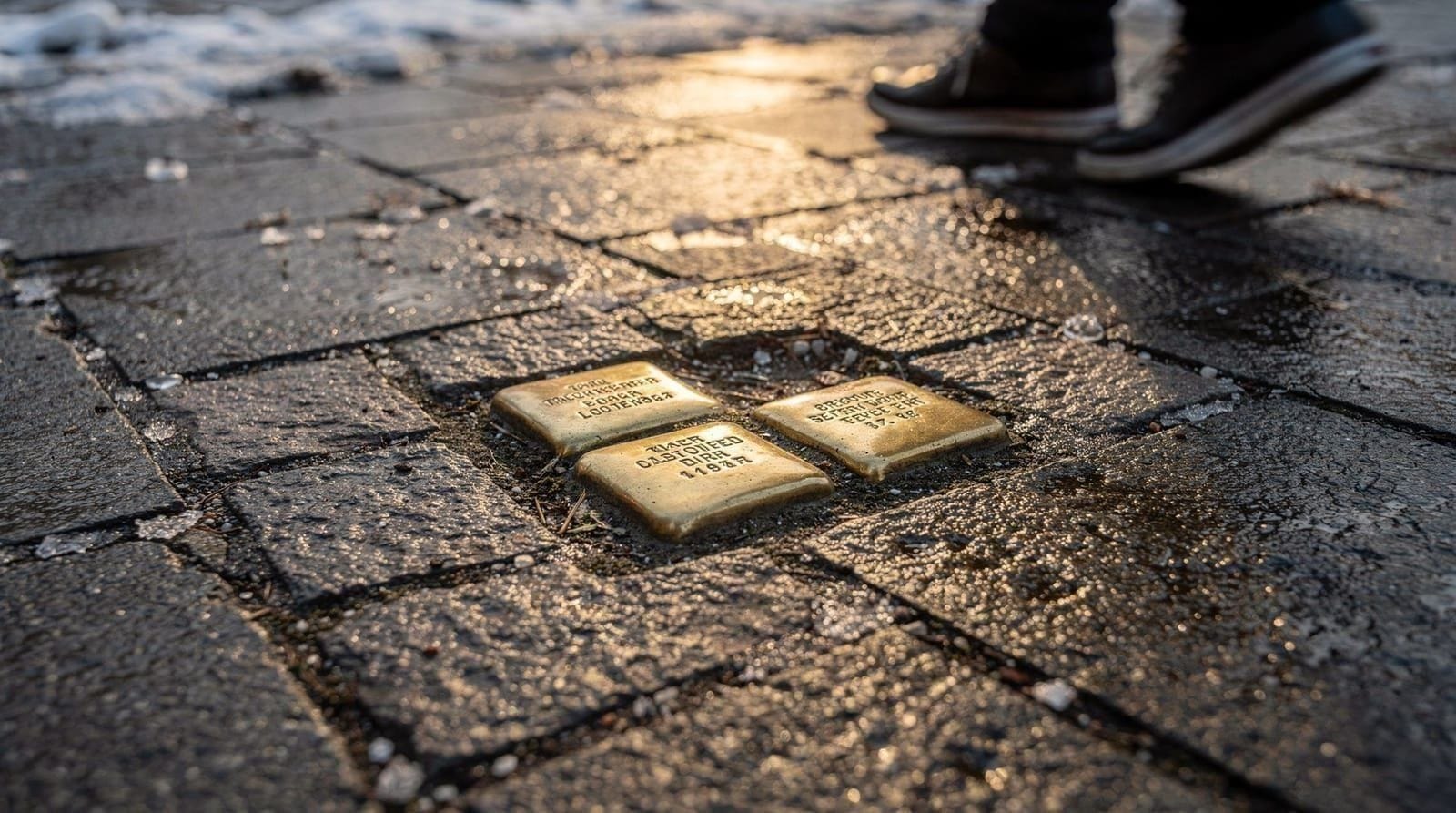
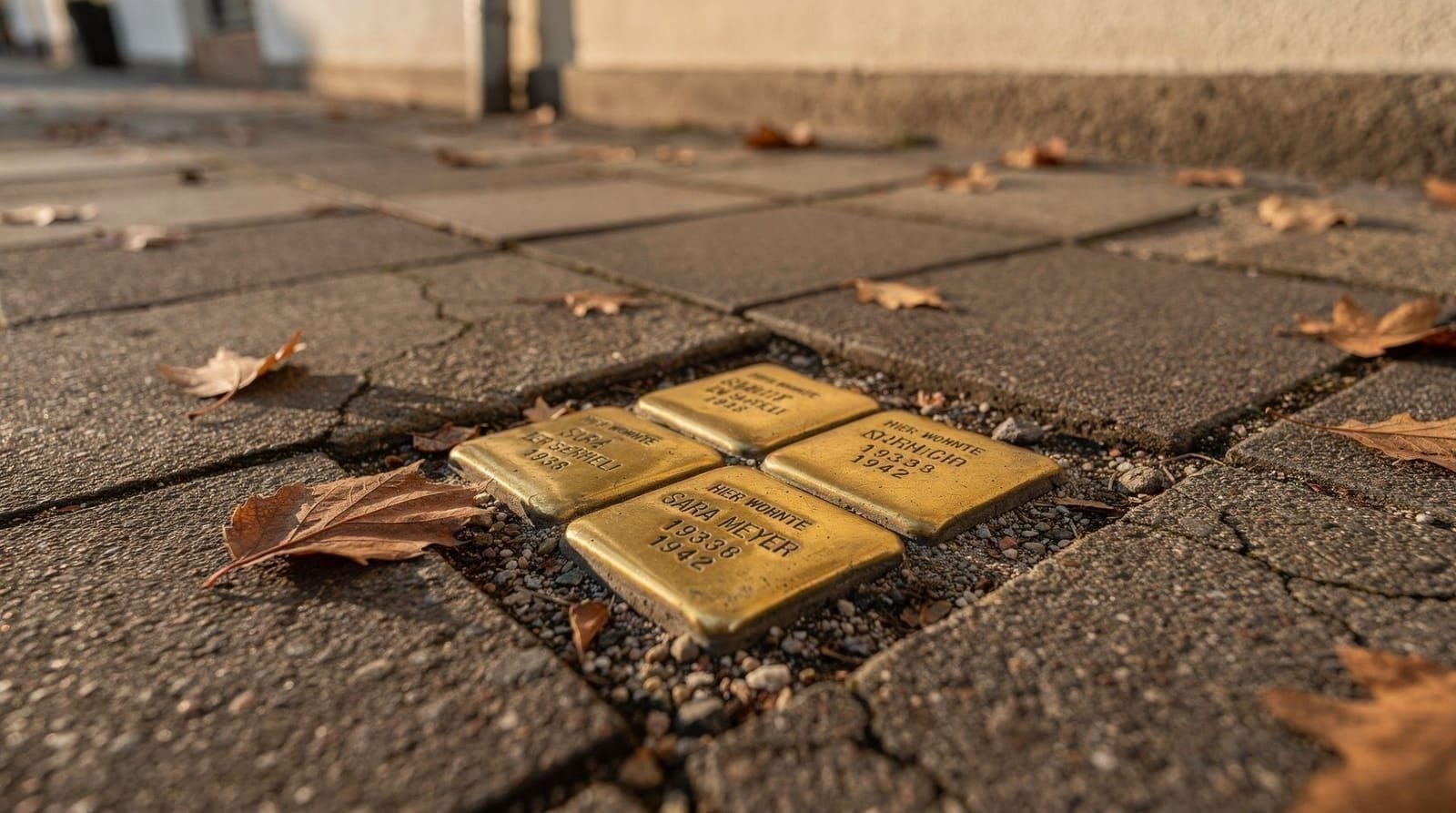
The Scheunenviertel has a high density of Stolpersteine — the brass cobblestones designed by Gunter Demnig to mark the last freely chosen residences of Holocaust victims. They are embedded in the pavement throughout the neighbourhood: on Oranienburger Strasse, Grosse Hamburger Strasse, Auguststrasse, Rosenthaler Strasse.
Each stone carries the name, birth year, and fate of one person. Reading them — crouching to see the engraving — takes time and slows a walk through the area in a productive way. The density of Stolpersteine in these streets is a spatial measure of the concentration of Jewish residents who lived here.
The neighbourhood today
The Scheunenviertel in 2026 is thoroughly gentrified. After decades of post-war neglect under the GDR, the area was developed rapidly after reunification, with the Hackeschen Markt area becoming one of Berlin’s first major tourist-oriented districts. The Hackesche Höfe opened to tourists in 1996. Art galleries colonised Auguststrasse in the 1990s, some remaining, others displaced by rising rents.
The neighbourhood now serves primarily as an upscale shopping and dining destination for tourists and well-heeled Berliners. The main tourist restaurants on Oranienburger Strasse and Rosenthaler Strasse are overpriced relative to Berlin standards; better options are found on the quieter streets off the main axis (try Tucholskystrasse or the streets around Monbijoupark).
The Jewish cultural institutions that survive — the Neue Synagoge, the Centrum Judaicum, the cemetery on Grosse Hamburger Strasse — function as historical sites rather than as part of a living community. The active Jewish community in Berlin today is dispersed across the city, centred in no single neighbourhood.
A walking route through the Scheunenviertel
This route takes approximately 2 to 2.5 hours on foot at a considered pace:
Begin at Hackescher Markt S-Bahn station. Walk through the Hackesche Höfe (entrance from the square, exit on Rosenthaler Strasse). Continue north on Rosenthaler Strasse (former centre of immigrant trade), then turn right on Almstadtstrasse (formerly Grenadierstrasse — note the changed name, look for Stolpersteine). Return west on Steinstrasse to Grosse Hamburger Strasse: walk south, visiting the deportation memorial at number 26 and the cemetery gate. Continue south to Oranienburger Strasse and the Neue Synagoge (allow time inside the Centrum Judaicum if budget permits). Walk west along Oranienburger Strasse and south on Tucholskystrasse to return to the starting area.
Private walking tour of Berlin’s Jewish quarter — Scheunenviertel and MitteConnecting the Scheunenviertel to wider Jewish Berlin
The Scheunenviertel is one chapter in a much longer story. To understand what the neighbourhood looked like at its cultural peak, before the destruction, read the Jewish Berlin before 1933 guide — it covers the theatres, newspapers, and political life that filled these streets. For the full arc from medieval settlement to the present day, the complete history of Jewish Berlin gives context the Scheunenviertel alone cannot.
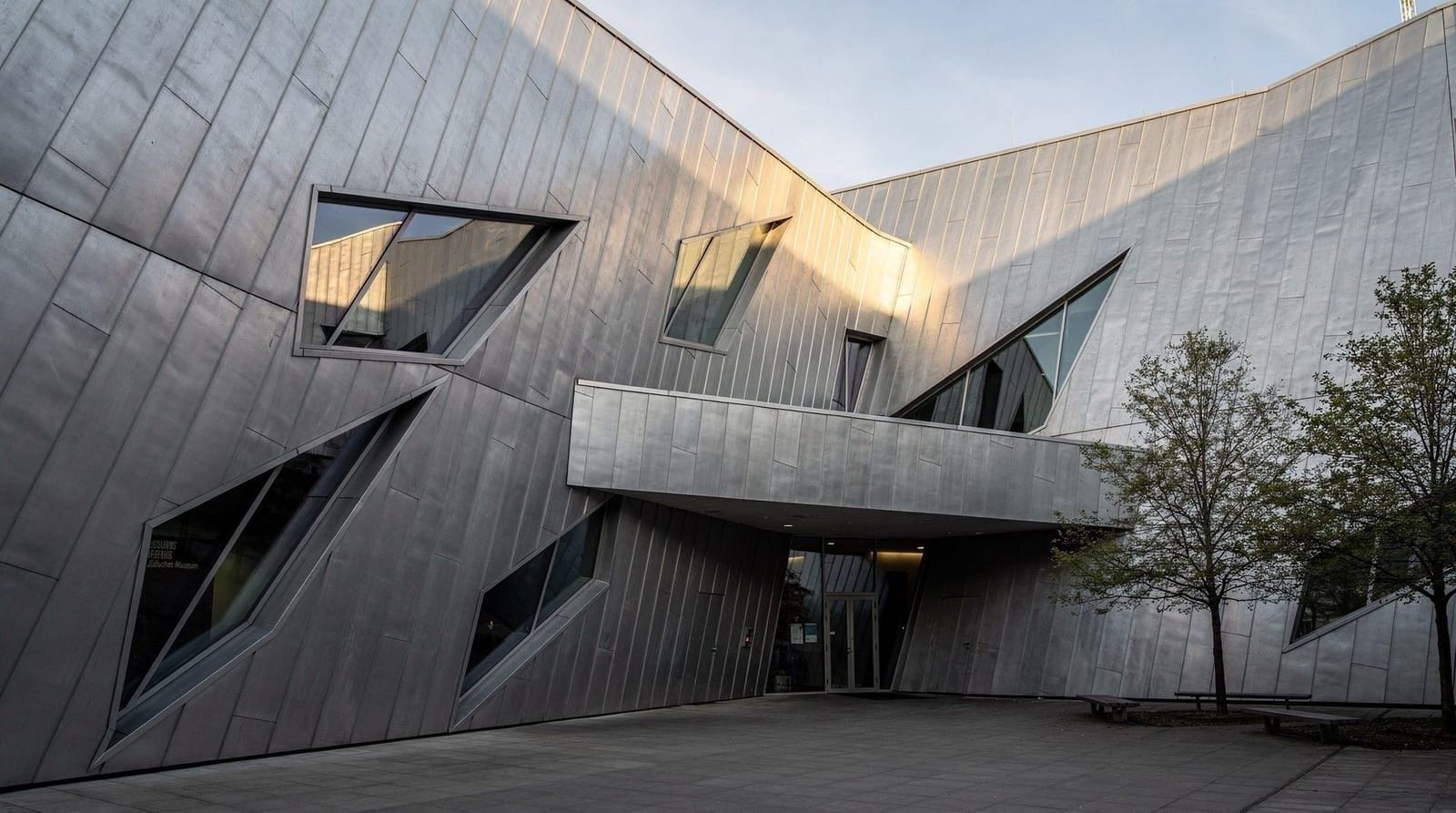
A short walk or U-Bahn ride away, the Jewish Museum Berlin covers two millennia of German-Jewish history in Daniel Libeskind’s building — a natural pairing with a Scheunenviertel walk, since the museum explains context that the street-level sites can only gesture at. The synagogue on Rykestrasse in Prenzlauer Berg, Germany’s largest surviving synagogue, is a further stop for anyone building out a fuller day of Jewish heritage sites. And for the specific November 1938 events that hit this neighbourhood hard, the Kristallnacht sites guide maps what happened here and elsewhere in the city on that night.
Visiting respectfully
The Scheunenviertel’s Jewish sites are not tourist attractions in the ordinary sense — the cemetery on Grosse Hamburger Strasse and the deportation memorial at number 26 mark real atrocities and real graves. Keep voices low near the cemetery wall, and treat the Stolpersteine underfoot as memorials rather than photo props: a respectful approach is to pause and read the name rather than step over them without noticing. The Neue Synagoge and Centrum Judaicum operate airport-style security; allow a few extra minutes at the entrance and expect bag checks.
Weekday mornings are quieter than weekend afternoons, when the surrounding streets fill with shoppers and brunch crowds unrelated to the area’s history — arriving early makes it easier to read the memorial plaques and Stolpersteine without competing for pavement space. If time is short, prioritise Grosse Hamburger Strasse over the shopping streets; it carries the most concentrated history in the smallest area.
Frequently asked questions about Scheunenviertel
Why was the Scheunenviertel the Jewish quarter of Berlin?
The Scheunenviertel attracted Jewish immigrants primarily from Eastern Europe (Russia, Poland, Romania) from the 1880s onward, following pogroms and poverty in the East. Berlin's earlier established Jewish community (centred further south, around Neue Synagoge) was largely assimilated and middle-class. The Scheunenviertel became home to the newer, poorer, more traditionally observant immigrants — a Yiddish-speaking enclave with its own markets, prayer houses, and communal organisations.What happened to the Scheunenviertel under the Nazis?
The Scheunenviertel was targeted from the earliest days of Nazi rule. The October 1923 Scheunenviertel Pogrom — one of the first organised antisemitic attacks in Berlin — had already demonstrated its vulnerability. After 1933, residents were progressively stripped of rights, businesses were confiscated, and deportations began from 1941 onward. By 1943 the neighbourhood's Jewish population had been killed or forced to flee. The area was then heavily bombed in 1943-44, destroying much of the built fabric.What Jewish sites survive in the Scheunenviertel today?
Key surviving sites include the Neue Synagoge on Oranienburger Strasse, the Jewish cemetery on Grosse Hamburger Strasse (the oldest in Berlin, established 1672), the former Jewish old people's home on Grosse Hamburger Strasse (used as a collection point for deportations), the Hackesche Höfe courtyard complex, and numerous Stolpersteine in the pavement throughout the streets.Is the Scheunenviertel worth visiting?
Yes, though visitors expecting a preserved historic Jewish quarter will find a largely gentrified neighbourhood with traces of history rather than a living cultural district. The streets, courtyards, and surviving buildings carry historical significance, but the atmosphere bears no resemblance to what existed before 1933. The Neue Synagoge and the Jewish cemetery on Grosse Hamburger Strasse are the most significant surviving elements.How do I get to the Scheunenviertel?
Take the S-Bahn (S3, S5, S7, S9) to Hackescher Markt. The Scheunenviertel's main arteries — Oranienburger Strasse, Rosenthaler Strasse, and Grosse Hamburger Strasse — are all within a short walk. Alternatively, take S-Bahn or U-Bahn to Alexanderplatz and walk 10 to 15 minutes northwest.What is the Grosse Hamburger Strasse memorial?
Number 26 Grosse Hamburger Strasse was originally a Jewish old people's home and is now marked by a memorial. Under the Nazis, the Gestapo converted the building into a collection (Sammelstelle) point from which Jewish Berliners were transported to Auschwitz, Theresienstadt, and other camps. Approximately 55,000 Berlin Jews passed through this address on their way to deportation. A sculptural memorial group and information panels mark the site.
Top experiences
Bookable activities with verified prices and instant confirmation on GetYourGuide.