Topography of Terror — Berlin's former Gestapo and SS headquarters
Berlin: Third Reich, Hitler, and WWII Walking Tour
What is the Topography of Terror in Berlin?
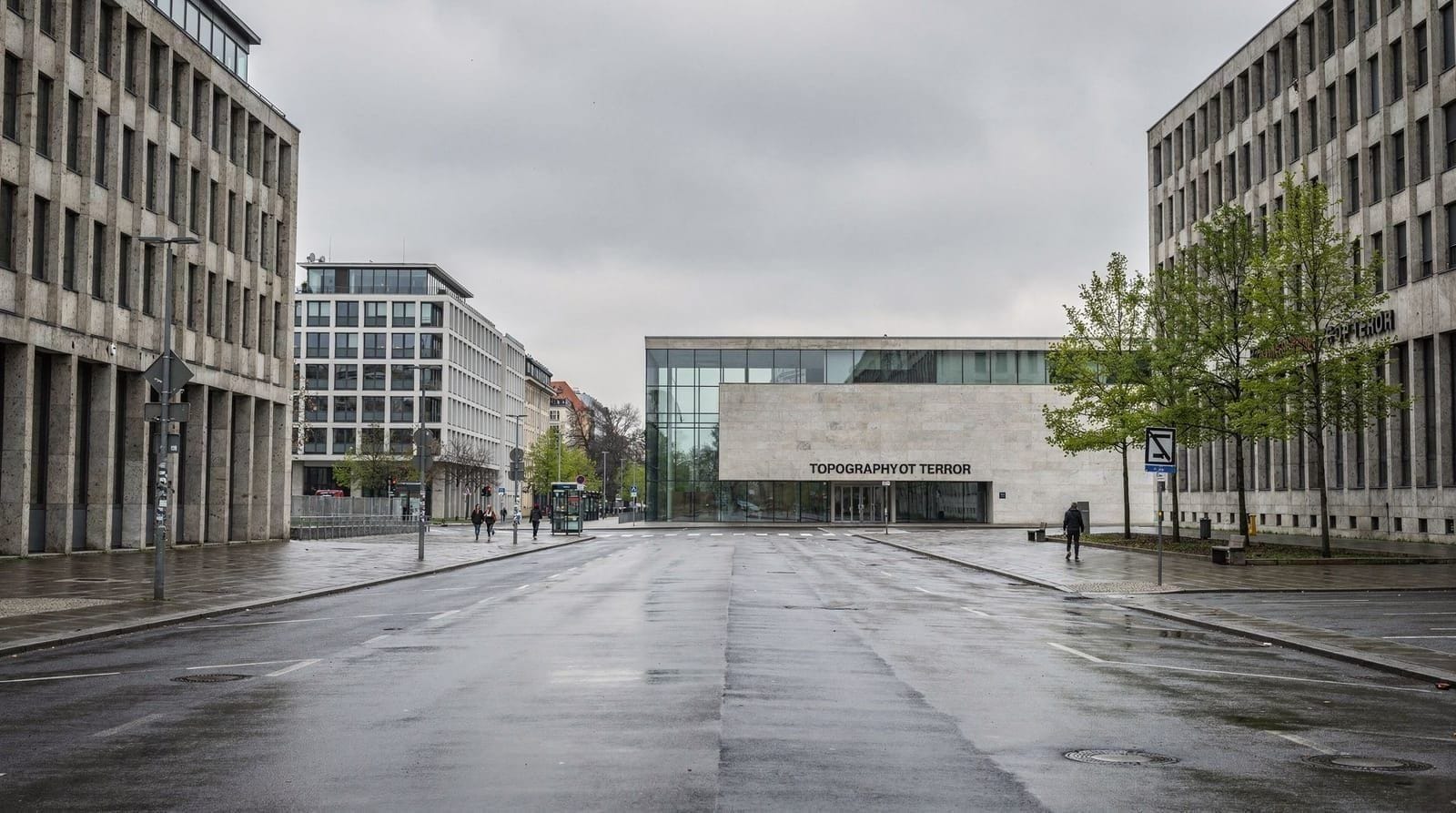
The Topography of Terror is a free outdoor and indoor documentation centre built on the excavated foundations of the former Gestapo, SS, and Reich Security Main Office headquarters in central Berlin. It documents the crimes of the Nazi terror apparatus from 1933 to 1945 through original evidence and testimonies. Entry is free; the indoor exhibition is open Tuesday to Sunday, 10:00–20:00.
What is the Topography of Terror? The Topography of Terror occupies the excavated foundations of the buildings where the Gestapo, SS, and Reich Security Main Office (RSHA) operated their administrative and interrogation machinery from 1933 to 1945. Entry is free. The indoor documentation centre on Niederkirchnerstrasse 8 is one of the most sobering and rigorous historical exhibitions in Germany — presenting the Nazi terror apparatus through original documents, survivor testimonies, and perpetrator records.
| Where | Niederkirchnerstrasse 8, Kreuzberg (Potsdamer Platz area) |
| Cost | Free entry, free audio guide |
| Time needed | 1.5–2 hours indoors, 2.5–3 hours with the outdoor excavation and Wall section |
| Getting there | U-Bahn/S-Bahn to Potsdamer Platz, 5-minute walk |
| Best time | Weekday mornings; closed Mondays |
What stood here and what happened
The block between Prinz-Albrecht-Strasse and Wilhelmstrasse in central Berlin was, before 1933, a respectable 19th-century district. The Hotel Prinz Albrecht, the Berlin School of Arts and Crafts, and the Prinz-Albrecht-Palais were among its buildings.
After the Nazi seizure of power in January 1933, the block was progressively taken over by the security apparatus of the regime:
- Gestapo (Geheime Staatspolizei): Secret state police, headquartered at Prinz-Albrecht-Strasse 8 from April 1933. The Gestapo was responsible for identifying, arresting, and interrogating perceived enemies of the regime — political opponents, Jews, Sinti and Roma, homosexuals, Jehovah’s Witnesses, and resistance members.
- SS Reichsführer’s headquarters: Heinrich Himmler’s SS command, located in the former Hotel Prinz Albrecht at Prinz-Albrecht-Strasse 9.
- SD (Sicherheitsdienst): The SS intelligence service, at the Prinz-Albrecht-Palais at Wilhelmstrasse 102.
- RSHA: From 1939, the Reich Security Main Office merged the Gestapo, SD, and Kripo (Criminal Police) into a single empire under Reinhard Heydrich.
The Gestapo interrogation cells were in the basement of number 8. Prisoners were held there before transfer to concentration camps or before execution. Records show that at least 15,000 people were subjected to “enhanced interrogation” (the Nazi euphemism for torture) in those cells between 1933 and 1945.
The indoor documentation centre — what to expect
The exhibition inside the purpose-built documentation centre (opened in 2010, architect Ursula Wilms) is arranged chronologically and thematically across two long parallel halls. It does not attempt a comprehensive history of the Second World War. Instead, it focuses specifically on the institutions that planned and implemented terror: who the perpetrators were, how the bureaucracy of persecution functioned, and what the victims experienced.
Key sections:
The terror institutions: Organisational charts, personnel files, and photographs document the structure of the Gestapo, SS, and RSHA. These are not abstractions — the exhibition names individuals at every level, from Himmler and Heydrich down to individual Gestapo officers in provincial offices.
Methods of persecution: This section documents the legal framework the Nazis built — the stripping of citizenship from Jews (Nuremberg Laws, 1935), the classification of “asocials,” the creation of the concentration camp system — alongside the day-to-day mechanics of arrest, denunciation, and deportation. The statistics are precise: 6,700 denunciations registered at the Berlin Gestapo headquarters in a single month in 1944.
The occupied territories: After 1939, the RSHA extended its terror across occupied Europe. The exhibition documents the Einsatzgruppen (mobile killing squads) that murdered approximately 2 million Jews and others in the Soviet Union and Eastern Europe from 1941 onward, using original operational reports sent to Berlin.
The perpetrators’ careers after 1945: A section that surprises many visitors: a significant number of senior Gestapo and SS officers were reintegrated into West German state and business life after the war. Some served in the early Federal Republic’s intelligence and security apparatus before being exposed in the 1960s.
The outdoor excavation
The outdoor section runs along the foundation trenches of the former Gestapo buildings, which were excavated starting in 1987 during Berlin’s 750th anniversary preparations. The ruins had sat as a vacant lot — informally used as a flea market — for over 40 years after the buildings were demolished following wartime bombing damage.
The excavated foundations are visible behind glass panels set into the path. Interpretive boards (in German and English) identify the function of each section: interrogation wing, administrative offices, courtyard.
The outdoor exhibition is accessible throughout the year, including public holidays when the indoor centre is closed. It is fully navigable for wheelchair users.
The Berlin Wall section
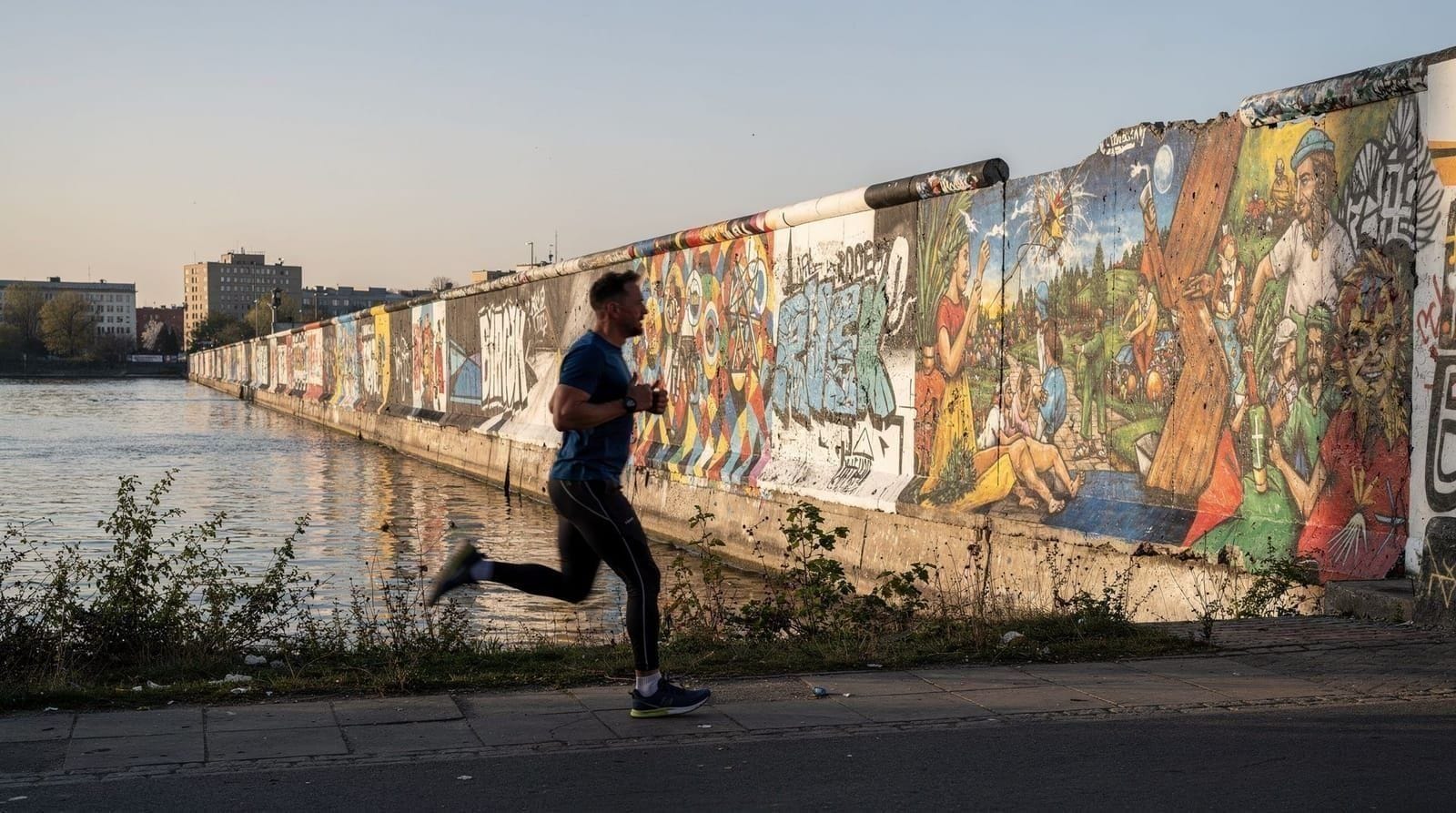
Along the northern boundary of the site, along Niederkirchnerstrasse (formerly Prinz-Albrecht-Strasse), runs an approximately 200-metre section of original Berlin Wall. This is among the longest intact sections in central Berlin.
The juxtaposition is historically significant. The Wall, built in 1961, ran directly along the former Prinz-Albrecht-Strasse edge of the Gestapo complex. The former interrogation courtyard fell within the death strip — the no-man’s-land between the two walls — for 28 years, inaccessible and unexamined. The rubble was not touched until the Wall fell.
Standing here, with the original Wall on one side and the excavated Gestapo foundations on the other, it is possible to experience two successive systems of state terror occupying the same space. This physical overlap of histories is unique in Berlin.
For a comprehensive understanding of the Wall’s history, the Berlin Wall complete guide provides context on the full 155 km border system.
The Gestapo in Berlin — a brief history
The Gestapo was established on 26 April 1933, five days after Hitler’s government transferred the Prussian political police to Hermann Göring’s control. Within months, the Gestapo had legal authority to arrest without warrant, hold without judicial review, and send prisoners directly to concentration camps via “protective custody” (Schutzhaft) — a measure that bypassed the existing legal system entirely.
By 1939, the Berlin Gestapo headquarters had over 1,000 staff. By 1943, the RSHA had centralised the entire security apparatus and was managing the logistics of the Holocaust in coordination with the railway system, the SS concentration camp administration (WVHA), and the Foreign Ministry.
The Wannsee Conference of January 1942, where senior officials coordinated the “Final Solution,” was convened by RSHA head Reinhard Heydrich. See the Wannsee Conference memorial guide for the full history of that meeting.
Visiting in context — related sites nearby
The Topography of Terror sits within a 15-minute walk of several other significant sites:
Martin-Gropius-Bau (directly opposite): A major temporary exhibition venue in a restored 19th-century building. Not a permanent historical site, but frequently hosts exhibitions on relevant themes.
Checkpoint Charlie (12 minutes east): The former Allied checkpoint on Friedrichstrasse, now heavily commercialised. The Checkpoint Charlie guide assesses what is worth visiting.
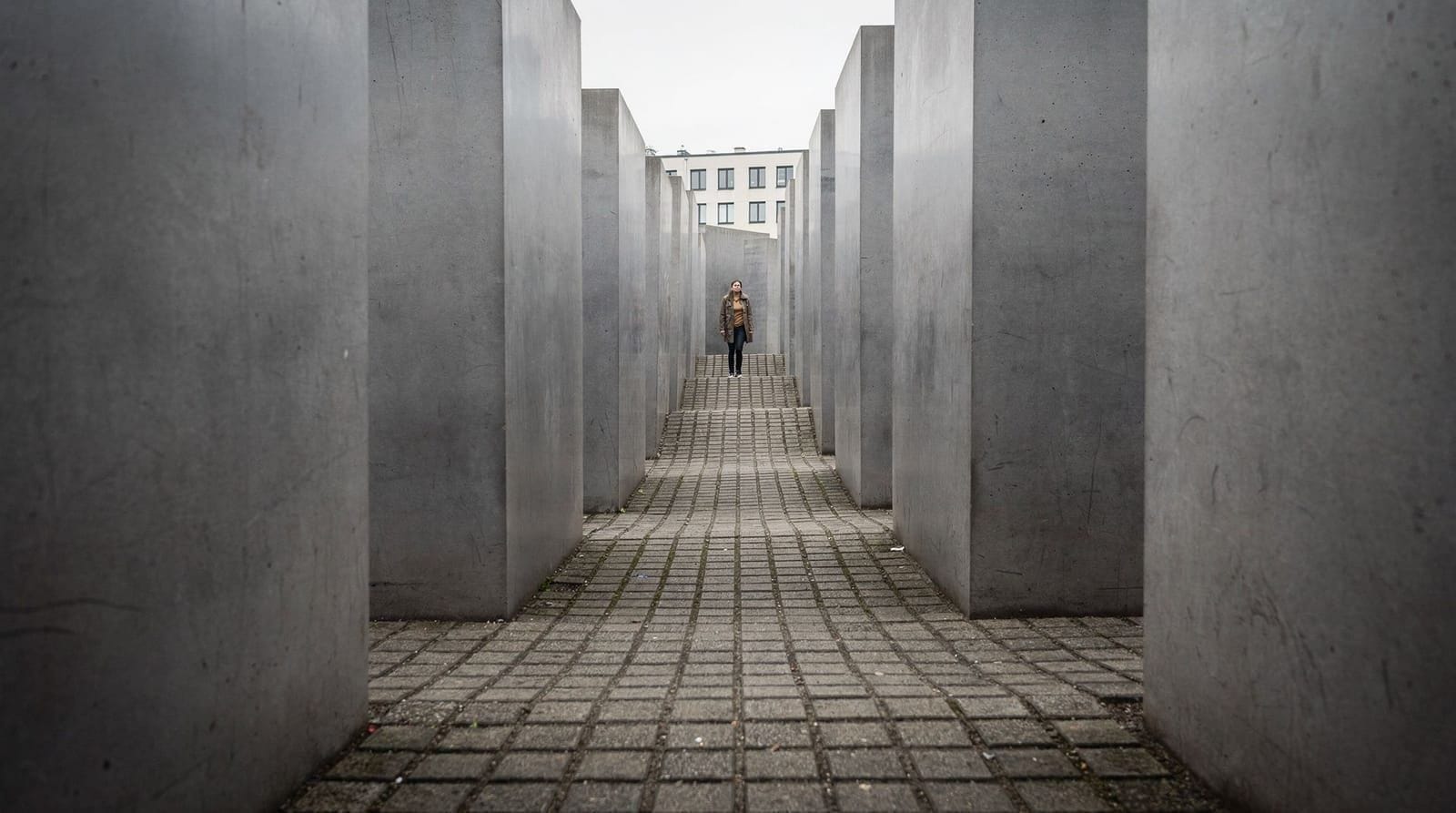
Memorial to the Murdered Jews of Europe (15 minutes north): The Eisenman stele field and underground information centre, near the Brandenburg Gate. See the memorial guide for planning advice.
Führerbunker site (18 minutes north): The car park above the former Reich Chancellery bunker complex. See the Führerbunker history guide for why no monument exists there.
Third Reich, Hitler and WWII walking tour — English guide, covers Topography of Terror and nearby sites, 3 hoursHow to plan your visit
Address: Niederkirchnerstrasse 8, 10963 Berlin
Opening hours (indoor centre):
- Tuesday to Sunday: 10:00–20:00 (last entry 19:30)
- Closed Monday (except public holidays — check topographie.de before visiting)
- The outdoor area is open daily, year-round
Entry: Free. No booking required. Audio guides free to borrow.
Getting there:
- U-Bahn/S-Bahn: Potsdamer Platz (U2, S1, S2, S25) — 5-minute walk north
- Bus: 200 (stop Niederkirchnerstrasse/Topographie des Terrors)
- Not recommended by car: parking in Mitte is limited and costly
Facilities: Cloakroom (backpacks over 40 cm must be checked), toilets, bookshop (well-stocked, prices reasonable). No café on site.
Accessibility: Fully accessible. The outdoor path is paved; the indoor centre has lifts.
When to go: The site is rarely crowded by Berlin tourist standards. Weekday mornings are quietest. Avoid arrival after 18:30 if you want time in the indoor exhibition. Summer afternoons can see coach groups, but the large space absorbs visitors well.
Guided tours of Third Reich sites
Self-guided visits are entirely feasible — the English-language audio guide is good, and all wall panels are translated. However, a guided walking tour that contextualises the Topography of Terror alongside other nearby Third Reich sites adds significant value for visitors who want human narrative rather than documentary evidence.
Berlin’s infamous Third Reich sites walking tour — small group, English, 3.5 hoursTours that begin at the Topography of Terror and continue to the Führerbunker site, Bebelplatz, and the Memorial to the Murdered Jews can cover the core geography of the Nazi state’s central Berlin presence in a single half-day. For a full third-reich itinerary including Wannsee, see the Third Reich history trail itinerary.
Berlin Nazi history walking tour — Topography of Terror, Bunker, Third Reich sites, 2.5 hoursPractical notes — what to bring and what to expect
The documentation centre provides a serious, sustained engagement with difficult material. Several practical notes:
Photographs: Permitted throughout, including of the documentary photographs on display. No flash.
Children: The exhibition contains images of executions, mass graves, and concentration camp conditions. These are documentary, not gratuitous, but the content is severe. Secondary-school age (14+) with preparation is the appropriate threshold for most children.
Emotionally demanding: Allow yourself time. The exhibition is long and dense. Many visitors find they need to step outside to the courtyard during the visit. There is no obligation to view every panel.
Language: All panels are in German and English. The audio guide covers the main sections in both languages plus others.
Photography from the street: The section of Berlin Wall along Niederkirchnerstrasse is a popular photography subject and can be viewed from the street at any time without entering the site.
The bookshop and taking the history home
The on-site bookshop is genuinely well-stocked and worth 15–20 minutes even if you’re not planning to buy anything. It carries English-language academic and popular titles on the Gestapo, the SS, the Holocaust, and Berlin’s Nazi-era history that are harder to find outside specialist shops, at reasonable prices (most paperbacks EUR 12–20). Staff are knowledgeable if you’re looking for a specific angle — biographies of individual perpetrators, victim testimonies, or architectural histories of the site itself. There’s no café on site, so if you need a coffee or lunch break during a long visit, the nearest options are a short walk north toward Potsdamer Platz.
How it compares to other Third Reich and Holocaust sites in Berlin
| Site | Focus | Time needed | Free? |
|---|---|---|---|
| Topography of Terror | Institutions and perpetrators — Gestapo, SS, RSHA | 1.5–2 hours | Yes |
| Memorial to the Murdered Jews of Europe | Victims — the Holocaust across Europe | 1–1.5 hours | Yes |
| Wannsee Conference House | The planning meeting for the “Final Solution” | 1.5–2 hours | Yes |
| Sachsenhausen Memorial | A concentration camp itself | Full day | Yes |
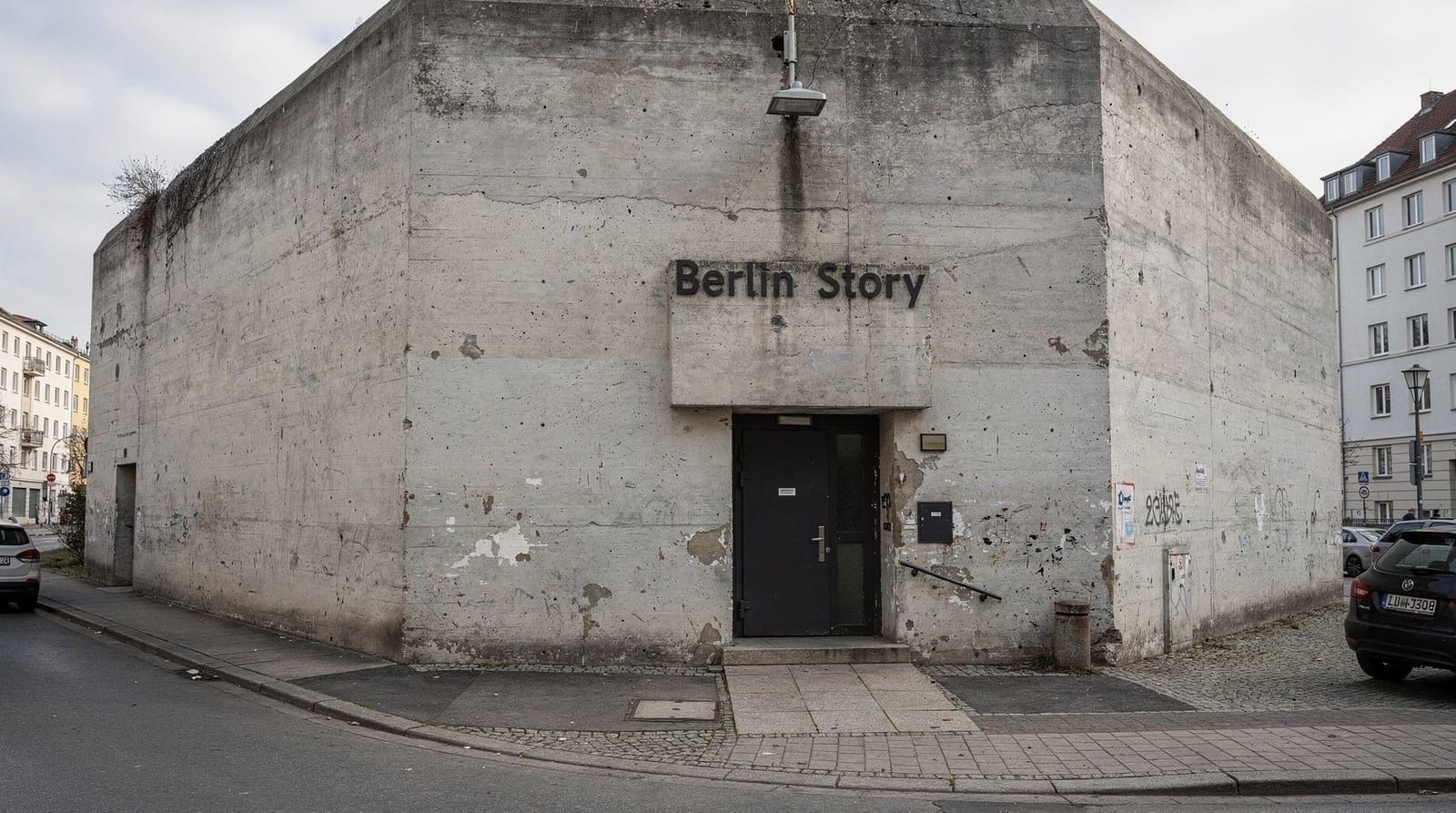
| Berlin Story Bunker | Narrative overview of Hitler’s rise and the regime | 1 hour | No (paid) |
Visitors with limited time often ask which single site to prioritise: the Topography of Terror is generally the strongest starting point because it explains the machinery of the regime — how ordinary bureaucratic structures enabled mass persecution — which gives context to everything else. The Third Reich sites in Berlin overview maps how to sequence several of these sites in one day or across a longer trip.
Frequently asked questions about Topography of Terror
How much does the Topography of Terror cost?
Entry is free, both to the outdoor excavation and the indoor documentation centre. Audio guides in German, English, French, Russian, and other languages are available to borrow free of charge at the information desk.Where exactly is the Topography of Terror?
The site is at Niederkirchnerstrasse 8, 10963 Berlin, in the Kreuzberg district. The nearest U-Bahn is Potsdamer Platz (U2, S1, S2, S25) — a 5-minute walk north along Stresemannstrasse. Bus 200 stops directly in front. The Martin-Gropius-Bau museum is directly opposite.How long do you need at the Topography of Terror?
The indoor exhibition takes 1.5–2 hours if read thoroughly. Adding the outdoor excavation and Wall section along Niederkirchnerstrasse, allow 2.5–3 hours in total. The outdoor area is open all year, including when the indoor centre is closed.Is the Topography of Terror suitable for children?
The exhibition contains graphic documentary photography of Nazi crimes — executions, concentration camp conditions, and deportations. It is designed for adult and secondary school-age audiences. There is no age restriction, but the content requires careful preparation for younger visitors. The outdoor excavation is accessible and less confrontational.What buildings stood here before 1933?
The block between Prinz-Albrecht-Strasse (now Niederkirchnerstrasse), Wilhelmstrasse, and Anhalter Strasse contained the Hotel Prinz Albrecht, the Berlin School of Arts and Crafts, and other 19th-century buildings. The Nazis seized them from 1933 and converted them into administrative and interrogation centres.Is there a section of the Berlin Wall at the Topography of Terror?
Yes. A 200-metre section of original Berlin Wall runs along the northern boundary of the site along Niederkirchnerstrasse. This is one of the few places where the Wall is directly adjacent to documentation of the Nazi regime — a site of two successive totalitarianisms sharing the same ground.What is the "death strip" connection at this site?
After 1945, the bombed-out ruins of the Gestapo and SS headquarters were left as rubble. When the Berlin Wall was built in 1961, it ran directly along the Prinz-Albrecht-Strasse edge, and the former Gestapo courtyard fell within the death strip — inaccessible to both sides. The ruins were not excavated until 1987.
Top experiences
Bookable activities with verified prices and instant confirmation on GetYourGuide.