Third Reich history trail: three days through Berlin's darkest sites
Berlin: Third Reich and the Holocaust Private Guided Tour
A note on this itinerary
These three days visit sites of extreme historical violence. The purpose of documentation — at the Topography of Terror, at Sachsenhausen, at the Wannsee House — is to ensure that what happened is understood in concrete detail rather than abstracted into general statements. The sites themselves are designed with this in mind, and the quality of the historical interpretation at the main Berlin memorials is high.
Visitors should plan for the emotional weight of the material. Three days of concentrated engagement with these sites is a lot; the itinerary includes some physical movement and outdoor time to provide rhythm. Sachsenhausen is given its own full day because it requires it.
| Where | Mitte, Wannsee, Kreuzberg, Oranienburg (Sachsenhausen) |
| Cost | around €51 per person for entries and transport |
| Time needed | 3 days |
| Getting there | S-Bahn/U-Bahn within Berlin; S1 or RE5 to Oranienburg for Sachsenhausen |
| Best time | Year-round; indoor-heavy on Days 1–2, outdoor walking at Sachsenhausen |
Day 1: The perpetrators’ sites in central Berlin
Morning: Topography of Terror (9:30–12:30)
Start at the Topography of Terror (Niederkirchnerstrasse 8, free, open 10:00–20:00 daily). This is the most important single site for understanding how the Nazi state functioned. The documentation centre stands on the combined headquarters of the SS, SD, and Gestapo — the organisations that planned and executed the Holocaust and the regime’s political terror. The indoor exhibition traces the structure of these organisations, the personalities who ran them, and the documented crimes they committed. The outdoor exhibition runs along a surviving 200-metre section of the Berlin Wall, itself built on the former prison cellar of the SS Reich Security Main Office.
Allow three hours. The exhibition is dense but the layout is clear and the image documentation is extensive. This is not a quick walkthrough. See our Topography of Terror guide.
Lunch: Near Potsdamer Platz (12:30–13:30)
Several lunch options exist around Potsdamer Platz, a 10-minute walk west. The area was completely destroyed in the war and then lay in the death strip of the Wall until 1990; it is now a commercial centre with no visual connection to its former state. Budget €12–18.
Afternoon: Holocaust Memorial and nearby sites (13:30–17:30)
Walk north from Potsdamer Platz to the Memorial to the Murdered Jews of Europe (free, open at all hours; underground information centre €6, closed Monday). The information centre beneath the field of stelae documents the fate of individual families and communities — it is deliberately individual rather than statistical. Budget 60–75 minutes for the memorial and centre together.
Two minutes’ walk north is the Memorial to the Homosexuals Persecuted Under the National Socialist Regime — a single concrete box with a looped film visible through a small window. Four minutes further north is the Memorial to the Sinti and Roma Victims of National Socialism by the Tiergarten lake. These adjacent memorials collectively represent the breadth of the Nazi genocide.
Continue north to the Reichstag (viewing dome, free with advance booking at bundestag.de). The building was the site of the Reichstag fire in February 1933 — the arson that the Nazis used to justify the emergency decree suspending civil liberties. Thirty meters south of the dome entrance, embedded in the pavement, is a small marker showing where the Wall ran along the Spree. Allow 45 minutes for the dome visit.
Walk east along Unter den Linden to Bebelplatz — the square where the Nazi student union burned 20,000 books on 10 May 1933. The memorial by Micha Ullman is underground: a chamber of empty white bookshelves visible through a glass panel in the paving. Easily missed if you do not know to look for it. See our Bebelplatz guide.
Evening
Dinner in Mitte or Friedrichshain; the area around Hackescher Markt has good mid-range options in the €15–25 range.
Day 2: Wannsee, the Jewish Museum, and the neighbourhood traces
Morning: Wannsee House (9:30–12:30)
Take the S-Bahn S1 or S7 to Wannsee station (from Zoologischer Garten, about 30 minutes; from Hauptbahnhof, about 40 minutes). At the station, take bus 114 to Haus der Wannsee-Konferenz (10 minutes, or 20-minute walk through the Grunewald forest).
The House of the Wannsee Conference (Am Grossen Wannsee 56-58, free, open daily 10:00–18:00) is the villa where, on 20 January 1942, SS-Obergruppenführer Reinhard Heydrich chaired a 90-minute meeting of 15 senior Nazi officials to coordinate the implementation of the “Final Solution to the Jewish Question.” The meeting did not decide to carry out the Holocaust — that decision had already been made — but it coordinated the bureaucratic machinery for mass murder. The meeting minutes (the Wannsee Protocol) survive and are displayed here in full.
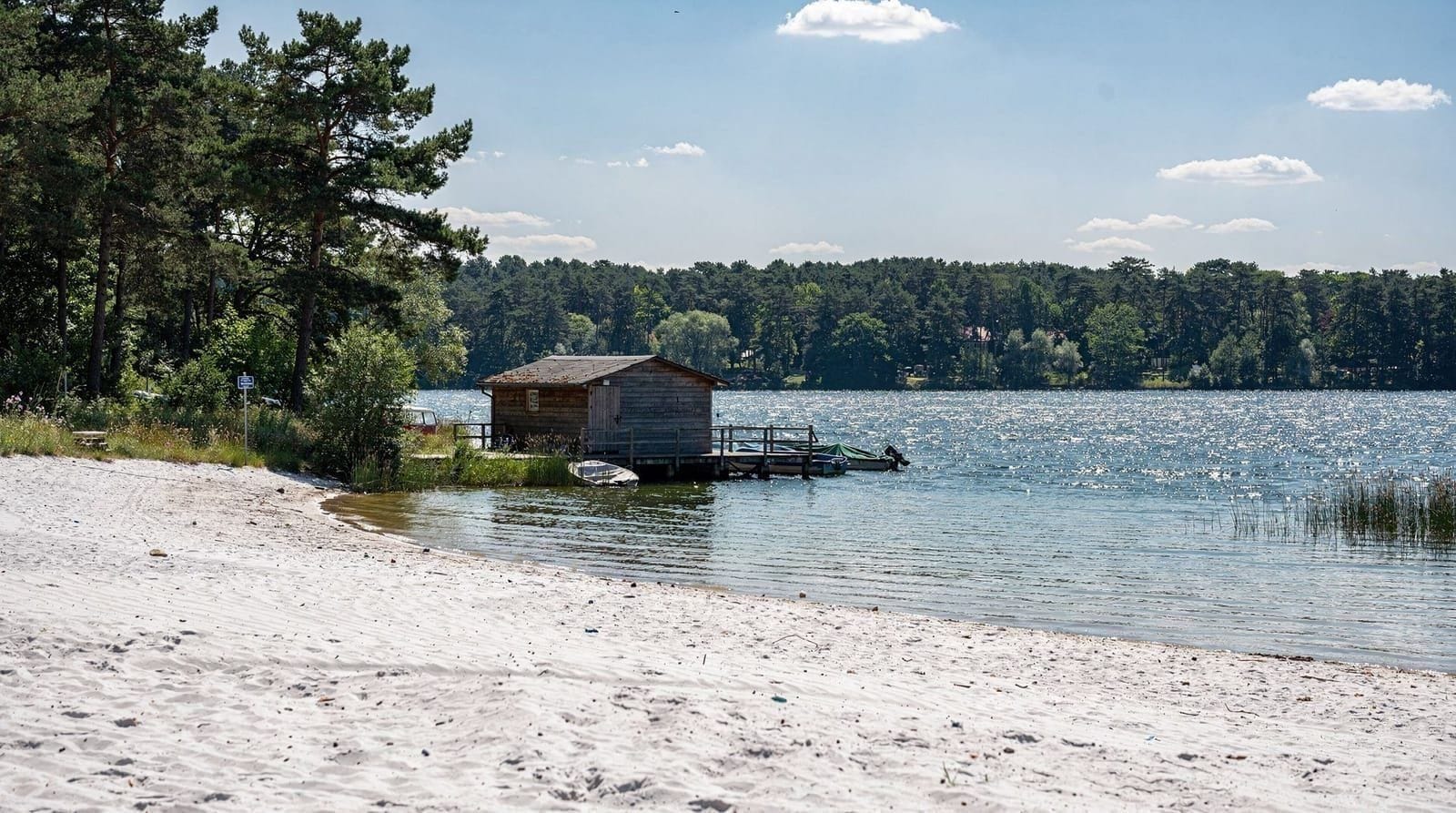
The exhibition is scholarly, quiet, and carefully documented. The villa’s physical setting on a lake — beautiful in summer — makes the contrast with the meeting’s content more disturbing rather than less. Allow three hours. See our Wannsee Conference guide.
Read our Wannsee destination page for logistics and nearby context.
Lunch: Wannsee (12:30–13:30)
Several cafes and restaurants exist near Wannsee station and around the lake. The Strandbad Wannsee (Berlin’s large public lake beach) has a cafe open in summer. Budget €12–16.
Afternoon: Jewish Museum Berlin (14:30–18:00)
Take the S7 back toward city centre, then U8 south to Hallesches Tor, and walk 10 minutes to the Jewish Museum Berlin (Lindenstrasse 9-14, €10, open Monday–Sunday; closed on Rosh Hashanah and Yom Kippur).
Daniel Libeskind’s building is itself an argument: the zinc-clad building’s angular geometry represents the absence created by the Holocaust. The void spaces — cold, concrete, dimly lit, deliberately uncomfortable — are integrated into the exhibition circulation. The collection covers 2,000 years of Jewish history in German-speaking lands, with the 20th century documentation being most directly relevant to this itinerary.
Allow 2.5 to 3 hours. Book tickets online to avoid queuing. See our Jewish Museum guide.

Late afternoon: Stolpersteine and the Scheunenviertel (18:00–19:30)
Walk north through Mitte into the Scheunenviertel (Barn Quarter), historically the centre of Berlin’s Jewish community. Stolpersteine — small brass plaques embedded in the pavement in front of former homes of murdered Jews — appear throughout this neighbourhood. The plaques carry individual names, birth dates, dates of deportation, and fate. They were designed by artist Gunter Demnig beginning in 1992 and there are now more than 100,000 across Europe. See our Stolpersteine guide.
The New Synagogue on Oranienburger Strasse (€7, open Sunday–Friday) survived Kristallnacht because a Berlin police officer refused to let the SA destroy it; it was later damaged by bombing. The golden dome was restored in the 1990s. Open for visits during much of the day.
Day 3: Sachsenhausen — the concentration camp north of Berlin
Getting there (9:00 departure)
From Berlin Hauptbahnhof, take the S1 north to Oranienburg (about 45 minutes; check times as frequency varies). Alternatively, take the RE5 regional train from Hauptbahnhof or Gesundbrunnen to Oranienburg (30 minutes, about every 30 minutes). From Oranienburg station, it is a 20-minute walk or short bus ride (bus 804) to the Sachsenhausen Memorial.
Buy a Berlin ABC zone day ticket (€10.80) which covers the S1 to Oranienburg. If taking the RE5, the same ABC ticket is valid. Do not buy an AB ticket — Oranienburg is in zone C.
Sachsenhausen Memorial (10:00–16:00)
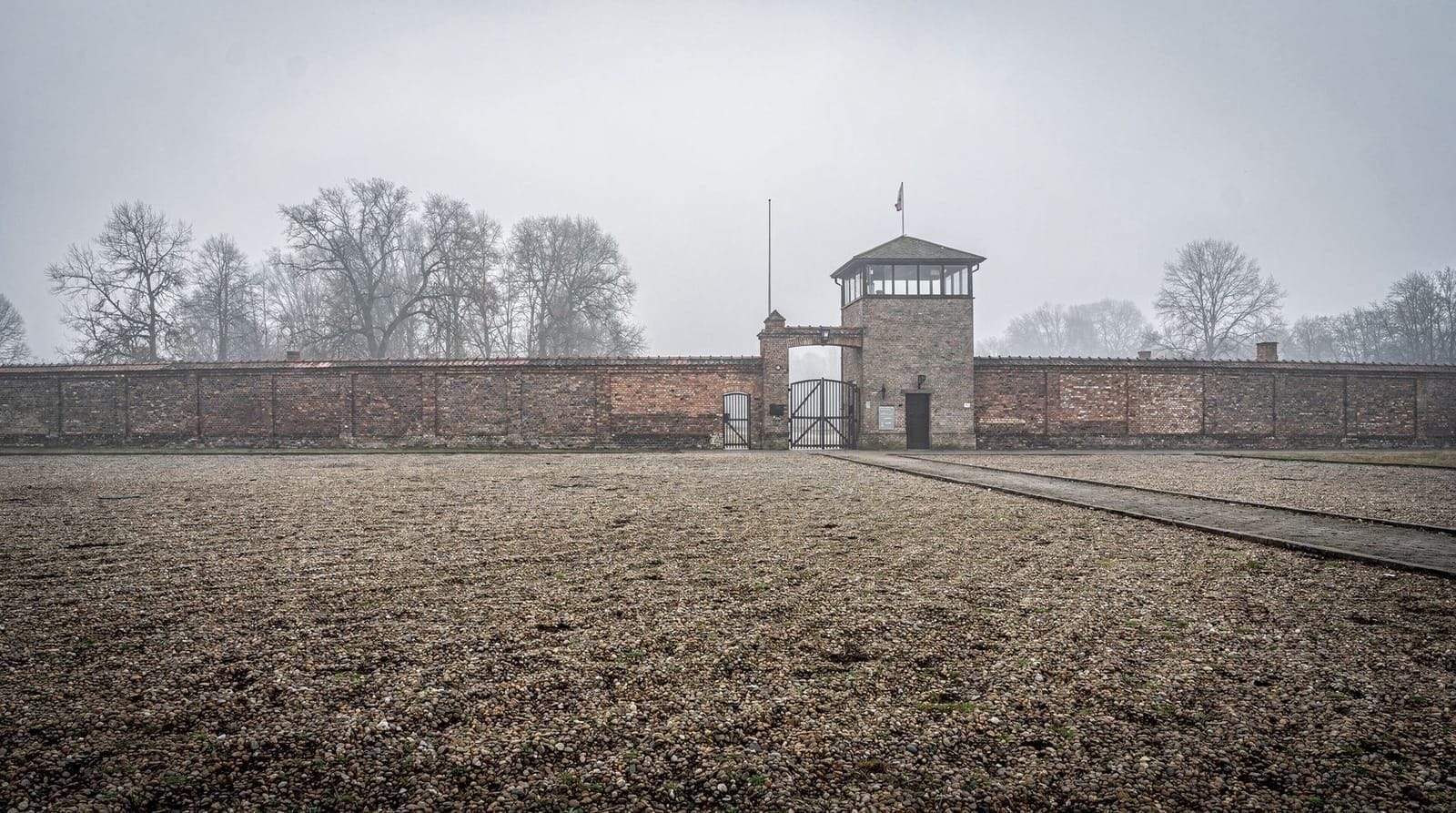
Sachsenhausen Concentration Camp (free, open daily 8:30–18:00 summer, 8:30–16:30 winter) was established in 1936 as the model camp for the entire Nazi concentration camp system. The SS administrative school and headquarters were in Oranienburg, and camp commandants from across the system were trained here.
The camp held political prisoners from across occupied Europe, Soviet POWs (tens of thousands of whom were executed here), Jews, criminals, and homosexuals. Between 1936 and 1945, approximately 200,000 people were imprisoned here; the exact number of deaths is uncertain but estimated at 30,000–50,000 from execution, disease, and forced labour.
After liberation in April 1945, the Soviets used the camp as a special internment camp (Special Camp Nr. 7) until 1950, in which approximately 12,000 people died of starvation and disease. Both phases are documented in the memorial.
Allow a minimum of four hours. The site is large — the triangular camp covers 58 hectares — and the documentation in the main exhibition building (Museum A), the infirmary barracks (Station Z remains), and the prison cells is extensive. Take the audio guide (€3) or consider a guided tour which provides essential context.

Read our Sachsenhausen day trip guide and destination guide for detailed site layout and logistics.
Practical notes for Sachsenhausen:
- Wear comfortable walking shoes; the site is large and the paths are gravel
- There is a small cafe/shop near the entrance; bring water
- The memorial is free; the audio guide (€3) and specialist tours (€5–12) are charged separately
- Closing time is enforced; plan to finish by 30 minutes before closing
Return to Berlin (16:30–17:30)
Walk or take the bus back to Oranienburg station. The S1 and RE5 both return to Berlin; the RE5 is faster. Last trains run well into the evening.
Evening
After Sachsenhausen, many visitors prefer a quiet evening. Prenzlauer Berg and Mitte both offer low-key dinner options in the €15–22 range. The Mauerpark area in Prenzlauer Berg is good for an evening walk.
Key practical information
Photography: Photography is permitted at most Berlin memorial sites. At Sachsenhausen, photography is permitted throughout except inside a few specifically marked areas. The Wannsee House asks for discretion in the main conference room.
Children: This itinerary is designed for adults. Sachsenhausen and the Wannsee House are documented in detail without softening; the content is unsuitable for younger children. The memorial sites themselves do not restrict entry, but the material requires adult context.
Pacing: Three consecutive days of this material is demanding. If the schedule proves too concentrated, replace the Wannsee afternoon with a walk through Tiergarten or the Kreuzberg canal path — having some time outside and away from the material is appropriate, not avoidant.
Languages: All major sites (Topography of Terror, Sachsenhausen, Wannsee House, Jewish Museum) have full English-language exhibitions and audio guides. Guided tours in English are available at all of them.
Where to stay for this itinerary
Mitte is the practical base: Day 1’s sites (Topography of Terror, the Holocaust Memorial, the Reichstag, Bebelplatz) are all within walking distance of each other, and it keeps the S-Bahn journeys to Wannsee on Day 2 and Oranienburg on Day 3 straightforward. Avoid basing yourself in the far southwest or far north for this trip — the geographic spread across three days (central Berlin, Wannsee, and Oranienburg) already involves real travel time, and a peripheral base adds to it unnecessarily. See our Berlin neighbourhoods overview for area comparisons.
Combining this trail with Cold War history
The Third Reich and Cold War stories in Berlin are directly connected — the same buildings, streets, and institutions often carry both histories layered on top of each other. The Topography of Terror site, for instance, briefly housed Soviet intelligence after 1945 before its buildings were demolished. If this three-day trail leaves you wanting the continuation, our Cold War Berlin itinerary picks up directly where this one ends, tracing the same city through division, the Wall, and the Stasi surveillance state.
Three days at a glance
| Day | Focus | Where |
|---|---|---|
| Day 1 | Topography of Terror, Holocaust Memorial and adjacent memorials, Reichstag, Bebelplatz | Mitte |
| Day 2 | Wannsee House, Jewish Museum Berlin, Stolpersteine, New Synagogue | Wannsee to Kreuzberg/Mitte |
| Day 3 | Sachsenhausen Memorial | Oranienburg (day trip) |
Budget overview (per person)
| Item | Cost |
|---|---|
| Topography of Terror | Free |
| Holocaust Memorial info centre | €6 |
| Wannsee House | Free |
| Jewish Museum | €10 |
| Sachsenhausen Memorial | Free |
| Sachsenhausen audio guide | €3 |
| Berlin Story Bunker (optional) | €15 |
| Transport: 3 × BVG ABC day ticket | €32.40 |
| Total (core) | ~€51 |
Frequently asked questions about the Third Reich history trail
Do I need to book any of these sites in advance?
The Jewish Museum benefits from online booking (€10 vs potential queue). Sachsenhausen and the Wannsee House are free and walk-in. The Topography of Terror does not require booking. The Reichstag dome requires advance registration at bundestag.de (free, essential).
Is it appropriate to visit Sachsenhausen as a tourist?
Yes. The site exists specifically to be visited and documented. The Sachsenhausen Memorial is maintained by the state of Brandenburg and staffed by professional historians. Visitor engagement with the material — understanding what happened and why — is the purpose of keeping the site open. The site asks for appropriate behaviour (quiet, no running, photography restrictions in marked areas) rather than restricting access.
How long should I spend at Sachsenhausen?
A minimum of three hours; four is better. The site is large enough that rushed visits inevitably skip significant areas. The two main exhibition spaces (Museum A in the prisoner barracks and the documentation in Station Z, the execution area) alone take two hours; the full site takes four.
What is the Wannsee Conference Protocol?
The Wannsee Protocol is the surviving typed minutes of the 20 January 1942 meeting. It documents the coordination meeting between SS leaders and representatives of relevant Reich ministries for the “Final Solution of the Jewish Question.” The document was discovered by Allied investigators in 1947 and used at the Nuremberg Trials. The original document is in the German Foreign Office archive; a facsimile is on display at the Wannsee House.
Are there guided tours available for this itinerary’s content?
Yes. Several companies offer guided walking tours covering Third Reich sites in central Berlin, typically 3–4 hours. Sachsenhausen offers its own licensed guided tours. Private tours covering multiple sites over several days are available. See our guide to Berlin’s Third Reich tours for recommendations.
Should I combine this with a Cold War-focused trip?
If time allows, yes — the two histories are closely linked in Berlin, with several sites (Topography of Terror in particular) carrying both layers. Our Cold War Berlin itinerary is designed to follow on directly from this trail.
Where should I stay for this itinerary?
Mitte is the most practical base, keeping Day 1’s central sites walkable and the S-Bahn connections to Wannsee and Oranienburg straightforward on Days 2 and 3. See our Berlin neighbourhoods overview for alternatives.
Top experiences
Bookable activities with verified prices and instant confirmation on GetYourGuide.