Third Reich sites in Berlin — a walking tour overview
Berlin: Third Reich, Hitler, and WWII Walking Tour
What are the main Third Reich sites in central Berlin?
The core Third Reich sites in central Berlin are the Topography of Terror (former Gestapo and SS headquarters, free), the Memorial to the Murdered Jews of Europe (free), the Führerbunker site (car park, information board only), Bebelplatz (1933 book burning site, free), the Olympic Stadium (1936, accessible with entry fee), and the Wannsee Conference House (free, day trip south of Berlin). Most are within a 2–3 km radius of Potsdamer Platz and walkable in a full day.
Berlin carries more physical traces of the Third Reich than almost any other city in the world. Between 1933 and 1945, the Nazi government transformed the capital — building new administrative headquarters, converting existing institutions, and imprinting the ideology of the regime on the urban fabric. Allied bombing and postwar demolition removed much of this, but key sites survive, have been excavated, or have been marked with memorials. This guide maps the central Berlin Third Reich sites in walking order, with honest assessments of what is worth your time.
| Where | Mitte, along Wilhelmstrasse and Niederkirchnerstrasse |
| Cost | Free at most sites; Berlin Story Bunker around EUR 14.50 |
| Time needed | Full day (6–8 hours) for the whole route, 3–4 hours abbreviated |
| Getting there | U-Bahn/S-Bahn to Potsdamer Platz or Brandenburger Tor |
| Best time | Weekday mornings, before tour groups arrive at the Holocaust Memorial |
How the Nazi state organised its Berlin presence
Understanding the geography of Third Reich Berlin requires a brief map of the government district as it existed between 1933 and 1945.
The core of power was concentrated in a strip running from the Reich Chancellery on Vossstrasse (Mitte) south through the Wilhelmstrasse government district to the Prinz-Albrecht-Strasse block (now Niederkirchnerstrasse), where the Gestapo and SS operated.
Wilhelmstrasse was the equivalent of Whitehall or the Quai d’Orsay — the street of ministries. The Foreign Ministry, the Propaganda Ministry (Goebbels), and Göring’s Air Ministry were all here. Hitler’s Reich Chancellery abutted the street from a parallel block to the west.
The Prinz-Albrecht-Strasse block (now the Topography of Terror site): The Gestapo, SS headquarters, and SD. The organisations that planned and executed the persecution of the regime’s defined enemies.
The Brandenburg Gate and the East-West Axis: The ceremonial axis that Albert Speer was redesigning from 1937 onward as part of the planned “Germania” — the megalomaniacal redesign of Berlin as a world capital. Almost none of Germania was built; the war interrupted the project. The Axis survives as today’s Strasse des 17. Juni.
Walking route — central Berlin Third Reich sites
The following route covers the most significant sites in a logical geographic sequence. Total distance: approximately 8 km on foot. Allow a full day (6–8 hours) with stops at each site. The route is served by U-Bahn and S-Bahn at multiple points for those who want to shorten it.
Start: Bebelplatz — the 1933 book burning
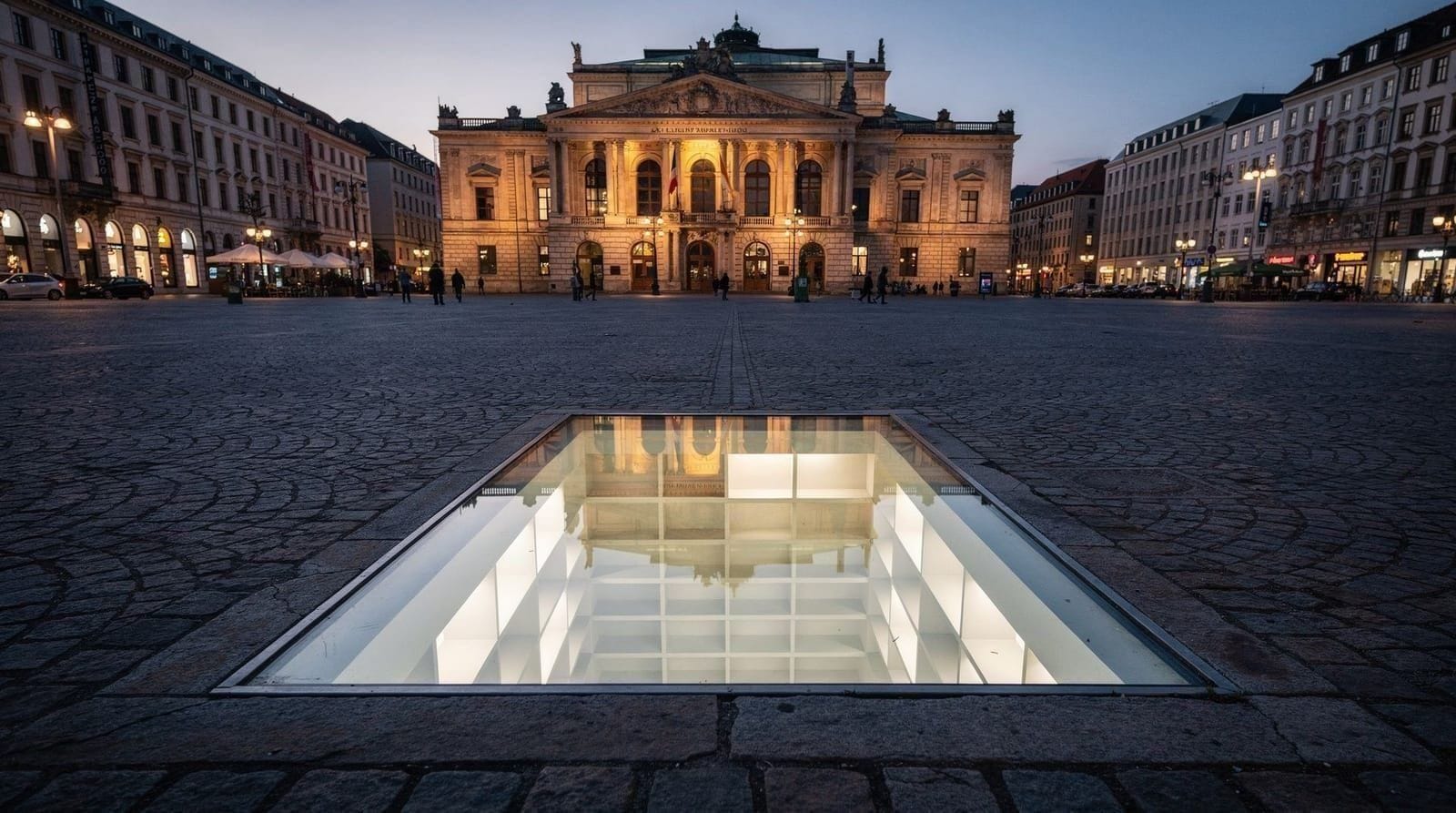
Bebelplatz, on Unter den Linden opposite the Humboldt University, is the site of the first major public burning of books in Nazi Germany, on 10 May 1933. An estimated 20,000 books by Jewish, Communist, and politically undesirable authors were burned by Nazi students while Joseph Goebbels addressed the crowd.
The underground memorial — “Bibliothek” (Library) by Micha Ullman, 1995 — is a small glass window set into the cobblestones, revealing a white underground room with empty bookshelves for 20,000 volumes. It is understated and effective. Visit early in the day before the square becomes crowded with tourist groups.
Heinrich Heine’s 1820 verse is engraved on a plaque nearby: “Where they burn books, they will ultimately burn people also.” The full context and history of the site is in the Bebelplatz book burning guide.
Neue Wache — the Central Memorial
Seven minutes walk west along Unter den Linden. The Neue Wache (New Guardhouse) is a Schinkel-designed neoclassical building from 1818, repurposed since 1993 as the Central Memorial of the Federal Republic of Germany for the victims of war and dictatorship.
The interior is stripped bare except for Käthe Kollwitz’s enlarged sculpture “Mother with Dead Son” under the open oculus in the roof. The sculpture was originally made in memory of Kollwitz’s own son Peter, killed in Flanders in 1914.
Important editorial note: The Neue Wache’s dedication language is deliberately broad — “victims of war and dictatorship” — which has generated sustained criticism from Holocaust historians and survivor organisations. The formulation risks equating perpetrators with victims and obscuring the specific nature of Nazi genocide. The Neue Wache is worth seeing, but this critical debate is worth knowing.
Brandenburg Gate — the symbolic threshold
A 5-minute walk from the Neue Wache, the Brandenburg Gate (Brandenburger Tor, built 1788–1791) was used extensively by the Nazi regime for propaganda purposes — the torchlight procession through the gate on the night of 30 January 1933 marked Hitler’s appointment as Chancellor. It subsequently served as a backdrop for numerous regime ceremonies.
After 1945 and the construction of the Berlin Wall, the Gate stood in the death strip — accessible to neither side. Its reopening on 22 December 1989 became the defining image of German reunification.
Memorial to the Murdered Jews of Europe
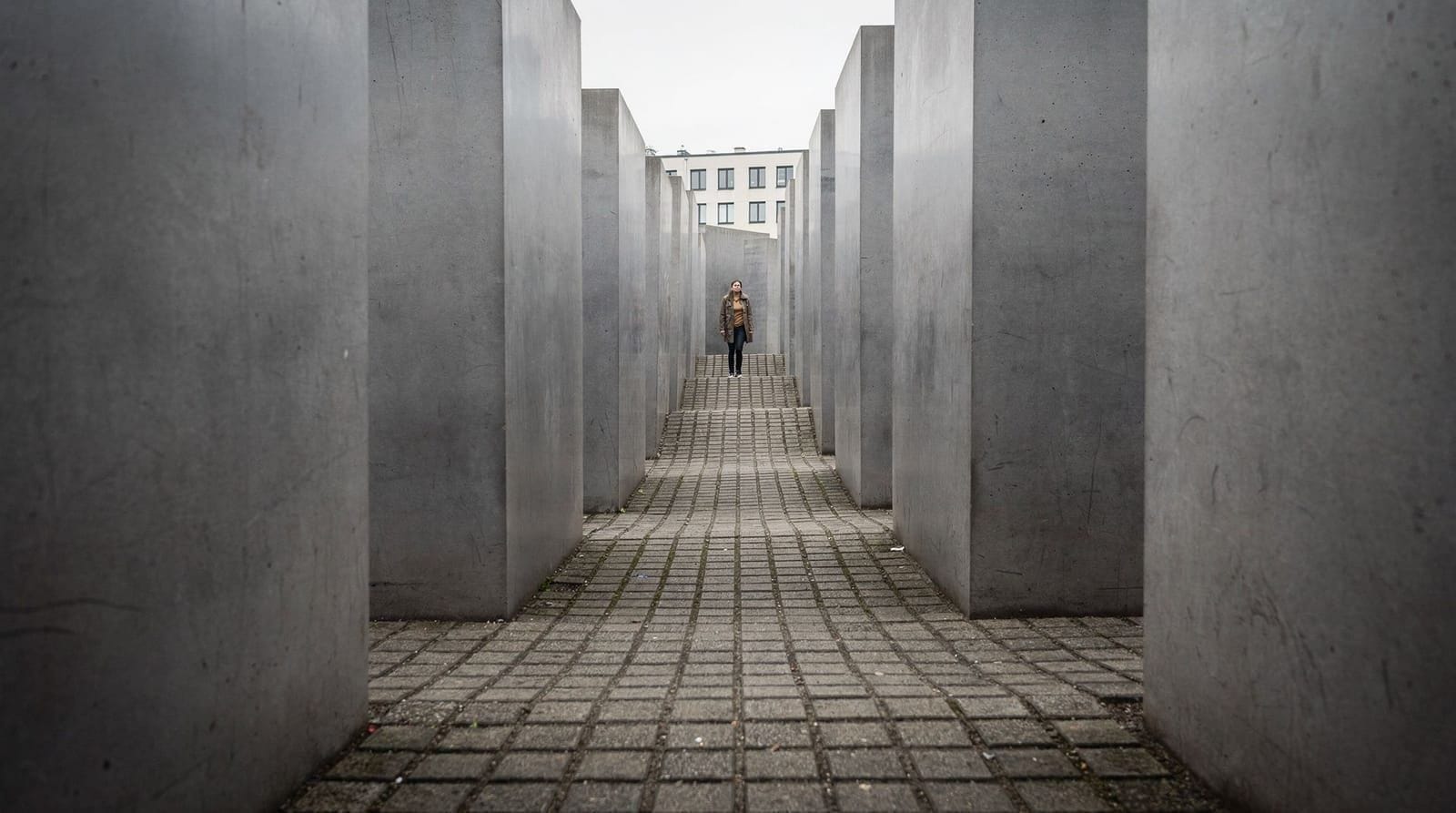
One block south of the Brandenburg Gate, the Eisenman stele field covers 19,000 square metres with 2,711 grey concrete stelae. The underground information center (free, Tuesday–Sunday 10:00–20:00) documents individual victims, families, and the geography of the murders across Europe.
The full practical guide is at Memorial to the Murdered Jews of Europe. Allow at least 1.5 hours for the outdoor field and information center combined.
Führerbunker site — the car park
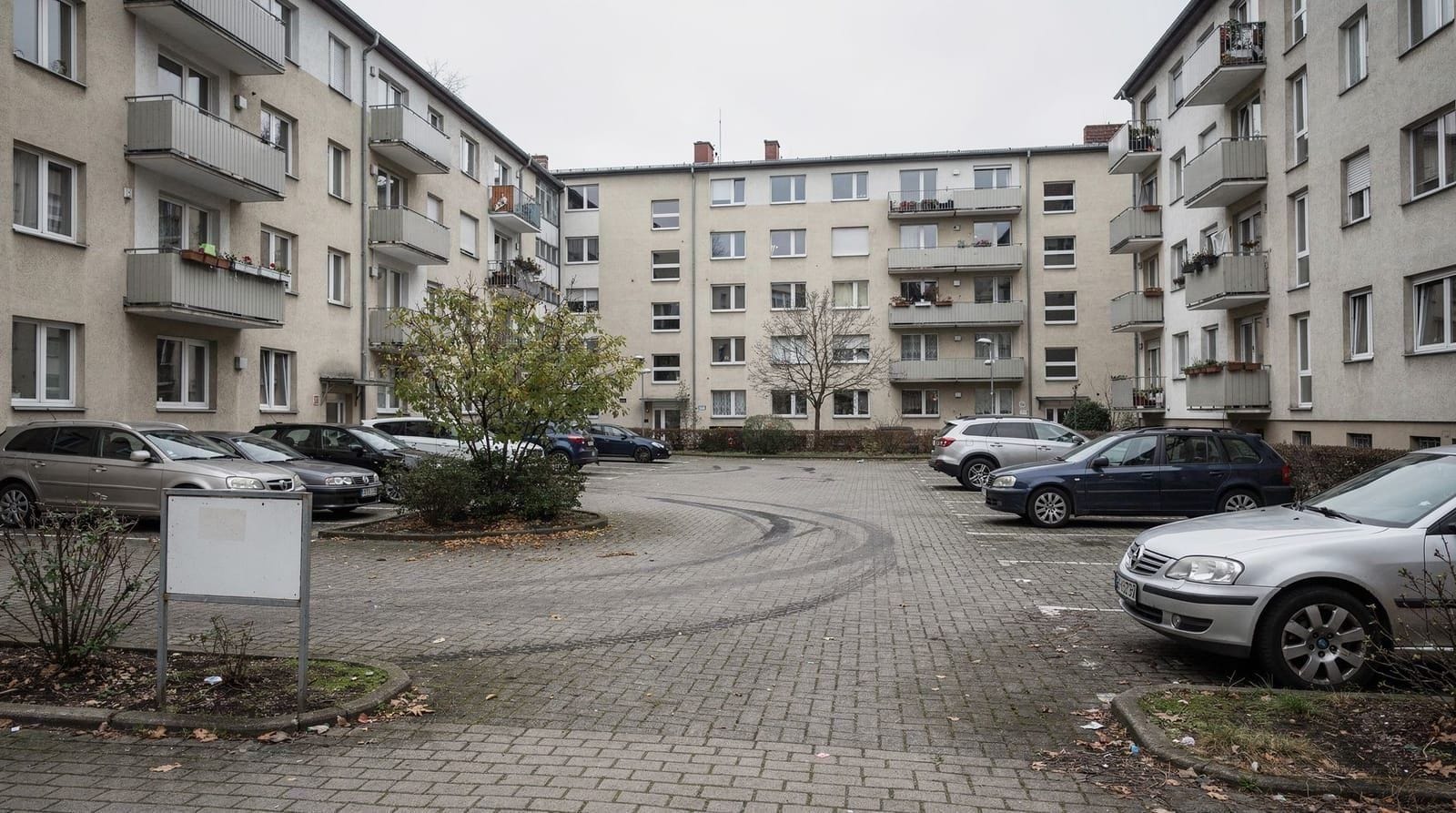
From the south end of the Holocaust Memorial, walk approximately 80 metres southeast along In den Ministergärten to the junction with Gertrud-Kolmar-Strasse. The unremarkable car park here is approximately above the buried remains of Hitler’s Führerbunker, where he spent the final weeks of the war and committed suicide on 30 April 1945.
A small information board is set into the pavement. There is no monument; the decision not to create one was deliberate. The Führerbunker history guide explains the full reasoning. Allow 15 minutes for a thoughtful reading of the information board.
Topography of Terror — the Gestapo and SS headquarters
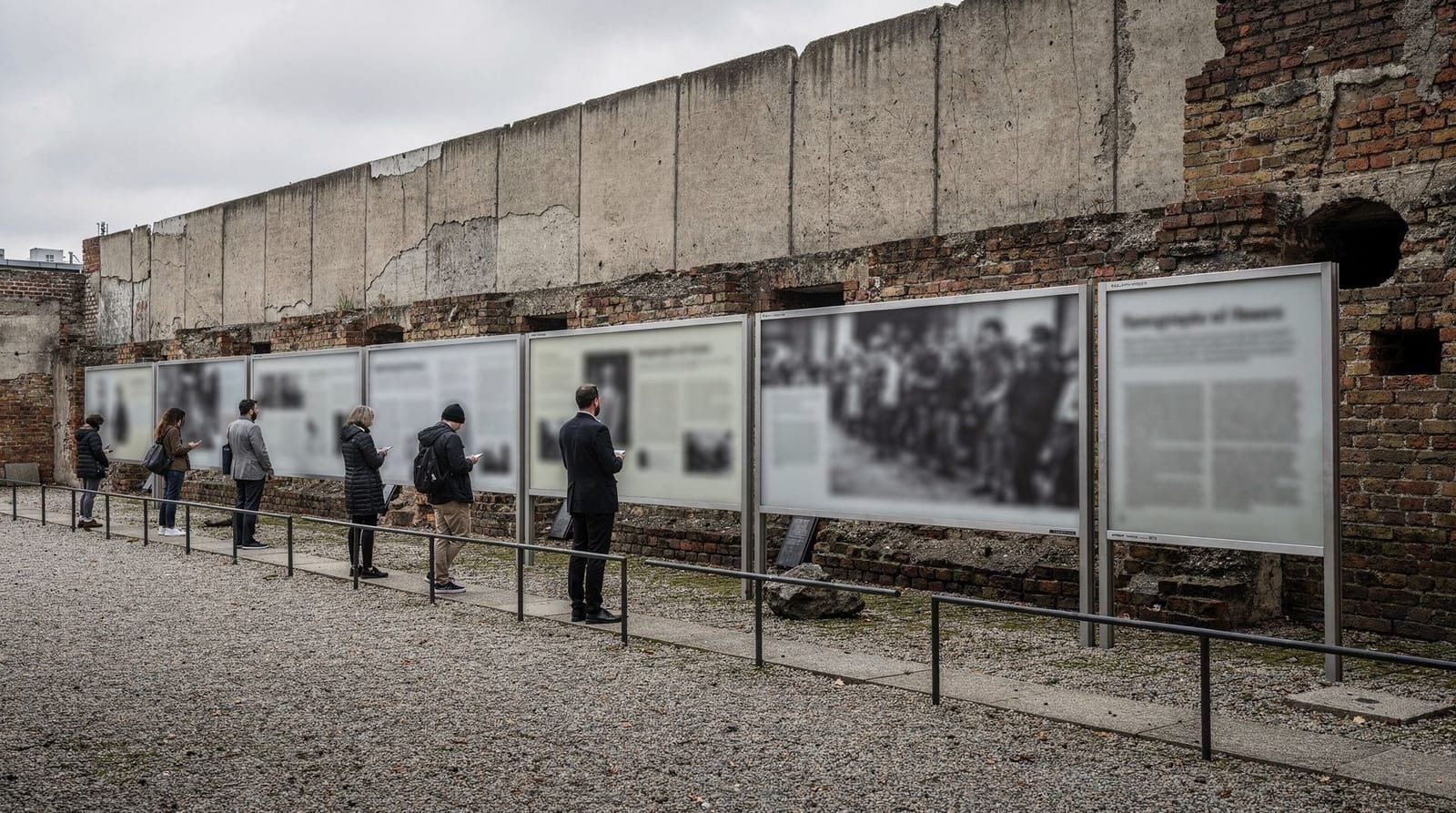
Walk 15 minutes south along Ebertstrasse and turn east along Niederkirchnerstrasse. The Topography of Terror documentation centre occupies the excavated foundations of the former Gestapo, SS, and RSHA headquarters — the core of the Nazi terror apparatus.
This is the single most important Third Reich site in central Berlin for visitors wanting documentary depth. Free entry. The indoor exhibition takes 2 hours minimum. The outdoor excavation and adjacent Berlin Wall section can be seen separately.
Full practical guidance at Topography of Terror guide.
The Air Ministry building (Federal Finance Ministry)
On Wilhelmstrasse, a 10-minute walk north from the Topography of Terror, the former Reich Air Ministry (Reichsluftfahrtministerium, built 1935–1936) is the best-preserved major Nazi government building in Berlin. Hermann Göring’s ministry was built to designs by Ernst Sagebiel in monumental stripped-classical style; the building covers 100,000 square metres of floor space.
After 1945, it was used by the East German government as the “House of Ministries.” A 120-metre socialist realist frieze by Max Lingner was added to the south facade in the GDR period. Since German reunification it has housed the Federal Ministry of Finance.
The building is not generally open to visitors, but the exterior — particularly the main facade on Wilhelmstrasse and the courtyard visible through the gate — is freely viewable. The GDR frieze on Leipziger Strasse is a striking layer of additional history.
Berlin Story Bunker (optional, paid)
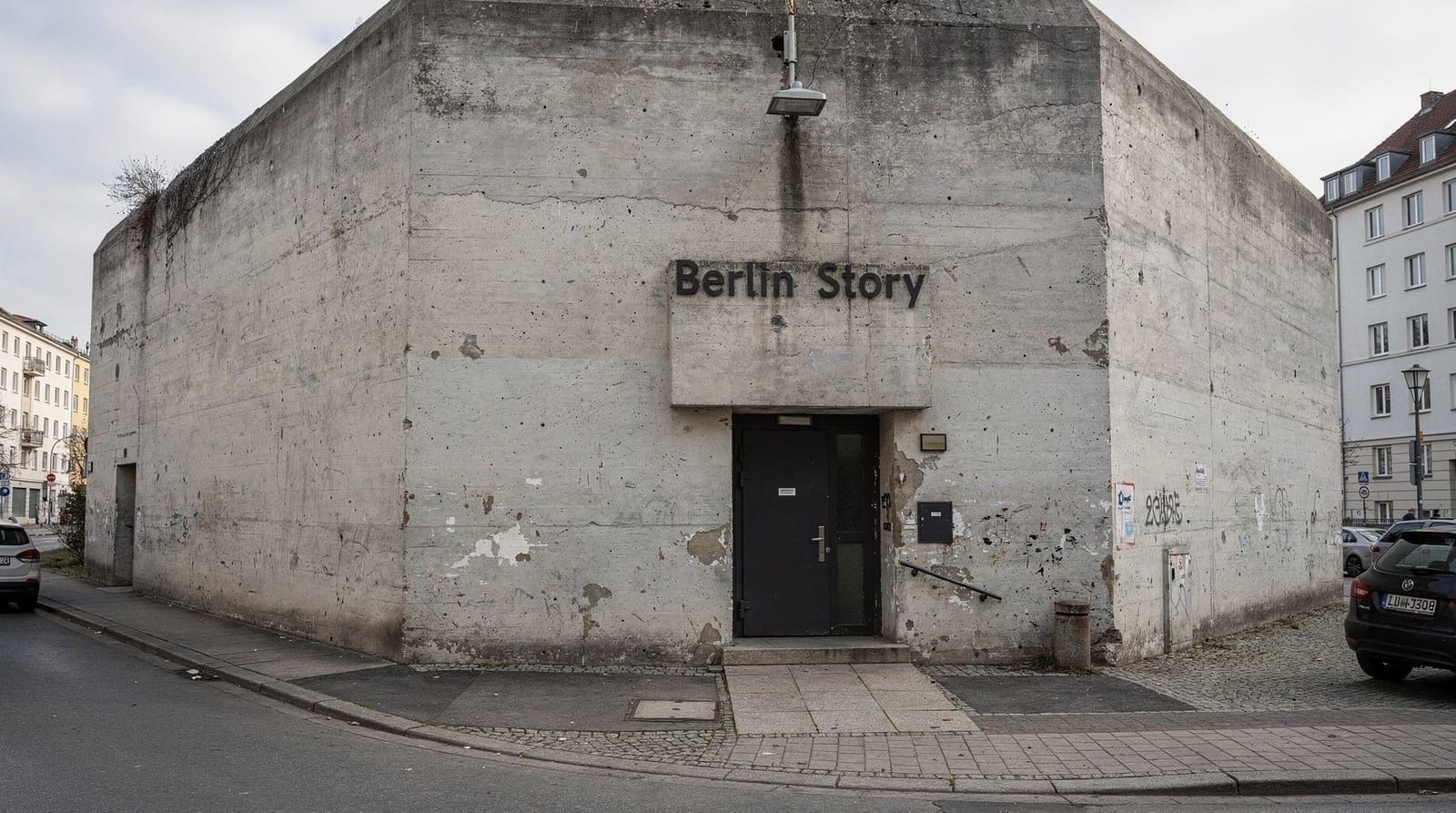
If continuing south on Schöneberger Strasse, the Berlin Story Bunker is 10 minutes from the Topography of Terror. It is a private museum in an original 1943 air-raid bunker, with the exhibition “Hitler — how could it happen?” Entry is paid (approximately EUR 14.50 adults). It is not a state memorial institution, but provides a useful narrative account of Hitler’s rise and the Nazi period. See the Berlin Story Bunker guide for an honest assessment.
A half-day abbreviated route
If one full day is not available, a 3–4 hour route covers the most essential sites:
- Topography of Terror (indoor exhibition, 1.5 hours)
- Walk north along Niederkirchnerstrasse, viewing the Wall section
- Memorial to the Murdered Jews of Europe — stele field and information center (1.5 hours)
- Führerbunker information board (15 minutes)
This covers the two most historically significant documentation sites and connects them geographically.
Choosing your route: full day, half day, or guided
| Route | Time | Sites covered | Best for |
|---|---|---|---|
| Full walking route | 6–8 hours | All central sites plus Air Ministry and Berlin Story Bunker | First-time visitors wanting the complete picture |
| Half-day abbreviated | 3–4 hours | Topography of Terror, Wall section, Holocaust Memorial, Führerbunker | Limited time, still want documentary depth |
| Guided walking tour | 2.5–4 hours | Varies by operator, usually Führerbunker area through Topography of Terror | Visitors who want spatial context and narrative without self-navigating |
| Add Wannsee | +half-day | Haus der Wannsee-Konferenz | Anyone with two days in Berlin |
| Add Sachsenhausen | +full day | Concentration camp memorial in Oranienburg | A dedicated 2–3 day Third Reich history trip |
Getting around between sites
The central route is walkable, but U-Bahn and S-Bahn stations sit close to nearly every stop if you want to shorten a leg or the weather turns. Potsdamer Platz (U2, U1, S1, S2, S25, S26) sits roughly midway between the Topography of Terror and the Holocaust Memorial. Brandenburger Tor (S1, S2, S25, S26, U55) is the closest station to the Memorial to the Murdered Jews and the Reichstag area. Mohrenstrasse (U2) is a short walk from Bebelplatz. For the day trips, Wannsee is reached via S1 from central stations, and Oranienburg (for Sachsenhausen) via S1 to its northern terminus — both covered by a standard Berlin ABC zone ticket since they lie in the outer fare zone.
What to skip if you only have half a day
If time is genuinely tight, prioritise the Topography of Terror and the Holocaust Memorial information center over the outdoor-only stops. Bebelplatz, the Brandenburg Gate, and the Führerbunker car park are each worth 10–20 minutes but add little beyond what a single photo and a paragraph of context convey — they matter more as part of the full walking sequence than as standalone destinations. The Air Ministry building and Berlin Story Bunker are the first things to cut; neither is essential to understanding the core history, and the Topography of Terror guide and Memorial to the Murdered Jews guide cover the material in more depth than a rushed walk-by ever could.
Guided tours — when they add value
Berlin Third Reich history half-day tour — English guide, covers central sites in 4 hoursSelf-guided visits to each site independently are feasible and, at the documentation centres, well-supported with English-language panels and audio guides. However, a guided walking tour that connects the sites adds:
- Physical context — walking the actual streets between the Gestapo headquarters, the Reich Chancellery site, and the bunker conveys the spatial concentration of power in a way no individual site visit achieves
- Human narrative — guides can personalise the history with specific stories that sites’ panels do not always provide
- Efficient routing — the geography can be confusing without knowledge of where the original buildings stood relative to current streets
For a full two-to-three-day itinerary covering all the major sites including Wannsee and Sachsenhausen, see the Third Reich history trail itinerary.
Day trips — Wannsee and Sachsenhausen
The central Berlin sites cover the planning and administrative machinery of the Nazi regime. Two significant sites require separate visits outside the city centre:
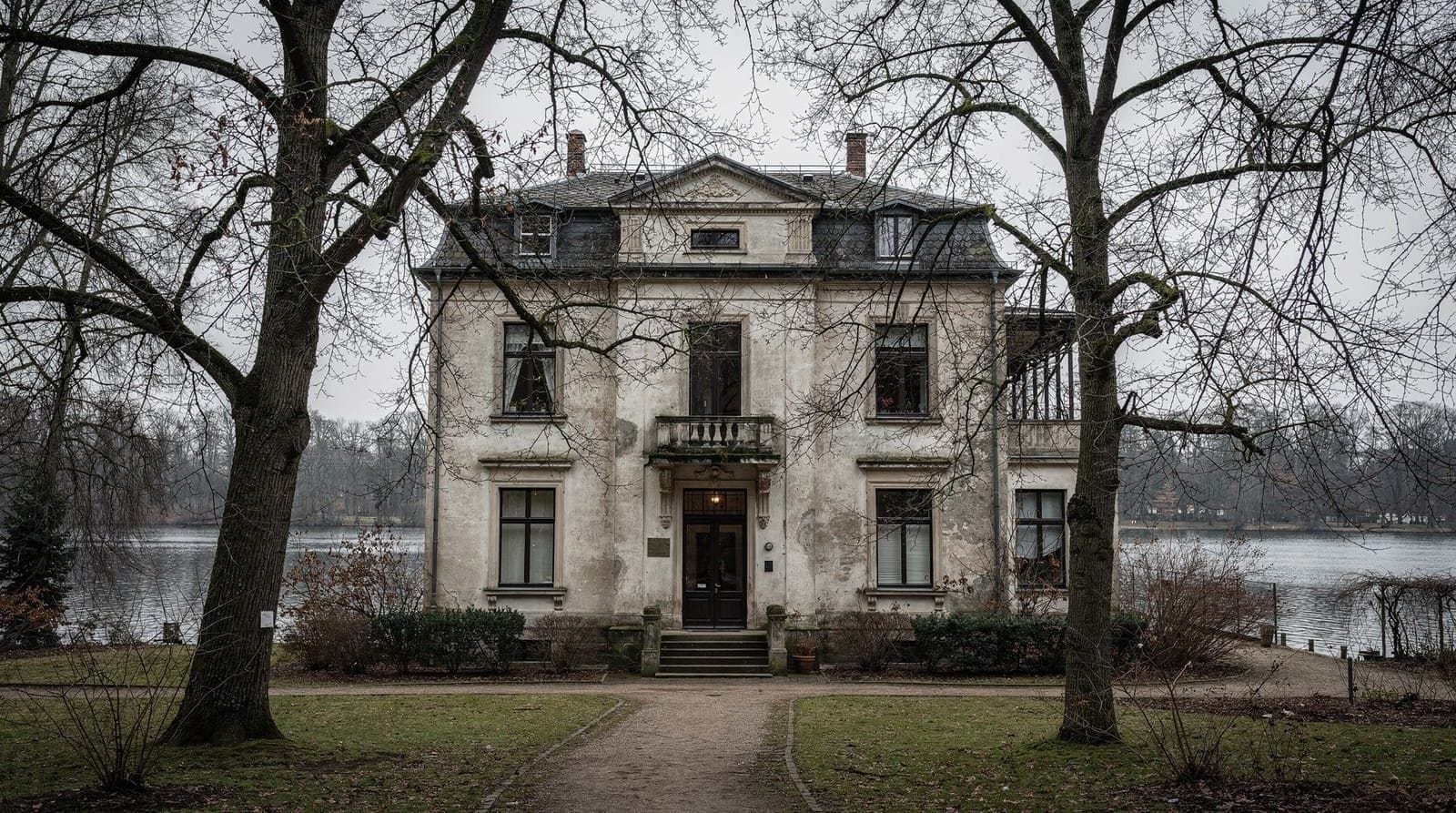
Haus der Wannsee-Konferenz: The villa 25 km southwest of central Berlin (S-Bahn S1 to Wannsee, then bus 114) where, in January 1942, senior officials coordinated the “Final Solution.” Free entry; full documentation centre. See the Wannsee Conference memorial guide.
Sachsenhausen concentration camp memorial: 35 km north (S-Bahn S1 to Oranienburg, 45 minutes). One of the first purpose-built concentration camps, established 1936, operating until liberation by Soviet forces in April 1945. Free entry; full day required. See the Berlin to Sachsenhausen day trip guide.
Frequently asked questions about Third Reich sites in Berlin
How many days do I need to see all the Third Reich sites in Berlin?
The core central Berlin sites — Topography of Terror, Memorial to the Murdered Jews, Führerbunker area, Bebelplatz, Neue Wache — can be covered in one long day on foot. Adding the Wannsee Conference House requires a separate half-day (S-Bahn trip south). Adding Sachsenhausen concentration camp memorial requires a full additional day. A dedicated 2–3 day itinerary covers everything substantively.Are most Third Reich sites in Berlin free?
Yes. The Topography of Terror, Memorial to the Murdered Jews (stele field and information center), Bebelplatz memorial, Neue Wache, Wannsee Conference House, and most outdoor sites are all free. The Berlin Story Bunker (private museum) charges entry. The Olympic Stadium charges a separate entrance fee for the interior.Where was the Reich Chancellery?
Hitler's Reich Chancellery (Reichskanzlei) was located on Vossstrasse, between Wilhelmstrasse and Hermann-Göring-Strasse (now Ebertstrasse), in Mitte. The building was demolished after the war and nothing remains above ground. The Führerbunker was located in the garden behind the New Reich Chancellery on Vossstrasse. A car park and the edge of the Holocaust Memorial now occupy the former site.Is there a Third Reich walking tour in Berlin?
Yes, several guided walking tours cover the key Third Reich sites in central Berlin in 2.5–4 hours. These typically cover the Topography of Terror area, the Führerbunker site, the Memorial to the Murdered Jews, Bebelplatz, and the government district. Self-guided walks are also feasible with a good map and the background information from the sites' own exhibitions.What happened to most Nazi-era buildings in Berlin?
Most Nazi-era government buildings in central Berlin were destroyed by Allied bombing (1943–1945) or deliberately demolished after the war by Allied occupation authorities to prevent them becoming sites of Nazi pilgrimage. The Reich Chancellery, the Air Ministry (later East German government building, now Finance Ministry), and the Reich Aviation Ministry are among the exceptions. The Olympic Stadium survived largely intact.What is the Air Ministry building that survived?
The former Reich Air Ministry (Reichsluftfahrtministerium) on Wilhelmstrasse, built 1935–1936 under Hermann Göring, is one of the best-preserved Nazi-era government buildings in Berlin. It subsequently housed the East German government (as the "House of Ministries") and is now the German Federal Ministry of Finance. There is a memorial frieze from the GDR period on the exterior.Can you visit Sachsenhausen concentration camp from Berlin?
Yes. Sachsenhausen concentration camp memorial is located in Oranienburg, approximately 35 km north of central Berlin, reachable by S-Bahn S1 to Oranienburg in 45 minutes. Entry to the memorial is free. Allow a full day. The site is one of the most significant concentration camp memorials in Europe, located just outside the city. See the Berlin to Sachsenhausen day trip guide for practical planning.
Top experiences
Bookable activities with verified prices and instant confirmation on GetYourGuide.