East Side Gallery guide — murals, history, and what to expect
Berlin: Berlin Wall & East Side Gallery Walking Tour
What is the East Side Gallery and is it worth visiting?
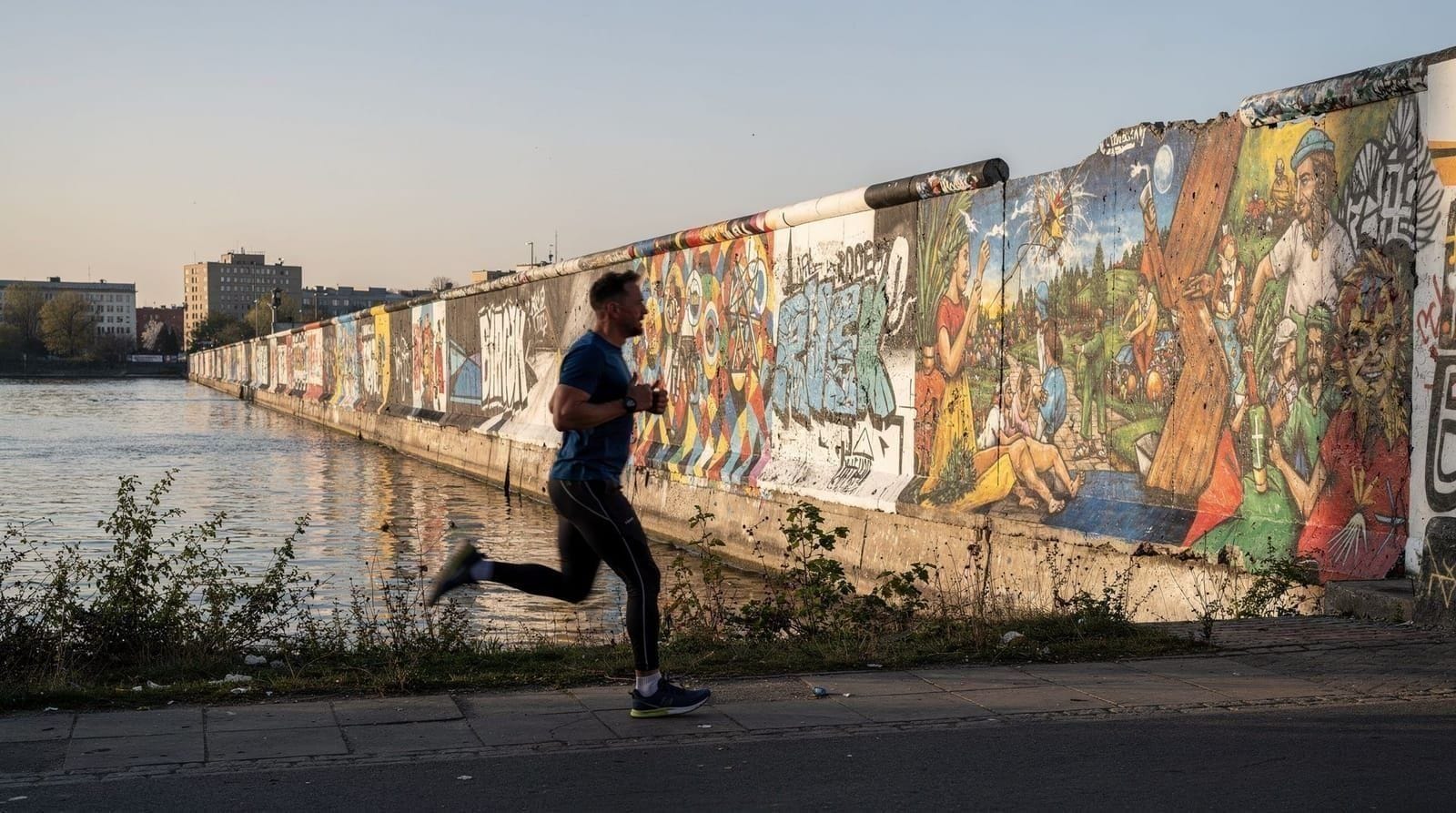
The East Side Gallery is a 1.3 km stretch of the original Berlin Wall's outer face, painted in 1990 by 118 artists. It is the longest surviving section of the Wall and one of the most significant open-air galleries in the world. Entry is free, open 24 hours. It is absolutely worth visiting, but go early morning to avoid crowds and see the murals without obstruction.
What is the East Side Gallery? A 1.3 km stretch of original Berlin Wall in Friedrichshain, painted in 1990 by 118 artists from 21 countries. Free, open 24 hours. It is the longest surviving section of the Wall and one of the most significant open-air commemorative art sites in the world. Go early morning to see it without crowds and tour groups.
| Where | Mühlenstrasse, Friedrichshain — between Ostbahnhof and Warschauer Strasse |
| Cost | Free |
| Time needed | 30 minutes to walk end-to-end; 1.5-2 hours with photography and reading boards |
| Getting there | S-Bahn to Ostbahnhof or U1 to Warschauer Strasse |
| Best time | Weekday mornings before 9am, spring or autumn |
What makes this site different from other Wall remains
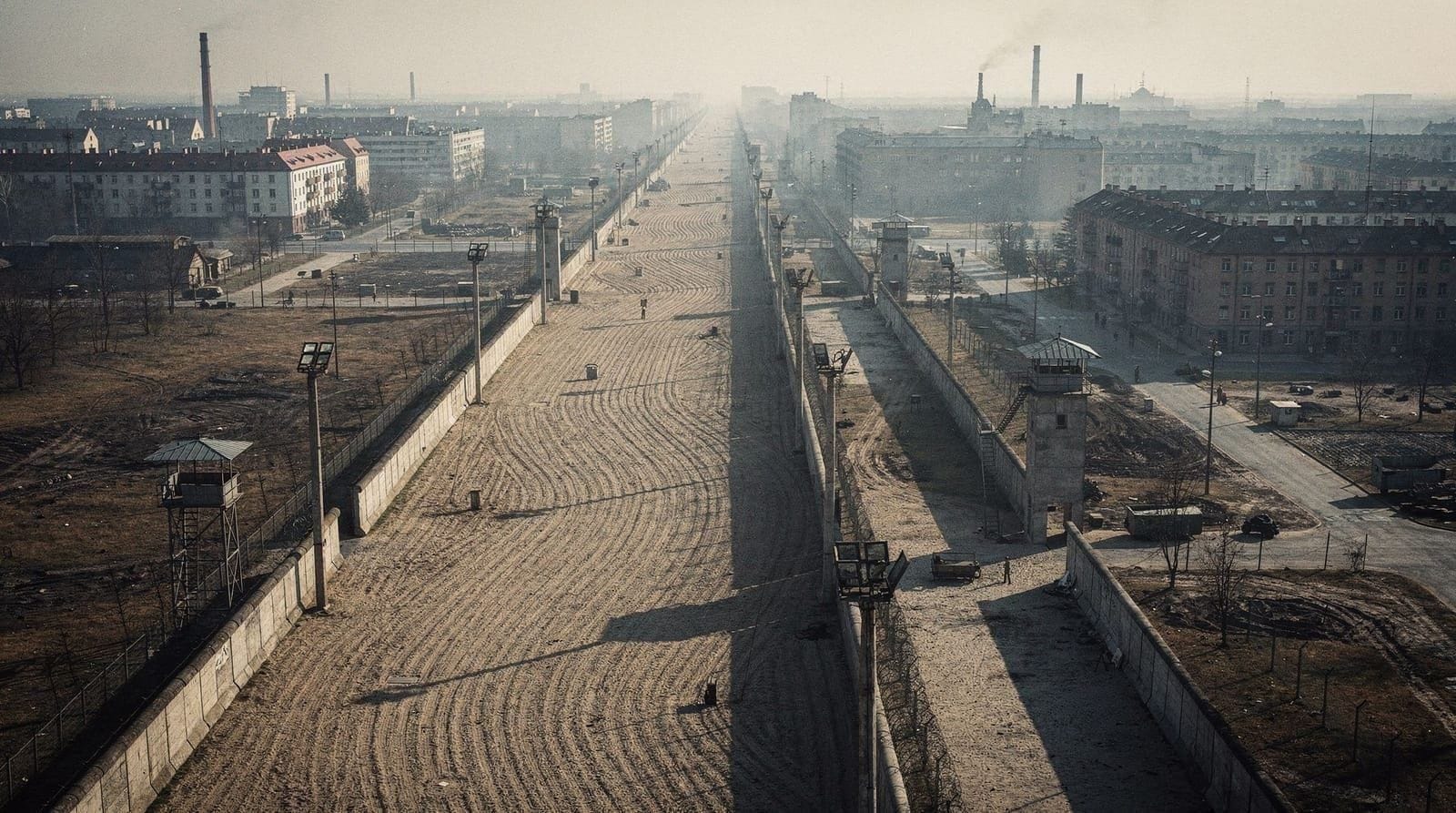
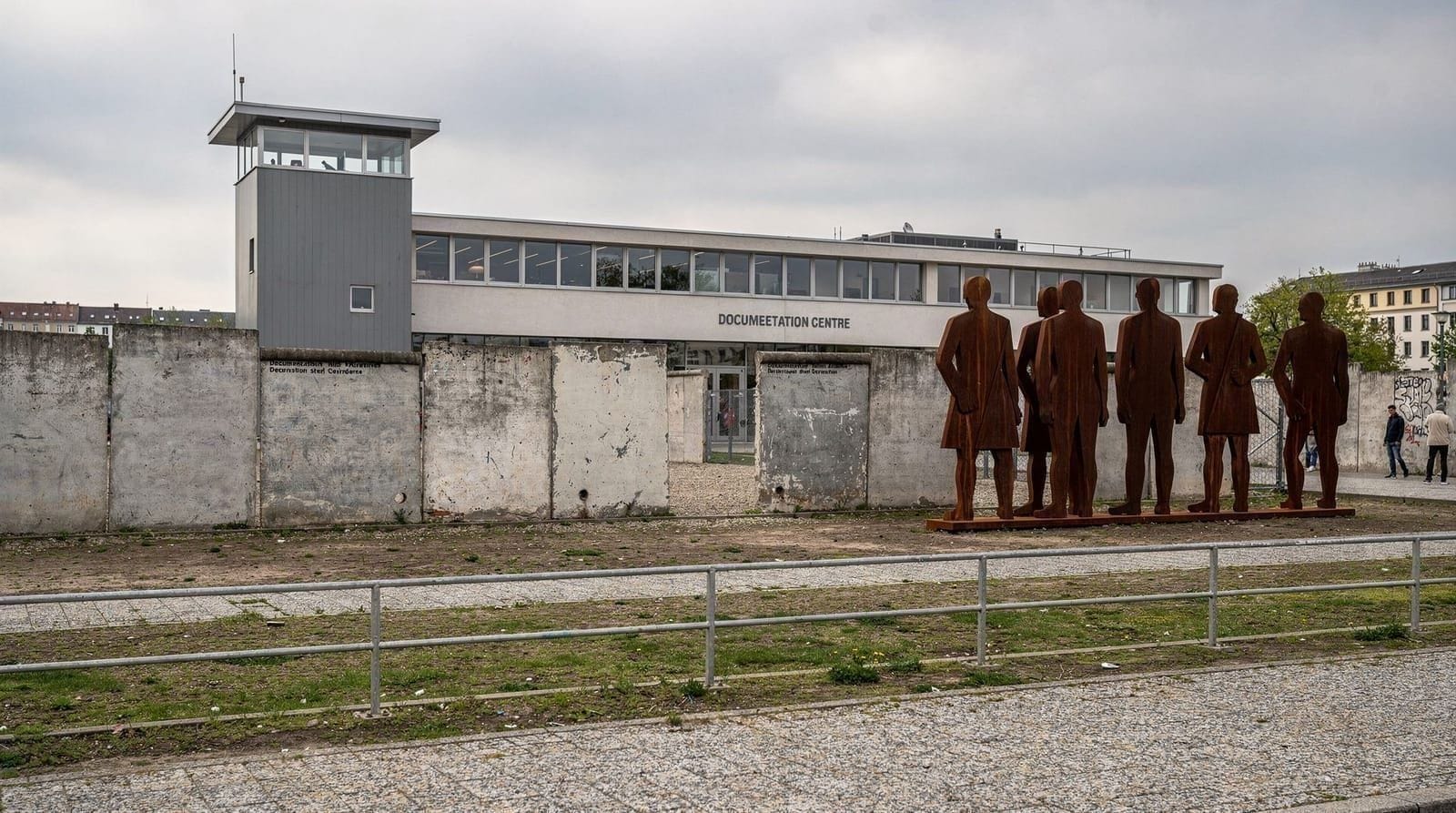
Most of the Berlin Wall was demolished in 1990–1991. Of the 155 km that once enclosed West Berlin, roughly 3 km survives. The East Side Gallery is by far the largest piece — and it is unusual because it was not preserved as a solemn memorial but as an artistic intervention.
In spring 1990, as demolition crews worked through the city, a group of artists negotiated with the East Berlin city authorities to protect this section. Over several months, 118 artists painted 105 murals on the outer wall’s eastern face — the side that had been visible from East Germany. The paintings ranged from solemn political statements to exuberant celebrations of freedom, from abstract colour fields to hyper-realistic portraiture.
The result is neither purely art gallery nor purely historical memorial. It sits between the two, and that ambiguity is part of its interest. Coming to it expecting a clean museum experience will disappoint. Coming expecting street art in a historically charged location is more accurate.
Walking the gallery — what to look for
The gallery runs along Mühlenstrasse from near Ostbahnhof to Warschauer Strasse. From the Ostbahnhof end, you are walking roughly south; from the Warschauer end, north. Either starting point works; the density of famous murals is highest in the middle section, approximately 400–800 metres from Ostbahnhof.
Key murals to find:
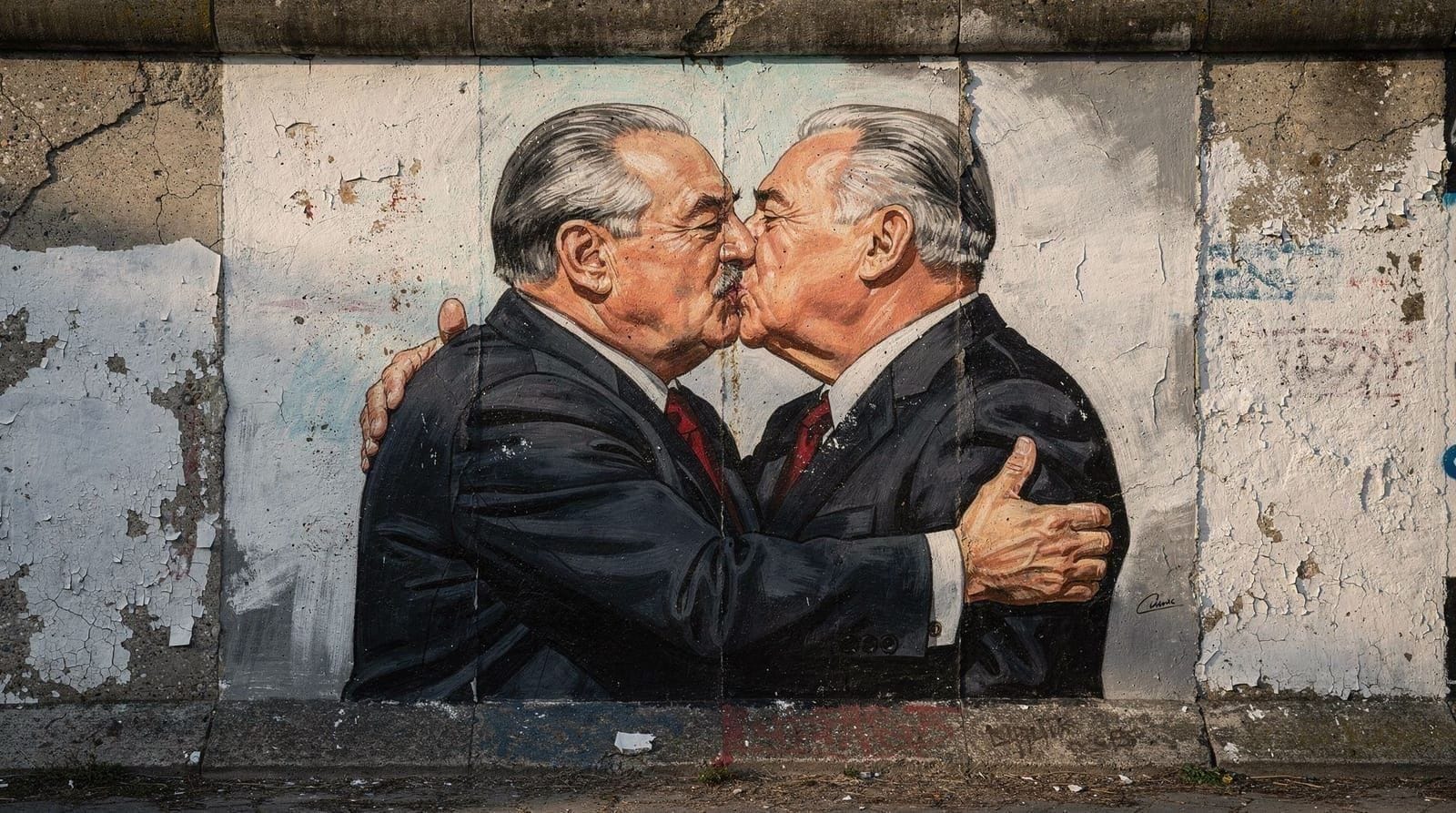
“My God, Help Me to Survive This Deadly Love” (Dmitri Vrubel, Russia): The most reproduced image — Brezhnev and Honecker in a socialist fraternal kiss. The original 1990 version was repainted by Vrubel himself in 2009. Based on a photograph from their 1979 meeting in East Berlin. The image satirises the socialist brotherly embrace while referencing the intimate subordination of East Germany to Soviet power.
“Test the Best” (Birgit Kinder, Germany): A yellow Trabant drives headfirst through the Wall, licence plate “Nov 9-89.” Kinder, a Magdeburg-born artist, painted the original version in 1990 and repainted it in 2009. The Trabant had become the universal symbol of East German ordinariness and now of liberation — 2CV-level engineering, years-long waiting lists, impossible to buy freely.
“The Mortal Kiss” (Thierry Noir, France): One of the earliest street artists to paint the Wall in West Berlin during the 1980s, Noir painted a line of large colourful cartoon heads. His style — thick outlines, flat colour, bulging features — became synonymous with Berlin Wall art from the western side.
“It happened in November” (Kani Alavi, Germany-Iran): A crowd of figures pressing through a gap in the Wall, faces ranging from joy to stunned incomprehension. Often described as the most emotionally direct of the murals.
“Vaterland” (Ignasi Blanch Gisbert, Spain): A halved figure with the two German states as its divided body. One of the more politically explicit works.
The East Side Gallery murals guide covers all 105 works with artist context.
Beyond the handful of famous images, the gallery rewards a slower walk. Many of the less-photographed murals deal directly with the fall of authoritarian regimes worldwide rather than Germany specifically — a reflection of the international group of artists invited to paint in 1990, several of whom brought perspectives from their own countries’ recent transitions away from dictatorship. Reading the small plaques beside each work, which name the artist and country of origin, gives a different sense of the gallery than simply photographing the well-known pieces: it becomes less a monument to one national event and more a statement about 1989-90 as a genuinely international moment.
The 2009 restoration controversy
By the late 2000s the original murals were in poor condition — graffiti tags covered many surfaces, pigment had faded, and some segments had been damaged by construction work for the adjacent O2 World arena (now Mercedes-Benz Arena). The Berlin Senate commissioned a comprehensive restoration in 2009 to mark the 20th anniversary of the Wall’s fall.
Most artists were invited to repaint their own works. Some did so faithfully. Others updated or modified their compositions. Several artists were deceased; their works were restored by conservators with varying accuracy. A handful of artists refused, on grounds that the restored version would not be the original work and should not claim that status.
Art critics and historians remain divided. The East Side Gallery you see today is largely the 2009 restorations, not the 1990 originals. This matters to some visitors more than others. The historical significance of the wall itself remains intact; the artistic authenticity of specific paintings is more contested.
What threatens the East Side Gallery now
The gallery has faced several pressures since its establishment as a listed monument in 1990:
Development pressure: Several gaps were opened in the wall during the 2000s–2010s to allow access to new residential and commercial developments along the Spree. Each opening was contested by preservationists. The most publicised dispute was in 2013, when developer Maik Uwe Hinkel planned a luxury apartment block requiring a Wall segment to be removed. Protests drew thousands of people; the segment was removed anyway.
Structural deterioration: The concrete segments were not designed for 35+ years of outdoor exposure. Several have been replaced with structurally identical new segments (repainted to match).
Graffiti and tags: Despite protective coatings applied after the 2009 restoration, new tags accumulate regularly. Cleaning is ongoing but imperfect. Some areas have been multiply tagged and cleaned, leaving a surface history visible in the paint layers.
The East Side Gallery is a living document of how societies negotiate between preservation and development, and between historical authenticity and accessibility. The tensions are genuinely unresolved.
Berlin’s listed-monument status for the gallery offers some legal protection, but it has not been absolute — the 2013 removals showed that development pressure can still prevail even against organised public protest and formal heritage designation. Visitors walking the gallery today are, in that sense, looking at a site whose boundaries and completeness have shifted repeatedly since 1990 and may continue to do so.
Guided tours of the gallery
Self-guided visits are easy — information boards in German and English are placed throughout, and a map at each entrance identifies the major works. However, a guided tour adds context that is difficult to absorb from boards alone: the political history of which murals were painted first, the artists’ biographical stories, the restoration debates, and the broader Cold War context of the Wall itself.
Guided walking tour of the East Side Gallery — murals, history, and Cold War contextA shorter art-focused tour is worth considering if you are primarily interested in the murals rather than Wall history:
Short guided art tour of the East Side Gallery — murals and artists explainedBerlin: The Wall Museum East Side Gallery Ticket — skip-the-line entry to the museum right at the gallery
Practical information
Address: Mühlenstrasse 3–100, 10243 Berlin
Hours: Open 24 hours, free
Getting there:
- S-Bahn S3/S5/S7/S9 to Ostbahnhof (5-minute walk to north end)
- U1 to Warschauer Strasse (5-minute walk to south end)
- Tram M10 along Karl-Marx-Allee to Warschauer Strasse
Crowd advice: Arrives heavily after 10 am in summer. Sunday afternoons are the worst. Weekday mornings before 9 am are the best. The gallery is pleasant in winter with low visitor numbers.
Best time to visit, by season
| Crowds | Light for photos | Notes | |
|---|---|---|---|
| Spring (Mar-May) | Moderate | Good, soft morning light | Best overall balance |
| Summer (Jun-Aug) | Heavy, especially afternoons | Harsh midday, better early/late | Go before 9am or after 7pm |
| Autumn (Sep-Nov) | Light to moderate | Excellent, golden light | Second-best season |
| Winter (Dec-Feb) | Lightest | Flat but crowd-free | Best for unobstructed photos, cold weather |
Photography: The murals are photogenic but the angle is awkward in afternoon sun. Morning light from the east is better. A long stretch of wall with murals photographed from a distance requires a wide angle; close-up details can be shot with a phone.
Nearby: The Mercedes-Benz Arena is directly adjacent. The Molecule Man sculpture in the Spree is visible from the gallery. Ostbahnhof area has several cafes and the YAAM beach club in summer. The RAW Gelände (former railway repair yard) is a 10-minute walk and contains some of Friedrichshain’s alternative bars and club spaces.
Combining the East Side Gallery with nearby sites
The East Side Gallery works well as part of a longer Friedrichshain day. After the gallery, walk east on Warschauer Strasse into the neighbourhood for lunch (Warschauer Strasse/Boxhagener Platz area has good independent cafes), then visit the Karl-Marx-Allee — the monumental GDR boulevard 10 minutes north — to understand the architectural ambitions of the East German state. The full Friedrichshain neighborhood guide covers the district’s bars, food scene, and RAW Gelände in more depth if you want to extend the day into the evening.
For a complete Cold War Berlin itinerary incorporating the East Side Gallery, Checkpoint Charlie, Bernauer Strasse, and the DDR Museum, see the Cold War Berlin itinerary.
For the Bernauer Strasse memorial, which gives a more sober and complete picture of the Wall’s physical structure, see the Berlin Wall Memorial guide.
For understanding the daily life context of GDR citizens who lived behind this wall, see the DDR life in East Germany guide.
Frequently asked questions about East Side Gallery guide
Is the East Side Gallery free?
Yes, completely free and open 24 hours every day. The gallery runs along Mühlenstrasse in Friedrichshain. No tickets, no booking required. The nearby DDR Museum and Checkpoint Charlie Museum charge entry.What are the most famous murals at the East Side Gallery?
The two most reproduced works are Dmitri Vrubel's 'My God, Help Me to Survive This Deadly Love' — showing Soviet leader Brezhnev and East German leader Honecker kissing — and Birgit Kinder's 'Test the Best,' showing a Trabant breaking through the Wall. Both are on the middle section of the gallery near the Ostbahnhof end.Are the murals original from 1990?
Most have been partially or fully repainted. The original 1990 murals deteriorated rapidly due to weather, graffiti, and vandalism. A major restoration project in 2009 saw many artists repaint their own works. Some pieces were restored by other hands after original artists declined or had died. Art historians debate whether the restored versions retain the same status as the originals.When is the best time to visit the East Side Gallery?
Early morning (before 8 am) on weekdays in spring or autumn. The gallery gets very crowded in summer afternoons, with tour groups and guided bike tours making photography difficult. The light is also better in the morning — the murals face north and east, so morning gives softer illumination than harsh afternoon direct sun.How long does the East Side Gallery take?
A casual walk from end to end takes about 30 minutes. Allowing time to stop, photograph, and read information boards: 1.5–2 hours. The gallery runs 1.3 km; you walk it one direction and return, or walk one way to Warschauer Strasse station.Can I take a bike to the East Side Gallery?
Yes. Cycling along the gallery path is possible and pleasant in the morning when it is quieter. Several Berlin bike tour operators use the gallery as a stop. Bike rental is available at Warschauer Strasse. In busy afternoon periods, cycling through the gallery crowds is difficult and inconsiderate.Is the East Side Gallery the actual Berlin Wall?
It is an original section of the outer wall — the face that East Berliners would have seen. The inner wall, death strip, and border fortifications on the other side were demolished. What survives is the outer concrete boundary wall, 3.6 metres high, painted with murals from 1990. Several individual segments have been replaced due to structural damage.
Top experiences
Bookable activities with verified prices and instant confirmation on GetYourGuide.