German Spy Museum Berlin guide — what to see and whether it is worth it
Berlin: German Spy Museum Flexible Entry Ticket
Is the German Spy Museum in Berlin worth visiting?
The Deutsches Spionagemuseum (German Spy Museum) on Niederkirchnerstrasse is genuinely educational rather than merely entertainment. Its Cold War Berlin sections — covering the CIA tunnel, Stasi methods, and spy tradecraft — are well-researched and illustrated with real artefacts including Enigma machines and Stasi surveillance equipment. Tickets cost around 17 euros; allow 2-3 hours for a thorough visit. Interactive exhibits including a laser maze add engagement without detracting from the historical content.
Is the German Spy Museum in Berlin worth visiting? The Deutsches Spionagemuseum on Niederkirchnerstrasse is genuinely educational rather than merely entertainment. Its Cold War Berlin sections — covering the CIA tunnel, Stasi methods, and spy tradecraft — are well-researched and illustrated with real artefacts including Enigma machines and Stasi surveillance equipment. Tickets cost around 17 euros; allow 2-3 hours for a thorough visit. Interactive exhibits including a laser maze add engagement without detracting from the historical content.
| Where | Niederkirchnerstrasse 18, Mitte, next to Topography of Terror |
| Cost | Around €17 adult; reduced rates for students/seniors |
| Time needed | 90 min focused, 2–3 hrs thorough |
| Getting there | U2/S1/S2/S25 Potsdamer Platz, 5 min walk |
| Best time | Weekday mornings or opening time (10am) on weekends |
Deutsches Spionagemuseum: what kind of museum this is
The German Spy Museum is a privately operated institution that opened in 2015. It is not a state-run memorial or research facility, and understanding that distinction sets appropriate expectations before you arrive. The museum’s founding premise was that espionage history — a topic of genuine historical significance that is also inherently engaging — was underserved by the city’s existing museum landscape. The Stasi Museum in Lichtenberg is a specific memorial institution tied to a single agency in a single country. No Berlin museum had covered the broader story of intelligence tradecraft, Cold War espionage competition, and the role of Berlin as the world’s primary spy capital during the period of division.
The Deutsches Spionagemuseum set out to fill that gap with a mixed approach: genuine historical artefacts alongside interactive elements, broad chronological coverage alongside a specific depth on Cold War Berlin, and an exhibition designed to be accessible to visitors who arrive without specialist knowledge. The result is a museum that works significantly better in its Cold War sections — where Berlin provides rich local specificity — than in its more general historical passages.
Its location is strategically placed for visitors doing a Cold War history circuit. Niederkirchnerstrasse runs directly alongside the Topography of Terror, the free outdoor and indoor exhibition on the Nazi security apparatus that occupies the site of the former SS and Gestapo headquarters. Potsdamer Platz is five minutes’ walk to the north. The Checkpoint Charlie site is ten minutes’ walk north-east. A half-day based on this street can cover the Topography of Terror (free, exterior and interior), the German Spy Museum (paid), and a walk to Checkpoint Charlie with minimal transit.
The comparison with the Stasi Museum in Lichtenberg is worth making explicitly. The Gedenkstätte Normannenstrasse is the actual building where the East German Ministry for State Security was headquartered — you walk through Erich Mielke’s preserved offices, the administrative corridors of the secret police, the actual rooms where surveillance was coordinated. The atmosphere is appropriately heavy. The Deutsches Spionagemuseum, by contrast, is a designed museum experience — thoughtfully curated but not freighted with the weight of the actual location. Both are historically valuable; they are different kinds of experience.
The collections: what you will find inside
The museum is organised across three floors and moves broadly chronologically from ancient and early modern espionage to the Cold War period and then into the contemporary digital surveillance age. The collection density and interpretive quality vary significantly across these sections.
The ancient and early modern sections (covering roughly Sun Tzu through to the First World War) are the thinnest parts of the museum. They establish context and demonstrate that intelligence collection is as old as organised conflict, but they are not the reason to visit. The artefacts in these sections are predominantly reconstructions and illustrative objects rather than original items, and the coverage is necessarily selective. Budget 15 to 20 minutes for this floor if you are covering the full museum.
The WWII intelligence section is stronger. The centrepiece is the Enigma machine collection (discussed in more detail below), and the surrounding material covers signals intelligence, the double-cross system (the British deception operation that turned virtually every German agent in Britain), and the broader intelligence competition of the war years. The display on Operation Mincemeat — the British deception operation in 1943 in which a corpse with false documents was floated off the Spanish coast to mislead German planners about the Allied invasion target — is clearly explained and represents the kind of intelligence history that is genuinely stranger than fiction.
The Cold War Berlin sections are the museum’s strongest material, both in terms of artefact quality and interpretive depth. This is where the museum’s location in Berlin gives it specific authority: Operation Gold (the CIA-MI6 tunnel), the Glienicke Bridge exchanges, the Stasi’s surveillance network, and the broader espionage competition in the divided city are covered with real artefacts, detailed case studies, and the benefit of the documentary record that became available after 1989. Allow at least an hour for this material.
The Stasi surveillance section within the Cold War area is particularly well-executed, with original miniaturised cameras and listening devices from the Stasi’s technical arsenal displayed alongside case studies of individual surveillance operations. The section on Zersetzung — the Stasi’s psychological harassment programme — is effective at explaining how the technique worked: not arrest and imprisonment, but systematic interference with a person’s daily life to the point where they became dysfunctional.
The contemporary surveillance section covering digital intelligence is the shortest and least distinctive of the final sections. The material is accurate but the museum is working in a field where events move faster than exhibition cycles, and some of the digital surveillance content may feel dated within a few years of any given visit.

Enigma machines and cipher history
Among the concrete artefacts in the museum’s collection, the Enigma cipher machines are the most historically significant. The museum holds several examples — the machine exists in multiple variants used by different branches of the German military and intelligence apparatus — and the display explains both how the cipher worked and how it was eventually broken.
For visitors unfamiliar with the Enigma story: the machine was an electro-mechanical cipher device that scrambled text through a series of rotating wheels (rotors), meaning that the output of any given keypress changed depending on the cumulative position of the rotors at that moment. With the rotors set to an astronomically large number of possible starting configurations, the German military considered the cipher effectively unbreakable. It was not. Polish mathematicians had made the first significant break into Enigma before the war; their work was developed dramatically at Bletchley Park in Britain from 1939 onwards, under teams that included the mathematician Alan Turing.
The museum’s display explains this history accessibly, with a working replica of the decryption process alongside the original machines. The importance of the Enigma break is difficult to overstate: reading German military communications gave the Allies significant operational advantages throughout the war, and the intelligence was used with sufficient care — called ULTRA — to avoid alerting the Germans that their cipher had been compromised.
Also in this section of the museum is material on the Lorenz cipher machine, a higher-security teleprinter encryption device used for communications between Hitler’s headquarters and senior field commanders. The Lorenz cipher was broken by a separate British effort at Bletchley, using the Colossus — one of the earliest programmable electronic computers. This story is somewhat less well-known than the Enigma narrative, and the museum’s treatment of it is useful.
The Cold War Berlin section in detail
This is the part of the museum that rewards the most time, and the part where the Deutsches Spionagemuseum most clearly justifies a visit for anyone with serious interest in Cold War espionage in Berlin.
Operation Gold — the CIA-MI6 tunnel operation in Berlin in 1955-56 — is given substantial coverage. The operation involved boring a tunnel approximately 300 metres long from the American sector in Rudow into the Soviet sector, to physically access the cable conduit carrying Soviet and East German military communications. The tunnel functioned as planned for several months before Soviet forces “discovered” it in April 1956 — an apparent discovery that was in fact staged, because the KGB had known about the tunnel from the beginning. British double agent George Blake had been present at the planning meetings in London and had passed the details to Soviet intelligence before construction even began. The Soviets chose to let the tunnel run for a period rather than expose it immediately, partly to protect Blake’s position within MI6.
The display covers the tunnel’s construction, the scale of the intelligence harvest during its operational period, the eventual Soviet “discovery,” and the way in which the Blake betrayal fundamentally altered Western assessments of the operation’s value. A cross-section model shows the engineering involved. A marker in the Rudow district of Berlin indicates the approximate site of the western tunnel entrance, though the tunnel itself is inaccessible.
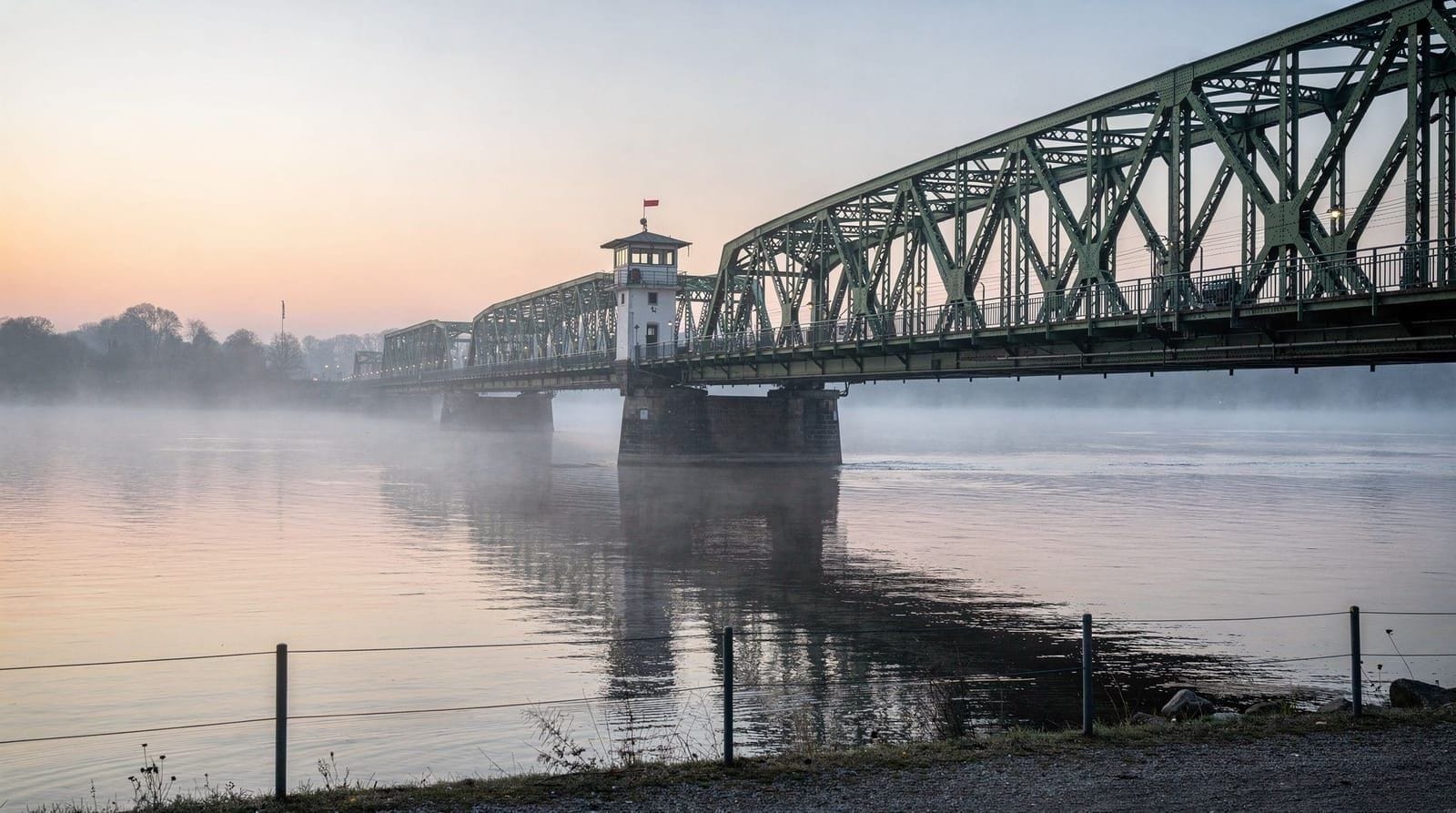
The Glienicke Bridge exchanges are covered with photographs and reconstructed material. The bridge on the south-western edge of Berlin — connecting Wannsee to Potsdam — was used for multiple Cold War spy swaps, the most famous being the 1962 exchange of U-2 pilot Francis Gary Powers for KGB illegal Rudolf Abel. The museum’s material on the exchanges complements what visitors can see at the bridge itself (where interpretation panels are in place).
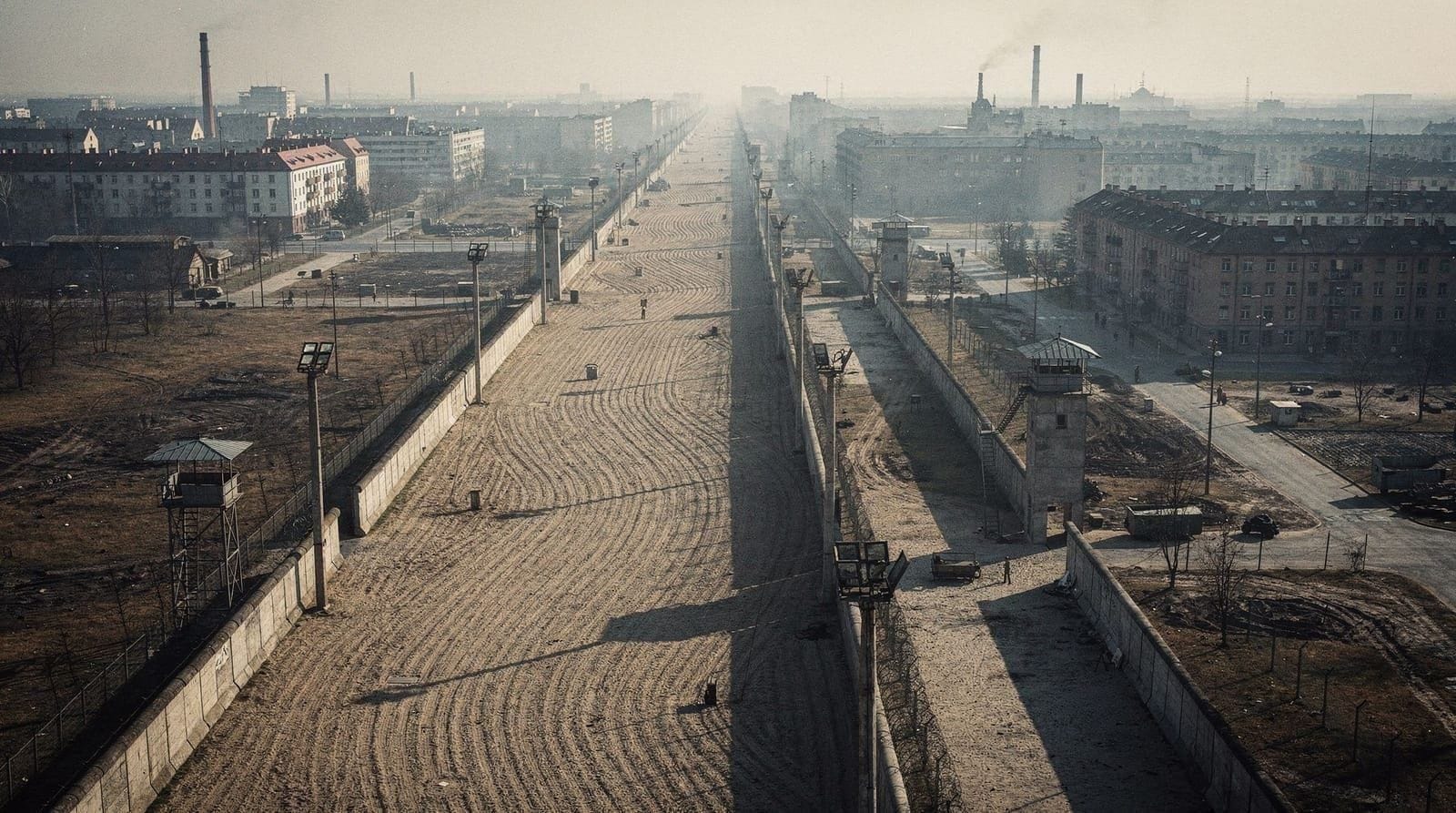
The section on the building of the Berlin Wall in August 1961 includes intelligence aspects that are sometimes overlooked: despite the CIA’s extensive network of agents and resources in Berlin, the Wall’s construction on the night of 12-13 August 1961 came as a complete operational surprise to Western intelligence agencies. The failure — if such a large structural decision could in retrospect have been anticipated — contributed to subsequent reviews of intelligence priorities and methods in the divided city.
The Stasi section
The East German Ministry for State Security — the Stasi — is the subject of a substantial and well-executed section within the Cold War area of the museum. The numbers are worth stating: at its peak, the Stasi employed approximately 85,000 full-time officers in a country with a population of 16 million. Its network of unofficial informants (Inoffizielle Mitarbeiter, or IMs) numbered approximately 174,000 individuals who provided information on their neighbours, colleagues, and family members. The ratio of surveillance apparatus to population was without parallel in any state in history.
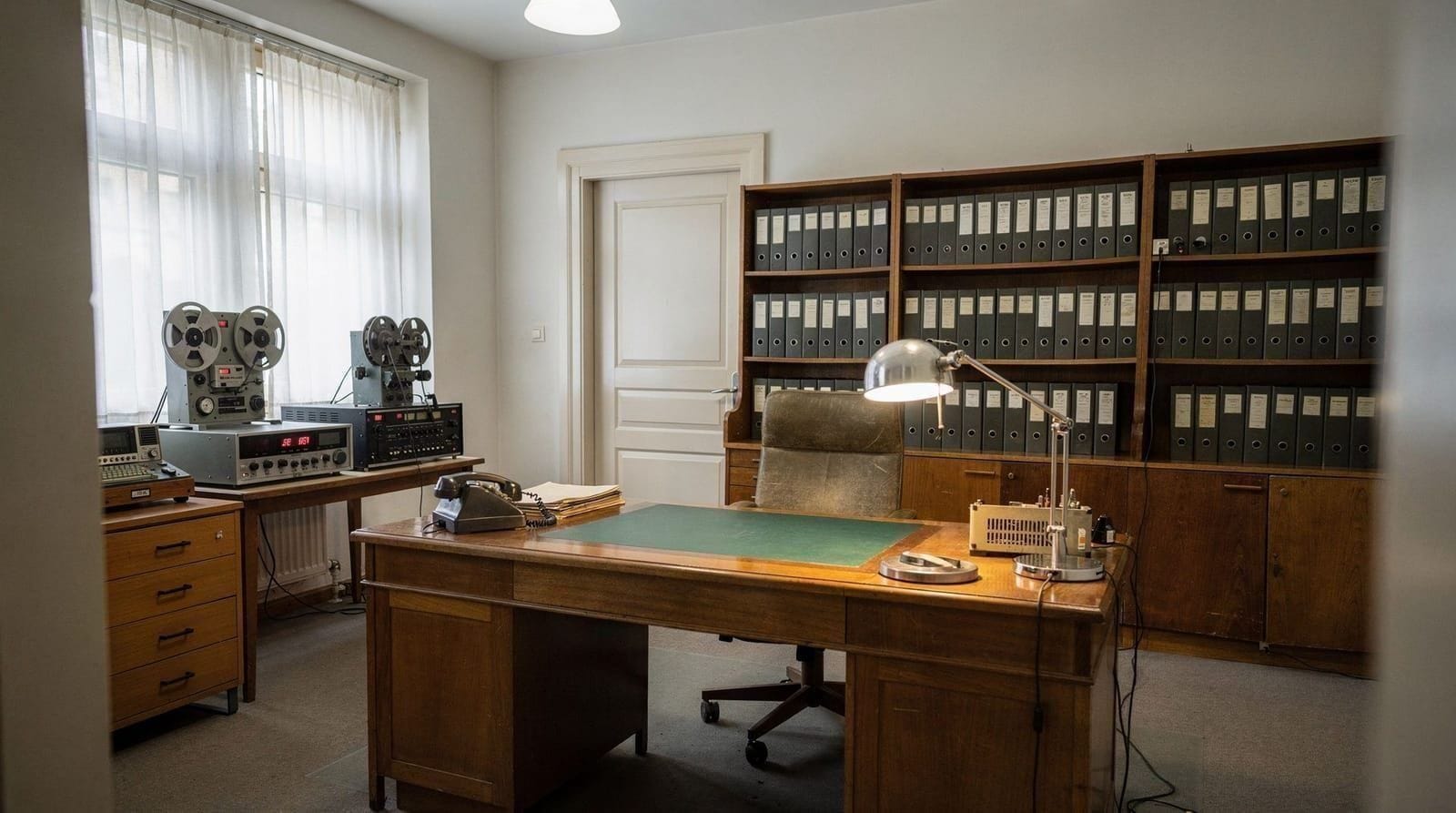
The physical Stasi surveillance technology on display is genuinely arresting. Miniaturised cameras concealed in ties, briefcases, and jacket buttons are displayed alongside the photographs they produced. Wire-tapping equipment from successive decades of refinement shows the increasing technical sophistication of audio surveillance. The display of a complete Stasi surveillance file — the documentation assembled on a single private citizen over a period of years — communicates the scope and granularity of the information gathered better than any general description can.
The Zersetzung tactics are covered in a dedicated section. Zersetzung (literally “decomposition” or “corrosion”) was the Stasi’s preferred method for dealing with citizens who had come to official attention but whom the state did not wish to arrest and charge openly. The technique involved systematic interference with the target’s daily life: moving objects in their apartment, spreading false rumours among their colleagues, making anonymous telephone calls, engineering small professional setbacks. The goal was psychological destabilisation — making the target unreliable, paranoid, or discredited without any formal accusation that could be contested. The section includes documented case studies of individuals subjected to these methods.
The final phase covered in this section is the attempted destruction of the Stasi’s file system in late 1989 and early 1990. As the GDR began to collapse following the opening of the Wall in November 1989, Stasi units at local and district offices began destroying files — shredding, burning, and manually tearing documents to prevent their capture and use as evidence. The destruction was partial and inconsistent: citizens occupied some Stasi buildings before all files had been destroyed, and the Bundesbeauftragter für die Stasi-Unterlagen (the agency responsible for the files, now integrated into the Bundesarchiv) has spent decades reconstructing thousands of partially destroyed documents.
For a visit to the actual Stasi building and Erich Mielke’s preserved offices, see our Stasi Museum guide. The Lichtenberg site and the Deutsches Spionagemuseum complement each other: the former for specific, sober immersion in the physical reality of the Stasi operation; the latter for broader context on the Cold War intelligence landscape within which the Stasi functioned.

The laser maze: what it is and who it is for
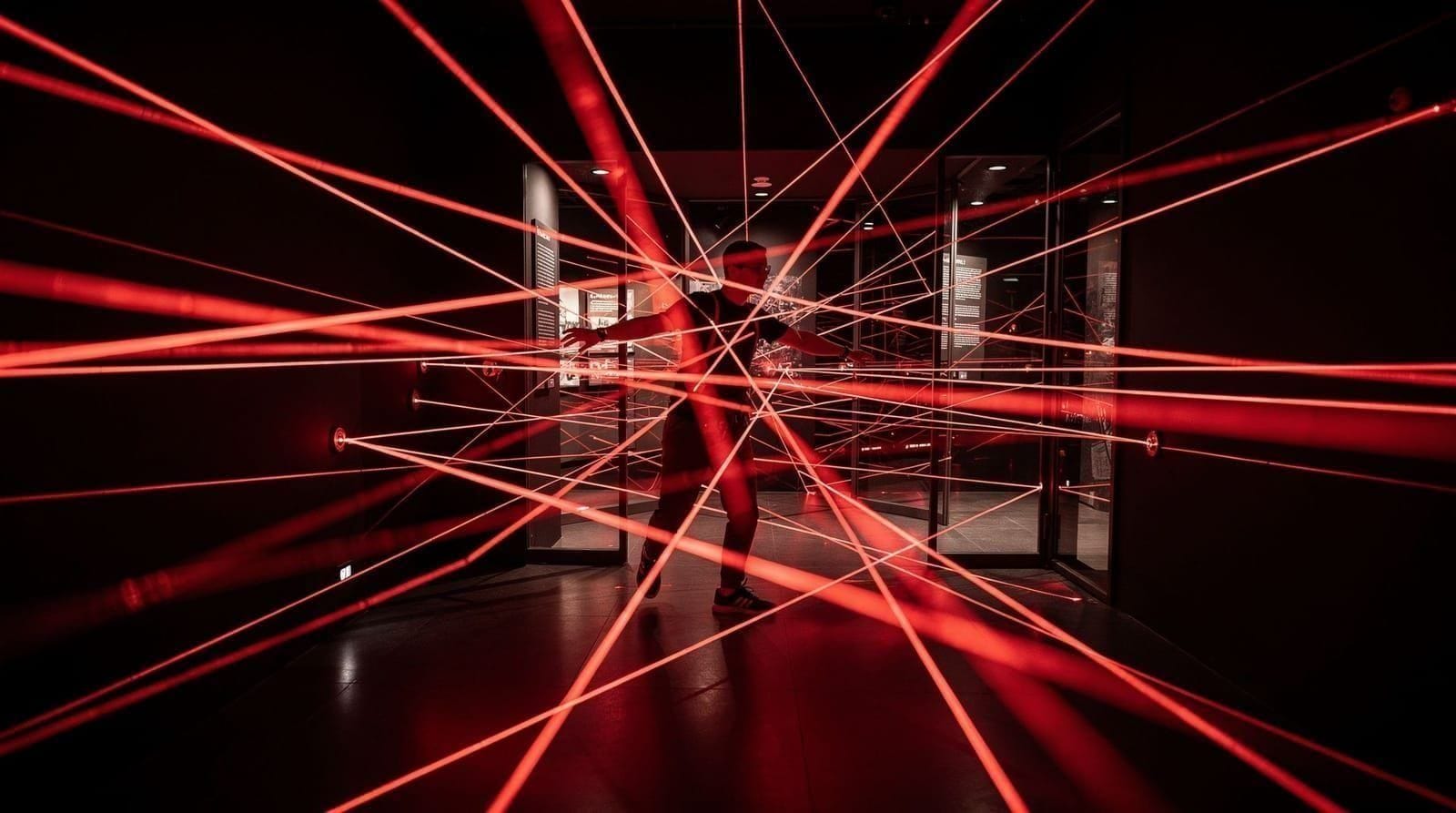
The laser maze occupies a dedicated room within the museum and is included in the standard ticket price without supplementary charge. The concept is straightforward: a grid of laser beams at varying heights — ankle, knee, chest, head — crosses the room, and visitors navigate from one end to the other without breaking a beam. Breaking a beam triggers an alarm. The framing within the museum’s narrative is that of a tradecraft training scenario: an operative must move through a secured facility without activating any sensor.
The physical demands are genuine. Bending under low beams, stepping over floor-level lasers, and moving through sequences of beams at multiple heights involves crawling, stretching, and manoeuvring in ways that require a degree of mobility. The maze is not suitable for visitors with limited mobility, and some older adults will find it physically taxing. For children of approximately 10 and above, and for physically active adult groups, it is typically a highlight of the visit.
Reservations for maze slots are made at the entrance desk when you arrive. On busy weekends, the available slots can fill within the first hours of the day. If the maze is something you specifically want to do, ask about slot availability when you enter and reserve immediately. Weekday visits generally have more flexibility.
Photography in the laser maze is not permitted during active use — partly for the obvious reasons of distraction, and partly because the laser grid is only visible under specific lighting conditions that the room is calibrated to maintain. The maze operates in low light.
How it compares to Berlin’s other surveillance and history museums
Berlin has several museums covering overlapping ground — Nazi-era security, Cold War espionage, and the divided city — and first-time visitors often aren’t sure which ones justify their time and money. Here’s how the main options stack up:
| Museum | Focus | Cost | Time | Best for |
|---|---|---|---|---|
| German Spy Museum | Global espionage history, Cold War Berlin, tradecraft | ~€17 | 2–3 hrs | Enigma, laser maze, families |
| Stasi Museum | East German secret police, actual HQ building | Free–€10 | 1–1.5 hrs | Sobering, site-specific depth |
| Topography of Terror | Nazi security apparatus, SS/Gestapo HQ site | Free | 1.5–2 hrs | Serious WWII history, no charge |
| Checkpoint Charlie area | Cold War border crossing, outdoor boards | Free (boards) | 30–45 min | Quick, iconic photo stop |
If your time is limited to one, choose based on what you value most: the Spy Museum for breadth and interactivity, the Stasi Museum for authenticity and gravity, or the Topography of Terror if budget is the deciding factor. Many visitors combine two of the four in a single afternoon, since all sit within a 20-minute walk of each other in central Mitte.
Booking online versus buying at the door
Online booking through the museum’s own site or through a bundled ticket is worth doing for two reasons beyond the modest price saving: it locks in a specific entry slot during peak season, and it lets you walk past the ticket-office queue directly to the entrance turnstile. On a busy Saturday afternoon in summer, that queue can run 20–30 minutes; during quieter weekday mornings it is rarely more than a couple of minutes. If you’re combining the museum with a tight schedule elsewhere — say, an afternoon at the Topography of Terror followed by an evening at Checkpoint Charlie — a pre-booked slot removes the one part of the day you can’t fully control.
Skip-the-line German Spy Museum ticketGroup and family tickets are available at the door and are not always cheaper to pre-book online, so if you’re travelling with more than four people it’s worth checking both routes before deciding. Reduced tickets for students and seniors require ID at entry regardless of how the ticket was purchased.
Visiting with teenagers and school groups
The museum sits in an unusual sweet spot for teenagers: serious enough to feel like real history rather than a theme park, but interactive enough — the laser maze especially — that it holds attention in a way a text-heavy museum sometimes doesn’t. Teachers and parents planning a visit around the Cold War curriculum (the division of Germany, the Wall, the Stasi) will find the museum’s Cold War Berlin section maps closely onto standard syllabus material, and the audio guide’s additional detail gives older students enough to write about afterwards. Group bookings for school parties are handled separately from individual tickets — contact the museum directly for rates and available slots, since these can be limited during term-time weekday mornings when school visits cluster.
For families with younger children (under 8), the laser maze and the hands-on cipher displays tend to hold attention better than the wall-text-heavy ancient espionage section, so it’s reasonable to skip straight to the interactive floors and circle back only if time allows.
Guided or self-guided?
Most visitors do the museum self-guided using the included wall text and the paid audio guide, and for a solo visitor or couple that’s the right call — the exhibition is well laid out and doesn’t require a human guide to follow. Where a guide adds real value is in tying the museum together with the outdoor Cold War sites nearby: a private walking tour covering the Wall, Checkpoint Charlie, and the espionage landscape around Potsdamer Platz gives context that the museum alone can’t, since it can physically stand you at the locations the exhibits describe.
Berlin Cold War 2-hour walking tourIf you’re short on time and have to choose one format, the museum works well as a self-guided visit; a guided walk works better as a separate half-day covering the outdoor sites (the Wall remnants, Checkpoint Charlie, Bernauer Strasse) that the museum’s indoor exhibits reference but don’t physically include.
Where to eat nearby
Potsdamer Platz itself has chain cafés and a food court in the Arkaden shopping centre, convenient but unremarkable. For something better, walk 10 minutes into the Tiergarten side of Mitte or toward Gendarmenmarkt for a wider choice of restaurants and cafés — see the Berlin breakfast and brunch guide if you’re visiting in the morning, or the Berlin food tour guide for a broader sense of where locals actually eat rather than the tourist-facing options directly around the museum. A packed lunch or a quick bakery stop before entering is also reasonable, since the museum itself has no full café, only vending machines and a small snack counter near the entrance.
Visitor experience — what works and what to skip
The museum’s strengths are concentrated in the Cold War Berlin and Stasi sections, in the Enigma and WWII cipher material, and in the overall quality of the English translations and explanations throughout (the museum is evidently aware that a substantial portion of its visitors are English-speaking). The interactive elements — the laser maze, various hands-on cipher and communications displays — are well-integrated rather than feeling like theme-park additions tacked onto a history exhibit.
The audio guide, available in multiple languages, adds significant context to sections where the wall text alone does not fully convey the complexity of the historical material. For the Cold War Berlin section particularly, the audio guide’s additional commentary on specific operations and individuals makes the material considerably richer. It is worth hiring if you have the time to use it properly.
If you are working with limited time — say, 90 minutes rather than the full 2-3 hours — concentrate on the Cold War Berlin sections (Operation Gold, the Glienicke exchanges, the Wall construction section), the Stasi displays, and the Enigma material. The ancient espionage and contemporary digital sections can be skimmed or skipped without losing the core of what the museum offers.
Crowding is variable. Weekend afternoons in peak tourist season are the busiest periods; arriving at opening time (10 am) on a Saturday or Sunday significantly improves the experience. Weekday mornings are consistently quieter. Booking online in advance not only saves slightly on the ticket price but means you can walk past any queue at the entrance.

Combining the museum with nearby sites
The Deutsches Spionagemuseum’s location on Niederkirchnerstrasse makes it one of the easier museums in Berlin to combine with adjacent sites of historical interest.
The Topography of Terror occupies the site immediately adjacent — a 5-minute walk connects the two. The Topography covers the Nazi security apparatus from 1933 through 1945: the SS, the Gestapo, the security services, and the apparatus of terror they operated across occupied Europe. The exhibition is free, impressively well-documented, and divided between a large indoor hall and an extensive outdoor exhibition running along the surviving section of the Berlin Wall that borders the site. The combination of the Topography of Terror (Nazi security state) and the Deutsches Spionagemuseum (Cold War espionage) covers the two most significant surveillance and intelligence periods in Berlin’s 20th-century history in a single half-day. Our Topography of Terror guide has the practical details.
The Martin-Gropius-Bau is approximately two minutes’ walk from the museum — a magnificent 19th-century exhibition building that hosts rotating temporary exhibitions of high quality. Check what is showing during your visit; it frequently offers something worth 30 to 60 minutes of additional time.
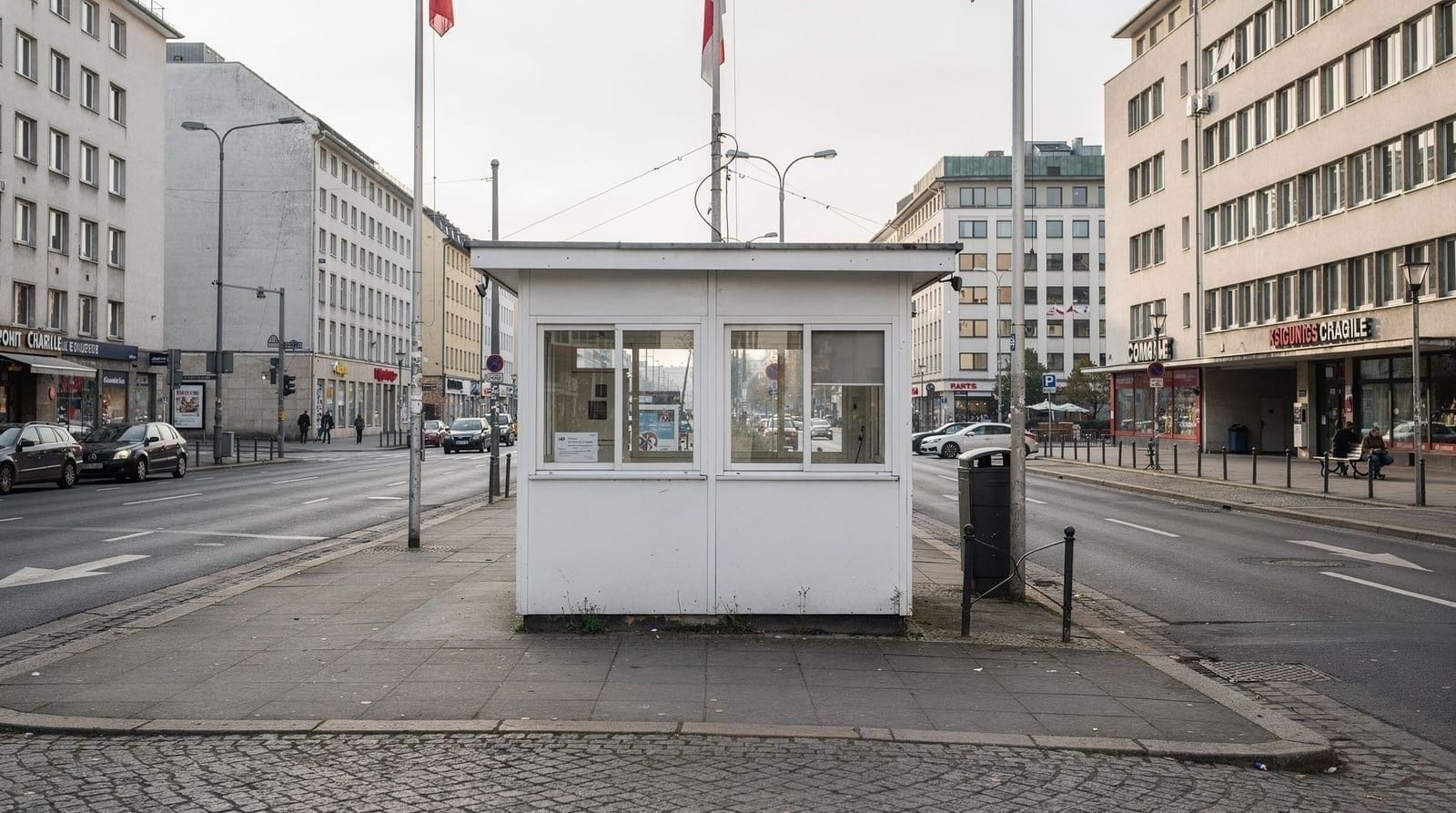
Checkpoint Charlie is a 10-minute walk to the north-east, along Friedrichstrasse. The crossing point itself is now heavily commercialised — costumed “guards” and souvenir stands surround the replica checkpoint booth. The outdoor information boards that line the nearby street, however, contain genuinely useful historical material about the crossing’s history, the escape attempts, and the 1961 tank standoff. The indoor Checkpoint Charlie museum (a separate paid institution at the same location) is of mixed quality; most informed visitors prioritise the free outdoor boards and the nearby East Side Gallery for their Wall history.
The Memorial to the Murdered Jews of Europe is approximately 15 minutes’ walk north from the museum — the grey stelae field visible from the Potsdamer Platz area. Including this in an afternoon circuit adds an hour.
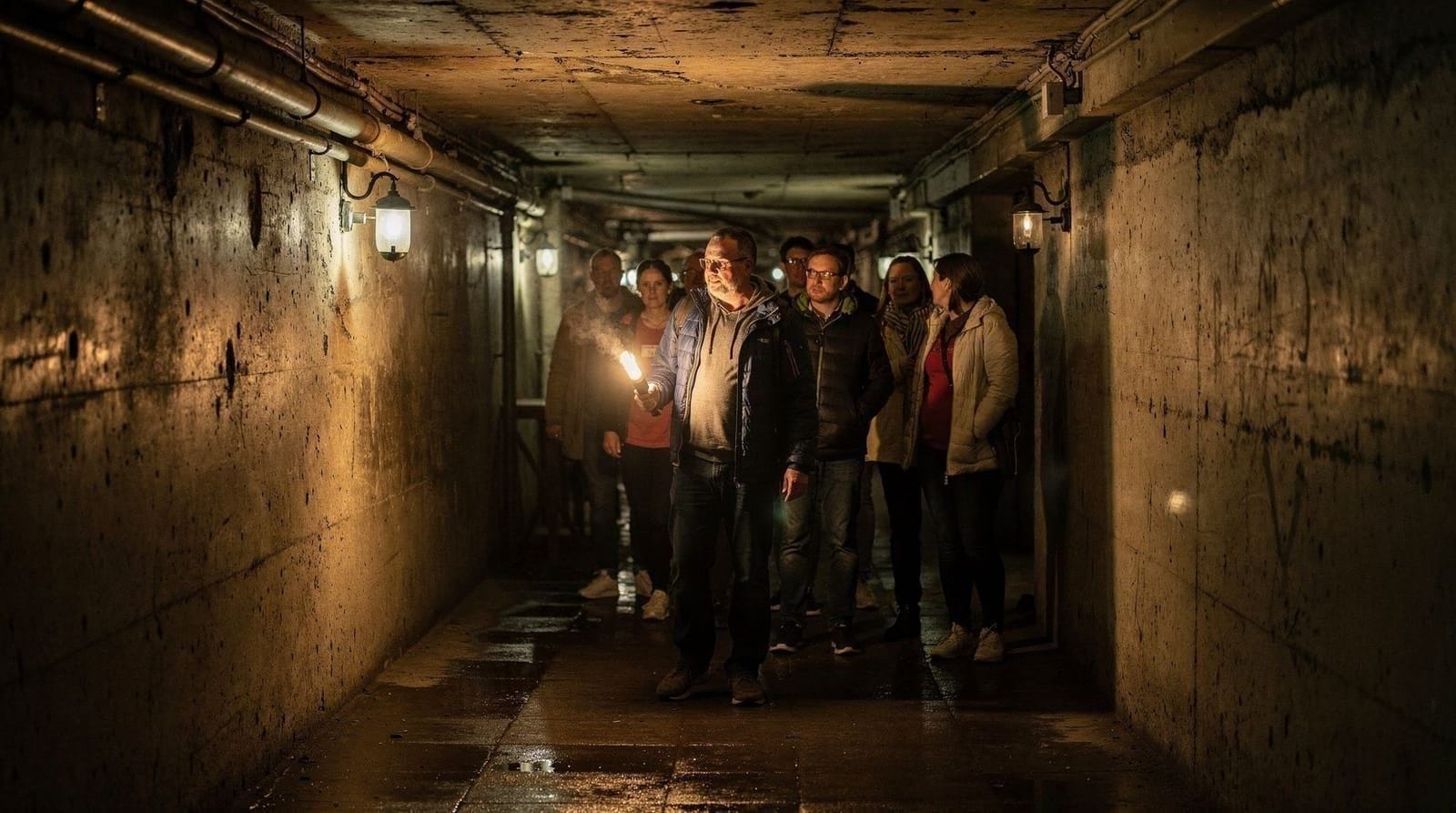
For underground Berlin, the Berliner Unterwelten tours at Gesundbrunnen are reachable from Potsdamer Platz in approximately 25 minutes by U-Bahn (U2 northbound to change, then U8 or S-Bahn). It is a feasible afternoon addition if you have started the day early and have the energy for a 90-minute underground tour. The Cold War bunkers guide covers the booking and logistics.
The Cold War Berlin itinerary integrates the museum into a multi-day sequence with the other major sites of the period.
Practical information
Address: Niederkirchnerstrasse 18, 10963 Berlin
Opening hours: Daily 10 am to 8 pm, last entry 7 pm. Verify current hours at deutsches-spionagemuseum.de before visiting, as seasonal variations may apply.
Tickets: Approximately 17 euros for adults (2026). Reduced rates for students, seniors, and children. Children under 6 free. Family tickets available. Online booking avoids queues and may offer a marginal discount. No free entry days.
Getting there: U2, S1, S2, or S25 to Potsdamer Platz, then a 5-minute walk south-east along Niederkirchnerstrasse. Alternatively, U6 to Kochstrasse (8-minute walk west) or U2 to Stadtmitte (10-minute walk south). The museum is clearly visible from the Topography of Terror outdoor exhibition.
Photography: Permitted throughout the permanent collection except in the laser maze. No flash restrictions are posted but discretion is sensible near display cases with sensitive materials.
Accessibility: Lifts serve all floors of the museum; the permanent exhibition is fully accessible to wheelchair users with the exception of the laser maze, which requires a degree of mobility that makes it impractical for most wheelchair users. Accessible toilets are on the ground floor.
Time needed: 2-3 hours for a thorough visit; 90 minutes for a focused visit concentrated on the Cold War Berlin and Stasi sections.
Language: English translations are provided throughout the exhibition and are generally of high quality. Audio guides available in multiple languages at additional cost; recommended for the Cold War sections specifically.
For further reading on the espionage history covered in the museum’s strongest sections, our guide to Cold War espionage in Berlin provides the outdoor and outdoor-accessible complement to the museum visit. The Berlin divided city history guide situates the espionage story within the broader political and social context of the division years. The Berlin spy museum guide covers related material from a different angle. For visitors who want to extend their Cold War circuit, the East Side Gallery guide covers the surviving Wall section in Friedrichshain — a different facet of the same divided-city story. All these sites are within the Berlin public transport network and straightforward to combine across a two or three-day visit.
Frequently asked questions about German Spy Museum Berlin guide
Where is the German Spy Museum in Berlin?
The Deutsches Spionagemuseum is at Niederkirchnerstrasse 18, near Potsdamer Platz. The nearest U-Bahn is Potsdamer Platz (U2/S1/S2/S25) or Stadtmitte (U2/U6). The museum is about a 5-minute walk from Potsdamer Platz station. It is also adjacent to the Topography of Terror (free), which many visitors combine in the same half-day.How much does the German Spy Museum cost?
Adult tickets cost approximately 17 euros (2026 prices; verify at deutsches-spionagemuseum.de before visiting). Reduced tickets are available for students, seniors, and groups. Children under 6 enter free. A combined ticket with online booking may be slightly cheaper. No free entry days are offered; the museum operates on a paid-entry model.How long does the German Spy Museum take?
A thorough visit takes 2-3 hours. The museum covers multiple themed sections across three floors — from ancient espionage to Cold War Berlin to contemporary digital surveillance. If you focus on the Cold War and Berlin-specific sections (which are the most historically detailed), you can complete a focused visit in 90 minutes. The laser maze (an interactive tradecraft simulator) adds 15-20 minutes if you choose to do it.What real artefacts does the German Spy Museum have?
The museum holds several genuine artefacts, including Enigma cipher machines used by the German military in WWII, Stasi surveillance devices (miniature cameras, wire-tapping equipment), Cold War communication equipment, and documents from various intelligence agencies. Some exhibits are reconstructions or interactive replicas, and the museum is transparent about distinguishing original items from reproductions.Does the German Spy Museum cover the Stasi?
Yes. The Stasi section is one of the strongest parts of the museum, covering the East German Ministry for State Security's surveillance methods, informant network (174,000 unofficial collaborators for a population of 16 million), psychological harassment tactics (Zersetzung), and file destruction attempts in 1989. Physical Stasi surveillance equipment is displayed. For a more immersive Stasi experience, the Stasi Museum in Lichtenberg (free entry to the building, Erich Mielke's preserved office) provides the actual site.What is the laser maze at the German Spy Museum?
The laser maze is an interactive room where visitors navigate a grid of laser beams without triggering sensors — a recreation of a tradecraft training scenario. It is a popular element with children and groups. It costs no extra fee beyond the museum ticket. Reservations for the maze are made at the entrance; slots fill up on busy days. The maze is physically demanding enough that it is not suitable for all visitors.How does the German Spy Museum compare to the Stasi Museum?
The Deutsches Spionagemuseum covers international espionage broadly with a focus on entertainment and interactivity alongside substance. The Stasi Museum (Gedenkstätte Normannenstrasse in Lichtenberg) is a sober memorial and research site focused specifically on the East German secret police, in the actual building where the Stasi operated. Both are worth visiting; the Spy Museum is broader and more interactive, the Stasi Museum is more specific and more sobering. They complement each other.Is the German Spy Museum family-friendly?
Largely yes. The laser maze is popular with children; the interactive exhibits are accessible to older children and teenagers. Some sections covering Cold War tension and surveillance may require parental guidance for younger children. The museum avoids graphic content. Children under 6 enter free; family tickets are available. The museum recommends age 8 and above for the full experience.
Top experiences
Bookable activities with verified prices and instant confirmation on GetYourGuide.