Berlin Spy Museum guide — Cold War espionage, gadgets, and interactive exhibits
Berlin: German Spy Museum Flexible Entry Ticket
Is the Berlin Spy Museum worth visiting?
Yes, for most audiences. The Deutsches Spionagemuseum is a well-designed private museum with authentic Cold War artefacts, an Enigma machine, a functioning laser obstacle course, and a dedicated section on Berlin as the world capital of espionage. Tickets are €14 adult. Allow 2–2.5 hours.
Quick answer: Tickets are €14 adult. The laser maze, Enigma machine, and Cold War Berlin tunnel history section are the highlights. Good for ages 8 and up. Allow 2–2.5 hours. Located at Potsdamer Platz, easily combined with the Memorial to the Murdered Jews of Europe.
| Where | Leipziger Platz 9, Mitte — at Potsdamer Platz |
| Cost | around €14 adult, €9 child, €38 family |
| Time needed | 2-2.5 hours |
| Ages | best for 8+ |
| Getting there | U2 or S1/S2/S25 Potsdamer Platz, 3-min walk |
| Booking | recommended ahead for weekends and summer |
What makes the Berlin Spy Museum different
Spy museums exist in several cities, and many are unconvincing assemblies of replica gadgets and generic Cold War photographs. The Deutsches Spionagemuseum (German Spy Museum) in Berlin is a different proposition — partly because Berlin is the actual ground zero for Cold War intelligence operations, and partly because the museum’s collection of authentic artefacts is substantially better than comparable institutions.
Berlin’s unique position as the world’s most intensively spied-upon city for 40 years gives the museum an authenticity that Vienna or Zurich spy museums lack. The CIA and MI6 built an actual tunnel under East Berlin’s Treptow district (Operation Gold, 1954–1956) to tap Soviet military telephone cables. The KGB ran more agents in West Berlin than anywhere else in Western Europe. The Stasi monitored approximately one in sixty East German residents through its network of unofficial informants. These are not theatrical claims — they are documented historical facts, and the museum treats them as such.
The museum covers espionage from ancient history through the modern era, but approximately 60% of the content focuses on the Cold War period and specifically on Berlin. This makes it far more specific and coherent than the title “3,000 years of espionage” might suggest.
The collection: what you actually see
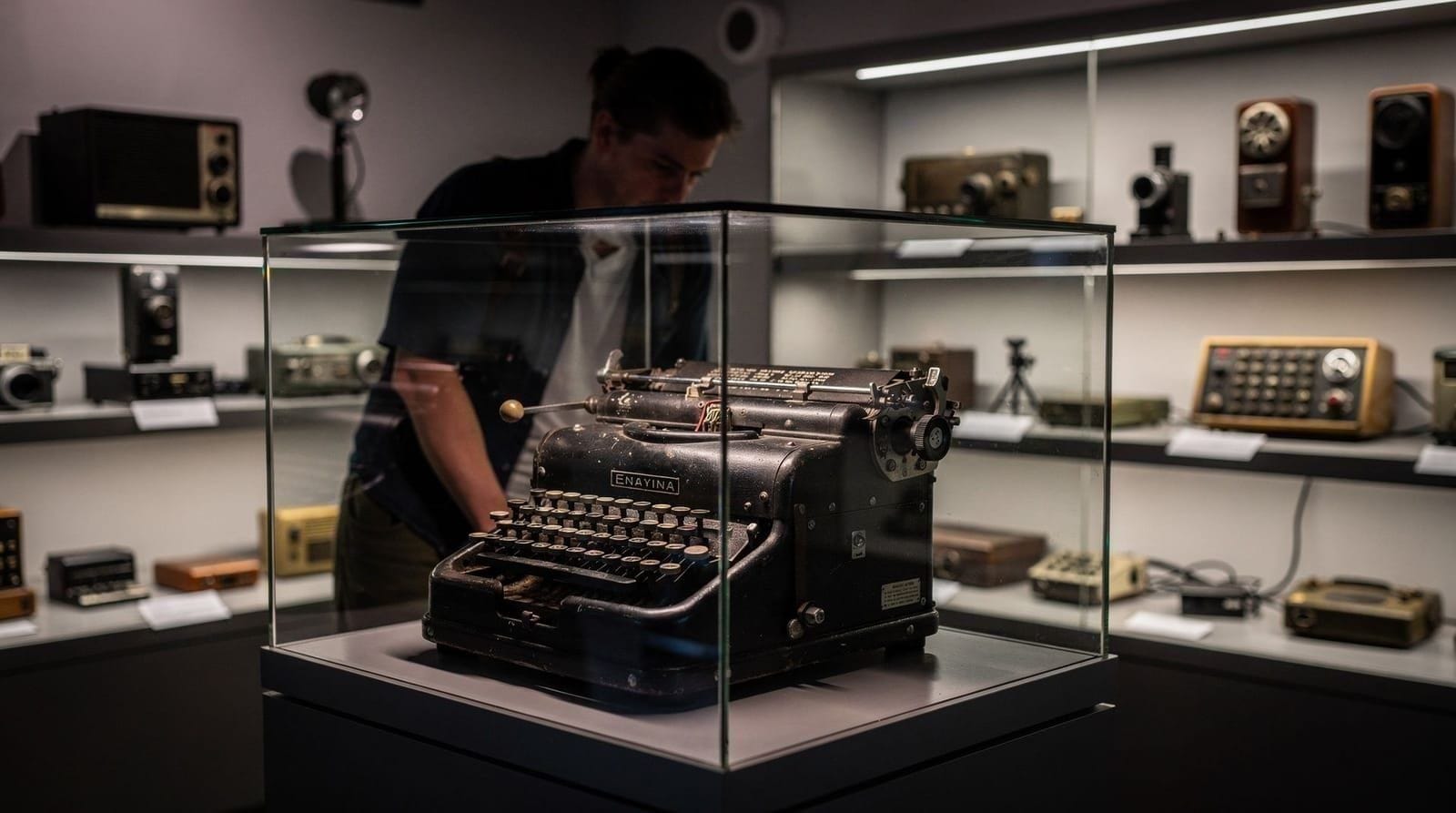
The Enigma machine: The centrepiece of the WWII section is an authentic German Enigma cipher machine, the electromechanical device used to encrypt Wehrmacht communications. The Berlin museum’s example is in working condition and can be demonstrated by staff. Visitors can operate the keyboard and observe the rotor mechanism. Alan Turing’s role in breaking Enigma is covered in the adjacent panels.
Cold War spy gadgets: The Cold War section holds authentic KGB and CIA operational equipment — minox cameras (thumb-sized film cameras used for document photography), concealed recording devices embedded in mundane objects (shoes, books, cigarette lighters), dead drop containers retrieved from actual Berlin sites, and a range of disguise materials. The provenance of each item is documented; these are not replicas.
Operation Gold (the Berlin Tunnel): A full section covers the CIA/MI6 tunnel dug from the American sector in Rudow under the Soviet sector to tap the Red Army telephone exchange at Schönefelder Chaussee. The tunnel was 450 metres long, took 11 months to build, and operated for 11 months before being discovered. The discovery was later shown to have been staged — the Soviets had a source (George Blake, an MI6 officer) who had revealed the tunnel plan before the first brick was laid, but they waited 11 months to expose it to avoid compromising their source. The full story is covered with annotated maps and original documents.
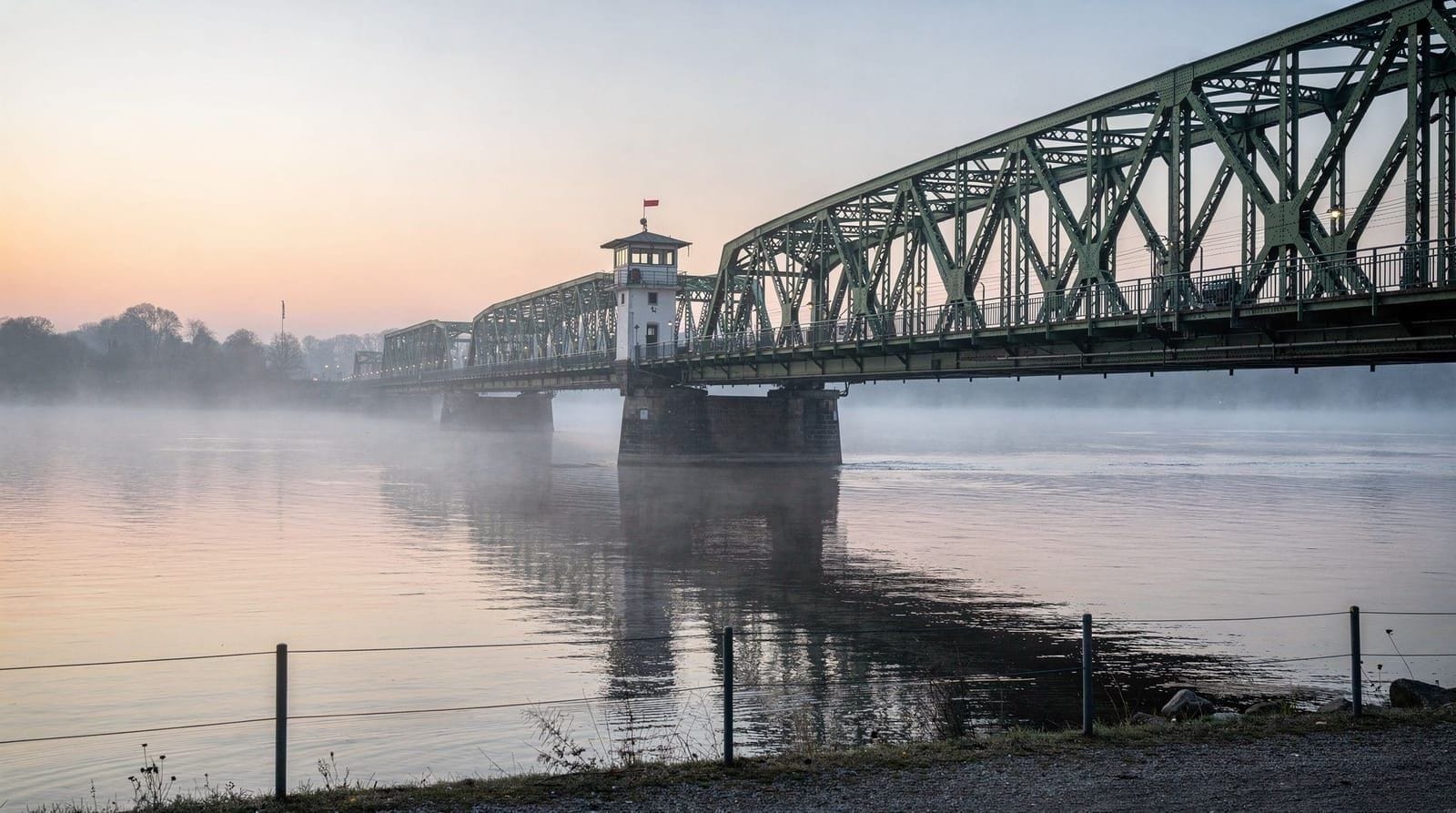
Berlin as spy capital: A dedicated room covers the geography of Cold War Berlin intelligence — the Glienicke Bridge (Spy Bridge) where agent exchanges took place, the dead drop sites across both sectors, the locations of CIA and KGB stations, and profiles of notable double agents including Kim Philby, George Blake, and John Vassall.
The laser labyrinth: Separate from the historical exhibits, the laser maze is a timed infiltration course — a square room with laser grids at varying heights and angles that visitors must navigate without triggering sensors. It runs in 3-minute timed sessions and records results on a leaderboard. Popular and genuinely challenging for adults; not simply a children’s attraction.
The interactive sections
The museum has invested significantly in interactive content beyond the laser maze:
Decoding stations: Working cipher machines (modern reproductions) allow visitors to encrypt and decrypt messages using methods from the Caesar cipher through to Cold War era systems. Well-explained for non-specialists.
Surveillance simulation: A section where you take the role of a case officer directing surveillance of a target through video feeds and decide when and how to intervene. More sophisticated than typical museum interactives.
Disguise station: A photo opportunity element where visitors can try period-appropriate disguise elements (wigs, spectacles, facial hair) and compare before/after. Lighter in tone but consistently popular.
Voice print analysis: A demonstration of how voice identification works and how Cold War operatives attempted to mask or replicate voices.
The interactive elements are better integrated here than in most comparable museums — they feel like extensions of the content rather than afterthoughts.
Book Berlin Spy Museum entry including access to the laser labyrinth and all interactive exhibitsHistorical context: Berlin as espionage capital
Berlin’s centrality to Cold War intelligence is not metaphorical. From the city’s division in 1945 to German reunification in 1990, Berlin was simultaneously the most surveilled and the most penetrated city in the world:
Western intelligence in East Berlin: The CIA station in West Berlin ran dozens of agents in the East German government, military, and the SED (Socialist Unity Party). Berlin’s particular geography — a Western city surrounded by East Germany — made it a transit point for agents moving between sectors.
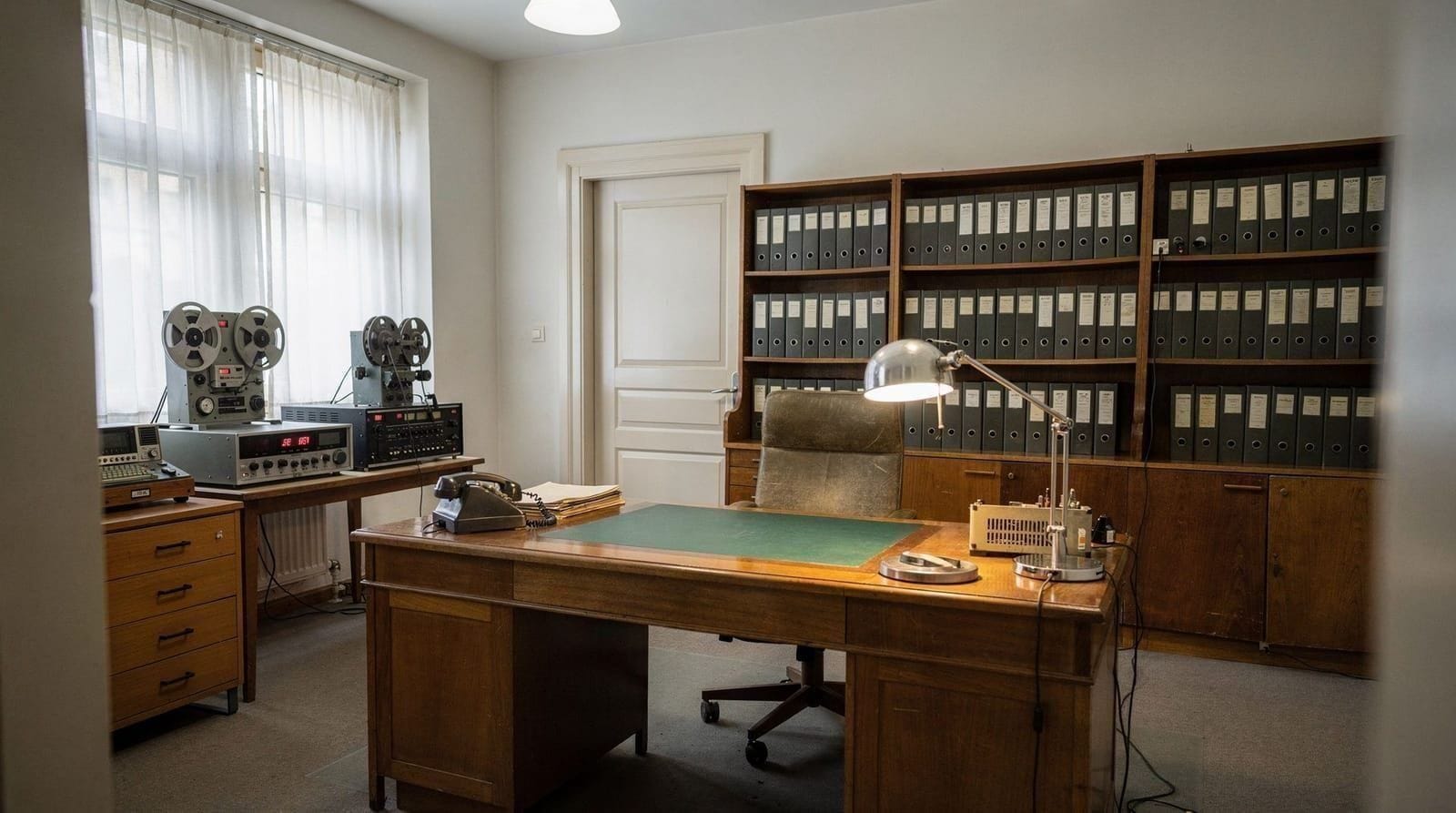
The Stasi network: The MfS (Ministerium für Staatssicherheit) under Erich Mielke employed approximately 91,000 full-time officers and an estimated 300,000 unofficial informants at its peak. The Stasi generated 111 kilometres of paper files — a density of surveillance unprecedented in history. The Stasi Museum in Lichtenberg covers this in more forensic detail.
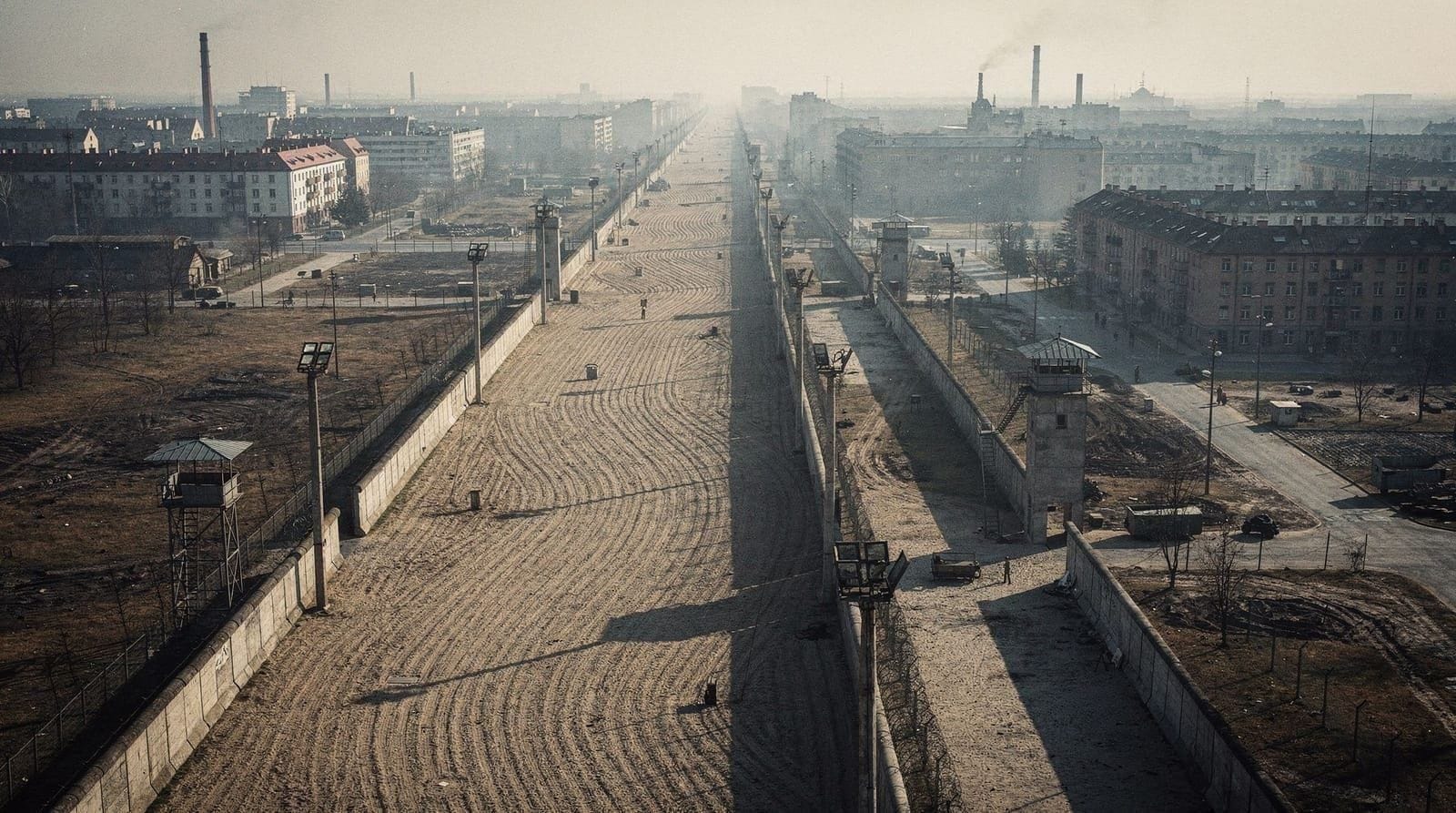
The Wall as intelligence infrastructure: The Berlin Wall, built in August 1961, changed the intelligence calculus. Before 1961, approximately 3.5 million East Germans had emigrated through Berlin. The Wall stopped the exit route but also made East Berlin more opaque to Western intelligence. The escalation of covert operations in the 1960s was a direct consequence.
Glienicke Bridge: The Glienicke Bridge connecting West Berlin to Potsdam was used for three documented Cold War spy exchanges — Rudolf Abel/Gary Powers in 1962, Anatoli Sharansky in 1986, and a multi-party exchange in 1986. The museum covers all three with documentary material. The Berlin to Potsdam day trip guide notes the bridge’s location for visitors interested in seeing it.
Combining the Spy Museum with nearby sites
The Spy Museum’s Potsdamer Platz location is one of the most historically dense areas of Berlin:
Memorial to the Murdered Jews of Europe: 15-minute walk north along Ebertstrasse. The Holocaust Memorial guide covers the underground documentation centre. Free entry.
Topography of Terror: 10-minute walk southeast, on the site of the former Gestapo and SS headquarters. Free entry, one of Berlin’s most important historical sites. Covered in the Topography of Terror guide.
Potsdamer Platz itself: The plaza sits exactly on the former border between East and West Berlin. Interpretation boards on the plaza mark the former Wall line and the death strip, with historical photographs. The transition from the death strip to today’s commercial development is jarring and worth understanding.
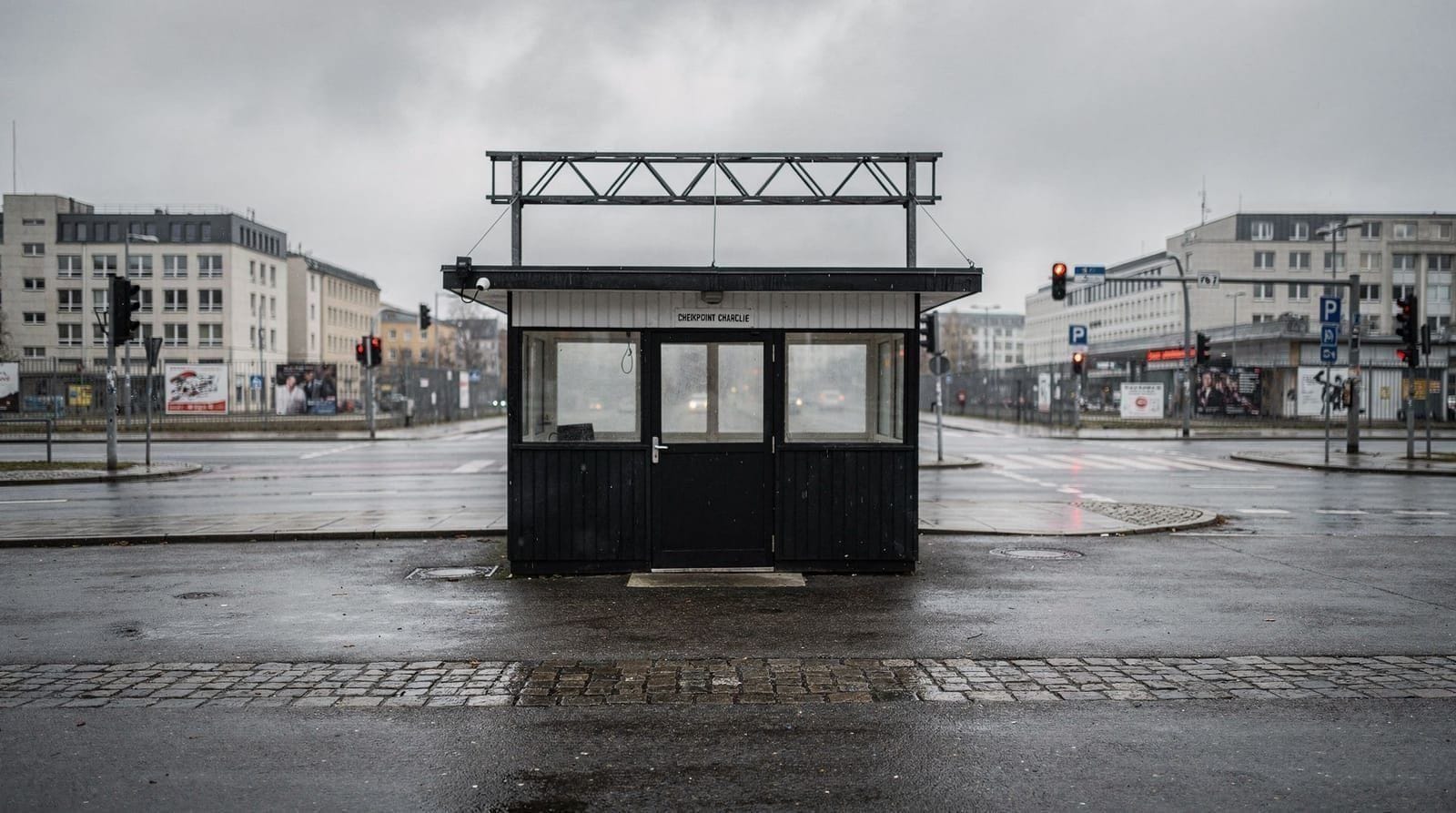
Checkpoint Charlie: 20-minute walk east along Zimmerstrasse. The Checkpoint Charlie guide covers the authentic history versus the current tourist experience.
The Cold War Berlin itinerary sequences these sites across three days for visitors who want a systematic approach to the city’s divided history.
Book a walking tour covering Cold War espionage sites — tunnels, dead drops, and the Spy BridgePractical notes
Address: Leipziger Platz 9, 10117 Berlin
Opening hours: Daily 10 am–8 pm (last entry 7 pm). Open 365 days a year.
Getting there: U2 or S1/S2/S25 to Potsdamer Platz — 3-minute walk. The entrance is on Leipziger Platz, the square immediately east of Potsdamer Platz.
Photography: Permitted throughout (no flash restrictions noted).
Accessibility: The museum is on multiple floors with lift access. The laser maze requires physical movement and may not be suitable for visitors with limited mobility; the rest of the museum is fully accessible.
Language: Exhibit text is in German and English throughout. Audio guides available in German and English at additional cost (approximately €3).
Café and shop: A cafe is on site. The museum shop sells espionage-themed books, replica gadgets, and Enigma cipher device reproductions in various sizes. The books selection is particularly good.
Spy Museum vs the Stasi Museum — which one first?
Visitors with limited time often ask which of Berlin’s two espionage-themed museums to prioritise. They are genuinely different experiences: the Deutsches Spionagemuseum is interactive, polished, and international in scope, while the Stasi Museum is the actual former MfS headquarters in Lichtenberg — more austere, more historically rigorous, and specific to East German surveillance rather than global espionage. If you only have time for one, the Spy Museum works better for families and for a broad, entertaining introduction; the Stasi Museum works better if you want the unfiltered original documents and building. With a full day available, doing both — Spy Museum in the morning near Potsdamer Platz, Stasi Museum in the afternoon via U-Bahn to Lichtenberg — gives a genuinely complementary picture, and both slot naturally into the Cold War Berlin itinerary.
Planning a full day around Cold War Berlin
If espionage history is a genuine focus of your trip rather than a single stop, the Spy Museum works best as the opening act of a full Cold War day centred on Potsdamer Platz. A realistic sequence: Spy Museum in the morning (2-2.5 hours), lunch in the immediate area, then the Topography of Terror in the early afternoon (allow 1.5-2 hours for the outdoor and indoor exhibition), finishing at Checkpoint Charlie before it gets dark. This keeps travel time to a minimum since all three sites are within a 20-minute walk of each other, and it front-loads the more interactive, family-friendly content before moving into the denser historical material later in the day — a sequencing that tends to work better than the reverse for visitors travelling with children or anyone new to the period. Budget accordingly: entry across the three sites runs around €14-20 total once the free Topography of Terror is factored in, plus lunch, making it one of the more affordable full days of sightseeing available in central Berlin relative to how much history it covers.
Frequently asked questions about Berlin Spy Museum guide
How much do Berlin Spy Museum tickets cost?
Adult tickets are €14. Students and seniors pay €10. Children 6–17 pay €9. Children under 6 are free. A family ticket (2 adults + 2 children) is €38. Tickets are available at the door or via GetYourGuide — advance booking is recommended for weekends and summer afternoons to guarantee entry.What is the laser maze at the Berlin Spy Museum?
The laser labyrinth (Laserlabyrinth) is a timed obstacle course where visitors navigate through a grid of laser beams without triggering sensors — modelled on spy-film vault infiltration scenarios. It is available to all visitors as part of admission. Groups of up to 4 people can enter at once. Times are recorded on a leaderboard. It is popular with both adults and older children (suggested minimum age around 8).Is the Berlin Spy Museum good for children?
The interactive format — laser maze, disguise stations, code-breaking puzzles, and surveillance simulation — makes it one of the more child-friendly museums in Berlin for ages 8 and up. Younger children may find the historical sections less engaging, but the hands-on elements are well-calibrated for a mixed family audience.What Cold War Berlin history does the Spy Museum cover?
A dedicated section covers Berlin's unique role in Cold War espionage — the tunnel dug by the CIA and MI6 beneath East Berlin (Operation Gold), the double agents who worked both sides of the Wall, the Stasi network and its informants, and the network of dead drops and signal sites across divided Berlin. The museum holds authentic artefacts from East and West German intelligence operations.Where is the Berlin Spy Museum?
Leipziger Platz 9, 10117 Berlin — directly adjacent to Potsdamer Platz, a 3-minute walk from the Potsdamer Platz U-Bahn (U2) and S-Bahn (S1, S2, S25) stations. It is a 15-minute walk from the Holocaust Memorial and Brandenburg Gate.How long does the Berlin Spy Museum take to visit?
Most visitors spend 2 to 2.5 hours. The museum has three floors of exhibits covering approximately 3,000 years of espionage history, plus interactive stations that add time. If you engage with all the interactive elements including the laser maze and the decoding stations, allow the full 2.5 hours.Is the Berlin Spy Museum the same as the Stasi Museum?
No. The Spy Museum (Deutsches Spionagemuseum) is a private museum in Mitte covering international espionage broadly, with a Cold War Berlin section. The Stasi Museum (Forschungs- und Gedenkstaette Normannenstrasse) is the actual former headquarters of the East German Ministry for State Security in Lichtenberg. Both are worth visiting if espionage history is your primary interest; the Stasi Museum is more historically rigorous, the Spy Museum more interactive and entertaining.What authentic historical items does the Spy Museum hold?
The collection includes an authentic Enigma cipher machine (the German WWII encryption device), original KGB and CIA surveillance equipment, Stasi minox cameras and concealed recording devices, authentic period disguise kits, and Cold War-era dead drop containers retrieved from Berlin sites. The quality of the authentic artefacts is higher than many similar museums of this type.
Top experiences
Bookable activities with verified prices and instant confirmation on GetYourGuide.