Stasi Museum Berlin guide — Lichtenberg HQ and Hohenschönhausen prison
Berlin: Stasi Museum Private Guided Tour with Entry Ticket
What are the main Stasi sites to visit in Berlin, and are they worth it?
There are two principal Stasi sites. The Stasimuseum in Lichtenberg occupies the actual Stasi headquarters building — the minister's office is preserved as it was in 1989. Entry is free for the permanent exhibition. The Gedenkstätte Hohenschönhausen is the Stasi's main remand prison in Berlin — guided tours only, €8, deeply affecting. Both are essential for understanding the GDR. Plan a full day to combine them; they are 6 km apart by U-Bahn.
The two main Stasi sites: The Stasimuseum in Lichtenberg (actual Stasi headquarters, free entry, Mielke’s preserved office) and the Hohenschönhausen prison memorial (guided tours only, €8, some guides are former prisoners). Both are essential for understanding the GDR surveillance state. Plan a full day; they are 6 km apart. These are serious memorial sites — approach them accordingly.
| Where | Lichtenberg (Stasimuseum) and Hohenschönhausen (prison), NE Berlin |
| Cost | free at Stasimuseum; around EUR 8 at Hohenschönhausen |
| Time needed | around 5-6 hours to combine both with travel |
| Getting there | U5 Magdalenenstrasse; tram M5 to Freienwalder Strasse |
| Best time | book Hohenschönhausen’s English tour ahead |
The Stasi: what it was and why it matters
The Ministerium für Staatssicherheit (Ministry for State Security), universally known as the Stasi, was the East German state security apparatus from 1950 to 1990. It was simultaneously a secret police, an intelligence service, a counterintelligence operation, and a comprehensive domestic surveillance mechanism.
The statistics that most visitors find most striking: at its 1989 peak, the Stasi employed 91,015 full-time officers and maintained 174,000 registered unofficial informants (Inoffizielle Mitarbeiter, or IM) — in a country of 16 million people. Extrapolating broader networks of “contact persons” who provided occasional information, historians estimate that perhaps one in ten adult GDR citizens had some form of connection to the Stasi apparatus. Informants included neighbours, colleagues, friends, and in some cases spouses and children.
The Stasi’s primary domestic function was identifying, monitoring, and suppressing political dissent. Its methods ranged from conventional surveillance and infiltration to a sophisticated psychological campaign of persecution called “Zersetzung” (decomposition or corrosion): systematically undermining a target’s social relationships, professional standing, and mental stability through anonymous harassment, planted evidence, and manufactured conflicts — without the target necessarily knowing they were being targeted.
Understanding the Stasi is understanding the social texture of GDR life: the pervasive self-censorship, the cautiousness about who you trusted, the knowledge that any room might be bugged and any conversation potentially reported. For context on daily GDR life, see DDR life in East Germany, and for the broader political history of the divided city, Cold War Berlin history sets the surrounding timeline.
Stasimuseum — the headquarters in Lichtenberg
What it is
The Stasimuseum occupies House 1 of the former Stasi headquarters complex on Normannenstrasse in the Lichtenberg district. The complex was a city-within-a-city — 53 buildings on 22 hectares, with its own canteen, fitness facilities, and shooting range. House 1 contained the offices of Minister Erich Mielke and the senior leadership.
Citizens discovered the true extent of the complex only after the Wall fell. On January 15, 1990, crowds occupied the Berlin Stasi headquarters, preventing document destruction and initiating the process that would eventually open the files to the public. House 1 was preserved by the occupying citizens and opened as a museum in 1990 — making it one of the earliest post-communist memorial museums in Europe.
What you’ll see
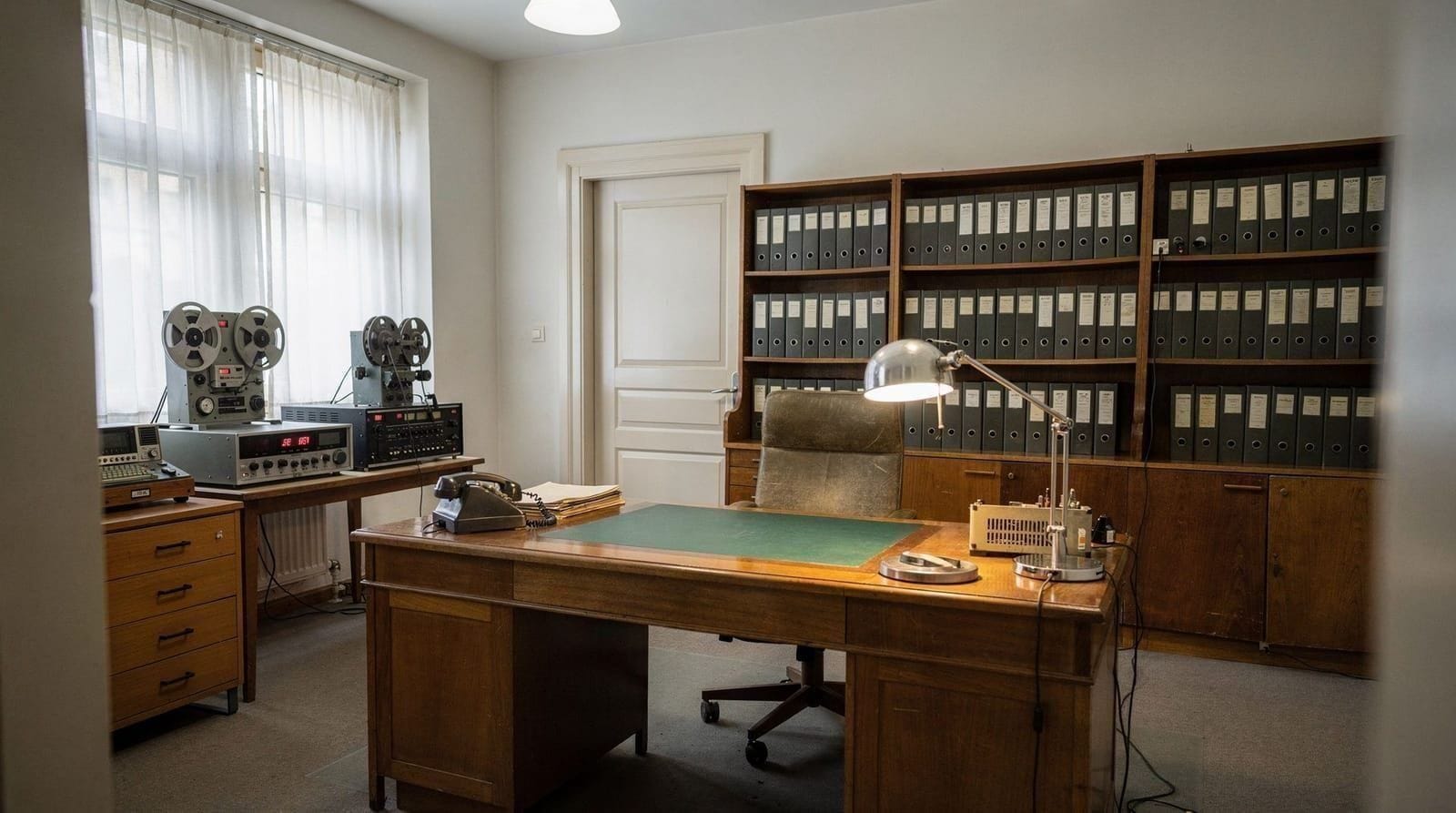
The museum occupies multiple floors of House 1. The most significant element is the preservation of Mielke’s working environment: his office, conference room, antechamber, and private bathroom are presented exactly as they were when he was removed from power in October 1989. The functional modernity of the 1970s furnishings — solid wood, built-in shelving, the minister’s leather chair — is striking precisely because it looks like any senior bureaucratic office rather than a villain’s lair.
The exhibits cover the Stasi’s organisational structure, its surveillance technologies (bugging devices, hidden cameras concealed in watering cans and rocks, postal interception equipment), its informant network, its foreign intelligence operations (the HVA, led by Markus Wolf), and its psychological operations.
The surveillance technology section is particularly illuminating. Devices used for postal surveillance, apartment bugging, and mobile tracking are displayed alongside documentation of their operational use. The Stasi’s capacity for technical ingenuity — in the context of GDR material limitations — is notable.
Practical information
Address: Ruschestrasse 103, House 1, 10365 Berlin (Lichtenberg)
Getting there: U5 to Magdalenenstrasse (10-minute walk), or tram 21 to Frankfurter Allee/Normannenstrasse
Hours: Tuesday–Friday 10 am–6 pm, Saturday–Sunday 11 am–6 pm; closed Mondays
Entry: Free for permanent exhibition. Some special exhibitions: €5
Time needed: 1.5–2 hours
Gedenkstätte Hohenschönhausen — the Stasi prison
What it was
Hohenschönhausen was the Stasi’s main remand prison (Untersuchungshaftanstalt) in Berlin from 1951 to 1989. Before the Stasi took over the site, it served as a Soviet NKVD special camp from 1945 to 1948 — the “U-boot” cells in the basement, without natural light, date from this earlier Soviet period.
During the Stasi era, an estimated 11,000 people passed through the prison. Prisoners were held here during pre-trial investigation — an investigation that could last months or years. Prisoners were not told where they were being held; transport vans had opaque windows, and prisoners were kept disoriented about their location (the area around the prison was removed from GDR maps). Relatives were not informed of detention.
The Stasi’s preferred interrogation method in the later GDR period was psychological rather than physical — isolation, sleep deprivation, deliberate disorientation, systematic undermining of the prisoner’s sense of reality. Physical torture, common in the Stalinist early period, was largely replaced by Zersetzung techniques precisely because psychological manipulation left no physical evidence.
What the guided tour covers
The tour (90 minutes) walks through the prison as it was when it operated. Cell blocks from different periods show the evolution of the prison — from the windowless Soviet-era underground cells to the more modern remand cells of the 1970s–80s (which appear almost functional by comparison until you understand the interrogation procedures). The interrogation rooms are particularly affecting: their mundane, office-like appearance — chairs, a small desk, frosted glass windows — makes concrete what “psychological interrogation” meant in practice.
Many tour guides at Hohenschönhausen are former prisoners who were detained here. Their ability to describe specific cells, specific interrogation techniques, and specific personal experiences gives the tour a quality that no academic documentation can replicate.
One important note: Tours run in German by default; English-language tours are available but have a more limited schedule (check the website for current English tour times). Booking well in advance is essential for English tours, particularly in summer.
Practical information
Address: Genslerstrasse 66, 13055 Berlin
Getting there: Tram M5 from Hackescher Markt to Freienwalder Strasse (30–35 minutes), 5-minute walk; or Bus 256. Not easily accessible by U-Bahn.
Hours: Daily except Monday. Guided tours at various times; English tours typically twice daily.
Entry: €8 adults, €4 reduced. Book online at stiftung-hsh.de
Time needed: 90 minutes (tour length is fixed)
A private guided tour for deeper context
The public tours at Hohenschönhausen are generally excellent, but for visitors who want pre-tour contextualisation or thematic focus, a private guided experience is available:
Private guided tour of Berlin’s Stasi Museum — Lichtenberg headquarters with expert historical contextCombining both sites in one day
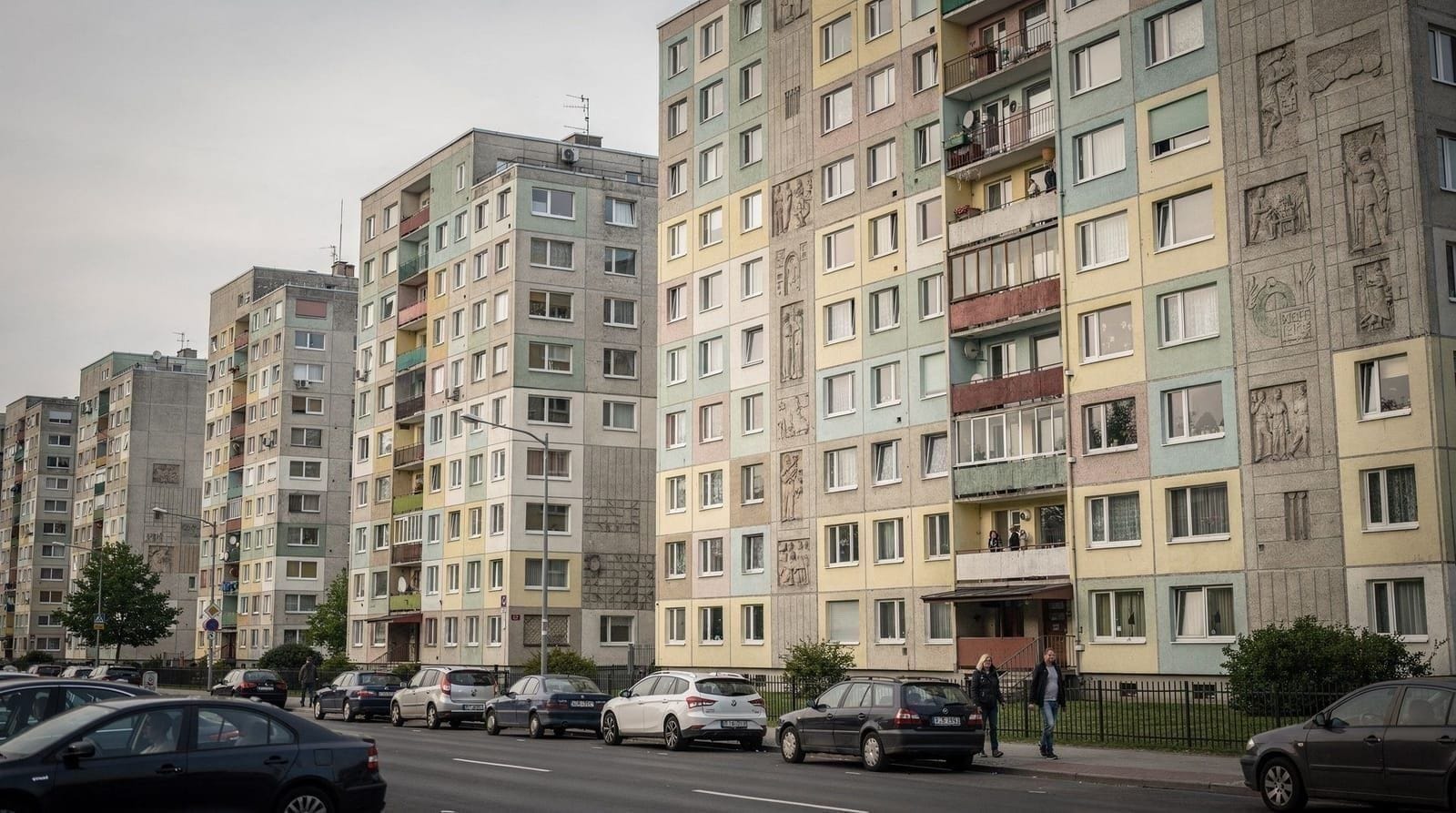
The most logical sequence: morning at Hohenschönhausen (take the 10 am English tour), then by tram back to Frankfurter Allee and U5 to Magdalenenstrasse for the Stasimuseum in the afternoon. Allow time for lunch in the Lichtenberg area between sites. The Marzahn Plattenbau housing estates are visible from the tram — seeing where most GDR citizens actually lived provides context for the institutional power displayed in the Stasi headquarters.
Total travel time between sites: approximately 20 minutes. If tour timing doesn’t allow the morning-first sequence, reversing the order works too — the Stasimuseum’s self-paced format tolerates a later start better than Hohenschönhausen’s fixed tour slots.
For a broader Cold War Berlin itinerary incorporating these sites alongside the East Side Gallery, Bernauer Strasse, and Checkpoint Charlie, see the Cold War Berlin itinerary. The Berlin Wall complete guide covers the physical division of the city that the Stasi apparatus was built to enforce, and Cold War espionage in Berlin widens the picture to the wider intelligence war fought across the divided city.
The Stasi files
The 111 km of paper files preserved by citizens in January 1990 are held by the BStU (Federal Commissioner for Stasi Records), now integrated into the Bundesarchiv. Any person who was a GDR citizen can request to see their own file. Since 1991, approximately 3.4 million file access requests have been processed.
The files contain not only surveillance reports but the “smell jars” (Duftkonservierungen) — the Stasi practice of preserving items of clothing belonging to monitored individuals in sealed jars, for use by tracking dogs. These are displayed at the Stasimuseum.
The decision to open the files (made in December 1991 against international precedent — other Eastern Bloc countries destroyed most of their files) has had profound social consequences. Former informants have been identified among politicians, journalists, athletes, and clergy. The revelations continue — new IM identifications still generate public debate.
For visitors who are themselves former GDR citizens or descendants researching family history, the BStU’s file access process is a separate administrative undertaking from a museum visit and requires its own application well ahead of any trip — it is not something that can be arranged on the day at either site.
The German Spy Museum — a different approach
For those who want a more accessible and less emotionally demanding introduction to Cold War intelligence, the German Spy Museum (Deutsches Spionagemuseum) on Potsdamer Strasse takes a broader approach covering intelligence history from the Cold War era to the present. Entry €13. More entertainment-oriented than scholarly, but well-produced. See German Spy Museum guide.
Cold War espionage and Berlin Wall walking tour — covers Stasi, spying, and divisionEmotional preparation and who these sites suit
Both sites deal directly with state surveillance, imprisonment, and psychological coercion, and neither softens the material for a casual audience. Hohenschönhausen in particular can be a heavy experience — hearing a former prisoner describe their own interrogation in the room where it happened affects most visitors more than they anticipate going in. Morning slots, when energy and attention are freshest, are often better spent here than at the end of a long day of sightseeing.
For families, Hohenschönhausen is generally considered appropriate for teenagers with some historical background rather than younger children — the guided format assumes an adult level of engagement with the material. The Stasimuseum is more self-paced and works for a slightly younger audience willing to read exhibit text carefully.
If you can only choose one site given limited time, Hohenschönhausen delivers the more visceral, personal understanding of what the Stasi actually did to individuals; the Stasimuseum delivers the more comprehensive institutional picture of how the apparatus worked. Doing both, in the sequence suggested above, gives the fullest picture — but either alone is a legitimate and valuable use of half a day.
Frequently asked questions about Stasi Museum Berlin guide
What is the Stasimuseum in Berlin?
The Stasimuseum (officially: Forschungs- und Gedenkstätte Normannenstrasse) occupies House 1 of the former Stasi headquarters complex in Lichtenberg — specifically the building that housed Minister Erich Mielke's office. The museum documents the structure, methods, and scope of the Stasi. Mielke's office and conference rooms are preserved as they were when officers abandoned the building in December 1989. Entry to the permanent exhibition is free.Is the Stasimuseum free?
The permanent exhibition at the Stasimuseum is free. Some special exhibitions may charge a small entry fee. The audio guide is available for hire. Address Ruschestrasse 103, House 1, Lichtenberg. U5 to Magdalenenstrasse.What is the Hohenschönhausen prison memorial?
The Gedenkstätte Berlin-Hohenschönhausen is a former Stasi remand prison in the northeast of Berlin, used from 1951 to 1989. An estimated 11,000 people were imprisoned here during that period. Visits are by guided tour only (available in German and English), last approximately 90 minutes, and cost €8. Many guides are former prisoners who can speak from direct experience. It is one of the most emotionally powerful memorial sites in Berlin.How do I get to the Hohenschönhausen prison memorial?
Address: Genslerstrasse 66, 13055 Berlin. Tram M5 from central Berlin (Hackescher Markt direction: Zingster Strasse) to Freienwalder Strasse stop — 5-minute walk. The site is not easily accessible by U-Bahn. Allow 30–40 minutes travel time from central Berlin. Guided tours run regularly throughout the day; booking in advance is strongly recommended.Can I visit Hohenschönhausen without a guide?
No. The memorial is accessible only as part of a guided tour. This is a considered decision — the tour structure allows former prisoners who serve as guides to control the narrative and pacing of the experience. English-language tours run multiple times daily; check the memorial website for current schedule and book in advance, particularly in summer.What was Erich Mielke's role in the Stasi?
Erich Mielke served as Minister for State Security from 1957 to 1989 — 32 years. He built the Stasi from a relatively conventional secret police operation into the most comprehensive surveillance apparatus in history. At its peak under his leadership, one in every 63 East German adults was a registered informant. Mielke was arrested in 1989 and eventually convicted in 1993 — not for Stasi crimes, but for the murder of two police officers in 1931. He died in 2000, aged 92.How long does the Stasi Museum take to visit?
Allow 2 hours for the Stasimuseum if you read exhibits carefully. Allow 90 minutes for the Hohenschönhausen guided tour (non-negotiable — that's the tour length). To combine both in one day with travel time, allow 5–6 hours total. Starting at Hohenschönhausen in the morning (when tour slots are available) and then taking the U5 to Lichtenberg for the Stasimuseum in the afternoon is the most logical sequence.
Top experiences
Bookable activities with verified prices and instant confirmation on GetYourGuide.