Berlin breakfast and brunch guide — Frühstück culture, best spots, and what it actually costs
Berlin: Guided Street Food Tour with Tastings
Where is the best brunch in Berlin?
Berlin's brunch scene is strongest in Prenzlauer Berg (Kollwitzplatz area), Kreuzberg (around Görlitzer Park and Graefekiez), and Schöneberg (Winterfeldtplatz). Budget €10–18 per person for a full sit-down brunch. The city's "Frühstück" (breakfast) culture involves long, unhurried morning meals — arriving before 10:00 on weekends avoids waits of 30–60 minutes at popular spots.
Where is the best brunch in Berlin? The city’s strongest brunch neighbourhoods are Prenzlauer Berg, Kreuzberg, and Schöneberg. Budget €14–22 per person for a full sit-down meal with coffee. Arrive early on weekends to avoid waiting — the Frühstück ritual here is taken seriously, and Berliners will occupy a café table for two hours minimum.
| Where | Prenzlauer Berg, Kreuzberg, Schöneberg, Friedrichshain |
| Cost | around €14–22/person sit-down, from €5 bakery-style |
| Time needed | 1.5–2.5 hours for a proper weekend brunch |
| Getting there | U-Bahn to the relevant Kiez (Senefelderplatz, Kottbusser Tor, Nollendorfplatz) |
| Best time | Weekdays or before 10:00/after 13:30 at weekends |
The Frühstück ritual — understanding Berlin’s breakfast culture
There is a reason “going for breakfast” in Berlin often takes longer than expected. The German concept of Frühstück (breakfast) was always more substantial than the British toast-and-coffee — rolls, cheese, cold cuts, eggs. But in Berlin, post-reunification café culture amplified this into a full social ritual.
The city’s history explains part of it. West Berlin, isolated and subsidised, developed an intense café culture from the 1970s onward. Cafes became de facto living rooms for residents in small apartments. The tradition of the extended breakfast — sitting for two or three hours over multiple coffee cups — became embedded in Berlin social life. It survived reunification, spread to East Berlin’s newly opening café scene, and became one of the defining characteristics of Berlin neighbourhood life.
What this means practically: on Saturday and Sunday mornings, the best breakfast cafes in Prenzlauer Berg and Kreuzberg fill up between 10:00 and 11:00 and do not empty until 14:00. The people eating there are not in a hurry. Brunch is not a preliminary to the day’s activities — it is the morning’s main event.
For visitors, this is worth embracing rather than fighting. Plan brunch as a two-hour activity, not a 30-minute fuel stop.
Prenzlauer Berg — the brunch heartland
Prenzlauer Berg became Berlin’s most café-dense neighbourhood in the 1990s when young creative professionals settled in the area’s relatively affordable Gründerzeit apartments. The neighbourhood now has the highest concentration of brunch cafes in the city, with a cluster particularly strong around Kollwitzplatz, Kastanienallee, and Helmholtzplatz.
Anna Blume
Address: Kollwitzstrasse 83, 10435 Berlin (Prenzlauer Berg) U-Bahn: U2 to Senefelderplatz Hours: Daily 08:00–22:00
Named after a Kurt Schwitters poem, Anna Blume is one of Prenzlauer Berg’s oldest and most established breakfast cafes. The signature item is the house Frühstücksteller — a large board with rolls, cold cuts, cheese, egg, and seasonal additions (€12–16 depending on composition). The flower shop at the front of the premises is part of the same enterprise. Weekend queues are common before 11:00; reservations accepted by phone. Cards accepted.
Roamers
Address: Pannierstrasse 64, 12047 Berlin (Neukölln — close to Prenzlauer Berg’s southern orbit) U-Bahn: U8 to Boddinstrasse Hours: Tuesday–Friday 09:00–17:00, Saturday–Sunday 09:00–18:00
A neighbourhood café with genuine food quality rather than Instagram appeal. The brunch menu includes good eggs dishes, house-baked bread, and a rotating selection of grain bowls and salads. Price: €10–16 per person for brunch. Lower tourist foot traffic than Prenzlauer Berg proper means no queues most mornings.
Café Morgenrot
Address: Kastanienallee 85, 10435 Berlin (Prenzlauer Berg) U-Bahn: U2 to Eberswalder Strasse Hours: Monday–Friday 09:00–22:00, Saturday–Sunday 10:00–22:00
A collectively run café on Kastanienallee with a commitment to vegan-friendly breakfast options. The brunch menu covers standard German Frühstück elements alongside vegan alternatives. Prices are deliberately kept lower than comparable spots: breakfast plates €7–12. Cash only.
Kreuzberg — eclectic and international
Kreuzberg’s breakfast scene reflects the neighbourhood’s diversity — Turkish cafes, Middle Eastern bakeries, hipster brunch spots, and old-school neighbourhood cafes exist within a few blocks of each other. The overall feel is less polished than Prenzlauer Berg, prices are often lower, and the clientele more local.
Café Büclim, Kreuzberg
Address: Urbanstrasse 70, 10967 Berlin (Kreuzberg) U-Bahn: U8 to Schönleinstrasse Hours: Monday–Saturday 08:00–20:00, Sunday 09:00–18:00
A Turkish-German café serving both a standard German breakfast and a more elaborate Turkish breakfast spread. The Turkish kahvaltı for one (€14–18) includes menemen, olives, beyaz peynir, honey, and fresh bread. Sit-down only. The neighbourhood around it is residential Kreuzberg — not the tourist circuit.
Van Kahvaltı Salonu
Address: Skalitzer Strasse 14, 10999 Berlin (Kreuzberg) U-Bahn: U1/U8 to Kottbusser Tor Hours: Daily 09:00–22:00
One of the best Turkish breakfast spreads in Berlin. The full kahvaltı for two (€28–35) arrives as a wooden tray covered with small dishes: menemen, fried egg, white cheese, honey and kaymak (clotted cream), olives, tomato and cucumber, and a basket of fresh bread. Cay (Turkish tea) comes in tulip glasses and is refilled repeatedly. The experience is genuinely unhurried — plan an hour minimum. Cards accepted.
Five Elephant
Address: Reichenberger Strasse 101, 10999 Berlin (Kreuzberg) U-Bahn: U1/U8 to Kottbusser Tor Hours: Monday–Friday 08:00–18:00, Saturday–Sunday 10:00–18:00
A specialty coffee roaster with a small breakfast and cake menu. The cheesecake here has its own local following (€5–6 per slice). Not a full brunch destination but excellent for coffee paired with something sweet. The beans are roasted on-site. Prices: coffee €3–5, small food items €4–8. Often a short wait for seating on weekend mornings.
Schöneberg — the weekend market combination
Schöneberg’s Winterfeldtplatz area offers a specific Berlin combination: morning market shopping followed by café breakfast, or vice versa. The Winterfeldtmarkt (Wednesday and Saturday, 08:00–16:00) combined with the café strip around Winterfeldtplatz is one of the better morning itineraries in the city.
Café Schönberg
Address: Winterfeldtstrasse 23, 10781 Berlin (Schöneberg) U-Bahn: U1/U2/U3/U4 to Nollendorfplatz Hours: Daily 08:00–22:00
A neighbourhood café with no particular pretension that has been serving breakfast to local residents for decades. The Frühstücksteller (€9–13) is reliable: fresh rolls, decent cheese selection, soft-boiled egg. Large windows overlook the market on market days. Cash preferred.
Café Berio
Address: Maaßenstrasse 7, 10777 Berlin (Schöneberg) U-Bahn: U1/U2/U3/U4 to Nollendorfplatz Hours: Daily 08:00–01:00
A Schöneberg institution that has served the local community including the LGBTQ+ community around Nollendorfplatz for decades. Breakfast served until 16:00 daily. Standard German Frühstück at honest prices: €8–14 per person. Cards accepted.
Friedrichshain — the alternative
Friedrichshain has a younger, more alternative café scene than Prenzlauer Berg, with lower average prices and fewer tourists on weekday mornings. The main café corridor runs along Simon-Dach-Strasse and the surrounding streets.
Mano
Address: Grünberger Strasse 81, 10245 Berlin (Friedrichshain) U-Bahn: U5 to Frankfurter Tor Hours: Daily 09:00–20:00
A small neighbourhood café serving a short but quality breakfast and brunch menu. Eggs dishes (scrambled, poached, fried) €7–10, house bread with accompaniments €8–12. No tourist-facing marketing, modest interior, local clientele. Cash only.
Mitte and Charlottenburg — brunch near the sights
If you are staying centrally and don’t want to cross the city for breakfast, Mitte and Charlottenburg both have solid, if pricier, options. Mitte’s café scene clusters around the Hackescher Markt and Rosenthaler Platz area — convenient for anyone sightseeing near Museum Island or the Mitte guide area, but expect tourist pricing (€12–18 for a Frühstücksteller). Charlottenburg, around Savignyplatz, has a more old-money, quieter café culture with excellent bakeries and slightly higher prices; it pairs naturally with a morning at Charlottenburg Palace — see the Charlottenburg neighbourhood guide for the wider area. Neither area matches Prenzlauer Berg or Kreuzberg for value, but both save you a U-Bahn journey if your hotel is central.
How the neighbourhoods compare
| Neighbourhood | Vibe | Typical price | Best for |
|---|---|---|---|
| Prenzlauer Berg | Polished, café-dense, some queues | €10–16 | First-timers, reliable quality |
| Kreuzberg | Eclectic, Turkish influence, local | €10–22 | Turkish kahvaltı, lower tourist density |
| Schöneberg | Relaxed, market-adjacent | €8–14 | Combining with Winterfeldtmarkt |
| Friedrichshain | Younger, cheaper, fewer tourists | €7–12 | Budget brunch, weekday quiet |
| Mitte / Charlottenburg | Central, tourist-facing | €12–18 | Staying centrally, less U-Bahn time |
For a wider view of how these areas differ beyond breakfast, see the Berlin neighbourhoods overview.
Sunday closures and public holidays
Some independent cafes close on Mondays (their “Sunday” equivalent, since Sunday is often their busiest day) — always check before a Monday-morning trip. On German public holidays, bakeries generally close or run reduced hours, while café brunch spots in Prenzlauer Berg and Kreuzberg mostly stay open and often get busier than a normal Sunday. If you want a guided introduction instead of café-hopping alone, a street-food or market tour is a reasonable shortcut to the neighbourhoods above.
Berlin guided street food tastings tourHotel brunch — what to expect and whether it is worth it
Berlin’s four and five-star hotels offer weekend brunch buffets typically priced €35–75 per person. These are comprehensive spreads but represent poor value compared to neighbourhood cafes unless you specifically want the format of multiple dishes assembled at a table. The Regent Berlin on Charlottenstrasse and Hotel de Rome on Bebelplatz offer brunch with architectural settings that justify some of the premium.
For most visitors, the neighbourhood café experience delivers better food at one-third to one-fifth the price and represents a more authentic engagement with the city.
The German bakery breakfast — the cheap alternative
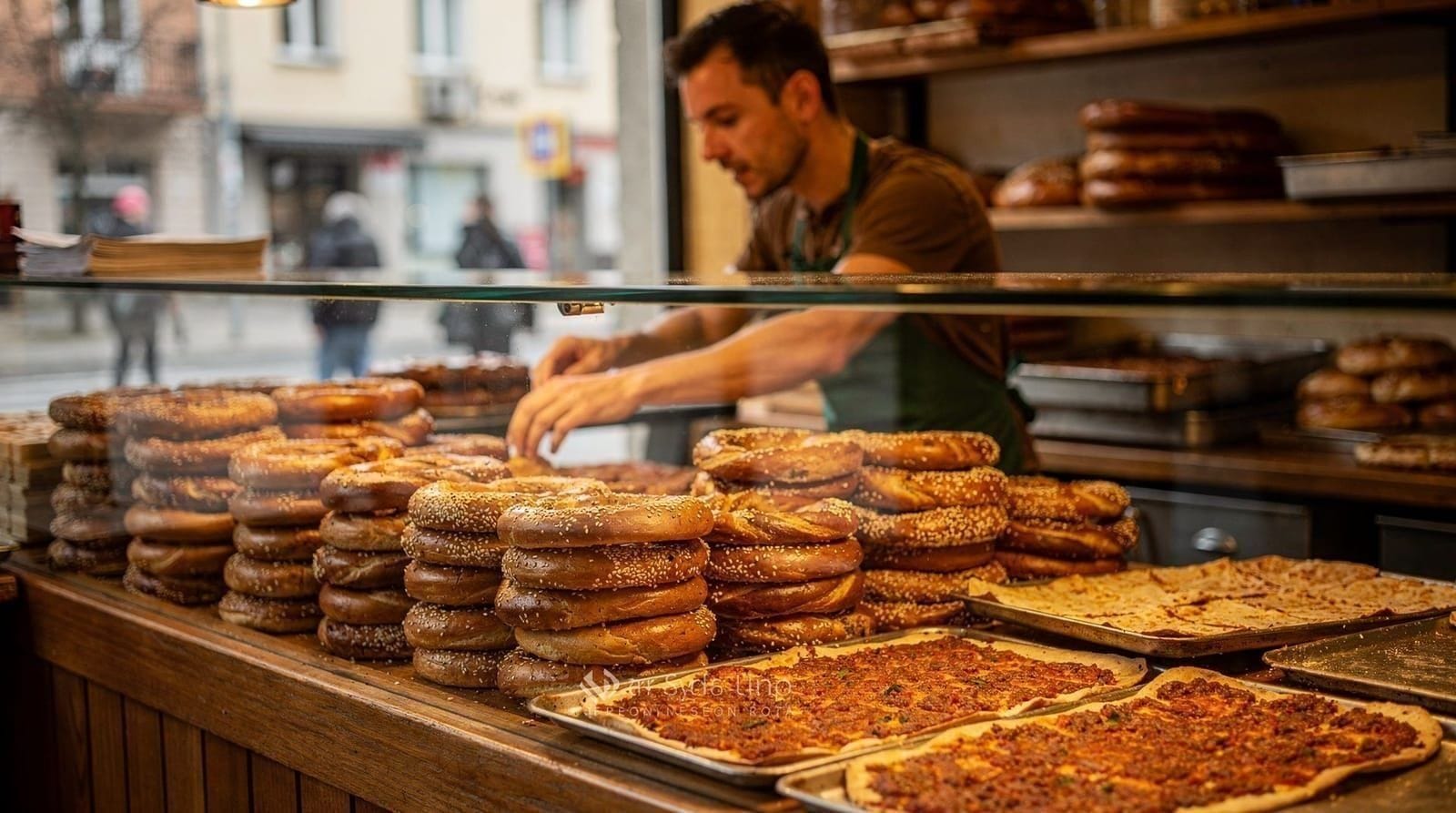
If the café queue defeats you, Berlin’s bakeries (Bäckereien) are an underused option. A proper German bakery — not a chain — serves fresh rolls (Brötchen) from early morning at €0.30–0.50 each, which you can take to a nearby park bench or canal bank.
Quality bakeries to look for: Joseph Roth Diele (Potsdamer Strasse, Schöneberg), Buchwald Konditorei (Bartningallee, Tiergarten), Bäckerei Steinecke (multiple locations, reliable chain). The Backwerk and Yorma’s chains at train stations are acceptable but not a substitute for proper Bäckerei quality.
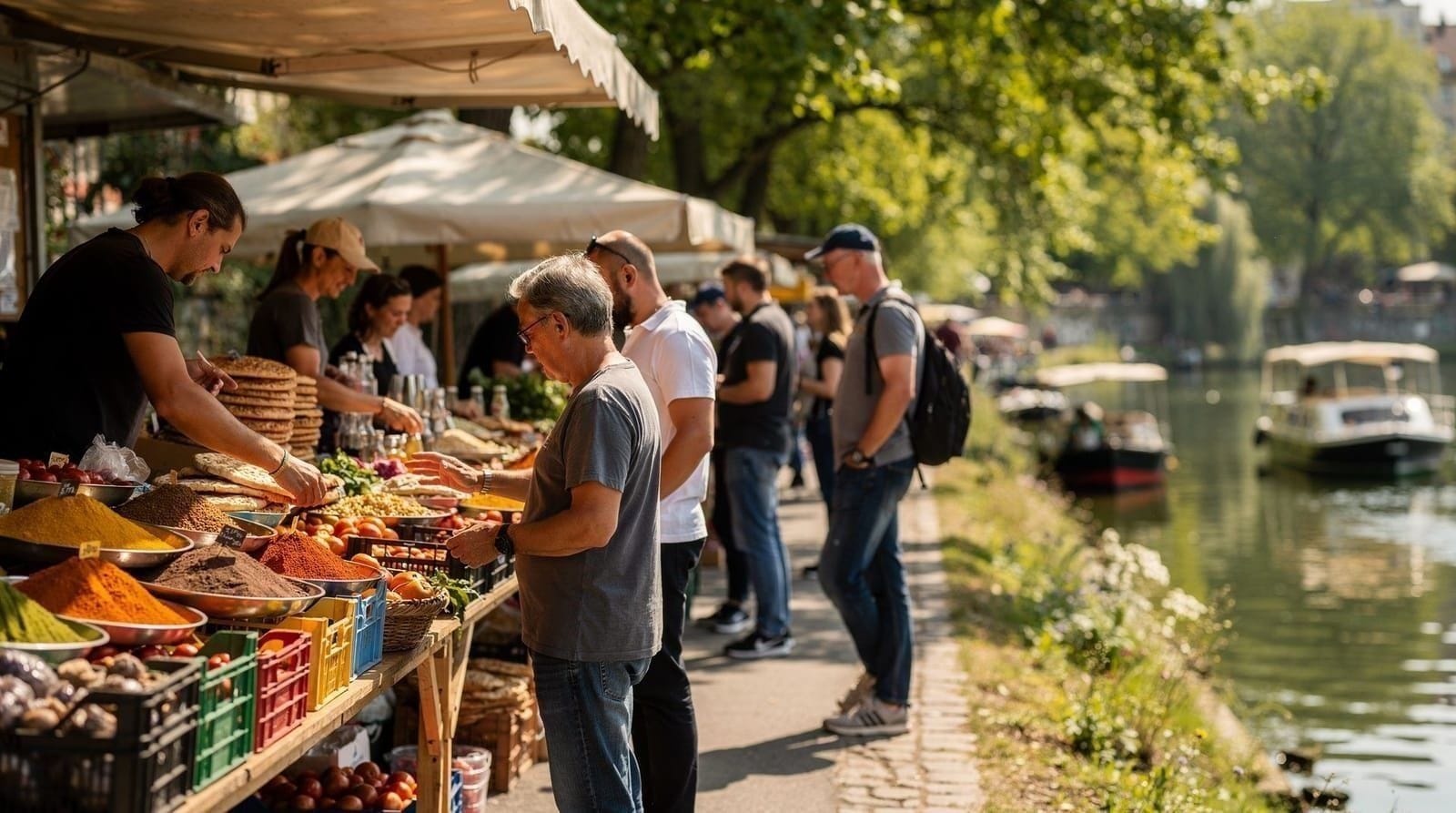
Combine fresh rolls with cheese and ham from a nearby supermarket (REWE or Edeka) and you have a genuine German breakfast for under €5 per person — eaten in Tiergarten, Monbijoupark, or along any canal bank. The Berlin budget guide covers this approach in more detail.
What to order — a breakfast vocabulary
Brötchen — fresh bread rolls, the foundation of German breakfast. Available as plain wheat (Weizenbrötchen), sesame, poppy seed, or wholegrain (Vollkornbrötchen).
Aufschnitt — cold cuts: sliced salami, ham, Leberwurst, smoked meat. Standard component of a German breakfast plate.
Käse — cheese. A Frühstücksteller typically includes one or two cheeses: often a mild Gouda-style and something with more character like Bergkäse or Tilsiter.
Rührei / Spiegelei / Weichgekochtes Ei — scrambled egg / fried egg / soft-boiled egg. Specify when ordering if you have a preference.
Milchkaffee — a large, café au lait-style coffee, common breakfast coffee in Berlin. Stronger than a latte. Ask for Cappuccino or Espresso if you want something different.
Quark — a fresh soft cheese similar to fromage blanc, sometimes served with fruit or honey on German breakfast plates. Lighter than cream cheese, mild flavour.
Mett — raw minced pork with onion, spread on bread. Traditional German breakfast item that surprises many visitors. Not found everywhere but common at butcher-run cafes.
Practical notes
Timing: The busiest window at Prenzlauer Berg and Kreuzberg cafes is 10:00–13:00 Saturday and Sunday. Arrive at 09:00–09:30 or after 13:30 to avoid waits. Weekday brunch (many cafes open at 08:00–09:00) has no such issue.
Payment: Many neighbourhood cafes are cash-only. Have €20–30 in cash for breakfast. Cards are generally accepted at larger, more tourist-facing cafes but not reliably at small independent places.
Language: Menus at Prenzlauer Berg cafes are commonly bilingual. In Kreuzberg and Neukölln neighbourhood spots, German-only menus are common. Useful phrase: “Haben Sie eine Frühstückskarte?” (Do you have a breakfast menu?)
Reservations: Worth attempting by phone for popular Prenzlauer Berg spots on Saturday and Sunday, though many do not take reservations. Simply arriving early is more reliable.
Frequently asked questions about Berlin breakfast and brunch guide
What is the Frühstück culture in Berlin?
Frühstück literally means breakfast, but in Berlin it has evolved into a social ritual. Traditional German Frühstück includes bread rolls (Brötchen), cold cuts (Aufschnitt), cheese, soft-boiled eggs, and coffee. Berlin's version expands this: cafes serve extended breakfast menus until 14:00 or 16:00 on weekends, and weekend brunch is genuinely a multi-hour social affair. This is not fast food — Berliners will sit at a breakfast table for two to three hours with newspapers and multiple coffee refills.How much does brunch cost in Berlin?
A standard café breakfast or brunch in Berlin: simple bread with cheese and cold cuts €5–8. Full brunch plate or set menu €10–18. Turkish breakfast spread (for one) €14–18. Eggs Benedict or avocado toast at trendy spots €10–14. Coffee (Kaffee or Milchkaffee) €2.50–4.50. Total per person for a proper sit-down brunch with coffee: €14–22. Brunch buffets exist but are less common; the better spots serve à la carte.Which neighbourhood has the best brunch spots?
Prenzlauer Berg has the highest concentration of brunch cafes, particularly around Kollwitzplatz and along Kastanienallee. Kreuzberg offers more eclectic and international options, often with Turkish or Middle Eastern breakfast influences. Schöneberg around Winterfeldtplatz is good for a mid-morning market combined with café breakfast. Neukölln has a growing independent café scene that is less tourist-facing and often cheaper.Do I need to book for brunch in Berlin?
For weekend brunch (Saturday 10:00–13:00, Sunday 09:00–13:00), popular spots in Prenzlauer Berg and Kreuzberg can have queues or waits of 30–60 minutes without reservations. Some cafes accept reservations by phone; many do not. The practical strategy is to arrive before 10:00 on weekends, or eat after 13:30 when the initial crowd has moved on. Weekday brunch has no such issues.What is a typical German breakfast at a Berlin café?
The classic set: two or three fresh Brötchen (rolls) with butter, an assortment of cold cuts and cheese, a boiled egg, jam, and a large coffee or Milchkaffee (approximately a café au lait). This is served on a board or tray rather than in separate bowls. Many Berlin cafes also offer fresh orange juice, muesli, and yoghurt as additions. A Frühstücksteller (breakfast plate) of this type costs €8–14 depending on location.What is a Turkish breakfast in Berlin?
Several cafes in Kreuzberg serve the full Turkish kahvaltı spread: menemen (scrambled eggs with peppers and tomatoes), fresh bread, olives, white cheese (beyaz peynir), honey, tomato and cucumber salad, and cay (tea in tulip glasses). This is served as a shared spread for one or two people and costs €14–22. It is a fuller and more varied meal than a standard German breakfast. Best found in Kreuzberg around Kottbusser Tor.Are there good vegan breakfast options in Berlin?
Yes — Berlin's vegan scene extends to breakfast. Several cafes in Prenzlauer Berg, Kreuzberg, and Neukölln offer dedicated vegan breakfast menus with plant-based milks, tofu scramble, vegan pastries, and nut butters. The Berlin vegetarian and vegan guide covers dedicated vegan cafes in detail.Is brunch available every day of the week in Berlin?
Yes, but the experience differs. Weekday brunch is calm and fast, with many cafes opening from 08:00 or 09:00 and no waits at all. Weekend brunch, particularly Saturday and Sunday between 10:00 and 13:00, is the full social ritual with queues at the most popular Prenzlauer Berg and Kreuzberg spots. Some independent cafes close on Mondays as their weekly rest day, so check ahead if planning a Monday-morning visit.What is the best area for a first visit to Berlin brunch culture?
Prenzlauer Berg is the most reliable starting point — the highest concentration of established cafes, consistently good quality, and bilingual menus. For something more local and less polished, Kreuzberg's Turkish breakfast spreads around Kottbusser Tor are a highlight many first-timers miss. Both are a short U-Bahn ride from central Berlin.