Kreuzberg food guide: eating in Berlin's most diverse neighbourhood
Berlin: Private Kreuzberg Food and Street Art Tour
What should I eat in Kreuzberg?
Kreuzberg's strongest food offers are Turkish street food (döner, lahmacun, börek along Mehringdamm and Oranienstrasse), Markthalle Neun (Eisenbahnstrasse 42, Street Food Thursday 17:00-22:00), and the Türkenmarkt along Maybachufer canal. Budget €8-15 per person for a thorough food crawl. The Bergmannstrasse area has better sit-down restaurants.
Kreuzberg’s strongest food offers are Turkish street food — döner, lahmacun, börek — concentrated along Mehringdamm and Oranienstrasse, Markthalle Neun at Eisenbahnstrasse 42 (Street Food Thursday every week, 17:00-22:00), and the Türkenmarkt along the Maybachufer canal on Tuesday and Friday mornings. Budget €8-15 per person for a thorough food crawl. The Bergmannstrasse area in the western part of the neighbourhood has better sit-down restaurant options if you want to spend an evening eating properly.
| Where | SO36 (Oranienstrasse/Mehringdamm) and Bergmann-Kiez (Bergmannstrasse) |
| Cost | Around €8–15 for a street food crawl; €15–25 for a sit-down meal |
| Getting there | U6/U7 Mehringdamm, U1/U8 Kottbusser Tor, U8 Schönleinstrasse |
| Best days | Thursday (Markthalle Neun), Tuesday/Friday (Türkenmarkt) |
| Avoid | Sunday mornings — many Turkish businesses close or open late |
The two Kreuzbergs and why that matters for food
Kreuzberg is not one neighbourhood — it is two distinct areas that happen to share an administrative boundary, and the food scene in each reflects a different history and demographic.
The eastern half, known as SO36 after its old postal code, runs along Oranienstrasse and down to Kottbusser Tor. This is where Berlin’s Turkish and Kurdish community — among the largest outside Turkey — has been concentrated since the 1960s. The Anwerbeabkommen of 1961 brought hundreds of thousands of Turkish gastarbeiter (guest workers) to West Germany under bilateral labour agreements, and Kreuzberg, cheap and close to the Wall’s dead zone, absorbed a large share of Berlin’s arrivals. By the 1970s the eastern part of Kreuzberg was majority Turkish-German in many blocks. The food infrastructure that grew around that community is what makes SO36 genuinely different from tourist-facing Berlin: the bakeries, the grocers selling dried legumes and fresh herbs, the butchers with sucuk and pastirma, the social clubs where tea is served in tulip glasses, the snack bars running on family recipes.
The western half — the Bergmann-Kiez around Bergmannstrasse and Marheinekeplatz — has a different character. Post-reunification gentrification hit harder here. The residents are younger professionals, artists, and long-term locals who have stayed despite rising rents. The food scene is correspondingly more café-heavy, brunch-oriented, and international in the Instagram-friendly sense. Prices are higher and the vibe is quieter. Both halves are worth visiting; just calibrate your expectations.
Kreuzberg also has a political identity that shaped its food culture. The neighbourhood was an anarchist and alternative stronghold through the 1970s and 1980s, a centre of squatter communities and radical politics. The 1987 May Day riots became an annual tradition. This identity created tolerance for food businesses operating outside mainstream German restaurant conventions — street food, shared tables, hole-in-the-wall formats — that the rest of West Berlin found unconventional. That legacy is still visible in how food is served and eaten here. For context on what the neighbourhood looked like when it was pressed against the Berlin Wall, the history is worth reading before you visit.
The Turkish and Middle Eastern food strip
Mehringdamm corridor (U6/U7 Mehringdamm)
Mehringdamm is the main artery running south from the station of the same name, and it contains two of Berlin’s most famous street food addresses within a hundred metres of each other.
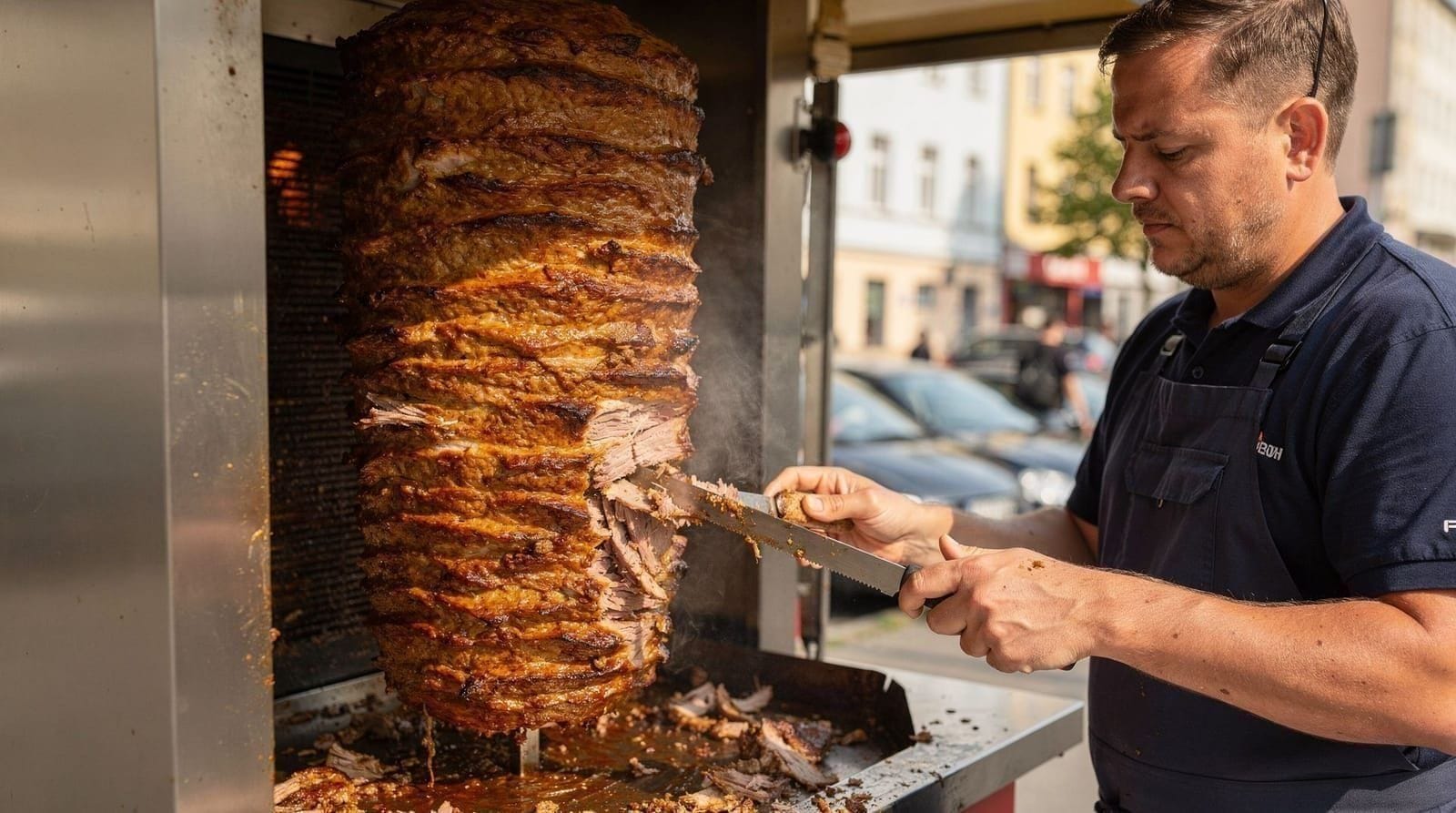
Mustafa’s Gemüse Kebab at Mehringdamm 32 is the most discussed döner in Berlin. The queue is real — 30 to 45 minutes on weekends, less on weekday afternoons. The Gemüse Kebab is a vegetable-focused variant with roasted peppers and feta alongside the usual salad and meat, and it costs around €5. Is it worth the queue? It is genuinely good, but the queue itself is partly self-reinforcing. Our döner guide for Berlin covers alternatives if you want to skip the wait and still eat well.
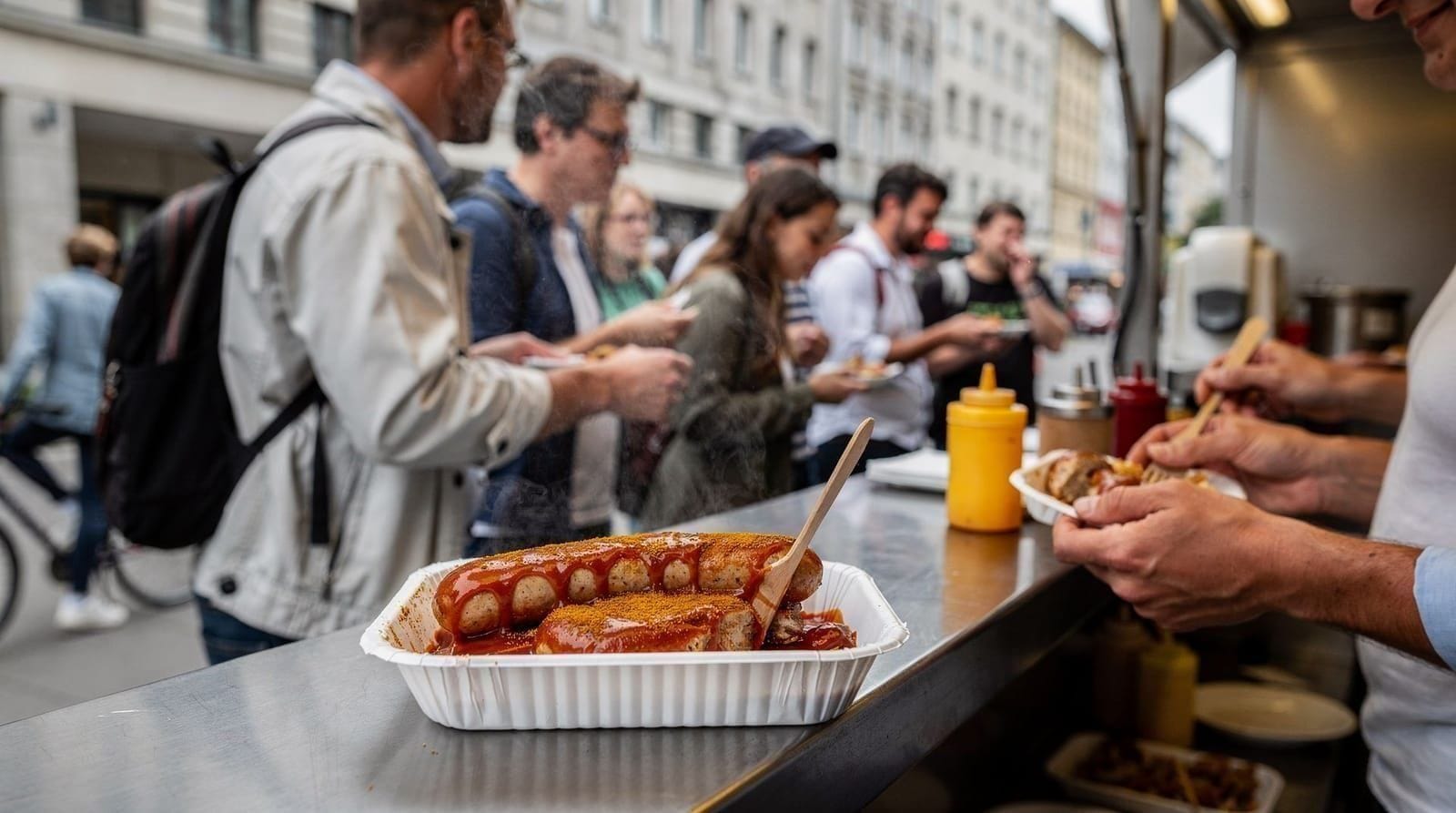
Curry 36 is at Mehringdamm 36, directly across from Mustafa’s. It is a legitimate currywurst institution, open late, serving both pork and chicken sausage variants with a house sauce. A portion with fries costs around €4-5. Berlin currywurst is its own cultural phenomenon with a longer history than either shop — the currywurst guide covers that history and what separates a good one from a mediocre one.
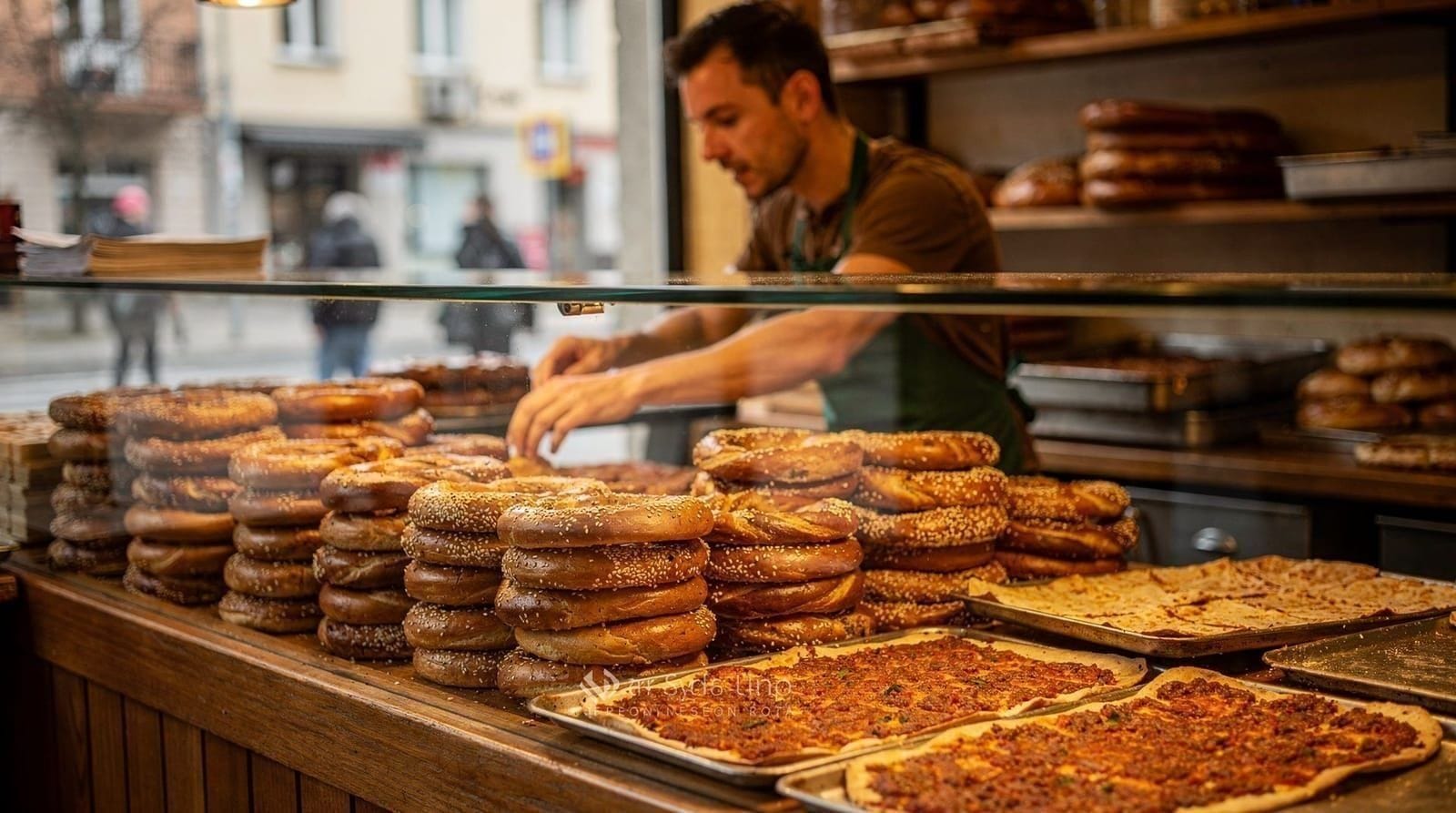
Beyond those two anchor addresses, Mehringdamm and the surrounding streets have a dense concentration of Turkish bakeries. These are not tourist operations — they serve the local community and their prices reflect that. Lahmacun (thin flatbread baked with spiced minced lamb and vegetables) runs €2-3 per piece and should be eaten fresh, folded with a squeeze of lemon. Börek — savoury pastry filled with white cheese and parsley, or spinach, or minced meat — costs €2-3 for a substantial portion. Simit (sesame-crusted circular bread, often sold from carts) is around €1. These are real prices at real grocery-facing bakeries, not the tourist-adjusted versions you will pay on Hackescher Markt.
Oranienstrasse (U1/U8 Kottbusser Tor)
Oranienstrasse is the cultural main street of SO36. It runs east from Kottbusser Tor through a dense mix of Turkish restaurants, falafel spots, Arab cafés, second-hand clothing shops, and bars. The street food here is slightly more sit-down than Mehringdamm — there are tables outside many of the restaurants, and the pace is slower.
Falafel here is reliably good. A sandwich with salad and tahini runs €4-5. Look for places with a visible fryer and a queue of locals — those are the reliable indicators. Arab cafés along Oranienstrasse serve strong coffee, mint tea (free refills in most places), and pastries. They are cheap, unhurried, and excellent for a mid-morning or mid-afternoon stop.
The Turkish food guide goes deeper on what to order at sit-down Turkish restaurants if you want to move beyond the snack format.
Markthalle Neun: Berlin’s best indoor food market
Markthalle Neun at Eisenbahnstrasse 42 is a nineteenth-century market hall that was saved from demolition in 2011 by a community campaign and transformed into a hybrid food market and event space. It is ten minutes’ walk from Görlitzer Bahnhof (U1/U3).
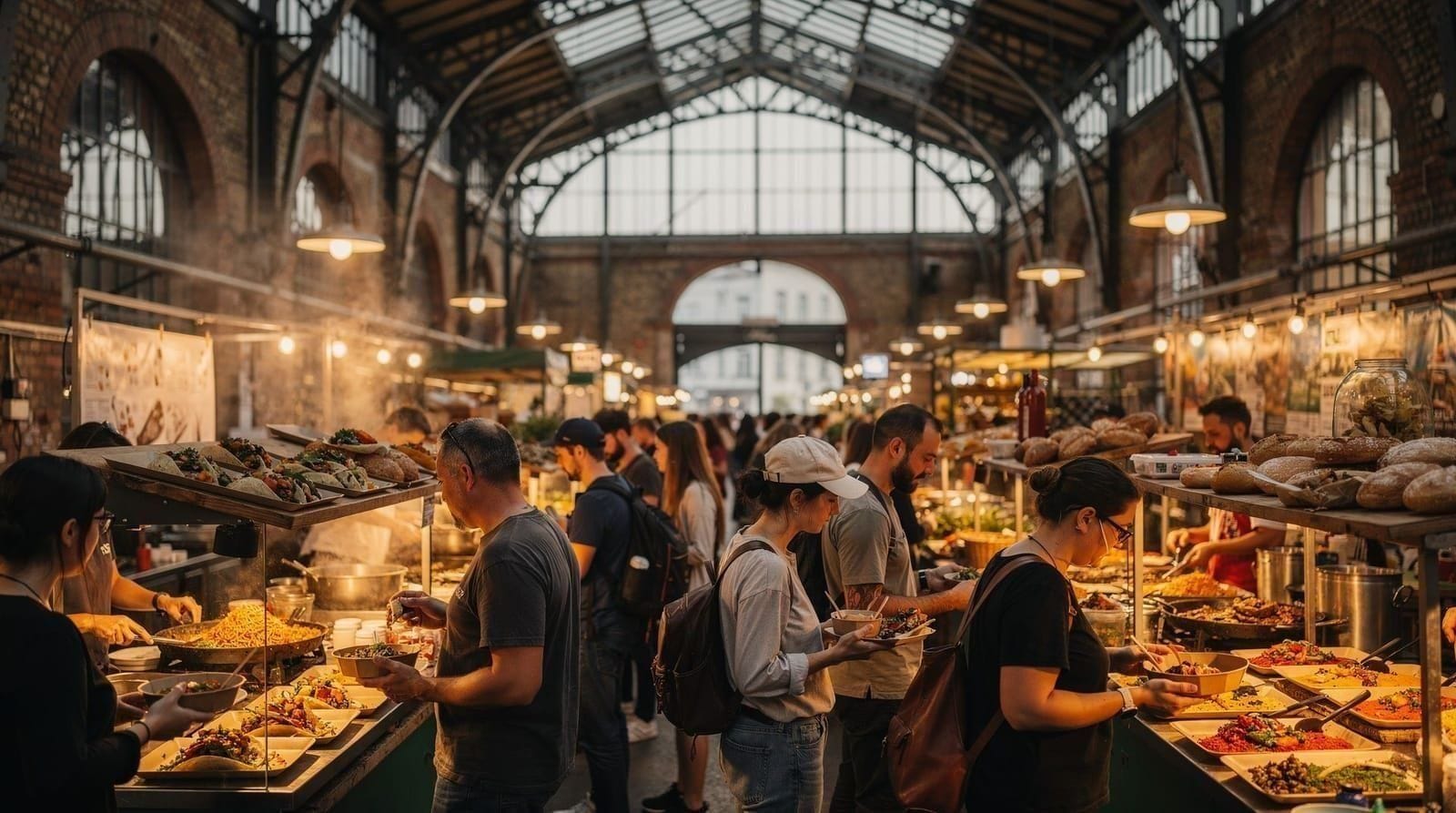
Street Food Thursday runs every Thursday from 17:00 to 22:00. Entry is free. On a typical Thursday there are 30 to 40 vendors serving food from across the world: Venezuelan arepas, handmade pasta (often with live pasta-making), Korean bibimbap and pajeon, natural wine by the glass, Thai som tum, Japanese ramen, wood-fired pizza, Armenian lahmacun that is better than most in the city, Indian chaat, and rotating specials. A full meal across two or three vendors costs €12-18 depending on what you choose. Portions are generous.
Strategy for visiting: arrive at 18:00 rather than when it opens at 17:00 — the vendors need 45 minutes to hit their stride and the first wave crowds the entrance. Do a full lap before buying anything so you know what is available. Seating inside is limited and contested; experienced visitors either bring their food to the benches outside or eat standing at the market’s edge. Avoid arriving after 20:30 if you want choice — popular vendors sell out.
Saturday morning market (09:00-15:00) is a different experience — quieter, more focused on produce. Local farmers, artisan cheesemakers, sourdough bakers, and specialty coffee roasters take over the hall. It is a good place to assemble a picnic for Görlitzer Park or to buy provisions. Prices are honest but not discount — you are paying for provenance and quality.
Markthalle Neun also runs a monthly Breakfast Market (check their website for dates, usually one Sunday per month, 10:00-15:00) and occasional craft beer and natural wine events. These sell out or get crowded fast — arrive early if you plan to attend one. The street food scene guide covers Markthalle Neun alongside Berlin’s other major food markets.

Türkenmarkt on Maybachufer
The Türkenmarkt runs along the Maybachufer canal on Tuesday and Friday, 11:00 to 18:30. It sits on the border between Kreuzberg and Neukölln — the canal itself is the boundary — and it functions as an actual community market, not a tourist market.
Take U8 to Schönleinstrasse and walk five minutes south to the canal. The market stretches along several hundred metres of the towpath. What you will find: fresh vegetables (aubergine, courgette, peppers, herbs, and Turkish varieties you will not find in supermarkets), multiple olive vendors with barrel samples (buy a small pot to try before committing), beyaz peynir (white cheese similar to feta, sold in brine), sucuk (Turkish garlic sausage, good raw or grilled), Turkish bread including pide and simit, seasonal fruit at genuine grocery prices, pickles, dried legumes, and cooked food stalls selling gözleme (stuffed flatbread cooked on a griddle, €3-4) and midye dolma (stuffed mussels, €1 each — eat them with a squeeze of lemon on the spot).
Most items cost €1-3. This is what it actually costs local families to buy groceries here. There is no tourist mark-up because the customer base is not tourists. The market is busier on Friday than Tuesday.
Bergmannstrasse and the Graefekiez
Bergmannstrasse is the commercial strip of Kreuzberg’s western half, reachable via U7 Gneisenaustrasse. The street and its surrounding Kiez (neighbourhood) have undergone significant gentrification but retain enough independent businesses to be worth a visit, particularly for sit-down meals and coffee.
The food profile here is different from SO36: more Italian restaurants (several are genuinely operated by Italian families), wine bars, brunch cafés with long weekend queues, a few good Middle Eastern restaurants, and independent bakeries selling European-style sourdough and pastries. Prices are 20-30% higher than the Mehringdamm corridor.
Marheineke Markthalle at Marheinekeplatz is a traditional covered market open Monday to Saturday, 08:00 to 20:00. It functions as a daily grocery market with fishmongers, butchers, a cheese counter, an olive bar, and a baker. There are a few food stalls inside serving lunch. It is quieter than Markthalle Neun and aimed entirely at local residents doing their shopping — no events, no curated vendors, just functional provisioning at fair prices. Good for assembling a self-catering meal.
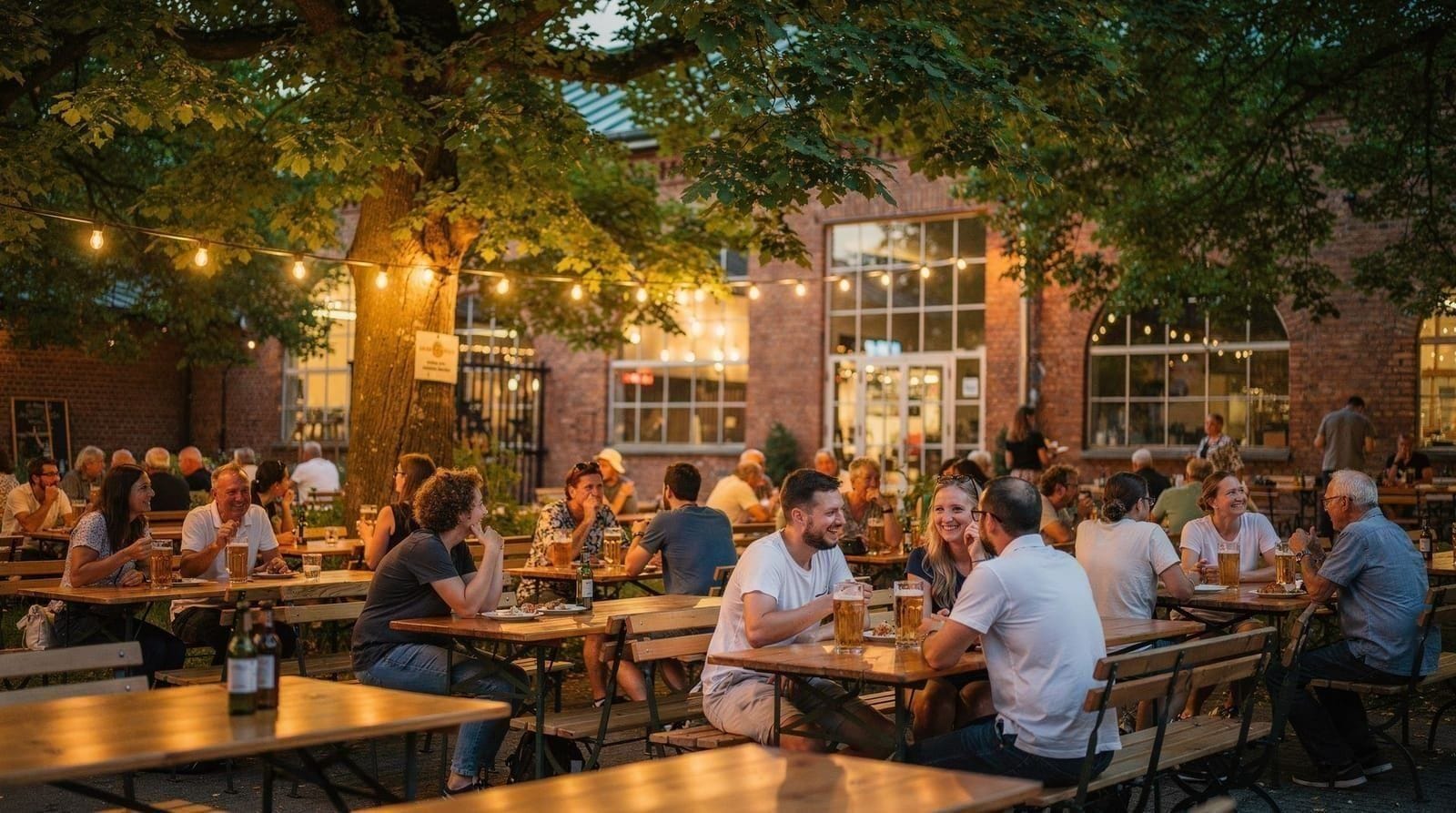
Bergmannstrasse itself has a craft beer bar scene that connects to Berlin’s wider craft beer culture. Several bars along the street stock local Berlin breweries alongside German classics. The sit-down format and table service make it a different experience from the Kotti bar scene.
Vietnamese food in and around Kreuzberg
Berlin has one of the largest Vietnamese communities in Europe — estimates range from 80,000 to 100,000 people, a community with roots in both East German contract workers and post-reunification immigration. The most concentrated Vietnamese food infrastructure is the Dong Xuan Center in Lichtenberg (far east of Berlin), a wholesale market and food court that serves the community but requires a dedicated trip.
Closer to Kreuzberg, the area around Skalitzer Strasse and Kottbusser Tor has a handful of Vietnamese restaurants that are not tourist-facing. Pho (beef noodle soup) costs €7-9, bánh mì (Vietnamese sandwiches) €4-6. Quality varies — the reliable indicator is whether the menu is translated into Vietnamese alongside German and English, which usually means the kitchen is serving the community as its primary customer base rather than visitors.
Coffee and breakfast
Kreuzberg has a high concentration of speciality coffee shops — higher than most Berlin districts outside Mitte and Prenzlauer Berg. The neighbourhood has an established roaster and café culture, with Bonanza Coffee operating a roastery presence (check current locations as they have shifted over the years) and Silo Coffee having a long-established presence with a strong reputation for filter and espresso-based drinks. Both are serious operations by European standards.
A full Kreuzberg breakfast — bread with cold cuts or cheese, a boiled egg, fresh fruit, coffee — typically costs €8-14 at a sit-down café. This is not cheap by Berlin historical standards but reflects the current rental reality of the neighbourhood. The signal for a tourist-facing café is an English-only menu, laminated and with photographs. Those cafés are not reliably bad but they charge the tourist premium without necessarily delivering better food. Look for handwritten menu boards in German with English spoken by staff — those tend to be the resident-facing places.
Bars and late-night eating
Kreuzberg’s bar scene overlaps with its food scene in the evening, particularly around Kottbusser Tor (known as Kotti). The square itself is chaotic and not conventionally pretty, but the density of bars and restaurants around it means you can eat and drink within a small radius for an entire evening.
Möbel Olfe on Dresdener Strasse is a legendary bar operating in a former furniture shop, gay-friendly and consistently popular, serving basic drinks without food. Laidak on Bad-stübner-Strasse is a reliable neighbourhood bar with beer garden space. Neither is a restaurant but both are worth knowing as anchors for an evening in the area.
Würstchen stands (grilled sausage carts) operate late around Kottbusser Tor, often until 02:00 or later on weekends. A grilled sausage with bread costs €3-4. It is functional late-night food rather than culinary tourism, but it is how a lot of Kreuzberg residents end an evening. The Kreuzberg bars guide covers the drinking side in more detail.
The street art that covers much of the neighbourhood’s walls is its own attraction alongside the food — the street art guide covers the murals and the Kreuzberg art scene that developed alongside its food culture.
Guided food tours
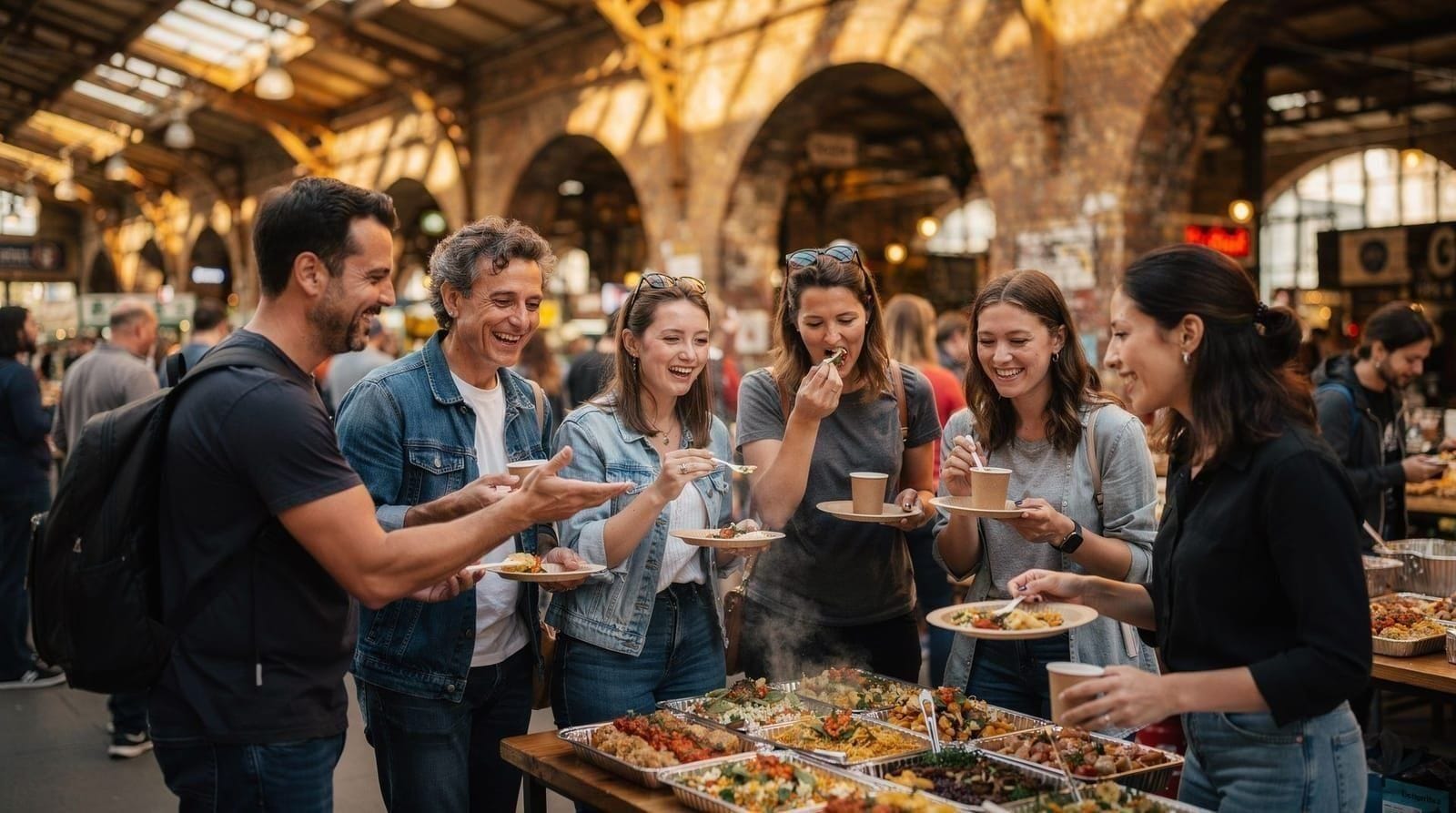
If you want a structured introduction to Kreuzberg’s food scene rather than navigating it independently, guided food tours are a reasonable option. The quality varies significantly — the best tours take you to places you would not find on your own and give you context about the community behind the food; the worst are walking routes between the most-photographed street food stops you would have found anyway.

A cultural walking tour that combines street food with neighbourhood history is worth considering for a first visit — Kreuzberg makes more sense when you understand the gastarbeiter history, the Wall period, and the post-reunification changes that shaped what you are eating and where.

If you want to combine the Kreuzberg food scene with cycling around Friedrichshain — the neighbourhood directly across the Spree, where the East Side Gallery runs along the river — a bike tour covering both areas covers more ground efficiently.

For the self-guided approach, our Berlin food tour guide has a half-day route through Kreuzberg that sequences the stops sensibly. The Berlin page has the fuller context on the city’s food geography.
Ordering etiquette worth knowing
At Turkish snack counters (döner, lahmacun, börek), queue discipline is informal but real — locals notice if you push in, and staff generally serve in the order people arrived even without a visible line. Pointing at what you want is normal and expected when the counter is busy; German or English both work for basic orders. Cash remains the safer default at smaller bakeries and market stalls, even where card readers exist, since connections can be slow at peak times. At the Türkenmarkt, sampling olives before buying is expected and welcomed — vendors offer tastes without being asked. Tipping at counter-service places is not expected beyond rounding up; at Bergmannstrasse’s sit-down restaurants, 5-10% is standard practice.
Getting around: U-Bahn stops by food area
Kreuzberg is well served by U-Bahn. The relevant stops and what you can reach from each:
Mehringdamm (U6 and U7): Mustafa’s Gemüse Kebab, Curry 36, Turkish bakeries on Mehringdamm. Ten-minute walk to Bergmannstrasse.
Kottbusser Tor (U1 and U8): Oranienstrasse restaurants, falafel spots, Arab cafés, the Kotti bar cluster. The most central stop for SO36 eating.
Görlitzer Bahnhof (U1 and U3): Ten-minute walk to Markthalle Neun via Eisenbahnstrasse. Also the stop for Görlitzer Park if you want to eat outdoors.
Schönleinstrasse (U8): Five-minute walk south to the Maybachufer canal and the Türkenmarkt (Tuesday and Friday only).
Gneisenaustrasse (U7): Bergmannstrasse food and café strip, Marheinekeplatz, Marheineke Markthalle.
What to avoid
Tourist-trap restaurants near Checkpoint Charlie: Checkpoint Charlie is less than one kilometre north of Mehringdamm, and the restaurant corridor between the two areas — particularly along Friedrichstrasse and Rudi-Dutschke-Strasse — runs heavily tourist-facing restaurants with high prices and indifferent food. The Checkpoint Charlie guide covers the history, but do not eat in that corridor. Walk south to Kreuzberg proper.
English-only laminated menus with photos: The signal has already been mentioned but it is worth repeating. These menus are a reliable indicator of tourist-adjusted pricing. The mark-up is typically 30-50% over equivalent food one block away.
Pre-packaged food from kiosks in Görlitzer Park: The park kiosks on the Kreuzberg side sell overpriced wrapped sandwiches and bottled drinks. Bring food from elsewhere if you are picnicking in the park.
The Döner shops in transit hubs: Berlin’s transport hubs — Hauptbahnhof, Ostbahnhof, major bus stations — have döner shops that are convenient and uniformly mediocre. The price is similar to what you pay in Kreuzberg but the product quality is not. Make the U-Bahn journey.
Sunday mornings in SO36: Many Turkish-owned food businesses close on Sunday, or open late. The Türkenmarkt does not run on Sunday. Markthalle Neun is closed Monday and has no Thursday market on public holidays. Check dates before planning a specific itinerary around these markets.
Which day should you go, and for what
Kreuzberg’s food scene changes significantly by day of the week — the table below helps match your visit to what’s actually running that day.
| Day | What’s on | Best for |
|---|---|---|
| Tuesday | Türkenmarkt (11:00–18:30) | Cheap produce, gözleme, midye dolma by the canal |
| Thursday | Street Food Thursday at Markthalle Neun (17:00–22:00) | A global food crawl under one roof |
| Friday | Türkenmarkt, busier than Tuesday | Same as Tuesday with more atmosphere |
| Saturday | Markthalle Neun producers market (09:00–15:00); Marheineke Markthalle open | Picnic provisions, cheese, sourdough |
| Sunday | Many SO36 Turkish businesses closed or late | Bergmannstrasse brunch cafés instead |
Budgeting a day of eating
For a full day sampling Kreuzberg’s range rather than one meal, a rough budget looks like this: a Turkish bakery breakfast (simit or börek, coffee) around €5–6, a midday döner or falafel around €5–6, an afternoon coffee and pastry around €5–7, and either a Markthalle Neun street food dinner (€12–18 across two or three vendors) or a Bergmannstrasse sit-down meal (€15–25). A full day of eating well, without rationing, comes to roughly €30–45 per person — considerably less than the equivalent quality would cost in Mitte or Charlottenburg.
Frequently asked questions about Kreuzberg food guide
Is Kreuzberg good for vegetarians and vegans?
Yes, Kreuzberg is one of the best Berlin neighbourhoods for plant-based eating. Vöner (Boxhagener Platz, technically Friedrichshain but close) offers vegan döner. Markthalle Neun has multiple plant-based vendors. The neighbourhood has a dense cluster of vegan and vegetarian cafés, particularly around Bergmannstrasse and Oranienstrasse.Where is Bergmannstrasse and what can I eat there?
Bergmannstrasse runs through the residential Graefekiez part of Kreuzberg (U7 Gneisenaustrasse). It has a stretch of independent restaurants, bakeries, and cafés aimed at local residents rather than tourists. Good options include breakfast cafés, Middle Eastern restaurants, Italian spots, and craft beer bars. Prices are slightly higher than Mehringdamm but quality is reliable.What is the Türkenmarkt and how do I get there?
The Türkenmarkt (Turkish Market) runs along the Maybachufer canal on the border of Kreuzberg and Neukölln, Tuesday and Friday from 11:00 to 18:30. Take U8 to Schönleinstrasse, then walk 5 minutes south to the canal. It serves the local Turkish-German community and has genuinely low prices on fresh produce, olives, cheese, sucuk (sausage), and cooked food.How do I get to Kreuzberg from central Berlin?
From Mitte, take U6 south to Mehringdamm (10-12 min from Stadtmitte). From Alexanderplatz, take U8 south to Kottbusser Tor (12 min). From Potsdamer Platz, take U2 east then change, or take a 15-minute walk south. Most of Kreuzberg's food area is within walking distance of either Kottbusser Tor or Mehringdamm stations.Is Kreuzberg safe to visit as a tourist?
Yes. Kreuzberg is a residential neighbourhood with a large family population. The area around Oranienstrasse can be lively at night and sometimes has political street art and demonstrations, but it is not unsafe. As with any urban neighbourhood, be aware of your surroundings and avoid confrontations during political events. The food areas are safe and well-frequented day and night.When is the best time to visit Kreuzberg for food?
Thursday evening for Street Food Thursday at Markthalle Neun (17:00-22:00, arrive 18:00). Tuesday or Friday morning for the Türkenmarkt (11:00-18:30). Saturday morning for Markthalle Neun's regular producers market (09:00-15:00). Weekday lunch (12:00-14:30) is best for döner shops as the meat is freshly carved. Sunday is quieter — some Turkish shops close.What is the difference between SO36 and SO 36 Kreuzberg?
SO36 refers to the old postal code for the eastern part of Kreuzberg (Oranienstrasse area), distinct from SW61 in the western Bergmannstrasse part. Locals often call the east side xberg or SO36 and the west side Bergmann-Kiez. The food scenes differ: SO36 is more Turkish and counter-culture, Bergmann-Kiez is more gentrified café-restaurant with slightly higher prices.
Top experiences
Bookable activities with verified prices and instant confirmation on GetYourGuide.