Berlin Turkish food guide — where to eat doner, lahmacun, and more beyond the tourist trail
Berlin: Guided Street Food & Cultural Walking Tour
Where do locals eat Turkish food in Berlin?
Neukölln (particularly Sonnenallee and Karl-Marx-Strasse) and Kreuzberg (Kottbusser Tor area and the Turkish Market on Maybachufer) are the centres of Berlin's Turkish food scene. The best doner kebabs are not the tourist shops near the Brandenburg Gate charging €7–9 but the neighbourhood Imbisse (snack bars) in these districts where prices stay at €4–6.
Where do locals eat Turkish food in Berlin? Neukölln and Kreuzberg are the authentic zones. The best doner in Berlin is not the one nearest your hotel — it is the neighbourhood Imbiss in Kottbusser Tor or Sonnenallee where a full stuffed pita costs €4–5.50 and the meat is carved from a vertical spit rotating since early morning. This guide covers specific addresses, what to order, and why Berlin’s Turkish food scene is unique in the world.
| Where | Neukölln (Sonnenallee) and Kreuzberg (Kottbusser Tor, Maybachufer) |
| Cost | Doner around €4-5.50 (Kreuzberg/Neukölln) vs around €7-9 near Brandenburg Gate |
| Getting there | U8 Schönleinstrasse/Kottbusser Tor, U7 Karl-Marx-Strasse |
| Market days | Türkenmarkt: Tuesday and Friday, 11:00-18:30 |
| Best time | Weekday lunch for shorter queues; Friday afternoon for the market |
Why Berlin has the world’s largest Turkish community outside Turkey
The story begins not with food but with labour contracts. West Germany’s post-war economic miracle (Wirtschaftswunder) required workers the German labour pool could not supply. In 1961, the West German government signed the Anwerbeabkommen — a recruitment agreement — with Turkey, and Turkish workers began arriving in large numbers in West Berlin particularly.
They settled in Kreuzberg, then a cheap, peripheral district in the shadow of the Wall and largely ignored by wealthier West Berliners. Turkish immigrants built businesses, community organisations, mosques, and cultural infrastructure. When the recruitment programme officially ended in 1973, many who had intended to return stayed — and their families joined them under family reunification law.
By the 1980s, a Turkish-German urban culture had developed in Kreuzberg that was genuinely its own thing — not Turkey transplanted, not Germany unchanged. The food reflected this: Turkish recipes adapted with German ingredients, Turkish bakers learning German bread traditions, the creation of entirely new dishes (the Berlin-style doner) that do not exist in Turkey in the same form.
Today Berlin has approximately 250,000 residents of Turkish origin. Kreuzberg and Neukölln have Turkish population concentrations above 20 percent in some districts. The food infrastructure serves this community first and tourists second — which is precisely what makes it worth seeking out.
The doner kebab — Berlin’s most important street food
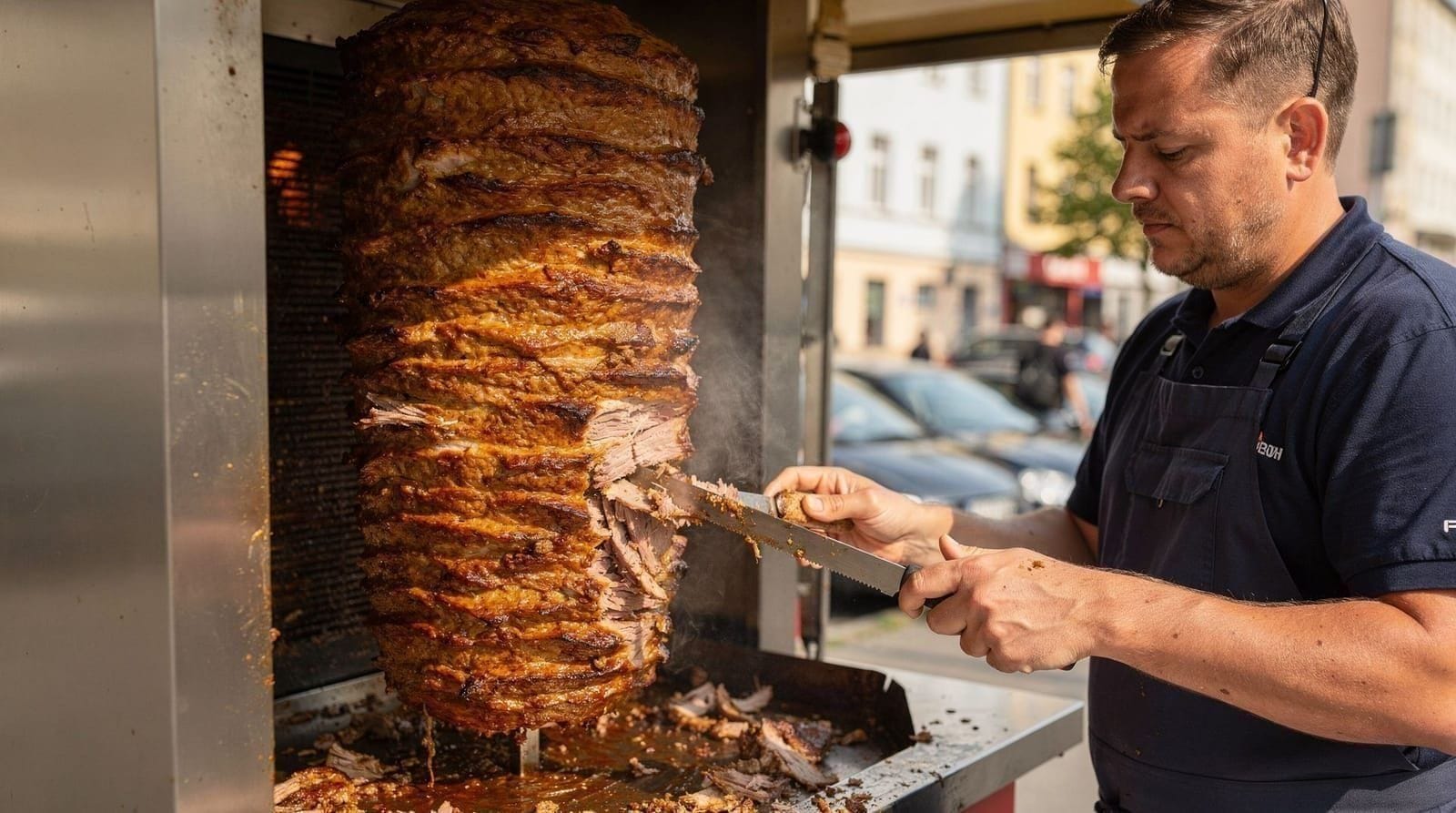
The doner kebab exists in Turkey, but the Berlin street-food format — shaved meat in pita with fresh vegetables and sauce, sold from an Imbiss for eating on the go — was developed in West Berlin in the early 1970s.
Kadir Nurman, a Turkish immigrant from Stuttgart who moved to Berlin, is generally credited as the originator of the format. He opened a stand near Bahnhof Zoo in 1972 and began selling the Berlin-style doner. The Turkish Döner Kebab Producers Association formally recognised Nurman as the inventor before his death in 2013.
This origin matters because it explains why Berlin doner is distinct from Turkish doner: it was designed around German eating habits (eating while walking, German bread preferences, heavy saucing) by someone bridging two culinary cultures.
What makes a good Berlin doner
The meat: Traditionally a blend of veal and lamb, the vertical spit rotating slowly with heat from gas or coals. Quality shops use mixed cuts with visible fat marbling; cheaper operations use processed compressed meat loaves that taste uniform and bland. You can often see the spit through the window — a proper spit has a roughly cylindrical form with uneven texture, not a perfectly smooth column.
The bread: Either pita (flatbread pocket, thinner) or a Fladenbrot (Turkish flatbread, thicker and doughier). The best places bake their own or take delivery from a Turkish bakery. Mass-produced frozen pita from a wholesaler is a quality indicator to avoid.
The vegetables: Fresh cabbage (shredded), tomatoes, cucumber, red onion, and often iceberg lettuce. These should be cut to order, not pre-prepared by several hours.
The sauce: The defining variable. A good yoghurt-based garlic sauce (knoblauchsauce) should be pungent and fresh. Hot sauce (scharf) should be real chilli paste, not ketchup with chilli flavouring. Herb sauces (Kräutersauce) vary widely.
Price: A fair price in Kreuzberg and Neukölln in 2026 is €4.00–5.50. Chicken doner is often slightly cheaper than veal-lamb. If you are paying more than €6.50, you are paying a location premium.
Where to eat doner in Berlin — specific addresses
Rüyam Gemüse Kebab, Wedding
Address: Badstrasse 38, 13357 Berlin (Wedding) U-Bahn: U6 to Rehberge Hours: Monday–Saturday 10:00–23:00, Sunday 12:00–22:00
Consistently rated one of the best doner operations in Berlin by Turkish community members, not just food media. The meat is veal and lamb mixed, carved from a properly managed spit. The bread is baked in a stone oven on premises. Price: €5.50. Cash only. Often a queue outside, which moves quickly. The neighbourhood is Wedding — not on most tourist itineraries, which keeps the queue manageable.
Hasir, Kreuzberg
Address: Adalbertstrasse 10, 10999 Berlin (Kreuzberg) U-Bahn: U1/U8 to Kottbusser Tor Hours: Daily 08:00–02:00
One of the original Turkish restaurants in Berlin, open since 1969. Hasir is a sit-down restaurant as well as takeaway, and is known particularly for its iskender kebab and the broader Turkish menu rather than just doner. The doner itself is good but the main reason to come is the menu depth and the historical setting. Prices: doner €5.00, iskender €13–15, full meal €15–25. Cards accepted.
Mustafa’s Gemüse Kebab, Kreuzberg
Address: Mehringdamm 32, 10961 Berlin (Kreuzberg) U-Bahn: U6/U7 to Mehringdamm Hours: Monday–Thursday 10:00–03:00, Friday–Saturday 10:00–05:00, Sunday 11:00–02:00
The most famous doner spot in Berlin — the one with the long queue at any hour. Quality is real (grilled vegetables added to standard ingredients, good sauce options) but the wait is frequently 30–45 minutes. If you have the time and want the experience, go on a weekday before noon when queues are shorter. If you are short on time, the queue-to-quality ratio is not optimal when better options exist closer to your accommodation. Price: €5.00–5.50.
Imren Grill, Neukölln
Address: Karl-Marx-Strasse 74, 12043 Berlin (Neukölln) U-Bahn: U7 to Rathaus Neukölln or Karl-Marx-Strasse Hours: Daily 09:00–midnight
A more neighbourhood-rooted operation in Neukölln, serving a predominantly local customer base. Iskender kebab here is excellent — the bread soaks the tomato sauce and browned butter in the traditional way. The interior is simple, the service brisk, and the clientele is local Turkish families eating lunch. Prices: doner €4.50, iskender €12, full meals €10–18. Cash strongly preferred.
Quick comparison of the four spots above:
| Spot | Neighbourhood | Doner price | Typical wait | Best for |
|---|---|---|---|---|
| Rüyam Gemüse Kebab | Wedding | around €5.50 | Short-moderate | Overall quality, off the tourist trail |
| Hasir | Kreuzberg | around €5.00 | Short | Sit-down menu depth, iskender |
| Mustafa’s Gemüse Kebab | Kreuzberg | around €5.00-5.50 | 30-45 min | The full queue experience, if time allows |
| Imren Grill | Neukölln | around €4.50 | Short | Local atmosphere, excellent iskender |
Beyond doner — the full Turkish food landscape
Lahmacun
Lahmacun (pronounced lah-mah-JOON in the Turkish-Berlin dialect) is a thin dough base covered with minced lamb mixed with tomatoes, peppers, and spices, baked at high heat. It is typically rolled around a salad filling and eaten by hand.
The best lahmacun in Berlin comes from operations using stone ovens, not gas-fired commercial ovens. Look for: Doyum Restaurant (Admiralstrasse 36, Kreuzberg — €2.50 per piece, stone oven, consistently full of Turkish families) and Haci Baba (Sonnenallee 59, Neukölln — €2.00–3.00 per piece, faster service, equally reliable).
Gözleme
Freshly made flatbread dough rolled to order, filled with spinach and cheese or minced meat, and cooked on a saç (a curved griddle) in front of you. Best sources: the Turkish Market on the Maybachufer (Tuesday and Friday, €4–5), and several permanent Imbisse on Sonnenallee in Neukölln (€4–6).
Manti
Turkish dumplings: small pasta parcels filled with minced lamb, served with garlic yoghurt, tomato butter, and dried mint. A more time-consuming dish to make, so found mainly at sit-down Turkish restaurants rather than Imbisse. Try at Borchardt’s Turkish competitors in Kreuzberg rather than tourist-facing spots.
Turkish breakfast
The full Turkish kahvaltı — menemen (scrambled eggs with peppers and tomatoes), fresh bread, olives, white cheese, honey, tomato and cucumber salad, and tea in tulip glasses — has become one of Berlin’s standard weekend breakfast formats. Several cafes in Kreuzberg offer it. Prices €10–18 per person for a full spread.
Good addresses: Van Kahvaltı Salonu (Skalitzer Strasse 14, Kreuzberg, Sunday from 10:00, full Turkish breakfast €14–18) and Sonnenallee’s multiple neighbourhood teahouses where a simpler breakfast costs €6–10.
Turkish pastry and bakeries
Baklava, kadayif, revani, and other syrup-soaked pastries are sold by weight at dedicated pastane (pastry shops) in Kreuzberg and Neukölln. Price: roughly €2–4 per piece for baklava, less for simpler items. Fresh simit (sesame-coated bread rings) from Turkish bakeries cost €0.80–1.20 each — considerably cheaper and better than the imitation simit sold at tourist markets.
The Turkish Market on the Maybachufer
Address: Maybachufer, 12047 Berlin (Neukölln/Kreuzberg border) U-Bahn: U8 to Schönleinstrasse (3 minutes walk) Hours: Tuesday 11:00–18:30, Friday 11:00–18:30
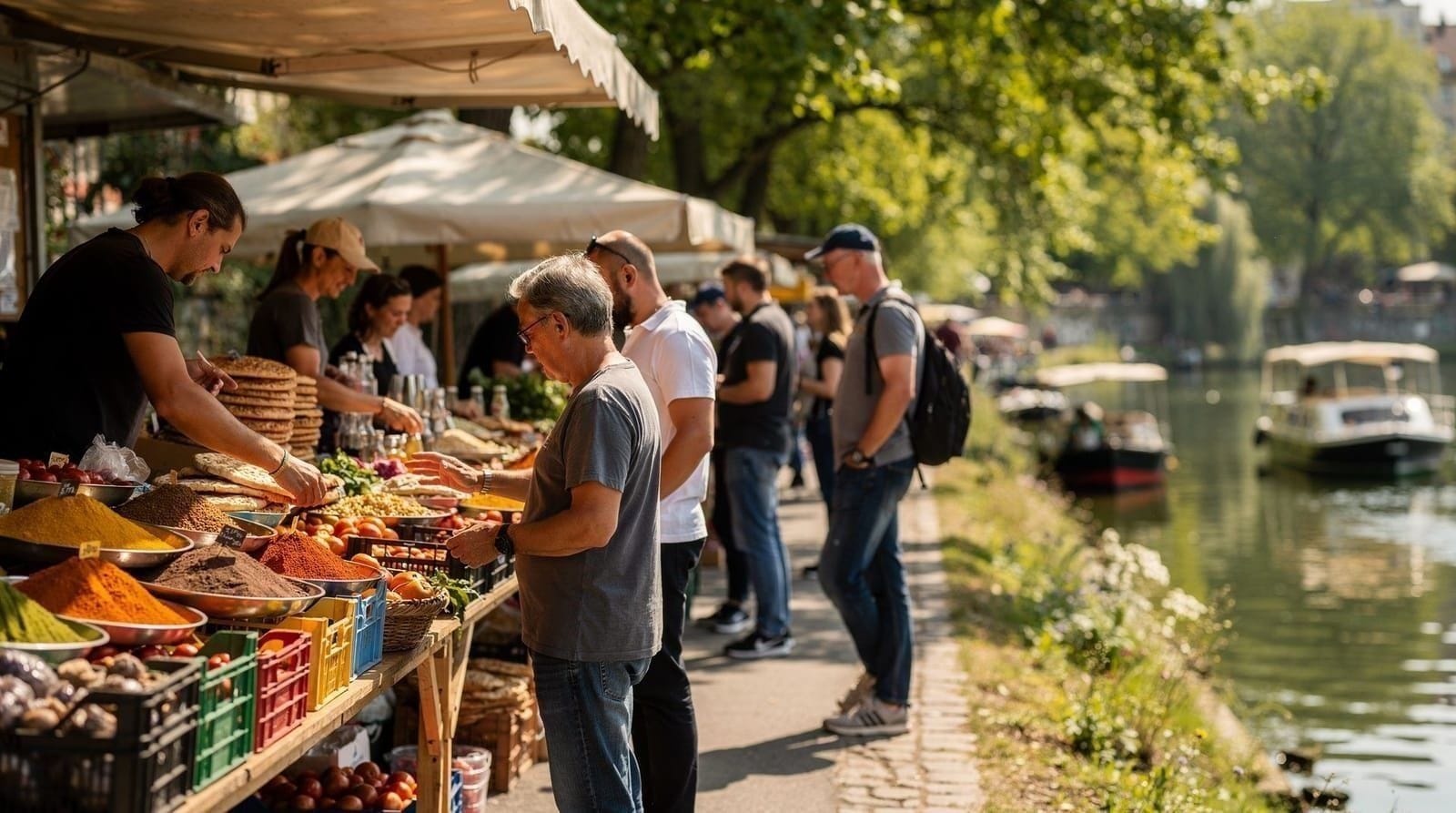
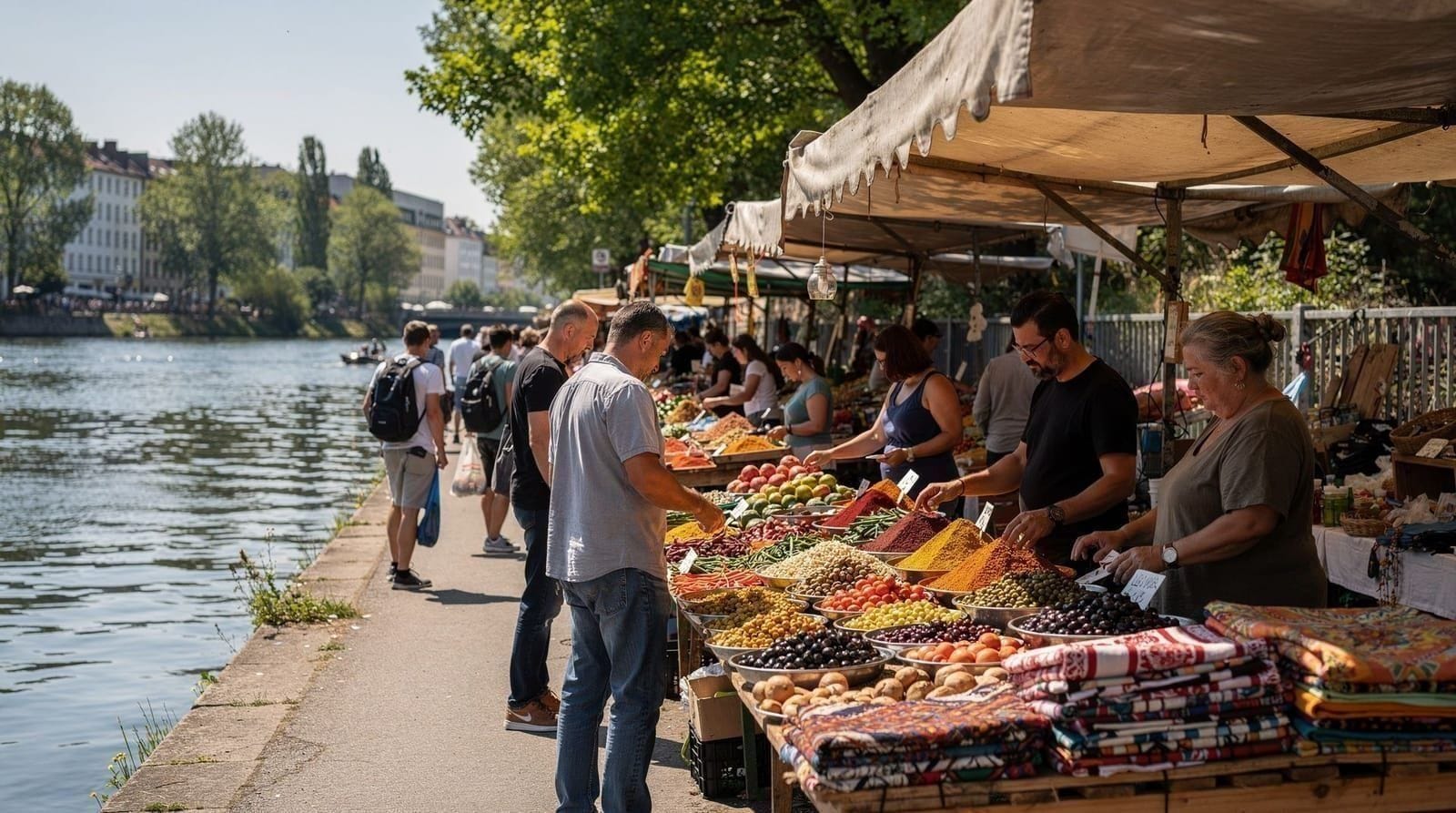
The Türkenmarkt (its informal name) runs along the Landwehrkanal and is one of the most important food markets in Berlin for Turkish and Middle Eastern ingredients. It is a working market for community members — not a curated food experience for visitors — which keeps prices and quality honest.
Food stalls at the market sell: fresh gözleme made to order (€4–5), lahmacun (€2–3 each), fresh ayran (€1.50), simit and bread from mobile carts, and an enormous variety of fresh olives, cheeses, and pickled vegetables at stall prices rather than shop prices.
The Friday market is larger and more social. In summer, people eat on the Maybachufer canal banks after shopping — bring a blanket and plan extra time.
A broader view of how this market fits into Berlin’s eating scene appears in the best markets for eating guide.
A guided introduction to the Turkish food scene
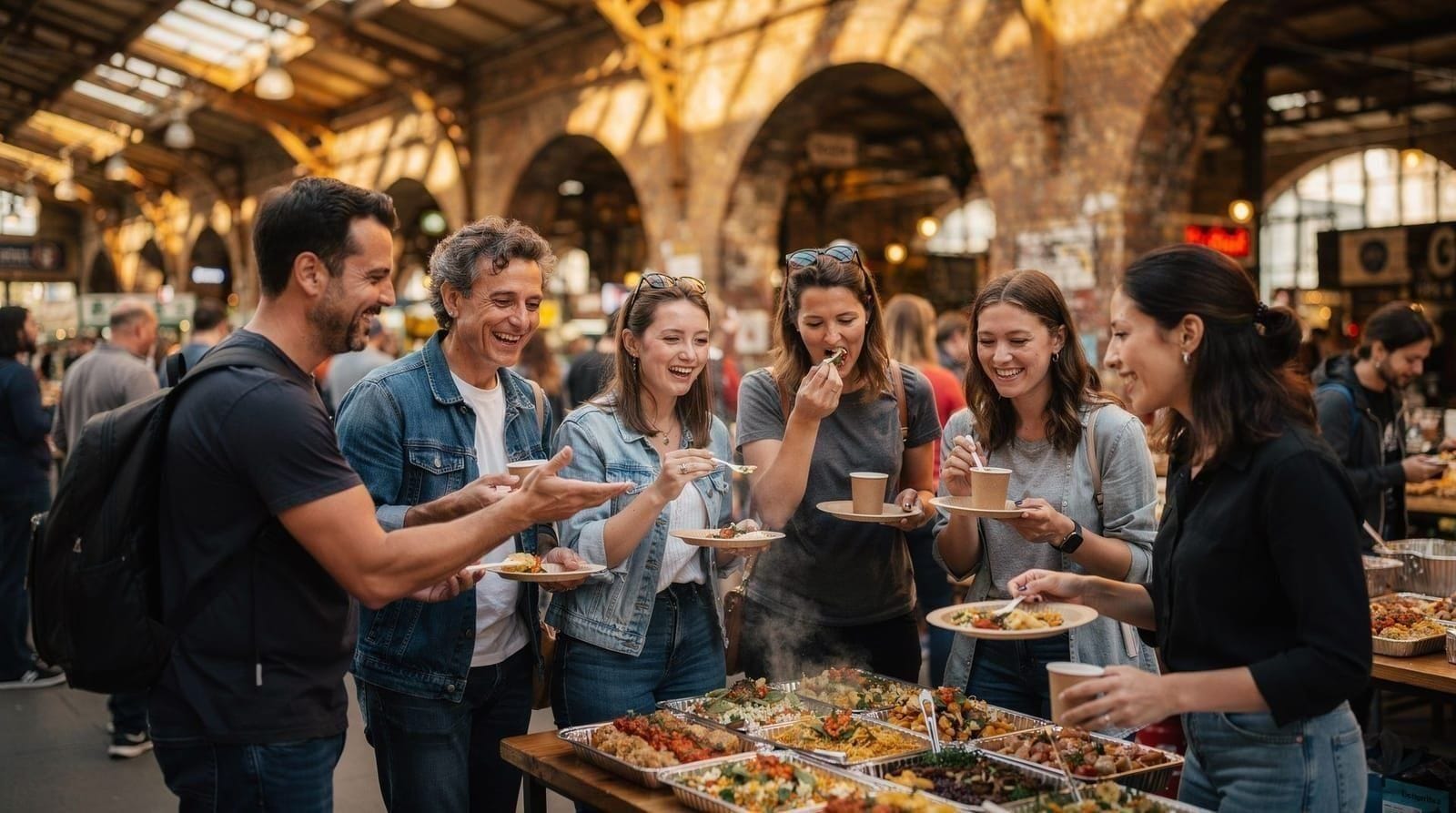
If you are not confident navigating Neukölln and Kreuzberg independently to find the best food, a guided street food walk through these neighbourhoods provides context and curated stops.
Berlin street food and cultural walking tour — Turkish quarter, Kreuzberg, market stopsA good tour should explain the community history, not just the food. Avoid any tour that stays in Mitte or Prenzlauer Berg — the Turkish food scene is in Kreuzberg and Neukölln.
Berlin Kreuzberg food and street art walking tour — combines Turkish food stops with neighbourhood contextPractical notes
Language: Most vendors in Kreuzberg and Neukölln speak Turkish and German, with varying English. A few useful phrases: “Einmal Döner, bitte” (one doner, please), “Scharf oder mild?” means “hot or mild?” — choose scharf if you want chilli sauce, mild if you do not. “Zum Mitnehmen” means takeaway; “zum Hier Essen” means eating in.
Cash: The majority of Turkish Imbisse, market stalls, and smaller restaurants are cash-only. Have €20–30 in small notes.
Transport: Kottbusser Tor (U1/U8) is the hub for Kreuzberg Turkish food. For Neukölln: Karl-Marx-Strasse (U7) and Hermannplatz (U7/U8). The Turkish Market is accessed from Schönleinstrasse (U8).
Best times: Doner shops are busiest 12:00–14:00 and 20:00–22:00. The Turkish Market is at its best on Friday afternoons. Turkish breakfast spots fill up on Saturday and Sunday mornings from 10:00 onward.
Getting oriented on foot: Sonnenallee and Kottbusser Tor are roughly a 20-minute walk apart, connected via Kottbusser Damm — a route that passes several smaller Imbisse and bakeries worth a stop if you’re not in a hurry. If you’re combining a doner run with the Türkenmarkt, aim to start at the market (mornings are calmer) and walk south toward Sonnenallee for lunch once the shopping crowds pick up.
For the broader context of eating well in Berlin without overspending, see the Berlin budget guide.
Vegetarian and vegan Turkish options
Turkish food is more vegetarian-friendly than the doner-centric reputation suggests. Mercimek corbasi (red lentil soup) is naturally vegetarian and often vegan. Gözleme with spinach and cheese (or ask for a vegetable-only filling) is widely available. Turkish breakfast spreads are largely vegetarian by default — eggs, cheese, olives, honey, and salad, with meat as an optional extra. Falafel, though more strongly associated with Arab cuisine in Berlin, is sold alongside doner at many Kreuzberg and Neukölln Imbisse and is a reliable vegan option at €4–6. For a fuller citywide rundown of where meat-free eating is easiest, see the Berlin vegetarian and vegan guide.
How this fits a wider food day in Kreuzberg or Neukölln
Turkish food is one strand of a broader street-food culture in these neighbourhoods, not an isolated pocket. Sonnenallee also has strong Arab and Levantine food (hence its nickname), and Kreuzberg’s food scene beyond Turkish specifically is covered in the Kreuzberg food guide. If you’re building a full day around eating, the Berlin food tour guide and the Berlin street food scene guide both help sequence a route that mixes Turkish stops with other neighbourhood specialities without doubling back on yourself.
Frequently asked questions about Berlin Turkish food guide
Why does Berlin have so much Turkish food?
Germany's post-war labour recruitment programme (the 1961 Anwerbeabkommen) brought hundreds of thousands of Turkish "Gastarbeiter" (guest workers) to West Berlin. Many stayed, and their families followed under family reunification laws. By the 1980s, a substantial Turkish community had established itself particularly in Kreuzberg and Neukölln. Today Berlin has approximately 250,000 people of Turkish origin — the largest Turkish community outside Turkey. This community built the food culture from scratch using imported ingredients and adapted recipes.What is a proper Berlin doner kebab?
A Berlin doner is specifically a pita or flatbread stuffed with shaved meat (traditionally veal and lamb, increasingly chicken or mixed), fresh vegetables (cabbage, tomatoes, cucumber, onion), and a garlic or herb yoghurt sauce. The Berlin version differs from Turkish doner — it uses German bread styles and heavier saucing. It was adapted here in the early 1970s, and Kadir Nurman, a Turkish immigrant in Berlin, is generally credited as the inventor of the street-food format.What is lahmacun and where should I eat it?
Lahmacun is a thin flatbread topped with minced meat (typically lamb with tomatoes, onions, and spices), baked in a wood-fired or stone oven. It is rolled around fresh salad and a squeeze of lemon. A single portion costs €2–4 at quality Neukölln and Kreuzberg restaurants versus €5–8 at tourist-facing spots near Alexanderplatz. Look for restaurants where locals are actually eating — a queue of Turkish families is a reliable quality signal.What is the Turkish Market on the Maybachufer?
The Türkenmarkt runs along the Maybachufer canal bank every Tuesday and Friday (11:00–18:30). It is a working market for the Turkish and Arab community — not a tourist attraction. You will find fresh produce, bulk spices, halal meats, fresh simit, gözleme, and lahmacun at prices far below what central Berlin charges. U8 to Schönleinstrasse. Cash only.Is there a difference between Turkish food in Kreuzberg versus Neukölln?
Kreuzberg (particularly the SO36 postcode around Kottbusser Tor) was the historical centre of Turkish settlement and has the most visible Turkish food scene including the Türkenmarkt. Neukölln — especially Sonnenallee, which locals call "Arab Street" though it has substantial Turkish presence too — is denser, more working-class, and often has lower prices and less tourist-facing presentation. Neither is better; they serve different moods and contexts.What should I order beyond doner?
Beyond doner: mercimek corbasi (red lentil soup, €3–5), iskender kebab (sliced doner over bread with tomato sauce and browned butter, €10–16 at sit-down restaurants), gözleme (savoury filled flatbread, €4–7), manti (Turkish dumplings with yoghurt and paprika butter, €8–12), and baklava (€2–4 per piece at pastry shops). For breakfast, menemen (Turkish scrambled eggs with peppers and tomatoes, €6–9) at any of the Turkish breakfast cafes in Kreuzberg.Which doner shops are tourist traps?
Any shop near the Brandenburg Gate, Checkpoint Charlie, or Alexanderplatz charging over €6.50 for a doner is running tourist prices. The same product costs €4–5.50 in Neukölln and Kreuzberg. Avoid shops that display large photos of the food with English-only menus prominently in the window and no Turkish speakers behind the counter — this usually signals a franchise operation prioritising turnover over quality.
Top experiences
Bookable activities with verified prices and instant confirmation on GetYourGuide.