Best indoor markets for eating in Berlin — Markthalle Neun, Arminiusmarkthalle and more
Berlin: Food Tour in Hidden Gems for Small Groups
Which indoor market is best for eating in Berlin?
Markthalle Neun in Kreuzberg is the top choice for quality food vendors and the Thursday Street Food Thursday event (17:00–22:00). Arminiusmarkthalle in Moabit is quieter and more local. Both charge nothing to enter. Avoid the fake-rustic tourist market stalls near the Brandenburg Gate.
Which indoor market is best for eating in Berlin? Markthalle Neun in Kreuzberg is the top choice for quality and variety, especially on Thursday evenings. Arminiusmarkthalle in Moabit offers a more local, less photographed alternative. Both are free to enter. The food truck clusters near the Brandenburg Gate and Hackescher Markt are overpriced and best avoided.
| Where | Markthalle Neun (Kreuzberg), Arminiusmarkthalle (Moabit), Winterfeldtmarkt (Schöneberg) |
| Cost | Free entry; €10–20 for a full meal from multiple vendors |
| Time needed | 1–2 hours per market |
| Getting there | U1 Görlitzer Bahnhof, U9 Turmstrasse, or U1–4 Nollendorfplatz |
| Best time | Street Food Thursday 17:00–22:00 at Markthalle Neun; Saturday mornings elsewhere |
What makes Berlin’s indoor markets different
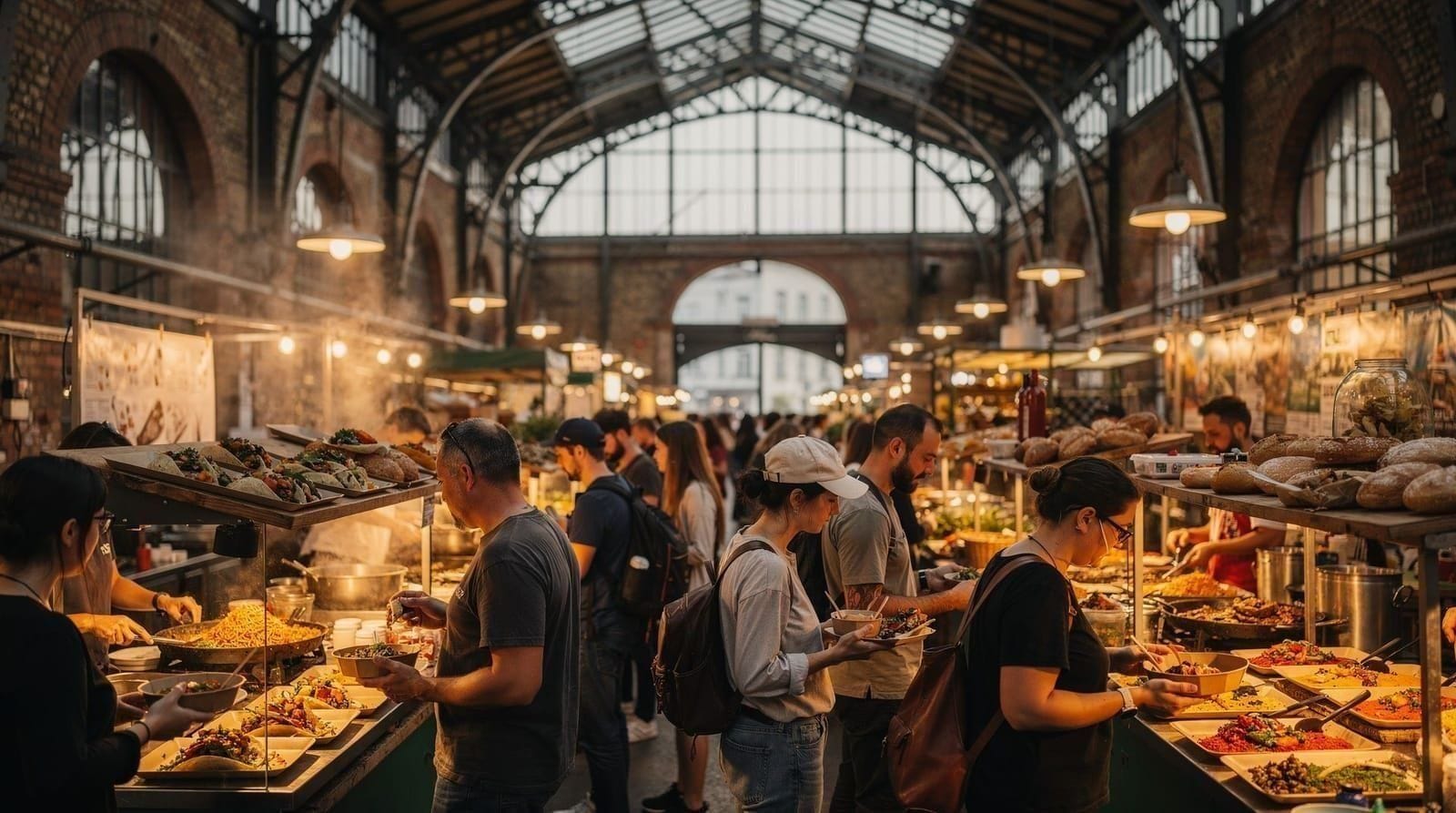
Berlin’s indoor market halls — Markthallen — are converted nineteenth-century market buildings that survived two wars, division, and decades of neglect before being repurposed. They are not artisan pop-ups. They are permanent structures with brick vaulting, cast-iron columns, and a history as neighbourhood food supply centres.
The revival of these spaces from around 2011 onward was part of a genuine neighbourhood food movement, not a tourism project. That distinction matters: the best markets are primarily used by locals, which is why prices remain reasonable and vendor quality is maintained by regular competition.
This guide covers the indoor halls specifically. For outdoor markets, see the Turkish Market guide and Berlin flea markets guide.
Planning a market-focused afternoon
If eating at markets is your main plan for a day, sequencing matters. Arminiusmarkthalle and Winterfeldtmarkt both wind down by mid-afternoon, so start there if visiting on a Wednesday or Saturday, then move on to Markthalle Neun’s permanent vendors (open Tuesday–Saturday daytime) or wait for Street Food Thursday if your dates align. The Türkenmarkt only runs Tuesday and Friday afternoons, so check the calendar before building a day around it — arriving on the wrong day means a wasted trip to a closed market. Combine a market visit with the Kreuzberg food guide or Kreuzberg neighbourhood guide if you’re near Markthalle Neun, since the surrounding streets have their own worthwhile food stops beyond the hall itself.
Markthalle Neun, Kreuzberg — the standard
Address: Eisenbahnstrasse 42–43, 10997 Berlin (Kreuzberg) U-Bahn: U1 to Görlitzer Bahnhof (7 minutes walk), or U8 to Schönleinstrasse (10 minutes) Hours: Tuesday–Friday 12:00–18:00, Saturday 10:00–18:00. Street Food Thursday: every Thursday 17:00–22:00.
Markthalle Neun (Market Hall Nine — Berlin had nine official Markthallen in the late nineteenth century) opened in 1891 and served as a neighbourhood grocery market until the 1970s, when supermarket chains made it obsolete. It became a flea market, then fell into disrepair. In 2011, a cooperative of buyers including food entrepreneurs Bernd Maier, Nikolaus Driessen, and Florian Niedermeier acquired the hall and relaunched it as a food and crafts market.
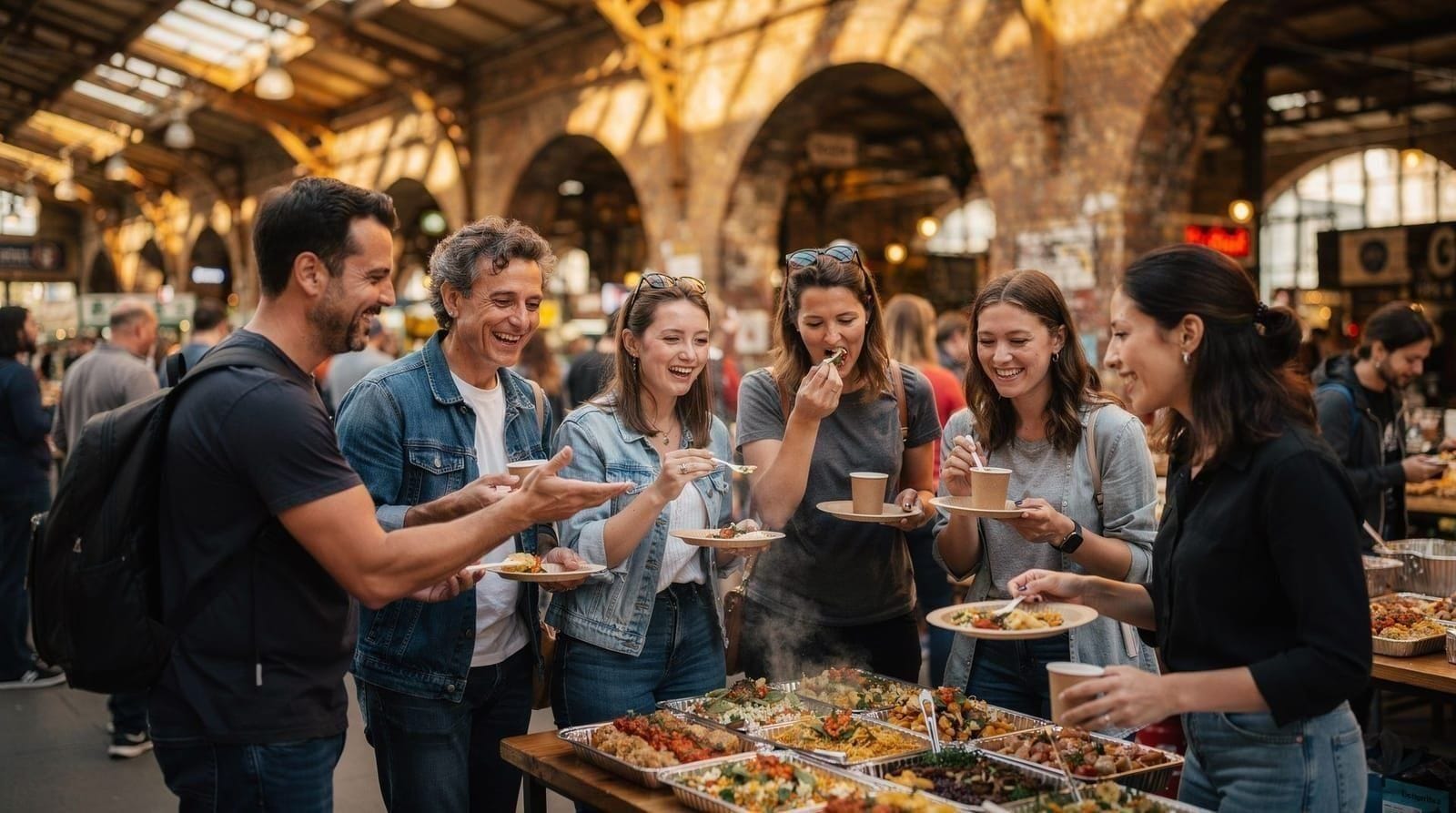
The result is a 4,800 square metre brick hall with a stated policy of excluding multinational food brands. All vendors are small operators. The weekly Street Food Thursday is the main event — 30–40 rotating food stalls, a bar serving German wines and local craft beer, and a crowd that is roughly 70 percent local, 30 percent tourists in summer.
What to eat at Markthalle Neun
The vendor roster changes, but consistent quality performers include:
Bratwurst and Thuringian sausage: Several German regional sausage vendors set up on Thursdays. Prices €3–5 per sausage with bread. Quality varies — the ones grilling over charcoal rather than gas are generally better.
Georgian food: Khinkali (steamed dumplings) have become a Thursday fixture. Price: around €8–10 for six pieces. The Georgian vendors also do churchkhela (walnut-grape candy strings) and lobiani (bean bread).
Vietnamese and Southeast Asian: Multiple stalls, variable quality. The banh mi vendors tend to be reliable; avoid stalls that look like they are running pre-packaged filling.
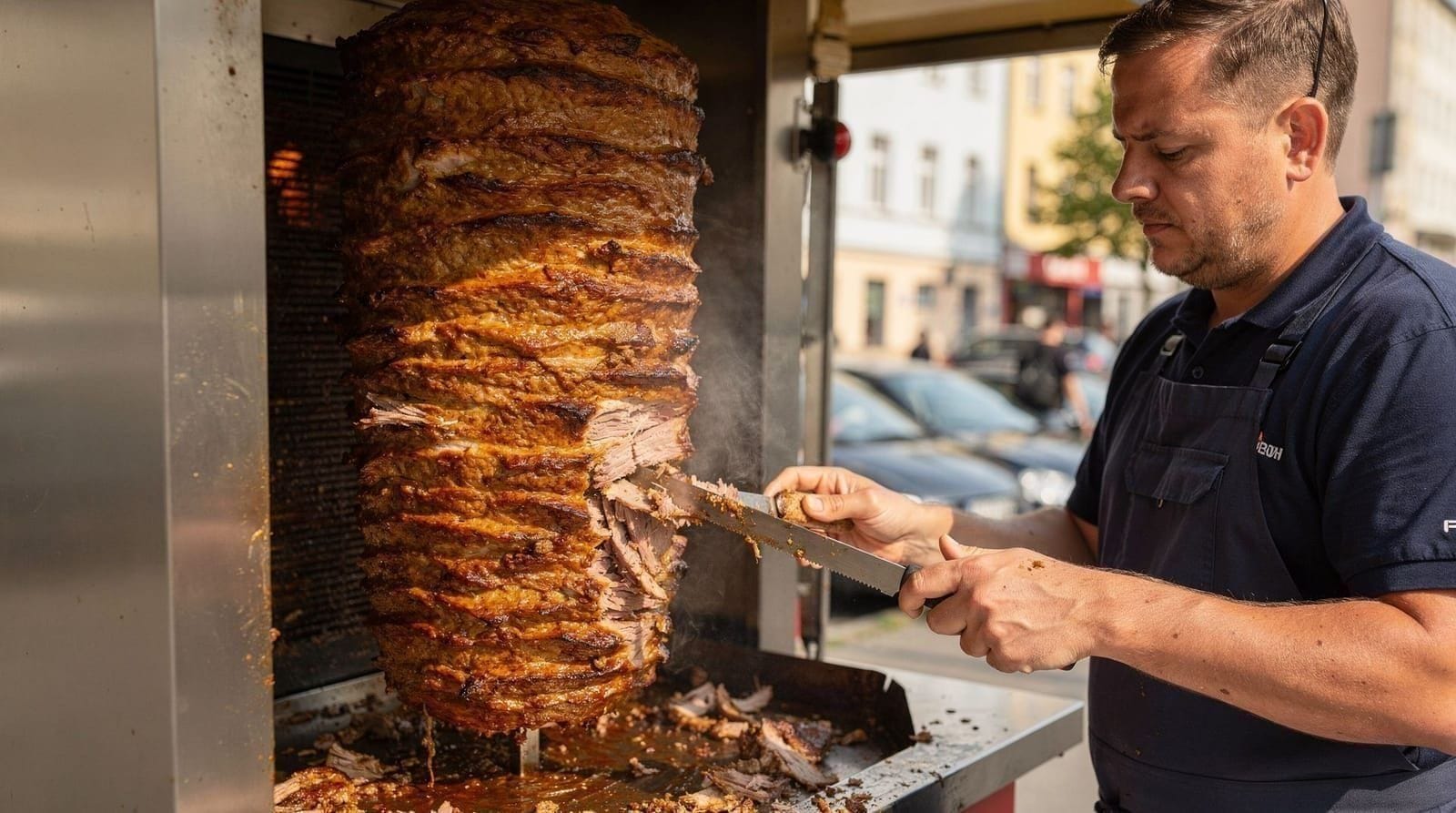
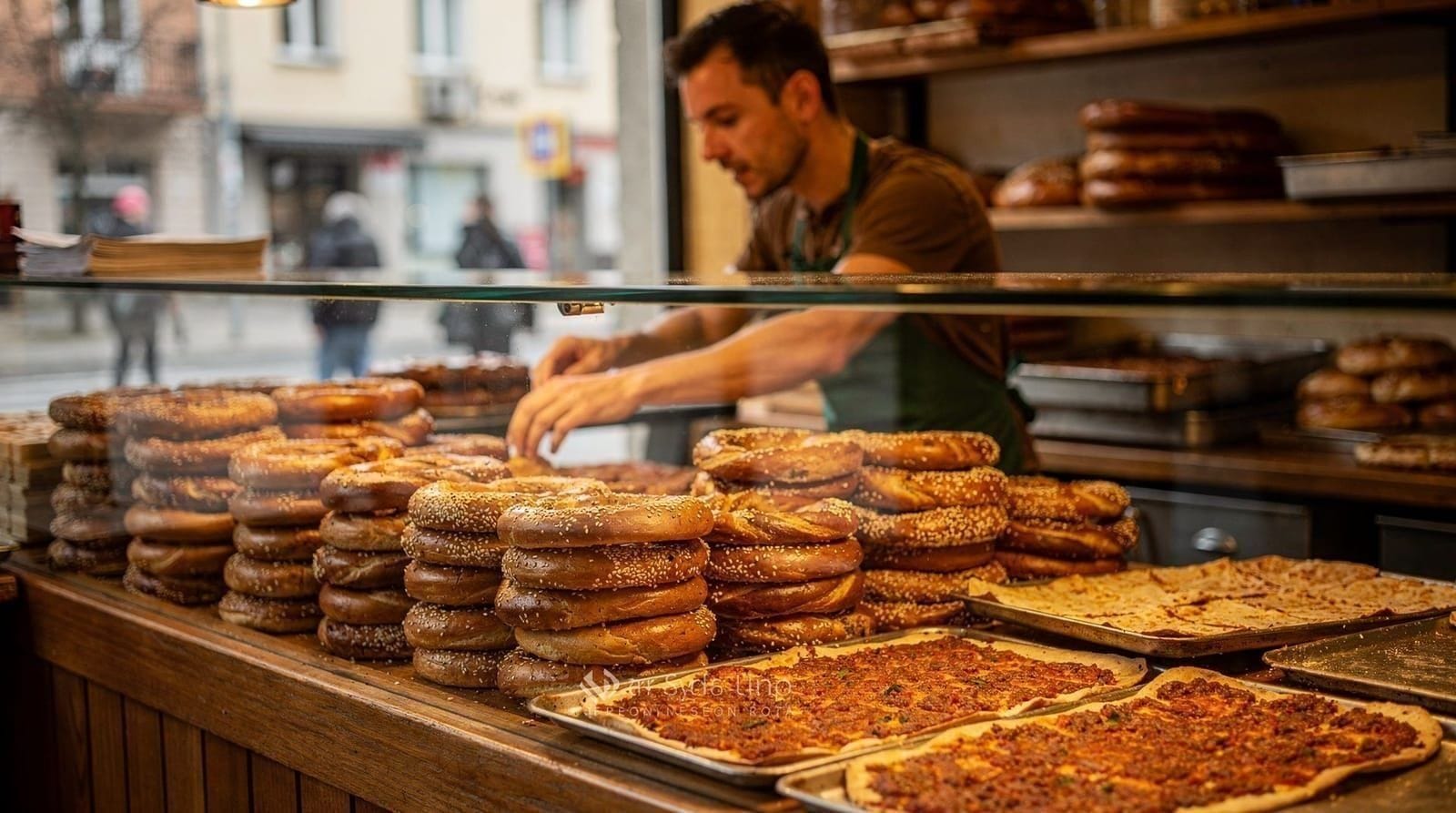
Turkish and Middle Eastern: Lahmacun, gözleme, falafel wraps. Typically €4–7 per item. Better options exist in Neukölln and at the Turkish Market, but the convenience at Markthalle Neun is good.
Local beer from Hops and Barley: The permanent Hops and Barley microbrewery inside the hall brews Berlin Weisse, Pilsner, and seasonal beers on site. A half litre costs around €4.50. This is not a tourist gimmick — it is an actual working brewery that has been in the hall since 2008.
The Saturday market
Smaller than Thursday evening but often better for serious food shopping. The focus is on producers: organic vegetable farms from Brandenburg, artisan cheese from small German dairies, sourdough bakers, specialty olive oil importers. It is a good place to buy provisions if you have a kitchen. Budget €15–30 for a proper shop.
Arminiusmarkthalle, Moabit — the local alternative
Address: Arminiusstrasse 2–4, 10551 Berlin (Moabit) U-Bahn: U9 to Turmstrasse, then 10 minutes on foot. Or bus 123 to Arminiusstrasse. Hours: Monday–Friday 07:00–18:00, Saturday 07:00–16:00. Closed Sunday.
Built in 1891 (same year as Markthalle Neun, same city programme), the Arminiusmarkthalle in Moabit is the least touristified of Berlin’s surviving indoor market halls. Moabit is a mixed working-class and immigrant neighbourhood north of Tiergarten — not a destination on most visitor itineraries, which is precisely what keeps this market honest.
The hall has a higher proportion of permanent food stalls — grocers, butchers, Turkish delicatessens — alongside a rotating selection of hot food vendors. The clientele is predominantly local residents doing their weekly shop. Tourist prices are not being charged here.
What to eat at Arminiusmarkthalle
Turkish delicatessen and doner: Several Turkish grocery and deli stalls sell olives, cheeses, pastries, and prepared foods. Prices are lower than equivalent products in Kreuzberg or Mitte. Fresh simit (sesame bread rings, €0.80–1.20) and börek (filo pastry with cheese or spinach, €2–4) are the standard quick snacks.
Hot food lunch: A handful of stalls serve hot food weekday lunchtimes targeting market workers and neighbourhood residents. Expect Mittagessen (lunch plates) for €5–8 — usually a meat or vegetable dish with salad and bread.
German butcher: There is a traditional German Metzger (butcher) inside the hall selling Aufschnitt (cold cuts) and prepared meats. Good for buying Leberwurst or smoked ham.
The hall gets busy 11:00–13:00 on weekdays. Arrive before 11:00 or after 13:30 for a more relaxed experience.
Winterfeldtmarkt, Schöneberg — the best all-rounder
Address: Winterfeldtplatz, 10781 Berlin (Schöneberg) U-Bahn: U1/U2/U3/U4 to Nollendorfplatz (5 minutes walk) Hours: Wednesday 08:00–14:00, Saturday 08:00–16:00
Technically an outdoor market but covered in part by awnings, the Winterfeldtmarkt deserves inclusion because it combines the best elements of both a proper farmers’ market and a street food event. It is one of the oldest continuous outdoor markets in Berlin (running since the 1970s) and serves a neighbourhood — the area around Nollendorfplatz and Winterfeldtplatz — with strong independent food culture.
Recommended stops: the Turkish pastry stand in the northwest corner (baklava, kadayif, and börek at honest prices), the Brandenburg organic farm stalls (seasonal vegetables, often with samples), and the French cheese importers (strong selection, expect €4–6 per 100g for good Comté or Brie de Meaux).
Hot food stalls sell currywurst, falafel, crêpes, and soups. Prices are €3–8. The surrounding cafes — particularly those on Maaßenstrasse — are good for sitting down with coffee before or after the market.
Turkish Market on the Maybachufer — the specialist case
Address: Maybachufer, 12047 Berlin (Neukölln/Kreuzberg border) U-Bahn: U8 to Schönleinstrasse (3 minutes walk) Hours: Tuesday 11:00–18:30, Friday 11:00–18:30
Not an indoor market but included here because it is the most important food market in Berlin for Turkish and Middle Eastern food specifically — and because it directly complements the Berlin Turkish food guide.
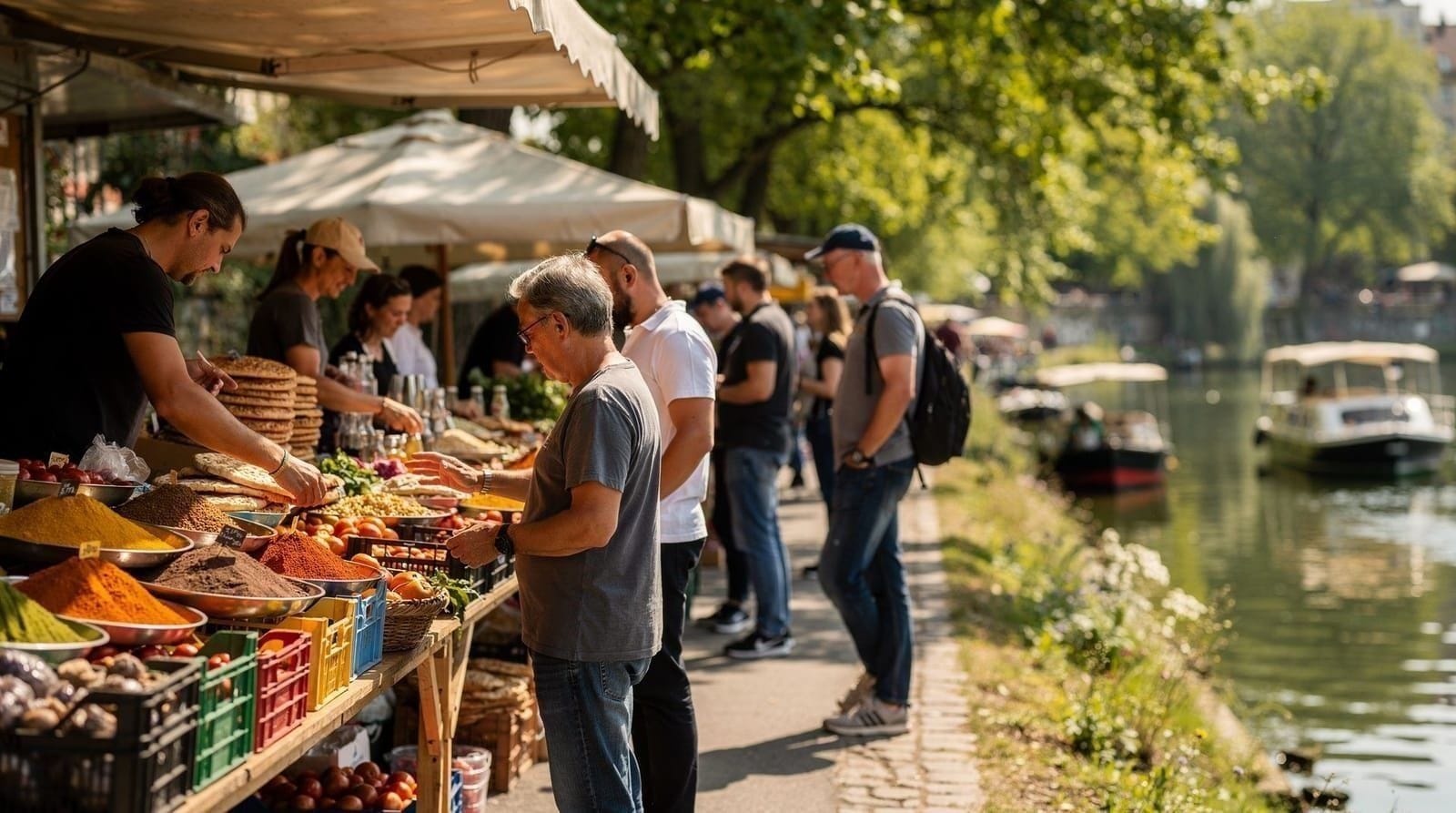
The Türkenmarkt runs along the Landwehrkanal between the Kreuzberg and Neukölln banks. It is a working market for the Turkish and Arab community — not a tourist market with German prices. You will find: fresh produce trucked in from wholesale markets, whole dried spices in bulk bags, halal meat and fish stalls, and prepared food including freshly fried gözleme (€4–5), lahmacun (€2–3), and fresh ayran (€1.50).
The Friday market is larger than Tuesday. Summer afternoons turn the canal banks into an informal social scene with people eating on the grass. Bring cash, as virtually every stall is cash-only.
Markets to skip
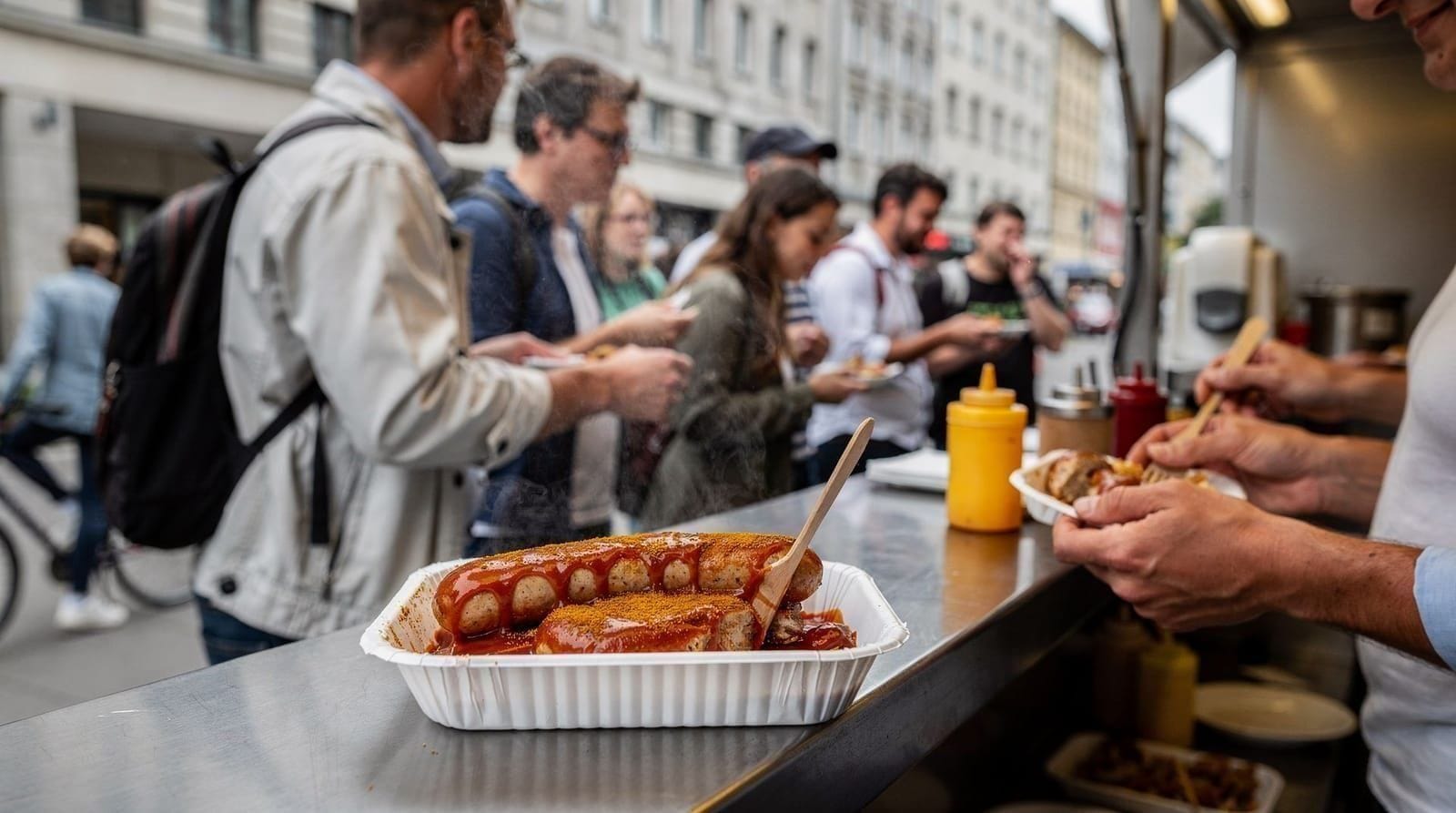
Hackescher Markt food trucks: The weekend food truck cluster near Hackescher Markt in Mitte serves tourist prices with mediocre food. A currywurst here costs €5–7; the same thing costs €2.50 at Curry 36 in Kreuzberg. Skip it.
Brandenburg Gate area food stalls: The portable food stalls between the Gate and Potsdamer Platz charge landmark premiums. Bratwurst at €6–8, waffles at €5–7. The food is not worse than elsewhere, but there is no reason to pay those prices when Markthalle Neun is 20 minutes by U1.
Christmas market stalls (general note): Berlin’s Christmas markets are atmospheric but expensive. A mug of Glühwein costs €4–6 plus a €2–4 deposit. Stalls selling Flammkuchen or Reibekuchen charge €6–10. The Berlin Christmas markets guide covers which markets offer best value.
Guided food market tours
If you want a guided introduction to Berlin’s food culture across multiple markets and neighbourhoods, a guided street food or market tour is a practical option — especially for a first visit where you do not yet know the difference between a genuine vendor and an overpriced tourist stall.
Berlin local food and hidden gems tour — markets, street food, neighbourhood contextThe most useful tours go beyond single markets and cover at least two or three neighbourhoods. A good guide will explain the Turkish community’s contribution to Berlin food, point out which vendors are selling mass-produced food versus fresh, and calibrate expectations on prices.
Berlin Kreuzberg food and street art tour — combines food vendors with neighbourhood contextTours running only to Markthalle Neun on a Thursday and calling it a complete food experience miss the Türkenmarkt, the Winterfeldtmarkt, and the Neukölln independent food scene. Ask in advance what the itinerary covers.
Practical advice for market eating in Berlin
Cash: Every market listed above has cash-only stalls. Assume cash is needed and plan accordingly. Geldautomaten (ATMs) are available near each market but Deutsche Bank and Sparkasse ATMs are preferable to avoid high foreign transaction fees.
Timing: Thursday Street Food Thursday at Markthalle Neun gets crowded between 18:30–20:30. Arminiusmarkthalle and Winterfeldtmarkt are busiest 10:00–12:00 Saturday. The Turkish Market on the Maybachufer is quietest 11:00–13:00 on Tuesdays.
Dietary needs: Turkish and Middle Eastern stalls generally have good vegetarian options. Vegan options are available but less systematic than at dedicated vegan restaurants — see Berlin vegetarian and vegan guide for restaurant alternatives.
Language: English is widely spoken by vendors at Markthalle Neun. At Arminiusmarkthalle and the Türkenmarkt, Turkish and German are more common. Basic German phrases (Einmal bitte — “one please”, Danke — “thank you”, Wieviel kostet das — “how much does that cost”) will serve you well.
Markets compared
| Market | District | Best day | Crowd level | Price range |
|---|---|---|---|---|
| Markthalle Neun | Kreuzberg | Thursday evening | High (tourists + locals) | €3–12/dish |
| Arminiusmarkthalle | Moabit | Weekday mornings | Low, mostly local | €2–8/dish |
| Winterfeldtmarkt | Schöneberg | Wednesday & Saturday | Moderate | €3–8/dish |
| Türkenmarkt (Maybachufer) | Neukölln/Kreuzberg | Friday | Moderate–high | €1.50–5/dish |
Frequently asked questions about Best indoor markets for eating in Berlin
When is Street Food Thursday at Markthalle Neun?
Every Thursday from 17:00 to 22:00. Vendors rotate but typically include 30–40 stalls covering everything from Georgian khinkali to Vietnamese banh mi to local bratwurst. Arrive before 18:00 to avoid queues at popular stalls. Entry is free.Is Markthalle Neun open on weekends?
Yes — the market hall hosts a smaller Saturday market (10:00–18:00) with local producers, cheese, bread, and specialty groceries. The hall itself also houses permanent vendors open Tuesday through Saturday during daytime hours. Sunday is closed.Is Arminiusmarkthalle worth visiting?
Yes, especially if you want a genuine neighbourhood market without the tourist crowd of Markthalle Neun. The food stalls lean towards Turkish, Middle Eastern, and German classics. Prices are lower on average. It is open Monday to Saturday 07:00–18:00 and is located in Moabit, a ten-minute walk from Turmstrasse U9.Are there food markets near the city centre?
The Gendarmenmarkt Christmas Market is a seasonal exception. Year-round, the closest quality food options near Mitte are the Turkish Market on the Maybachufer (Tuesday and Friday afternoons) and the Winterfeldtmarkt in Schöneberg (Wednesday and Saturday mornings). Do not confuse these with the overpriced food trucks on Hackescher Markt.What is the Winterfeldtmarkt like for food?
One of Berlin's best all-round markets for eating and shopping. Open Wednesday 08:00–14:00 and Saturday 08:00–16:00 on Winterfeldtplatz in Schöneberg. Strong for fresh produce, artisan cheese, Turkish pastries, and hot snacks. The neighbourhood around it — Nollendorfplatz area — has good cafes for extending the morning.Can I pay by card at food markets?
Cash is strongly recommended at all Berlin markets. Many individual food stalls are cash-only, including the majority of vendors at Markthalle Neun and Arminiusmarkthalle. There is usually a cash machine nearby but fees apply. Bring at least €20–30 in cash per person for a proper market meal.Is the Markthalle Neun expensive?
Individual dishes range from €3–12. A full meal from multiple vendors — which is the normal way to eat here — costs €10–20 per person depending on appetite and choices. German wine and craft beer from the market bar cost €4–6 per glass. This is reasonable for Berlin, though not cheap street food.
Top experiences
Bookable activities with verified prices and instant confirmation on GetYourGuide.