How to visit Berlin's Christmas markets — dates, prices, and practical tips
When do Berlin's Christmas markets run and which is the best?
Most markets open in late November (around 23 November 2026) and close on 26 December, with a few running to 30 December. Berlin has approximately 80 markets. The Gendarmenmarkt market charges €1 entry and is considered the most elegant setting. Alexanderplatz is the largest and most tourist-facing. For neighbourhood character without commercial pressure, the Lucia Christmas Market in Prenzlauer Berg is worth the detour.
How do you visit Berlin’s Christmas markets without tourist-trap exhaustion? Berlin has approximately 80 Christmas markets of varying quality, from the beautiful (Gendarmenmarkt) to the generic (most of Alexanderplatz’s commercial fringes). This guide covers the markets worth visiting, how to navigate them practically, what things cost, and what to actually buy. Dates given are for 2026 based on standard Berlin market calendars — confirm on individual market websites as exact dates are set annually.
| Where | Mitte, Charlottenburg, Prenzlauer Berg, Friedrichshain, Schöneberg |
| Cost | free–€1 entry; around €3.50–5.50/Glühwein |
| Time needed | 1.5–2 hours per market, half a day for a multi-market route |
| Getting there | U-Bahn/S-Bahn to each market; AB-zone day ticket covers the centre |
| Best time | Late November opening through 23–31 December depending on market |
How Berlin’s Christmas markets differ from the German stereotype
Berlin’s markets are more urban and less traditionally Bavarian than the image that dominates Christmas market tourism from abroad. You will find Glühwein and Lebkuchen everywhere, but Berlin markets also incorporate craft beer stalls, international food trucks, design-forward gift shops, and underground music venues — especially in the alternative markets in Kreuzberg and Friedrichshain.
This is a feature, not a bug. The diversity means there is a market for essentially every interest. The challenge is filtering out the mass-commercial markets and identifying the ones with genuine character.
The season runs from late November (usually the Monday before the first Advent Sunday, which in 2026 falls on 29 November) through to 26 December. Some markets extend to 30 December or New Year’s Eve. The German public holidays of 25 and 26 December are both active shopping and visiting days; 26 December (Zweiter Weihnachtstag) sees many markets still open with local families out in force.
The major markets — an honest assessment
Weihnachtsmarkt am Gendarmenmarkt
Location: Gendarmenmarkt, Mitte (U2/U6 Stadtmitte) Entry: €1 per person (cash or card) Dates 2026: Late November to 31 December (check gendarmenmarkt.de) Hours: 11am–10pm weekdays, 10am–10pm weekends
The gold standard of Berlin Christmas markets, and genuinely worth the entry fee. The Gendarmenmarkt is one of the most architecturally coherent squares in Germany — the Konzerthaus flanked by the Deutscher Dom (German Cathedral) and Französischer Dom (French Cathedral). At night with the buildings illuminated and the market operating between them, it is genuinely atmospheric rather than kitschy.
The €1 entry is not a profit centre; it is a crowd-management tool. The result is a market with real craft stalls (Erzgebirge woodwork, hand-blown glass, ceramics) mixed with food and drink. The Glühwein tends to be better quality than at the free markets.
Practical tip: go at 6–9pm on a weeknight for the best balance of atmosphere and crowd density. Weekend afternoons are very busy. The adjacent Konzerthaus sometimes runs associated Christmas concerts — check konzerthaus.de.
WeihnachtsZauber am Gendarmenmarkt
Technically a separate event from the Weihnachtsmarkt above, sometimes co-located or adjacent. Focused on handmade gifts, fair-trade goods, and higher-end craft. Also charges €1 entry. Worth combining with the main Gendarmenmarkt market if you are already there.
Weihnachtsmarkt Alexanderplatz
Location: Alexanderplatz, Mitte (U2/U5/S3/S5/S7/S9 Alexanderplatz) Entry: Free Dates 2026: Late November to 26 December Hours: 10am–10pm daily
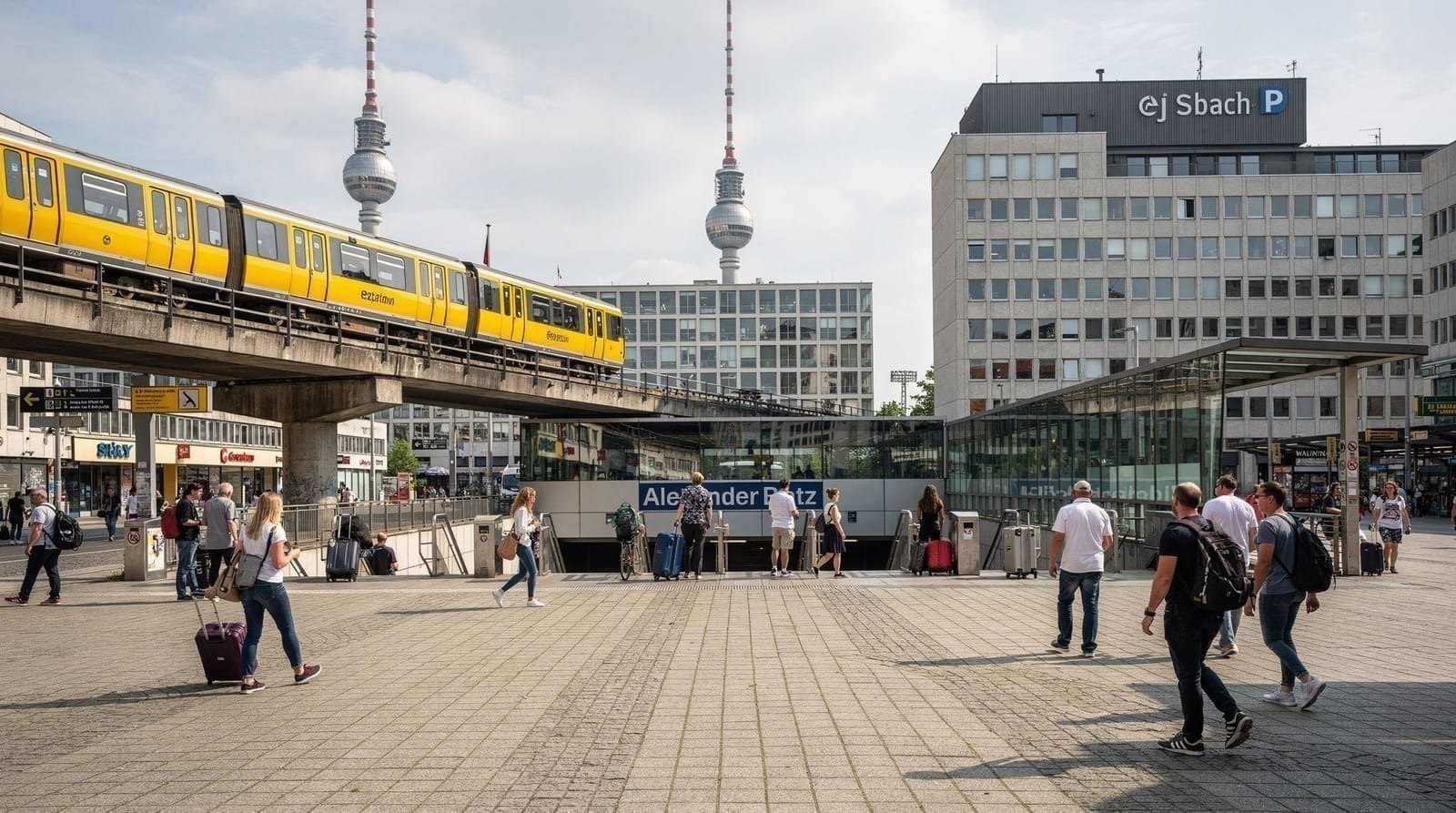
The largest market in terms of pure scale. Hundreds of stalls across the wide plaza, with rides, a large stage, and the TV Tower as backdrop. Glühwein, Bratwurst, and Lebkuchen in industrial quantities. The merchandise is heavily commercial — you’ll find the same Berlin-branded mugs and T-shirts repeated across dozens of stalls.
Worth visiting for the spectacle and the easy S-Bahn accessibility, but set expectations accordingly. It is a tourist-volume market rather than a craft market. The ice skating rink at Alexanderplatz runs separately, adjacent to the market.
For a neighbourhood perspective, the alternative market at Boxhagener Platz in Friedrichshain (20 minutes by U5 from Alexanderplatz) is a better use of time for actual gift shopping.
Weihnachtsmarkt Breitscheidplatz (Kaiser-Wilhelm-Gedächtniskirche)
Location: Breitscheidplatz, Charlottenburg (U2 Zoologischer Garten) Entry: Free Dates 2026: Late November to 30 December Hours: 10am–11pm daily
One of the most recognisable settings: the partly-bombed Kaiser Wilhelm Memorial Church kept as a war ruin alongside its modern blue-glass replacement. The market encircles the ruins and extends along the Kurfürstendamm approach.
This market was the site of the December 2016 terrorist attack (a truck driven into the crowd). The memorial to the victims is integrated into the area; a small placard near the market entrance marks the attack site. It feels right to acknowledge this rather than treat the market as purely commercial.
The market itself mixes quality stalls with tourist merchandise. The setting is visually distinctive. Accessible from Zoologischer Garten station, which also connects to the nearby KaDeWe department store for high-end gift shopping.
Wintertraum Alexanderplatz / Potsdamer Platz market
Potsdamer Platz (S1/S2/S25/U2 Potsdamer Platz) runs a market with an ice rink as the centrepiece — particularly good for families. The ice rink is the main draw; skate hire is around €4–6. The Arkaden shopping centre adjacent provides indoor warmth.
The neighbourhood markets — where Berliners actually go
Lucia Christmas Market, Kulturbrauerei (Prenzlauer Berg)
Location: Kulturbrauerei, Schönhauser Allee 36, Prenzlauer Berg (U2 Eberswalder Strasse) Entry: Free Dates 2026: Late November to 23 December
Set in the courtyard of the Kulturbrauerei (a former brewery complex now used as a cultural venue), this Scandinavian-inspired market focuses on Nordic design, organic food products, and crafts. More local clientele, less commercial merchandise, live music that tends toward folk and jazz rather than pop. Worth combining with a Prenzlauer Berg neighbourhood walk — the Prenzlauer Berg guide covers the neighbourhood in full.
Boxhagener Platz Christmas Market (Friedrichshain)
Location: Boxhagener Platz, Friedrichshain (U5 Samariterstrase) Entry: Free Dates 2026: First three weekends of December (weekends only)
Weekend-only market in one of Friedrichshain’s most neighbourhood-feeling squares. Independent craftspeople, local food producers, design objects. Crowds are entirely local — this is not on the standard tourist circuit. Best visited on Sunday afternoon, combined with the regular Sunday flea market that also runs on Boxhagener Platz.
Winterfeldtplatz Christmas Market (Schöneberg)
Location: Winterfeldtplatz, Schöneberg (U4 Nollendorfplatz) Entry: Free Dates 2026: First three weekends of December
The regular Winterfeldtplatz market (one of Berlin’s best weekly markets) takes a Christmas form in December with seasonal stalls. Local character, strong food focus, the mix of Schöneberg neighbourhood demographics that makes it genuine rather than curated.
Spandau Old Town Christmas Market
Location: Altstadt Spandau, western Berlin (U7 Altstadt Spandau) Entry: Free Dates 2026: Late November to 21 December
Spandau’s old town (one of the few medieval town centres surviving in the Berlin area) hosts a market that spreads through the historic streets and along the river. Less crowded than the central markets, genuinely picturesque in the small-scale medieval streetscape. Takes about 40 minutes by U7 from central Berlin — worth the journey if you want to combine with a visit to the Spandau Citadel.
What things cost at a Berlin Christmas market
Glühwein: €3.50–5.50 per 0.2-litre cup, plus €2–3 Pfand (deposit on ceramic mug). Return the mug to any stall at the same market for the Pfand refund. You can keep the mug — many have the year printed and make a reasonable souvenir.
Bratwurst: €3.50–5 for a sausage in a roll. Currywurst stands at the same price point.
Lebkuchen: Approximately €3–5 for individual pieces, €8–15 for decorated tins or decorated hearts (Lebkuchenherzen). The large iced Herzen with piped messages are a Berlin market tradition — kitsch but genuine.
Erzgebirge woodcraft (pyramids, nutcrackers): €15–200 depending on size and complexity. Mass-produced imitations from China look similar but are lighter and have no regional marking. Authentic Erzgebirge products carry a “Echtes Erzgebirge” label and tend to have hand-painted details.
Feuerzangenbowle: Approximately €6–8 for a spectacle and a drink. A sugar cone soaked in rum is lit and melted into mulled wine. Often done table-side; entertaining in cold weather.
Practical tips for visiting
Cash is essential. The majority of Christmas market stalls in Berlin are cash-only. Some larger markets now have a few card-accepting stalls, but assume you need cash and take €50–100 per person for a proper market visit (food, drink, and a purchase or two). ATMs are common throughout the city but may have queues on busy weekends.
Crowd timing. The busiest times are Saturday afternoons (3–6pm) and Sunday afternoons at the major markets. For Gendarmenmarkt, weekday evenings after 6pm are the best compromise between atmosphere (lights are on, music playing) and crowd density. Markets are virtually deserted on weekday mornings before noon.
Layering. Berlin in late November and December is cold — typically 0–5°C. Market visits involve standing still waiting for drinks and food. Dress warmer than you think you need to, especially your feet (the stone plazas are cold underfoot). Wearing your warmest coat is not overcautious.
Transport. The central markets are all accessible by U-Bahn or S-Bahn without needing a car or taxi. A BVG AB-zone day ticket (€10.20) or 7-day pass (€36.20) covers all the central markets. For Spandau, you need either an ABC zone ticket or a day add-on.
Photography. Evening photography at Gendarmenmarkt and Breitscheidplatz is excellent — the lit buildings provide natural backlighting. Overcast days (common in Berlin in November–December) produce softer light better than harsh winter sun. A compact camera or phone with a good night mode is sufficient.
A suggested one-day Christmas markets route
Morning (10–11am): Start at Alexanderplatz market (U5, see the scale, have a breakfast Bratwurst, €3.50).
Late morning (11:30am–1pm): Walk or U2 to Stadtmitte. Visit Gendarmenmarkt market (€1 entry, allow 1.5 hours for the market and a Glühwein at the Konzerthaus steps).
Lunch: Lunch at one of the Gendarmenmarkt food stalls or the nearby Augustiner am Gendarmenmarkt restaurant (sit-down, Bavarian, around €18–25 for a main).
Afternoon (2–4pm): U2 to Zoologischer Garten, walk to Breitscheidplatz market (30 minutes, free). Visit the Memorial Church interior (free). Browse the Kurfürstendamm stalls.
Evening (5–8pm): Return to Gendarmenmarkt for the evening atmosphere, or take U7 to Winterfeldtplatz for the Schöneberg neighbourhood market experience.
Total budget for the day: approximately €30–60 per person (entry fees, food, drink, transport) without purchases.
Market comparison at a glance
| Market | Entry | Vibe | Best for |
|---|---|---|---|
| Gendarmenmarkt | €1 | Elegant, architecturally stunning | Craft quality, evening atmosphere |
| Alexanderplatz | Free | Large, commercial, spectacle | Scale, easy transport access |
| Breitscheidplatz | Free | Distinctive ruin backdrop | Photography, Charlottenburg-adjacent shopping |
| Lucia (Kulturbrauerei) | Free | Scandinavian design, local | Gift shopping without crowds |
| Boxhagener Platz | Free | Neighbourhood, weekend-only | Local character, Friedrichshain combo |
| Spandau Altstadt | Free | Medieval streetscape | Escaping crowds entirely |
Winter context beyond the markets
Christmas markets are one part of Berlin’s winter season, which also includes shorter daylight hours, indoor museum days, and the run-up to New Year’s Eve celebrations. The Berlin in winter guide covers what else to plan around a market visit — museum priorities, indoor alternatives on the coldest days, and how the season affects opening hours citywide. If you’re travelling with children, the Alexanderplatz and Potsdamer Platz markets’ rides and ice rinks are the easiest fit; see the Berlin with kids guide for broader family planning.
Combining markets with gift shopping
Beyond the market stalls themselves, KaDeWe near Breitscheidplatz and the Mitte shopping streets around Friedrichstrasse get into full Christmas mode during the season, with window displays that are worth a walk even without buying anything. The Berlin shopping guide covers the wider retail landscape if you want to combine a market visit with actual gift shopping beyond the stalls. For food beyond Glühwein and Bratwurst, the best markets to eat guide covers Berlin’s year-round food markets, several of which run seasonal Christmas stalls alongside their usual vendors.
Frequently asked questions about How to visit Berlin's Christmas markets
How much does entry cost for Berlin's Christmas markets?
Most markets are free to enter. The Weihnachtsmarkt am Gendarmenmarkt charges €1 admission (cash or card). This fee helps maintain the market's quality and limits some of the mass-tourism crowds. WeihnachtsZauber am Gendarmenmarkt is a separate, adjacent event also with a €1 entry. The Breitscheidplatz (Memorial Church) market, Alexanderplatz, and Potsdamer Platz markets are all free to enter.What does Glühwein cost at Berlin Christmas markets?
A 0.2-litre cup of Glühwein typically runs €3.50–5.50, plus a Pfand (deposit) of €2–3 on the ceramic mug. Keep the mug or return it at the same stall. Berlin's Glühwein is generally less sweet than the Bavarian version. Punch, hot chocolate, and Feuerzangenbowle (rum flambé punch) are also common. Bring cash — most stalls do not accept cards, though some larger markets now have card-accepting stalls.What are the best Christmas markets in Berlin for locals rather than tourists?
The Lucia Christmas Market in Prenzlauer Berg (Kulturbrauerei complex), the alternative market at Boxhagener Platz in Friedrichshain, and the Schöneberg market at Winterfeldtplatz attract a more local crowd with independent crafts and less mass-market merchandise. These markets tend to be smaller and close earlier (around 9pm).Is the Gendarmenmarkt market worth the €1 entry fee?
Yes, for most visitors. The Gendarmenmarkt is one of Berlin's most beautiful squares — flanked by the Deutscher Dom and Französischer Dom with the Konzerthaus between them. The market itself has better-quality craft stalls, live music from the stage, and somewhat lower tourist density than Alexanderplatz. The €1 fee genuinely reduces the casual crowd. Evening visits (6–9pm) are most atmospheric when the buildings are lit.What time do Berlin Christmas markets open and close?
Most markets run roughly 11am–9pm or 10pm on weekdays, 10am–10pm on weekends. The Gendarmenmarkt market tends to close at 10pm. Breitscheidplatz stays open to 10–11pm. Markets are closed on Christmas Day (25 December). Several run on 26 December (Second Day of Christmas, a German public holiday). Always check individual market websites for exact hours, as they vary.Can I visit multiple markets in one day?
Yes. The central markets (Gendarmenmarkt, Brandenburger Tor, Breitscheidplatz) are 15–20 minutes apart on foot. Add the Alexanderplatz market and you have a logical route covering four major markets in one half-day. For the neighbourhood markets (Prenzlauer Berg, Friedrichshain), combine with other area sightseeing and allow separate visits.What to buy at Berlin Christmas markets — and what to avoid?
Worth buying — hand-painted ornaments from Erzgebirge craftspeople (look for the regional woodcraft association stalls, not factory copies), Lebkuchen (gingerbread), local craft beer advent sets, and handmade ceramics. Avoid — mass-produced Berlin-branded merchandise that is identical across all markets and sold online for less. The Gendarmenmarkt market has stricter controls on commercial goods; the larger markets are more mixed.Are Berlin Christmas markets family-friendly?
Generally yes. The Alexanderplatz and Potsdamer Platz markets have children's rides and family-focused stalls. Evening crowds can be very dense at the major markets on weekends — consider afternoon visits with children. The Spandau market in the old town (Altstadt Spandau) is consistently rated well for families and is less crowded than the central markets.Which Berlin Christmas market should I pick if I only have time for one?
Gendarmenmarkt, for most visitors — the €1 entry filters some of the crowd, the setting between the Deutscher Dom and Französischer Dom is genuinely beautiful lit up at night, and the craft quality is higher than the free markets. If you want scale and spectacle instead, Alexanderplatz is the largest. If you want zero tourist crowd, go for Boxhagener Platz or the Spandau Altstadt market instead.How cold does it get at Berlin Christmas markets and how should I dress?
Berlin in late November and December typically runs 0–5°C, sometimes colder in the evenings. Because market visits involve standing rather than walking continuously, dress warmer than you would for sightseeing — a proper winter coat, warm socks, and a hat and gloves. The stone plazas at Gendarmenmarkt and Breitscheidplatz get cold underfoot quickly.