Berlin public transport guide — S-Bahn, U-Bahn, trams, buses and tickets
Berlin WelcomeCard: Discounts & Transport Berlin Zones (AB)
How does Berlin public transport work?
Berlin BVG runs U-Bahn (underground), S-Bahn (overground rail), trams (Strassenbahn, mostly east Berlin), and buses on a single zonal ticket system. Zone AB covers all of Berlin; zone C adds Potsdam and outer Brandenburg. A single AB ticket costs €4.80; a day ticket is €9.90. The BVG app sells tickets instantly on your phone.
Quick answer: Berlin’s BVG network covers the whole city with U-Bahn, S-Bahn, trams, and buses on a single ticket. Zone AB covers everything within Berlin proper, including BER airport. A day ticket (€9.90) pays off if you make three or more journeys in a day. Buy tickets via the BVG app or yellow machines at any station.
Berlin’s public transport is genuinely good. The city of 3.6 million people has 10 U-Bahn lines, 15+ S-Bahn lines, 22 tram lines (east), and an extensive bus network — all running on a single zonal ticket. For visitors, the system is not intimidating once you understand the key distinctions.
| Zones needed | AB for Berlin itself; add C for Potsdam or Oranienburg day trips |
| Single ticket | around €4.80 (AB) |
| Day ticket | around €9.90 (AB) — worth it from 3+ trips |
| Buy via | BVG Fahrinfo app or yellow station machines |
| Validation | Stamp paper tickets before boarding; app tickets activate instantly |
| Fine if caught without one | around €60, no exceptions for tourists |
The BVG and DB — two operators, one ticket
Confusingly, Berlin’s public transport is operated by two different companies:
BVG (Berliner Verkehrsbetriebe): Runs the U-Bahn, trams, and buses. The BVG logo (a blue-and-yellow design) is what you’ll see on machines, stops, and apps.
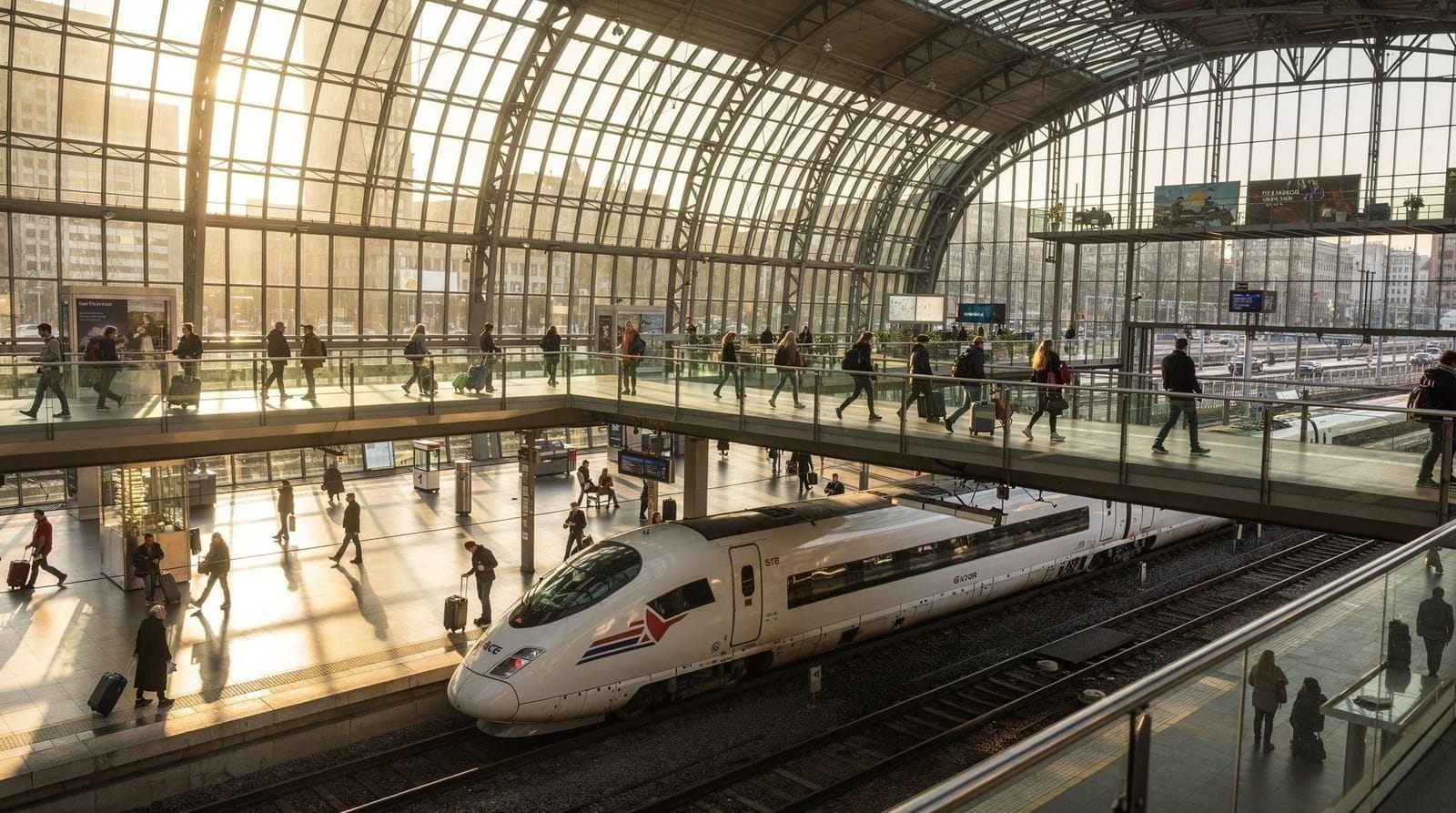
DB (Deutsche Bahn): Runs the S-Bahn. The S-Bahn uses a different set of vehicles (silver with a red stripe), different platforms, and is often at street level or elevated. However, the same BVG ticket is valid on S-Bahn within Berlin.
In practice, you don’t need to think about this. Buy any valid BVG ticket and use it on everything.
Zone AB vs. ABC — the key distinction
Berlin’s ticket system uses three concentric zones:
Zone A: The inner city, roughly inside the S-Bahn ring (the circular S41/S42 lines that form a rough oval around the city centre). Includes Museum Island, Mitte, Tiergarten, Kreuzberg, Prenzlauer Berg, Wedding, and Friedrichshain.
Zone B: The outer city, everything within Berlin’s city limits not in Zone A. This includes Charlottenburg, Spandau, Tempelhof, Neukölln, Lichtenberg, BER airport, and Pankow.
Zone C: Areas outside Berlin’s city boundary. Most relevant for visitors: Potsdam, Oranienburg (for Sachsenhausen day trip — see the Sachsenhausen day trip guide), Königs Wusterhausen, and Brandenburg an der Havel.
Standard zone for visitors: AB. This covers all of Berlin proper, including BER airport, and is what the vast majority of tourists need. If you’re taking a day trip to Potsdam, upgrade to ABC.
Ticket types and what they cost in 2026
Single ticket (Einzelfahrschein):
- AB: €4.80 — valid 2 hours from validation, unlimited transfers within zone
- ABC: €5.00
- Kurzstrecke (short trip): €2.40 — valid for 3 stops on S-Bahn/U-Bahn or 6 stops on bus/tram, no transfers
Day ticket (Tageskarte):
- AB: €9.90 — valid until 3am the following day
- ABC: €10.60
- Worth it if you take 3+ single trips in a day
7-day ticket (7-Tage-Karte):
- AB: €36.00 — valid 7 consecutive days from first use
- Significantly cheaper than 7 day tickets. Worth buying if staying a week or more
Monthly ticket (Monatskarte):
- AB: €86.00 — primarily for Berlin residents; rarely economical for short stays
Group day ticket (Gruppenkarte / 5-Personen-Tageskarte):
- AB: €29.50 — covers up to 5 people for one day. Outstanding value for families or groups
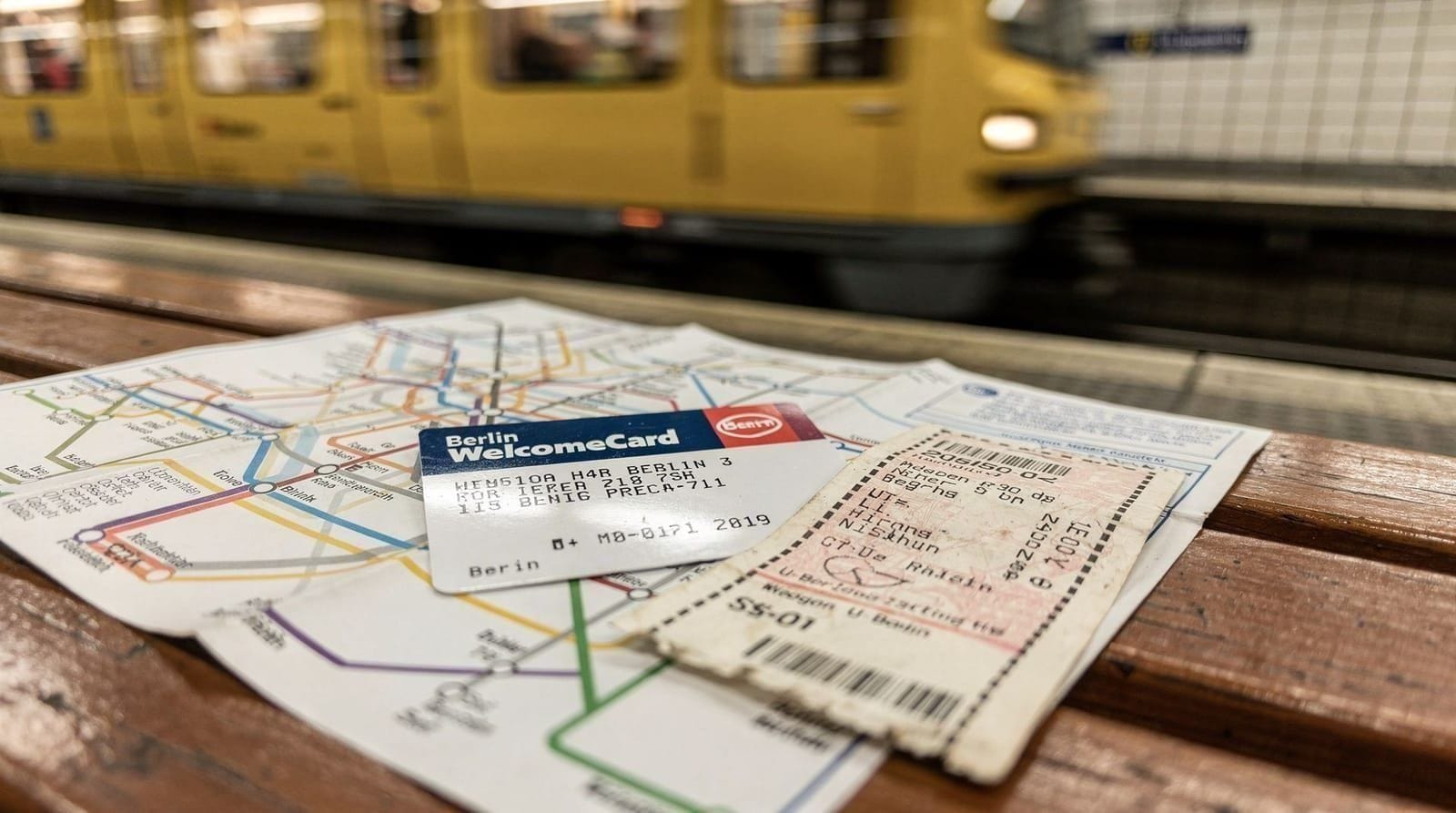
WelcomeCard: A tourist-specific card bundling transport with museum discounts. Sold in 2, 3, 4, 5, and 6-day versions for AB and ABC zones. Includes discounts at major museums and attractions. See the dedicated analysis at is the Berlin WelcomeCard worth it before buying.
Get the Berlin WelcomeCard AB zone — transport + museum discounts bundled Get the Berlin WelcomeCard ABC zone — includes PotsdamThe BVG app — recommended for daily use
The BVG Fahrinfo app (iOS and Android, free) is the practical choice for most visitors:
- Buy tickets in-app, no machine queue
- Tickets activate immediately and display as a QR code for inspection
- Journey planner with real-time delays
- Night network and tram lines included
- Accepts major credit/debit cards
The UI is in German and English. The app works offline for purchased tickets. One practical note: buy tickets before you board — purchasing after boarding is not technically permitted, and if an inspector boards, you cannot quickly buy a ticket to avoid a fine.
Alternative: Google Maps and Citymapper both work well for navigation in Berlin and integrate BVG real-time data.
U-Bahn — the underground network
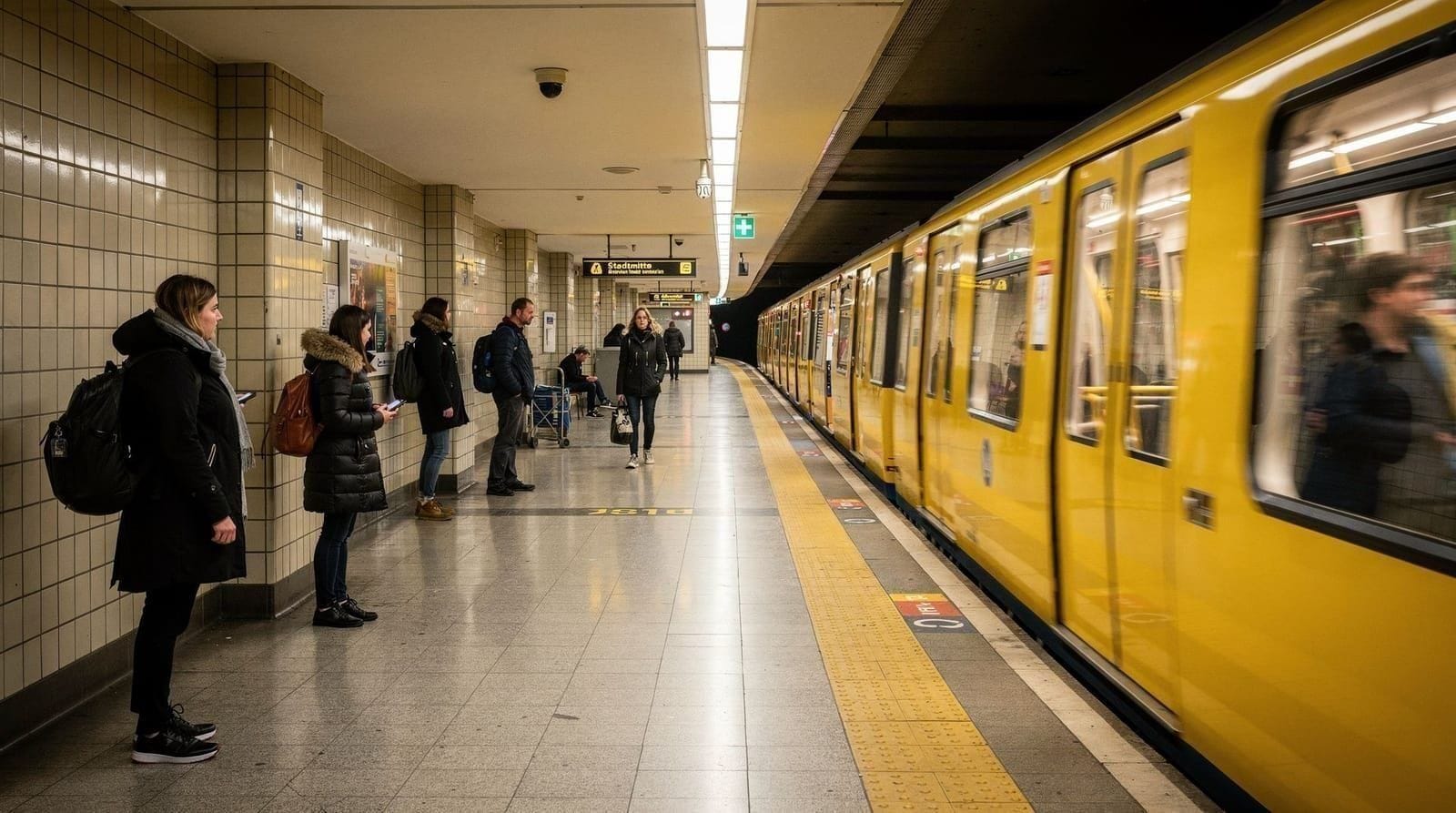
The U-Bahn (Untergrundbahn) runs 10 lines (U1 through U9, with U55 now merged into U5) covering most of central and western Berlin. Key lines for visitors:
U5: The backbone east-west line, running from Hauptbahnhof through Brandenburger Tor, Bundestag, Alexanderplatz, Frankfurter Allee, to Hönow. This is one of the most useful tourist lines.
U6: Runs north-south through Mitte, including Friedrichstrasse, Stadtmitte, Mehringdamm, and Tempelhof.
U2: Connects Ruhleben in the west through Zoologischer Garten, Wittenbergplatz, Nollendorfplatz, Gleisdreieck, and Potsdamer Platz east to Pankow.
U1/U3: Kreuzberg-Friedrichshain line, important for visitors in the Görlitzer Park and Treptower Park areas.
For a detailed guide to the U-Bahn network, including night services and how the system actually functions without barriers, see the Berlin BVG/U-Bahn guide.
S-Bahn — overground rail
The S-Bahn runs 15+ lines on dedicated tracks above or at ground level. Key lines:
S5/S7/S75: The central east-west corridor, running from outer suburbs through Hauptbahnhof, Hackescher Markt, Alexanderplatz, Ostbahnhof, and onward. Most visitors use this corridor frequently.
S41/S42 (Ring): The circular Ringbahn running around the inner city. Connects Wedding, Schonhauser Allee, Ostkreuz, Treptower Park, Südkreuz, Westkreuz, and back. Useful for avoiding the centre when travelling between districts.
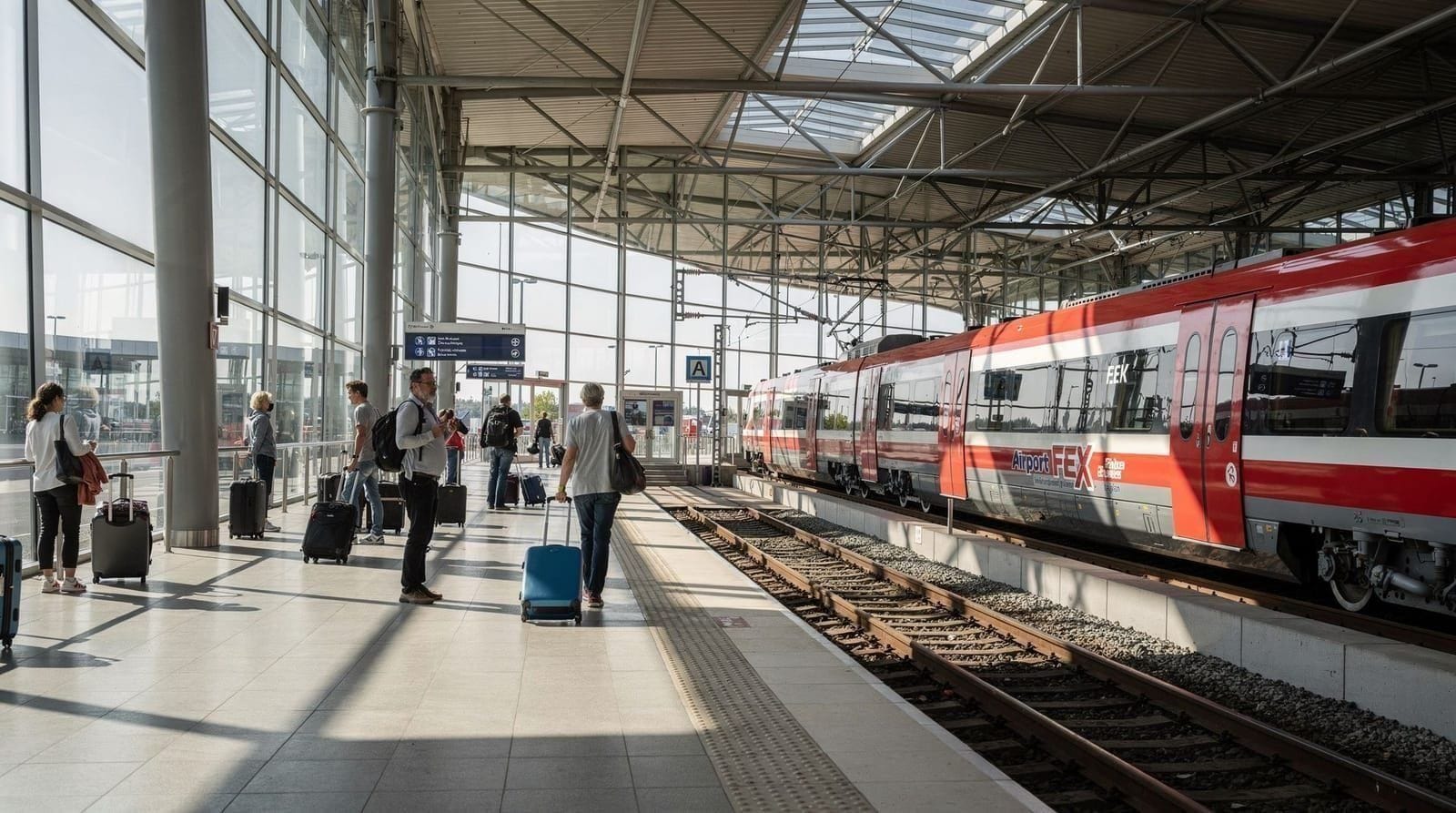
S9: BER airport service (see the Berlin BER airport guide). Also runs through Schoneberg, Ostbahnhof, and connects to Spindlersfeld.
S1: Wannsee — Oranienburg line, passing through Potsdamer Platz, Friedrichstrasse, and northern Berlin. Useful for Wannsee day trips.
Trams — east Berlin only
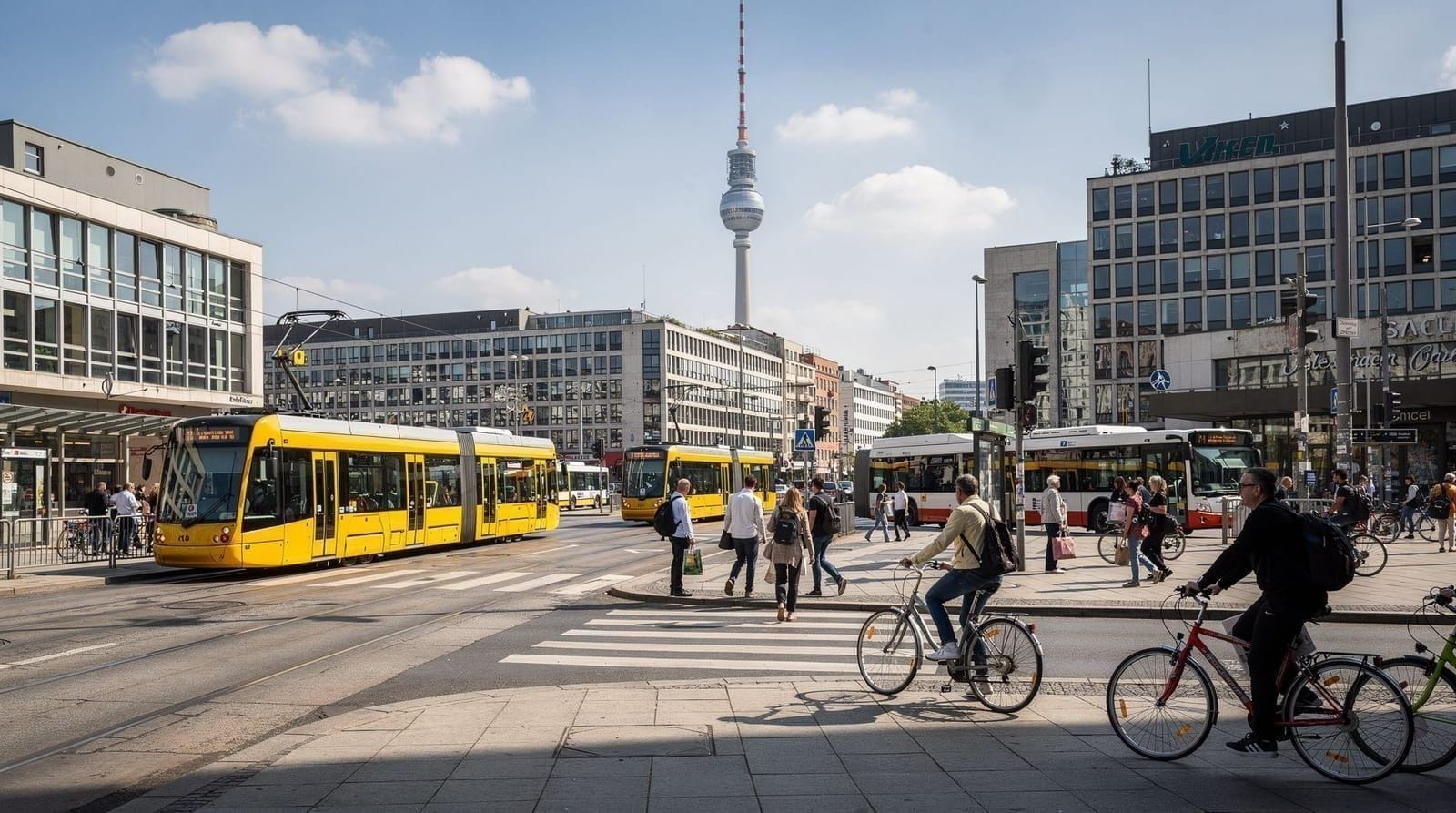
The Strassenbahn covers Mitte, Prenzlauer Berg, Friedrichshain, Lichtenberg, and outer east Berlin. Key lines:
M1: Rosenthaler Platz, Prenzlauer Berg (Kastanienallee, Helmholtzplatz), and north. Extremely useful for Prenzlauer Berg visitors.
M10: Hauptbahnhof to Warschauer Strasse, passing through Friedrichshain and Prenzlauer Berg. Particularly useful for the east-west corridor through the north.
M4/M5/M6: Connect Alexanderplatz to Lichtenberg and further east.
Trams use the same ticket as all other modes. Tickets can be bought from machines at the stop or on the tram (only at the front near the driver). The BVG app works on trams.
Bus network
Berlin’s bus network is extensive but most tourists rarely need it beyond specific journeys. Notable buses:
Bus 100 and 200: The “tourist buses.” These connect Zoologischer Garten (Zoo) through Tiergarten, Brandenburg Gate, Unter den Linden, Museum Island, and Alexanderplatz. A standard ticket works — this is sometimes cheaper than a hop-on-hop-off tour. See the Berlin hop-on-hop-off guide for whether that option makes sense.
Night buses (N-prefix): Run overnight when U-Bahn is not operating (Sunday to Thursday nights). Night network covers all key routes.
Practical tips for using Berlin public transport
Peak hours: Trains are crowded 7-9am and 5-7pm on weekdays. Manage expectations, especially on U5 and S-Bahn ring lines.
Validation: Stamp paper tickets before boarding. A forgotten stamp = an €60 fine with no exceptions made for tourists or language barriers.
Platform confusion: S-Bahn and U-Bahn stations often share a name but are separate physical locations, sometimes a few minutes’ walk apart. At Alexanderplatz, for example, the U2/U5/U8 station and the S-Bahn platforms are connected but on different floors. At Zoologischer Garten, the S-Bahn and U2 are above and below ground respectively.
Transfers: A single ticket allows unlimited transfers within its validity window (2 hours for singles). You can switch between S-Bahn, U-Bahn, tram, and bus on one ticket. Travel must be in a consistent direction — backtracking on the same line is technically not permitted on a single, though rarely enforced if the time is still valid.
Bikes: Bicycles are allowed on U-Bahn (in designated carriages, marked with a bicycle symbol on the carriage door), S-Bahn, and some regional trains. A bicycle requires a separate Fahrradkarte (bicycle ticket, €2.40). Bikes are not permitted on buses or trams. See the Berlin cycling guide for cycling options.
What to avoid
Buying from machines near tourist attractions: At Alexanderplatz or Brandenburg Gate, machines sometimes have short queues and can be slower. The BVG app is faster.
Unofficial apps: Some third-party transit apps exist but charge premium prices for tickets. Use the official BVG Fahrinfo app.
Hoping for barriers: Berlin has no ticket barriers. This makes it tempting to skip tickets. The fine (€60) is not negotiable and inspectors are frequent. On an average week, you’ll encounter inspectors on roughly one in four journeys.
Overbuying: If you take fewer than 3 trips in a day, individual singles may be cheaper than a day ticket. Track your journeys.
Getting around without public transport
For a full comparison of all transport options — including walking, cycling, and rideshares — see the getting around Berlin guide.
Which ticket should you actually buy?
| Traveller type | Recommended ticket | Approx. cost |
|---|---|---|
| One day, sightseeing centre (Mitte, Museum Island) | Day ticket AB | around €9.90 |
| One day trip to Potsdam or Sachsenhausen | Day ticket ABC | around €10.60 |
| Short stay of 4-6 days, moving around daily | 7-day ticket AB | around €36.00 |
| Family or group of up to 5, one day | Group day ticket AB | around €29.50 |
| Just one or two short hops | Single or Kurzstrecke tickets | around €2.40-4.80 each |
| Sightseeing plus museums, 2-6 days | Berlin WelcomeCard | see WelcomeCard guide |
As a rule of thumb: if you’re not sure, buy the day ticket. It removes the mental math of tracking individual fares and lets you hop on and off freely between Mitte, Kreuzberg, Prenzlauer Berg, and Charlottenburg without a second thought.
Step-free access and accessibility
Not every U-Bahn station has a lift (Aufzug) — older stations built before the 1990s, especially on the U1, U2, and parts of the U6, still rely on stairs only. The BVG app marks stations with wheelchair icons and shows real-time lift outages, which are worth checking before you travel, since lifts do break down. S-Bahn stations are more consistently step-free than older U-Bahn stations. Trams and most buses are low-floor and step-free by default. If you’re travelling with a wheelchair, a pushchair, or heavy luggage, cross-check your route in the app rather than assuming every interchange is accessible — this matters especially for families heading to attractions covered in the Berlin with kids guide.
Taxis and rideshares as a backup
Public transport covers almost everything, but taxis, Uber, Bolt, and FreeNow are useful backups late at night when you’ve missed the last train, when travelling with heavy luggage straight from BER airport, or in bad weather with young kids. Expect a taxi across central Berlin (say, Mitte to Kreuzberg) to run roughly €15-25 depending on traffic and distance — noticeably more than a €4.80 transit ticket, but sometimes worth it for convenience. Ride-hailing apps generally undercut street taxis slightly. For most journeys within the city, the U-Bahn or S-Bahn remains faster than a car once you factor in traffic.
Frequently asked questions about Berlin public transport guide
What is the difference between S-Bahn and U-Bahn in Berlin?
The S-Bahn (Stadtbahn) runs above ground on dedicated rail tracks, with fewer stops and faster journey times. It is operated by DB (Deutsche Bahn), not BVG, but uses the same BVG ticket system. The U-Bahn runs mostly underground with more frequent stops in central areas. Both use the same ticket. S-Bahn is better for cross-city distances; U-Bahn is better for dense central coverage.What is the AB zone and when do I need zone C?
Zone A covers the central city (within the S-Bahn ring). Zone B covers the rest of Berlin, including BER airport. Zone C covers areas outside Berlin — primarily Potsdam, Schonefeld, and parts of outer Brandenburg. Most visitors only ever need an AB ticket. Add zone C if you plan to take a day trip to Potsdam (see the Berlin to Potsdam guide).How much does a Berlin public transport ticket cost in 2026?
Single AB ticket (Einzelfahrschein) costs €4.80. Day ticket (Tageskarte AB) costs €9.90. 7-day ticket costs €36.00. Monthly ticket costs €86.00. Zone ABC single costs €5.00, day ticket €10.60. Short trip ticket (Kurzstrecke — 3 S-Bahn/U-Bahn stops or 6 bus/tram stops) costs €2.40.How do I buy a BVG ticket in Berlin?
Three options — yellow BVG machines at every U-Bahn and S-Bahn station (card and cash), the BVG Fahrinfo app (iOS/Android, digital ticket on phone), or ticket offices at major stations. The BVG app is the most convenient for daily purchases. Paper tickets from machines must be validated (stamped) in the yellow machines at platform entrances; BVG app tickets activate immediately on purchase.Do I need to validate my ticket in Berlin?
Yes, for paper tickets purchased from machines. Find the yellow validation machines (Entwertungsautomaten) at U-Bahn platform entrances and S-Bahn platforms, and stamp your ticket before boarding. Digital tickets bought via the BVG app do not require separate validation. Travelling on an unvalidated paper ticket is treated the same as travelling without a ticket — a €60 fine.Are there ticket inspections on Berlin public transport?
Yes, though not at every journey. Berlin operates a trust-based system without barriers. Plainclothes Kontrolleure (inspectors) board trains regularly and check tickets without warning. Fines for travelling without a valid ticket are €60, paid on the spot or later by bank transfer. The inspection frequency is real — short-term visitors who skip tickets are regularly caught.Do trams run all over Berlin?
No. The Strassenbahn (tram) network covers eastern Berlin almost exclusively — Mitte, Prenzlauer Berg, Friedrichshain, Lichtenberg, Pankow, Weissensee, and Kopernick. Western Berlin (Charlottenburg, Schoneberg, Kreuzberg west, Wedding) has almost no tram coverage. U-Bahn and buses serve the west. This is a historical legacy of the city's division — trams were maintained in East Berlin; West Berlin removed them.What is the night network in Berlin?
Berlin has an extensive Nachtliniennetz (night network) running every 30 minutes from around 12:30am to 4:30am. Night buses (N-prefix) replace U-Bahn lines. The S-Bahn runs overnight on Friday and Saturday nights on most lines. Standard tickets are valid on night services.