Getting around Berlin — all transport modes compared honestly
Berlin WelcomeCard: Discounts & Transport Berlin Zones (AB)
What is the best way to get around Berlin?
Berlin's BVG public transport network (U-Bahn, S-Bahn, tram, bus) covers the whole city efficiently on a single AB zone ticket. Walking and cycling work well in central neighbourhoods. Taxis and rideshares are practical late at night but expensive for regular use. Renting a car in Berlin is rarely sensible for visitors.
Quick answer: Public transport (BVG network) handles almost everything in Berlin efficiently and cheaply. Walking works in central areas. Cycling is excellent for Mitte and cross-neighbourhood trips in good weather. Taxis and rideshares are for late-night journeys or heavy luggage. Cars are unnecessary and actively inconvenient for most visitors.
Berlin is genuinely one of the more manageable large European cities for independent travellers. The public transport network is comprehensive, the city is flat (making cycling and walking non-strenuous), and the distances between major sights — while real — are navigable. This guide breaks down each mode honestly.
| Best default | BVG public transport (U-Bahn/S-Bahn/tram/bus), zone AB |
| Cost | Single €4.80, day ticket around €9.90, 7-day around €36 |
| Fastest cross-city | S-Bahn (S5/S7/S75 corridor) |
| Best for short hops | Cycling — around 1,800km of infrastructure |
| Skip | Renting a car for central Berlin |
Walking — when it makes sense
Central Berlin is walkable in a way that larger European capitals are not. Key distances:
- Brandenburg Gate to Museum Island: 1.8 km (20-25 min walk)
- Alexanderplatz to East Side Gallery: 2.6 km (30-35 min)
- Museum Island to Checkpoint Charlie: 2.2 km (25 min)
- Rosenthaler Platz (Mitte) to Mauerpark: 1.6 km (20 min)
- Potsdamer Platz to Tiergarten Victory Column: 2.2 km through the park (25-30 min)
Where walking is the best option:
- Along Unter den Linden and the Museumsinsel cluster — too close together to bother with transport
- The Tiergarten park itself — a 5 km green corridor where walking IS the experience
- Kreuzberg’s Bergmannstrasse / Paul-Lincke-Ufer circuit
- Prenzlauer Berg’s Kastanienallee / Kollwitzplatz
Where walking is impractical:
- Cross-city journeys (Charlottenburg to Friedrichshain = 10 km)
- BER airport to anywhere
- Any journey in heavy rain or winter cold
Berlin is completely flat — no hills, no significant elevation changes within the city boundary. This makes longer walks significantly less tiring than in Edinburgh, Prague, or Lisbon.
Public transport — the baseline for every day
The BVG network of U-Bahn, S-Bahn, trams, and buses is the primary mode for most visitors and covers the city comprehensively. The key points:
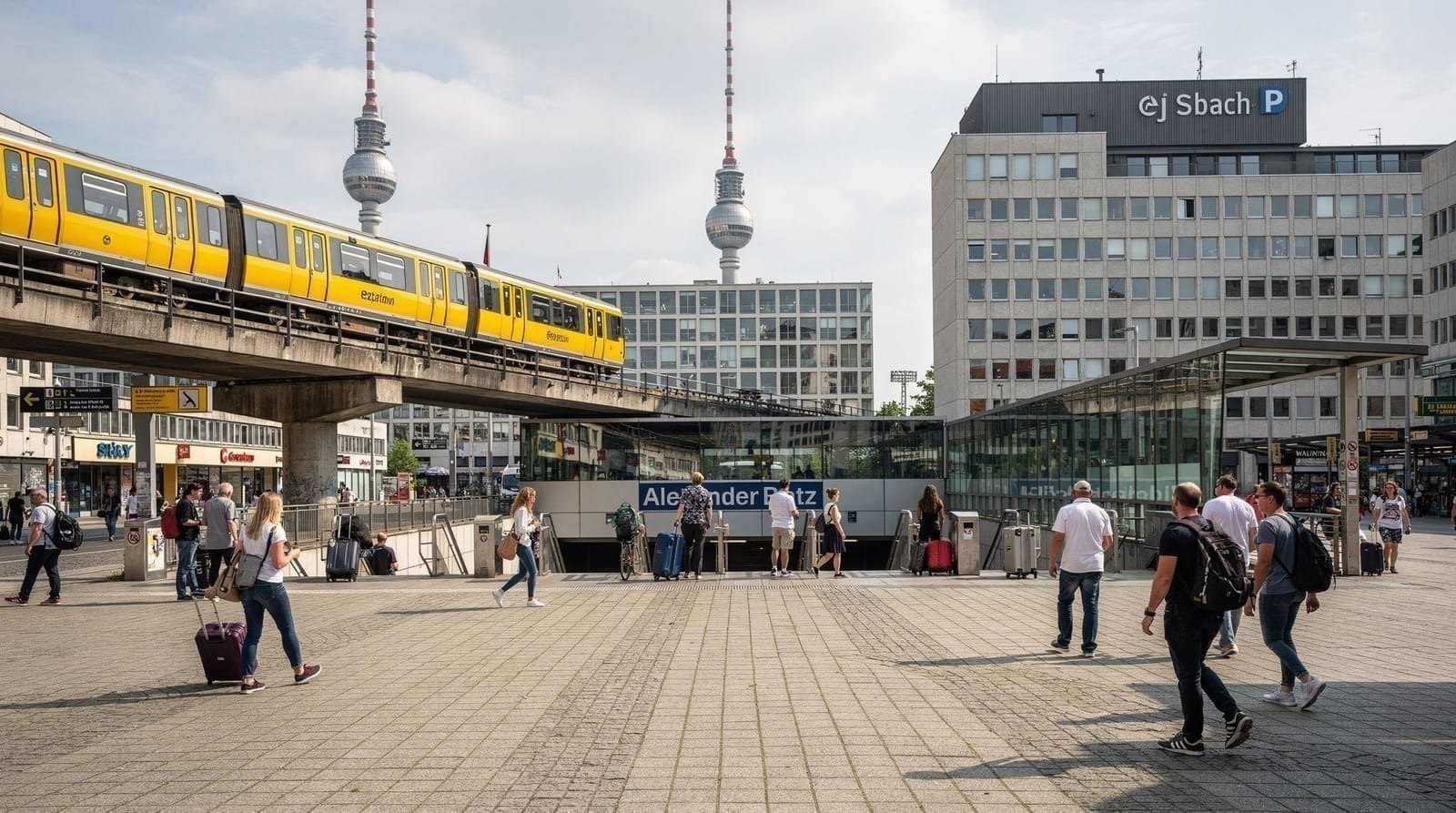
Zone AB ticket covers everything within Berlin — U-Bahn, S-Bahn, trams, buses, and BER airport. Zone C adds Potsdam and outer Brandenburg.
Practical ticket economics:
- 1-2 trips per day: buy singles (€4.80 each)
- 3+ trips per day: buy a day ticket (€9.90)
- Staying 5+ days: buy a 7-day ticket (€36.00)
- Group of 3-5 people for one day: group day ticket (€29.50) — exceptional value
Fastest for cross-city travel: S-Bahn. The S5/S7/S75 east-west corridor from Spandau to Erkner passes through Hauptbahnhof, Alexanderplatz, Ostbahnhof in under 15 minutes.
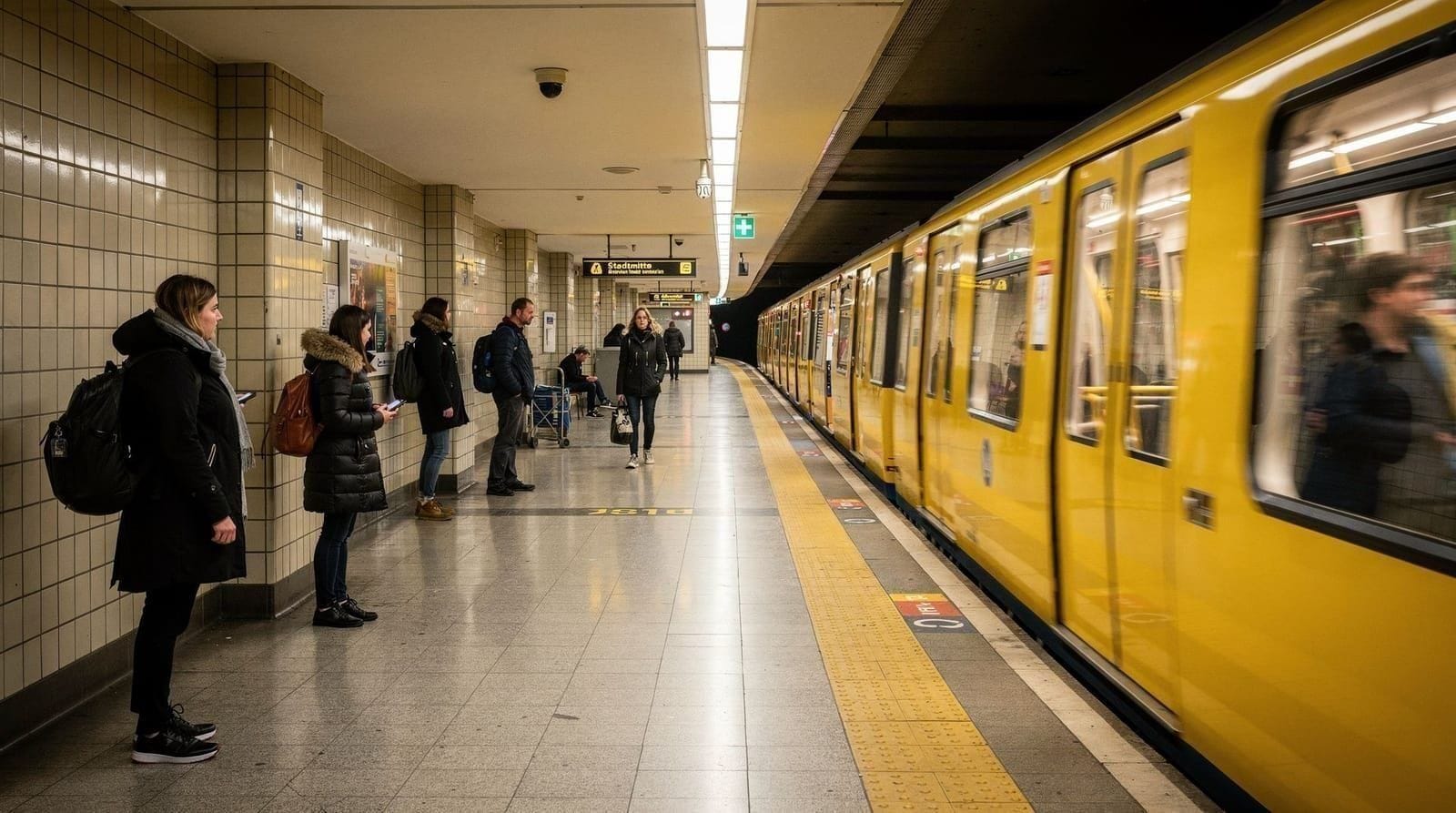
Best for dense central coverage: U-Bahn. The U5, U2, U6, and U8 stop every 600-800 metres in central Berlin.
East Berlin only: Trams. Mitte, Prenzlauer Berg, Friedrichshain, Lichtenberg are served by trams not running west of approximately Rosenthaler Platz / Alexanderplatz.
For the full BVG breakdown, see the Berlin public transport guide and the U-Bahn guide.
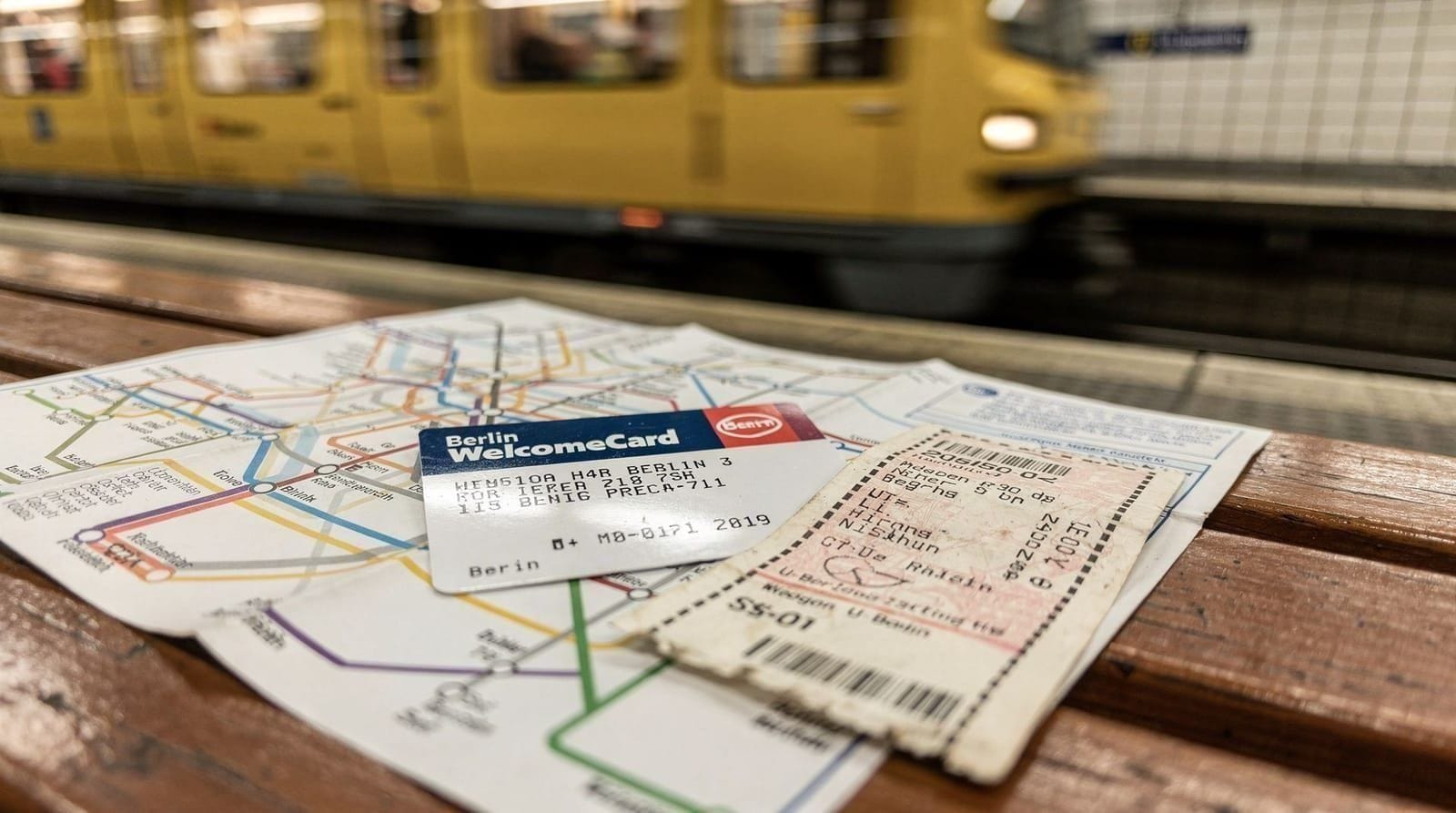
Berlin WelcomeCard AB zone — transport + discounts for multi-day staysCycling — the city’s best-kept transport secret
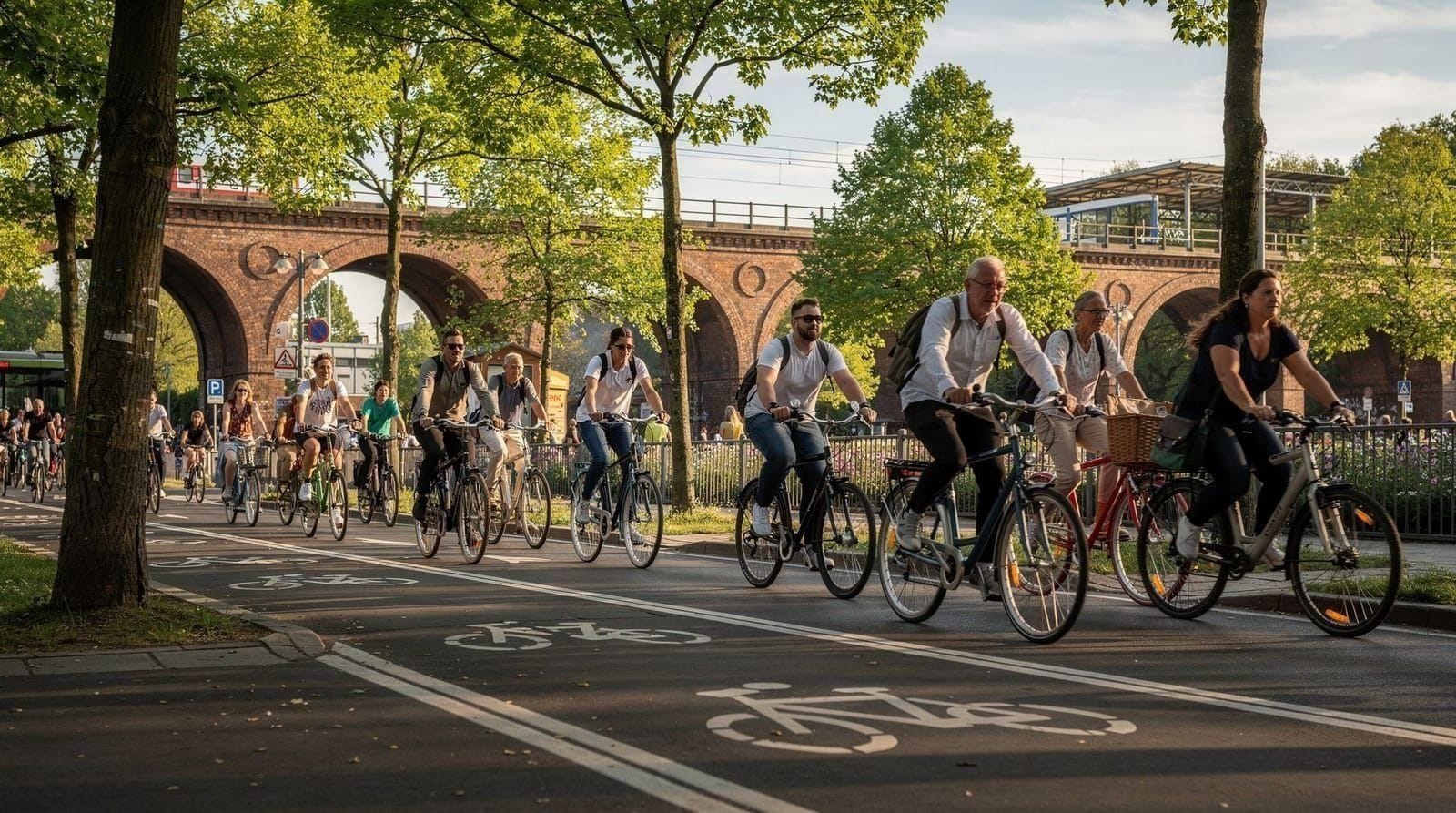
Berlin has approximately 1,800 km of cycling infrastructure, and the city’s flatness makes cycling genuinely practical for most visitors. Cycling is often faster than public transport for journeys of 2-5 km in central areas.
Typical journey times by bike:
- Brandenburg Gate to Museum Island: 8 minutes (vs. 20 min walk, 8 min on U5)
- Kreuzberg to Prenzlauer Berg: 25 minutes (vs. 35-40 min on U-Bahn with connections)
- Tiergarten circuit: 6 km loop, 30 minutes at leisure
Bike hire options:
- Nextbike: Station-based, app-required. First 30 min free with certain memberships; otherwise €1/30 min or €9 day rate.
- Bolt / Tier e-bikes and e-scooters: Dockless, app-based, park within designated zones.
- Independent hire shops: Day rates €12-20 for city bikes, €20-35 for e-bikes. Near major S-Bahn stations. Better value for full-day use.
What to watch for: Tram tracks. Cycling diagonally across tram rails can catch a narrow bike tyre. Cross at right angles. Also: the dooring risk from parked cars, and delivery cyclists who treat red lights as optional.
See the full Berlin cycling guide for specific routes, rules, and safety detail.
Taxis — legitimate and useful, not essential
Berlin’s licensed taxis are metered white cars with a “TAXI” rooftop sign. They are reliable and the meter is non-negotiable (flat rate offers from unlicensed drivers should be refused — see the BER airport guide for the airport taxi scam).
When taxis make sense:
- Late night (after U-Bahn/bus gap, roughly 1am-4:30am weekday nights)
- Heavy luggage and a long transfer
- BER airport if the group is 3+ people (taxi cost splits well against multiple train tickets)
- Rain, if you’re without a raincoat
When taxis don’t make sense:
- Regular daytime journeys — slower than U-Bahn in traffic, significantly more expensive
- Rush hour — a 4 km journey can take 25 minutes by car vs. 7 minutes by U-Bahn
Taxi cost reference:
- Startup: €3.90
- Per km (first 7 km): €2.30
- Per km (after 7 km): €1.65
- Typical 3 km central journey: €10-12
- BER to Mitte: €45-55
Booking via FreeNow (app) allows cashless payment; street hails also work everywhere.
Rideshare apps — Bolt, Uber, FreeNow
All three operate legally in Berlin. A practical comparison:
Bolt: Generally competitive pricing, often slightly cheaper than Uber for city-centre journeys. Good BER airport coverage.
Uber: Available but German Uber drivers must be licensed through a partner company (not the US P2P model). Prices are comparable to taxis. UberX is the standard tier.
FreeNow: App-based taxi booking, using licensed Berlin taxi drivers and fleet. Identical regulation to street taxis. Useful for cashless payment and advance booking.
When to use rideshares:
- Designated pickup zones at BER airport (avoids taxi rank queue)
- Late-night journeys when cycling feels unappealing
- Outer areas with poor U-Bahn coverage
Surge pricing warning: Friday and Saturday nights after 2am see heavy surge pricing from all rideshare apps. A journey that costs €12 at 11pm may cost €25-30 at 3am.
Berlin on foot — neighbourhoods that reward slow travel
Several Berlin neighbourhoods are significantly better explored on foot than by any transport mode:
Mitte and Unter den Linden: The 1.5 km stretch from Brandenburger Tor to Alexanderplatz is a logical walking route covering the Brandenburg Gate, Unter den Linden, Bebelplatz, Humboldt Forum, and Museum Island entrance. Walking takes 25-30 minutes at a relaxed pace but allows stopping at every point.
Kreuzberg’s Bergmannkiez: The cluster of streets around Bergmannstrasse, Marheineke Markthalle, and the adjacent park is best at walking pace.
Prenzlauer Berg: The Kastanienallee / Kollwitzplatz / Helmholtzplatz triangle is a natural walking circuit of about 2 km covering the main neighbourhood character. The Prenzlauer Berg guide covers this in detail.
Friedrichshain: Warschauer Strasse to East Side Gallery along the Spree is a 1 km walk integrating the gallery, the Wall, and the riverfront.
Charlottenburg: Kurfürstendamm to Charlottenburg Palace is 1.5 km walking west along Kurfürstendamm and Schlossstrasse.
Cars — almost always the wrong choice for visitors
Driving in Berlin is possible but presents consistent problems for visitors:
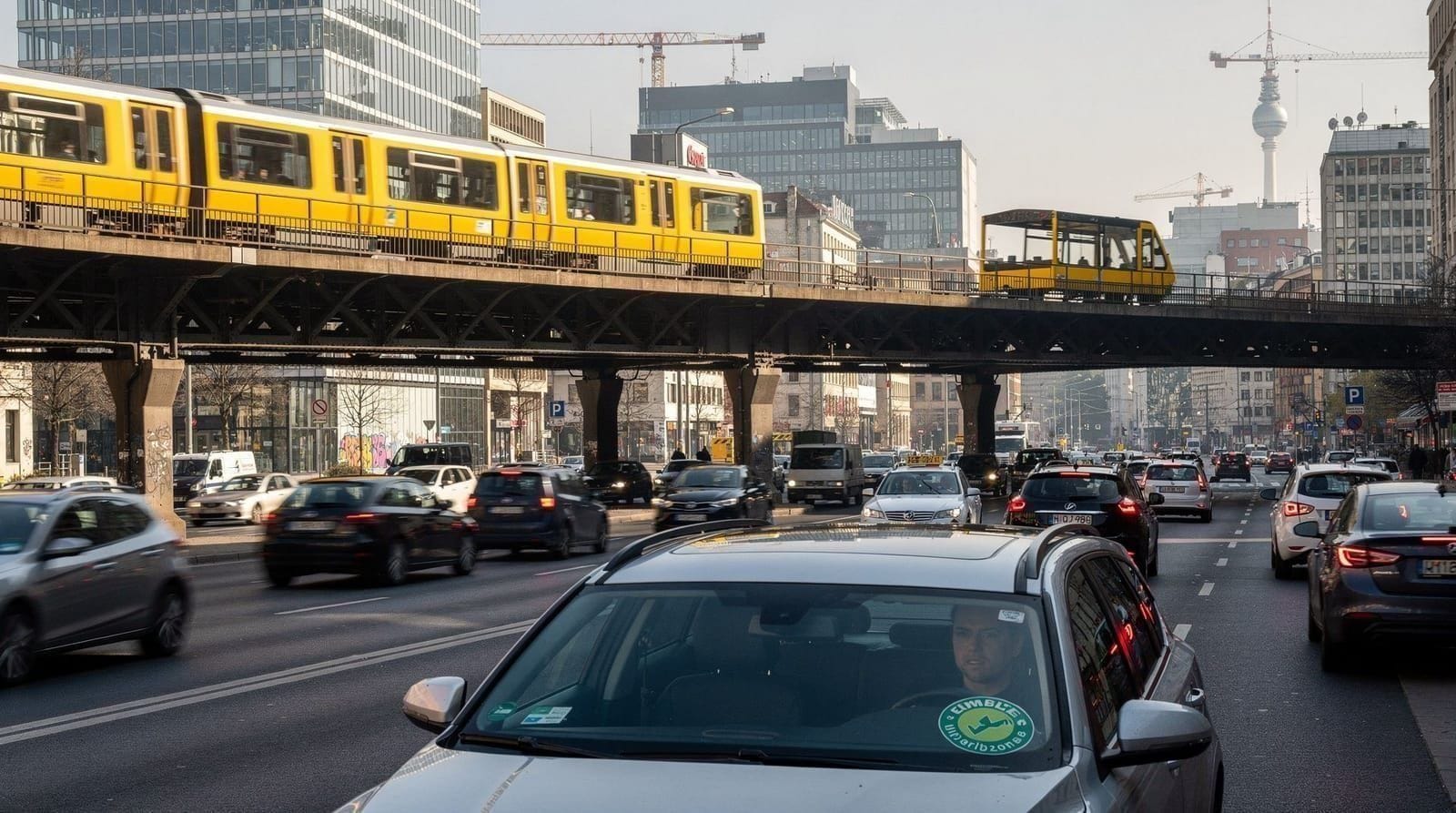
Parking: Central Berlin has very limited street parking. Paid parking zones (Parkzone) with 1-2 hour limits cover most of central Mitte, Kreuzberg, and Charlottenburg. Parking garages charge €3-6/hour. Finding a space near major attractions takes longer than U-Bahn travel.
Umweltzone: The entire area inside the S-Bahn ring requires a green environmental sticker (Umweltplakette). Rental cars in Germany have it; personal vehicles from abroad need to obtain one before entering.
Traffic speed: Berlin has extensive 30 km/h speed limits and significant traffic. Journey times by car often exceed U-Bahn times during the day.
When a car makes sense:
- Day trips to rural Brandenburg without train connections (e.g., the Müggelsee area, the Märkische Schweiz)
- Transporting large group luggage
- Visitors who are specifically road-tripping through Germany and Berlin is a stop rather than a destination
See the full Berlin car rental guide for a realistic assessment of car hire here.
E-scooters and dockless bikes
Bolt and Tier e-scooters are available throughout central Berlin. Rates typically €0.25 to unlock and €0.19-0.25 per minute. They are fastest for journeys of 1-3 km in good weather without public transport connections — filling gaps in the network rather than replacing it.
Rules for e-scooters in Berlin:
- Must use cycle lanes or roads, not footpaths
- Maximum speed 20 km/h
- Helmet not legally required but recommended
- Must park in designated zones or facing kerb without blocking pavements
- No riding with a blood alcohol level above 0.5 — same as car limit
Validating tickets — the detail that catches out visitors
Berlin runs on a proof-of-payment system: there are no barriers at U-Bahn or tram stops, and it is physically possible to ride without ever touching a ticket machine. That doesn’t make it a safe bet. Plainclothes BVG inspectors (Kontrolleure) check tickets regularly, including on trams and buses, and a fine for riding without a valid, validated ticket is €60 on the spot, payable immediately or your details are taken for a mailed invoice. Paper single and day tickets bought from a machine or kiosk must be stamped in the small red or yellow validation box at the platform entrance or on board trams and buses before travel — an unvalidated ticket in your pocket counts as no ticket at all. Tickets bought through the BVG app are automatically valid from the moment of purchase and need no separate stamping. If you’re using the Berlin WelcomeCard, the transport portion works the same way as a normal zone ticket and must be validated on first use if it’s a paper voucher.
Airport transfers in more detail
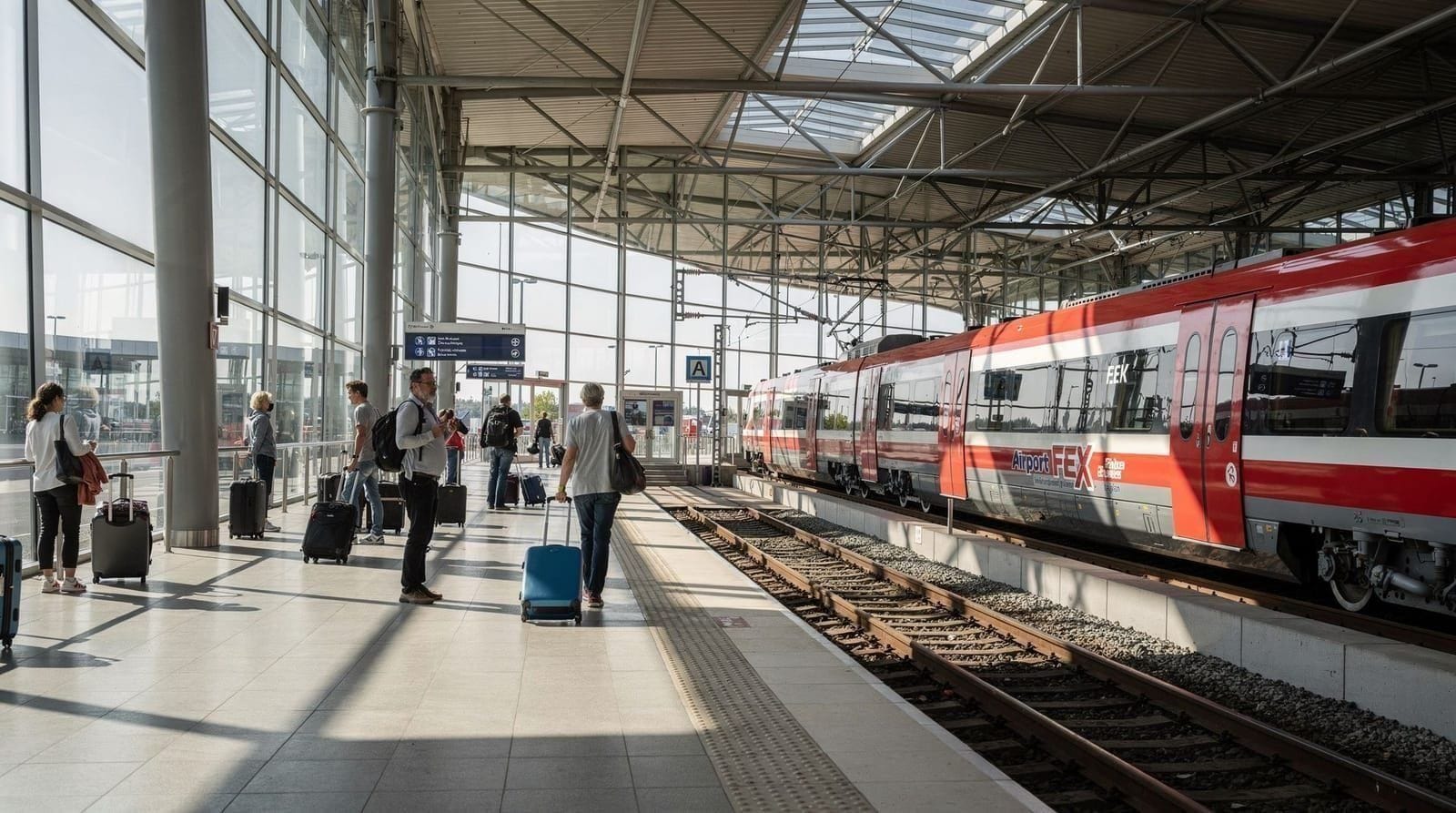
BER airport connects to the city primarily via the FEX express train (about 30 minutes to Hauptbahnhof) and the regional RE7/RB14 services, all covered by a standard AB or ABC zone ticket depending on which terminal and destination. The airport express runs roughly every 30 minutes outside peak times and more frequently during the day. For groups of three or more with luggage, a taxi or pre-booked rideshare often works out close to the same total cost as three or four individual train tickets, with far less hassle — see the BER airport guide for a full cost comparison and how to avoid the flat-rate taxi scam that targets arriving tourists at the terminal exits.
Accessibility for visitors with reduced mobility
Berlin’s newer U-Bahn and S-Bahn stations have lifts and step-free access, but a meaningful number of older U-Bahn stations — particularly on the U1, U2, and parts of the U6 — still rely on stairs only, so it’s worth checking a specific station’s accessibility on the BVG app or website before relying on it. Buses and trams are step-free with low-floor boarding as standard across the network. Taxis can be booked with wheelchair-accessible vehicles through FreeNow with advance notice, though availability is more limited than standard cars. Central, heavily touristed stations — Alexanderplatz, Hauptbahnhof, Potsdamer Platz, Brandenburger Tor — are all step-free, which covers most first-time visitor itineraries even before checking further afield.
Comparing modes for common tourist journeys
| Journey | Walk | Bike | U-Bahn/S-Bahn | Taxi/Rideshare |
|---|---|---|---|---|
| Brandenburg Gate → Museum Island | 20 min | 8 min | 8 min (U5) | 10 min / €10 |
| Alexanderplatz → East Side Gallery | 35 min | 12 min | 12 min (S3/S5) | 12 min / €9 |
| Hauptbahnhof → Charlottenburg Palace | Not realistic | 22 min | 15 min (S5 + walk) | 20 min / €18 |
| Kreuzberg → Prenzlauer Berg | Not realistic | 25 min | 35 min (connections) | 20 min / €18 |
| Mitte → BER Airport | Not realistic | Not realistic | 30 min (FEX) | 50 min / €48 |
Frequently asked questions about Getting around Berlin
Is Berlin easy to get around without a car?
Yes. Berlin's public transport network is extensive and central areas are walkable and well-served by cycling infrastructure. A car in central Berlin means expensive parking, low-emission zone (Umweltzone) vignette requirements, and little time advantage over the U-Bahn. Most visitors never need a car unless doing specific day trips to rural Brandenburg.How big is Berlin and can I walk between major sights?
Berlin is a large city (892 km2 — 15 times the area of Paris within the Peripherique). Central tourist areas like Mitte, Museum Island, Brandenburg Gate, and Unter den Linden are walkable between them (2-4 km at most). However, getting from Charlottenburg to Prenzlauer Berg, or from Museum Island to the East Side Gallery, involves 4-6 km on foot and is better done by public transport.How much does a taxi cost in Berlin?
Berlin taxis use a meter. Starting fare is €3.90; rate is €2.30/km for the first 7km, dropping to €1.65/km after that. A typical central Berlin journey of 3-4 km costs €10-15. Airport to city centre costs €40-55 depending on destination. Rideshare apps (Bolt, FreeNow, Uber) are often comparable in price; Bolt tends to be slightly cheaper.Are there bike-share schemes in Berlin?
Yes. Nextbike operates a docked bike-sharing scheme with stations across the city. Bolt and Tier offer dockless e-scooters and e-bikes (park anywhere within designated zones). For longer rides, independent bike hire shops near major S-Bahn stations offer day rates of €12-20 for city bikes and €18-30 for e-bikes.What is the Umweltzone and does it affect me as a visitor?
Berlin's Umweltzone (environmental zone) covers the entire city within the S-Bahn ring. All vehicles entering must display a green Umweltplakette (low-emission sticker) on the windscreen. Rental cars in Germany typically come with the sticker already. If driving your own vehicle from outside Germany, you need to obtain a sticker before entering — available online (€10-15) or at German car accessory shops.Is cycling safe in Berlin?
Berlin has extensive cycling infrastructure including dedicated Radwege (cycle lanes) on major roads, advisory lanes, and separated paths. Safety standards are uneven — some routes are well-designed, others require sharing space with trams or parking lanes. Cycling in Berlin is common and generally safe, but requires attention at tram crossings and parked car doors. See the full cycling guide for specific routes.How do rideshare apps work in Berlin?
Bolt, Uber, and FreeNow (formerly myTaxi) all operate in Berlin. Surge pricing applies during peak demand. Pickup zones at BER airport are designated and separate from taxi ranks. For central city trips, rideshares are comparable in cost to taxis but without the taxi rank queue. Note that unlike UK or US Uber, German rideshare drivers are licensed taxi or rental car operators — the regulatory environment is different.Do I need a transport card for Berlin or can I pay per journey?
Paying per journey works fine if you make 2 or fewer trips per day. For 3+ daily trips, a day ticket (Tageskarte AB, €9.90) is cheaper. For a full week, a 7-day BVG ticket (€36 AB zone) is the most economical. The Berlin WelcomeCard bundles transport with museum discounts — see the dedicated guide at /guides/is-berlin-welcomecard-worth-it/ for the honest maths.