Shopping in Berlin — Ku'damm, Mitte, vintage and concept stores
Where is the best shopping in Berlin?
Berlin has distinct shopping zones. Kurfürstendamm and KaDeWe cover luxury and international brands in the west. Mitte's Hackescher Markt area concentrates designer and independent labels. Kreuzberg and Neukölln offer the strongest vintage and secondhand scene. Prenzlauer Berg has the most curated independent boutiques and concept stores.
Where do you shop in Berlin? The answer depends entirely on what you are looking for. Berlin is not a luxury shopping destination in the same tier as Paris or Milan — but it has an unusually strong independent retail culture, particularly for vintage clothing, vinyl records, local design labels, and food markets. The city splits into broadly western (Charlottenburg, Tiergarten) and eastern (Mitte, Prenzlauer Berg, Kreuzberg, Friedrichshain) shopping zones, each with a different character and price level.
| Luxury and chains | Ku’damm and Tauentzienstrasse, Charlottenburg |
| Designer and independent | Hackescher Markt, Mitte |
| Vintage and secondhand | Kreuzberg and Neukölln |
| Concept stores | Kastanienallee, Prenzlauer Berg |
| Shop hours | Mon-Sat around 10am-8pm, closed Sundays |
| Cash needed | yes, especially Kreuzberg, Neukölln, flea markets |
The western zone — Ku’damm and Tauentzienstrasse
Kurfürstendamm (always shortened to “Ku’damm”) runs west from Breitscheidplatz for about 3.5 km through Charlottenburg. This is Berlin’s equivalent of Oxford Street or the Champs-Élysées — international chain stores, luxury brands, and the commercial mainstream.
The density of shops is highest between Breitscheidplatz (with the Kaiser Wilhelm Memorial Church) and Olivaer Platz. Zara, H&M, Mango, Esprit, and equivalents occupy most of the street-level retail. Luxury houses including Bulgari, Louis Vuitton, Rolex, and Hermès have boutiques here, but the concentration is thinner than in central Paris or London’s Mayfair.
KaDeWe — the anchor
The department store that defines western Berlin shopping sits not on Ku’damm itself but on Tauentzienstrasse, a few minutes’ walk east. Kaufhaus des Westens (KaDeWe) opened in 1907 and occupies around 60,000 square metres across seven floors. It is one of the largest department stores in Continental Europe.
For general clothing, KaDeWe is impressive but not exceptional — you will find the same international brands available elsewhere. The sixth-floor Feinschmeckeretage (gourmet food hall) is the genuine attraction: over 2,400 square metres of food, wine, cheese, meat, fish, chocolate, and a rotating selection of prepared food stations. The oyster bar is popular. Allow an hour to walk it properly. The food hall is open Monday to Saturday, 9:30am to 8pm.
KaDeWe is also worth visiting for context — it was one of the most famous department stores in the world before WWII, was substantially damaged in 1943, reopened in 1950 in West Berlin as a deliberate statement of western prosperity, and became a symbol of division. After reunification it became one of the first western luxury shops East Berliners could visit freely.
What to buy in the Ku’damm area:
- International fashion at accessible-to-luxury price points
- KaDeWe food hall for German food products to take home (Spreewald pickles, Black Forest ham, regional cheeses, Riesling)
- Cosmetics (Douglas perfumery on Ku’damm has one of the largest ranges in Germany)
What to skip: Berlin-branded merchandise near Breitscheidplatz is overpriced tourist stock. The underground Europa-Center mall attached to the Memorial Church is dated and not worth a detour.
Mitte — the designer and independent midpoint
Mitte’s retail divides between the sterile luxury of Friedrichstrasse and the more interesting Hackescher Markt area to the north.
Friedrichstrasse runs south from the S-Bahn station and was deliberately rebuilt after reunification as a luxury shopping street. It works architecturally but feels lifeless — the footfall never quite materialised at the level planned. Galeries Lafayette (the French department store’s Berlin outpost on Friedrichstrasse) is worth a look for its central atrium, a glass cone structure designed by Jean Nouvel. It concentrates on upscale French brands and has a basement food hall.
Hackescher Markt and the Spandauer Vorstadt are more interesting. The Hackescher Höfe — a series of connected courtyards north of the S-Bahn station — contain a mix of boutiques, jewellery designers, small galleries, and cafes. The Rosenthaler Strasse and Neue Schönhauser Strasse corridors running north have the highest density of independent clothing shops. Brands to look for include Wood Wood (Danish minimalist streetwear), Carhartt WIP, and various German designers with showrooms here.
Unter den Linden is a tourist thoroughfare rather than a serious shopping street — bookshops and a few souvenir sellers around the Humboldt Forum, but not a retail destination.
Approximate prices in Mitte boutiques: Independent designer T-shirts €35–80. Bags from local leatherworkers €80–250. Concept-store multi-brand shops have broad ranges from €30 upward for clothing basics.
Kreuzberg and Neukölln — vintage, thrift and alternative
Kreuzberg is the heart of Berlin’s secondhand and vintage scene. The neighbourhood’s mixed demographics — longtime residents, students, and the remnants of the 1970s and 1980s West Berlin alternative scene — have sustained a secondhand culture that predates the current global vintage trend.
Bergmannstrasse in Kreuzberg 61 (the western, quieter half of Kreuzberg) has the most mainstream version of this: several vintage shops, independent bookshops, a Saturday farmers’ market, and a relaxed shopping environment without tourist pressure. Walk the full length (about 700 metres) for a concentrated sample.
Oranienstrasse in Kreuzberg 36 (the eastern half, sometimes called SO36 after the old postcode) is rougher and more interesting: Turkish food shops, leftist bookstores, music venues, and scattered vintage clothing outlets.
Specific shops worth knowing:
- Humana on Frankfurter Tor in Friedrichshain is the largest secondhand store in Berlin — a former department store now operated as a charity shop with genuinely large stock at low prices (€2–20 for most items). No curation, so you need to look.
- Garage on Ahornstrasse in Schöneberg sells secondhand clothing by the kilo (€15–20/kg for most grades). Genuinely cheap, but you are genuinely sorting through piles.
- Sing Blackbird on Sanderstrasse in Neukölln is a curated vintage boutique that has become a neighbourhood institution. Higher prices than Humana (€20–80 for key pieces), but the editing is good.
- Kleidermarkt on Maybachufer in Neukölln — a curated vintage market that operates separately from the Turkish market on the same canal. Check current hours.
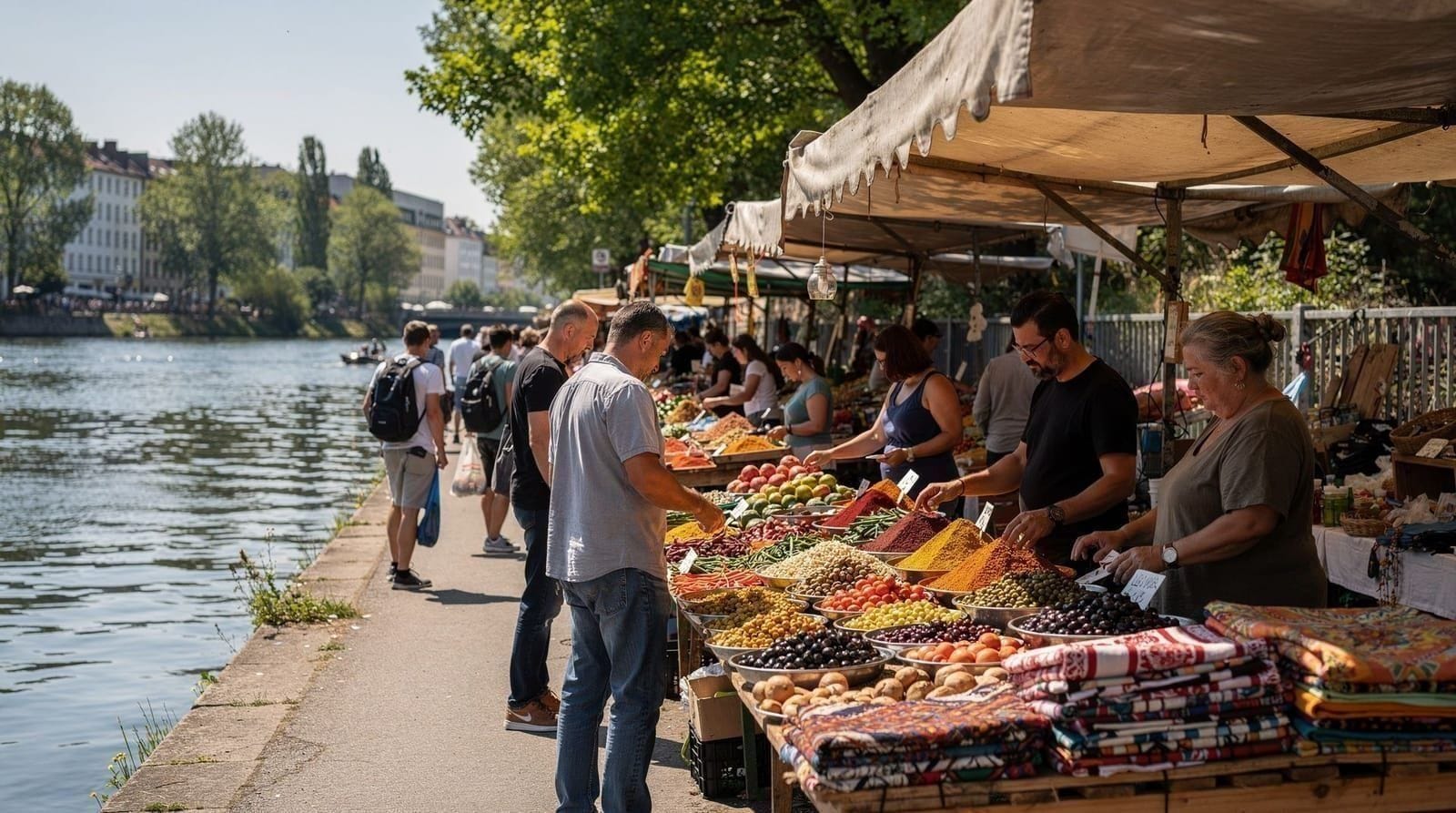
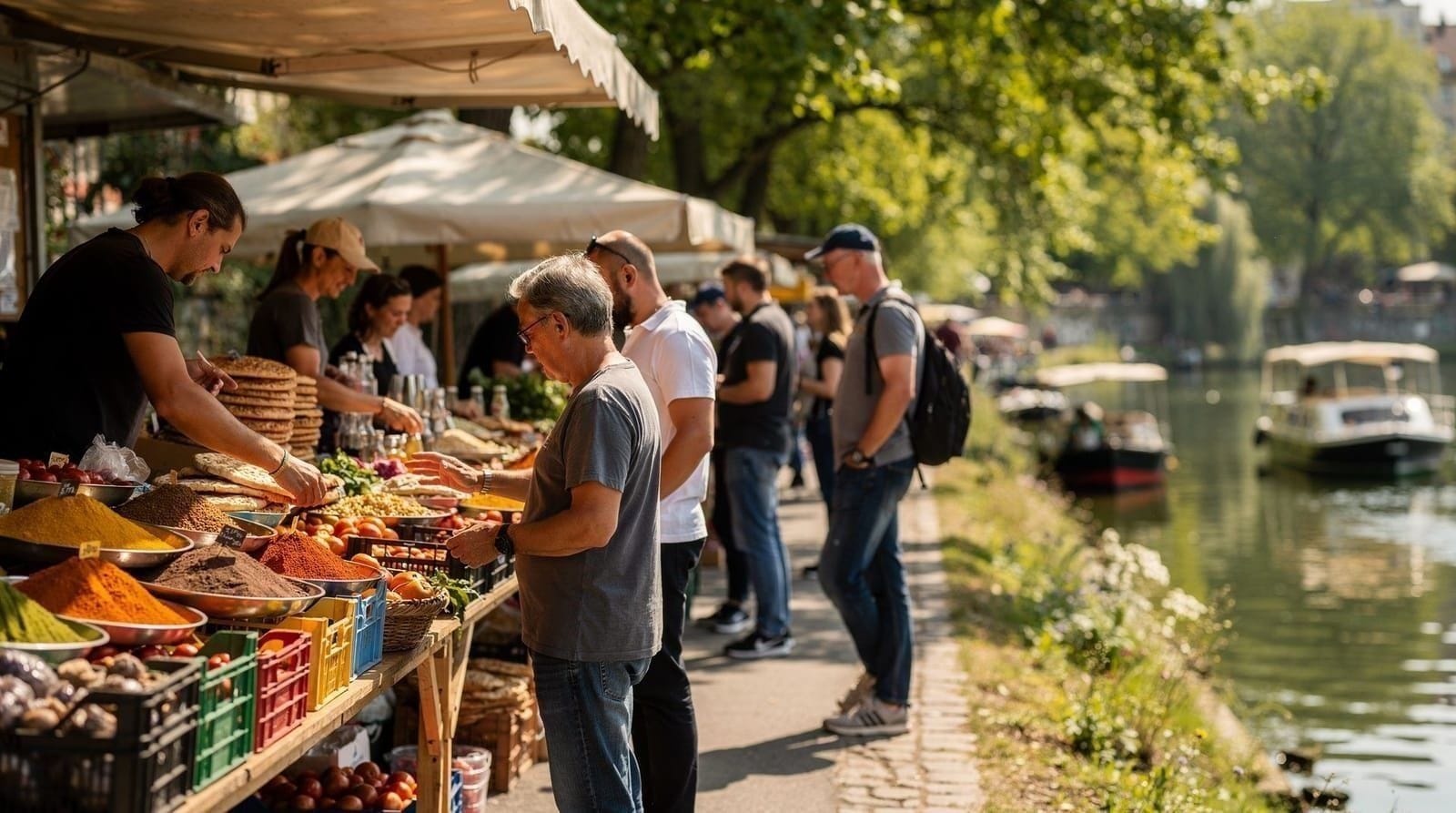
Neukölln’s Maybachufer canal strip deserves a separate visit — the Türkenmarkt operates Tuesdays and Fridays (see the Türkenmarkt guide for detail), and on the same stretch you will find several vintage clothing shops with items sourced from across Europe.
Prenzlauer Berg — concept stores and local brands
Prenzlauer Berg shifted after reunification from a low-rent creative zone to an affluent family neighbourhood with corresponding retail. The shopping is more curated and expensive than Kreuzberg but less corporate than Mitte.
Kastanienallee — sometimes called Casting Alley locally, for the number of models spotted here in the 1990s — has the best concentration of independent boutiques. The street runs from Eberswalder Strasse U-Bahn station south toward Zionskirchplatz, and most of the interesting shops are in the northern half. Labels to find include local Berlin designers, Scandinavian imports, and concept-led shops selling a combination of fashion, homeware, and food.
Stargarder Strasse and Schönhauser Allee Arcaden (a standard modern shopping centre near the U2 station) serve neighbourhood needs more than visitor interest. Skip the Arcaden unless you need standard German supermarkets or a pharmacy.
Notable stores in the area:
- Voo Store (originally in Kreuzberg, now with outposts) — one of the more influential concept stores in the city, mixing fashion, music, and publications.
- Do You Read Me?! on Auguststrasse in Mitte (a short walk from the Prenzlauer Berg border) is one of the best-stocked independent magazine and book shops in Europe. Stock covers art, design, photography, and literary publications in multiple languages.
Vinyl and music — a Berlin speciality
Berlin’s record shops are a legitimate attraction in their own way. The city has one of the densest concentrations of specialist record shops in Europe, supported by the techno and club scene.
Space Hall on Zossener Strasse in Kreuzberg is a long-established shop with secondhand and new vinyl, specialising in electronic music. Staff knowledge is genuine.
Hard Wax in the Tempodrom area of Kreuzberg is a cult address for electronic music — minimal techno, dub, and experimental. Cash only, deliberately low-profile entrance.
Melting Point on Kastanienallee in Prenzlauer Berg covers a broader range (jazz, soul, electronic, world music) and is more accessible to non-specialists.
Hallmann und Klee in Neukölln mixes vintage clothing and vinyl in one space, which captures the neighbourhood’s character well.
Prices: secondhand vinyl €3–15 for most items; rare pressing or first pressings can reach €50–200+. New vinyl in Berlin is priced similarly to elsewhere in Western Europe (€20–30 for an LP).
Practical logistics
Payment: Cash remains important in Berlin. Many small shops, all flea markets, and some restaurants do not accept cards. Carry at least €50 in cash when visiting Kreuzberg, Neukölln, or any flea market. ATMs are widely available; the Sparkasse and Deutsche Bank ATMs have the most transparent fee structures for foreign cards.
Transport between shopping areas:
- Ku’damm area: U1/U9 to Kurfürstendamm
- Hackescher Markt: S-Bahn S3/S5/S7/S9 to Hackescher Markt, or U8 to Weinmeisterstrasse
- Kreuzberg (Bergmannstrasse): U7 to Gneisenaustrasse
- Kreuzberg (Oranienstrasse): U1/U3 to Görlitzer Bahnhof
- Neukölln: U8 to Hermannplatz or S-Bahn to Neukölln
- Prenzlauer Berg (Kastanienallee): U2 to Eberswalder Strasse
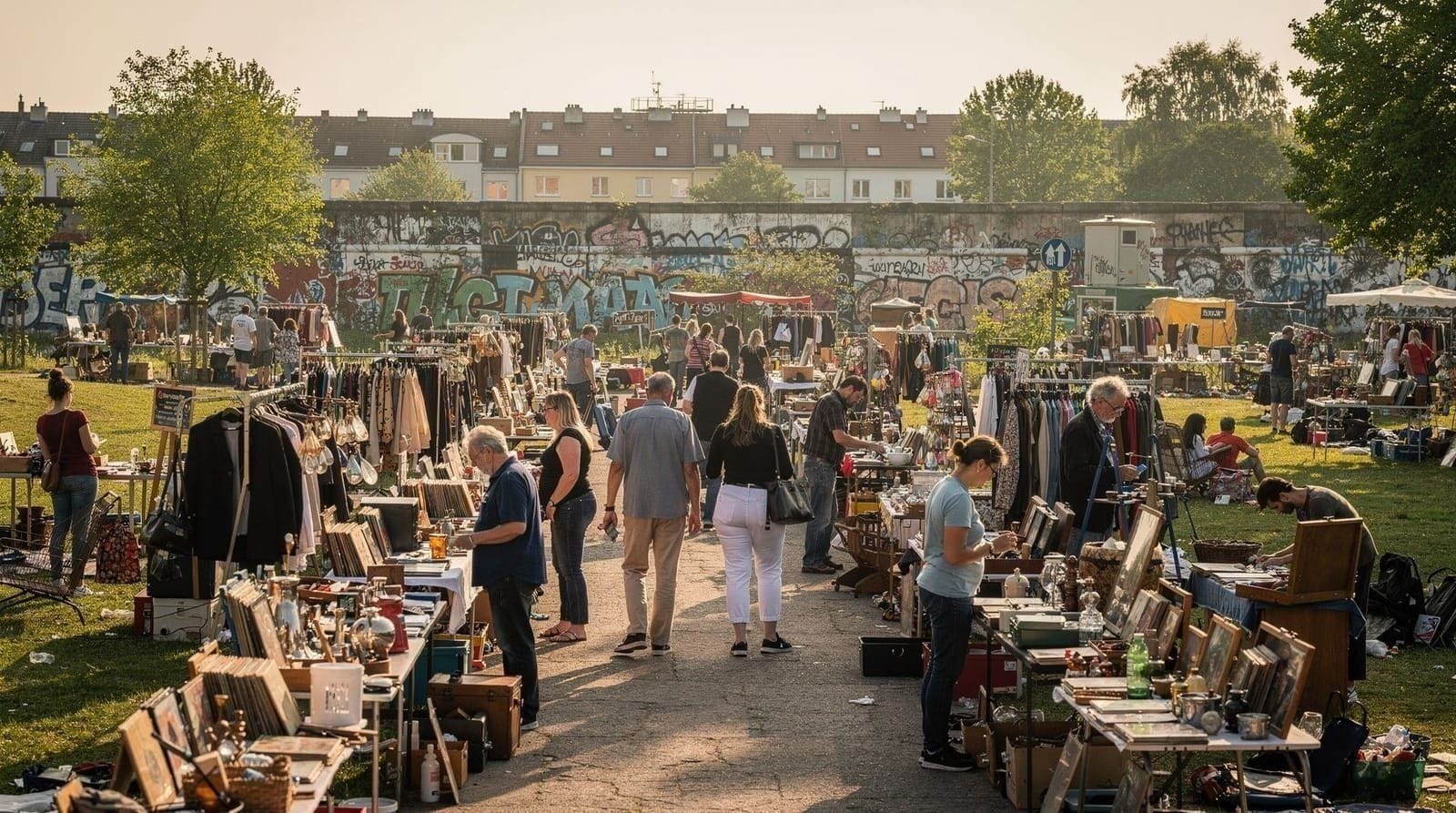
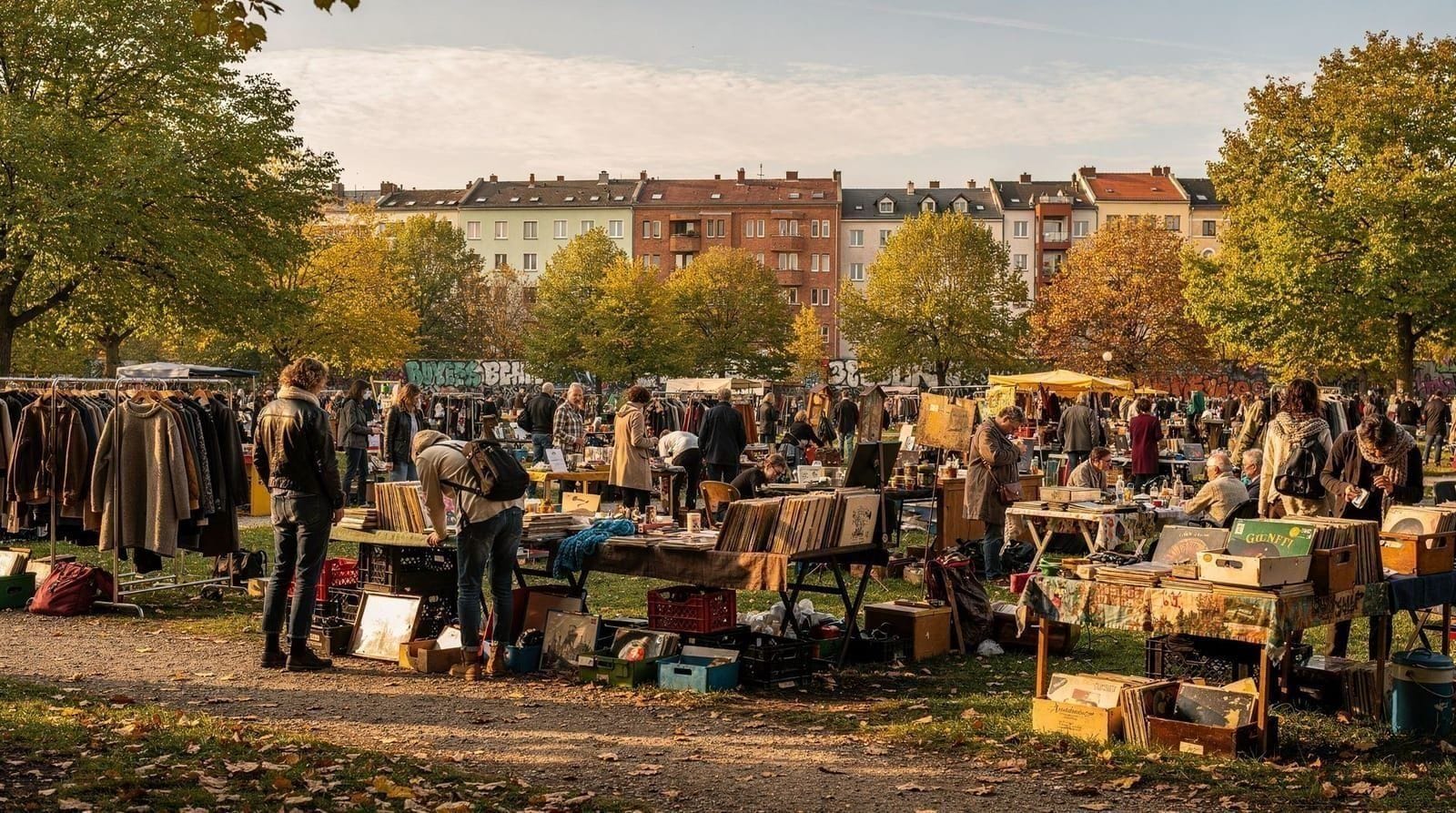
Sunday shopping: German law restricts Sunday retail opening. Shops are closed. The practical exceptions are flea markets (Mauerpark, Boxhagener Platz, Arkonaplatz all operate Sundays — see the Berlin flea markets guide for full details), petrol stations, and transport hub shops. If Sunday is your only shopping day, plan around the flea markets.
Sales: Germany has two formal sale periods — Winterschlussverkauf (January, after Christmas) and Sommerschlussverkauf (end of July/August). Outside these periods, discounting is less common than in the US or UK. The January sales can produce genuine reductions of 30–50% at major retailers.
Department stores compared
| Store | Location | Character | Best for |
|---|---|---|---|
| KaDeWe | Tauentzienstrasse, Charlottenburg | Luxury, wide range | Food hall, luxury brands |
| Galeries Lafayette | Friedrichstrasse, Mitte | French luxury | Atrium architecture, French brands |
| Alexa | Alexanderplatz | Mass market mall | Everyday shopping, sports stores |
| Bikini Berlin | Breitscheidplatz | Concept mall | Independent labels, concept stores |
Bikini Berlin, adjacent to the Zoologischer Garten, is the most interesting of the mall formats — a converted 1950s building with a deliberately curated mix of pop-up spaces and established independent brands. Worth 30 minutes on a Charlottenburg visit. The rooftop terrace has views toward the zoo.
What Berlin does not do well
- Luxury watch and jewellery: far thinner selection than Geneva, Zurich, or Paris
- High-end menswear: Savile Row equivalents don’t exist here
- Souvenir kitsch: avoid the tourist market near Checkpoint Charlie and Alexanderplatz for anything you actually want to give as a gift — for genuine Berlin souvenirs, read the best souvenirs guide
- Sunday retail: the closed-on-Sunday rule is genuinely limiting for visitors with short stays
Shopping neighbourhoods at a glance
| Neighbourhood | Character | Price level | Best day to visit |
|---|---|---|---|
| Ku’damm / Charlottenburg | International chains, luxury, KaDeWe | High | Weekday, avoid Saturday crowds |
| Mitte / Hackescher Markt | Designer, independent labels | Mid-high | Any weekday |
| Kreuzberg | Vintage, secondhand, alternative | Low-mid | Saturday, plus Bergmannstrasse market |
| Neukölln | Curated vintage, Türkenmarkt | Low-mid | Tuesday or Friday for the market |
| Prenzlauer Berg | Concept stores, local design | Mid-high | Weekday, quieter than weekends |
Combining shopping with food and markets
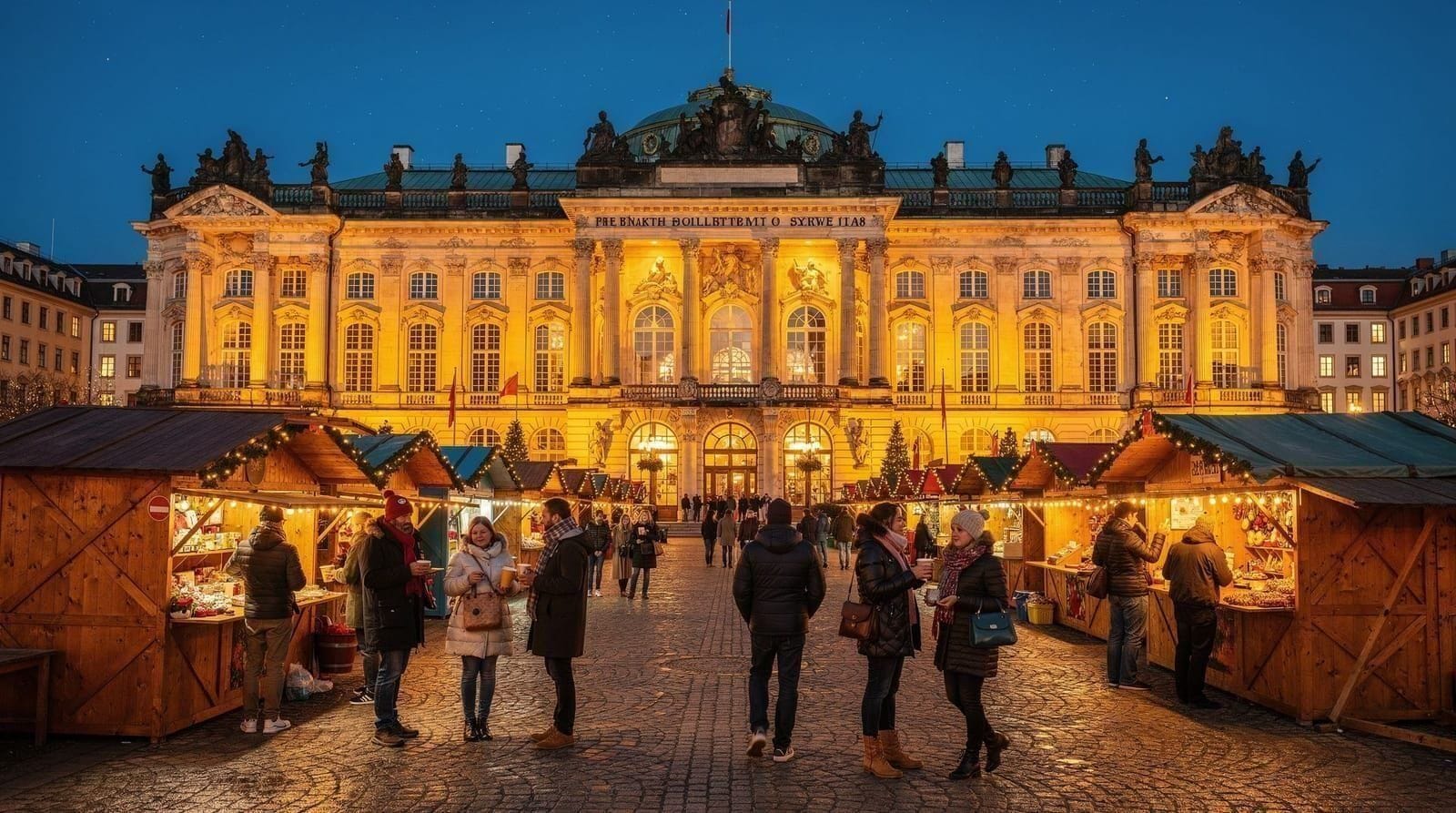
Shopping in Kreuzberg pairs naturally with the neighbourhood’s food scene — see the Kreuzberg food guide for where to eat between vintage shops on Bergmannstrasse or Oranienstrasse. If your trip includes a market day, cross-reference the Mauerpark flea market guide for Sunday browsing, or, if travelling in December, the Berlin Christmas markets overview covers the seasonal stalls that add another shopping layer to Gendarmenmarkt and elsewhere. Visitors focused on the western zone often combine Ku’damm shopping with a stop at Charlottenburg Palace, a short ride further west.
Shipping and luggage considerations
If you’re buying anything bulky — vinyl records, secondhand furniture from a flea market, or a bag of Spreewald pickles and preserved goods from KaDeWe — think about how it fits into your luggage before you buy rather than after. Vinyl in particular travels poorly in checked luggage without a rigid protective sleeve, which specialist shops like Space Hall and Hard Wax generally sell at the counter for a small extra cost. For anything genuinely too large or fragile to fly with, some of the more established shops (particularly at KaDeWe and the larger concept stores) offer international shipping, though it adds meaningfully to the cost and is rarely worth it for anything under about €100 in value. Budget travellers doing a serious flea-market haul should simply bring an empty duffel bag as hand luggage for the return trip — checked-baggage fees on most budget carriers flying into Berlin are cheap enough that this is usually more economical than shipping.
Frequently asked questions about Shopping in Berlin
Is Berlin a good city for shopping?
Yes, particularly for vintage clothing, independent concept stores, vinyl records, and local design labels. Berlin is less impressive for luxury flagship stores (Paris and London have far more). The city's strength is mid-range independent retail concentrated in the eastern neighbourhoods.What are Berlin's main shopping streets?
Kurfürstendamm (Ku'damm) in Charlottenburg handles luxury and chain stores. Friedrichstrasse in Mitte is upscale but feels sterile. Hackescher Markt and the surrounding Spandauer Vorstadt has the best independent designers. Bergmannstrasse in Kreuzberg is good for secondhand and independent shops. Kastanienallee in Prenzlauer Berg has the densest concentration of concept stores.When do Berlin shops open and close?
Most shops open Monday to Saturday, typically 10am to 8pm. Berlin shops are closed on Sundays (German law). Exceptions include shops at Hauptbahnhof and BER airport, and bakeries which can open briefly on Sunday mornings. Flea markets operate on Sundays and partially compensate for closed shops.Does KaDeWe take credit cards?
Yes, KaDeWe accepts all major payment methods. However, many smaller independent shops and vintage markets in Berlin are cash-only. Always carry some euros, especially in Kreuzberg, Neukölln, and at flea markets.What is KaDeWe and is it worth visiting?
Kaufhaus des Westens (KaDeWe) is a department store on Tauentzienstrasse, founded in 1907 and one of the largest in Continental Europe. The sixth-floor food hall is genuinely impressive and worth visiting even if you are not buying clothes. It covers 2,400 square metres with over 34,000 food and drink products. Entry is free; expect crowds on weekends.Are there VAT refunds for non-EU visitors?
Yes. Non-EU visitors can claim a VAT refund (Mehrwertsteuererstattung) on purchases over around €25 at shops displaying the Tax Free Shopping logo. Ask for a Tax Free form at the point of purchase. Process the refund at customs before departing the EU. Budget around 15-19% back on eligible purchases.What should I avoid buying in Berlin?
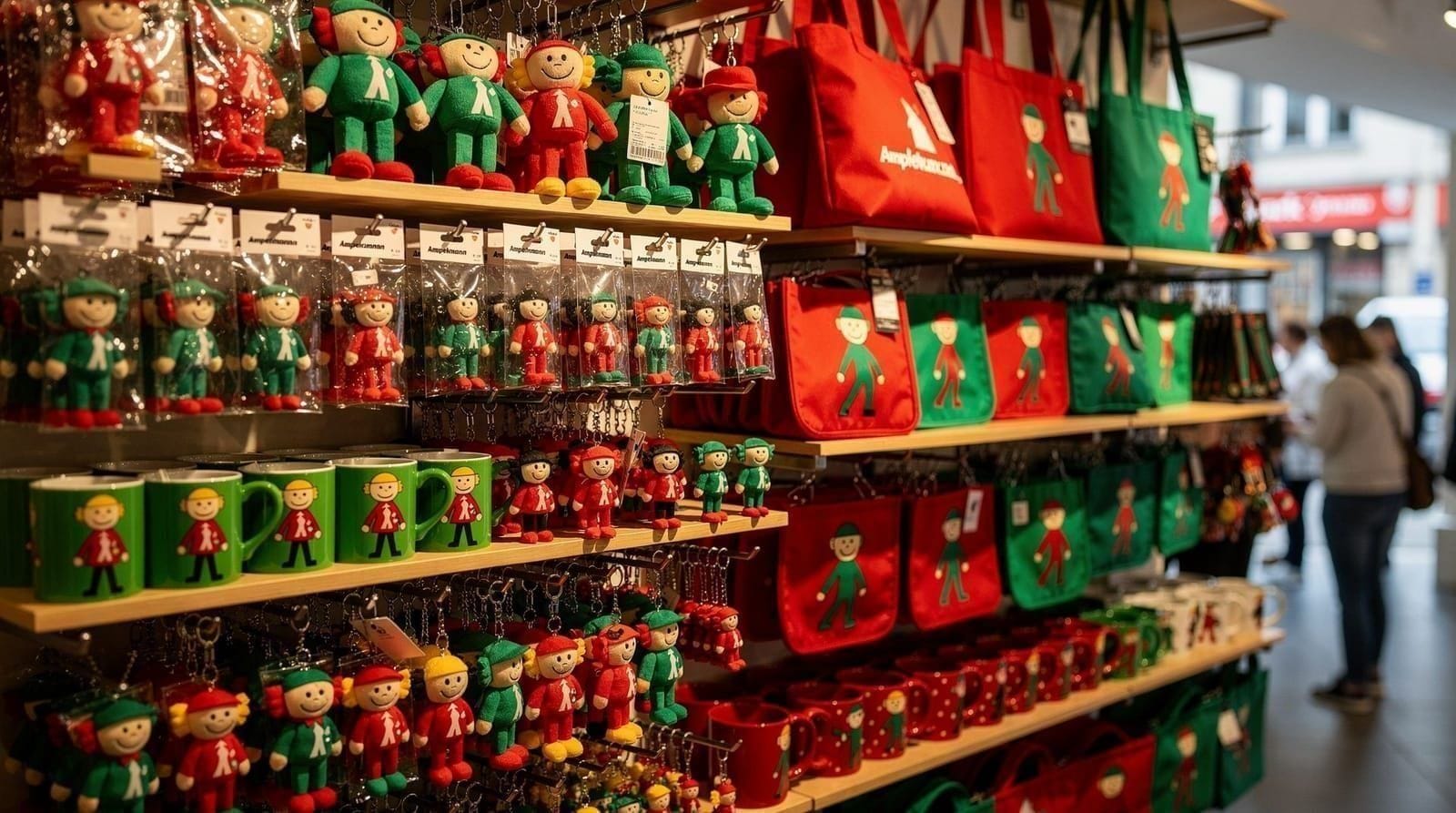
Avoid Berlin Wall fragments from tourist stalls near Checkpoint Charlie — the vast majority are fake. Avoid cheap Ampelmann merchandise from airport shops; it is more expensive than the Ampelmann shops near Hackescher Markt. Avoid generic souvenir items (Brandenburg Gate magnets, generic "Berlin" T-shirts) at Alexanderplatz tourist traps. See the dedicated guide to the best Berlin souvenirs for what is genuinely worth buying.