Mauerpark flea market — the complete Sunday guide
When does the Mauerpark flea market run and what will I find there?
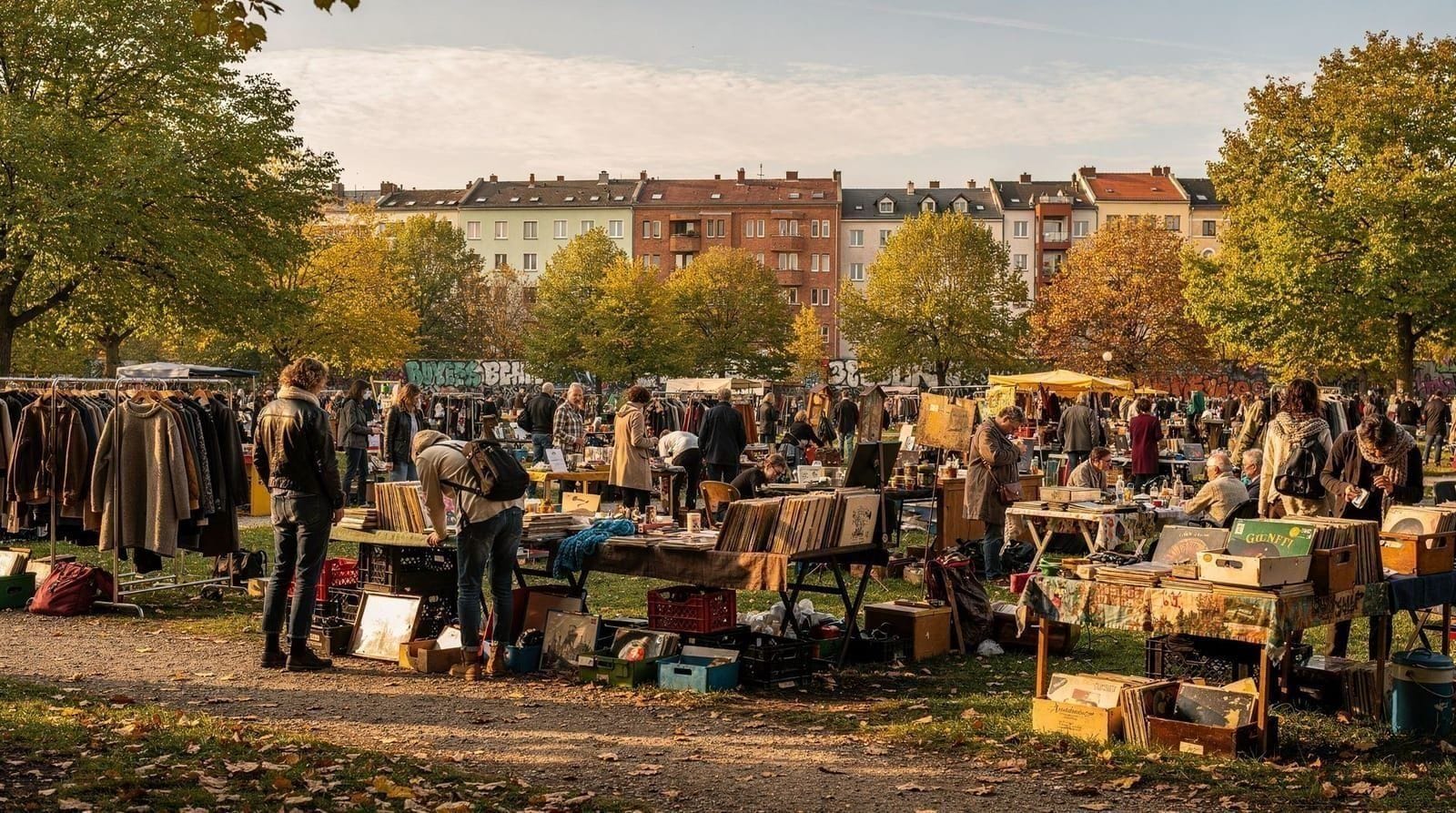
The Mauerpark flea market runs every Sunday from 9am to 6pm (last sellers typically pack up around 5:30pm). It occupies the northern end of Mauerpark in Prenzlauer Berg and covers around 200 stalls selling vintage clothing, records, secondhand books, handmade jewellery, Soviet-era items, furniture, and general bric-a-brac. The park itself is also home to the famous bear pit karaoke on Sunday afternoons.
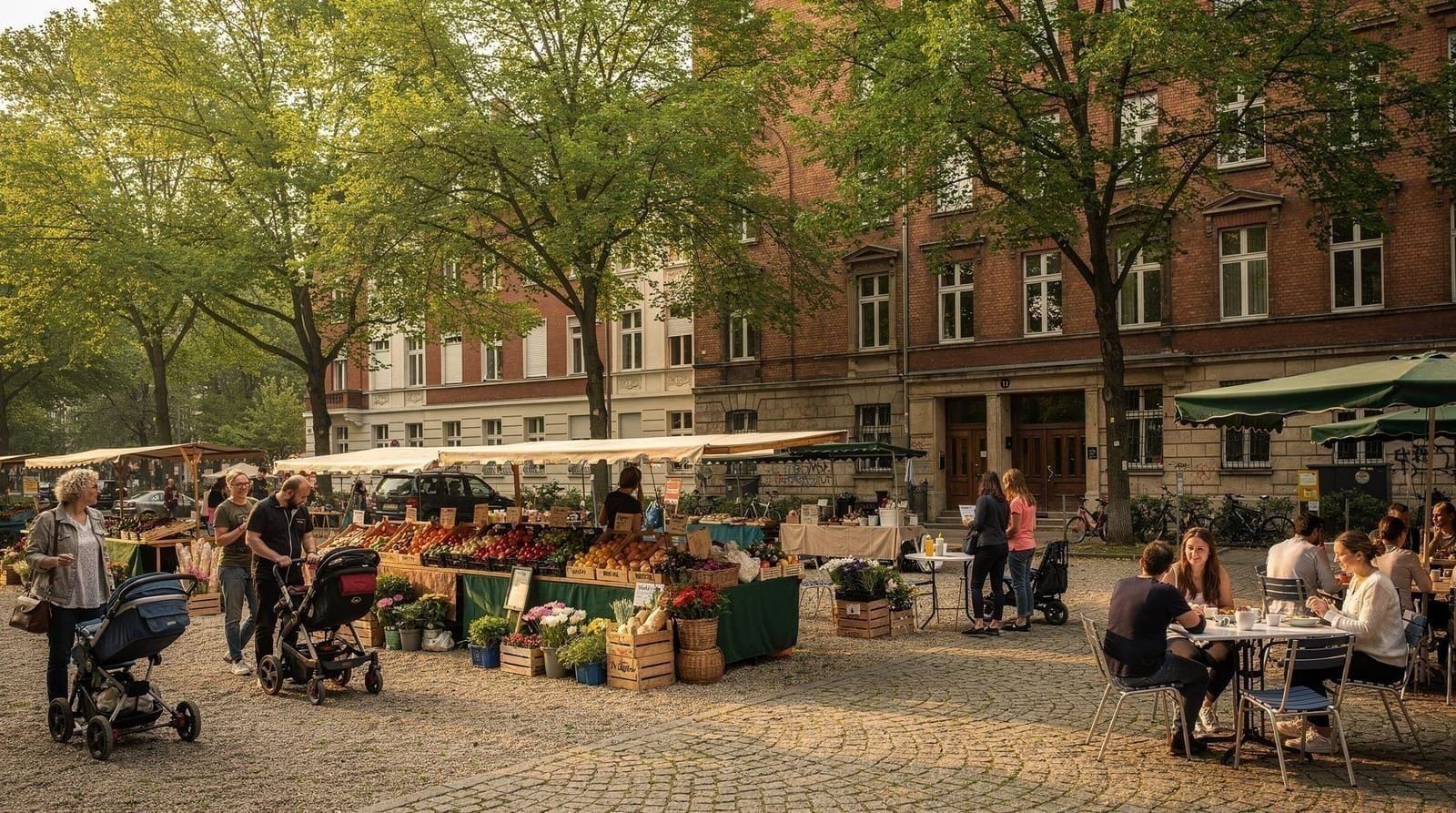
Every Sunday morning in Prenzlauer Berg, around 200 stallholders set up along the northern edge of Mauerpark. The market is one of Berlin’s best-known flea markets — popular enough that it attracts both serious vintage hunters and casual Sunday visitors — but still large enough to find genuine bargains if you arrive early and know what you are looking for.
| When | Sundays, 9am–6pm |
| Where | Northern Mauerpark, Prenzlauer Berg (entrance on Bernauer Strasse) |
| Cost | Free entry; typical purchases €1–80 |
| Getting there | U2 Eberswalder Strasse or U8 Bernauer Strasse |
| Payment | Cash only at almost all stalls |
| Best time | Before 10am for selection; bear pit fills from 11:30am |
What to expect at the market
Mauerpark flea market is not a curated antique market. It is a mixed flea market where private sellers, professional dealers, and a few crafts vendors all operate side by side. This creates both the best and worst of flea market culture in one space.
On the positive side: the range is genuinely wide. On a typical Sunday you will encounter:
Vintage clothing and accessories: Denim jackets, leather coats, 1970s–1990s knitwear, boots, bags, and belts. Quality ranges from genuine vintage fashion pieces (well cared for, competently priced) to worn-out junk being sold at inflated tourist prices. The difference is identifiable by condition and the seller’s approach to pricing.
Vinyl records: A consistent presence at Mauerpark. Expect soul, jazz, rock, electronic, classical, and a quantity of GDR-era East German pressings (Amiga label) that are often interesting and undervalued. Prices for standard secondhand records run €1–8; rarer or specifically sought items €15–40. Bring a portable record player or phone adapter if you need to verify condition.
Books and printed matter: Mostly German-language, with occasional English, French, and Dutch titles. Secondhand paperbacks at €1–3 are common. Art books and illustrated volumes occasionally appear at low prices if a private seller is clearing an estate.
Furniture and homewares: Usually from private sellers clearing flats. Interesting mid-century German pieces appear occasionally — chairs, lamps, crockery. The logistics of getting large items home limit this category for most visitors, but it is worth scanning.
GDR and Eastern Bloc collectibles: Soviet pins, East German uniforms (replica and original), Trabant miniatures, and Cold War ephemera are consistently present. Quality varies. See the best souvenirs guide for advice on identifying authentic versus reproduction pieces.
Handmade jewellery and craft items: A section of the market covers contemporary handmade goods — leather jewellery, handprinted textiles, ceramics, botanical candles. These are new items, not secondhand. The quality here is higher than most tourist markets, and prices are reasonable (€10–40 for most pieces).
Food and drink stalls: Multiple food vendors operate at the market perimeter. Coffee from serious espresso carts (€2.50–4), bratwurst, international street food, and beer in summer. The food quality is generally good — this is Prenzlauer Berg, where food standards are high.
The bear pit karaoke
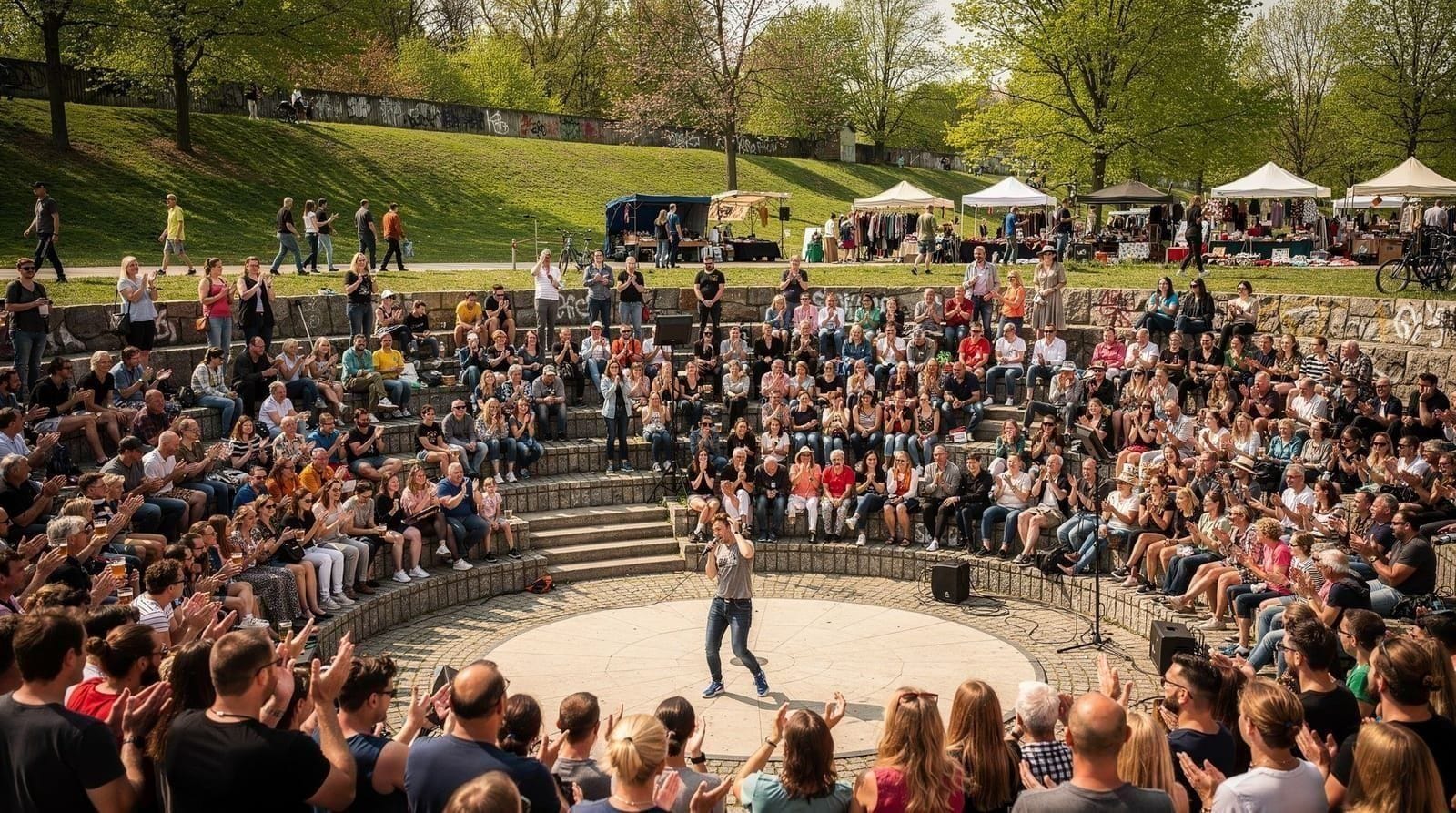
In the southeast corner of Mauerpark, a stone amphitheatre (the Freilichbühne, built in the 1950s as an outdoor performance space) hosts a Sunday tradition that has become one of Berlin’s most distinctive unofficial institutions.
Joe Hatchiban, a Paris-born entertainer, began hosting open-air karaoke sessions in the bear pit in 2009. He brings his own sound system, microphones, and a song catalogue of several thousand tracks. Participation is open to anyone who signs up. The crowd — typically 200–600 people on a good summer day — occupies the stone seating, grass slopes, and surrounding area.
The karaoke typically starts around noon and runs until early evening, often finishing between 4pm and 6pm depending on the season and weather. It is weather-dependent — in rain, the event either moves indoors to a nearby venue or cancels. Check social media for updates on wet-weather days.
The quality of performances ranges from genuinely good singers who use the bear pit as an informal stage to cheerfully terrible group efforts that the crowd cheers anyway. The atmosphere is relaxed and participatory. You do not need to sing to enjoy it — most of the crowd is spectating.
This is a free, spontaneous event. No ticket. No booking. Just turn up.
What to buy — and what to skip
Buy:
- Vintage leather jackets and denim — the pricing at Mauerpark is competitive with dedicated vintage shops. A good leather jacket in wearable condition runs €30–80; denim jackets €15–40.
- Vinyl records — particularly East German Amiga label pressings, which are often undervalued and genuinely interesting as cultural documents.
- GDR-era postcards, posters, and printed ephemera — relatively cheap (€1–5 each), compact to carry, and authentic.
- Handmade ceramics and jewellery from the craft section — the quality is high and prices fair for locally made goods.
Skip:
- Fake Berlin Wall fragments — they appear here as at every tourist market. The Mauerpark sits in the former death strip (the Wall ran along the western edge of the park), which lends an air of authenticity, but the fragments sold as Wall pieces at stalls are essentially never verified. If you want genuine information on this, read the section in the best souvenirs guide.
- Generic tourist merchandise — same keyrings and magnets available everywhere, sold at significantly elevated prices because tourists pass through.
- Electronics without testing — the market has occasional electronics stalls selling vintage audio equipment and cameras. Without testing before purchase and no returns policy, these carry real risk.
Mauerpark itself — the Cold War geography
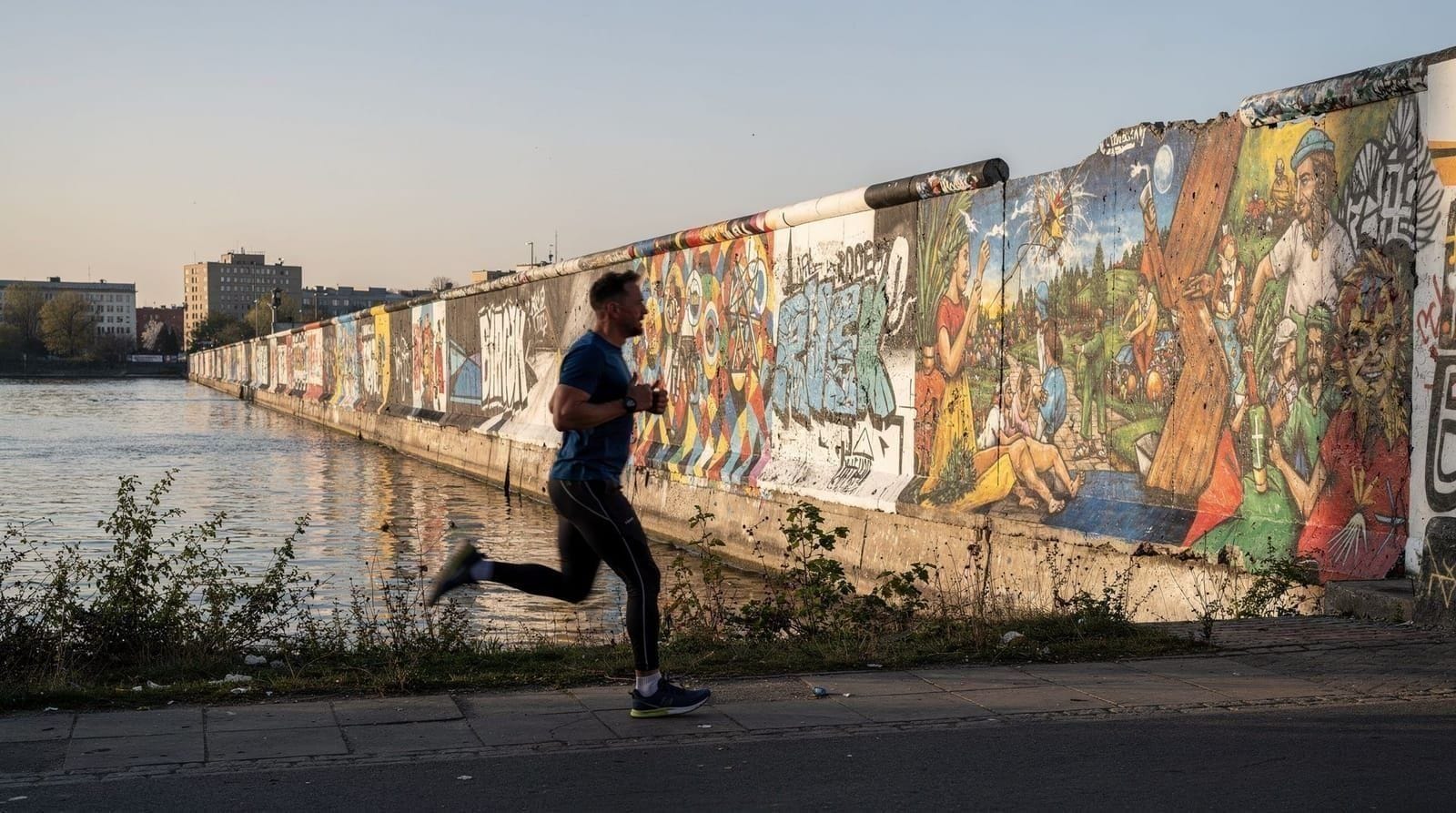
The park name translates as “Wall Park.” This is not nostalgic branding — Mauerpark literally occupies the former death strip between Prenzlauer Berg in the east and the Wedding neighbourhood to the west. The Wall ran along what is now the park’s western edge, and the grassy space you walk through was formerly a militarised no-man’s-land that no civilian could legally enter from either side.
A section of original Wall survives along the western edge — heavily graffitied and not maintained as a formal memorial. It is genuine. The park itself was created in 1994 from the cleared strip. The unusual topography (the slope toward the amphitheatre follows the original terrain of the death strip) is still visible if you know what you are looking at.
For the full historical context, read the Berlin Wall complete guide and the detailed Mauerpark guide.
Practical tips for the Mauerpark flea market
Arrive before 10am for the best selection. By noon on sunny Sundays the market is extremely crowded. By 2pm the best vintage pieces have been sold, and the crowd is at its thickest. If you are specifically looking for clothing, records, or high-quality items, the first two hours of the market are the productive ones.
Bring cash. Virtually all stalls are cash only. The ATMs nearest to the market are a 5–10 minute walk away on Kastanienallee and Schönhauser Allee. The market does not have an ATM on site.
Dress for the weather. The market is entirely outdoors. In winter (November to February), dress warmly — the stalls continue in temperatures near zero but the experience is considerably less pleasant than summer. Rain does not usually cancel the market, but it dramatically reduces the number of stalls and buyers. Spring and summer Sundays (particularly May to September) see the highest seller count and most pleasant conditions.
Carry a bag. Sellers do not always provide packaging, and you will be carrying purchases while continuing to browse. A reusable shopping bag takes up no space and solves the problem.
Negotiate in German. Even basic phrases produce better results than English-only. “Wieviel kostet das?” (How much is this?) and “Können Sie etwas nachgeben?” (Can you go a bit lower?) are sufficient.
The bear pit fills up from noon. If you want a good viewpoint for the karaoke, arrive at the amphitheatre by 11:30am and claim a spot on the stone seating. Late arrivals watch from the grass slopes or standing at the back.
Nearby: what else to do in Mauerpark
After the flea market, the surrounding area rewards exploring:
- Kastanienallee (10 minutes south) has coffee shops, brunch restaurants, and independent boutiques open on Sundays due to their café-attached status.
- Bernauer Strasse Memorial (5 minutes east by foot) — the main Berlin Wall Memorial with its documentation centre and reconstructed border strip. Open Tuesday to Sunday, free. It gives the Mauerpark’s Cold War history direct context.
- Kollwitzplatz (15 minutes south in Prenzlauer Berg) has a Saturday farmers’ market (not Sunday) and a cluster of restaurants around the square.
For the wider Prenzlauer Berg neighbourhood beyond the park, see the Prenzlauer Berg guide. If Mauerpark leaves you wanting more secondhand hunting, the Berlin flea markets guide covers the city’s other weekend markets, and the Berlin shopping guide rounds out retail options beyond markets.
Frequently asked questions about Mauerpark flea market
What are the exact opening hours of the Mauerpark flea market?
The market runs Sundays only, 9am to 6pm. Stall holders typically begin setting up from 7am. The best selection is from 9am to noon — by 2pm many of the better vintage pieces have sold. If you are specifically hunting clothing or records, arrive early.How do I get to Mauerpark by public transport?
Take U2 to Eberswalder Strasse and walk north along Kastanienallee for 10 minutes, or tram M10 to Eberswalder Strasse. Alternatively, U8 to Bernauer Strasse and walk west 8 minutes. The market entrance is on Bernauer Strasse at the northern edge of the park. There is no useful car parking nearby on Sundays.Is the Mauerpark flea market free to enter?
Yes, entry is free. You pay only for what you buy. There is no pre-registration or ticket requirement.What is the bear pit karaoke at Mauerpark?
The bear pit (Freilichbühne) is a semi-circular stone amphitheatre in the park where Joe Hatchiban has hosted open-air karaoke sessions most Sunday afternoons since 2009. It typically starts around noon to 1pm and runs until late afternoon. Anyone can sign up to sing. The crowd is large (hundreds of spectators on good weather days) and enthusiastic. It is entirely spontaneous and free. The karaoke runs separately from the market and does not require market participation.Can I negotiate prices at Mauerpark?
Yes, negotiation is standard and expected — particularly for items over €10. Polite offers of 20–30% below the asking price are usually well received. Saying "Können Sie etwas beim Preis machen?" (Can you do anything on the price?) in German works better than pushing in English. Very cheap items (under €3) are generally fixed price.Is Mauerpark cash only?
The vast majority of flea market stalls are cash only. A few professional dealers accept card payment, but do not rely on it. Bring enough euros for your anticipated spending. The nearest ATMs are on Schönhauser Allee and Kastanienallee (5–10 minutes' walk).Is the Mauerpark flea market good for children?
The market is child-friendly. The park itself is large, with open grass areas, a playground near the southern entrance, and space to run around. The karaoke is genuinely entertaining for older children. It can get very crowded in the market lanes by mid-morning on sunny summer Sundays — keep close to small children in the narrower stall corridors.