Mauerpark guide — flea market, bear pit karaoke and Cold War history
What is Mauerpark and why do people visit it?
Mauerpark is a public park in Prenzlauer Berg built on the former Berlin Wall death strip. On Sundays it hosts the city's largest flea market (roughly 3,000 vendor spaces) and the famous bear pit karaoke in an amphitheatre that attracts crowds of several hundred spectators from early afternoon. Entry to the park and karaoke is free; flea market stalls sell anything from vintage clothes to GDR-era objects.
What is Mauerpark? A 3.5-hectare public park in Prenzlauer Berg built directly on the former Berlin Wall death strip, open daily and free. On Sundays it hosts the city’s largest flea market (roughly 3,000 vendor spaces) and the famous bear pit karaoke in a stone amphitheatre, drawing crowds of several hundred to several thousand on fine afternoons. The park and karaoke are free; the flea market requires no entry fee.
| Where | Prenzlauer Berg, northern edge on Bernauer Strasse |
| Cost | Free — park, market entry and karaoke all free |
| Getting there | U8 Bernauer Strasse, or tram M10 to Eberswalder Strasse |
| Best day | Sunday — market 9am–6pm, karaoke from ~3pm |
| Cash | Essential — almost no vendors accept cards |
| Pair with | Berlin Wall Memorial, 5 minutes south |
From death strip to city park: how Mauerpark came to be
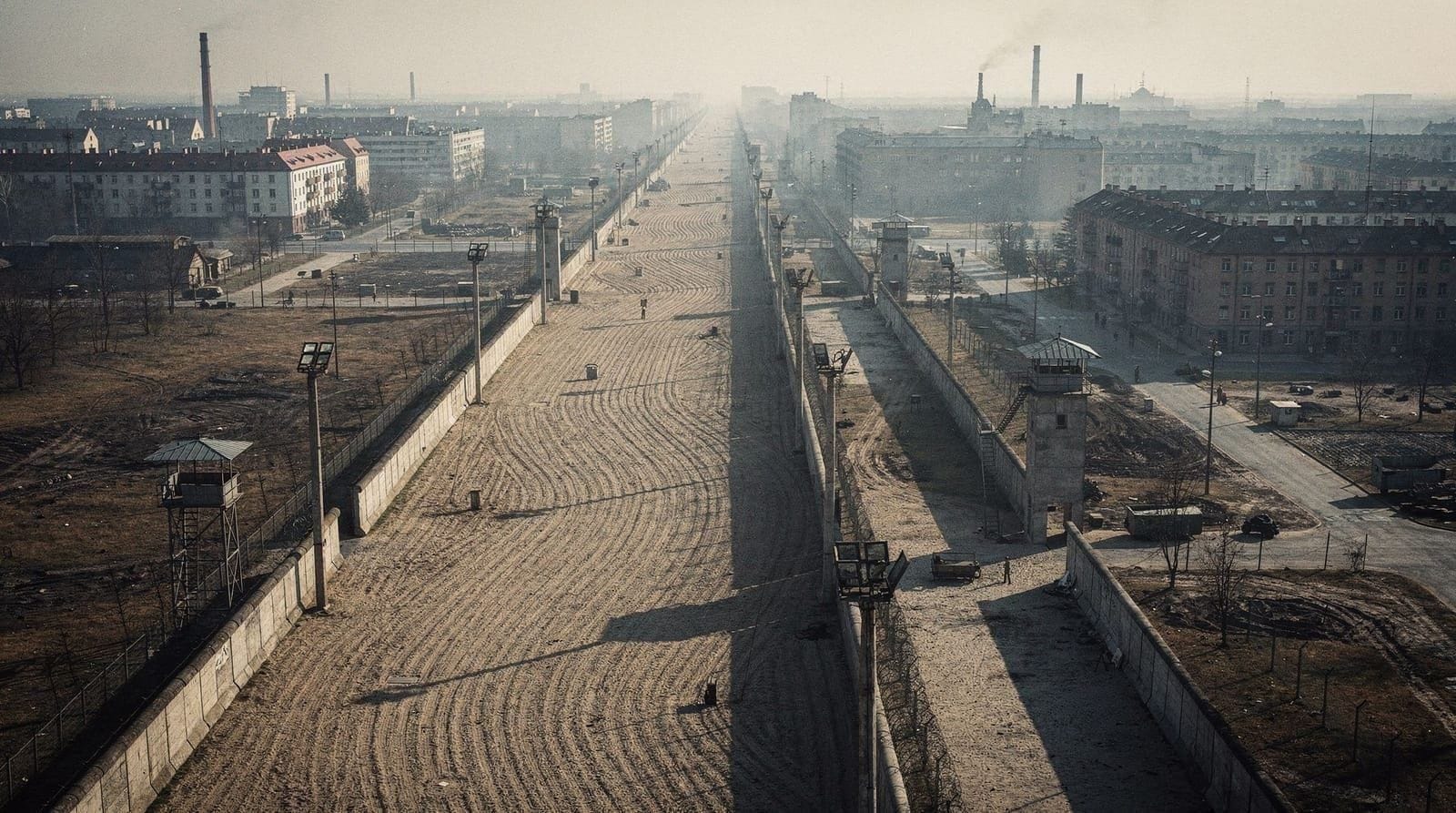
The land that Mauerpark now occupies was, until 9 November 1989, part of one of the most heavily fortified stretches of the Berlin Wall system. Specifically, it sat within the Todesstreifen — the death strip — the controlled no-man’s-land between the inner wall (facing East Berlin) and the outer wall (facing West). Nothing was permitted to grow here without obstruction lines of sight for guards; nothing was permitted to stand that might aid an escape attempt.
After the Wall fell and Germany reunified in October 1990, the question of what to do with this land became immediately contentious. The Berlin Senate faced pressure from multiple directions: developers who saw prime urban land suddenly freed from its previous purpose, local residents who wanted public green space in a neighbourhood that had very little of it, and historians and activists who argued that any development should acknowledge the site’s function in the division of the city.
The residents of Prenzlauer Berg and Wedding — the two districts separated here by the Wall — organised a sustained campaign through the early 1990s to prevent the land being sold off or built upon. This was not a straightforward battle; Berlin’s financial situation after reunification was precarious, and the city government was under pressure to generate revenue from newly available land. The campaign succeeded. Mauerpark opened as a public park in 1994, roughly five years after the Wall’s fall.
The park spans both sides of what had been the border: the Prenzlauer Berg (formerly East) and Wedding (formerly West) sides are now joined within a single continuous space. This is a detail worth registering when you visit. Walking across the park, you are walking across what was an impassable, militarised barrier. The name “Mauerpark” — Wall Park — is deliberate. Unlike many Berlin public spaces that euphemise or softly rename former border areas, Mauerpark wears its origin in its title. It is named for what was here. Visitors who arrive purely for the flea market and leave without registering this are missing a significant part of the location’s meaning.
The park itself is approximately 3.5 hectares. A northern extension was added in 2013 after a lengthy planning dispute with a developer who had proposed a residential project on adjacent land. Local residents again campaigned successfully. The extended park is less used than the original section and gives a sense of the parkland’s potential when not hosting the Sunday market.
The Wall’s physical traces in the park
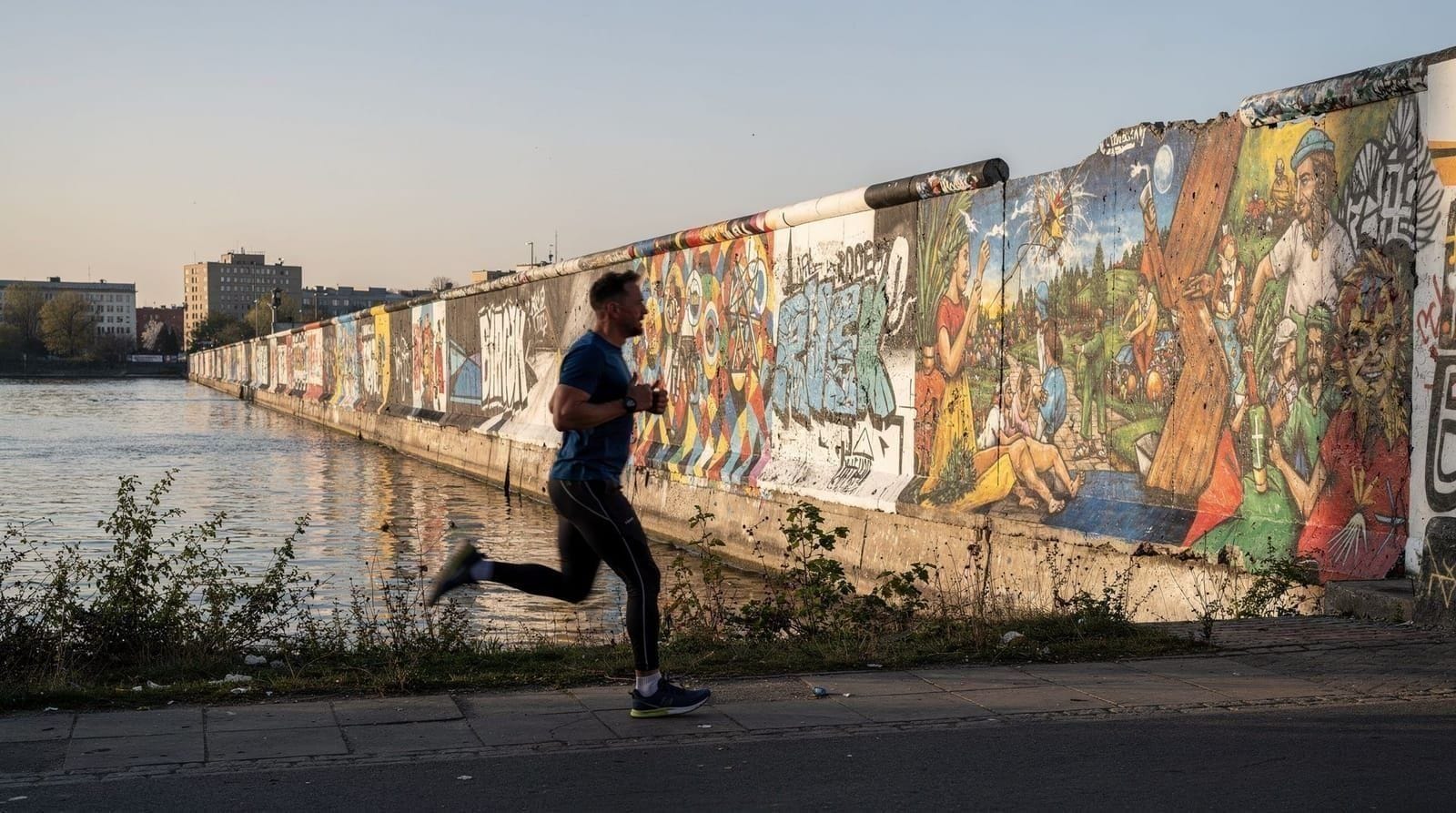
Not everything from the fortification system was cleared. The most visible remnant is the graffiti-covered wall section on the park’s western edge, running roughly north-south. This is original concrete — part of the actual barrier, now covered entirely in murals and legal street art. Unlike the East Side Gallery in Friedrichshain, where the Wall section is protected as a monument with restricted access, the Mauerpark section is treated as a community canvas. It is repainted continuously. Murals appear, are painted over, and reappear in different form. The effect is palimpsestic: layers of paint on a surface that itself carries forty years of Cold War history.
During the division of the city, the area around the park was among the more fortified sections of the Wall. Bernauer Strasse, the street that borders the park to the south, was famous from the earliest days of the Wall’s construction on 13 August 1961. The street ran along the sector boundary: the pavement fell in the Western (Wedding) sector, but the apartment buildings on the south side of the street stood in the Eastern (Prenzlauer Berg) sector. In the days immediately after 13 August 1961, residents of those apartments found themselves trapped: their buildings were in the East, but stepping out onto the pavement meant stepping into the West. Several people jumped from upper-floor windows to escape in the first days, some to their deaths. The buildings were subsequently sealed and eventually demolished to create a cleaner sightline for the guards — their foundations are now among the traces preserved at the Berlin Wall Memorial on Bernauer Strasse.
The anti-vehicle ditch that formed part of the fortification system — a shallow but impassable trench designed to stop any vehicle attempting to ram through the Wall — is partially visible in the park’s topography if you know where to look. The ground in the former death strip area is uneven in ways that reflect its history. Most visitors walk over it without registering this. The Berlin Wall complete guide has a fuller description of how the fortification system worked.
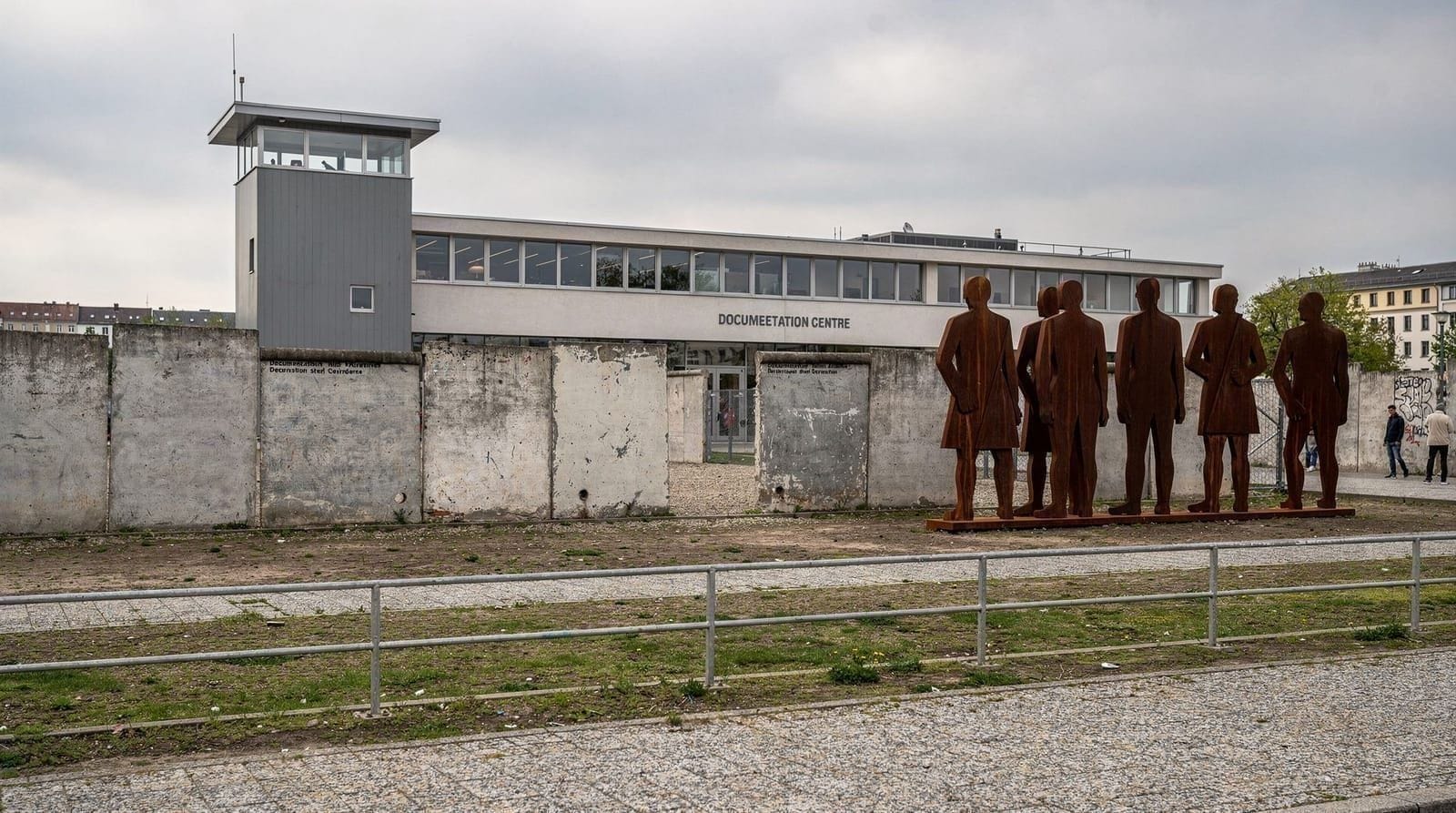
The most historically contextualised surviving section of the Wall in this part of the city is 5 minutes south on foot: the Berlin Wall Memorial on Bernauer Strasse preserves the outer wall, death strip, foundations of demolished houses, a documentation centre, and a chapel. If you are visiting Mauerpark and have any interest in the Cold War history of the site, the Bernauer Strasse memorial should be part of the same visit. It is free, outdoors, and open daily.
Getting to Mauerpark
The park is in the north of Prenzlauer Berg, close to the Wedding boundary.
By U-Bahn: U8 to Bernauer Strasse, then walk north along Bernauer Strasse approximately 10 minutes. The park entrance is on your left. This is the most straightforward option from central Berlin (Alexanderplatz to Bernauer Strasse is approximately 8 minutes).
By tram: M10 to Eberswalder Strasse, then walk west approximately 8 minutes. Alternatively, M10 to Am Friedrichshain/Wisbyer Strasse direction, or take the M10 from Nordbahnhof (S-Bahn connection) directly into Prenzlauer Berg. The tram is useful if you are coming from Friedrichshain or connecting from the S-Bahn at Warschauer Strasse.
By S-Bahn: Schönhauser Allee (S41/S42 ring lines) is approximately 12 minutes’ walk from the park’s northern entrance. Useful if you are combining with other sites along the S-Bahn ring.
By cycling: Excellent. The park has fence rails and designated bike stands. Prenzlauer Berg has good cycling infrastructure; the route from Mitte along Chausseestrasse and Schwedter Strasse is manageable and relatively traffic-light.
For Sunday market visitors: the crowds arrive gradually from 10 am onwards and peak between 1 pm and 3 pm. If you want the best selection of market goods without severe congestion, arrive between 10 am and 11 am. If you are primarily coming for the bear pit karaoke, arriving at 2:30 pm to secure amphitheatre seating is a better strategy. Combining both in the same visit means arriving around 11 am, spending 2 hours at the market, and moving to the amphitheatre area by 2:30 pm.
The Sunday flea market: what to expect
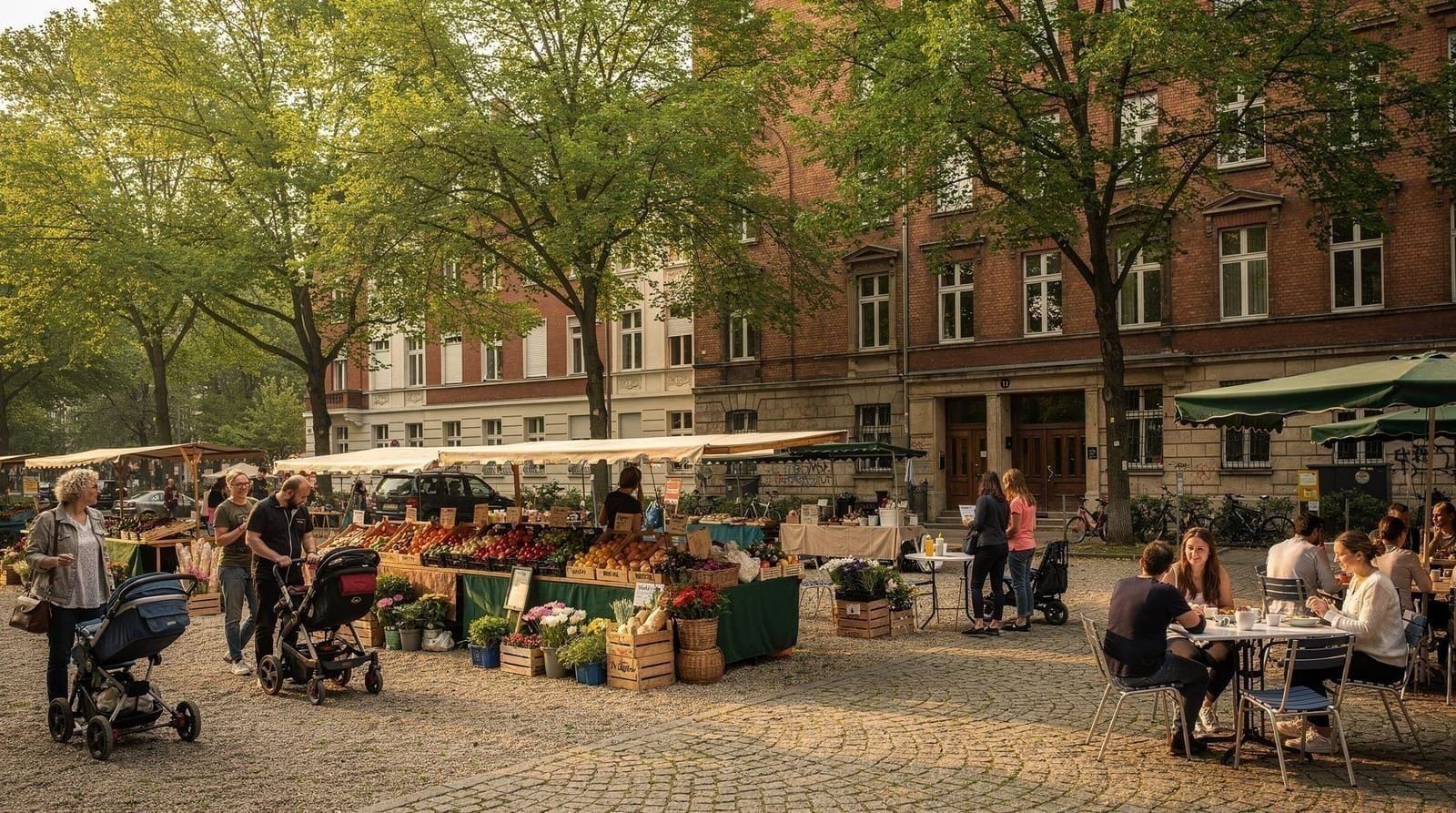
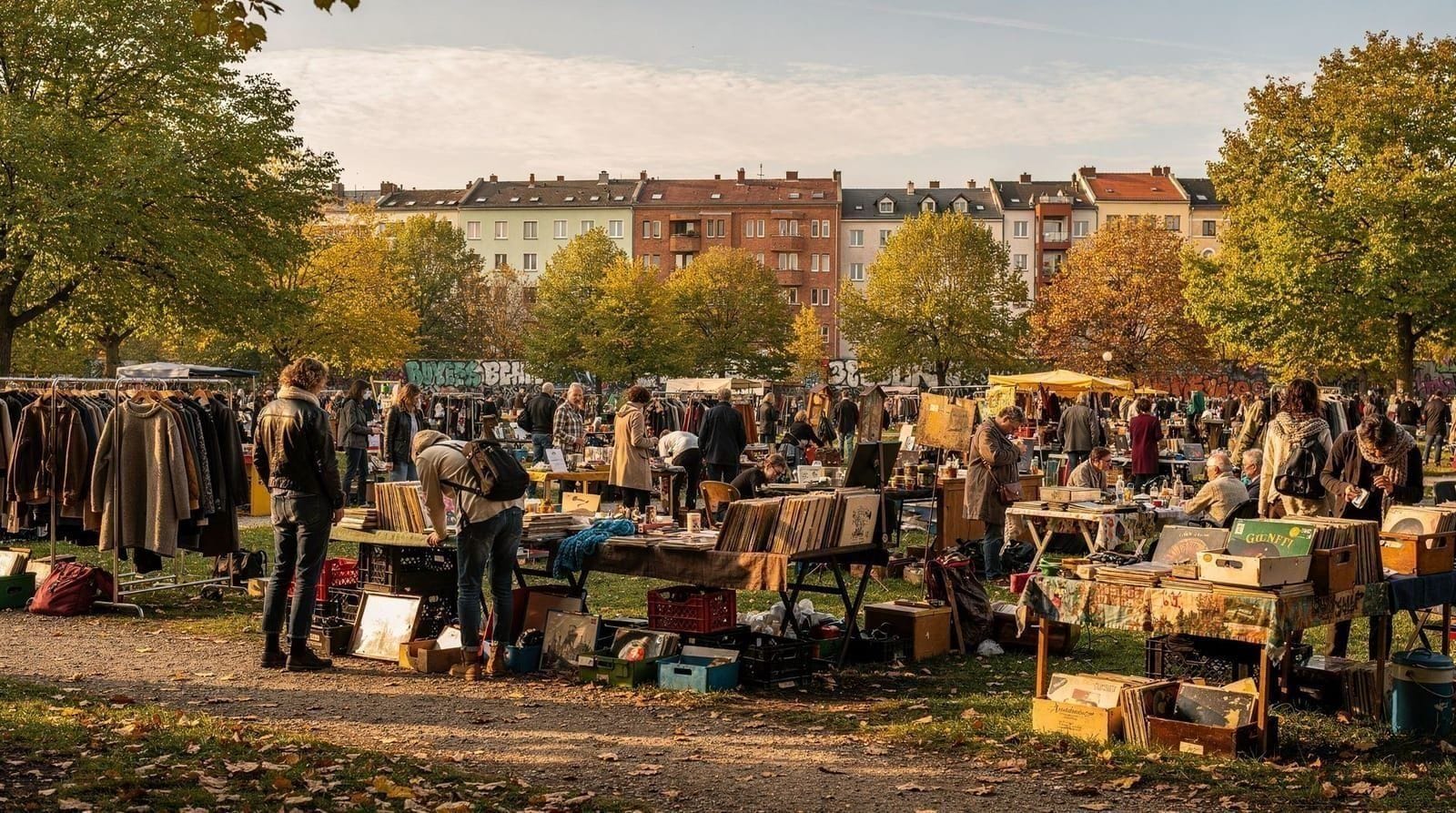
The Mauerpark flea market is the largest flea market in Berlin in terms of vendor numbers, running every Sunday year-round. Vendor counts reach approximately 3,000 spaces on a busy summer Sunday. The market sprawls along the Bernauer Strasse perimeter and extends through the park interior; it is significantly larger than it first appears from the entrance.
The market divides loosely by zone, though these zones are fluid and change week to week:
Bernauer Strasse entrance area: The densest concentration of professional vintage clothing vendors. These are traders who source, clean, and price quality second-hand clothing. Prices here are not “flea market cheap” — expect 20-50 euros for a good leather jacket, 15-30 euros for quality knitwear, 10-20 euros for vintage denim. Bargaining with professional vendors is generally not expected and often declined. They know what their stock is worth.
Park interior — central section: Vinyl records, books (mostly German-language), electronics, household goods, and curiosities. Private sellers mixing with semi-professional traders. This is the zone most likely to produce the interesting random finds that make flea markets worthwhile. Prices are negotiable; a record in unmarked condition might go for 2-5 euros, a box of assorted paperbacks for 1-2 euros each.
GDR objects: These appear throughout the market but are most concentrated in the interior sections. Prices vary enormously based on object, condition, and how commercially aware the seller is. Common finds: enamel tableware (2-15 euros), GDR-era badges and pins (1-5 euros), Ampelmann merchandise (often new reproductions rather than original). Genuinely rare GDR collectables — factory-produced toys, original propaganda posters in good condition, pre-1989 edition books — require searching and negotiating.
Near the amphitheatre — northern section: Artisan crafts, handmade jewellery, homemade food products, and street food stalls. Quality varies. Prices for handmade craft items are typically higher than for second-hand goods in the rest of the market. This section fills as Sunday afternoon progresses and people drift toward the bear pit area.
Food stalls: Distributed throughout. Currywurst around 3.50-4.50 euros, doner 5-7 euros, crepes 3-5 euros, coffee (often filter or Americano from portable setups) 2-3 euros. Cash is essential — the overwhelming majority of market vendors, food stalls included, do not accept card payment. Bring enough euros before you arrive; the nearest ATMs are on Bernauer Strasse and near Eberswalder Strasse.
A note on timing for deals: some vendors begin reducing prices in the late afternoon (after 4 pm) to avoid packing goods back up. This is more common with private sellers than with professional vendors. The trade-off is that the good stock is largely gone by mid-afternoon; what remains at 5 pm is what others did not want.
For comparisons with other Berlin markets and an overview of the flea market scene, the Berlin flea markets guide and Mauerpark flea market page have more detail. The Sunday Mauerpark market is also included in the 4-day Berlin itinerary as a recommended half-day activity.
Bear pit karaoke: the Bearpit tradition
The stone amphitheatre at the northern end of Mauerpark was built as part of the park’s original design. Its circular form and tiered stone seating can accommodate several hundred people. For most of the week it sits largely empty. On Sunday afternoons from approximately March through October (weather permitting), it becomes the venue for Bearpit Karaoke — one of Berlin’s more genuinely participatory public events.
The concept is simple. Joe Hatchiban, a Berlin-based performer, arrived with a portable PA system mounted on a bicycle in 2009. He has been running the same format every suitable Sunday since. Anyone who wants to sing adds their name to a list. Joe plays the backing track. The performer takes the single handheld microphone in the centre of the amphitheatre and sings in front of whoever has gathered — on a busy afternoon, this means a crowd of 1,500 to 2,500 people.
The technical setup is minimal: one bicycle-mounted system, one microphone, a song library accessed via phone or MP3 request. The acoustics of the stone amphitheatre do most of the work; the bowl shape focuses the sound and creates a natural intimacy between performer and audience that a flat open space would not provide.
What makes Bearpit Karaoke unusual is the crowd dynamic. The audience is large and genuinely engaged. When performers hit a recognisable chorus, the crowd joins in. When a performer struggles with nerves, the crowd provides encouragement rather than mockery. This is not a fringe event or an ironic exercise; it is a public cultural tradition that has run for fifteen years and draws tourists and locals in roughly equal measure. Some performers are clearly regulars with performance experience; others are clearly singing in public for the first time in their lives. The mix is part of the appeal.
Performances typically begin around 3 pm. Joe manages the sign-up list; join the queue near the stage as early as 2 pm if you want to perform on a busy day. Waiting times to perform can reach 2-3 hours on summer Sundays. As a spectator, arriving by 2:30 pm secures reasonable amphitheatre seating on the stone tiers. By 3 pm on a fine day the tiers fill and latecomers watch from the grass slopes above.
The event is free for spectators and performers. There is no official collection; Joe operates on tips and donations, which are given voluntarily. If you attend, a contribution is appropriate — this has been a consistent piece of Berlin’s cultural life for fifteen years, maintained by one person and a bicycle.
Bearpit Karaoke does not run in very wet weather, and the schedule can vary. The event’s online presence (reachable by searching “Bearpit Karaoke Berlin”) has current schedule information. Do not assume it will be running if the weather is poor.
Mauerpark vs. other Berlin flea markets
Mauerpark is not the only Sunday flea market in Berlin, and for some visitors another option may be preferable.
Boxhagener Platz (Friedrichshain): Smaller, Sunday, more local feel. Fewer tourists, more Berlin residents selling household goods and clothing. The scale is more manageable — approximately 100-150 vendors — and the market is finished in 2 hours rather than a half-day. Combine with the East Side Gallery nearby. Less spectacle but more authentic flea market character.
Tiergarten Strasse (Strasse des 17 Juni): Saturday and Sunday. Antiques and higher-quality goods. Substantially more expensive than Mauerpark; this is a professional antique and art market rather than a mixed flea market. If you are looking for investable vintage objects rather than browsing, this is more appropriate.
Arkonaplatz (Prenzlauer Berg): Sunday, much smaller. On Arkonaplatz itself near Zionskirche. A local neighbourhood market — a handful of vendors, more crafts and food than second-hand goods. Useful as a warm-up or comparison if staying in Prenzlauer Berg.
Mauerpark is the most tourist-frequented of all of these, and that has consequences: prices are generally higher than at more locally attended markets, professional vendors have calibrated their stock accordingly, and the crowd on a summer Sunday makes relaxed browsing difficult. If the primary motivation is finding bargains rather than the overall event experience, Boxhagener Platz is the more practical choice.
| Market | Size | Character | Best for |
|---|---|---|---|
| Mauerpark | ~3,000 stalls | Large, tourist-heavy, spectacle-driven | The full Sunday experience, karaoke |
| Boxhagener Platz | ~100–150 stalls | Local, manageable, quieter | Bargain-hunting, an authentic feel |
| Strasse des 17 Juni | Mid-size | Professional antiques market | Higher-quality, investable objects |
| Arkonaplatz | Small | Neighbourhood market | A quick browse while in Prenzlauer Berg |
Prenzlauer Berg neighbourhood context
Mauerpark sits at the northern edge of Prenzlauer Berg, on the boundary with Wedding to the north-west. Understanding the neighbourhood’s history adds to the experience of the park.
Prenzlauer Berg was a working-class district of East Berlin — densely populated, with a reputation in the GDR era for mild counter-cultural tolerance. The Gethsemane Church here was a key gathering point for the peaceful resistance movement of autumn 1989, hosting prayer meetings and vigils in the weeks before the Wall fell. After reunification the neighbourhood gentrified rapidly; it is now prosperous, with a strong café culture along Kastanienallee and Schönhauser Allee. Either street makes a practical starting or ending point for a Mauerpark visit.
For more on the neighbourhood’s history and current character, the Prenzlauer Berg guide has a full overview. The Berlin divided city history provides broader context on how East and West Berlin diverged.
What to do near Mauerpark
Berlin Wall Memorial, Bernauer Strasse (5-minute walk south): The most historically complete surviving section of the Wall system in the city. Outdoors, free, open daily. The documentation centre at Bernauer Strasse 111 has photographs, testimonies, and detailed maps of the fortification system. The outdoor section preserves the outer wall, death strip, house foundations, and a partial guard tower remnant. Essential if you are visiting Mauerpark for more than the market — the two sites together constitute a coherent Cold War circuit. For visitors following the Cold War Berlin itinerary, Mauerpark and Bernauer Strasse are a natural pairing.
Nordbahnhof S-Bahn station (5-minute walk east of Bernauer Strasse): One of Berlin’s most accessible “ghost station” sites. During the division of the city, several S-Bahn and U-Bahn stations in East Berlin were sealed — trains from West Berlin passed through them without stopping, in sealed carriages, the platforms left in darkness and patrolled by guards. Nordbahnhof is now a regular station, but exhibits on the platform document the ghost station period with original photographs. Free, viewable from the platform without a ticket if you enter from the street-level exhibition. A genuinely strange piece of Cold War urban history that most visitors miss.
Kulturbrauerei (15-minute walk east, or tram from Eberswalder Strasse): A former 19th-century brewery complex in Prenzlauer Berg, now a cultural centre with cinema, clubs, a regular market, and exhibition space. The complex itself is architecturally impressive — red brick factory buildings organised around a series of courtyards. The permanent “Alltag in der DDR” (Everyday Life in the GDR) exhibition, run by the Stiftung Haus der Geschichte, is free and covers domestic life in East Germany through objects and photographs. Worth an hour.
Gethsemane Church: 10-minute walk south along Stargarder Strasse. The church that served as the main gathering point for peaceful resistance groups in autumn 1989. The interior is normally accessible outside service times. Quiet, unassuming, and historically significant for understanding how the East German opposition organised in the weeks before the Wall fell.
Practical information
Park opening hours: Open at all times; no gate or perimeter fence.
Flea market: Every Sunday, approximately 9 am to 6 pm. No entry fee. Most active between 10 am and 3 pm. Cash only at virtually all stalls.
Bear pit karaoke: Sunday afternoons when weather permits, approximately 3 pm to 6-7 pm. Free. Sign up by 2 pm to perform; arrive by 2:30 pm for good amphitheatre seating.
Toilets: Available in the park on Sundays, small charge (50 cents to 1 euro). Limited on weekdays.
Parking: No dedicated area; public transport is the practical option.
Photography: Permitted throughout the park and market. Ask vendors before photographing their goods at close range.
Accessibility: Mostly grass and compacted gravel. The amphitheatre has stone tiers without adapted access. Not fully accessible for all mobility limitations.
Seasonal variation: The market runs year-round, but winter Sundays see far fewer vendors. Bear pit karaoke is a warm-weather event. April through October is the most active period.
Frequently asked questions about Mauerpark guide
What time does the Mauerpark flea market open and close?
The Mauerpark flea market runs every Sunday from approximately 9 am to 6 pm. Vendors typically have goods out and ready from 10 am; the best selection of vintage clothing and interesting finds is available in the morning. By 2-3 pm the market becomes very crowded and some stalls begin to pack up early. There is no entry fee.What is bear pit karaoke at Mauerpark?
Bear pit karaoke (Bearpit Karaoke) takes place in the stone amphitheatre at the northern end of Mauerpark, run by Joe Hatchiban with a portable sound system and a bicycle. Anyone can sign up and perform in front of crowds that regularly reach 2,000 people on fine Sunday afternoons. Performances begin around 3 pm and run until evening; the atmosphere is genuinely supportive. It has operated since 2009 and is free to watch.How do I get to Mauerpark from central Berlin?
Take the U8 to Bernauer Strasse and walk north (10 minutes), or the tram M10 to Eberswalder Strasse and walk west (8 minutes). From Mitte, tram M10 from Nordbahnhof is most direct. The park entrance on Bernauer Strasse is 5 minutes from the U8 station. By S-Bahn, Schönhauser Allee (S41/S42) is a 12-minute walk away.Is Mauerpark worth visiting outside of Sundays?
The flea market and karaoke only happen on Sundays. On other days Mauerpark is a pleasant but unremarkable urban park. The graffiti-covered wall section on the western side is present year-round and worth seeing. For a weekday Cold War experience, the Berlin Wall Memorial on Bernauer Strasse (5 minutes away) is the more historically substantial site.What can I buy at the Mauerpark flea market?
The market ranges from professional vintage clothing vendors (expect to pay 15-50 euros for quality pieces) to private sellers clearing attics (prices negotiable). Regular finds include GDR-era objects, vinyl records, second-hand books, handmade jewellery, and street food. The eastern section near the amphitheatre has more artisan crafts and food vendors; the main market runs along Bernauer Strasse and into the park interior.How does Mauerpark connect to the Berlin Wall?
The park was created on land that was part of the inner-German border fortification system — specifically the death strip between the outer (West-facing) wall and the inner (East-facing) wall. The watchtower that once stood here was demolished; a surviving section of the original anti-vehicle ditch and the graffiti-covered Mauer (wall segment) on the park's western edge are the most visible physical remnants. The adjacent Berlin Wall Memorial on Bernauer Strasse preserves a more complete section.Are there food options at Mauerpark on Sundays?
Yes, extensive. The Sunday market includes numerous food stalls selling currywurst, doner, crepes, international street food, and coffee. Prices are typical Berlin street food ranges (3-8 euros per item). Surrounding Prenzlauer Berg has numerous cafes and restaurants along Kastanienallee and Eberswalder Strasse for sit-down alternatives. Bring cash — most market vendors do not accept cards.