Berlin street art guide — RAW-Gelände, Urban Nation, and where to find the best murals
Berlin: Alternative & Street Art Tour
Where is the best street art in Berlin?
The RAW-Gelände in Friedrichshain and the Kreuzberg neighbourhood offer the highest concentration of legal murals and graffiti. Urban Nation museum in Schöneberg curates international pieces. The East Side Gallery is the most iconic single site. Most outdoor murals are free to view year-round.
Where is the best street art in Berlin? The highest concentrations are at RAW-Gelände in Friedrichshain and across Kreuzberg, where decades of tolerated outdoor painting have produced a layered, ever-changing visual landscape. Urban Nation museum in Schöneberg brings curated international work. The East Side Gallery is the most photographed single stretch. Almost all of it is free.
| Top spots | RAW-Gelände (Friedrichshain), Kreuzberg, East Side Gallery |
| Cost | free outdoors; Urban Nation museum around €10 |
| Time needed | half day to full day for a proper circuit |
| Best light | early morning, before 9am |
| Getting there | S/U-Bahn Warschauer Strasse for RAW and East Side Gallery |
| Cash needed | useful at RAW-Gelände market stalls |
Why Berlin became a street art capital
The conditions that produced Berlin’s street art culture were historically specific. West Berlin in the 1970s and 1980s was an enclave subsidised by the West German government, drawing artists, squatters, and political activists who found cheap space and a permissive atmosphere. The Wall itself became a canvas — on the western side, accessible to West Berliners with spray cans, while the eastern face remained blank and forbidden.
After reunification in 1990, enormous areas of East Berlin sat vacant or derelict — former factories, industrial yards, empty apartment blocks. Squatters moved in, art spaces opened, and the informal painting culture that had developed in West Berlin crossed the city. By the mid-1990s, Kreuzberg and Friedrichshain had some of the densest concentrations of unsanctioned murals in Europe.
The 2000s brought a second wave: invited international artists, institutional commissions, and the early street art market. Artists like Os Gemeos, ROA, and Shepard Fairey produced major works in Berlin. The city became a standard stop on the global mural circuit.
Today the scene is stratified — some areas are genuinely street-level and spontaneous, others are curated and institutional. Understanding the difference makes for a more honest visit.
RAW-Gelände, Friedrichshain — the authentic alternative hub
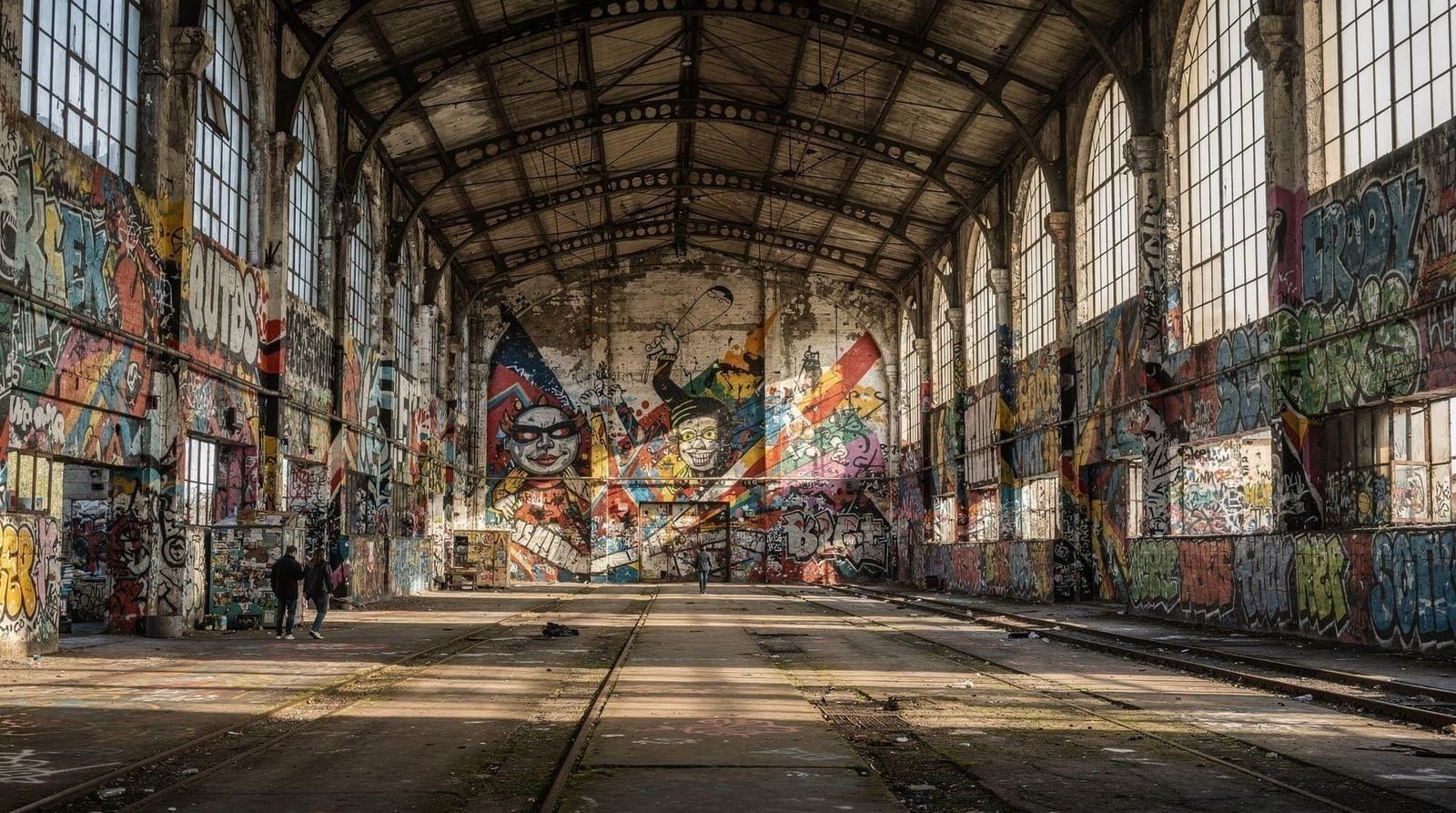
The RAW-Gelände (Reichsbahnausbesserungswerk, former railway repair depot) off Revaler Strasse in Friedrichshain is the most concentrated street art site in Berlin that feels genuinely lived-in rather than curated.
The complex was developed from 1867 as a railway maintenance facility. After reunification it was abandoned, then progressively occupied by alternative cultural organisations throughout the 1990s. Today it houses the Cassiopeia and Suicide Circus clubs, a climbing wall (Kletterhalle), a skate park, a boxing gym, several food stalls, and a weekend flea market. The perimeter and many of the buildings are entirely covered in graffiti and murals — work accumulates and layers over previous work continuously.
There is no entry charge to walk through the site. Most of the space is accessible from the Revaler Strasse entrance during daylight hours. Weekend evenings when clubs are open bring larger crowds. The flea market runs most Saturdays and Sundays.
The S-Bahn station Warschauer Strasse (S3, S5, S7, S9) is a 5-minute walk south. Alternatively, U1 or tram M10 to Warschauer Strasse.
The quality of individual pieces varies — this is an active painting area, not a curated museum. Work changes frequently. What you see on one visit will not be there six months later. That turnover is characteristic of the scene, not a problem.
For a deeper look at the Friedrichshain graffiti culture around Boxhagener Platz and the wider neighbourhood, see the Berlin graffiti Friedrichshain guide.
Urban Nation museum, Schöneberg
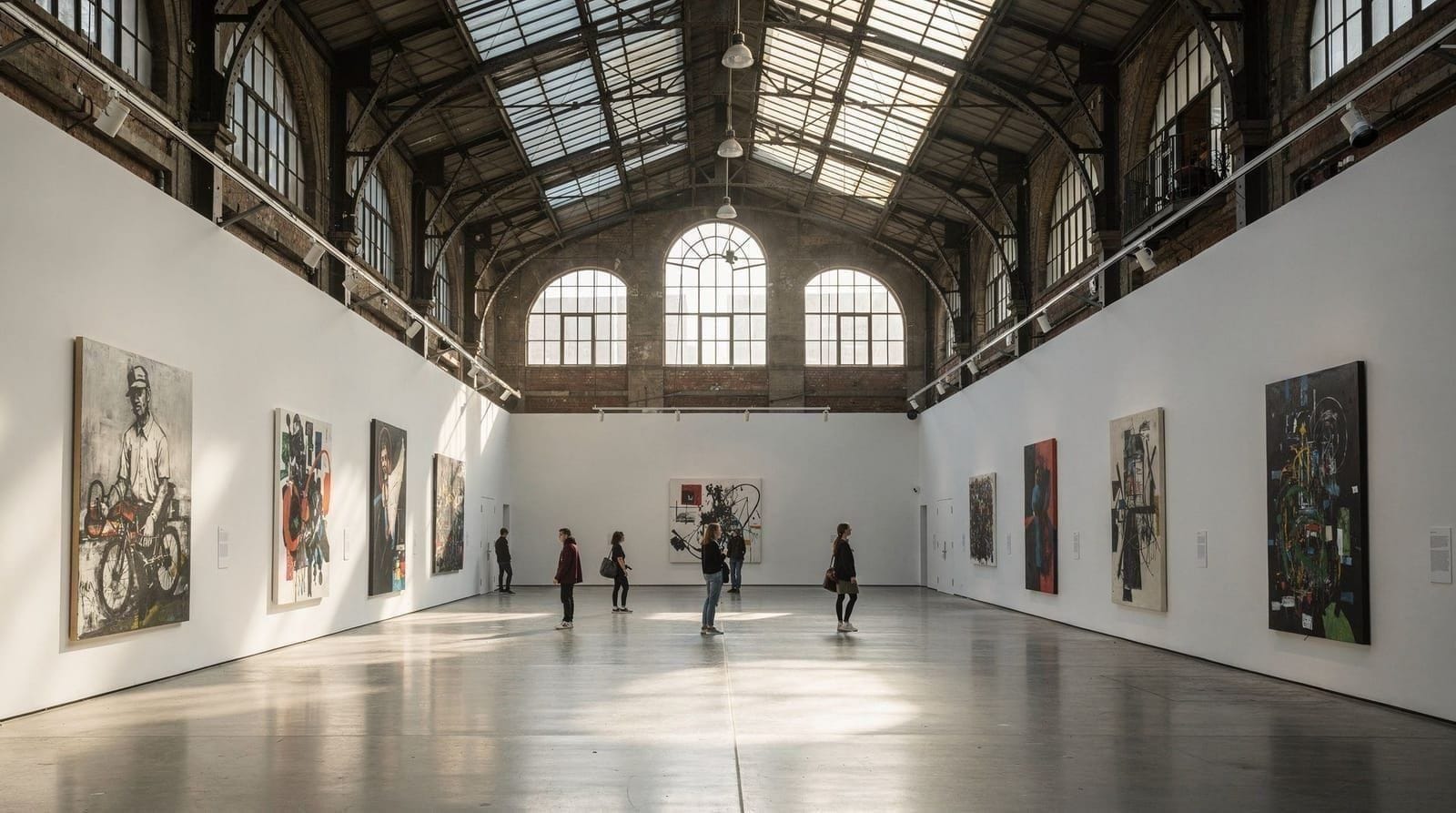
Urban Nation, on Bülowstrasse 7 in Schöneberg, opened in 2017 and represents the institutionalised end of Berlin’s street art spectrum. It is the only museum in the world specifically dedicated to urban contemporary art, and it functions both as an indoor gallery and as a commissioner of outdoor works.
The exterior of the building itself is a major piece — a large-format mural covers the facade. The surrounding streets on Bülowstrasse and Potsdamer Strasse carry works commissioned by Urban Nation from international artists over several years. A walk around the block gives a sense of how a single curatorial vision can reshape a street.
Inside, the changing exhibitions typically feature three to six artists at a time, with large-scale canvases, installation work, and photography. Entry costs €10 standard, €6 reduced (students, unemployed). Closed on Mondays. Hours Tuesday to Sunday 10:00–18:00. The museum shop sells prints and monographs.
Getting there: U-Bahn U2 to Bülowstrasse, 2 minutes walk. The surrounding area of Potsdamer Strasse has several commercial galleries showing contemporary and street-art-adjacent work.
Note that Urban Nation’s outdoor programme means the best works are sometimes blocks away from the museum itself. The museum publishes a map of current exterior commissions on its website.
Berlin: Alternative and Street Art Walking Tour — covers Kreuzberg and Friedrichshain, English-speaking guideKreuzberg — street art as neighbourhood identity
Kreuzberg’s mural culture is inseparable from its political history. The district was West Berlin’s squatter heartland in the 1970s and 1980s, home to a large Turkish-German population and a counterculture that resisted urban redevelopment. Street art was part of that resistance — political slogans, anti-fascist imagery, and artist names covered facades across the neighbourhood.
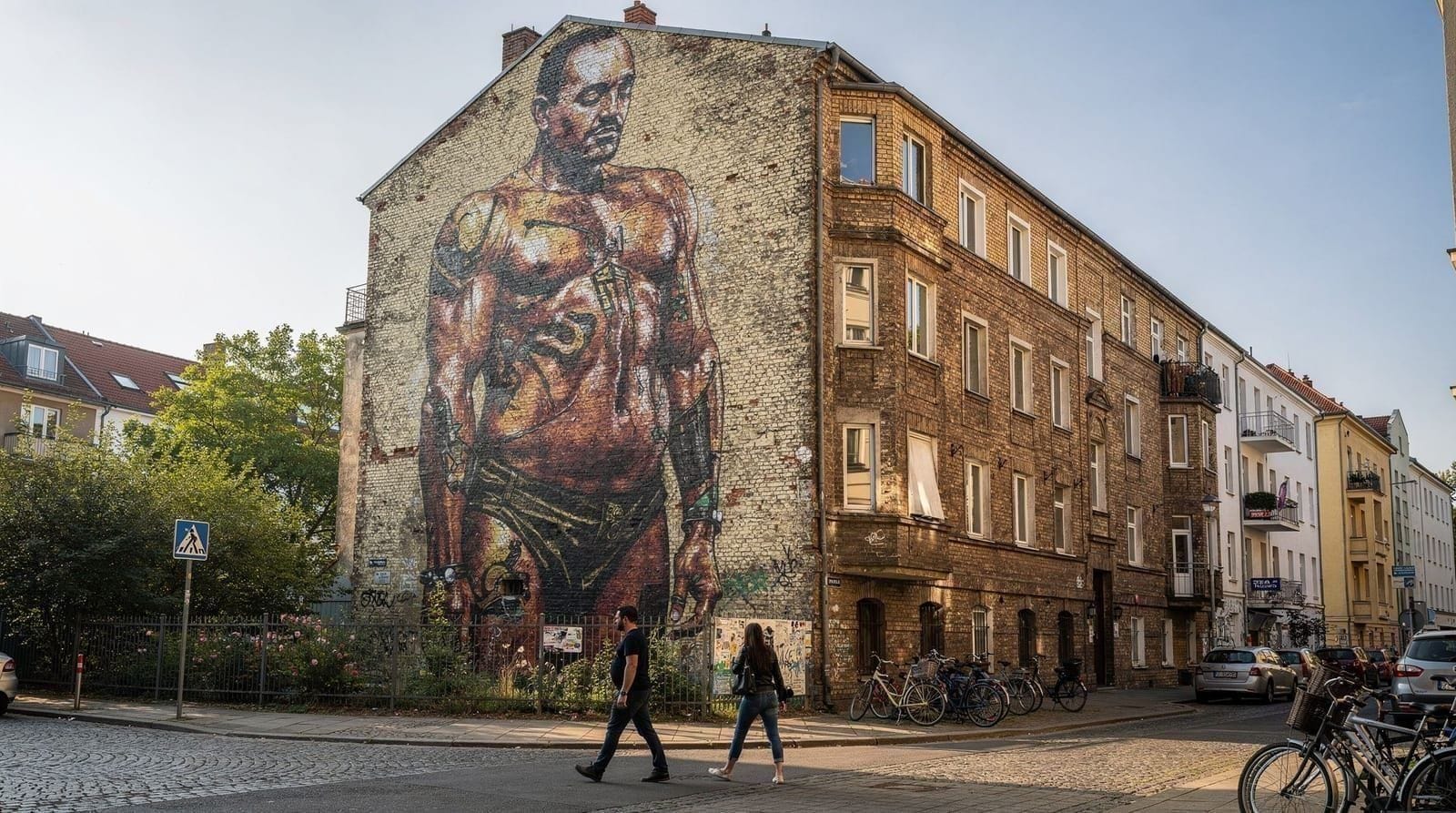
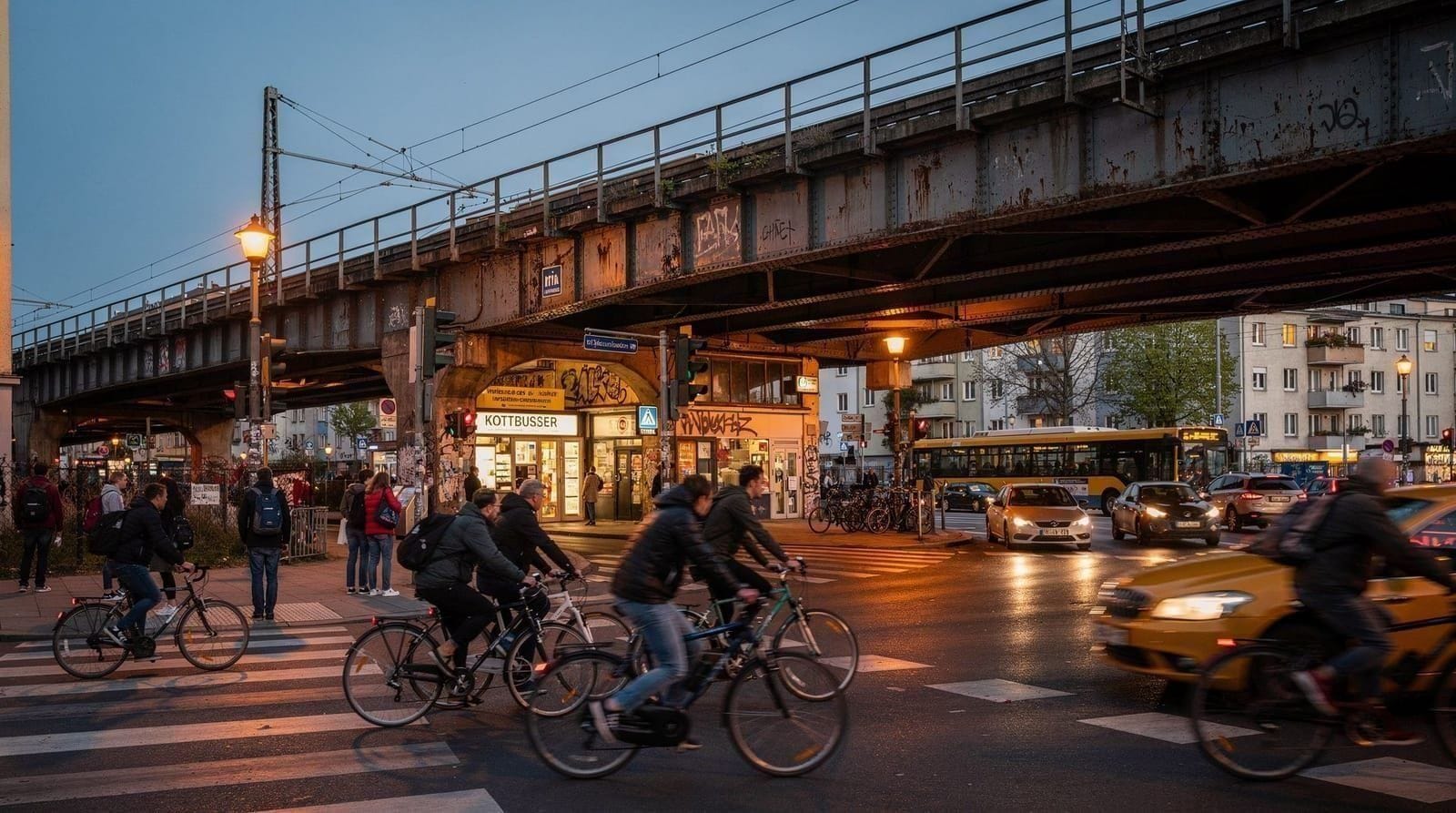
Today the most photogenic area runs from Kottbusser Tor southwest toward Admiralbrücke, and east toward Görlitzer Park. The streets around Lausitzer Platz, Skalitzer Strasse, and Wrangelstrasse have the highest density of large-format murals. Many are now officially commissioned; others are tolerated semi-legal works that have survived multiple layers of paint.
Key works to look for:
- The corridor around Oranienstrasse carries several major pieces from the early 2010s by artists including ROA (animal imagery, often monochrome)
- The area near Schlesisches Tor has examples of paste-up and stencil work alongside spray murals
- The wall along the Landwehrkanal near Paul-Lincke-Ufer is covered in pieces that have built up over twenty years
The Blu whitewashing incident in 2014 erased what had been several of the most significant large-scale murals in Kreuzberg. If you read about Blu’s Berlin work in older guides, those pieces no longer exist. What replaced them, in most cases, is not as distinctive.
For dedicated coverage of Kreuzberg’s urban art scene including specific addresses and gallery recommendations, see the Kreuzberg urban art guide.
Berlin: Kreuzberg Street Art and Graffiti Self-Guided Audio Tour — GPS route, works explainedThe East Side Gallery — murals with a historical context
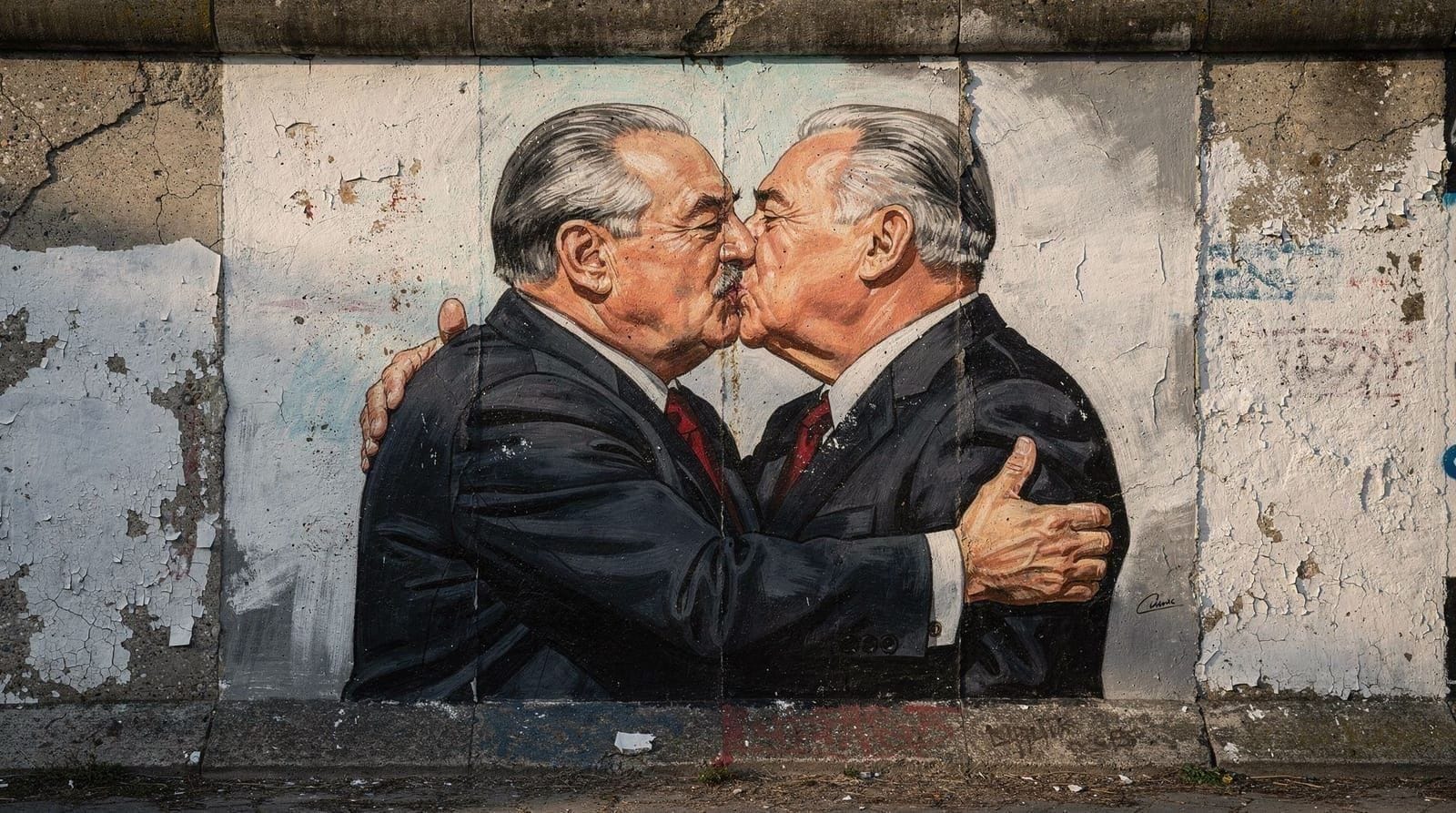
The East Side Gallery is not primarily a street art site in the unsanctioned sense — it is a series of officially commissioned murals on the original Berlin Wall, created in 1990 as an international artists’ response to reunification.
The 1.3 km stretch along Mühlenstrasse in Friedrichshain contains 105 paintings by artists from 21 countries. Some of the most reproduced images in post-1990 art are here: Dmitri Vrubel’s “My God, Help Me to Survive This Deadly Love” (the fraternal kiss between Brezhnev and Honecker), Birgit Kinder’s Trabant driving through the Wall, and Kani Alavi’s “It Happened in November.”
The distinction from typical street art: these works were sanctioned from the start, painted on a monument with institutional support. Several have been restored or repainted due to weather damage and vandalism — the degree to which specific panels are original 1990 work versus later restoration varies and is often not clearly labelled.
Access is free, 24 hours. The gallery runs from Ostbahnhof to Warschauer Strasse. It is heavily visited in summer afternoons. Early morning offers the least obstructed views and better light on east-facing sections.
For in-depth coverage of individual murals, the artists, and the historical context of the Wall itself, see the East Side Gallery murals guide.
Friedrichshain street art beyond RAW
The area around Boxhagener Platz in Friedrichshain is a secondary concentration point that is less visited than RAW-Gelände but often produces more interesting work. The streets around Grünberger Strasse, Krossener Strasse, and Revaler Strasse carry a mix of paste-up, stencil, and spray work.
Revaler Strasse itself, between RAW-Gelände and Frankfurter Allee, is worth walking in full — the residential and commercial buildings on both sides carry pieces that accumulate gradually without being formally curated.
The weekend flea market at RAW-Gelände draws a substantial alternative crowd, making Saturday afternoon a good time to combine market-browsing with mural-hunting in the surrounding streets.
For Friedrichshain-specific coverage of the graffiti scene, including the pier off Mühlenstrasse and the streets east of Warschauer Strasse, see the Berlin graffiti Friedrichshain guide.
Guided tours versus self-guided walks
Both approaches work. The case for a guided tour:
A knowledgeable guide can explain which artists produced which works, when, and in what context. The street art scene has historical layers and art-world references that are opaque without background. Guides who specialize in the alternative scene (not general Berlin sightseeing operators) typically have direct contact with local artists and up-to-date knowledge of recent additions and losses.
The case for self-guided walking:
The major areas — Kreuzberg, Friedrichshain, the RAW site — are compact and walkable. A street art map (several are available free from hostels and tourist information) covers the key locations. The self-guided audio tour of Kreuzberg is good value if you want narration without the fixed schedule of a group tour.
Berlin: Street Art and Graffiti Private Walking Tour — small group, flexible route, artist contextPractical planning for a street art day in Berlin
Route suggestion (approximately 5 hours on foot):
Start at Urban Nation on Bülowstrasse (U2 to Bülowstrasse). Spend 45 minutes inside if an exhibition interests you, then walk the surrounding Potsdamer Strasse area for exterior commissions. Take U1 or bus M29 east to Görlitzer Bahnhof. Walk north through the Kreuzberg mural zone — Oranienstrasse, Lausitzer Platz, Skalitzer Strasse — toward Kottbusser Tor. Take U1 east to Warschauer Strasse for the East Side Gallery. Finish at RAW-Gelände, 10 minutes walk north of Warschauer Strasse station.
Total walking distance: approximately 6–8 km depending on detours. Mostly flat.
Transport: Berlin AB ticket (€3.20 single, €8.80 day ticket) covers all of this. Cash is useful at RAW-Gelände market stalls.
Photography note: Most outdoor murals can be photographed freely. Urban Nation asks that you do not photograph other visitors inside without consent. On guided tours, the guide will indicate any restrictions.
What actually changes over time. Because street art is by nature temporary, don’t expect this guide — or any guide — to be a perfectly current map. Pieces at RAW-Gelände and along Boxhagener Platz can be painted over within weeks; the East Side Gallery and Urban Nation’s commissions are more stable but still get refreshed periodically. If a specific mural you’ve seen in photos is the reason for your visit, search recent dates on Instagram under location tags for RAW-Gelände or Boxhagener Platz before you go, since older blog posts and guides (including sections of this one, over time) inevitably lag behind what’s actually on the walls.
For neighbourhood context and café/bar stops along the route, see the Kreuzberg neighbourhood guide and Friedrichshain guide.
If five hours on foot is more than your day allows, the route above splits cleanly into two shorter halves: Urban Nation plus the Kreuzberg mural zone as a morning outing (around 2.5-3 hours), and the East Side Gallery plus RAW-Gelände as a separate afternoon or evening visit, particularly if you plan to be at RAW-Gelände’s weekend flea market or want to stay for its clubs after dark. Splitting the day also gives you flexibility to build in lunch or a proper sit-down break at one of the many cafés along Bergmannstrasse or in the Boxhagener Platz area, rather than trying to power through the full route in one continuous walk.
Fitting it into a longer trip
A dedicated street art day works well as one day within a longer Berlin visit — see the Berlin 4-day itinerary for how it might slot alongside museum and history days. If you’d rather explore the alternative scene more broadly rather than street art specifically, a guided alternative walking tour covers similar neighbourhoods with a wider cultural lens, and the Berlin contemporary art scene guide connects the street-level work to Berlin’s gallery world if you want to go deeper into the art context — useful if you find yourself drawn more to Urban Nation’s curated commissions than to the rawer, unsanctioned work at RAW-Gelände, since that’s effectively the same divide that runs through Berlin’s wider contemporary art scene between institutional galleries and independent project spaces. If you’re based in Mauerpark territory in Prenzlauer Berg, its own wall of legal graffiti is a smaller but easy add-on before or after a RAW-Gelände visit.
Frequently asked questions about Berlin street art guide
Is street art in Berlin legal?
Much of it is. Berlin has extensive designated "legal walls" — areas where painting is officially permitted. RAW-Gelände, the Mauerpark wall, and sections of Boxhagener Platz operate as de facto legal zones. Urban Nation commissions artists with full permissions. Unsanctioned graffiti on private property is still illegal, but enforcement is inconsistent in certain areas.What is Urban Nation Berlin?
Urban Nation is a street-art-focused museum in Bülowstrasse, Schöneberg, opened in 2017. It runs changing exhibitions inside and curates a rotating programme of exterior murals on the building and surrounding streets. Entry costs €10 (reduced €6). Closed on Mondays.What is RAW-Gelände?
RAW-Gelände (short for Reichsbahnausbesserungswerk) is a former railway repair depot in Friedrichshain, opened as an alternative cultural space in the 1990s. The complex hosts clubs, skate parks, a climbing wall, flea markets, and extensive graffiti on nearly every surface. It sits between Revaler Strasse and Warschauer Strasse.Who is Blu and why is he important to Berlin street art?
Blu is an Italian street artist who created some of the most celebrated large-format murals in Berlin, particularly in Kreuzberg and Friedrichshain, from the late 2000s onward. In 2014 he controversially whitewashed all his own Berlin works to protest the commercialisation of street art. Most of his original Berlin pieces no longer exist.How do I get to the East Side Gallery from central Berlin?
Take the S-Bahn (S3, S5, S7, or S9) to Ostbahnhof, or the U1 to Warschauer Strasse and walk about 5 minutes north along the river. The gallery runs 1.3 km along Mühlenstrasse on the north bank of the Spree. It is open 24 hours, free, and signposted.Are there guided street art tours in Berlin?
Yes. Several operators run 2–3 hour walking tours focusing on Kreuzberg, Friedrichshain, or the wider Berlin graffiti scene. Self-guided audio tours with GPS routes are also available and cost less. Private tours allow you to tailor the route and get more background on individual artists.What is the best time of day to photograph street art in Berlin?
Early morning (before 9 am) gives the best light on south-facing walls and avoids crowds at RAW-Gelände and along Boxhagener Platz. The East Side Gallery faces roughly east, making late afternoon light harsh — mid-morning is better. Overcast days reduce glare on large painted surfaces.
Top experiences
Bookable activities with verified prices and instant confirmation on GetYourGuide.