Berlin contemporary art scene — Hamburger Bahnhof, KW Institute, and Boros Collection
What are the best places to see contemporary art in Berlin?
The Hamburger Bahnhof museum on Invalidenstrasse is the leading public institution. KW Institute for Contemporary Art at Auguststrasse 69 shows the most cutting-edge programming. The Boros Collection in a World War II bunker requires advance booking but is one of Europe's most extraordinary private collections. For commercial galleries, the Potsdamer Strasse corridor in Schöneberg is the primary cluster.
What are Berlin’s best contemporary art institutions? The Hamburger Bahnhof is the major public museum. KW Institute runs the most adventurous programme. The Boros Collection in a World War II bunker is one of Europe’s most unusual private collections — but it requires booking months ahead. The commercial gallery corridor on Potsdamer Strasse is where to find the market. Access to most spaces is straightforward; the Boros is the exception.
| Where | Mitte (Hamburger Bahnhof, KW), Schöneberg (Potsdamer Strasse galleries) |
| Cost | around €8–14 museum entry, €22 Boros Collection tour, galleries free |
| Time needed | Half a day for one institution, a full day for the full route |
| Getting there | U-Bahn/S-Bahn to Hauptbahnhof, Weinmeisterstrasse, or Potsdamer Platz |
| Best time | Book the Boros Collection months ahead; visit during Gallery Weekend (April) for the fullest scene |
Why Berlin attracts contemporary artists and institutions
Berlin’s position as a contemporary art centre is relatively recent and historically contingent. In the 1990s, the reunified city had vast amounts of underused space, extremely low rents, and a social infrastructure (arts funding, cultural institutions, artist residency programmes) that made it viable to live and work as an artist without commercial success.
The result was an influx — from Germany and internationally — of artists, curators, and arts organisations that could not afford to base themselves in New York, London, or Zurich. By the mid-2000s, Berlin was widely recognised as having displaced Amsterdam and perhaps London as the most significant contemporary art city in Europe, measured by density of working artists, institutional activity, and commercial gallery presence.
Rents have risen significantly since then, and Berlin is no longer the cheapest European art city. But the infrastructure built in the 1990s and 2000s — the galleries, institutions, collector networks, and artist residency culture — remains. The city still has a functioning contemporary art ecosystem unlike anywhere else in Europe at the same scale.
Hamburger Bahnhof — the primary public institution
Hamburger Bahnhof (Museum für Gegenwart — Museum for the Present) at Invalidenstrasse 50–51 in Mitte is the principal public museum of contemporary art in Berlin and one of the major public collections in Germany.
The building was constructed in 1847 as the terminus for the Hamburg-Berlin railway. By the 1880s it had lost its transport function and was repurposed as a transport museum, then fell into partial ruin. A careful renovation in the 1980s and 1990s produced what is now one of the most architecturally striking museum spaces in Europe — the central nave, a vast hall under arched steel roofing, can accommodate very large installations.
The permanent collection: The museum’s core holdings include major works by Joseph Beuys (Germany’s most important post-war artist, with an extensive collection here), Cy Twombly, Andy Warhol, Robert Rauschenberg, and Anselm Kiefer. The Beuys installation “Das Kapital Raum” is a landmark work.
The Flick Collection: Friedrich Christian Flick donated a major collection of contemporary art to the Hamburger Bahnhof on long-term loan in 2004. The collection — one of the largest private art collections in the world — focuses on post-1960s international art, with significant work by Bruce Nauman, Candice Breitz, Paul McCarthy, Rodney Graham, and others. Not all of the Flick works are always on display; the loan arrangement allows for rotation.
Current programming: Alongside the permanent collection, the museum runs changing temporary exhibitions of significant scope. Typically two to four major exhibitions per year, often monographic or thematic, drawing on international loans.
Practical information: Located on Invalidenstrasse, walking distance from Berlin Hauptbahnhof (10 minutes east) or S-Bahn S5/S7/S9 to Hauptbahnhof and then the 15-minute walk, or bus 120 along Invalidenstrasse. Entry approximately €14 standard, reduced rates for students and concessions. Closed on Mondays.
KW Institute for Contemporary Art — the experimental programme
KW Institute at Auguststrasse 69 in Mitte is the most important independent (non-commercial, non-state) contemporary art institution in Berlin. Founded in 1991 by Klaus Biesenbach and a group of collaborators in a former margarine factory in what was then the early Mitte gallery district, KW has consistently programmed more formally and politically adventurous work than the public museums.
The building retains its industrial character — large, rough-edged spaces, visible building structure, none of the smooth finish of conventional museum architecture. This suits the type of work KW shows: large installations, video art, performance documentation, and works that require space and some ambiguity in their presentation.
KW’s exhibition history includes early solo presentations of artists who subsequently became major international figures — Tino Sehgal, Hito Steyerl, Kara Walker (European premiere here), and many others. It remains a reliable place to see important work before it reaches larger institutions.
Entry approximately €8 standard. Closed Tuesdays. A coffee shop in the former factory courtyard is one of the better outdoor café spaces in Mitte during summer.
KW’s location on Auguststrasse places it in the original Mitte gallery district. Walking north along Auguststrasse toward Oranienburger Strasse passes several smaller galleries. Walking south toward Hackescher Markt connects to the tourist centre of Mitte. The surrounding area is pleasant for walking.
The Boros Collection — an extraordinary private museum
The Boros Collection is one of the most unusual art experiences in Germany. The collection is housed in a World War II air raid bunker at Reinhardtstrasse 20 in Mitte — a massive reinforced concrete structure that served as a shelter for 2,000 people during Allied bombing raids, then as a Soviet prison, then as a textile warehouse, then (briefly) as a techno club (Bunker, active in the 1990s), before being acquired by collector Christian Boros in 2003 and converted into a private museum.
The building has five floors of thick concrete rooms, each converted to show specific works from the collection. The architecture is integral to the experience — some rooms retain visible damage from the war and Soviet occupation. The weight and enclosure of the bunker gives the installation of contemporary art an atmospheric charge quite different from conventional gallery spaces.
The collection focuses on post-2000 international art, with works by Olafur Eliasson, Wolfgang Tillmans, Ai Weiwei, Cosima von Bonin, and others. A penthouse apartment on the bunker’s roof is the private residence of the Boros family.
Booking is essential and difficult: Tours run Saturday and Sunday, small groups of 12 people maximum, guided, approximately 2 hours. Popular dates — particularly summer weekends — book out months in advance. Book online at boroscollection.com as soon as you know your travel dates. Ticket price approximately €22. Closed during collection reinstallation periods (every 3–4 years the entire collection is rehung).
Getting there: S-Bahn or U-Bahn to Friedrichstrasse (5 minutes walk north on Reinhardtstrasse). The bunker entrance is on the street, distinctive in its size.
The commercial gallery corridor — Potsdamer Strasse
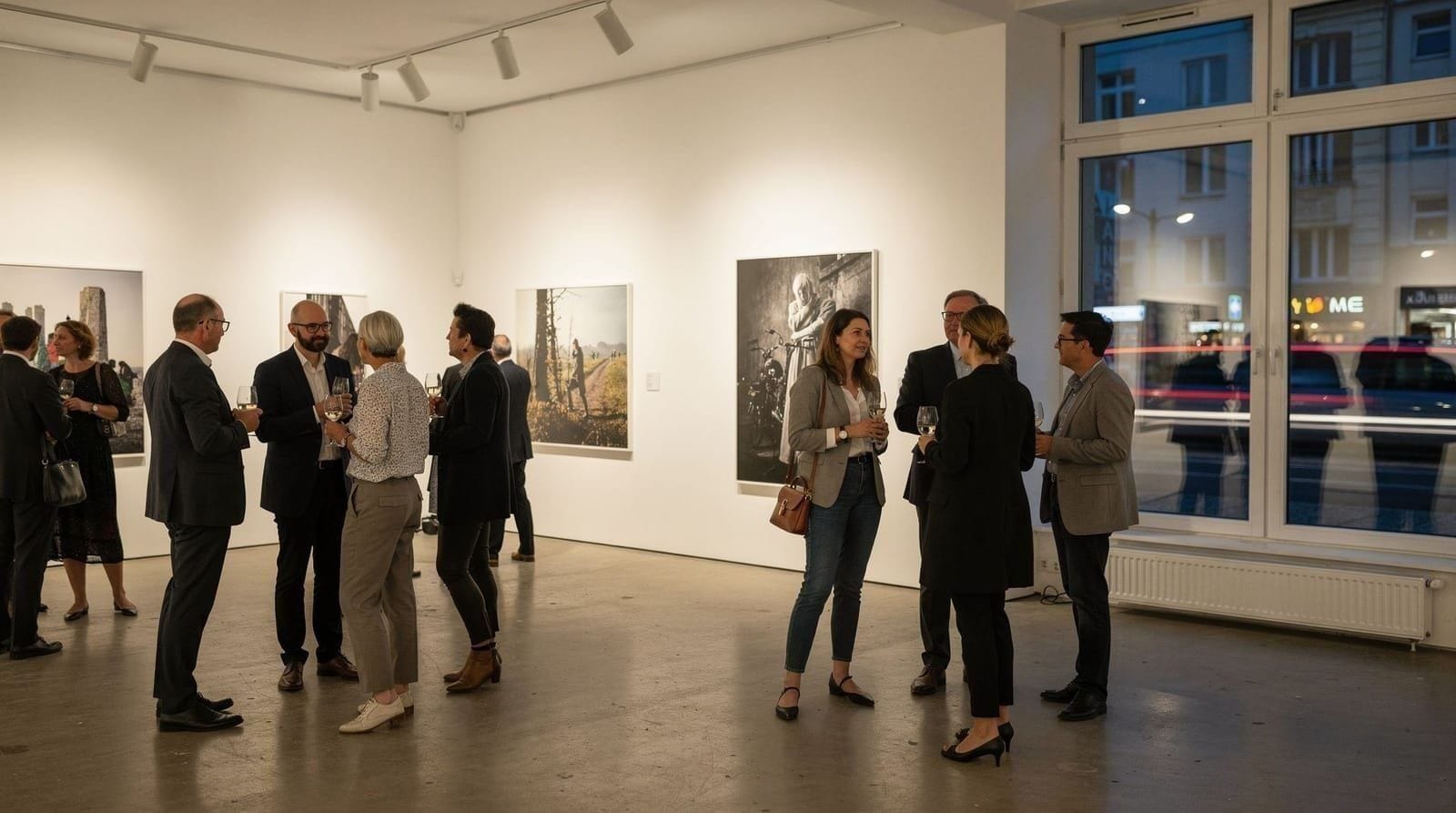
The stretch of Potsdamer Strasse running south from Potsdamer Platz through Schöneberg (and slightly north toward Tiergarten) has become Berlin’s most significant gallery corridor since the mid-2000s. When rents in Mitte increased as the Mitte district gentrified, galleries migrated south and west, and Potsdamer Strasse — then relatively unglamorous — became the new cluster.
Key spaces:
- Esther Schipper at Potsdamer Strasse 81e — major international programme, architects-turned-artists, multidisciplinary work
- Capitain Petzel at Karl-Marx-Allee 45 (somewhat separate from Potsdamer cluster) — blue-chip international programme
- Galerie Thomas Schulte (Charlottenstrasse, Mitte) — established German and international artists
- Galerie Judin on Potsdamer Strasse — photography and multidisciplinary work
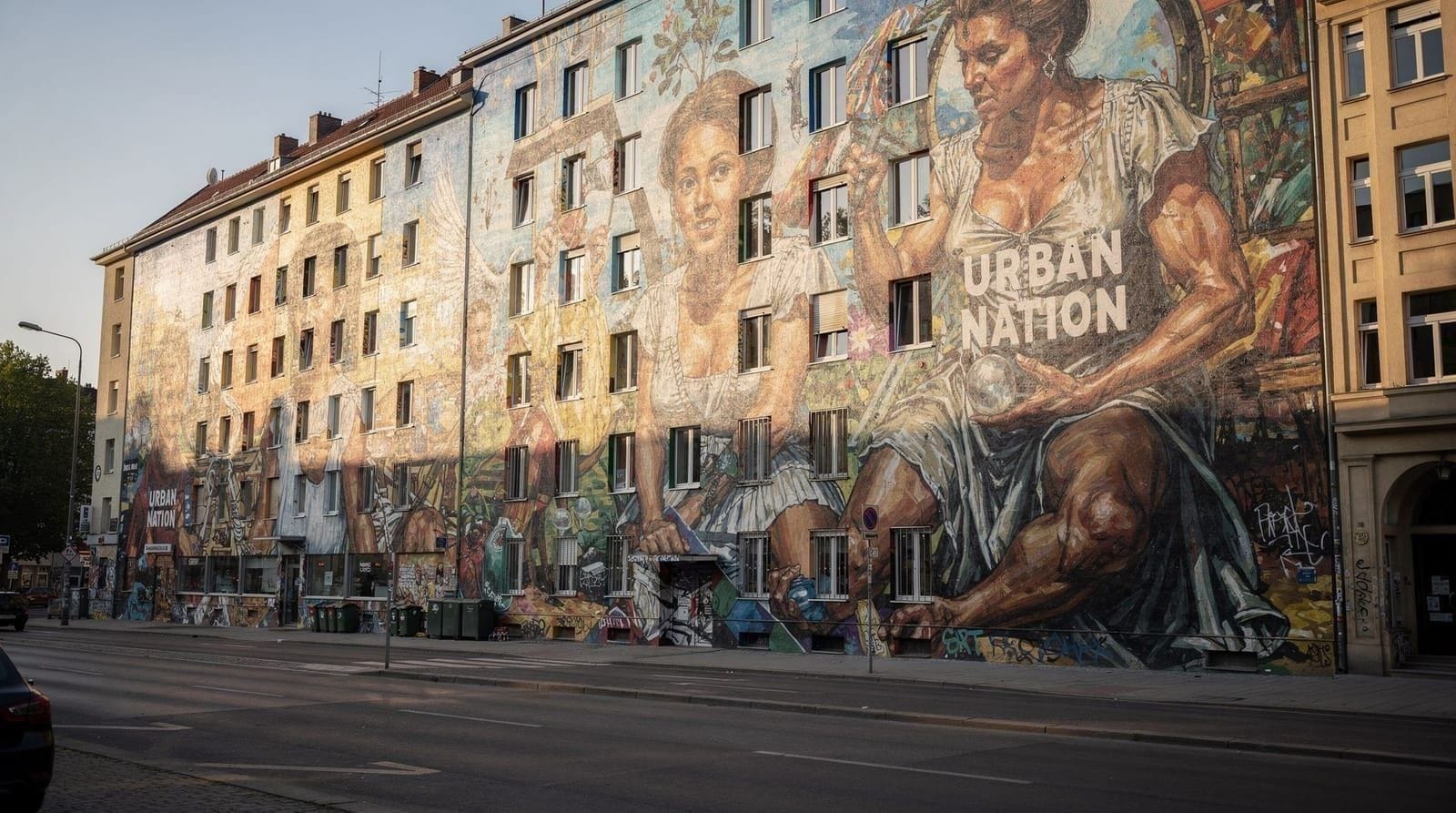
The corridor also contains Urban Nation museum (see the Berlin street art guide for more on Urban Nation’s programme).
During Gallery Weekend in April, most Potsdamer Strasse galleries coordinate their openings. At other times, most are open Tuesday to Saturday 11 am to 6 pm, entry free.
Smaller institutions and project spaces
Berlin’s contemporary art infrastructure extends well beyond the major institutions. Several smaller venues are significant:
Neue Nationalgalerie (under the aegis of the Nationalgalerie system): Primarily 20th-century modern art in Mies van der Rohe’s 1968 glass pavilion at Potsdamer Platz. Not a contemporary art museum in the strict sense, but shows significant 20th-century work with connections to postwar and Cold War art history. Currently operational after major renovation.
nGbK (Neue Gesellschaft für Bildende Kunst) at Oranienstrasse 25 in Kreuzberg — a member-run organisation showing politically engaged and community-focused contemporary art. Entry often free or minimal.
Kunsthaus Dahlem at Käuzchensteig 8 in Dahlem — postwar German sculpture and expressionism, in a building that was Albert Speer’s studio. Focused on a specific historical period but well worth visiting for the building and the Cold War West German art context.
Akademie der Künste on both Hanseatenweg (Tiergarten) and Pariser Platz — the national arts academy runs exhibition programmes at both sites, often connected to its archive holdings.
Planning a contemporary art day in Berlin
Morning route (Mitte focus): Start at KW Institute when it opens at 11 am. Walk Auguststrasse to see remaining gallery district spaces. Walk or take bus to Hamburger Bahnhof — plan 1.5–2 hours here. Walk south through Tiergarten to the Potsdamer Strasse gallery cluster for the afternoon.
Total time: Allow a full day for this route. KW and Hamburger Bahnhof each need at least an hour of serious attention.
Transport: U-Bahn U8 to Weinmeisterstrasse for KW, then bus or S-Bahn to Hauptbahnhof for Hamburger Bahnhof. S-Bahn to Potsdamer Platz for the gallery corridor — all on Berlin AB zone ticket.
For Museum Island context and other nearby cultural sites, see the Museum Island guide.
For a broader programme over three or more days including these sites alongside other cultural attractions, see the Berlin 3-day itinerary.
Gallery Weekend and Berlin Art Week — timing your visit
If your dates are flexible, Gallery Weekend in late April is the single best window to see Berlin’s commercial gallery scene at full strength — around 50 galleries coordinate openings and extended hours over one weekend, and several institutions run parallel programming. The Gallery Weekend guide covers dates, the participating galleries, and how to plan a route. Berlin Art Week in September is the other major date, with a broader mix of institutional and off-space programming across the city.
Combining contemporary art with street art
Berlin’s contemporary art scene and its street art culture overlap more than the institutional/informal divide suggests — several KW-affiliated and Potsdamer Strasse artists began in street contexts, and Urban Nation’s museum sits within the same gallery-corridor logic as its commercial neighbours. If murals and public installation interest you as much as museum walls, the Kreuzberg urban art guide and the wider Berlin street art guide cover the outdoor side of the same scene.
Where to base yourself for an art-focused trip
Staying in Mitte puts you within walking distance of both KW Institute and Hamburger Bahnhof, and a short S-Bahn hop from Potsdamer Strasse — the Berlin Mitte guide covers the neighbourhood’s accommodation options and layout. If you’re planning several museum visits across the trip, it’s worth checking whether a combined pass makes sense: the Berlin museums day pass guide breaks down which passes cover Hamburger Bahnhof and Museum Island, and where they don’t apply (the Boros Collection and KW are never included in day passes and must be booked separately).
Frequently asked questions about Berlin contemporary art scene
What is the Hamburger Bahnhof museum?
Hamburger Bahnhof (Museum für Gegenwart) is the national museum of contemporary art, housed in a 19th-century railway terminus on Invalidenstrasse in Mitte. The building's neoclassical facade and vast interior spaces make it architecturally distinctive. The permanent collection includes significant works by Joseph Beuys, Cy Twombly, Andy Warhol, and Anselm Kiefer, alongside the Friedrich Christian Flick Collection on rotating loan. Entry costs around €14, reduced rates available.What is the KW Institute for Contemporary Art?
KW Institute (Kunstwerke) at Auguststrasse 69 in Mitte is the most experimental public art institution in Berlin. Founded in 1991 in a former margarine factory, it shows solo and group exhibitions by emerging and established international artists, with an emphasis on politically engaged and formally experimental work. Entry around €8, closed on Tuesdays.How do I book the Boros Collection?
The Boros Collection at Reinhardtstrasse 20 in Mitte is accessible only by guided tour. Tickets must be booked in advance online at boroscollection.com — popular dates sell out months ahead. Tours run Saturday and Sunday, approximately 2 hours, small groups of 12 people maximum. Ticket prices around €22 per person.Is the Pergamonmuseum open in 2026?
The Pergamonmuseum's main hall remains closed for structural restoration until at least 4 June 2027. The Pergamon Panorama Asisi (an immersive 360-degree artwork showing ancient Pergamon) is open in a separate building on Museum Island. The Altes Museum, Neues Museum, Bode Museum, and Alte Nationalgalerie are all open.What is the Flick Collection at the Hamburger Bahnhof?
Friedrich Christian Flick donated a major collection of post-1960s international contemporary art to the Hamburger Bahnhof on long-term loan. The collection includes works by Bruce Nauman, Paul McCarthy, Candice Breitz, Rodney Graham, and many others — one of the largest private collections in Germany made accessible to the public. Some elements of the collection rotate; not all works are always on display.Are there affordable contemporary art spaces in Berlin?
Yes. KW Institute charges around €8. Many smaller project spaces (Projektraum) in Kreuzberg, Neukölln, and Prenzlauer Berg charge no entry. The Neue Gesellschaft für Bildende Kunst (nGbK) on Oranienstrasse runs community-focused exhibitions, often free. Gallery Weekend in April brings free access to 50 commercial galleries simultaneously.Does a Berlin museum pass cover the Boros Collection or KW Institute?
No. Combined museum passes and day passes cover the state museums such as Hamburger Bahnhof and Museum Island, but the Boros Collection (private, guided-tour-only) and KW Institute (independent, non-state) are never included and must be booked or paid for separately.When is the best time to visit Berlin for contemporary art?
Late April, during Gallery Weekend, when around 50 commercial galleries coordinate openings and extended hours in one weekend. Berlin Art Week in September is the other major date, with broader institutional and off-space programming. Outside these windows, the major public institutions (Hamburger Bahnhof, KW) run their normal year-round programme.