Kreuzberg urban art — murals, galleries, and the neighbourhood's artistic identity
Berlin: Private Kreuzberg Street Art Walking Tour
Where is the best urban art in Kreuzberg?
The streets around Oranienstrasse, Skalitzer Strasse, and Lausitzer Platz have the highest density of murals. The Kreuzberg food and street art corridor between Görlitzer Park and Kottbusser Tor is a reliable walking route. Most outdoor art is free to view at any time.
Where is the best urban art in Kreuzberg? The cluster around Oranienstrasse, Skalitzer Strasse, and Lausitzer Platz has the highest density of significant pieces. Walking from Görlitzer Bahnhof north to Kottbusser Tor covers the key corridor in about 45 minutes at gallery pace. The urban art here is not a tourist amenity — it is part of a neighbourhood political and cultural identity that predates street art as a concept.
| Where | Oranienstrasse, Skalitzer Strasse, Lausitzer Platz |
| Cost | Free — all outdoor murals |
| Time needed | 2–3 hours for the main corridor; half a day with detours |
| Getting there | U1 to Görlitzer Bahnhof or Kottbusser Tor |
| Best time | Weekday mornings before 11am for light and low foot traffic |
Kreuzberg’s mural culture — political roots
Kreuzberg’s visual landscape cannot be understood without its political history. In the 1970s and 1980s, when the district was depressed West Berlin territory immediately adjacent to the Wall, it attracted squatters, political activists, and the large Turkish-German community that had settled there since the 1960s Gastarbeiter recruitment.
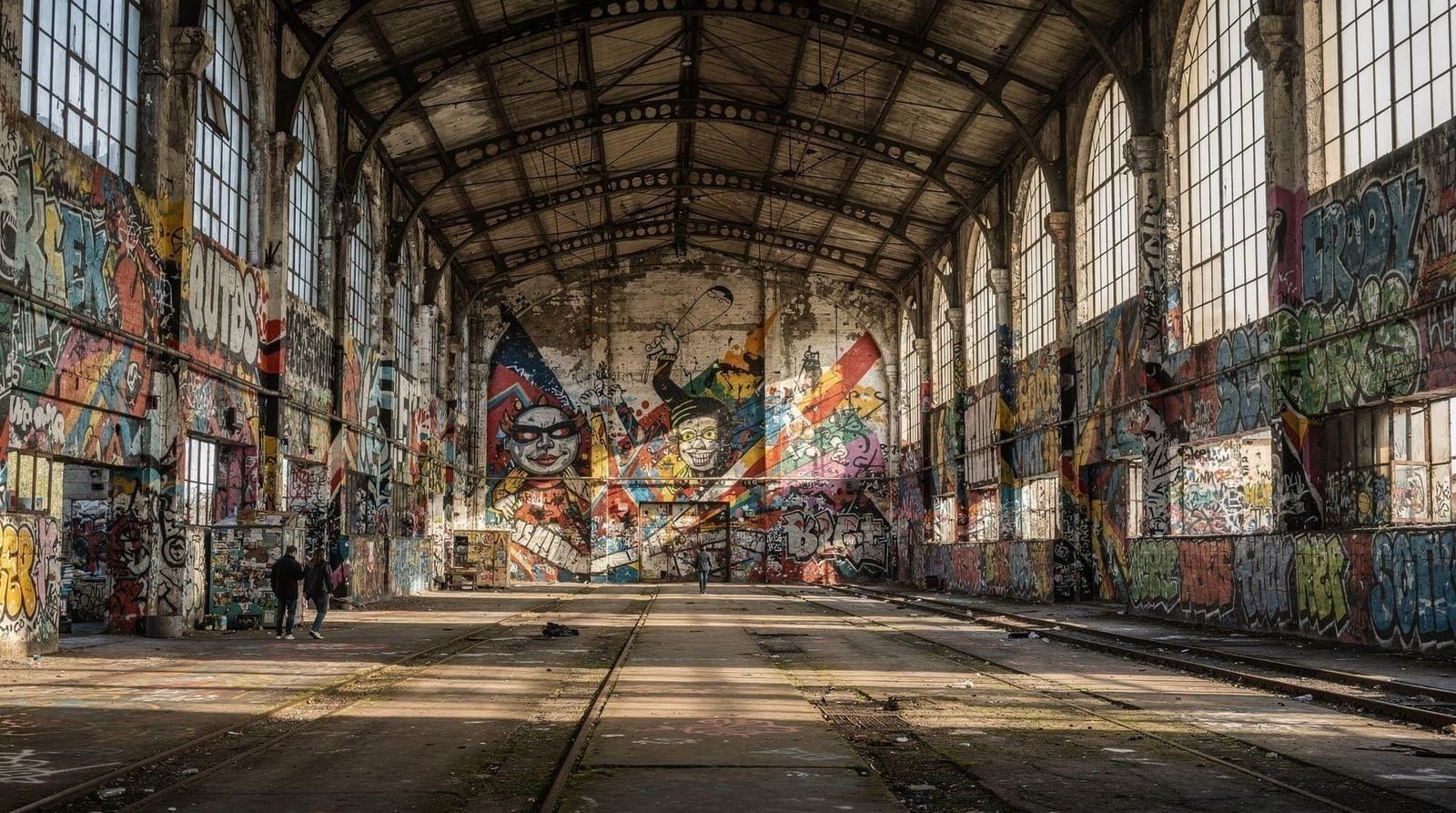
Hausbesetzung (squatting) was a mass phenomenon in Kreuzberg SO36 in the early 1980s — at the peak, over 160 buildings were occupied by squatters in Kreuzberg alone. The movement produced visual culture: painted facades, political slogans, and murals on squatted buildings that were simultaneously housing, community spaces, and political declarations. The aesthetics were rough and intentionally anti-commercial.
This is the substrate on which everything else in Kreuzberg’s urban art scene sits. The internationally commissioned large-format murals of the 2010s arrived in a neighbourhood that had been a painting ground for thirty years.
The key walking corridor: Görlitzer to Kottbusser Tor
The most reliable route for Kreuzberg urban art starts at Görlitzer Bahnhof (U1) and moves northwest toward Kottbusser Tor (U1 or U8).
From Görlitzer Bahnhof: Exit onto Görlitzer Strasse. Walk north along the western edge of Görlitzer Park — the housing blocks facing the park have accumulated layers of paste-up, stencil, and spray work. The park itself, while notorious for drug dealing in the afternoons, is not dangerous in the morning and has scattered pieces on its perimeter walls.
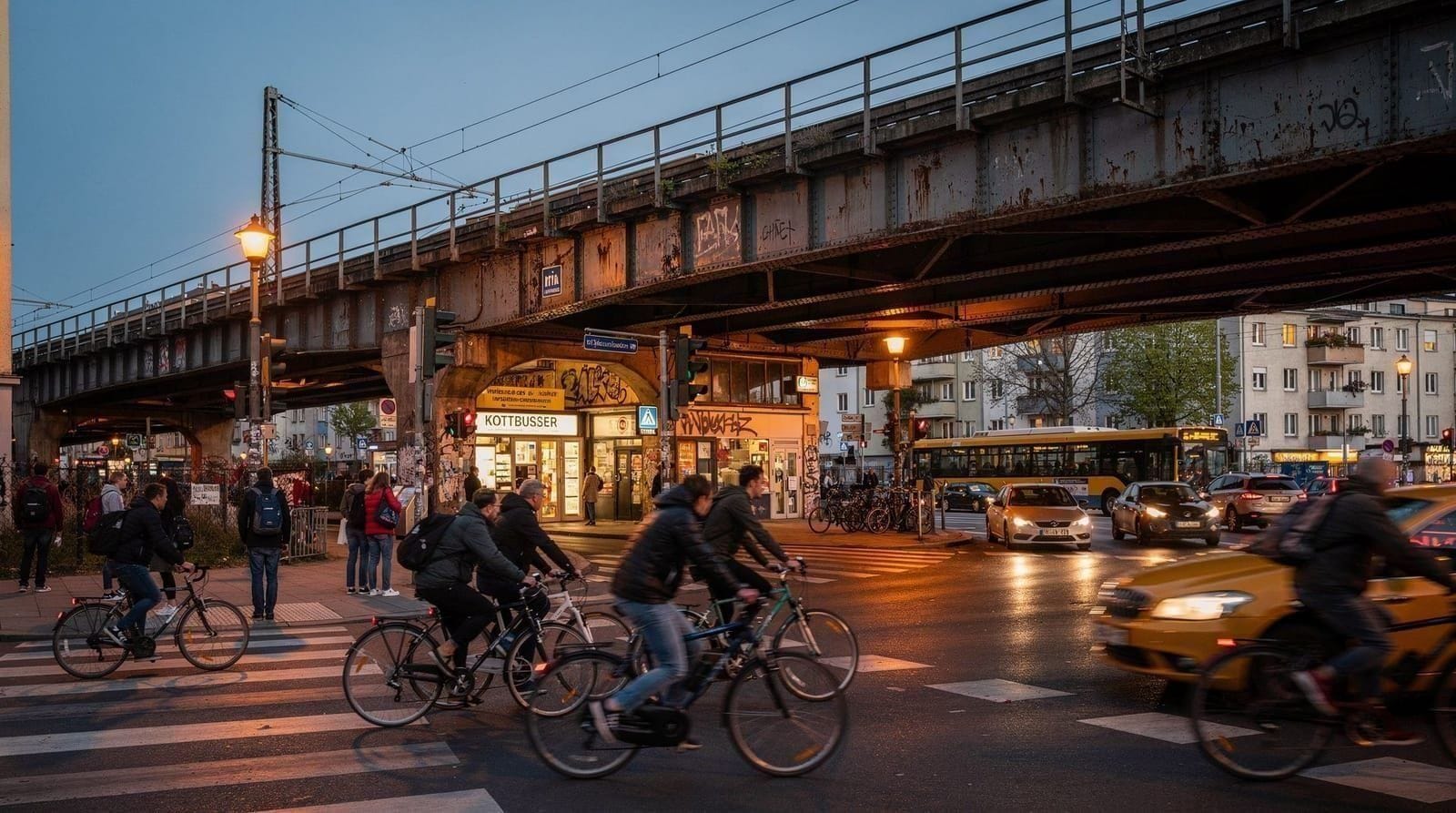
Skalitzer Strasse: The elevated U1 tracks run along Skalitzer Strasse, creating a visual corridor under the steel structure. The walls beneath the arches and the facades of buildings on both sides carry significant pieces. This is one of the most heavily painted streets in Kreuzberg.
Lausitzer Platz: The square at the corner of Lausitzer Strasse and Skalitzer Strasse has several building-scale murals on its surrounding facades. The pieces here are largely commissioned rather than spontaneous, and include some of the most technically ambitious work in the neighbourhood.
Oranienstrasse: The main commercial and nightlife street of SO36 carries scattered murals on side walls and the occasional building facade. The mix is more varied here — some very recent commissions alongside older paste-up work and political slogans.
Kottbusser Tor: The square around the elevated U1/U8 interchange is the social heart of SO36. The surrounding buildings carry some of the most politically explicit murals in Kreuzberg. This is also a good point to turn south toward the Landwehrkanal.
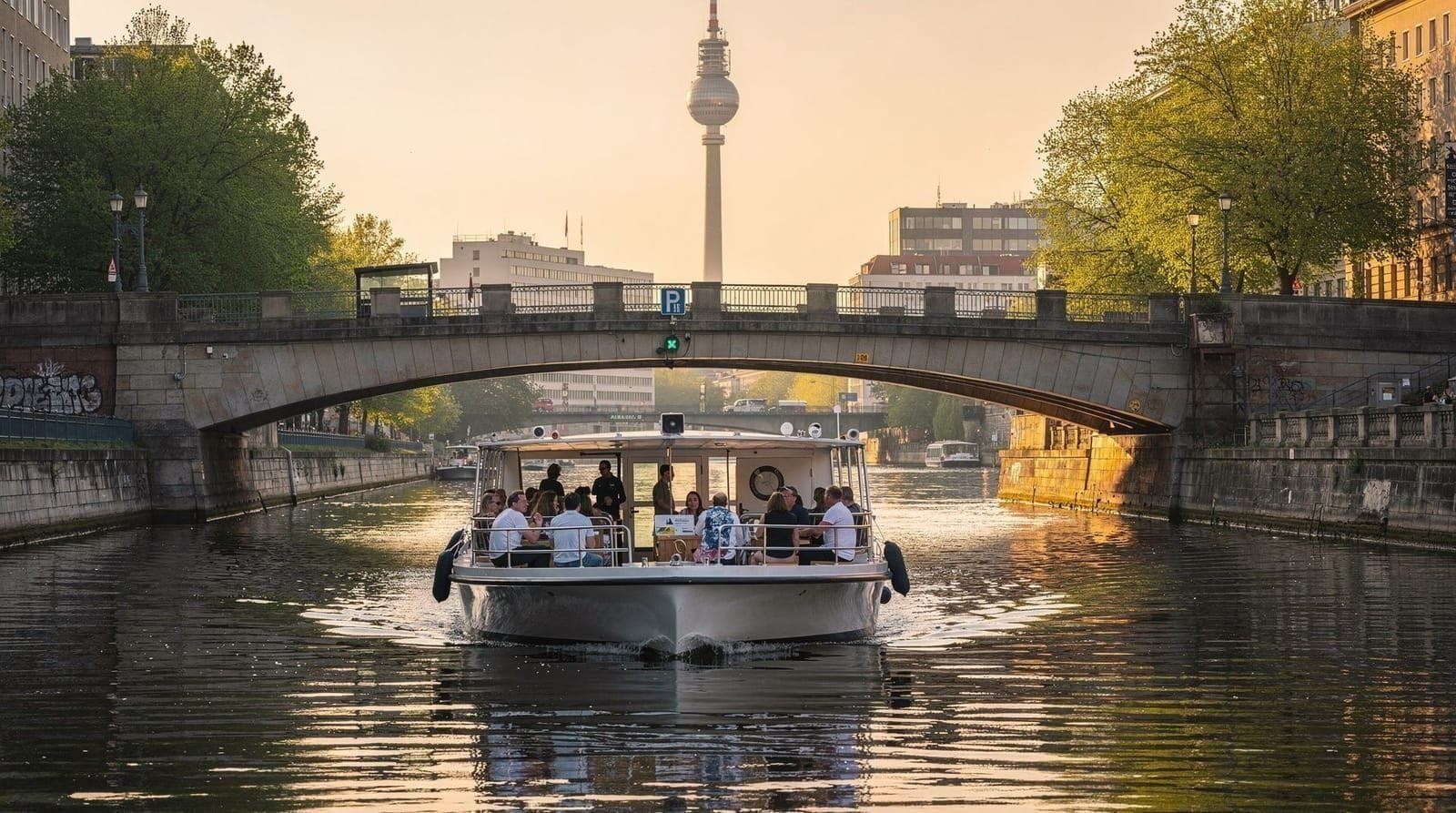
The canal corridor: The stretch of Paul-Lincke-Ufer along the Landwehrkanal south of Kottbusser Tor has murals on the retaining walls and canal-facing facades. Less dense than the streets above but more photogenic because of the water and light.
Berlin: Private Kreuzberg Food and Street Art Tour — combines murals with local food stops, 3 hoursROA in Kreuzberg
The Belgian street artist ROA (born 1976, real name withheld) worked extensively in Berlin from the late 2000s onward. His signature large-scale monochrome animal murals — painted directly on building facades — made him one of the most distinctive voices in the Berlin scene.
ROA’s animals are typically depicted in clinical anatomical detail, sometimes showing internal organs or skeletal structure alongside the surface form. The images are striking precisely because of their realistic rendering on an architectural scale.
Several ROA murals existed in Kreuzberg and Friedrichshain. Some have been preserved; others have faded significantly or been painted over. The precise locations of surviving work change — checking current street art databases or blogs (Streetartnews, Berlin Art Parasites) before your visit will tell you what is accessible.
The intersection of Oranienstrasse and Dresdener Strasse, and the area around Skalitzer Strasse, were primary ROA locations. Even faded, his pieces are recognisable from their scale and animal subject matter.
Urban Nation and the institutionalised dimension
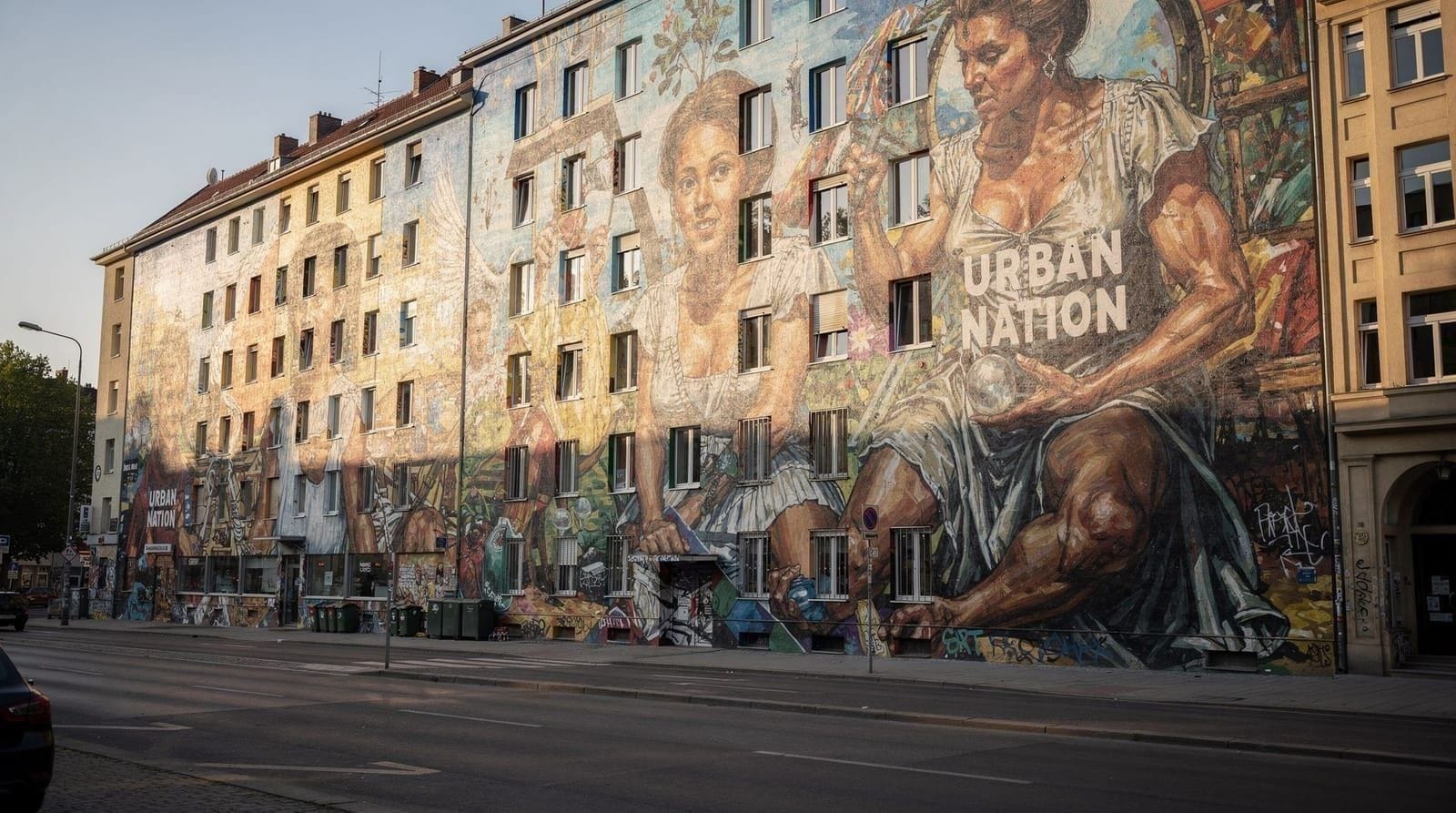
Urban Nation museum on Bülowstrasse 7 in Schöneberg (15 minutes by U-Bahn U7 from Kottbusser Tor to Kleistpark, then U2 to Bülowstrasse) is the most important institutional player in Berlin’s street art scene.
Its relationship to Kreuzberg is direct: Urban Nation grew out of the alternative art scene that centred on Kreuzberg and Friedrichshain, and it continues to commission artists who work in those neighbourhoods. The museum publishes a map of its current exterior commissions, many of which are in the surrounding streets of Schöneberg and Kreuzberg.
For full details on Urban Nation’s programme and how to integrate it into a street art day, see the Berlin street art guide.
The political murals: what the slogans mean
Several murals in Kreuzberg carry explicit political text — slogans in German, Turkish, and occasionally Arabic or Kurdish. For visitors unfamiliar with the local context, some context:
The Turkish-German community in Kreuzberg SO36 is multigenerational and politically active. Murals referencing the PKK (Kurdish Workers’ Party) or showing Kurdish political symbols have appeared on buildings in the neighbourhood and periodically become flashpoints for police action (the PKK is banned in Germany). Other murals reference the 1 May riots that have occurred in Kreuzberg annually since 1987, or carry anti-fascist imagery from the 1980s squatter movement.
This political context is not decorative. Visitors photographing overtly political murals should be aware that they are engaging with live, contested material — not historical documentation.
Galleries in and near Kreuzberg
The commercial and semi-commercial gallery scene is less concentrated in Kreuzberg than in Mitte or Charlottenburg, but several spaces are worth knowing:
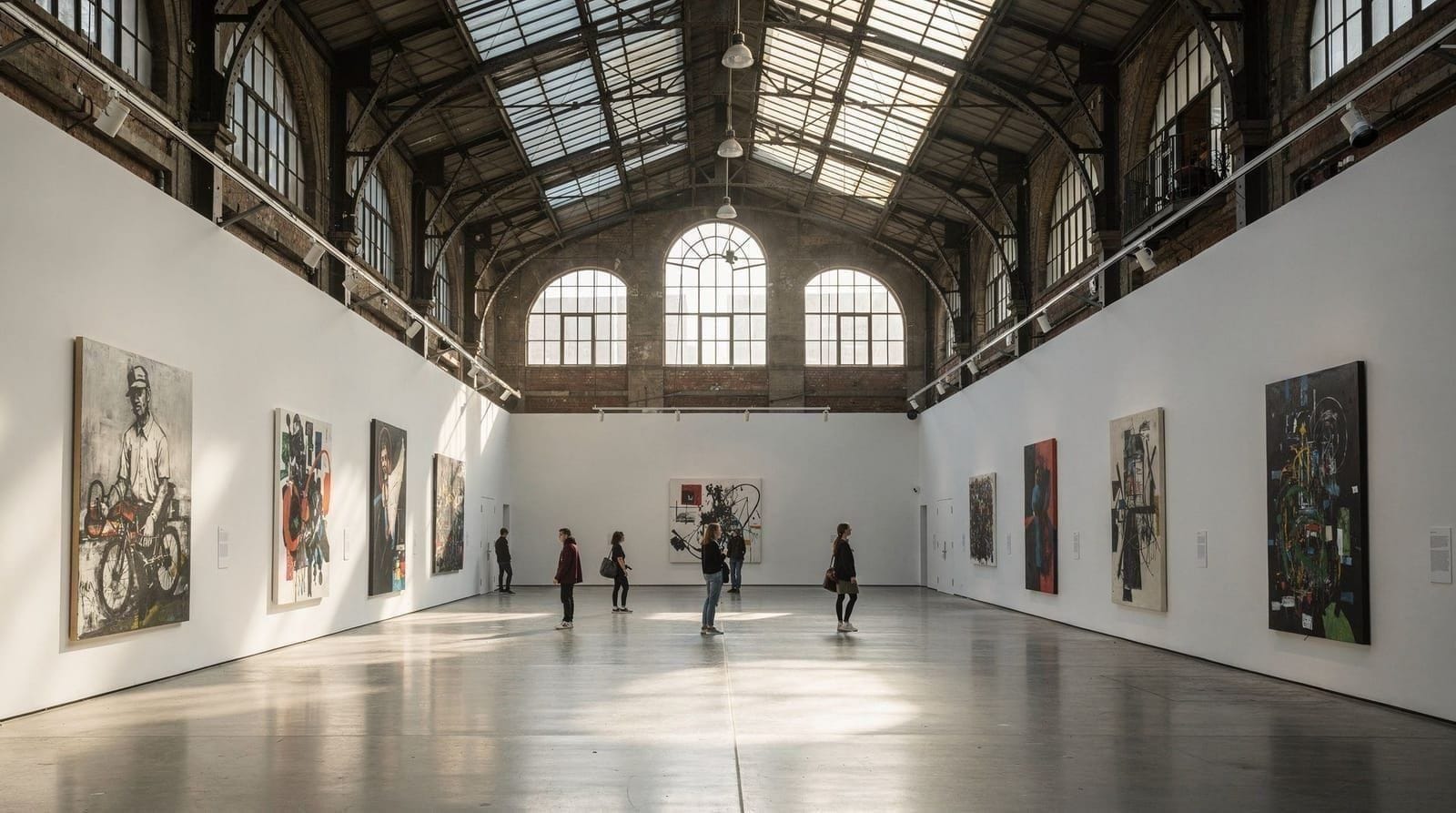
Potsdamer Strasse (technically in Tiergarten/Schöneberg but adjacent) has become Berlin’s most active contemporary gallery corridor in the last decade. Spaces like Esther Schipper, neugerriemschneider, and KW Kupfergraben have anchored a range of international galleries along this street. This is where you find gallery-format urban contemporary art rather than outdoor murals.
Mehringdamm and Gneisenaustrasse have scattered independent spaces, typically showing younger Berlin-based artists. Hours are irregular; many close on Mondays and Tuesdays.
Galerie Judin on Potsdamer Strasse shows photography and multidisciplinary work with regular connections to the street art world.
Berlin: Kreuzberg Street Art and Graffiti Self-Guided Audio Tour — GPS route, individual pieces explainedKarneval der Kulturen and the art dimension
Karneval der Kulturen, held annually in Kreuzberg over the Whitsun/Pentecost weekend in May or June, brings a different visual dimension to the neighbourhood. The street parade and outdoor festival involve elaborate decorated floats, performance art, and temporary installations.
The Karneval is Kreuzberg’s largest annual cultural event and reflects the multicultural character that defines the neighbourhood’s identity. For specific Karneval planning, see the Karneval der Kulturen guide.
Practical planning for urban art in Kreuzberg
Best time to visit: Weekday mornings (before 11 am) have the least foot traffic for photography. Saturday mornings are good before markets open. Avoid Sunday afternoons when the area around Görlitzer Park is most crowded.
Transport: U1 to Görlitzer Bahnhof or Schlesisches Tor for the eastern section. U1 or U8 to Kottbusser Tor for the northern section. U7 to Mehringdamm for the western edge. All on Berlin AB zone ticket.
Weather: Kreuzberg’s best murals are on south- and east-facing walls. Overcast light reduces glare for photography. Summer mornings have the best combination of light angle and moderate crowds.
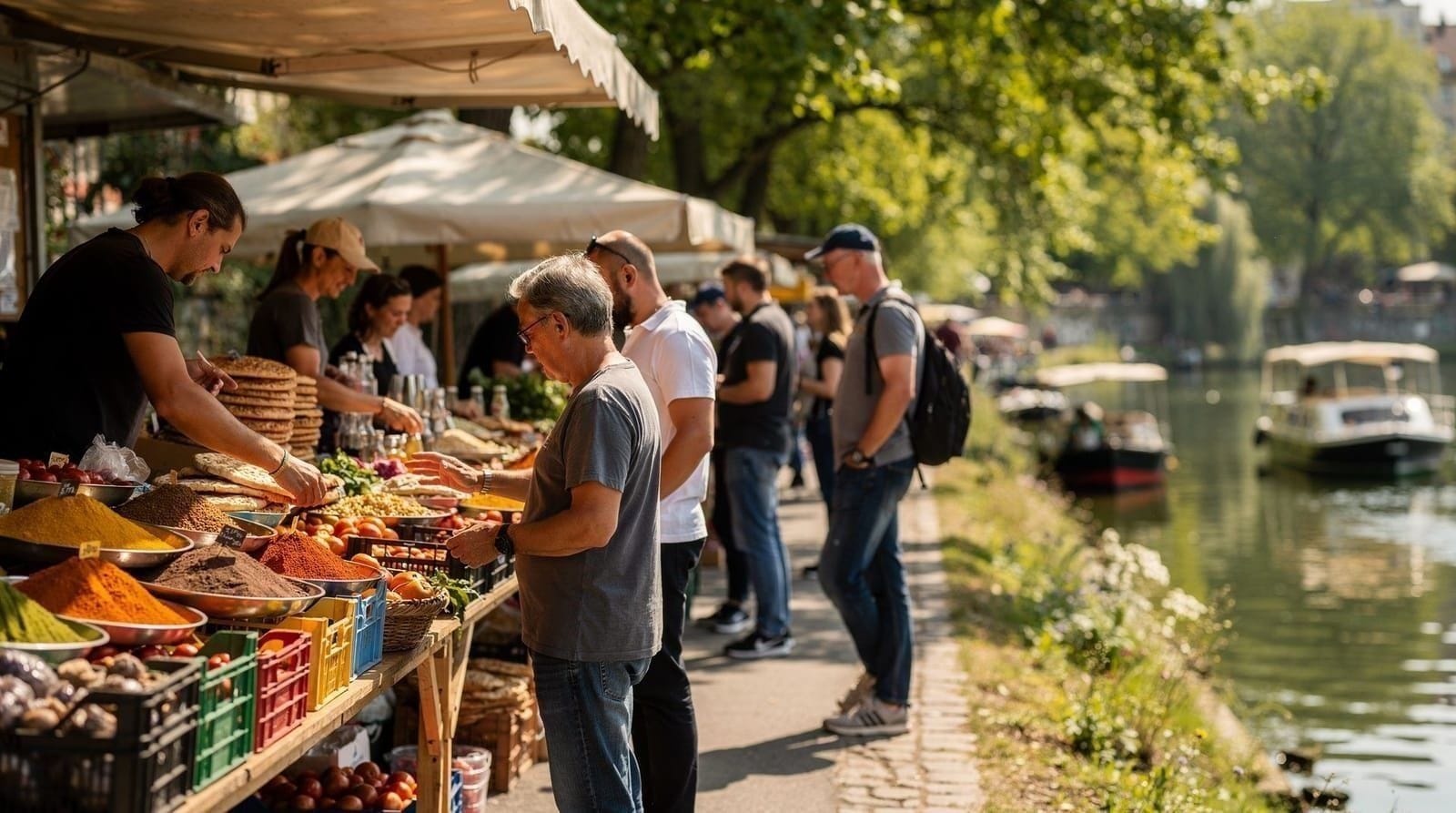
Combining with food: The street art walking route overlaps almost exactly with the best döner kebab and Turkish food spots in the neighbourhood. The Kreuzberg food guide covers the specific spots; many are on Oranienstrasse and around Kottbusser Tor.
Duration: The Görlitzer to Kottbusser Tor corridor with detours to the canal takes 2–3 hours at gallery pace. Adding Skalitzer Strasse fully extends this to half a day.
For a broader introduction to the neighbourhood beyond its art, see the Kreuzberg neighbourhood guide.
Kreuzberg vs. Friedrichshain vs. Mauerpark: where to go for what
Kreuzberg is one of three main street art destinations in Berlin, and each offers something different. Friedrichshain’s murals cluster around the East Side Gallery and tend toward curated, preserved pieces on the surviving Wall itself. Mauerpark has a rotating legal graffiti wall where anyone can paint, making it the most changeable of the three. Kreuzberg sits between the two: rougher and more political than the East Side Gallery, but with more building-scale commissioned work than Mauerpark’s free-for-all wall. Serious street art visitors often combine all three over a longer stay; Kreuzberg alone is enough for a focused half-day.
For gallery-format contemporary art beyond the street, the Berlin contemporary art scene guide covers Potsdamer Strasse and the wider institutional scene that Urban Nation connects to.
Frequently asked questions about Kreuzberg urban art
What makes Kreuzberg's street art different from other Berlin areas?
Kreuzberg's street art is embedded in a neighbourhood with a 50-year history of political activism, squatting, and working-class immigrant culture. The murals reflect that history — political slogans, anti-fascist imagery, and community-based commissions sit alongside internationally commissioned large-format works. The result is more politically charged and contextually specific than the street art in Friedrichshain.Are there any permanent large-format murals in Kreuzberg worth seeking out?
Yes. The ROA animal murals (large monochrome animal figures) are among the most distinctive in the district, though several have faded or been painted over. The corridor from Görlitzer Bahnhof toward Kottbusser Tor contains commissioned works from international artists. Lausitzer Platz has several building-scale pieces.What is the difference between Kreuzberg SO36 and SW61?
Kreuzberg is historically divided into two postal code zones. SO36 is the eastern section — the Turkish-German working-class area, historically associated with squatting and the 1 May riots, with a more politically raw character. SW61 is the western section, which gentrified earlier and has a more established gallery and arts scene. The street art concentrations differ accordingly.Are there any commercial galleries showing urban art in Kreuzberg?
Yes. Several galleries along Potsdamer Strasse (just north of Kreuzberg) and in Mitte show work by urban art practitioners. Within Kreuzberg itself, the gallery scene is smaller and less commercially oriented. Mehringdamm has a few spaces. The most important institution is Urban Nation in Schöneberg (15 minutes by U-Bahn), which runs the largest dedicated programme.Is it worth doing a guided street art tour of Kreuzberg?
For first-time visitors, yes. Kreuzberg's mural culture has many layers of context — political history, specific artists, the significance of individual locations — that are not legible from the street without explanation. A 2-hour guided tour with a local specialist covers the key pieces and gives enough context to explore independently afterward.Can you combine a street art walk with food in Kreuzberg?
Yes, and this is the recommended approach. The street art concentrations overlap almost exactly with the best food streets in Kreuzberg — Oranienstrasse, Skalitzer Strasse, and the area around Kottbusser Tor. A private food and street art tour specifically combines both. See the Kreuzberg food guide for café and restaurant recommendations.
Top experiences
Bookable activities with verified prices and instant confirmation on GetYourGuide.