Kreuzberg bars guide — Wrangelkiez, Oranienstrasse, and the best spots
Berlin Nightlife: The Original Unlimited Pub Crawl
What are the best bars in Kreuzberg?
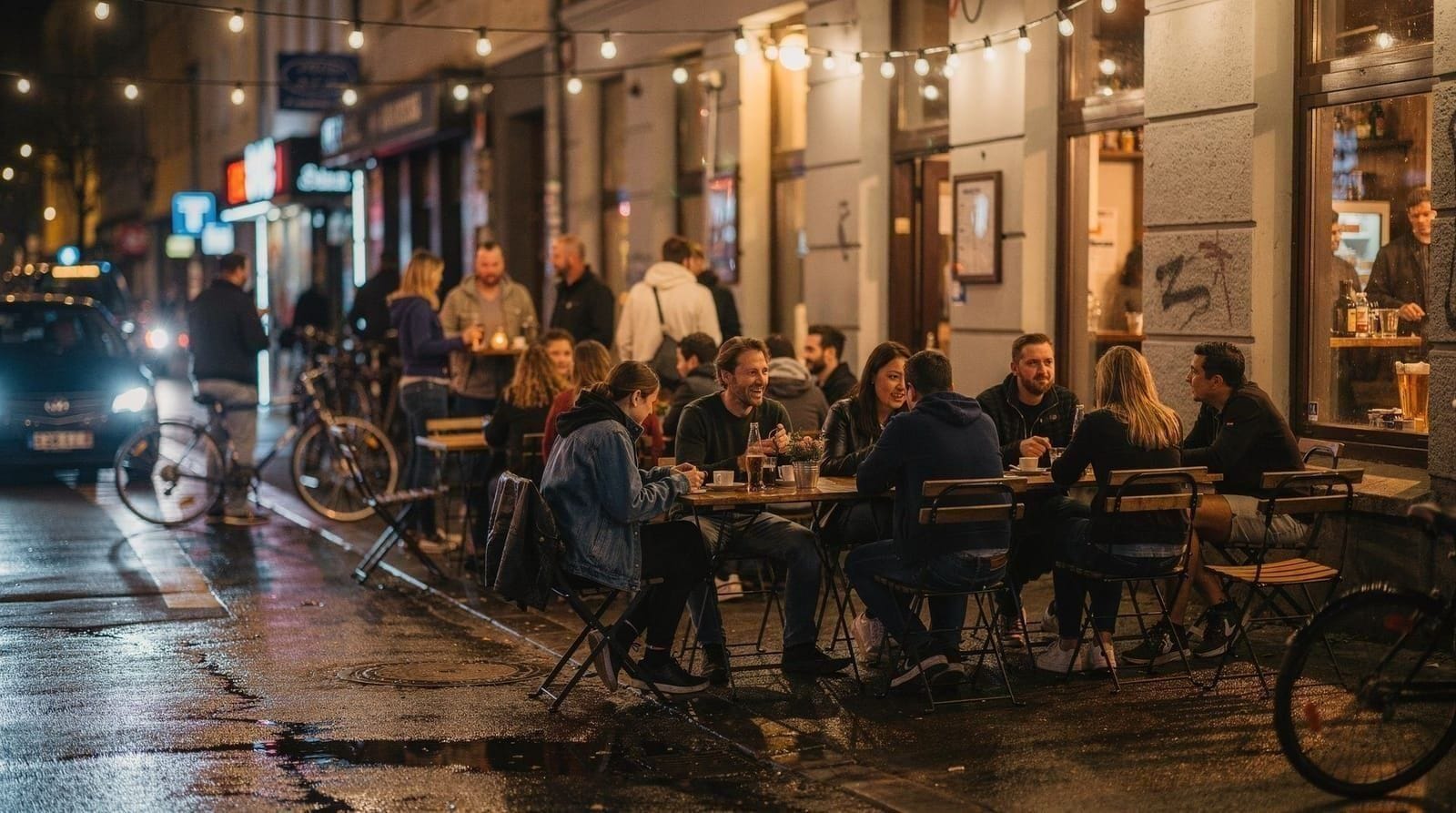
Kreuzberg has two main nightlife zones. Oranienstrasse (between Kottbusser Tor and Görlitzer Bahnhof) has the most historically significant alternative bars. Wrangelkiez around Schlesisches Tor mixes Turkish Spätis, dive bars, and clubs near the Spree. In summer, the Landwehrkanal banks become an open-air social space. Beer costs €3-€5; cocktails €8-€13.
What are the best bars in Kreuzberg? The area has the densest and most authentic bar scene in Berlin — the result of 50 years of counterculture, immigration, and community. Unlike Mitte’s tourist-facing spots or Friedrichshain’s club-heavy infrastructure, Kreuzberg is a neighbourhood first and a nightlife destination second. This makes it significantly more interesting.
| Where | Oranienstrasse, Wrangelkiez, Paul-Lincke-Ufer, Graefekiez |
| Cost | Beer around €3–5, cocktails €8–13, canal Späti beer €1.50–2 |
| Getting there | U1/U8 Kottbusser Tor, U1 Schlesisches Tor, U8 Schönleinstrasse |
| Best nights | Friday and Saturday, though bars run busy most nights |
| Closing time | No mandatory closing — many bars run to 4–5am |
For the neighbourhood’s daytime character and food beyond nightlife, see the Kreuzberg neighbourhood guide and the Kreuzberg food guide.
Understanding Kreuzberg’s bar geography
Kreuzberg is not a single nightlife strip but a collection of distinct micro-areas, each with a different feel:
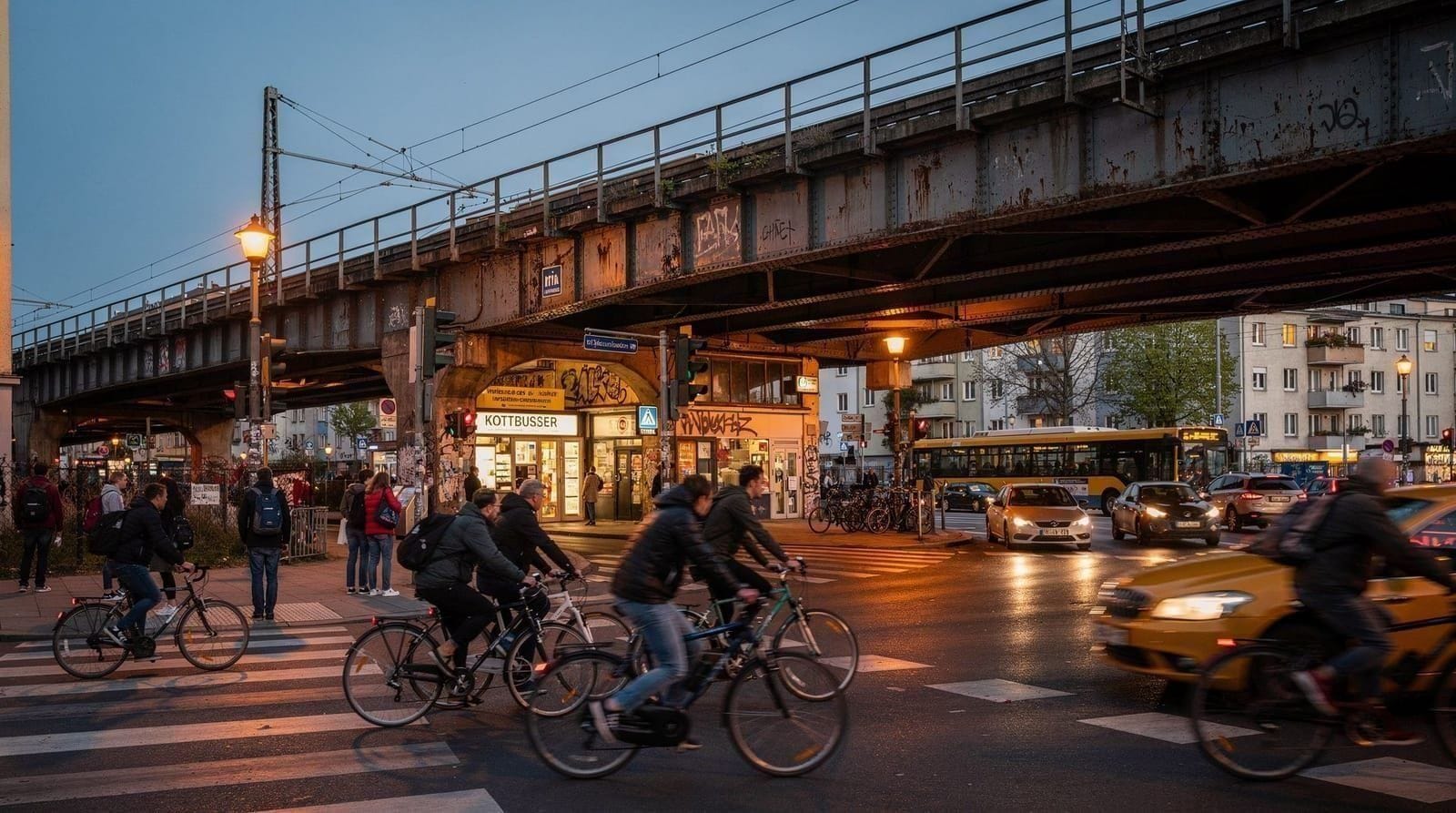
Oranienstrasse and Kottbusser Tor: The historic heart of alternative Kreuzberg. Dense with bars, but also a major bus and U-Bahn junction that is busy and slightly chaotic. Best for evening drinking with variety.
Wrangelkiez (around Schlesisches Tor): More residential, closer to the Spree, with a mixture of dive bars, Spätis, and the backstreet passages around Wrangelstrasse. Good for late-night bar-hopping without tourist pressure.
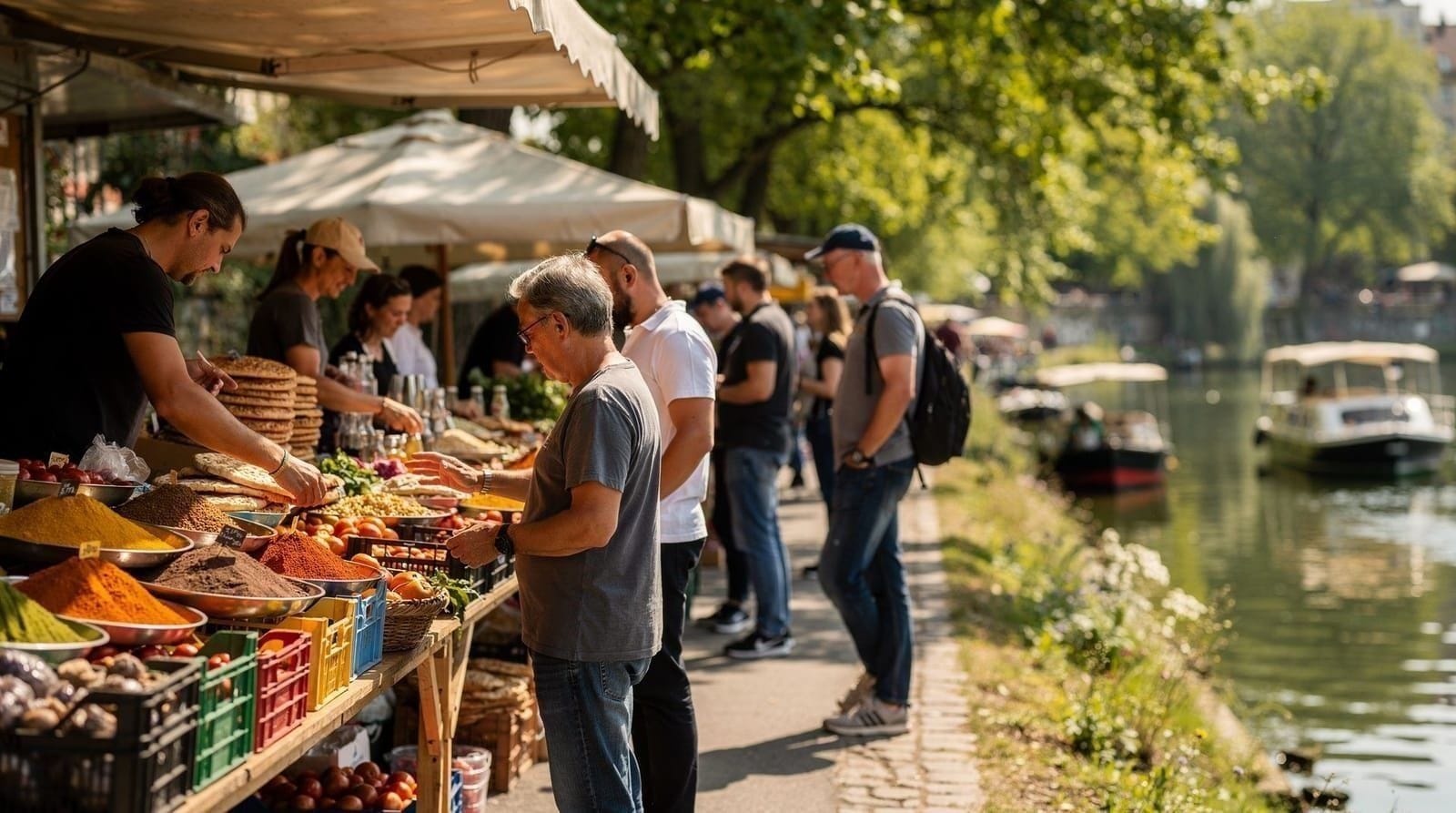
Landwehrkanal banks (Paul-Lincke-Ufer, Maybachufer): In warm months, the canal banks become one of Berlin’s best outdoor social spaces. Bring beer from a Späti and join the crowd on the embankment.
Graefekiez (around Graefestrasse): A quieter residential pocket between the canal and Kreuzberg’s centre, with wine bars and neighbourhood cafes that stay open late.
Oranienstrasse — the historic strip
Oranienstrasse runs east from Kottbusser Tor through the core of Kreuzberg. It is the most historically significant alternative commercial strip in Berlin.
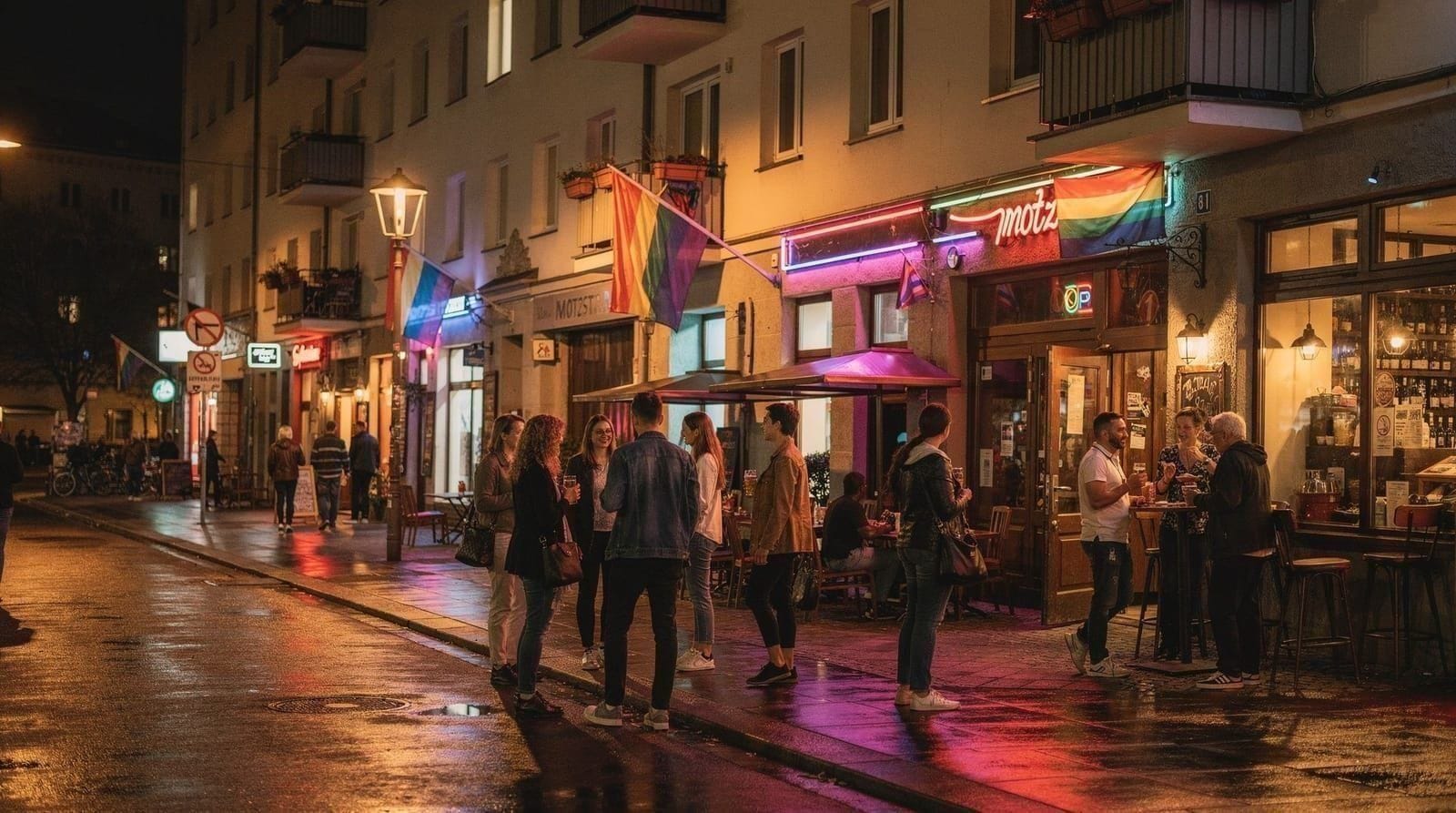
Roses (Oranienstrasse 187): A small gay bar covered floor-to-ceiling in pink velvet and kitsch decorations, operating since the 1980s. It is technically a gay bar but genuinely welcoming to everyone — tourists, locals, drag, suits, punks. Open until 4am. Beer around €3.50. Cash only.
SO36 (Oranienstrasse 190): The legendary venue that has programmed punk, post-punk, and alternative music since 1978. Also programs queer nights including Gayhane (Turkish queer) and Café Fatal (waltz). Check listings — not every night has a show. For more of Berlin’s queer scene beyond this one venue, see the Berlin queer nightlife guide.
Trinkteufel (Oranienstrasse 14): One of the more low-key dive bars on the strip. Opens in the early evening, stays open very late. Cash only, cheap beer, no pretension.
Rauschgold (Oranienstrasse 35): A neighbourhood cocktail bar that sits between dive and cocktail without fully committing to either. Reasonable cocktails at €8-€10. Stays busy late.
The streets around Kottbusser Tor: The junction itself is chaotic — drug dealers operate openly, fast food shops are busy, the underground bus and U-Bahn junction creates constant traffic. But immediately off the main junction (Adalbertstrasse, Reichenberger Strasse) are genuinely good neighbourhood bars.
Wrangelkiez — the riverside pocket
The area south of the Spree between Schlesisches Tor and Treptow Bridge is one of the most locally-used and tourist-free bar areas in Berlin.
Schlesisches Tor area: The U-Bahn station sits at a junction between Schlesische Strasse (heading north toward the river) and the streets heading south toward Wrangelstrasse. Both directions have bars.
Schlesische 27 (Schlesische Strasse 27): A bar and events space in a converted factory building with a riverside terrace. More of a venue-bar with DJ nights and events than a pure neighbourhood pub, but the outdoor area on summer nights is excellent.
Harte Zeiten (Wrangelstrasse): A neighbourhood pub that looks like it hasn’t changed much since the early 1990s. This is a compliment. Cheap beer, local crowd.
Görlitzer Strasse bars: Running south from the park, Görlitzer Strasse has a mix of Turkish family cafes, hookah bars, and the occasional European-style bar. The overlap between communities on this street is genuinely interesting to observe.
Stagger Lee and the canal area
The Landwehrkanal flows east to west through Kreuzberg, and the banks (Paul-Lincke-Ufer on the north bank, Maybachufer on the south bank, which hosts a Turkish market Tuesday and Friday mornings) are one of the best outdoor social spaces in Berlin.
Stagger Lee (Paul-Lincke-Ufer 44e): Named after the 19th-century American folk outlaw, Stagger Lee is a cocktail bar that manages to be genuinely good without performing it. The interior has good acoustics (important for conversation), the drinks are well made, and the space does not feel staged for Instagram.
Cocktails €9-€12. No reservation; walk-in. Gets busy from 9pm on weekends.
Canal-bank drinking: The stretch of Paul-Lincke-Ufer from Kottbusser Brücke to Schönleinstrasse is one of the best places in Berlin to sit with a beer on a warm evening. The canal embankment fills up from about 8pm in summer with locals who have bought beer from nearby Spätis. This costs €1.50-€2 per beer and requires nothing more than finding a spot on the wall.
Graefekiez — the quieter pocket
The residential streets of Graefekiez (around Graefestrasse, running south from the canal) have a cluster of lower-key bars and wine spots.
Luzia (Oranienstrasse 34): A neighbourhood bar on the border of Graefekiez and Oranienstrasse with a good-sized interior, regular clientele, and late-night hours. Not a cocktail destination — more of a neighbourhood social bar.
Leuchtstoff (near Graefestrasse): A small natural wine and spirits bar that has developed a loyal following among Berlin’s wine-interested crowd. More relaxed than Vin Aqua Vin in Mitte, equally good wine.
Watergate — the electronic music option
Watergate (Falckensteinstrasse 49) is Kreuzberg’s main electronic music club, positioned on the Spree between the bridge at Schlesisches Tor and the Molecule Man sculpture. It is more mainstream than Berghain or Tresor but has a serious programming approach to house and techno.
The glass terrace over the Spree is open in summer and is one of the better club-terrace settings in Berlin. Entry is typically €12-€15. More accessible door policy than the harder techno clubs. For the wider club landscape beyond Kreuzberg, see the Berlin techno clubs guide.
Spätis in Kreuzberg
Spätis are late-night off-licences, and Kreuzberg has a particularly high density of them. Key ones for nightlife purposes:
Around Kottbusser Tor: Multiple Spätis on Oranienstrasse and Skalitzer Strasse, open until 2-4am, selling cold beer for €1.50-€2.
Görlitzer Strasse/Wrangelstrasse junction: A cluster of Spätis that serve the Wrangelkiez crowd.
Paul-Lincke-Ufer: Several Spätis along the canal bank north of the water, useful for buying drinks before sitting by the canal.
A suggested Kreuzberg evening
7pm: Start with the Maybachufer Turkish market if it’s Tuesday or Friday (morning/afternoon only) — relevant for orientation. Otherwise, walk Oranienstrasse from Kottbusser Tor east.
8pm: Drinks at a bar on Oranienstrasse. Roses is always open by this point and is a good first stop for ambience.
9:30pm: Walk to the Landwehrkanal, buy a beer from a Späti on Paul-Lincke-Ufer, and sit on the embankment for 30-45 minutes.
10:30pm: Head to Stagger Lee for cocktails.
Midnight onward: Move toward Watergate (Schlesisches Tor) or continue south to Görlitzer Strasse bars. Alternatively, take the U1 two stops to Warschauer Strasse and walk to Friedrichshain’s clubs.
If you’d rather not plan the route yourself
A guided pub crawl takes the planning and door-policy guesswork out of a first Kreuzberg night out, moving you between venues with a group and usually a few free or discounted drinks included.
Berlin pub crawl with unlimited drinksFor a broader comparison of Berlin’s nightlife by neighbourhood — including how Kreuzberg differs from Friedrichshain, Neukölln, and Mitte — see the Berlin nightlife neighbourhoods guide and the citywide best bars in Berlin roundup. For a structured night out with a set itinerary and no navigation required, the Berlin pub crawl guide covers the main organised options across the city.
Frequently asked questions about Kreuzberg bars guide
What is the Kreuzberg nightlife scene like?
Kreuzberg has one of the oldest alternative nightlife traditions in Berlin, dating to the 1970s punk and squat culture. The scene now mixes long-standing dive bars, Turkish and Middle Eastern cultural cafes, cocktail bars, queer venues, and live music spots. It is more authentic and varied than Friedrichshain's tourist-facing strips.Where exactly is Wrangelkiez?
Wrangelkiez is the area around Wrangelstrasse, Schlesische Strasse, and the streets radiating from Schlesisches Tor U-Bahn station. It borders the Spree to the north and is walkable from Görlitzer Park. The district has a high density of Spätis and neighbourhood bars.What is Oranienstrasse known for?
Oranienstrasse runs east from Kottbusser Tor through Kreuzberg and is the traditional heart of the area's alternative bar scene. SO36 (punk venue, 1978) is at the eastern end. The street has been a centre of Turkish, Kurdish, and counterculture communities since the 1970s and retains that identity despite gentrification pressure.Are there good bars near Görlitzer Park?
Yes. Görlitzer Strasse and Paul-Lincke-Ufer around the park perimeter have neighbourhood bars, Spätis, and in summer, the park itself is an informal outdoor social space (though also the site of an open drug market — be aware). Stagger Lee on Paul-Lincke-Ufer is one of the better cocktail bars in the area.Is Kreuzberg safe at night?
Generally yes. Kreuzberg is a lived-in neighbourhood where nightlife happens naturally. Görlitzer Park at night has an open drug market (cannabis, primarily) that is visible but not typically threatening. The bar strips on Oranienstrasse and in Wrangelkiez are busy and well-lit. Standard city awareness applies.What time do Kreuzberg bars close?
Kreuzberg has no mandatory closing time. Neighbourhood bars close when they choose — some at 1am, others at 5am or later. Spätis in the area operate until 2am or later. The area stays active later than most European cities on most nights of the week.How do I get to Kreuzberg at night?
U1/U8 to Kottbusser Tor for Oranienstrasse and central Kreuzberg. U1 to Schlesisches Tor for Wrangelkiez. U8 to Schönleinstrasse for the canal area around Paul-Lincke-Ufer. Friday and Saturday nights, the U-Bahn runs continuously. Night buses cover the gaps on other nights.