Berlin nightlife neighborhoods — where to go out by area
Berlin: Pub Crawl with Skip-the-Line Club Entry
Which Berlin neighborhood is best for nightlife?
It depends on what you want. Friedrichshain has the major techno clubs including Berghain and Tresor. Kreuzberg is best for bars and a mixed alternative scene (Wrangelkiez, Oranienstrasse). Neukölln (especially Reuterkiez) is the current locals' choice for low-key bars and small venues. Mitte has the most tourist-facing nightlife but the least authentic feel.
Which Berlin neighborhood is best for nightlife? The answer depends entirely on what kind of night you want. Berlin’s nightlife is not concentrated in one district — different neighborhoods serve different purposes, and knowing which to choose saves you a bad night.
| Techno clubs | Friedrichshain (Berghain, Tresor, ://about blank) |
| Bars, mixed crowd | Kreuzberg (Oranienstrasse, Wrangelkiez) |
| Local, low-key | Neukölln (Reuterkiez) |
| Cocktails, calmer | Prenzlauer Berg |
| Beer/cocktail price | Around €3–5 beer, €8–14 cocktails |
| Clubs start properly | After midnight, often 1am+ |
Friedrichshain — the techno heartland
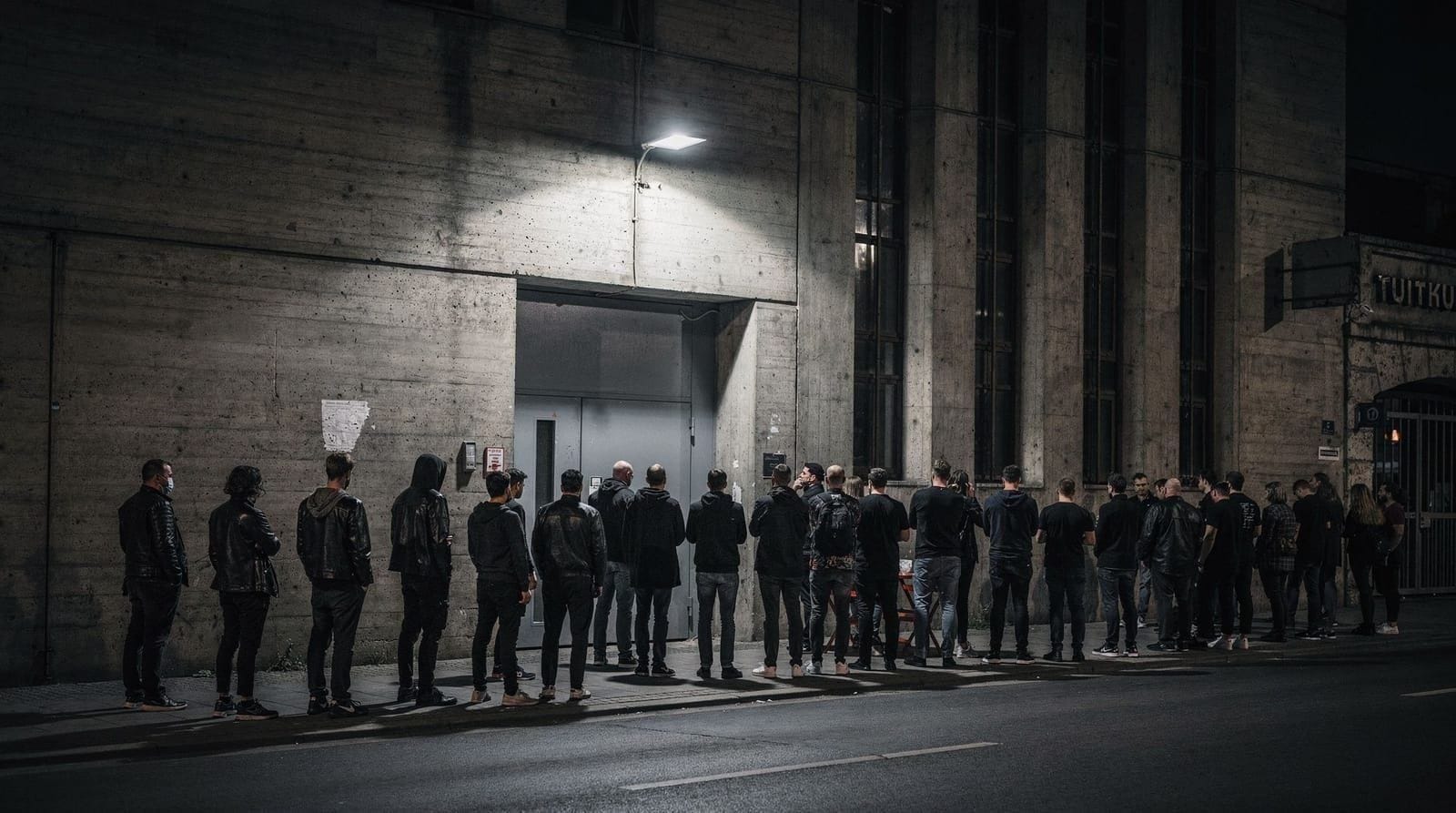
Friedrichshain is the neighborhood most associated with Berlin’s globally famous club scene. It sits in the eastern part of the city, south of the Spree, and stretches from the East Side Gallery in the west to the RAW-Gelände club complex in the centre.
The big clubs: Berghain is on Am Wriezener Bahnhof, a 10-minute walk south of Ostbahnhof. ://about blank is on Revaler Strasse. Sisyphos is further east in Rummelsburg. The RAW-Gelände (a former railway repair yard on Revaler Strasse) hosts Cassiopeia, Urban Spree, and a cluster of smaller venues and bars.
The casual bar scene: Simon-Dach-Strasse and the surrounding streets (Grünberger Strasse, Wühlischstrasse) have a more accessible bar and pub scene. This is tourist-facing and cheaper than Mitte, but not as local-feeling as Neukölln or Kreuzberg. It works well as a warm-up before a club night.
Getting around: U1/U3 to Warschauer Strasse gives access to the bar area and is within walking distance of Berghain. S-Bahn to Ostbahnhof is another option. Night buses N29 and N65 cover Friedrichshain late at night when U-Bahn service gaps occur (though Friday and Saturday nights the full network runs continuously).
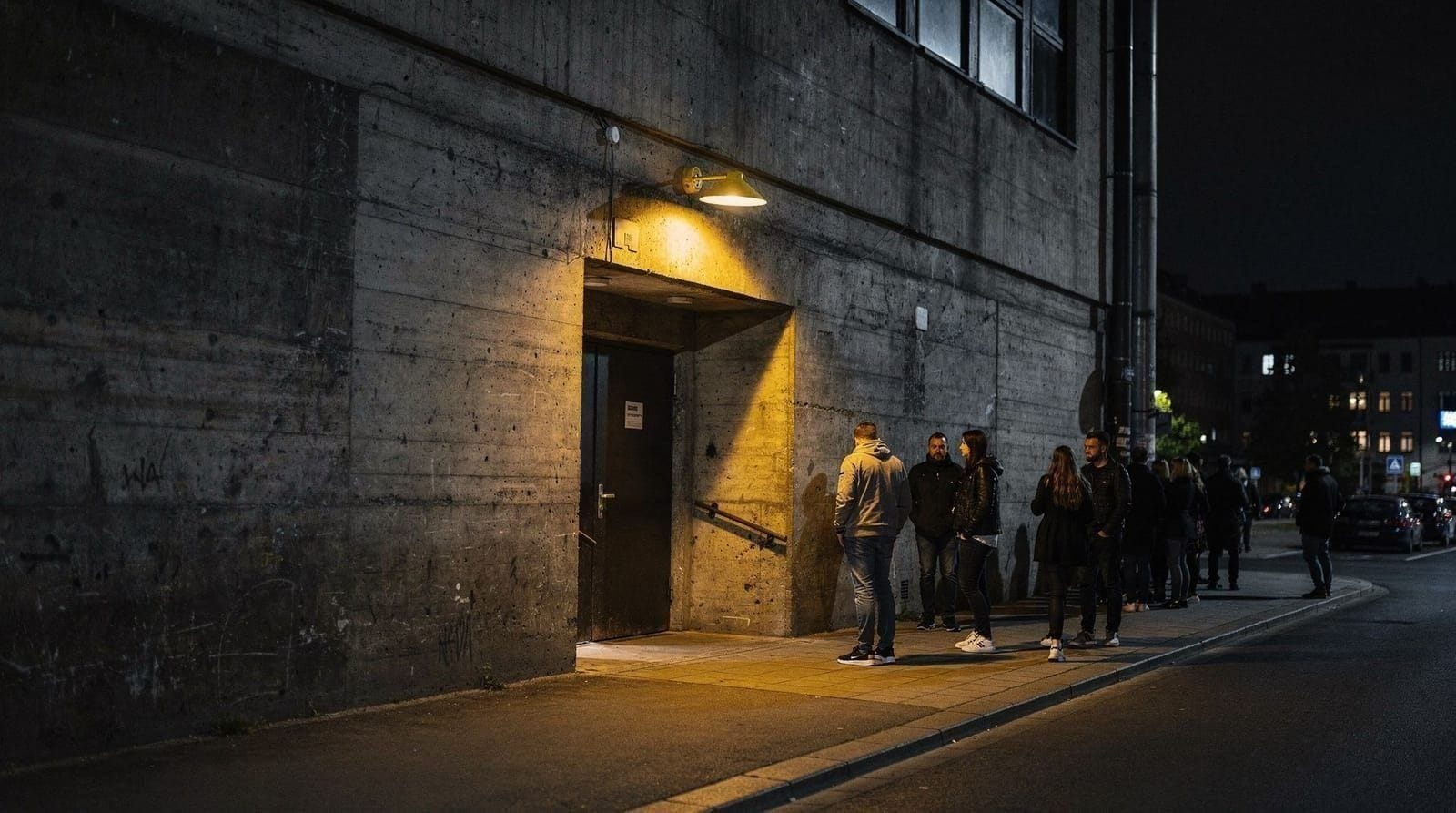
Best for: Techno clubs, warehouse parties, a late start and very late finish. Not ideal for a 10pm cocktail and early home. For door policy and what to actually expect at Berghain specifically, see the dedicated Berghain guide; for the wider club landscape beyond the headline venue, the Berlin techno clubs guide covers Tresor, ://about blank and Sisyphos in more depth.
Kreuzberg — the original alternative district
Kreuzberg has been Berlin’s counterculture district since the 1970s. It has the longest continuous nightlife tradition of any Berlin neighborhood, predating reunification and the techno era. The flavor is more political, more mixed in terms of community, and more varied in terms of venue type than Friedrichshain.
Wrangelkiez (around Schlesisches Tor): The area east of Schlesisches Tor U-Bahn station around Wrangelstrasse, Görlitzer Strasse, and Skalitzer Strasse is one of the most lively for bars. Spätis (late-night off-licences) line the streets; most sell beer to take to Görlitzer Park in warm months. Bars here are unpretentious and inexpensive.
Oranienstrasse: The main drag of West Kreuzberg’s nightlife, running east from Kottbusser Tor. SO36 (the legendary punk/alternative venue that opened in 1978 and still programs concerts and club nights) is at the east end. The street is dense with bars, some long-standing, some newer. The crowd is mixed in age, culture, and intent.
Watergate: On Falckensteinstrasse along the Spree, Watergate is the most mainstream of Kreuzberg’s electronic music venues — glass terrace over the river, international bookings, less selective door than Berghain. Good option for house and techno without the queue anxiety.
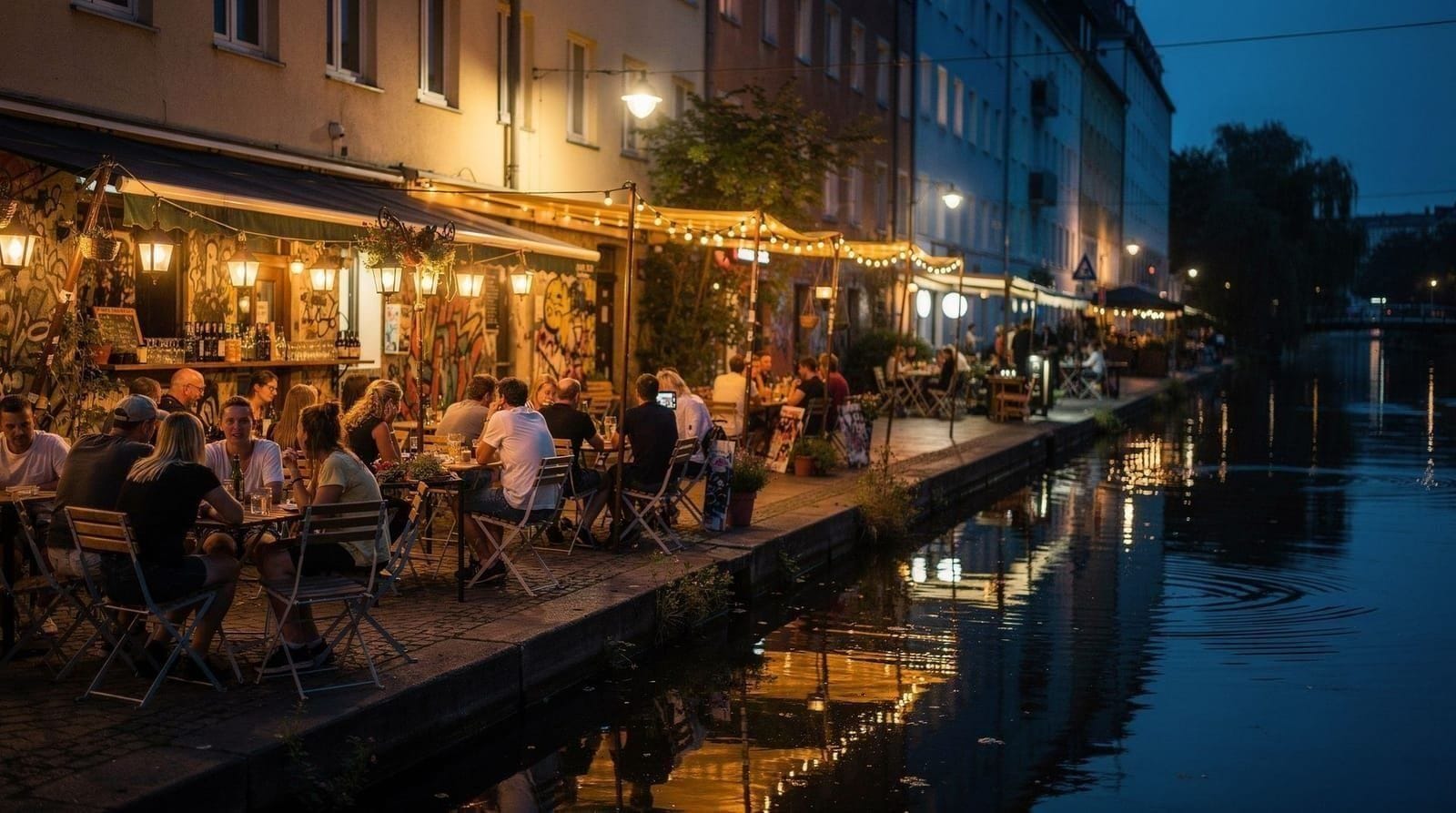
The canal area (Paul-Linke-Ufer and Maybachufer): In warmer months, the banks of the Landwehrkanal fill with people drinking outside late into the night. This is city-sanctioned open-air life rather than a club — bring your own beer from a Späti, sit on the bank, and experience a distinctly Berlin form of nightlife that costs essentially nothing.
Getting around: U1/U8 to Kottbusser Tor for Oranienstrasse. U1 to Schlesisches Tor for Wrangelkiez and Watergate.
Best for: Bars, live music, alternative culture, a mixed local crowd without the tourist dominance of Mitte. Good for early evening through late night. If a structured evening with a guide appeals more than working out the bar-hopping route yourself, an organised pub crawl covers several Kreuzberg venues in one night with skip-the-line entry included.
Berlin pub crawl — open bar, skip the line, multiple venues in one nightNeukölln — the locals’ current choice
Neukölln (specifically Reuterkiez) has been the neighborhood most actively discussed in Berlin nightlife in recent years as creatives and longtime Berlin residents have shifted east from Prenzlauer Berg and Mitte toward a cheaper, less polished environment.
Reuterkiez: The area around Reuterstrasse, Weichselstrasse, Karl-Marx-Strasse, and Sonnenallee has a high density of independently owned bars and small venues. Wine bars, natural wine spots, cocktail bars with local-only patronage, and small live music venues mix with Turkish and Arab social cafes that stay open until 4am. The atmosphere is notably less tourist-facing than anywhere in Mitte or Prenzlauer Berg.
Klunkerkranich: Atop the Neukölln Arcaden shopping centre (Karl-Marx-Strasse 66), Klunkerkranich is an open-air rooftop bar with one of Berlin’s best skyline views. Entry is free or with a small donation during events. See the Berlin rooftop bars guide for details.
Körnerpark area: A quieter pocket of Neukölln around the formal garden of Körnerpark, with wine bars and late-night cafes that cater to a local crowd. Very different in feel from the louder Reuterkiez strips.
What Neukölln lacks: There are no major techno clubs in Reuterkiez itself (Tresor and Berghain are accessible by U-Bahn but are not walkable). If you want a club night, you will be taking transport to Friedrichshain or Kreuzberg.
Getting around: U8 to Karl-Marx-Strasse or Rathaus Neukölln for most of Reuterkiez. U8 to Hermannstrasse for the southern end.
Best for: Neighbourhood bars, wine, conversation, and a genuinely local Berlin evening that doesn’t feel staged for visitors.
Prenzlauer Berg — calmer, cocktail-forward
Prenzlauer Berg was the creative district of East Berlin during the GDR era and became the first strongly gentrified neighbourhood after reunification. It now has the feel of a well-heeled residential area with good restaurants and cocktail bars but relatively quiet nightlife compared to its 1990s reputation.
Helmholtzplatz area: Good concentration of bars around the square and surrounding streets (Stargarder Strasse, Lychener Strasse). Less intense than Kreuzberg, more likely to be quieter after 1am.
Kastanienallee: Known as “Casting Alley” for the density of fashion-conscious bars and small venues. Good for early evening drinks.
Mauerpark: While primarily a flea market destination on Sunday mornings, Mauerpark becomes a social space on summer evenings — see the Mauerpark guide for context.
Best for: Cocktails, dinner and drinks, a lower-key evening. Not ideal for club nights.
Mitte — tourist nightlife
Mitte has the densest tourist nightlife in Berlin, concentrated around Hackescher Markt and the area near Museum Island. Prices are higher, authenticity is lower, and the atmosphere tends toward international-tourist casual.
What is worth it in Mitte: The Clärchens Ballhaus on Auguststrasse (ballroom dancing, open since 1913, genuinely charming) and a handful of cocktail bars in the Scheunenviertel area. The Soho House Berlin members’ bar is in Mitte and good if you have access.
What to avoid: The bar strip along Hackescher Markt fills with tourists early evening and becomes loud and expensive by 10pm. Clubs in Mitte that market themselves to tourists rarely represent Berlin’s club culture. Save Mitte for daytime and move elsewhere at night.
Practical map of nightlife by intent
| What you want | Go to |
|---|---|
| Hard techno clubs | Friedrichshain (Berghain, Tresor, ://about blank) |
| Alternative bars, local crowd | Kreuzberg (Oranienstrasse, Wrangelkiez) |
| Low-key neighbourhood drinks | Neukölln (Reuterkiez) |
| Cocktail bars, dinner and drinks | Prenzlauer Berg, Mitte Scheunenviertel |
| Rooftop bars | Neukölln (Klunkerkranich), Charlottenburg (Monkey Bar) |
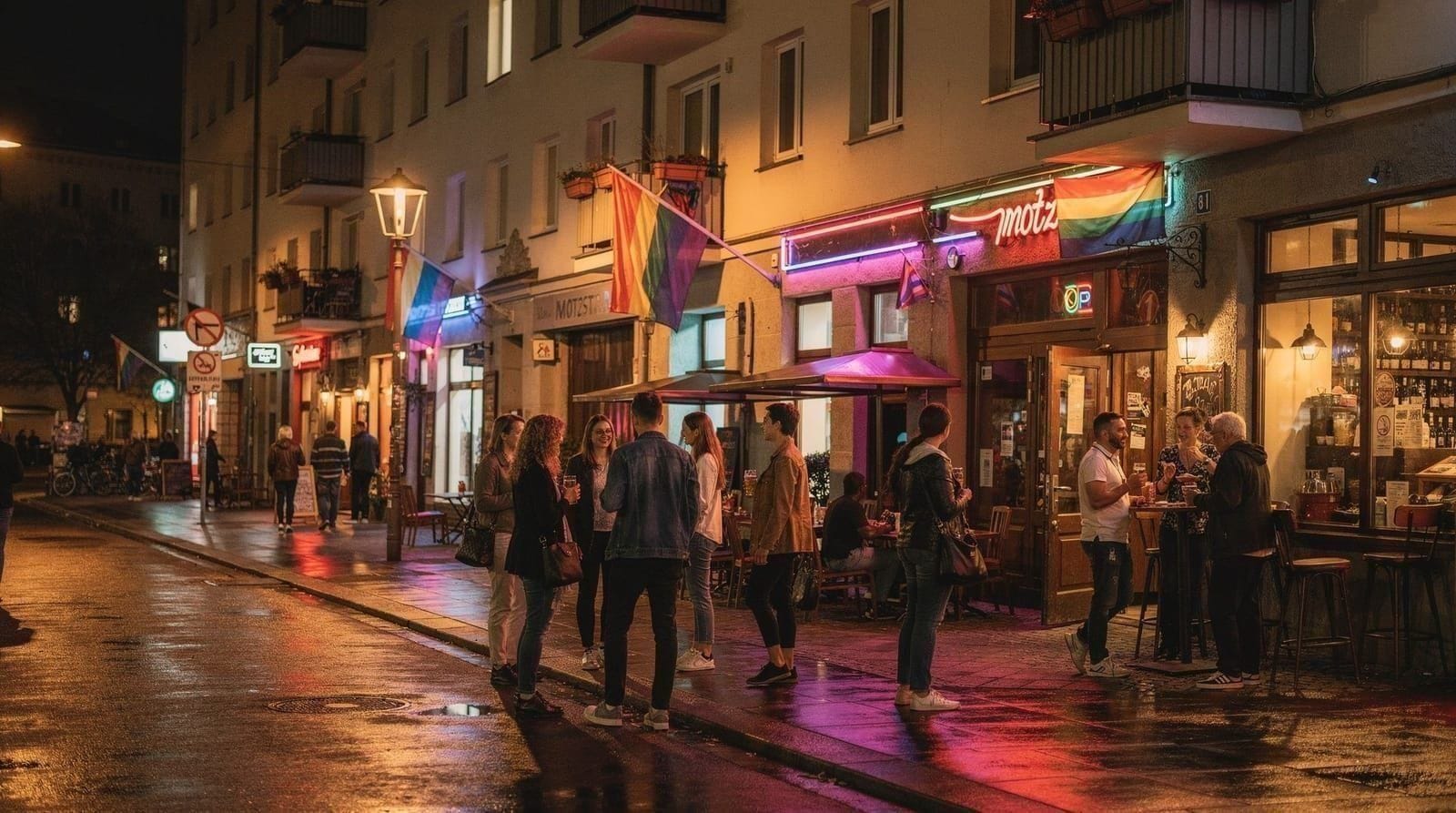
| Queer nightlife | Schöneberg, Kreuzberg, Friedrichshain |
| Jazz and live music | Kreuzberg (SO36), Charlottenburg (A-Trane, B-Flat) |
| Riverside summer drinking | Kreuzberg (Landwehrkanal), Kater Blau (Spree) |
Spätis — Berlin’s late-night institution
Spätis (short for Spätkauf, “late buy”) are neighbourhood off-licences open until 2am or later — often until whenever the last customer leaves. They are a fundamental part of Berlin nightlife, particularly in Kreuzberg and Neukölln.
You can buy cold beer for €1.50-€2, snacks, and essentials. Many Spätis have outdoor seating where regulars gather late at night. In summer, the area around Görlitzer Park and the Landwehrkanal becomes an informal outdoor bar scene fuelled almost entirely by Spätis.
This is not a tourist attraction — it is how a significant portion of Berlin’s population actually socialises. Treat Späti culture with the same low-key approach it operates with.
Safety by neighborhood, honestly
None of Berlin’s nightlife districts are genuinely dangerous by the standards of a major European capital, but the texture of “safe” differs by area. Friedrichshain and Kreuzberg are busy and well-populated late into the night, which itself is a form of safety — Görlitzer Park in Kreuzberg is the one specific spot worth avoiding after dark due to a persistent drug market, but the surrounding streets are fine. Neukölln’s Reuterkiez is calm and residential even late at night. Mitte’s tourist strips see more petty theft (bags, phones) than any real physical risk, simply because of visitor density and inattention. The general rule across all neighborhoods: standard city awareness on public transport after 1am, and avoid parks and unlit stretches alone regardless of area.
Getting home — the practical layer
Friday and Saturday nights, Berlin’s U-Bahn and S-Bahn run all night, which materially changes how late you can stay out without planning a taxi. Midweek, the metro stops in the small hours and the Night Bus network (N-lines) takes over — slower and less frequent, but it covers every neighborhood in this guide. If your night is midweek and ends after 1am, check the specific Night Bus route for your area before you head out rather than assuming a train will be running; see the Berlin public transport guide for the full network logic.
Frequently asked questions about Berlin nightlife neighborhoods
Is Berlin nightlife mainly about techno clubs?
Techno clubs are the internationally famous element, but Berlin nightlife is much broader. Kreuzberg has an excellent bar and small venue scene. Neukölln has a neighbourhood pub culture. Prenzlauer Berg is calmer but has good cocktail bars. Jazz, live music, karaoke bars, wine bars, and late-night food are all part of the picture.What is Friedrichshain known for in terms of nightlife?
Friedrichshain is home to Berghain, Tresor (technically on the Mitte border), ://about blank, and the RAW-Gelände club strip on Revaler Strasse. It also has the Simon-Dach-Strasse bar street, which is more casual and tourist-accessible. The neighborhood combines big club culture with regular bars.What is the Kreuzberg nightlife scene like?
Kreuzberg's nightlife is diverse and relatively unpretentious. Wrangelkiez around Skalitzer Strasse has a mix of Turkish-owned Spätis, dive bars, and small clubs. Oranienstrasse has been a counterculture nightlife strip since the 1980s. The area around Schlesisches Tor (SO36) is one of the original Berlin alternative music venues.Is Neukölln good for nightlife?
Yes, particularly Reuterkiez (the area around Reuterstrasse, Karl-Marx-Strasse, and Sonnenallee). It has the highest concentration of neighbourhood bars, wine bars, and small venues currently popular with Berlin's creative and expat communities. Less famous than Kreuzberg but often preferred by locals.Where is the best nightlife for over-30s in Berlin?
Kreuzberg (especially the bar scene rather than clubs), Neukölln (Reuterkiez), and Prenzlauer Berg offer more mature nightlife. Watergate in Kreuzberg draws a slightly older electronic music crowd than many clubs. The jazz venues (A-Trane, B-Flat) are also relevant — see the Berlin jazz guide.What time does nightlife start in Berlin?
Bars open from 6pm onward but most fill up after 9pm. Clubs genuinely don't start until after midnight — going at 10pm is too early. Berghain and similar venues are quiet until at least 1am. Berlin's night runs late — 6am, 8am, or later for the clubs. Plan accordingly if you have morning transport.Is Berlin nightlife expensive?
By European capital standards, no. A beer in a bar is €3-€5. Club entry is €10-€20. Cocktails are €8-€14 in most places. Neukölln and Kreuzberg are significantly cheaper than Mitte. Avoid the tourist bar strips on Hackescher Markt or near Checkpoint Charlie where prices are inflated.