Berghain door guide — honest advice on how to get in (and what to expect)
How do you get into Berghain?
There is no guaranteed method. Entry is at the door team's discretion, full stop. Roughly 30-50% of weekend queues are turned away. Your best levers are going on Sunday morning rather than Saturday night, dressing in black without obvious tourist markers, going alone or in a pair rather than a large group, and not talking loudly in the queue.
How do you get into Berghain? The honest answer: you might not, and that is fine to accept before you queue. Entry is at the sole discretion of Sven Marquardt and the door team. There is no code to crack, no dress combination that guarantees entry, and no app, tour, or tip that changes this fundamental reality. What you can do is shift your odds by understanding what the door team is actually evaluating — and by having realistic expectations.
| Where | Am Wriezener Bahnhof, Friedrichshain |
| Cost | entry around €18–20, drinks around €4–7, cash only |
| Time needed | queue 1–2+ hours, then as long as you like inside |
| Getting there | Ostbahnhof (S3/S5/S7) or Warschauer Strasse (U1/U3) |
| Best time | Sunday morning, roughly 6am–1pm |
What the door team is actually looking for
Berghain’s entry policy is not arbitrary, though it can feel that way from the street. The door team — led for years by Sven Marquardt, a tattooed photographer who has become synonymous with the venue — is managing the interior social ecosystem. Their job is not to curate fashion; it is to select people who will contribute to a specific atmosphere and behave appropriately inside.
What they are reading, in roughly this order:
Energy and intent. People who come to Berghain primarily for the story, the Instagram photo, or the bragging right tend to signal this in small ways — how they hold themselves, whether they look around nervously, whether they’re quietly rehearsing what to say. People who come to dance all night and are genuinely excited about the music tend to look different.
Social coherence. A couple who look like they go to clubs together regularly reads very differently from a group of eight tourists who met on a pub crawl. Large mixed groups, office party dynamics, hen parties, and stag groups are nearly always turned away — not because of hostility but because they’re likely to create friction with the interior culture.
Contextual fit. Berlin has dozens of good clubs. Someone who is not the Berghain demographic should go to those instead, and the door team will reach this conclusion faster than you will. If you have never been to a dark techno club, dressed minimally in black, and stayed on a dancefloor for 12 hours, you may simply not be the target guest — yet.
Realistic probabilities by profile type
This section is deliberately frank. No one can give you certainty. These are rough estimates based on widely reported patterns.
Experienced techno dancers who know the music, go alone or in pairs, dress appropriately, and arrive Sunday morning: roughly 70-80% success rate.
Well-prepared couples who dress right, have gone to similar clubs in other cities, and arrive on Sunday: roughly 50-65% success rate.
First-timer solo travellers who research the queue etiquette and arrive Sunday morning: roughly 40-55% success rate.
Groups of four or more, mixed levels of familiarity with the scene: roughly 20-40% success rate.
Large groups (6+), obvious tourists, Saturday night: under 20% and often zero.
People who have been inside before: significantly higher on return visits. The door team has extraordinary memory for faces.
These numbers are not published by the club. They reflect the consistent experience reported by frequent Berlin visitors and residents over years. Treat them as directional, not precise.
Best timing to queue
Sunday morning (6am-1pm): The optimum window for most visitors. The Saturday night crowd has settled, the atmosphere inside is experienced and mellow, and the door team is selecting for endurance and genuine interest rather than urgency. The queue can still be 1-2 hours long.
Thursday night (10pm-2am): Significantly more accessible than weekends, though the crowd is smaller and the energy is different. Good option if you are in Berlin mid-week.
Friday night (10pm-3am): Easier than Saturday, harder than Thursday. Worth trying if you’re already prepared and in the neighbourhood.
Saturday night (11pm-5am): The hardest queue of the week, longest waits, highest rejection rates. Only attempt this if you are genuinely prepared and accept the probability of being turned away.
Special events (Klubnacht, NYE, CSD weekend): Even higher demand, more selective. These events sell out or create extreme queues. Check the club’s website for ticket availability before attempting to queue.
The queue itself — practical notes
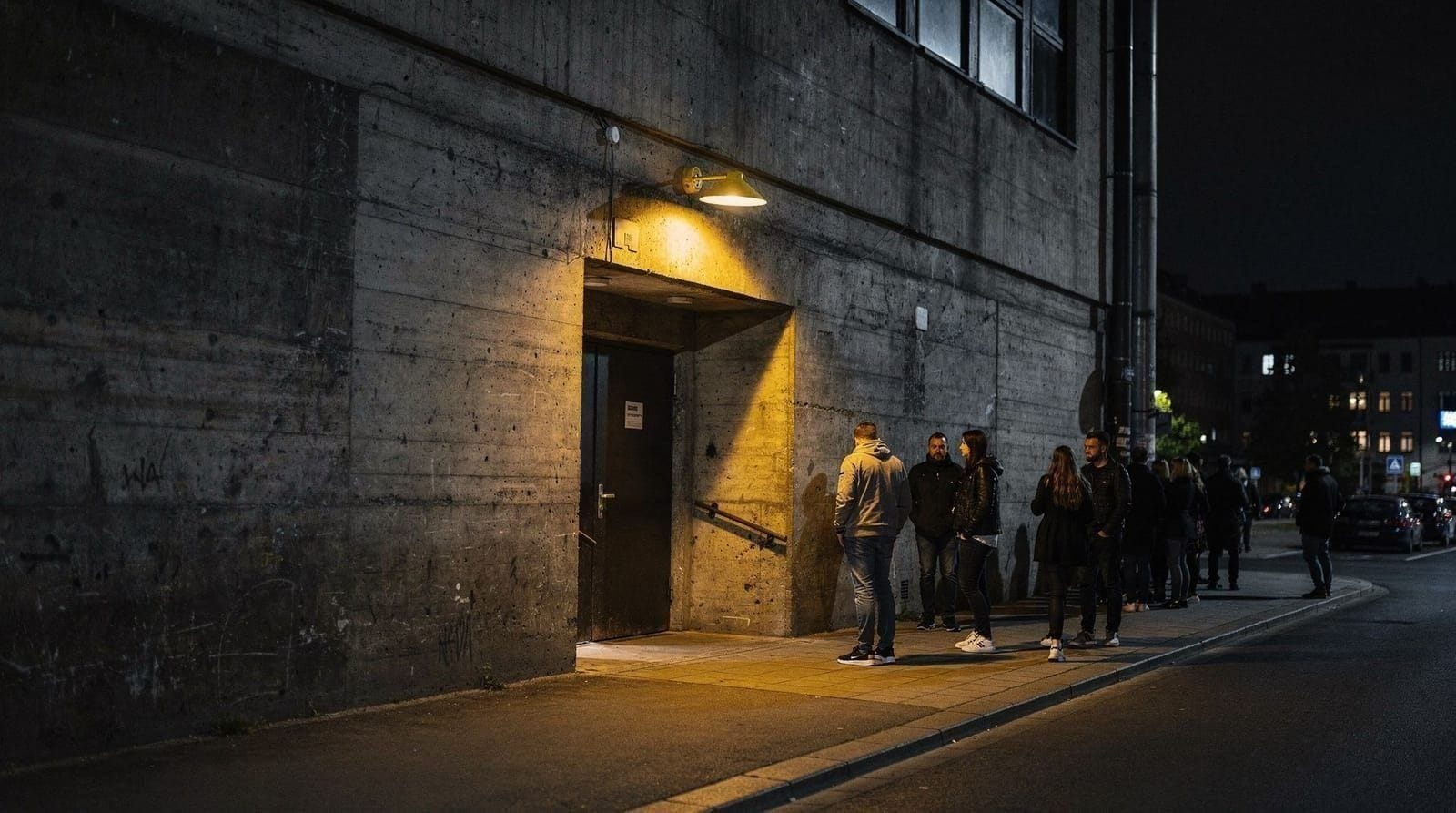
The queue for Berghain forms outside the former power plant on Am Wriezener Bahnhof in Friedrichshain, a 10-minute walk from Ostbahnhof (S-Bahn S3/S5/S7) or a short walk from Warschauer Strasse (U1/U3).
- Do not use your phone while in the queue. Put it away completely.
- Do not talk loudly in any language about being tourists, about what you’ve heard about the club, or about strategy for getting in.
- Dress in dark, minimal clothing. Black is the default. Leather, harnesses, fetish accessories, and transparent clothing are all appropriate and common.
- Go to the toilet before you queue. There are no facilities in the waiting line.
- If you are turned away, the door team will wave you aside without explanation. Do not argue, do not ask why, do not attempt to re-queue immediately. Accept it, go somewhere else, and try again on a different day if you want to.
What Berghain is actually like inside
If you do get in, here is what to expect.
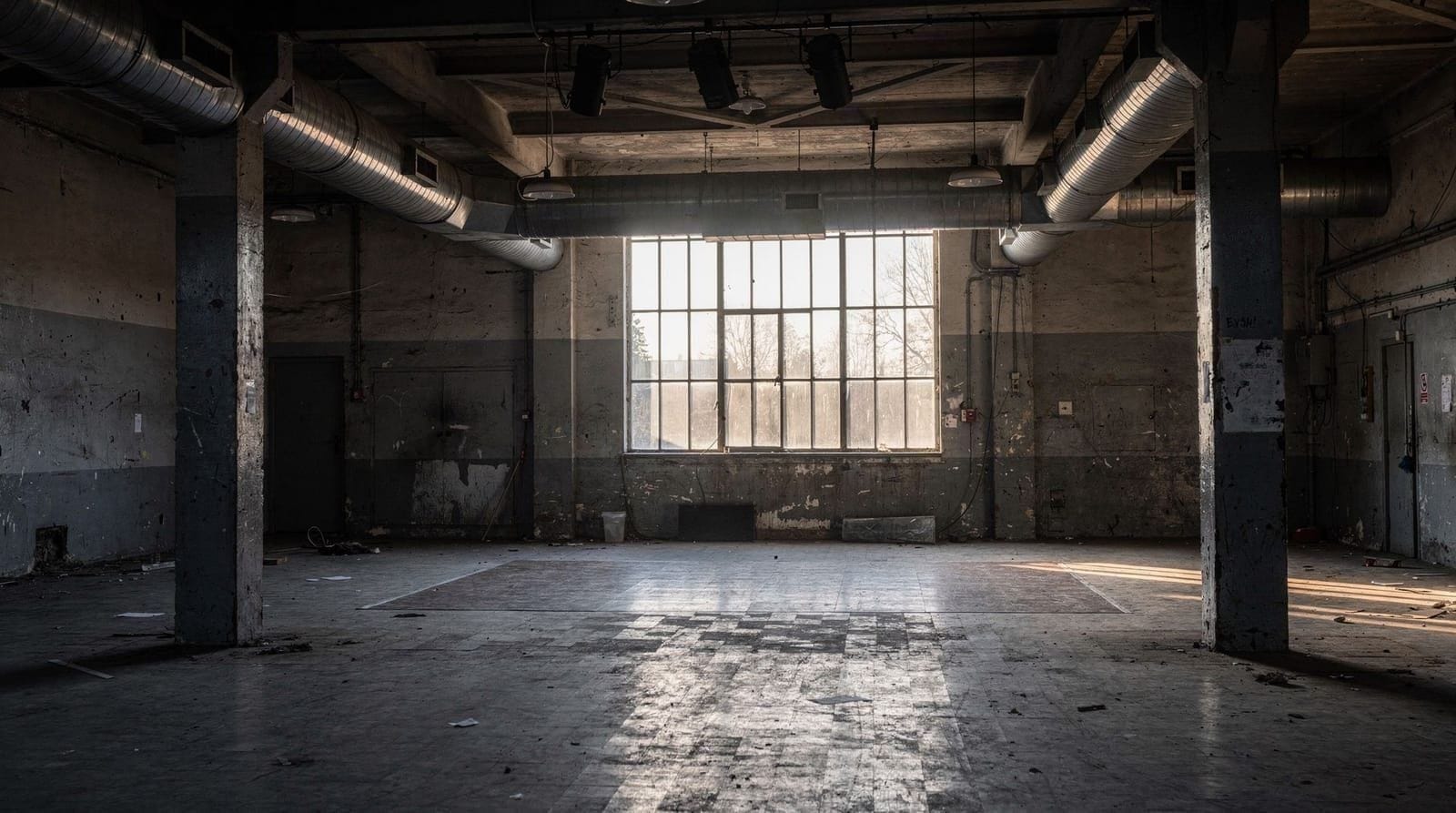
The building is a former East Berlin power plant (Heizkraftwerk Mitte). The ceiling of the main Berghain hall is approximately 18 metres high. The sound system — custom-built by Funktion-One — is one of the most powerful in any club in Europe, and the bass is physical. The main floor is very dark, very loud, and usually very crowded by Sunday morning.
The music on the Berghain floor is hard techno and industrial techno — slow, heavy, repetitive. DJs play sets of 6-12 hours. There are no countdown screens, no announcements. Time disappears.
Panorama Bar one floor up plays house and techno house in a brighter space with floor-to-ceiling windows. The social atmosphere is less intense.
Dark areas exist within the venue. These are clearly understood by regular club-goers. Behaviour that is normal in these areas would be unusual in most contexts. If you are not comfortable with this as an abstract fact, Berghain is not the right club for this visit.
The club runs continuously through the weekend. Some people enter Saturday night and stay until Monday. This is normal. The coat check (€2) is essential for a long stay.
What Berghain does not tolerate
Photography or filming inside — enforced strictly. Aggressive behaviour. Homophobia, transphobia, or any form of harassment — grounds for immediate expulsion. People who are visibly too intoxicated to function. Dealing drugs inside (note: drug use occurs in the club as in virtually every major European club, but dealing is a separate matter that will result in removal and potential police involvement).
The club has an explicit ethos of consent and mutual respect. Staff are trained to intervene in situations of harassment. The relatively strict door policy exists in part to protect this interior culture.
Alternatives if you don’t get in
Not getting into Berghain on a given night is not a failed Berlin trip. Several excellent clubs are within walking distance or a short U-Bahn ride:
://about blank (Revaler Strasse 99, Friedrichshain): political techno club with a queer-friendly ethos, more accessible door. 15-minute walk from Berghain.
Tresor (Köpenicker Strasse 70, Mitte): Berlin’s other legendary techno institution, originally in the vault of a pre-war department store. More accessible than Berghain.
Sisyphos (Hauptstrasse 15, Rummelsburg): sprawling outdoor club complex open through the weekend. Large space means the door is less restrictive.
Watergate (Falckensteinstrasse 49, Kreuzberg): electronic music club on the Spree with a terrace. More mainstream in feel, easier to enter.
For a broader overview of the Berlin techno scene including these venues, see the Berlin techno clubs guide. If you’d rather plan a whole weekend around the scene than gamble a single night on one door, the Berlin nightlife weekend itinerary sequences several clubs and bars across two nights, and the Friedrichshain neighbourhood guide covers the area’s bars and late-night food around Berghain itself.
Where to base yourself if clubbing is a priority
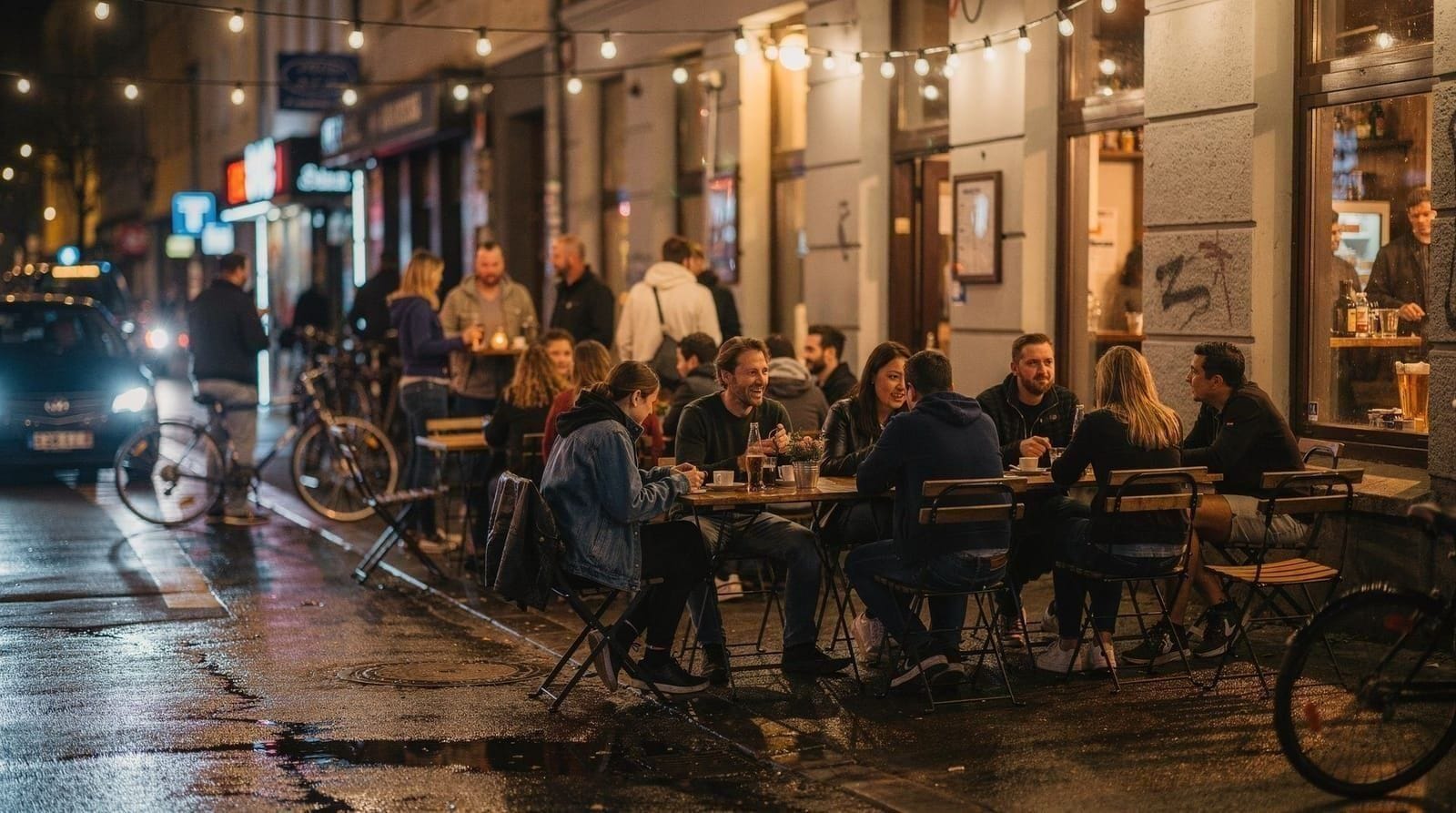
If Berghain and its neighbours are central to your trip, staying in Friedrichshain or Kreuzberg cuts the late-night journey home to a short walk or a single U-Bahn stop rather than a cross-city taxi at 6am. Both areas also have their own bar scenes worth an evening on nights you’re not queueing — see the Kreuzberg bars guide for options that don’t involve a door policy at all. Berlin’s night trains and U-Bahn run through the weekend (Friday and Saturday nights specifically), which matters more than it sounds: planning your route home before you queue means one less thing to think about after a 12-hour set.
The bigger picture — why this club matters
Berghain opened in 2004 in a building that had been empty since reunification. It arrived at a moment when Berlin’s post-Wall club scene was consolidating from improvised raves into more permanent institutions. The club did not invent Berlin’s techno culture, but it became its most internationally recognised symbol.
In 2022, a German court ruled that electronic music played in clubs qualifies as “art” under tax law, a legal judgment that partially stemmed from arguments about Berghain. In 2024, UNESCO added Berlin’s techno scene to its list of intangible cultural heritage. Berghain sits at the centre of both recognitions.
Understanding this context changes how you approach the queue. You are not trying to enter a fashionable bar. You are trying to enter a functioning cultural institution with a 20-year history of protecting a specific interior culture. The door exists to serve that function.
The full history of how this culture developed, from the improvised raves of 1990 to the current global scene, is covered in the Berlin club culture history guide.
Frequently asked questions about Berghain door guide
What is the best time to queue for Berghain?
Sunday morning from about 6am to noon is widely considered the most accessible window. The Saturday night queue (11pm-4am) is the hardest to enter. Friday and Thursday nights are easier than Saturday. Arrive early on Sunday before the club starts winding down — later on Sunday the vibe changes and so does the door.What is the Berghain dress code?
There is no strict written code, but the aesthetic is dark, minimal, and functional. Black clothing, industrial or fetish-adjacent pieces, and understated fashion read as club-appropriate. Avoid: bright colours, tourist casual (shorts, branded T-shirts, trainers with colourful logos), and anything that looks like you dressed to impress rather than to dance.Should I go alone or in a group?
Smaller is better. Pairs are ideal; solo entry is fine and common. Groups of four or more — especially mixed-gender groups of obvious tourists — have significantly lower success rates. The door team is watching for cohesion, not numbers.What should I not do in the queue?
Do not use your phone. Do not talk loudly in English about nightlife strategy. Do not look nervous. Do not wear a GoPro or camera around your neck. Do not ask someone in the queue for tips — it signals inexperience. Stand quietly, look comfortable, and be patient.Is Berghain only for gay men?
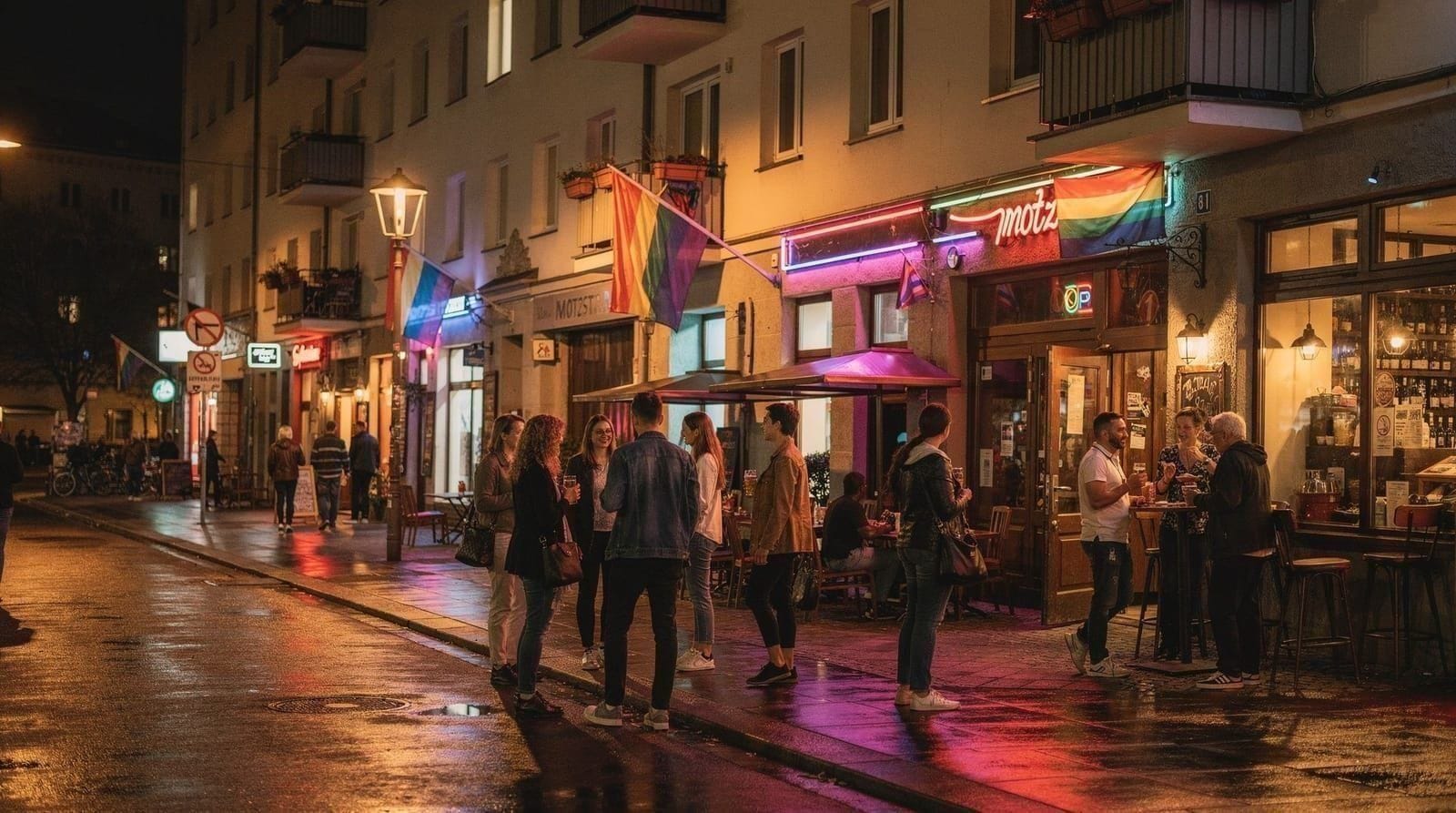
No. Berghain (the main floor) and Panorama Bar (the floor above) are open to everyone. The club began as a gay venue and retains a strong queer identity. Kink and fetish are visible and normalized. Guests who are openly uncomfortable with this are more likely to be turned away — not because of identity, but because the door team reads social fit.Is the no-photos policy real?
Yes. Phones must be stored in your pocket or bag inside the venue. Stickers are provided for your phone camera lenses by door staff. Using a phone for photos or social media inside is grounds for being asked to leave. This policy is enforced — don't test it.What does entry and drinks cost at Berghain?
Entry on weekends is typically €18-€20. Drinks inside are €4-€7 (beer and mixed drinks). Berghain accepts cash only — there are no card readers. ATMs are available nearby on Karl-Marx-Allee and Revaler Strasse. Budget accordingly before you queue.What is Panorama Bar compared to Berghain?
Panorama Bar is the upper floor of the same building. It plays house music rather than techno, has better lighting, and a slightly more accessible social atmosphere. The main Berghain floor is darker, louder, and more intense. Both floors are accessed through the same entrance and on the same ticket.Can I buy Berghain tickets in advance?
No. Berghain does not sell advance tickets or offer skip-the-line entry — every guest queues and is assessed at the door, with no exceptions for money or fame. Be wary of any site or tour claiming to guarantee entry; no legitimate service can do this.What should I do if I'm rejected at the door?
Leave without arguing — the decision is final for that night, and pushing back or asking why only confirms to the door team that you misread the situation. Head to a nearby alternative like ://about blank or Watergate instead, and if you want to try Berghain again, come back on a different day or time rather than re-joining the same queue.