Berlin club culture history — from post-Wall raves to UNESCO techno 2024
How did Berlin become a global techno capital?
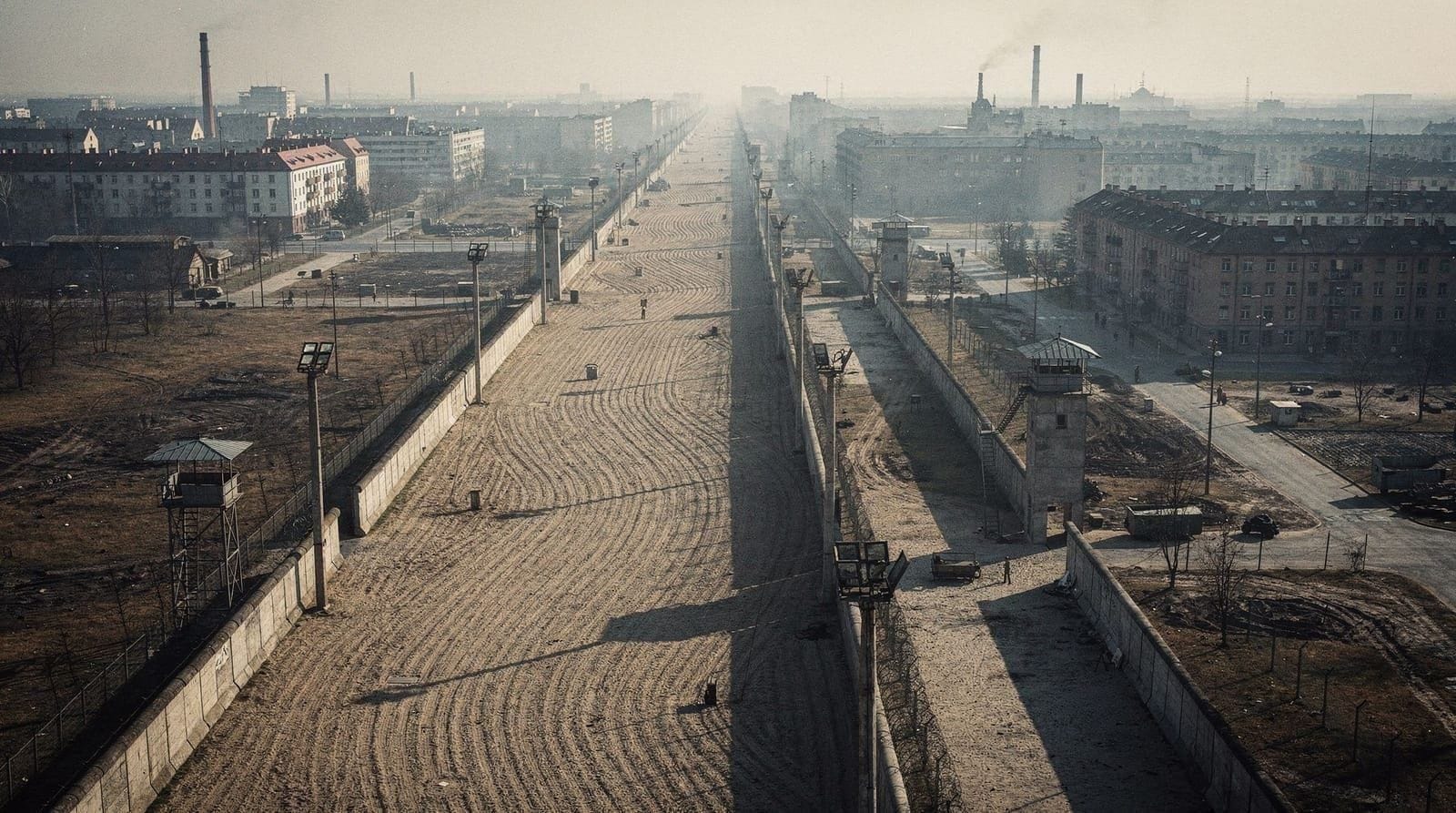
The fall of the Berlin Wall in November 1989 left hundreds of abandoned industrial buildings in the former death strip and East Berlin — power stations, warehouses, factories, and underground bunkers. A small community of DJs and party organisers colonised these spaces before ownership was clarified or law enforcement reached them. The techno sound arriving from Detroit at the same moment provided the soundtrack. The combination was unrepeatable: physical space, cultural vacuum, political energy, and a new music all arriving simultaneously.
How did Berlin become a global techno capital? The question has a specific answer, rooted in a very specific historical moment. Understanding it changes how you experience the clubs, the spaces, and the city.
| Where | Friedrichshain, eastern Kreuzberg, Mitte’s former death strip |
| Origin | November 1989 — the fall of the Wall left the buildings empty |
| Landmarks today | Berghain, Tresor, Sisyphos, Kater Blau |
| Recognition | UNESCO Intangible Cultural Heritage (national list), March 2024 |
| Best time to learn it | Before a club visit — context changes the experience |
November 1989 — the moment that made everything possible
On the night of November 9, 1989, the gates of the Berlin Wall opened. Within days, East Berliners were crossing freely. Within weeks, the first improvised parties were happening in the abandoned spaces of the former death strip and the derelict industrial buildings of East Berlin.
The physical conditions were extraordinary. East Berlin had entire neighbourhoods of empty buildings — factories, warehouses, power stations, cold storage facilities — that had fallen out of use during the GDR era and whose ownership was legally unclear in the months after reunification. The original Tresor vault had been the basement of the Wertheim department store, Berlin’s largest pre-war retail building, bombed in 1943 and standing ruined in the death strip for 28 years. The first Berghain predecessor, Ostgut, occupied a former freight depot whose status was disputed for years.
At the same moment, the techno sound from Detroit — developed by African-American producers including Juan Atkins, Derrick May, and Kevin Saunderson on equipment that was primarily synthesisers and drum machines — was reaching Europe. A small group of Berlin DJs and record shop owners had been following this music since the late 1980s. When the Wall fell, they had the music and suddenly had the spaces.
The combination was historically unique. No other European city had both the physical vacancy and the cultural vacuum that Berlin had in 1990. The result was not inevitable, but the conditions were so specific that it could not have happened anywhere else.
The founding years — 1989 to 1993
Ufo (1989-1993): One of the first Berlin techno clubs, in an underground bunker on Köpenicker Strasse. It closed when the building’s ownership was clarified and the space was reclaimed. Considered by many Berlin veterans to be the founding venue of the scene.
Tresor (1991-present): Opened March 1991 by Dimitri Hegemann and others in the vault of the bombed-out Wertheim building on Potsdamer Platz — which was, at the time of opening, one of the most symbolically charged locations in Berlin. Potsdamer Platz had been the busiest intersection in pre-war Europe, completely bisected by the Wall for 28 years, and was still a largely empty field when Tresor opened in its ruins. The founders brought Detroit producers to Berlin — Jeff Mills played at the first major Tresor events in 1992. The relationship with Detroit is fundamental to Tresor’s identity.
E-Werk (1993-1997): In a former electricity plant on Wilhelmstrasse (between the former Gestapo headquarters and the Topography of Terror), E-Werk was the largest and most ambitious early club — capacity around 3,000. It hosted some of the era’s biggest events and closed when the building was sold for development.
Bunker (1992-1996): In a Nazi-era air raid shelter near Reinhardtstrasse in Mitte. Dark, extremely loud, associated with the hardest and most uncompromising end of techno. The DJ Mijk van Dijk played there regularly; the building’s history as shelter was known and played into the aesthetic.
The Love Parade — 1989 to 2003
Parallel to the club scene, a public street party was beginning that would eventually become the largest outdoor gathering in German history.
The Love Parade started on July 1, 1989 — months before the Wall fell — as a political demonstration organised by DJ Westbam and Dr. Motte, framed as a demonstration for peace, tolerance, and party as political statement. The first edition involved approximately 150 people marching through Kurfürstendamm with a sound system on the back of a truck.
The parade grew each year:
- 1991: 6,000 participants
- 1994: 300,000
- 1997: 750,000
- 1999: 1,500,000 — the largest single edition
The 1990s Love Parade was not just a party. It was a specific political performance: the argument that dancing, connection, and the collapse of barriers between people represented a genuine form of political action. The framing was naïve by conventional political standards but corresponded to the actual mood of post-Wall Berlin — the sense that something fundamental had broken open.
Disputes over commercial sponsorship, noise, and the political framing of the parade as a “demonstration” (which gave it special permits) eventually broke apart the Berlin edition. After 2003, the Love Parade moved to other German cities. In Duisburg in 2010, a crowd crush killed 21 people in a tunnel approaching the venue. The Love Parade has not taken place since.
The establishment of Berghain — 1998 to 2004
Berghain did not emerge from nothing. Its history runs through Ostgut.
Ostgut opened in 1998 in a former GDR freight depot (Güterbahnhof) on the bank of the Spree in Friedrichshain. It was a gay sex club with a strict door policy and an approach to music programming that emphasised hard techno and the darkroom culture of gay Berlin. The founders were Norbert Thormann and Michael Teufele.
Ostgut attracted a specific crowd: gay men from Berlin and increasingly from across Europe, who came as much for the sexual and social freedom of the space as for the music. The club was not primarily a music venue — it was a social space where music was the operating environment.
The freight depot was demolished in 2003 for the construction of what became the O2 Arena (now the Mercedes-Benz Arena). Thormann and Teufele had to find a new venue. They found the adjacent Heizkraftwerk Mitte — a former municipal heating power station that had been decommissioned after reunification.
The upper floor (Panorama Bar) opened in 2003 during the Ostgut closure. The main Berghain floor opened in January 2004. The name combined the two areas: Friedrichshain and Prenzlauer Berg.
The 2000s and 2010s — consolidation and global fame
Through the 2000s, Berlin’s reputation as the world’s techno capital solidified. Several factors compounded:
Cheap rent and residency: Berlin’s post-reunification economic depression (and the ongoing “Berliner Schnauze” attitude of citizens dismissing hype) kept rents low until at least 2010. Artists, DJs, and club workers from across Europe and the US moved to the city on minimal budgets. A critical mass of musical talent concentrated in Friedrichshain and Neukölln.
The Resident Advisor effect: The website Resident Advisor, which tracks and reviews electronic music events globally, gave Berghain a 5/5 rating in its early years and repeatedly called it the best club in the world. This sent a stream of music tourism from the UK, Netherlands, and North America.
Club Hotel: The phenomenon of “club tourism” — people flying to Berlin specifically to attend Berghain or Tresor for the weekend — became measurable from around 2007 onward. Berlin Airport statistics showed rising Friday night arrivals from London specifically on club tourism weekends.
Bar25 (2004-2010): An outdoor club on the Spree that operated in a semi-legal status from 2004 until 2010, when it was demolished for development. Bar25 represented a different strand of Berlin club culture — more festival-like, outdoor, oriented toward alternative community and arts as much as music. Its spirit continues in Kater Blau, opened by the same founders.
Sisyphos (2012-present): The dog biscuit factory that became Sisyphos is the most recent major addition to the Berlin techno club ecosystem, representing the continuation of the “found industrial space” tradition 20 years after the scene began.
The 2022 court ruling and 2024 UNESCO recognition
Two formal recognitions arrived in quick succession and changed the institutional status of Berlin’s club scene.
September 2022 — the German fiscal court ruling: A German fiscal court in Berlin (Finanzgericht Berlin-Brandenburg) ruled that a Berlin nightclub’s activities qualified as the performance of “art” under tax law. This meant the applicable VAT rate was 7% rather than 19%, the rate applied to “entertainment.” The case had been argued partly on the basis that electronic music DJ sets are artistic performances equivalent to live music concerts. The ruling saved the relevant club approximately €800,000 in disputed taxes and set a precedent for the industry.
March 2024 — UNESCO Intangible Cultural Heritage: The German UNESCO Commission added Berlin’s “club culture” (Clubkultur) and specifically its techno scene to Germany’s national Register of Good Safeguarding Practices for Intangible Cultural Heritage. This is not the full UNESCO World Heritage list but a national-level recognition. The nomination explicitly cited Berghain, Tresor, and the post-Wall origin story. It was the first time club culture had received this status in Germany.
The nomination was supported by the Clubcommission Berlin, which had spent years building an economic and cultural case for the scene. Their arguments included the industry’s economic contribution (approximately €1.5 billion annually, around 9,000 jobs), its role in attracting international visitors, and its unique historical origin.
The current threat — gentrification and the development squeeze
The same cultural energy that made Berlin’s club scene famous has attracted exactly the investment and residential development that threatens it.
Berlin’s rents have risen dramatically since 2010. Areas that were industrial and cheap in 1990 (Friedrichshain, eastern Kreuzberg, the Spree riverside) are now expensive and competed over by residential and commercial developers. Several clubs have closed under direct pressure from development:
- E-Werk (1997): demolished for development
- Bar25 (2010): demolished for residential development
- Ostgut (2003): demolished for arena development
- Maria am Ostbahnhof: closed after decades, redeveloped
- Cookies (Mitte): closed multiple times and eventually permanently
The Clubcommission successfully lobbied for a “Club Protection” framework in Berlin’s urban planning law that designates established clubs as cultural venues, giving them some protection against noise complaints from nearby residential developments that post-date the club. The legal protection is imperfect but it has preserved several venues that would otherwise have faced closure.
The paradox — that the culture’s own appeal drives the conditions that threaten it — is openly discussed in Berlin and has no obvious resolution.
Visiting today — what’s still standing
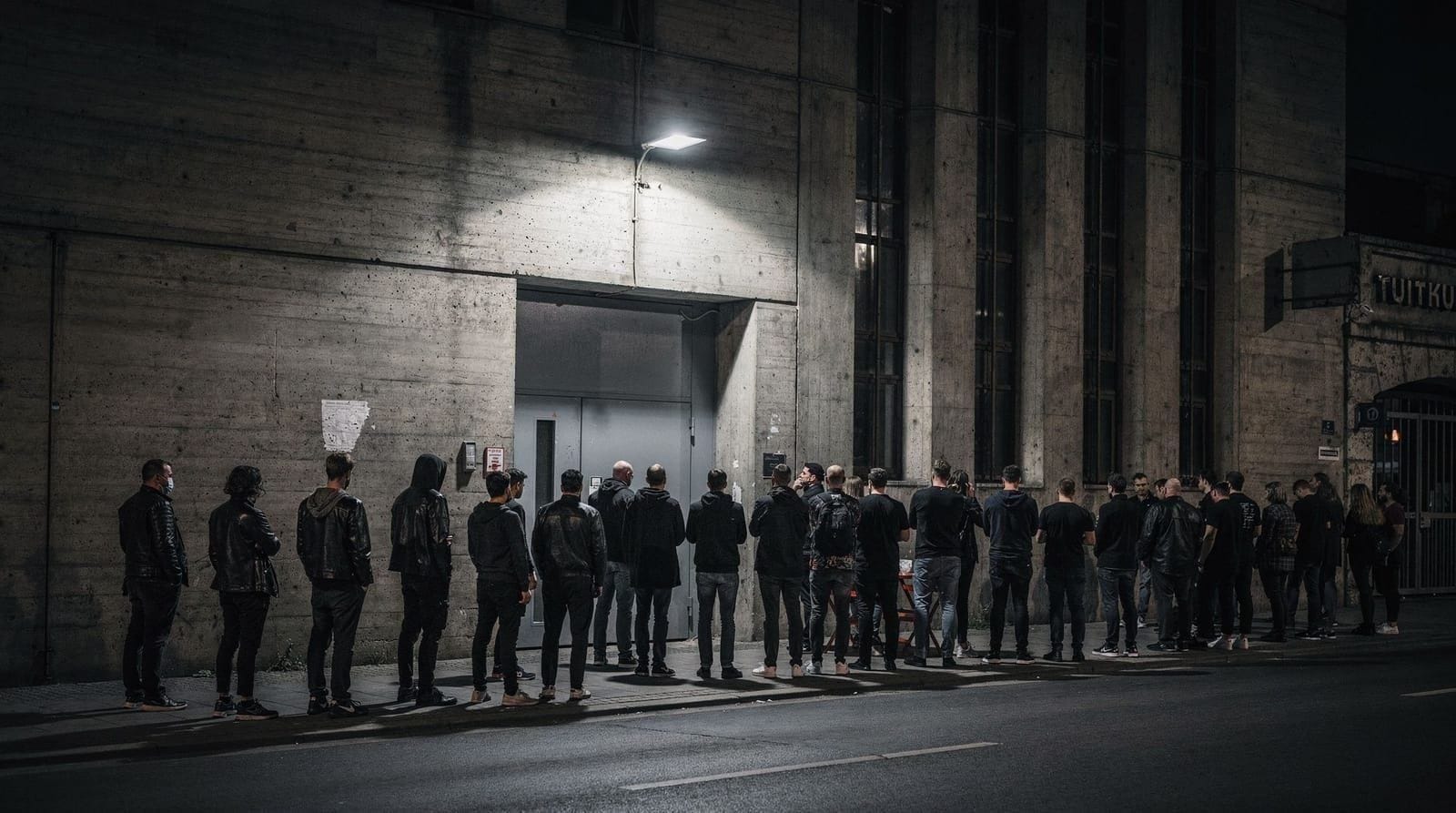
Of the founding-era venues, only Tresor still operates continuously at its post-1991 identity, now at a different address on Köpenicker Strasse after the original Potsdamer Platz site was redeveloped. Berghain remains the scene’s most globally recognised venue, and getting past its notoriously unpredictable door is its own small industry of advice — see the Berghain guide on how to get in for what actually helps and what’s just internet myth. For the current landscape beyond these two landmarks, the Berlin techno clubs guide covers Sisyphos, Kater Blau, and the smaller venues that have inherited the found-industrial-space tradition.
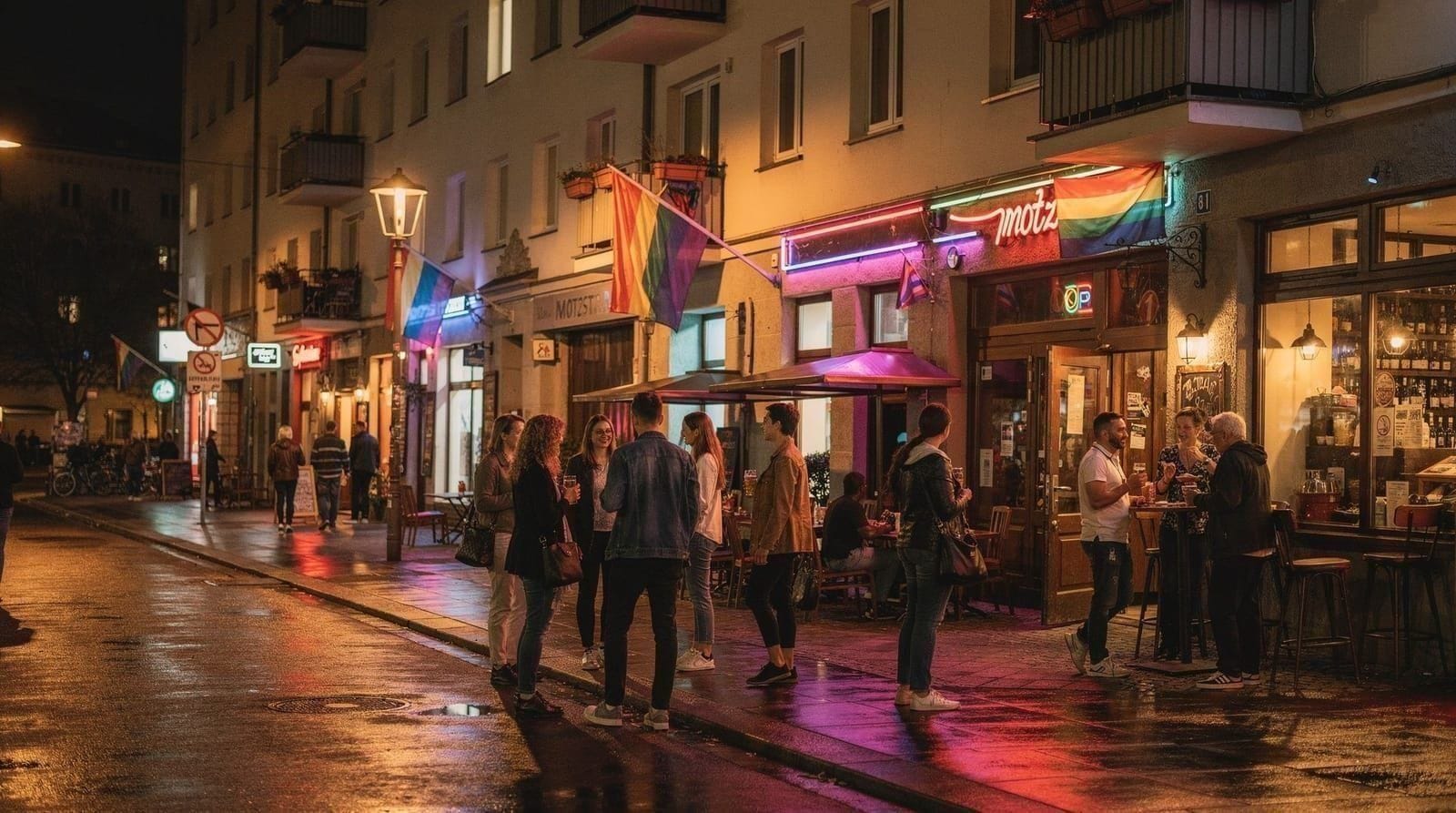
The culture’s roots in gay Berlin, via Ostgut, are still visible in today’s scene — the Berlin queer nightlife guide traces that thread from Ostgut’s darkrooms through to the current club and bar landscape. Geographically, most of this history plays out across Friedrichshain and eastern Kreuzberg; the Friedrichshain neighbourhood guide and the wider nightlife neighbourhoods guide map where to actually go.
Why the death strip mattered — the Cold War connection
None of this history makes full sense without the preceding 28 years. The empty buildings that became clubs were empty precisely because they sat inside or adjacent to the Wall’s death strip — a zone deliberately kept clear of activity and largely inaccessible. The Berlin Wall complete guide explains how that strip was constructed and policed, and the divided city history guide and Cold War Berlin history guide cover the wider 1961–1989 period that produced the specific urban vacancy techno culture later colonised. Understanding the Wall’s geography is, in a real sense, understanding why Tresor could exist exactly where it did.
Frequently asked questions about Berlin club culture history
When did Berlin's techno scene begin?
The first Berlin techno raves happened in late 1989 and 1990, immediately after the Wall fell. The Tresor club opened in March 1991 in the basement vault of the former Wertheim department store on Potsdamer Platz. E-Werk (in a former electricity plant) and Ufo (in an underground bunker) opened shortly after. These first years, roughly 1989-1993, are the founding period.What was the Tresor club and why does it matter?
Tresor opened in 1991 in the vault of a bombed-out pre-war department store at Potsdamer Platz, a building that had been in the death strip until 1989. The founders had a direct relationship with the Detroit techno scene — Robert Hood, Jeff Mills, and Underground Resistance all played Tresor in the early years. The club introduced Detroit techno to European audiences and established a direct transatlantic lineage that still defines Berlin techno.What was Berghain's predecessor?
Berghain grew out of Ostgut, a gay sex club that opened in 1998 in a former freight depot (Güterbahnhof) in Friedrichshain. Ostgut was demolished in 2003 for the construction of the O2 World arena. The founders — Michael Teufele and Norbert Thormann — used the Ostgut concept and community to open Berghain in the adjacent power station building in 2004. The Panorama Bar (the upper floor) opened first in 2003 while Berghain was under construction.What was the Love Parade and what happened to it?
The Love Parade began in Berlin in 1989 as a political demonstration for peace and tolerance, framed as a movement rather than a party. By 1999 it drew 1.5 million people to Berlin's streets. It was one of the largest public gatherings in German history. After commercial disputes and noise issues, it left Berlin in 2006. A relocated Love Parade in Duisburg in 2010 ended in catastrophe — a crowd crush killed 21 people. The Berlin Love Parade never returned.What is the significance of the 2022 German tax court ruling on techno?
In September 2022, a German fiscal court ruled that electronic dance music played in clubs qualifies as "art" (Kunst) rather than entertainment under German tax law. This reduced the applicable value-added tax from 19% to 7%, saving clubs significant money. The case involved a Berlin club's tax assessment and used arguments about the artistic nature of DJ performance and the role of clubs as cultural institutions. Berghain was central to the public discussion of the ruling.What is the UNESCO recognition of Berlin techno in 2024?
In March 2024, the German UNESCO Commission added Berlin's club culture and techno scene to Germany's list of Intangible Cultural Heritage. This is a national-level recognition rather than the full UNESCO World Heritage inscription, but it was the first time club culture had been recognized at this level in Germany. The nomination was supported by the Clubcommission Berlin (the club industry association) and explicitly cited Berghain, Tresor, and the scene's post-Wall origins.What is the Clubcommission Berlin?
The Clubcommission is the industry association representing Berlin's clubs, founded in 2001. It lobbies for club interests in urban planning (preventing noise complaints from new apartment buildings near established clubs), supports small venues financially, and collects data on the club industry's economic contribution. It calculated that Berlin's club scene generates around €1.5 billion annually and employs roughly 9,000 people, figures that supported the UNESCO nomination.Which founding-era Berlin techno clubs are still open today?
Only Tresor survives in continuous operation from the founding period, though it relocated from its original Potsdamer Platz vault to Köpenicker Strasse after the original site was redeveloped. Ufo, E-Werk, Bunker, and Ostgut all closed permanently between 1993 and 2003. Berghain, which opened in 2004, is the direct successor to Ostgut rather than a founding-era venue itself.Why is Friedrichshain so central to Berlin's club history?
Friedrichshain sat directly against the former death strip and had a dense concentration of GDR-era industrial buildings — freight depots, power stations — left vacant after reunification. Ostgut and later Berghain both occupy former industrial sites on the Friedrichshain side of the Spree, close to the historic border with Kreuzberg, which is why the club scene concentrated so heavily in this corridor.