Berlin free walking tours — honest guide to the tip model, operators, and quality
Berlin: Discover Berlin Half-Day Walking Tour
Are Berlin free walking tours really free?
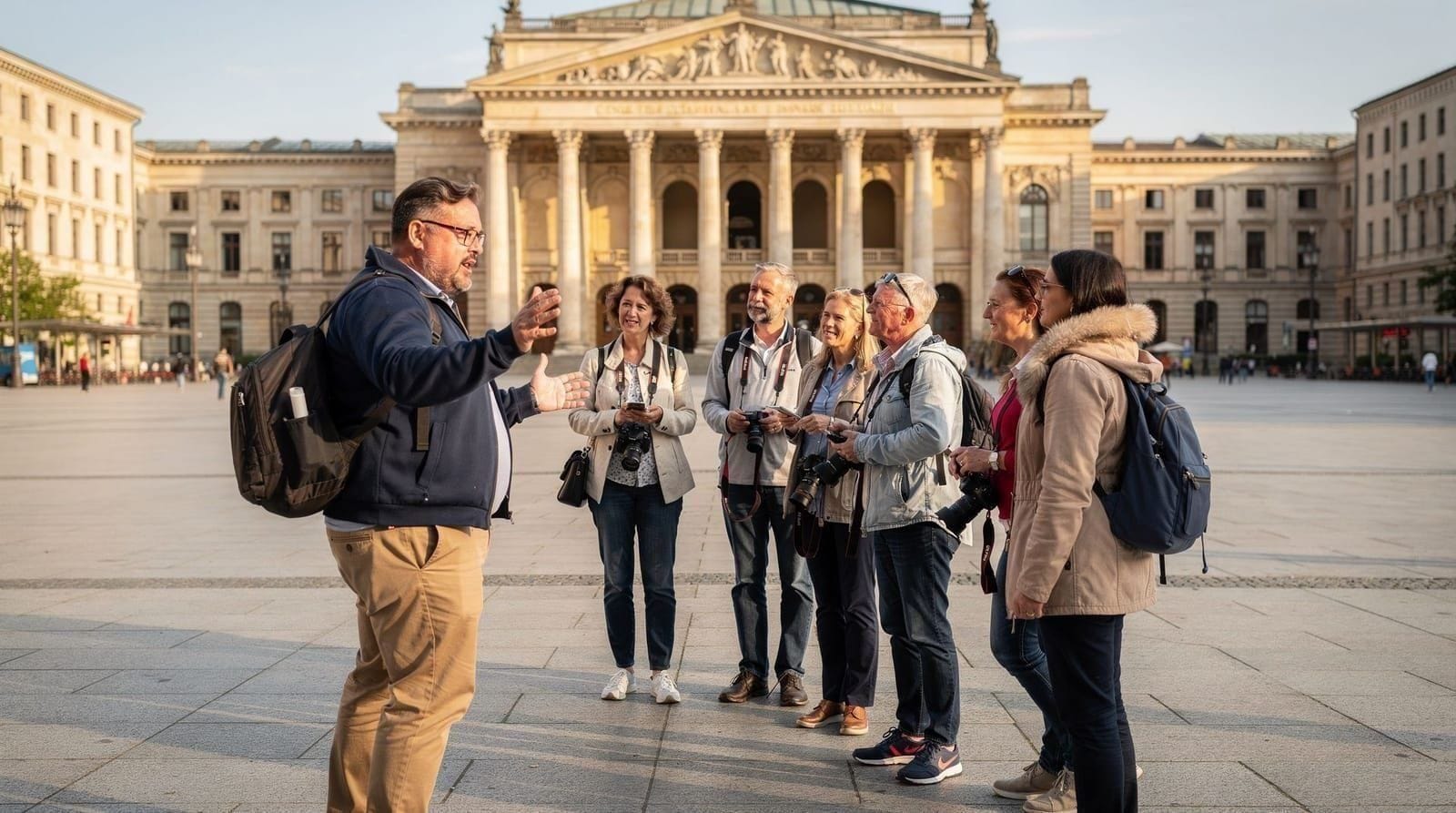
Free walking tours in Berlin charge €0 upfront. Guides work entirely on tips — no salary from the operator. Expect to tip €10-20 per person for a 2.5-3 hour tour. If a guide was genuinely informative and engaging over 3 hours, €15-20 is appropriate. Zero tip is extracting labour without pay. The tours are real and genuinely educational; the "free" label is a marketing model, not a charity.
Are Berlin free walking tours really free? The ticket price is €0 — nothing collected at booking. Guides are self-employed and work entirely on gratuities. For a 2.5-3 hour tour with a knowledgeable guide, the honest expectation is €10-20 per person in tips. The tour format is legitimate and often excellent; the “free” label is a pricing model, not a charity service. Understanding this upfront makes the experience better for everyone involved.
| Cost | €0 upfront; tip €10–20/person expected |
| Duration | 2.5–3 hours (themed tours up to 4) |
| Distance | 5–7 km on foot |
| Group size | 8–50+ depending on operator and season |
| Booking | Not required for walk-up tours; useful for themed ones |
How the free tour model actually works
The free walking tour model was effectively invented in Berlin in the early 2000s. Sandeman’s New Europe Tours launched in the city in 2000 with a genuinely novel concept: charge nothing upfront, have guides earn their income entirely from tips, and compete on guide quality rather than price. The model spread to every major European city and now dominates the budget travel tour market globally.
The mechanics in Berlin work as follows:
Guides are independent contractors. They are not employees of Sandeman’s or other free tour companies. They pay a daily or weekly pitch fee to the operator for the right to use the branding and meeting point. On a slow day with poor tips, a guide can earn negative income (tips received minus pitch fee). On a busy summer day with an excellent group, a guide can earn €200-300.
The operator makes money from volume and upselling. Sandeman’s earns the pitch fees from guides, plus commissions from recommended bars, hostels, and paid tours they promote at the end of the free tour. Free tours function as marketing for the operator’s paid themed tours.
Guides compete on quality. Because income depends entirely on tips, guides with a talent for storytelling and historical synthesis earn substantially more than guides who read from a script. This self-selecting mechanism produces some excellent guides and also some poor ones — there is little quality floor other than the market.
This is not a criticism of the model. It produces genuinely good outcomes when guide and audience understand the arrangement. Problems arise when visitors take a 3-hour tour and tip nothing, treating a professional guide as if they were a free attraction.
The pitch-fee arrangement also explains why guides sometimes seem to push recommended bars or paid add-on tours at the end of a free tour — this is part of how the operator recoups the value of the free tour as a marketing channel, and it’s a reasonable trade given you paid nothing upfront. A polite decline is entirely acceptable; the recommendation is not a condition of the tour, and it does not affect how much you should tip your guide.
What free walking tours cover in Berlin
Most Berlin free tours focus on the central Mitte district — the most historically dense area and the most practical for groups on foot. A typical 3-hour route covers:
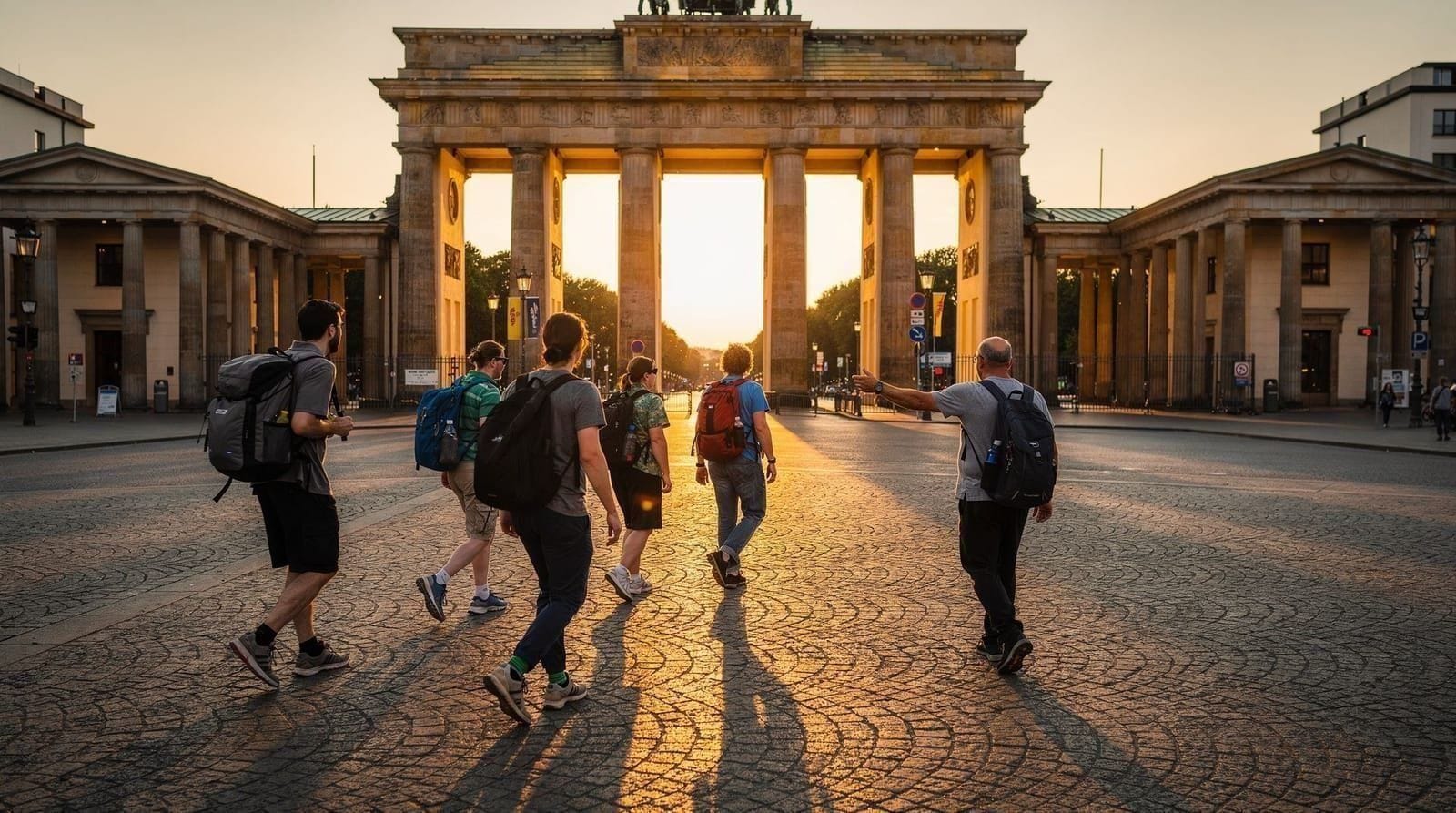
Brandenburg Gate — the symbolic divided-city landmark and post-1989 reunification icon. Most tours start and finish here.
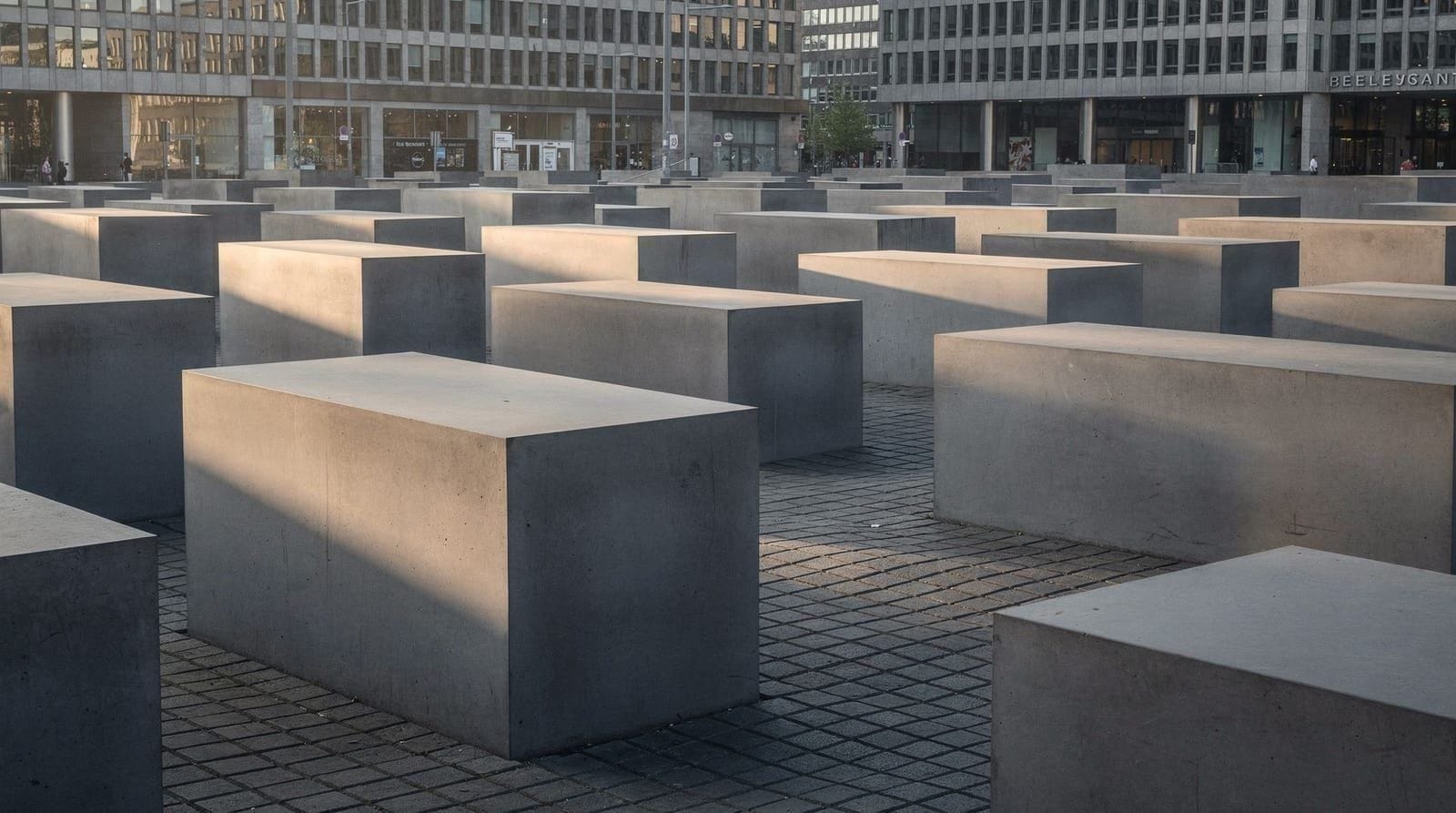
Holocaust Memorial (Memorial to the Murdered Jews of Europe) — the Peter Eisenman field of 2,711 concrete stelae. Usually visited on foot through the memorial with some guidance on its design controversy and intention.
Topography of Terror — the former Gestapo and SS headquarters site, now a free open-air documentation centre. Usually a 15-20 minute stop on free tours; could justify 1-2 hours independently.
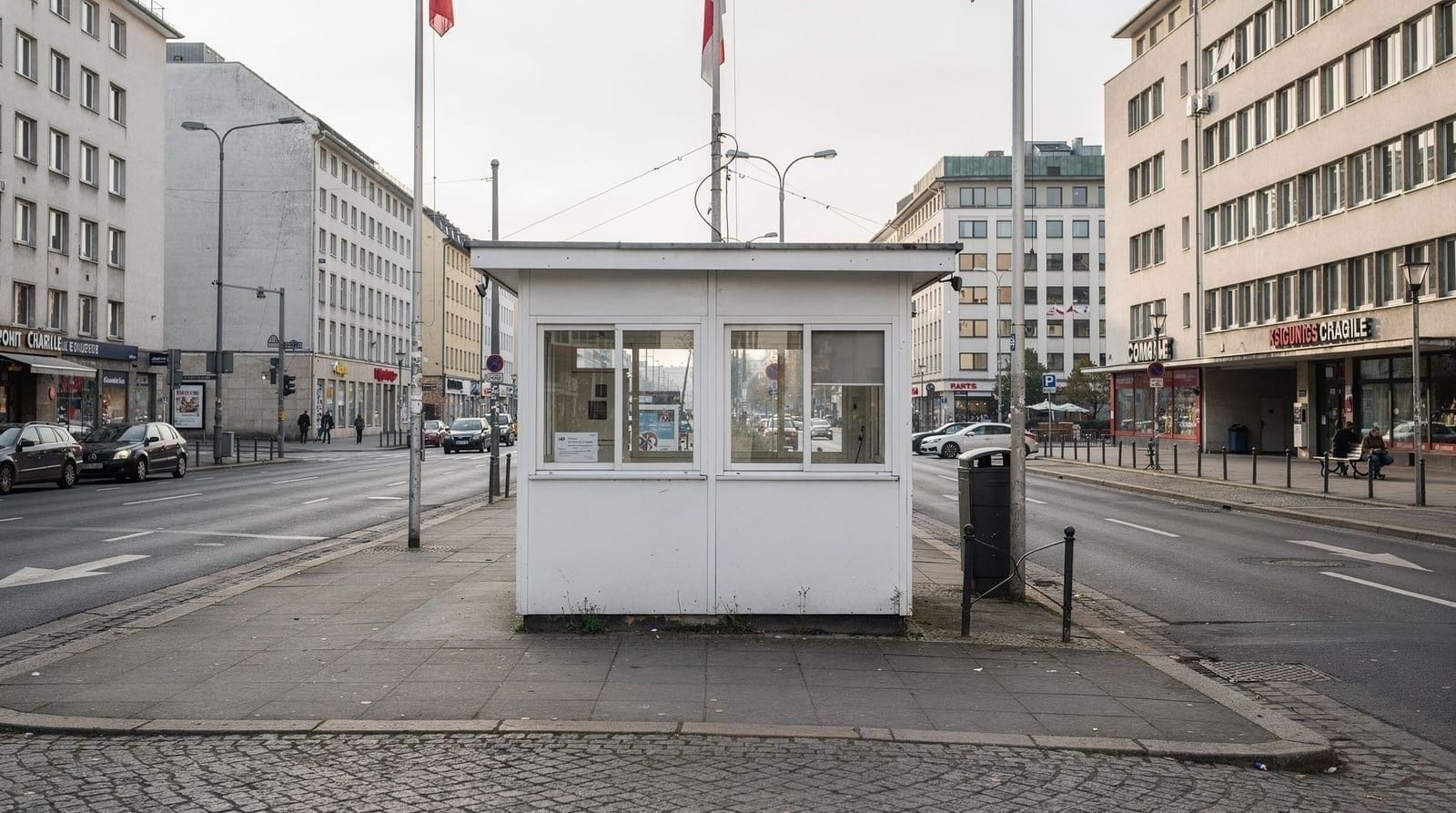
Checkpoint Charlie — the most famous crossing point, with honest guides explaining what’s original (very little) and what’s commercial fabrication (quite a lot). See the Checkpoint Charlie guide for detailed history.
Museum Island vicinity — usually a walkby rather than entry, given the admission costs.
The Holocaust Memorial stop is typically brief — enough to understand the design intent but not enough to sit with it. If the memorial affects you and you want more context afterwards, the Holocaust Memorial guide covers the underground information centre most tours skip entirely. The same is true of the Topography of Terror stop — see the Topography of Terror guide for why the outdoor documentation deserves a longer, independent visit.
Excellent guides supplement these sites with the stories of specific individuals — border crossers, resistance members, ordinary citizens affected by division — rather than staying at a macro-historical level. The difference between a good free tour and a mediocre one is usually this: whether the guide makes history feel specific and human.
The main operators and their differences
Sandeman’s New Europe Tours
The largest and most recognisable name. Multiple departures daily from the Brandenburg Gate south colonnade area (near the Starbucks). The 10am, 12pm, and 2pm tours run every day including public holidays in summer. The morning tour attracts smaller groups.
Sandeman’s guides are required to complete a training programme before leading tours independently. Quality still varies significantly by individual, but the floor is higher than with some smaller operators. The best Sandeman’s guides are excellent; the average ones are competent.
Meeting point: South side of Brandenburg Gate, near the Starbucks entrance.
New Berlin Tours
The other major player. Similar format to Sandeman’s, also departing from the Brandenburg Gate area on a competing schedule. Slightly smaller groups than Sandeman’s on average. Also runs themed tours (Third Reich, Cold War) for tips or a small fixed fee.
Brewer’s Berlin Tours
Smaller operator with a stronger reputation for quality over volume. Groups capped at lower numbers than Sandeman’s. The founder (Terry Brewer) is a long-standing Berlin guide and historian. Tours have a more depth-focused approach. Slightly older demographic of participants.
Meeting point: Prenzlauer Berg base, further from the tourist centre — which self-selects for participants who’ve done their research rather than spontaneous walk-ups.
Alternative Berlin Tours
Tips-based tours specifically focused on the alternative, countercultural, and underground aspects of the city — Kreuzberg squatter history, graffiti and street art, LGBTQ+ history, techno culture. These attract a different demographic to the mainstream history tours. Not suitable for visitors primarily interested in WWII or Cold War history. The route overlaps significantly with the Kreuzberg neighbourhood guide, worth reading beforehand if you want to recognise the streets independently afterwards.
Operator comparison
| Operator | Group size | Focus | Meeting point |
|---|---|---|---|
| Sandeman’s New Europe | 20–50+ | Standard city overview | Brandenburg Gate south colonnade |
| New Berlin Tours | 20–40 | Standard + themed tours | Brandenburg Gate area |
| Brewer’s Berlin Tours | 8–20 | Depth over coverage | Prenzlauer Berg base |
| Alternative Berlin Tours | 10–25 | Countercultural, street art, techno | Varies, usually Mitte/Kreuzberg |
The tip conversation: what guides actually say and mean
Most free tour guides do not directly state a tip amount during the tour. At the end, they typically say something like “if you enjoyed the tour, feel free to leave a tip — it’s how I make my living.” This understated closing is a professional choice, not an indication that tips are optional.
The effective rates:
€5: Signals you attended but weren’t particularly engaged. Guides will remember this (briefly) and it’s acceptable if the tour was below expectations.
€10: The lower-end appropriate amount for a solid 3-hour tour. Standard for budget travellers who are value-conscious but fair.
€15: The mid-range tip for a good, engaging tour. Comfortable for most travellers.
€20: Appropriate for an excellent guide who told stories you hadn’t heard, navigated your group’s questions thoughtfully, and gave 3 hours of genuine intellectual engagement.
€0: Only justified if the guide was actively wrong, misleading, or unprofessional. In practice, this is extremely rare. Do not conflate a competent-but-not-spectacular tour with a tip-worthy performance and a bad tour.
Tipping in cash (€5 and €10 notes) is the easiest format. Some guides have card readers now, but cash is expected.
Free tours vs paid tours: when to choose each
Free tours make most sense for:
- First-time Berlin visitors who want geographical orientation
- Budget travellers (the €10-20 tip still represents good value vs a €20+ paid tour)
- Solo travellers who want a social activity alongside the historical content
- Visitors with flexible schedules who can show up without pre-booking
Paid tours (€15-30) make more sense for:
- Visitors who want small groups (free tours can hit 50+ people in peak season)
- Visitors with specific interests (Cold War, Jewish history, architecture) where a specialist guide with verified credentials is preferable
- Second visits, where the broad city overview has been covered and depth is the priority
- Visitors with hearing difficulties (large-group free tours can make audio guides or hearing loops necessary)
Themed free tours worth knowing about
Beyond the standard city highlights tour, Berlin operators offer tip-based themed tours on specific topics:
Third Reich and Nazi history free tours: Several operators run tips-based tours covering Hitler’s Berlin — Topography of Terror, Führerbunker site, Bebelplatz, Neue Wache memorial. Some of the best historical guides in Berlin work on these tours precisely because the material rewards depth of knowledge.
Cold War free tours: Covering the Wall, Checkpoint Charlie, Bernauer Strasse, and East Berlin sites. See the Cold War Berlin history guide for the historical framework.
Alternative Berlin free tours: Kreuzberg street art, squatter history, underground culture. More relaxed in tone than history tours. Usually afternoon departures.
Prenzlauer Berg neighbourhood tours: Some operators offer local neighbourhood tours focusing on the gentrification, Jewish history, and everyday life of specific districts — less grand monument tour, more texture.
Practical information for free walking tours
When to arrive: Arrive at the meeting point 5-10 minutes early. For popular afternoon tours in summer, guides often use coloured umbrellas or signs to identify their group amid multiple overlapping tours at the same location.
Duration: 2.5-3 hours for standard city tours. Themed tours vary from 2 to 4 hours. Free tours almost never end exactly on time — factor this into your day.
Distance walked: 5-7 km typical for a Mitte city tour. Wear comfortable shoes. Cobblestone surfaces are common throughout the historic centre.
Language: English is the dominant language for free tours. Most operators also offer German-language tours, and some have French and Spanish options. Confirm language at booking.
Weather: Tours run in rain unless lightning is present. Bring a compact rain jacket in shoulder season. In summer heat, bring water — guides rarely stop at cafes.
Photography: Guides usually pause at photogenic spots but do not slow down for every individual photographer. If you want to spend time at the Holocaust Memorial or Topography of Terror for photography, plan to return independently after the tour.
What free tours cannot replace
A free walking tour is an orientation tool. It covers a lot of ground quickly with a narrative arc. What it cannot do:
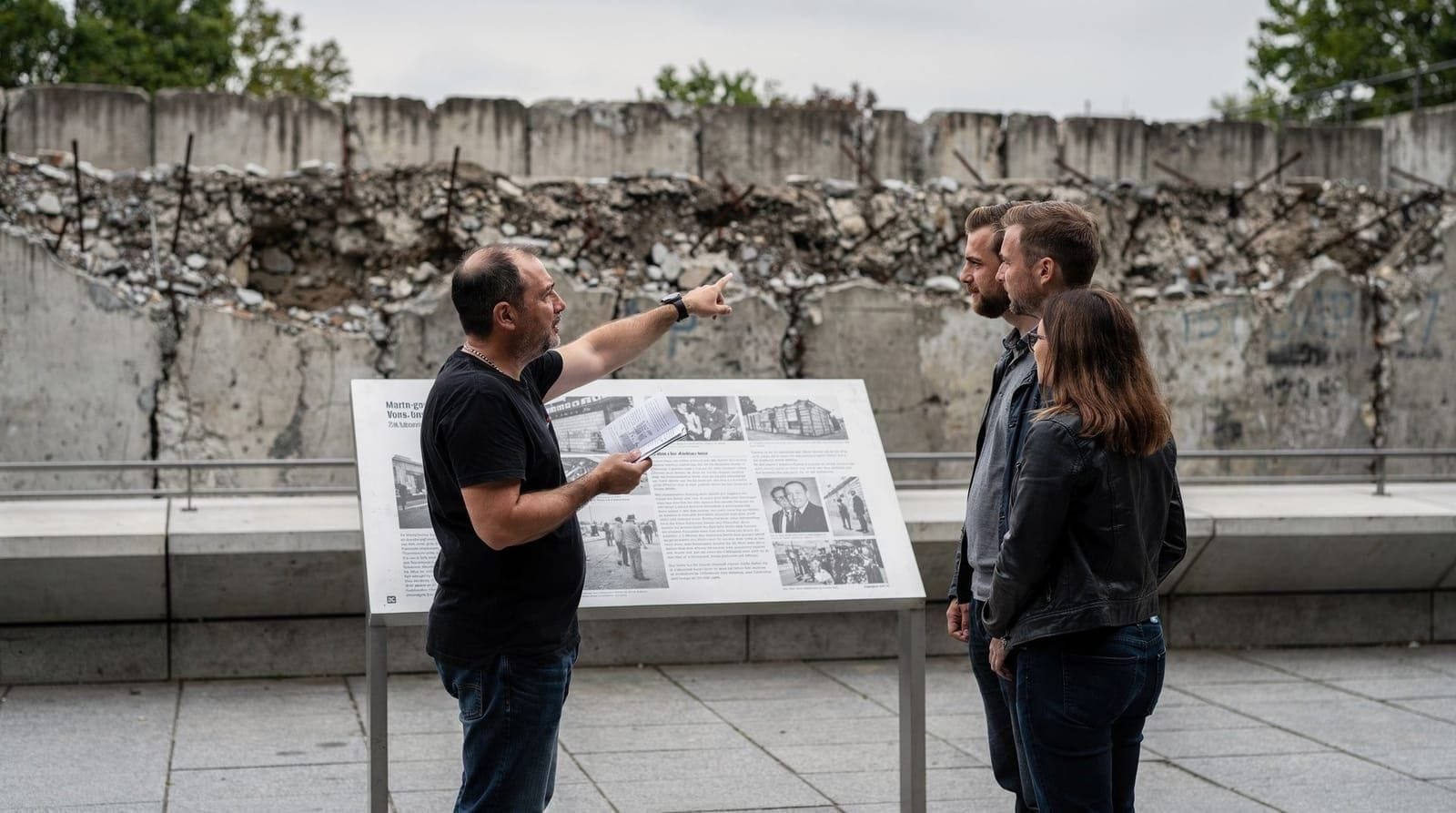
- Spend 1-2 hours at the Bernauer Strasse Wall Memorial documentation centre (the most substantive Cold War site in the city). See Berlin Wall Memorial guide.
- Give in-depth treatment to a single period or site. The Topography of Terror, for example, deserves a dedicated 1.5-2 hour visit. Free tours give it 15 minutes.
- Allow spontaneous detours based on group interests.
The ideal Berlin first day: free tour in the morning for orientation, then revisit specific sites independently in the afternoon with the spatial knowledge you’ve gained. For how this fits a broader multi-day plan, see the Berlin trip planning guide, and for budget-conscious visitors weighing tips against paid alternatives, the Berlin budget guide covers where a free tour genuinely saves money versus where it doesn’t.
If you want a broader survey of every tour format in the city — not just free tours — the Berlin walking tours guide and best tours for first-timers cover paid options in more depth, while Berlin private tours is the reference if a group tour of any size doesn’t suit you.
Berlin: City Center Walking Tour — paid alternative with a tight route through Mitte’s most significant sites, good for visitors who want structure without the tip pressure
Frequently asked questions about Berlin free walking tours
Who runs the best free walking tours in Berlin?
Sandeman's New Europe Tours is the largest operator with multiple daily departures from Brandenburg Gate. New Berlin Tours (SANDEMANs' original German competitor) also operates from the same area. Smaller operators like Brewer's Berlin Tours and Alternative Berlin offer tip-based tours with smaller groups, sometimes better suited to visitors who want depth over coverage. Quality depends heavily on the individual guide rather than the operator brand.How much should I tip on a free walking tour in Berlin?
The standard expectation is €10-20 per person. For a 3-hour tour with a knowledgeable, engaging guide who told stories you couldn't find in a guidebook — €20 per person is appropriate. For a competent but unexceptional tour — €10-15. For a tour you found poor quality — still tip something; the guide spent 3 hours working. Nothing is never appropriate unless the guide was actively offensive or misleading.What does a free walking tour in Berlin cover?
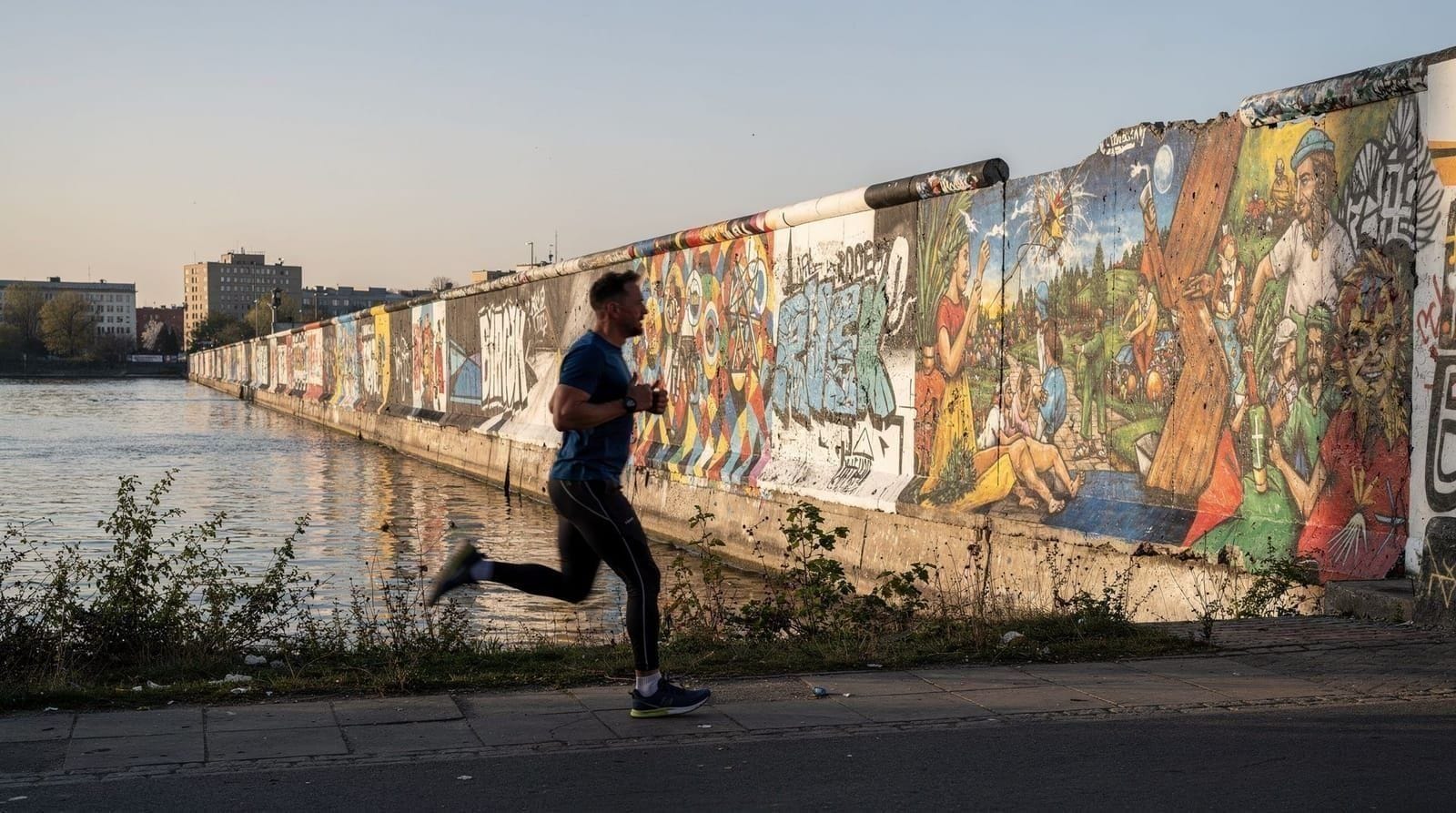
Standard free tours cover the central Mitte sites — Brandenburg Gate, Holocaust Memorial, Topography of Terror area, Checkpoint Charlie, and Museum Island — over approximately 3 hours and 5-6 km on foot. Some extended tours add the East Side Gallery or Mauerpark. Themed free tours cover specific topics including Third Reich history, Cold War sites, or alternative Berlin (Kreuzberg/Prenzlauer Berg).Do I need to book free walking tours in advance?
For walk-up free tours (Brandenburg Gate), no booking is required, though registering online can help guides plan. For specific themed free tours, capacity may be limited and online registration is useful. In peak summer (July-August), the popular 12pm and 2pm tours attract very large groups. Booking ensures you're counted but doesn't reduce group size.How large are the groups on Berlin free walking tours?
Sandeman's and New Berlin Tours regularly attract groups of 30-50 people in peak summer, especially for the 12pm and 2pm tours. The 10am tour is typically smaller. Alternative operators run smaller groups of 8-20 as a feature of their service. Large groups make it physically difficult to hear and impossible for interactive conversation with the guide.Are free walking tours appropriate for solo travellers?
Free tours are particularly popular with solo travellers — they provide a structured social activity, a chance to meet other travellers, and geographical orientation in a new city. Most solo travellers in Berlin join a free tour within their first day. The social element is as valuable as the historical content for many.What is the difference between a free tour and a paid walking tour in Berlin?
Free tours typically have larger groups, more variable quality (entirely guide-dependent), and broader coverage. Paid tours (€15-25) generally cap group sizes, provide more consistent guide quality, and allow more time per site. The content depth in paid tours is usually greater. If you want orientation, a free tour works well. If you have specific interests or want smaller groups, pay for a specialist tour.Can I revisit a site independently after a free walking tour?
Yes, and it's often the best strategy. Free tours give sites like the Holocaust Memorial or Topography of Terror only 15-20 minutes; returning independently afterwards, once you know the layout and history, lets you spend the time the site actually deserves.Do free walking tour guides get paid a salary?
No. Guides are independent contractors who pay a daily or weekly pitch fee to the operator for the right to use branding and meeting points. Their income is entirely tips minus that fee, which is why tipping fairly matters more than on a standard paid tour.
Top experiences
Bookable activities with verified prices and instant confirmation on GetYourGuide.