Tiergarten Berlin — the complete guide to Berlin's central park
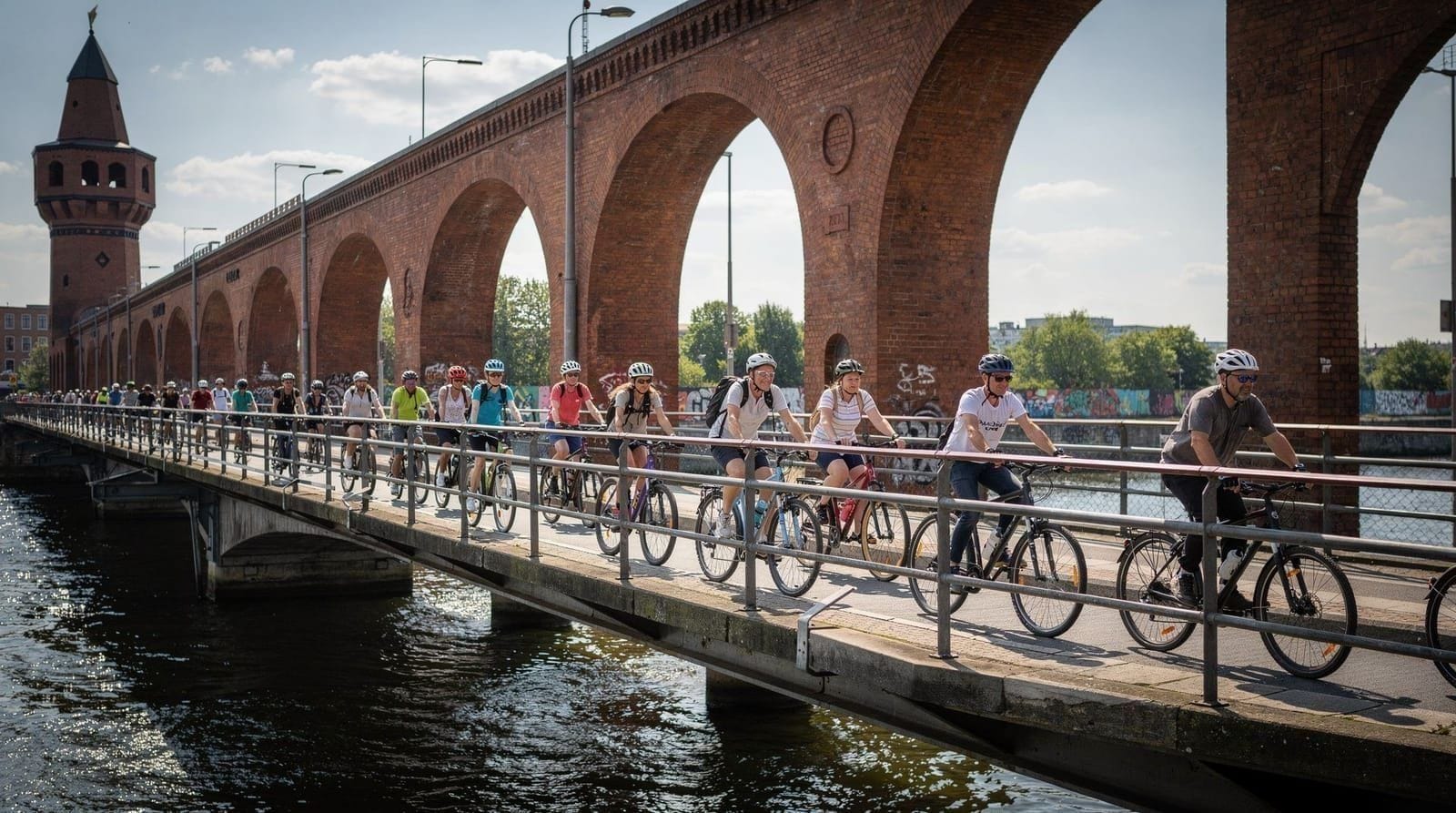
Berlin: Green City Guided Bike Tour
Is Tiergarten worth visiting in Berlin?
Yes — Tiergarten is Berlin's largest and most historically significant park at 520 hectares, and entry is completely free. The Siegessäule Victory Column (€4, 285 steps) gives one of the best city panoramas. The Café am Neuen See beer garden is one of the most pleasant outdoor spots in the city. The Soviet War Memorial, Rose Garden, and government quarter architecture add further depth. Half a day is enough for a relaxed visit; a full day lets you cover it properly.
Is Tiergarten worth visiting in Berlin? Yes — Tiergarten is Berlin’s largest and most historically significant park at 520 hectares, and entry is completely free. The Siegessäule Victory Column (€4, 285 steps) gives one of the best city panoramas. The Café am Neuen See beer garden is one of the most pleasant outdoor spots in the city. The Soviet War Memorial, Rose Garden, and government quarter architecture add further depth. Half a day is enough for a relaxed visit; a full day lets you cover it properly.
| Where | Central Berlin, between Brandenburg Gate and Charlottenburg |
| Cost | Free entry; Siegessäule around EUR 4, rowboats around EUR 17/hour |
| Time needed | Half a day for the highlights, a full day to cover it properly |
| Getting there | S-Bahn to Tiergarten station, U55 to Bundestag, or bus 100/200 |
| Best time | Late May–June for roses, weekday mornings to avoid crowds |
What Tiergarten actually is — and why it matters
Tiergarten is the green lung at the geographic heart of Berlin. At 520 hectares, it is larger than New York’s Central Park (341 ha) or London’s Hyde Park (142 ha). It stretches roughly 5 kilometres east-west and up to 1.5 kilometres north-south across the Mitte and Tiergarten districts, sitting between the Brandenburg Gate in the east and the Charlottenburg district in the west.
The name translates literally as “animal garden” — a clue to its origins. Tiergarten began as a royal hunting ground in the 16th century, used by the Hohenzollern court for deer and boar hunts. It remained walled and private until Frederick the Great opened sections to the public in 1740. The transformation into something recognisable today came in 1833-1840, when Peter Joseph Lenné redesigned it as an English-style landscape garden — the meandering paths, the artificial lakes, the strategic plantings of specimen trees — replacing the formal baroque symmetry that had preceded it.
That Lenné design is the foundation of what you walk through today, but it almost did not survive. By the end of the Second World War, Tiergarten was a wasteland. Allied bombing and Soviet artillery had destroyed most of the canopy. Then, in the desperate winter of 1945-46, Berliners stripped the remaining trees for firewood. Contemporary photographs show a treeless plain. The replanting began in 1949, largely funded by West German cities — each donated saplings, and the park grew back over the following decades from a completely new planting.
Knowing that context changes how you experience Tiergarten. The mature oaks and linden trees that now feel timeless are, at most, 70-75 years old. The park is a post-war reconstruction as much as a historic garden.
The Siegessäule — Berlin’s most photographed monument inside the park
The Siegessäule (Victory Column) stands at the centre of Tiergarten at the large roundabout called the Großer Stern. It is hard to miss: 67 metres tall, topped with a gilded bronze figure known to Berliners as “Goldelse” (Golden Lizzie), officially representing Victoria, the goddess of victory.
The column was built to commemorate Prussia’s military victories — the Danish War of 1864, the Austro-Prussian War of 1866, and the Franco-Prussian War of 1870-71. Each war is represented by a drum section of the column, built in stages. It originally stood in front of the Reichstag but was moved to its current location by Albert Speer in 1939 as part of Hitler’s plans for a redesigned Germania. The move and enlargement (Speer added a fourth drum section) gave it its current height.
Barack Obama’s 2008 campaign speech drew 200,000 people to this spot — one of the most watched moments in the park’s recent history. The visual of that crowd stretching down the Straße des 17. Juni towards Brandenburg Gate made Tiergarten briefly the backdrop for an event of global political significance.
Practical details for visiting:
- Entry to the column interior: €4 adults, €3 concessions
- Opening hours: Monday-Friday 9:30am-6:30pm, weekends and public holidays 9:30am-7pm (check seasonally, hours extend in summer)
- The climb: 285 steps, no lift. The staircase is narrow and winds tightly. Not suitable for visitors with mobility issues or claustrophobia
- The viewing platform sits at 51 metres — the column itself reaches 67 metres including the statue
- Interior mosaics line the base chamber and are worth a slow look before you start climbing — they depict scenes from the 19th-century wars in gold tesserae
- Best times: arrive before 11am or after 4pm to avoid tour group queues
Getting there: U55 to Bundestag (5 minutes’ walk through the park) or S5/S7/S9 to Tiergarten station (15 minutes’ walk west through the park). Bus 100 stops at the Großer Stern roundabout.
Café am Neuen See — the park’s best beer garden
The Café am Neuen See is the social heart of Tiergarten, set directly on the Neuer See lake on the southern side of the park. It is Berlin’s most atmospheric large beer garden, combining the lake setting with a proper food menu, rowboats for hire, and a crowd that mixes locals with visitors in a way that many central Berlin venues do not.
The café occupies a converted boathouse on the eastern shore of the Neuer See, with extensive outdoor terracing right at the water’s edge. Large willow trees trail into the water. In summer the scene — boats on the lake, beer steins on long wooden tables, ducks investigating the shallows — is genuinely idyllic and very unlike the urban surroundings just beyond the treeline.
Food and drink: The menu runs to Italian-influenced dishes — pizzas priced around €12-14, pasta €11-13, salads €8-10, and a standard selection of Berlin beers on tap. Service can be slow when the terrace is full; this is not a place to come for a quick lunch. The vibe is long afternoons rather than fast turnover.
Rowboat rental: €17 per hour for a standard rowing boat accommodating 2-4 people. Boats are available at the adjacent boathouse. No experience needed — the lake is calm, enclosed, and shallow. This is one of the most affordable and enjoyable activities in central Berlin for couples, families, or small groups.
Hours: From 10am when weather permits. The beer garden does not open in cold or rainy conditions — this is genuinely weather-dependent, not just a seasonal policy. Check conditions before making a specific trip.
Address: Lichtensteinallee 2, 10787 Berlin.
Transport: S5/S7/S9 Tiergarten station (10 minutes’ walk south through the park) or U9 to Kurfürstenstrasse (15 minutes’ walk north).
For visitors combining Tiergarten with a bike tour, many guided cycling routes include a stop at or near the beer garden — the Berlin green city bike tour and Berlin city bike beer garden tour both pass through this part of the park:
Berlin: Green City Bike Tour — explore Tiergarten and the city’s parks by bike, with stops at key sites including the Siegessäule and beer garden Berlin: City Bike Tour with Beer Garden Stop — a relaxed cycling route through central Berlin with a scheduled beer garden visitThe Rose Garden — a free hidden highlight
The Rosengarten (Rose Garden) sits to the northeast of the park, immediately behind Schloss Bellevue on the Spree bank. It is one of Tiergarten’s most undervisited features, largely because it lacks the brand recognition of the Victory Column or the beer garden — yet it is genuinely beautiful in late May and June when the roses are in peak bloom.
The garden contains over 80 rose varieties in formal beds arranged around a central fountain. Entry is free at all times. The setting — with the Spree visible through the surrounding trees and the pale neoclassical facade of Schloss Bellevue forming the backdrop — is particularly photogenic in the morning light.
Bloom timing: roses typically peak in the second half of May and continue into early July, with a secondary flush in August-September. Mid-June is generally reliable for full colour.
Schloss Bellevue — presidential residence you can photograph but not enter
Schloss Bellevue (Palace Bellevue) is the official Berlin residence of the German President, occupying a prominent position on the northern edge of Tiergarten near the Spree. The palace was built in 1786 for Prince Augustus Ferdinand of Prussia and is Berlin’s oldest surviving neoclassical palace.
The building is not open to the public, and the grounds immediately around it are secured. However, you can walk the Spree bank path nearby and get clear views of the distinctive white-and-cream neoclassical facade from the river-side path. When the German flag is flying, the President is in residence.
The adjacent English Garden (Englischer Garten) section of Tiergarten — a separate, more formal garden area near the palace — is open to the public and provides the closest legitimate access to the palace’s immediate surroundings.
Soviet War Memorial — history at the Brandenburg Gate end
The Soviet War Memorial in Tiergarten (Sowjetisches Ehrenmal Tiergarten) stands at the eastern edge of the park, on Straße des 17. Juni, roughly 700 metres west of the Brandenburg Gate. It is free to visit and usually uncrowded — most Brandenburg Gate tourists walk right past it without stopping.
The memorial was built in 1945-46 to commemorate the 80,000 Soviet soldiers who died in the Battle of Berlin. It consists of a curved red granite colonnade, a large bronze statue of a Soviet soldier, and — the most striking element — two genuine Soviet T-34 tanks positioned symmetrically on either side of the entrance. These are real wartime vehicles, not replicas.
The memorial is technically inside what was West Berlin during the Cold War, an anomaly resulting from the post-war boundary drawing. Soviet guards maintained a 24-hour presence here throughout the division of the city — an odd situation in which Soviet soldiers were stationed inside West Berlin, accessible only via a designated Soviet military corridor. The guards were withdrawn after German reunification in 1990.
It is worth distinguishing this from the much larger Soviet War Memorial at Treptower Park in the east of the city, which contains mass graves and a vast figurative statue that dwarfs the Tiergarten version.
Cycling through Tiergarten — the practical reality
Tiergarten has an extensive network of designated cycling paths through its interior. Cycling is permitted on these marked paths and on the main roads through the park; cycling on the pedestrian footpaths is not permitted, though enforcement is inconsistent.
The main east-west cycling axis follows a route parallel to (but separate from) the Straße des 17. Juni, the broad ceremonial boulevard that runs straight from the Brandenburg Gate to the Siegessäule. This provides a fast, flat, car-free cycling corridor across the park.
For visitors who want to explore the park and broader city by bike, the dedicated bike tour options are worth considering — particularly the guided green city route that combines Tiergarten with other Berlin parks:
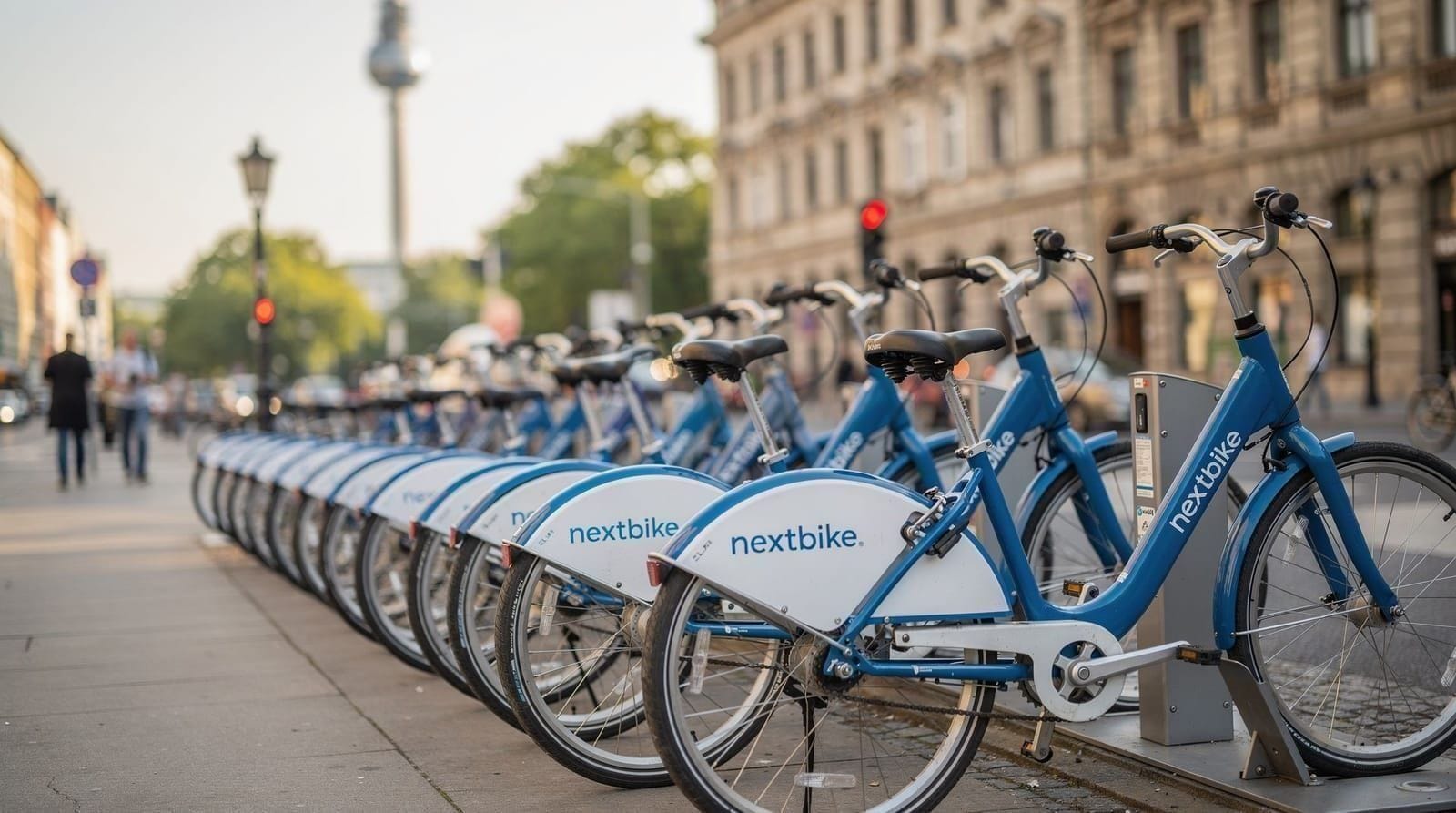
Berlin: Guided Bike Tour to Explore the Highlights — a comprehensive cycling route covering Tiergarten, the government quarter, and key city sites Berlin: Small Group Bike Tour of the City Centre — small-group guided cycling covering Tiergarten and central Berlin, max 12 participantsIf you prefer to explore independently, Berlin has a dense network of bike rental stations. See the full breakdown in the Berlin bike rental guide and the Berlin bike tours guide for an overview of guided options.
The Berlin self-guided walk highlights route also passes through the eastern section of Tiergarten near the Brandenburg Gate and Soviet Memorial, making it easy to incorporate a park section into a broader city walk.
Getting to Tiergarten — transport options
Tiergarten is well served by public transport from all directions, though the park is large enough that the right stop depends on where you want to go.
By S-Bahn: Lines S5, S7, and S9 stop at Tiergarten station (exit onto the southern edge of the park near the Neuer See and Café am Neuen See). This is the best option for the beer garden and the Schloss Bellevue end of the park.
By U-Bahn: U55 to Bundestag station puts you immediately adjacent to the government quarter and a short walk from the Siegessäule (Großer Stern). This is also the closest underground stop to the Soviet War Memorial. Note that U55 is a very short line (three stations) currently; check the current extension status as the U5 extension was completed in late 2020, connecting it through to Alexanderplatz.
By bus: Routes 100 and 200 are the main tourist bus routes through central Berlin, running along the Straße des 17. Juni through the park. They stop at the Siegessäule (Großer Stern) and connect the Brandenburg Gate area with Charlottenburg in the west. These routes pass most of the main Tiergarten sights.
On foot: Tiergarten is easily walkable from the Brandenburg Gate (eastern entrance to the park). From the gate to the Siegessäule along the Straße des 17. Juni is about 2.2 km. From the gate to Café am Neuen See is approximately 2 km walking through the park interior.
By boat: The Spree passes along the northern edge of Tiergarten. Several Berlin boat tour routes pass this section of river, offering views of Schloss Bellevue and the parkland from the water.
Tiergarten in summer — what to expect
Summer is the park’s peak season and it can get genuinely busy on warm weekend afternoons. The Café am Neuen See terrace fills quickly on days above 24°C — arrive before noon or after 4pm if you want a table without a long wait.
The park’s interior paths and clearings become informal picnic grounds throughout summer. Berliners treat Tiergarten much like Londoners treat Hyde Park — rugs, portable speakers, barbecues in designated areas, extended afternoon sessions. The atmosphere is relaxed and decidedly local, particularly away from the main tourist axis along Straße des 17. Juni.
For a full picture of what to do in Berlin across the summer months, see the Berlin in summer guide, which covers open-air events, lakes, and seasonal programming beyond Tiergarten itself.
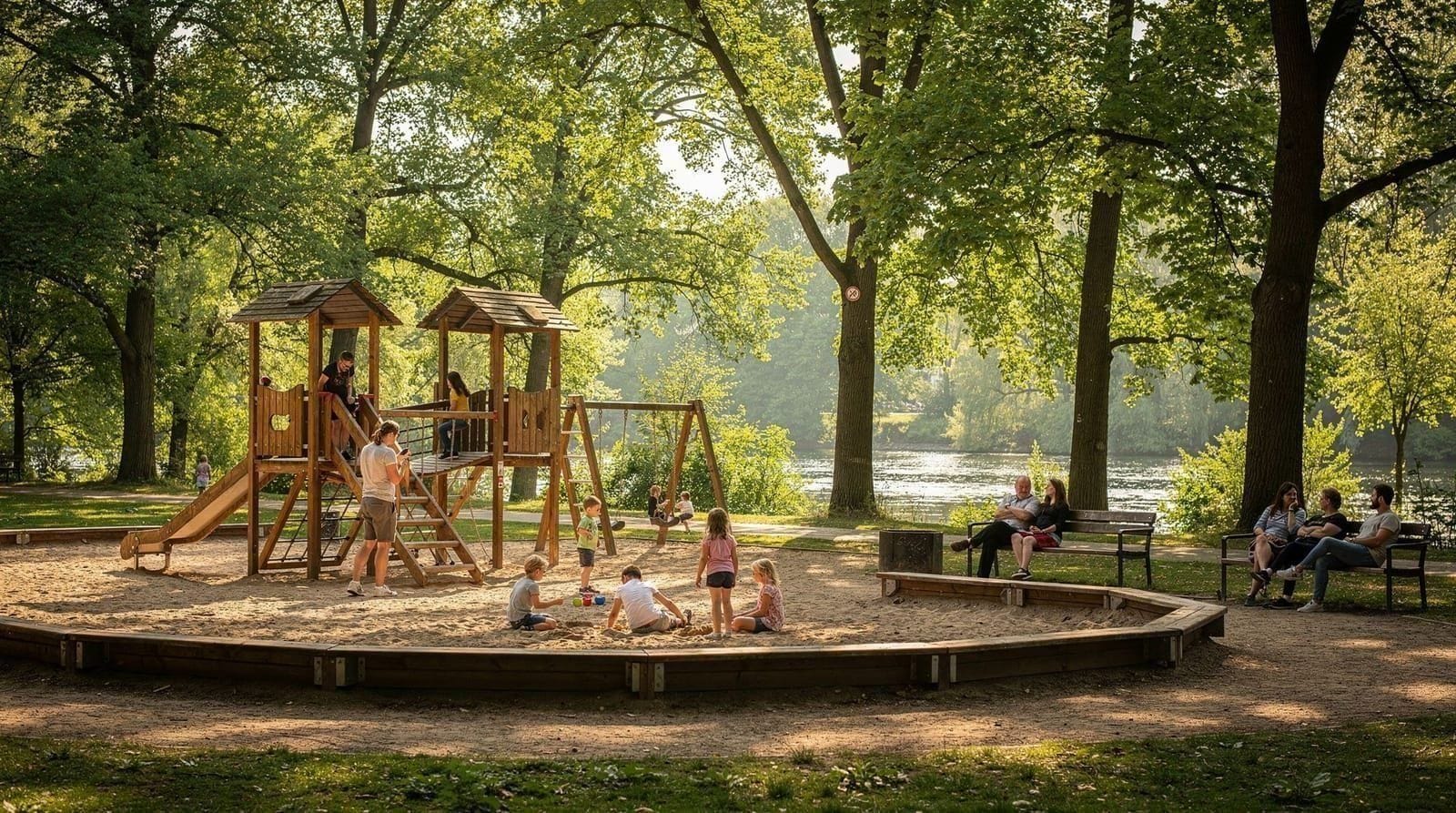
For visitors with children, the Tiergarten family guide covers playgrounds, kid-friendly routes through the park, and the rowboat question in more detail. The broader Berlin with kids guide puts Tiergarten in the context of the city’s family-friendly offer.
One genuine tourist trap to note: the souvenir stalls clustered around the Siegessäule base sell generic Berlin memorabilia at prices 40-60% above what you would pay in the city’s supermarkets or proper gift shops. There is nothing exclusive sold here. If you want a magnet or a piece of Wall, the stands at the East Side Gallery or the shops around Hackescher Markt offer better quality at lower prices.
Tiergarten in brief — seasonal calendar
January-February: The park is quiet. Bare trees reveal the underlying Lenné landscape structure clearly. Good for photography without crowds. Beer garden closed.
March-April: First flowering begins. The meadow sections near the Neuer See have early bulbs (snowdrops, crocuses) from late February. Cherry blossom typically peaks in April — the trees along the park’s southern paths are a draw for photography.
May: The park’s best month. Roses beginning to bloom, café terrace opens, long daylight hours, school groups not yet at peak. The Rose Garden is often at its best in late May.
June-August: Peak season. Café am Neuen See at maximum capacity on warm days. Rowboats busy. The Siegessäule queue longest in July-August (arrive early). Combine with Berlin in summer events.
September-October: Autumn foliage from mid-September. Crowds thin noticeably after late August. Beer garden continues if weather holds. Golden light for photography.
November-December: Park largely quiet. Some frost and fog days are exceptional for atmosphere. The Christmas market at the Spandauer Damm end of the park (near Charlottenburg) draws visitors to the western edge.
Tiergarten as part of a broader Berlin itinerary
For first-time visitors, Tiergarten works naturally as part of a Brandenburg Gate — Government Quarter — Tiergarten circuit that can be done in an afternoon. The Berlin self-guided walk highlights route structures this efficiently.
For visitors on a short itinerary, the planned two-day Berlin itinerary and three-day Berlin itinerary both allocate a Tiergarten slot in the afternoon of the day covering the government district, which works logically given the geographic proximity.
For budget-conscious visitors: Tiergarten itself costs nothing. The Siegessäule at €4 is one of the cheapest ticketed views in the city. The Soviet War Memorial and Rose Garden are free. The main cost is food and drink at Café am Neuen See, which is fairly priced but not cheap (budget €20-25 per person for beer, food, and a rowboat hour split between two people). See the budget Berlin guide for broader cost-management strategies.
For those planning to continue south and west to Wannsee for swimming in summer, both destinations can be combined in a single day: morning in Tiergarten, afternoon by S-Bahn to Wannsee. The Grunewald forest guide covers the large forested area between Tiergarten and Wannsee that makes that western corridor of parks and water one of the most attractive green sequences in any European capital.
If you prefer to be guided through the area rather than navigate independently, the Berlin free walking tours page covers the various tip-based walking tour operators whose routes often include the Brandenburg Gate area and eastern Tiergarten edge.
The English Garden and Luiseninsel — quieter corners
Beyond the headline Siegessäule and beer garden, Tiergarten has several smaller set-piece gardens worth a detour. The English Garden (Englischer Garten), near Schloss Bellevue on the park’s northern edge, is a more formal landscaped section with specimen trees and open lawns — a gift-like echo of the naturalistic English style that inspired Lenné’s original design, and generally much quieter than the main east-west axis.
Luiseninsel, a small fenced garden island in the southwestern part of the park near the Zoo, is one of Tiergarten’s least-visited highlights. It contains statues of Queen Luise of Prussia and King Friedrich Wilhelm III, set among formal flowerbeds that are replanted seasonally. Most visitors walking the main paths never notice it exists, which is precisely its appeal for anyone wanting a few minutes of calm.
Scattered through the western half of the park is the Great Path of the Poets and Thinkers (Grosser Weg), lined with 32 marble statues of German poets, philosophers, and scientists — including Goethe, Wagner, and Humboldt — installed in the late 19th century under Kaiser Wilhelm I. Many are weathered and unlabelled in English, but they form an unexpected open-air sculpture gallery for anyone walking the interior paths rather than sticking to the main boulevard.
Ways to see Tiergarten compared
| Method | Time | Cost | Best for |
|---|---|---|---|
| Self-guided walk | 1–4 hours | Free | Flexible visitors who want to set their own pace |
| Guided bike tour | 2–3 hours | Paid tour price | Covering the whole park plus nearby sites efficiently |
| Independent cycling | 1–2 hours | Bike rental only | Visitors already comfortable navigating Berlin by bike |
| Boat trip past the park | 1 hour | Paid tour price | Seeing Schloss Bellevue and the Spree-side treeline from the water |
| Combined with government quarter walk | Half day | Free (except Siegessäule) | First-time visitors pairing history with green space |
Toilets, benches and practical facilities
Public facilities are concentrated around the park’s main hubs rather than spread evenly through the interior. The most reliable toilets are at Café am Neuen See and near the Siegessäule base (small fee at some kiosks, free for café customers). Benches are frequent along the main paths but sparser in the wooded interior — if you need a proper rest stop, aim for the lakeside path around the Neuer See or the seating around the Rose Garden. Drinking water fountains are limited; carrying a bottle is sensible in summer. The paths are largely flat and well-surfaced on the main boulevard and lakeside routes, though the smaller interior trails can be uneven gravel, which is worth knowing if you are using a wheelchair or a pushchair — see the Tiergarten family guide for pushchair-specific routing.
Bins are plentiful along the main paths, and the park is generally well kept given how heavily it’s used in summer. Mobile signal is reliable throughout, so navigation apps work fine even away from the main boulevard, which matters given how easy it is to lose your bearings among the winding interior paths — the tree canopy blocks the usual city landmarks you’d otherwise use to orient yourself.
Frequently asked questions about Tiergarten Berlin
Is entry to Tiergarten free?
Yes, the park itself has no entry fee and is open around the clock. The Siegessäule (Victory Column) inside the park charges €4 for adults and €3 for concessions to climb the column (285 steps, no lift). The Soviet War Memorial, Rose Garden, and all park paths are free. Rowboat rental at Café am Neuen See costs €17 per hour.How do I get to Tiergarten by public transport?
Several options depending on where in the park you want to go. S5, S7, or S9 to Tiergarten station drops you at the eastern end near the English Garden and Café am Neuen See. U55 to Bundestag is best for the Siegessäule and government quarter. Bus 100 and 200 run through the park along the main east-west axis (Straße des 17. Juni) and stop near the Victory Column — these are the same tourist routes that pass the Reichstag and Brandenburg Gate.How long does it take to walk through Tiergarten?
Tiergarten is 5 km long east-west and about 1.5 km wide at its broadest point. A brisk walk straight through takes about an hour. A proper exploration including the Siegessäule, beer garden, Soviet Memorial, and Rose Garden takes 3-4 hours. Most visitors spend a half-day and combine it with the nearby Brandenburg Gate, Reichstag, and government district.When is the best time to visit Tiergarten?
Late April to May is the best time if you want spring blossom — the park has cherry trees and flowering shrubs that peak in this window. June to August is peak beer garden season at Café am Neuen See, with tables filling quickly on warm afternoons. Autumn (September-October) offers golden foliage and fewer crowds. Winter is quiet and atmospheric but the beer garden closes in bad weather.Can I rent a rowboat at Tiergarten?
Yes. Rowboat rental operates at Café am Neuen See on the Neuer See lake, Lichtensteinallee 2. The rate is €17 per hour for a standard rowing boat accommodating 2-4 people. The café/beer garden is open from 10am when the weather permits. This is one of the most enjoyable and affordable activities in central Berlin — the lake is calm, shaded, and surrounded by willows.Is the Siegessäule (Victory Column) worth climbing?
Yes, with reservations. The 285-step climb costs €4 and the viewing platform at 51 metres (the column base plus the column itself reaches 67 metres total) gives genuine 360-degree views over the Tiergarten tree canopy, the Spree loop, and the government quarter. The interior mosaic panels are impressive up close. The drawback is that there is no lift, the staircase is narrow, and the viewing platform is small and gets crowded. Go early (before 11am) or late afternoon to avoid queues.Where exactly is the Soviet War Memorial in Tiergarten?
The Soviet War Memorial (Sowjetisches Ehrenmal Tiergarten) is at the eastern edge of the park, near the Brandenburg Gate, on Straße des 17. Juni. It is easily reached from the Brandenburg Gate on foot (about 700 metres west). The memorial consists of a curved colonnade, a bronze soldier statue, and — most unusually — two genuine Soviet T-34 tanks flanking the entrance. Entry is free. It is distinct from the larger Soviet memorial at Treptower Park.Are dogs allowed in Tiergarten?
Yes, dogs are welcome throughout Tiergarten and it is very popular with Berlin dog owners. Dogs must be kept on a lead in designated areas, though some sections allow them to run free. There are water points and waste bin stations distributed through the park. It is one of the most dog-friendly large parks in central Europe.
Top experiences
Bookable activities with verified prices and instant confirmation on GetYourGuide.