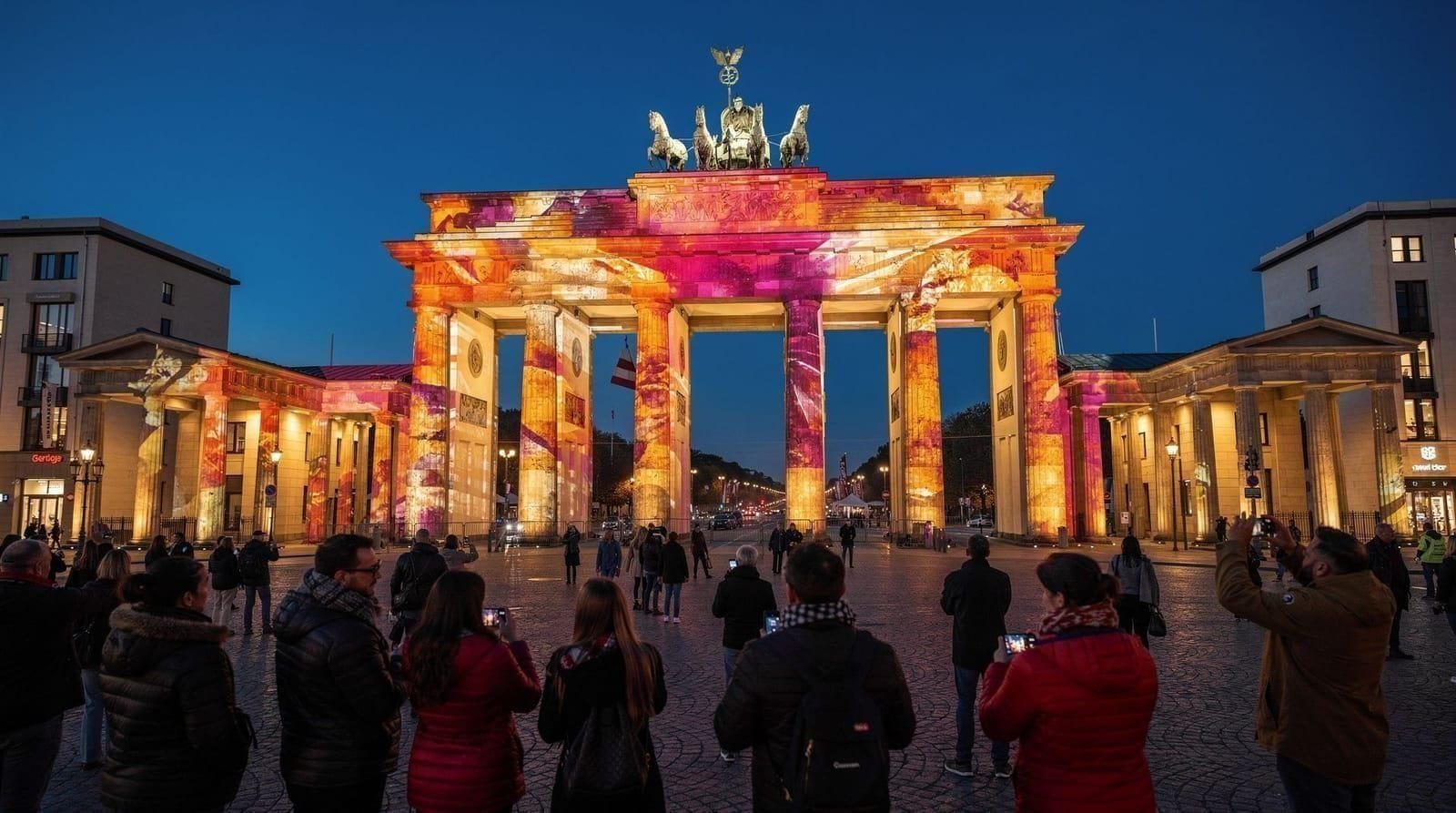
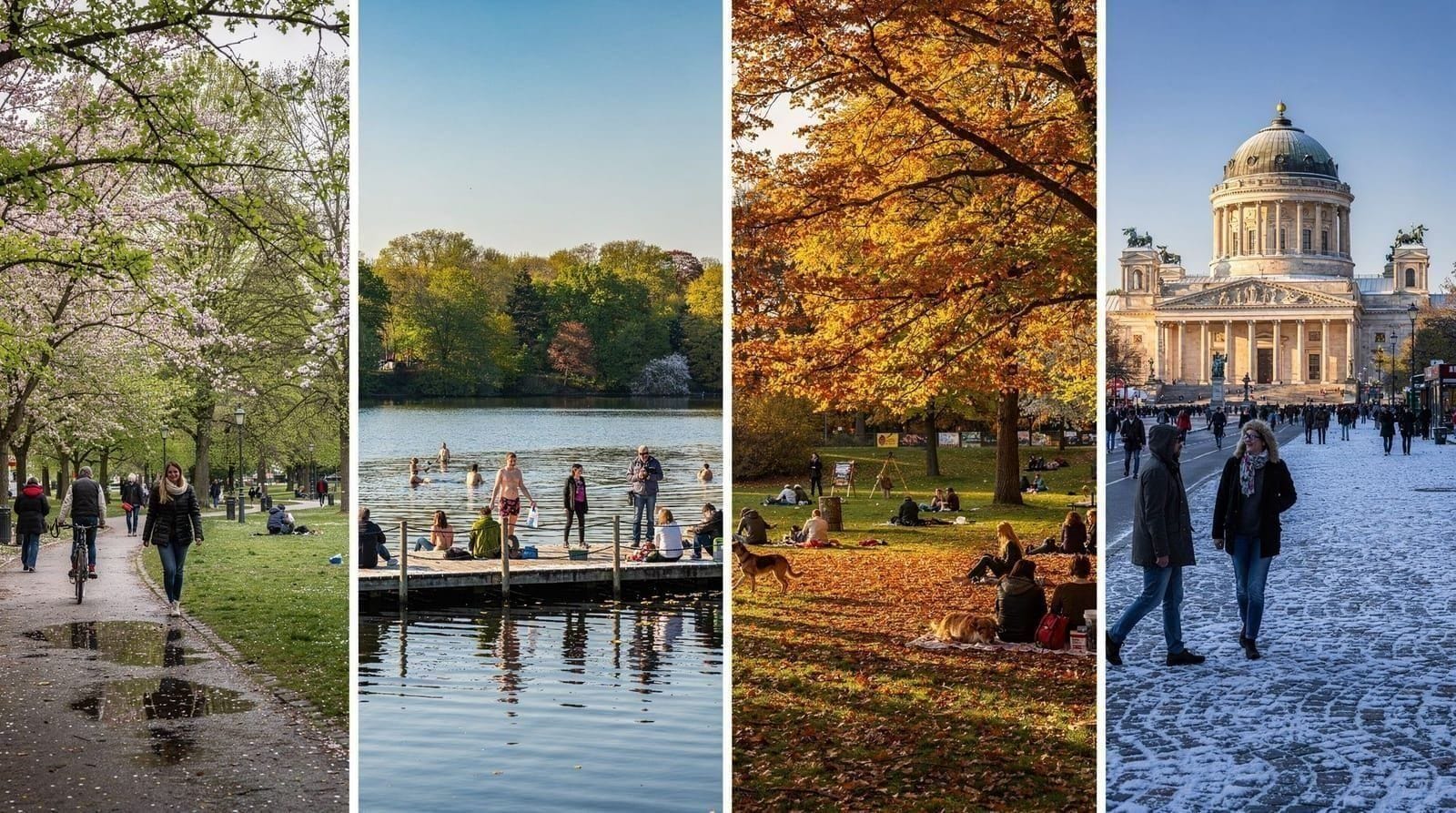
Berlin in summer — lakes, biergartens, festivals, and long days
Berlin: City Bike Tour with Beer Garden Stop
What is Berlin like in summer?
Berlin in summer (June–August) is warm, very long-daylight, and busy. Average temperatures are 22–26°C with occasional heat waves above 35°C. The city's lakes are genuinely excellent for swimming — Wannsee, Müggelsee, and Schlachtensee are accessible by S-Bahn. Biergartens open from April onward. The main downside is peak-season crowds and hotel prices at their annual high.
What is Berlin like in summer? Long days, warm temperatures, and the entire city moving outdoors. Berlin summers (June through August) bring 17+ hours of daylight at peak, genuine warmth (22–26°C average, with heat waves above 35°C), and a transformation of the city’s character. Parks, lakes, biergartens, outdoor stages, and rooftops fill. Museum Island queues lengthen. Hotel prices peak. Berlin in summer is excellent but requires more planning than the off-season — especially for accommodation and popular museum bookings.
| Temperature | 22–26°C average; heat waves above 35°C possible |
| Daylight | Up to 17 hours around the solstice |
| Hotel prices | 40–60% above winter lows; book 6–8 weeks ahead |
| Best for | Lakes, biergartens, outdoor festivals, long evenings |
| Watch out for | Museum queues, CSD-weekend price spikes |
Month-by-month at a glance
| Month | Weather | Crowds | Key events |
|---|---|---|---|
| June | Warming, 20°C avg | Rising | Karneval der Kulturen (late May–early June) |
| July | Hottest, 23–25°C avg | Peak | CSD (late July), Classic Open Air |
| August | Similar to July | Peak | Freiluftkino in full swing |
The summer rhythm of Berlin
Berlin’s transformation in summer is more pronounced than in most European capitals because the winter contrast is so stark. By late May, the terraces and biergartens are already filling. By July, the city is in full outdoor mode: the Spree quaysides in Mitte and Kreuzberg host impromptu gatherings, the Tempelhof airfield (a decommissioned airport converted into a park) fills with cyclists and picnickers, and the lakes on the city’s edges become de facto beaches.
Sunset at 9:30pm around the solstice means evenings feel different. Dinner at 8pm is still fully daylit. Berliners eat later, stay out later, and the distinction between afternoon and evening blurs. For visitors, this means more flexibility: outdoor sightseeing that would be impossible in winter at 4pm is perfectly viable.
The main practical constraints of summer: peak hotel prices (40–60% above winter lows), crowded museums, and the occasional heatwave for which most Berlin accommodation is poorly equipped. Very few Berlin hotel rooms have air conditioning below the four-star tier. If heat is a concern, check before booking.
The lakes — Berlin’s best-kept summer secret
Berlin sits in a landscape of glacial lakes and rivers. Within or immediately adjacent to the city limits, there are over 60 designated bathing lakes (Badegewässer) that the Berlin Senate monitors for water quality. This is one of the most underrated aspects of the city for summer visitors.
Wannsee (Großer Wannsee) is the most famous. The Strandbad Wannsee — a 1,275-metre beach with 1930s functionalist lido buildings — is Europe’s largest inland lido. It opened in 1907 and was redesigned in the 1920s. Entry is around €6 adults (€3 children). Accessible by S1 or S7 to Nikolassee, then a 10-minute walk (or S7 to Wannsee and tram). The beach fills on hot summer afternoons; arrive before noon or after 5pm to find reasonable space.
For historical context (the Wannsee Villa nearby hosted the 1942 conference on the Holocaust), see the Wannsee Conference memorial guide. The two sites — lido and memorial — are a 15-minute walk apart.
Müggelsee in Köpenick is Berlin’s largest lake (730 hectares). The S3 to Friedrichshagen brings you there in 40 minutes from the city centre. The atmosphere is more local and less touristy than Wannsee. The Strandbad Müggelsee on the south shore has a paying section (around €4); free entry points exist further along the shore. The surrounding Köpenick forest is good for walking.
Schlachtensee in Zehlendorf is smaller and more enclosed by forest — quieter and more natural-feeling. S1 to Schlachtensee. No lido; it’s a free, informal lake. Popular with families and locals.
Tegeler See in the northwest is less visited by tourists but accessible by bus 222 from U6 Alt-Tegel. A working harbour on the south end, quiet swimming beaches in the north.
Water quality across all four is consistently rated “excellent” by the Berlin Senate’s annual monitoring. Real-time water quality data is available at badeseen.berlin.de.
If lakes aren’t the priority and you’d rather spend a summer Sunday browsing outdoors, Mauerpark runs its famous flea market and open-air karaoke every Sunday through the season — a very different but equally quintessential Berlin summer experience.
Biergartens worth visiting
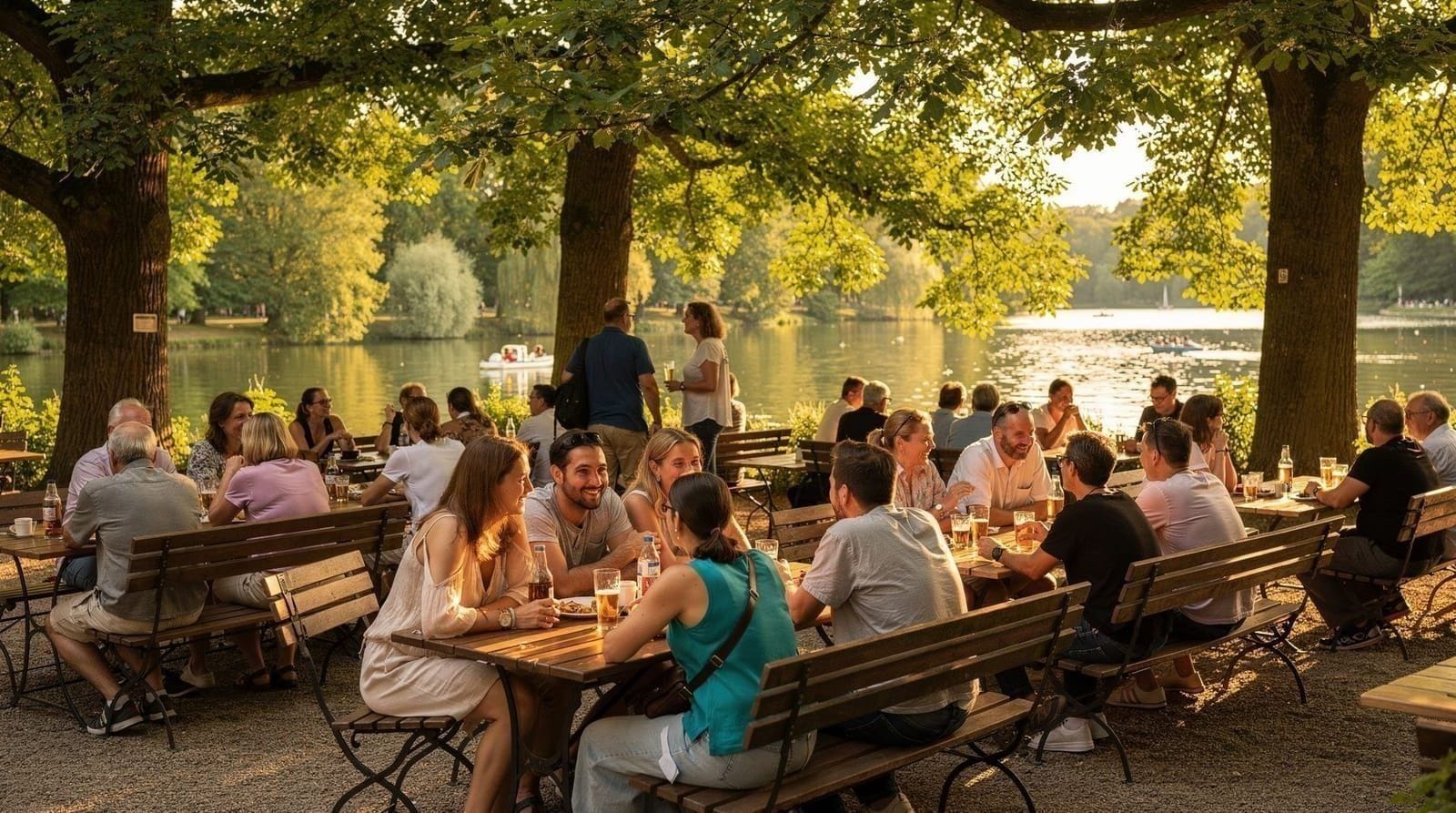
Berlin’s biergarten culture is not as elaborate as Munich’s, but it is authentic and widely spread across the city. The key distinction: Berlin biergartens tend to be more casual, less ceremonially Bavarian, and cheaper.
Prater Garten (Kastanienallee 7-9, Prenzlauer Berg) is the oldest biergarten in Berlin, established in 1837. 600 seats under horse-chestnut trees. A half-litre of Pils runs around €4.50. The kitchen serves simple German food. Opens from around 12pm when weather allows, April through October. Cash preferred. It’s a genuine neighbourhood institution rather than a tourist attraction.
Schleusenkrug (Tiergarten Schleuse, near the zoo) sits next to one of the Landwehrkanal locks in the middle of Tiergarten. You can watch boats being raised and lowered while you drink. Accessible from U2 Zoologischer Garten (15-minute walk through the park). One of the few large biergartens genuinely within easy walking distance of the centre. Pils around €4.80, large portions. It’s a good stop if you’re already spending an afternoon in the wider Tiergarten park, Berlin’s largest and greenest central space.
Loretta am Wannsee (Kronprinzessinenweg 260) is lakeside — beer with a lake view. Accessible by S1 to Nikolassee, then walk 5 minutes. Open from noon, closes at midnight in summer.
Zollpackhof (Elisabeth-Aue, near the Bundeskanzleramt) is immediately west of the government district and tends to attract a mix of government employees, tourists, and Berliners. Good spot after visiting the Reichstag area.
Berlin city highlights bike tour with biergarten stop — guided, 3.5 hoursOutdoor festivals and events
Summer in Berlin is dense with outdoor events. The most significant:
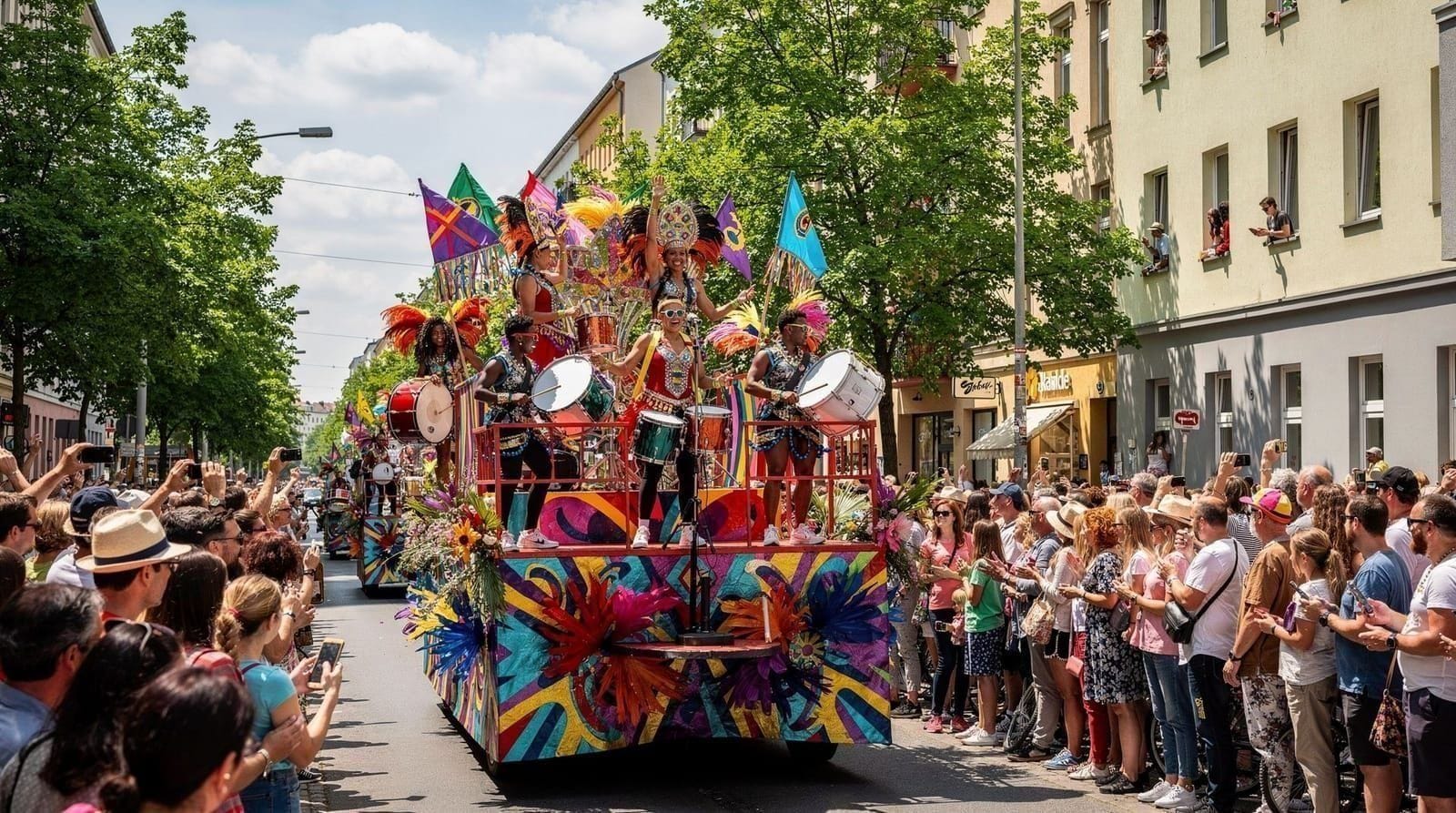
Karneval der Kulturen (late May to early June, Kreuzberg): a street carnival celebrating Berlin’s multicultural makeup. Four days culminating in a Sunday parade through Kreuzberg streets. Completely free to attend. The parade includes over 70 groups representing communities from dozens of countries. Crowds of 700,000+ attend over the four days. See the dedicated Karneval der Kulturen guide.
Christopher Street Day (CSD) (late July, Mitte/Tiergarten): Berlin’s Pride parade, one of Europe’s largest. The parade route runs through the city centre, typically finishing near the Brandenburger Tor. Around 500,000–1 million participants and spectators. Very crowded along the route; arrive early for any specific viewpoint. The surrounding days include club events, parties, and the Schöneberg district (historically the centre of Berlin queer life) is particularly active.
Freiluftkino (outdoor cinema): Multiple venues operate June through August. Freiluftkino Friedrichshain (Volkspark Friedrichshain, free deckchairs), Freiluftkino Rehberge (Wedding), and the Museumsinsel-adjacent screenings each have their own programmes. Tickets typically €8–11. Films are usually in original language (OV) or German — check listings.
Classic Open Air on Gendarmenmarkt (July): classical and crossover concerts in the open air between the Konzerthaus and the two cathedrals. Tickets €35–80. The setting is one of the most beautiful in the city.
Spree cruises and boat tours
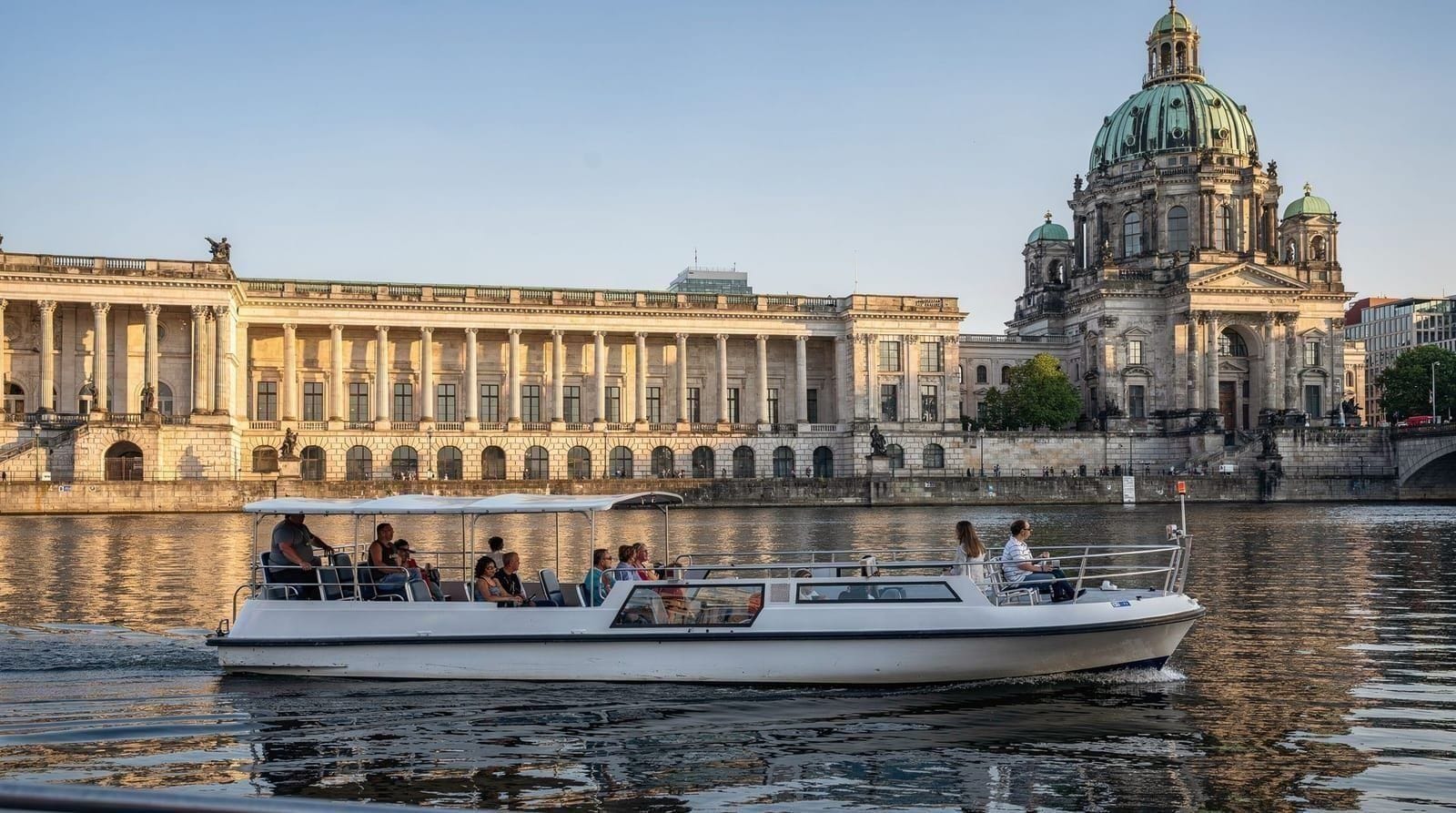
Summer is the natural season for boat tours on the Spree and the Landwehrkanal. Several operators depart from central points:
- Moltkebrücke (Mitte, north of the Hauptbahnhof): shorter city cruises and transfers
- Märkisches Ufer (Mitte): several operators, 1-hour tours common
- Friedrichstrasse landing stage (Weidendamm Brücke area): very central
Standard 1-hour cruises run €17–22. The 4-hour Landwehrkanal route through Kreuzberg and Tempelhof-adjacent waterways is slower-paced and better for seeing Berlin’s quieter waterscapes.
Berlin Spree 1-hour city sightseeing cruise — commentary in English and GermanEvening cruises on summer weekends (8pm–10pm departures) sell out regularly — book at least a week ahead. The Spree at sunset in July is genuinely atmospheric. See the full Berlin boat tours guide for operator comparison.
Cycling in summer
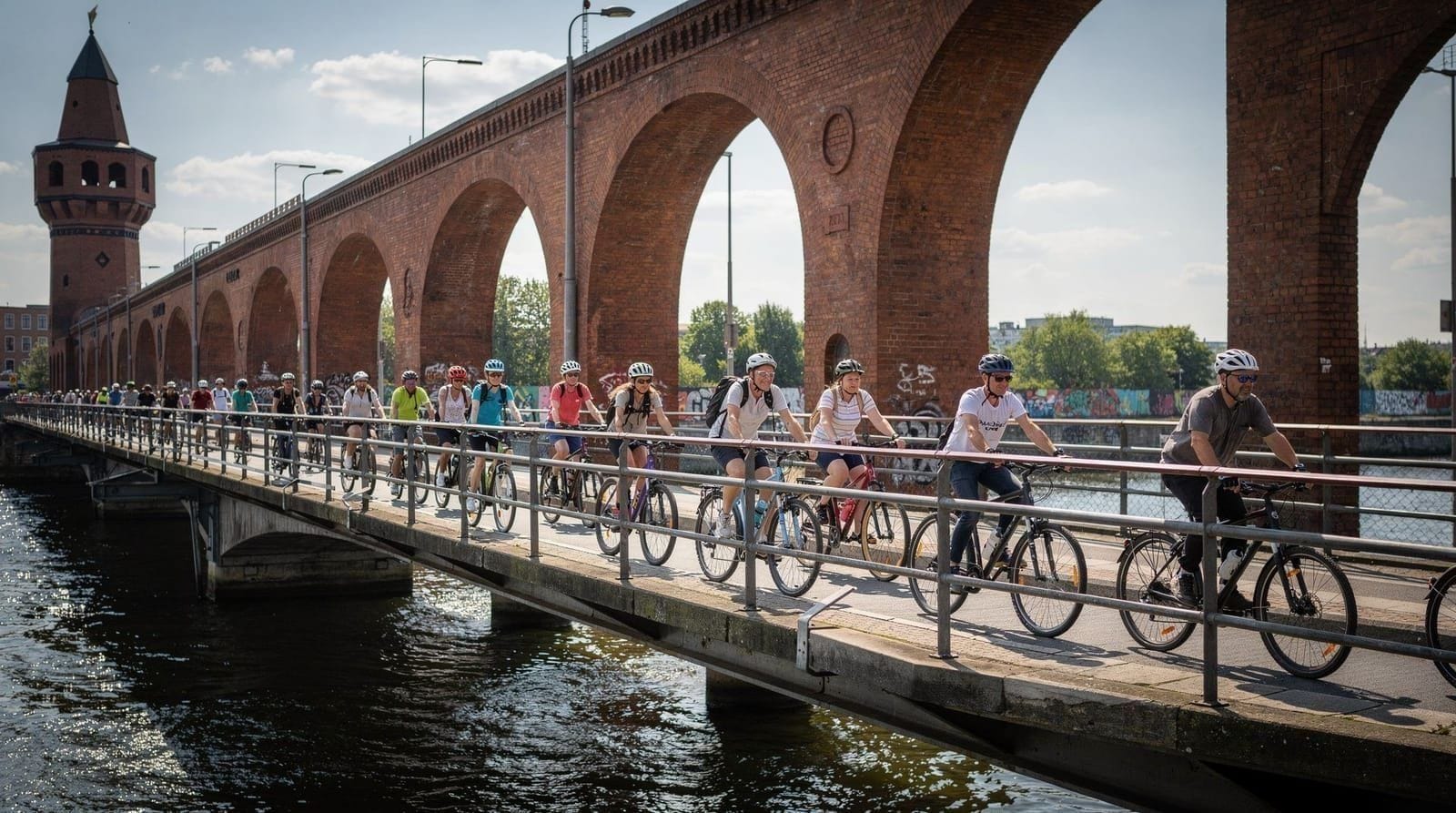
Berlin is one of Europe’s most cycle-friendly cities. The network of dedicated lanes (Radwege) covers most of the city, and summer brings it to life. The flat topography — Berlin has no meaningful hills — means cycling is accessible for all fitness levels.
A summer cycling route from the city centre: Alexanderplatz to the East Side Gallery along the Spree (10 minutes), then south through Kreuzberg and Neukölln to the Tempelhofer Feld (the former airfield), then west along the Landwehrkanal to Kreuzberg’s canal-side bars. The round trip is around 20–25 km at a casual pace, 2–3 hours.
Rental options: DB’s Nextbike (app-based, around €1/30 minutes) is available at stations across the city. Donkey Republic and Lime also operate. For guided cycling, several operators run 3.5-hour tours covering the main sites. See the Berlin bike tours guide.
Berlin city highlights guided bike tour — 3.5 hours, English guide, small groupTempelhof Field — Berlin’s most unusual summer park
Tempelhofer Feld is the former Tempelhof Airport, decommissioned in 2008 and converted into a public park covering 386 hectares — larger than Central Park. The runways are still intact and used by cyclists, inline skaters, and kite flyers. The park has no entrance charge and is open year-round but is at its best in summer.
Access: U6 Tempelhof, or U8/U9 Boddinstrasse. The park opens at 6am in summer.
What to bring: food (there are a few kiosks but nothing cheap near the runways), a bike or skates if you have them, and sunscreen — the former airfield has almost no shade.
The sight of Berliners lounging on a 1,600-metre runway with the terminal building in the background is one of the most distinctly Berlin experiences the city offers. The terminal itself is one of the world’s largest historical buildings — partly accessible via guided tours.
Tempelhof sits close to Neukölln and Kreuzberg, both of which come alive in summer with canal-side bars and outdoor dining — a natural pairing if you want to combine the park with an evening out afterwards.
Practical planning for Berlin in summer
Accommodation: Book 6–8 weeks ahead for July and August. Midweek is cheaper than weekends. Prenzlauer Berg and Kreuzberg neighbourhoods offer good access to biergartens and parks without the premium of Mitte hotel pricing.
Museum booking: Museum Island museums can be booked online at smb.museum. The queue without booking on a summer Saturday afternoon at the Neues Museum can reach 90 minutes. Online booking (€1 surcharge per ticket) is strongly advisable for July and August. The Pergamonmuseum remains closed until June 2027.
Heat preparedness: Carry water. UV levels in Berlin in July are higher than many visitors expect. Most cafes and restaurants will refill a water bottle without charge. Pharmacies stock sun cream if you run out.
CSD timing: If you are visiting in late July, be aware that CSD weekend (usually the last Saturday of July) dramatically increases hotel prices. Book well ahead or consider the week before.
Is summer the right time to visit at all?
Summer is Berlin’s most popular season, but it is not automatically the best fit for everyone. If crowds and peak pricing are dealbreakers, the shoulder months either side — May and September — offer most of the same outdoor culture (lakes, biergartens, long-ish evenings) at noticeably lower hotel prices and thinner museum queues. For a full comparison across the calendar year, including how summer stacks up against spring, autumn and winter for specific priorities, see the best time to visit Berlin guide.
That said, three things are genuinely summer-exclusive and worth planning a trip around specifically: the full lake-swimming season (water is only reliably warm enough June–September), Karneval der Kulturen and CSD (both fixed to their summer dates), and the 17-hour daylight window that makes late-evening outdoor plans effortless in a way no other season replicates.
Frequently asked questions about Berlin in summer
How hot does Berlin get in summer?
June averages around 20°C, July is the hottest month at 23–25°C average with frequent highs above 30°C. August is similar to July. Heat waves (above 35°C) have become more common since 2018 — Berlin hit 38.6°C in July 2019, with poor air conditioning across most of the city making it uncomfortable. Come prepared with a water bottle and sun protection.What are the best lakes for swimming near Berlin?
The most accessible is Wannsee (S1/S7 to Nikolassee or Wannsee station), a large inland lake with a famous 1930s lido (the Strandbad Wannsee). Müggelsee in Köpenick (S3 to Friedrichshagen) is larger and less crowded. Schlachtensee in the southwest is smaller and more natural-feeling. Tegeler See in the north is reachable by bus 222. All are free or low-cost to access.What major festivals happen in Berlin in summer?
The Christopher Street Day (CSD) parade in late July is one of Europe's largest Pride events, drawing 500,000+ people. The Karneval der Kulturen in late May or early June fills Kreuzberg's streets with a multicultural street parade. Lollapalooza Berlin runs in September (technically early autumn). Outdoor film screenings (Freiluftkino) operate at multiple locations from June through August.Are there biergartens in Berlin in summer?
Yes, many. The Prater Garten in Prenzlauer Berg is Berlin's oldest (1837) with seating for 600 under chestnut trees. The Schleusenkrug biergarten in Tiergarten by the canal lock is popular and car-free. Loretta am Wannsee is a lakeside option. Zollpackhof near the Chancellery is central. Most open from around 11am–11pm when weather permits, April through October.How long are the summer days in Berlin?
Around the summer solstice (21 June), Berlin gets about 17 hours of daylight, with sunrise around 4:45am and sunset around 9:30pm. Even by late August, sunset is around 8:30pm. This makes evening outdoor activities — Spree cruises, biergarten evenings, open-air concerts — genuinely pleasurable in a way that does not happen in shorter-day destinations.Is Berlin crowded in summer?
Yes. July and August are the peak tourist months, and the difference from winter is substantial. Museum Island queues can reach 60–90 minutes on summer afternoons without pre-booking. The East Side Gallery is extremely busy on summer weekends. Biergartens fill by early evening. Book accommodation 6–8 weeks ahead for July/August, and consider pre-booking museum tickets online.What are Freibäder and Strandbäder in Berlin?
Freibäder are outdoor swimming pools (chlorinated), while Strandbäder are designated swimming beaches on lakes. Berlin has over 60 designated bathing lakes (Badegewässer) monitored for water quality. The Strandbad Wannsee is the most famous, with a 1930s functionalist lido building, changing rooms, and a lifeguarded beach. Entry is around €6 adults. Most natural lake beaches are free.Can I do a Spree boat cruise in summer?
Yes, and summer is the best time. Several operators run 1-hour city cruises from near Friedrichstrasse or the Nikolaiviertel, typically €17–22 per person. A full 4-hour cruise through the Landwehrkanal is also popular. Book ahead for evening cruises in July and August, which sell out on weekends. See the Berlin boat tours guide for operator comparison.Is May or September a better alternative to peak summer in Berlin?
For many visitors, yes. May and September offer most of the same outdoor culture — lakes are swimmable, biergartens are open, evenings are still reasonably long — at noticeably lower hotel prices and with shorter museum queues than July or August.What should I pack for a Berlin summer trip?
Light layers for daytime heat, a light jacket for cooler evenings (Berlin summer nights can still drop to 15°C), sun cream, a refillable water bottle, and comfortable walking shoes. If your hotel lacks air conditioning, a small portable fan is worth packing for heat-wave nights.