Berlin Festival of Lights — illuminated monuments, walking routes, and practical guide
Berlin: Evening City Sightseeing Cruise
When is the Berlin Festival of Lights and what does it involve?
The Berlin Festival of Lights runs for approximately 10 days in mid-October each year, typically starting around 12–13 October. Major landmarks — Brandenburg Gate, Berlin Cathedral, TV Tower, Charlottenburg Palace, Kaiser Wilhelm Memorial Church — are illuminated with light projections and laser displays from dusk until midnight. Entry to all outdoor viewing areas is free.
When is the Berlin Festival of Lights? Mid-October, approximately 10 days starting around 12–13 October. Major landmarks across Berlin are lit by projection mapping, laser displays, and coloured illumination from dusk until midnight. All outdoor viewing is free. October evenings in Berlin can be cold (8–12°C); bring a coat.
| When | Mid-October, around 12–22 October (approx. 10 days) |
| Hours | Dusk (~7pm) until midnight |
| Cost | Free outdoor viewing; transport day ticket around €8.80 |
| Best evenings | Tuesday–Thursday for smaller crowds |
| Getting there | S-Bahn/U-Bahn to Brandenburger Tor, Hackescher Markt, or Alexanderplatz |
What the Festival of Lights involves
The Berlin Festival of Lights began in 2004 and has grown to involve over 100 illuminated sites across the city. It is one of the largest light art events in the world by number of participating venues and estimated attendance (around 2 million visitors over the 10-day period, though this figure is contested).
The format is a combination of:
- Projection mapping on landmark facades — video and static imagery projected directly onto buildings
- Laser installations around open spaces and along the Spree
- LED and architectural lighting on buildings that do not lend themselves to projection
- Light art installations — free-standing structures in parks and public spaces
The quality and ambition of individual installations varies considerably. The biggest sites (Brandenburg Gate, Berlin Cathedral, TV Tower) have the most technically sophisticated projections. Smaller sites may have simple coloured lighting. The programme is partly editorial (commissioned light art) and partly commercial — corporate sponsors pay for their buildings to be included and the projections reflect branding accordingly.
Being honest: the Festival of Lights is at its best around three or four major landmarks. Walking the full list of 100+ “illuminated” sites would be exhausting and would include many that are simply company headquarters with a logo lit in orange. The itinerary below focuses on the genuinely worthwhile sites.
The main sites — what to prioritise
Brandenburg Gate
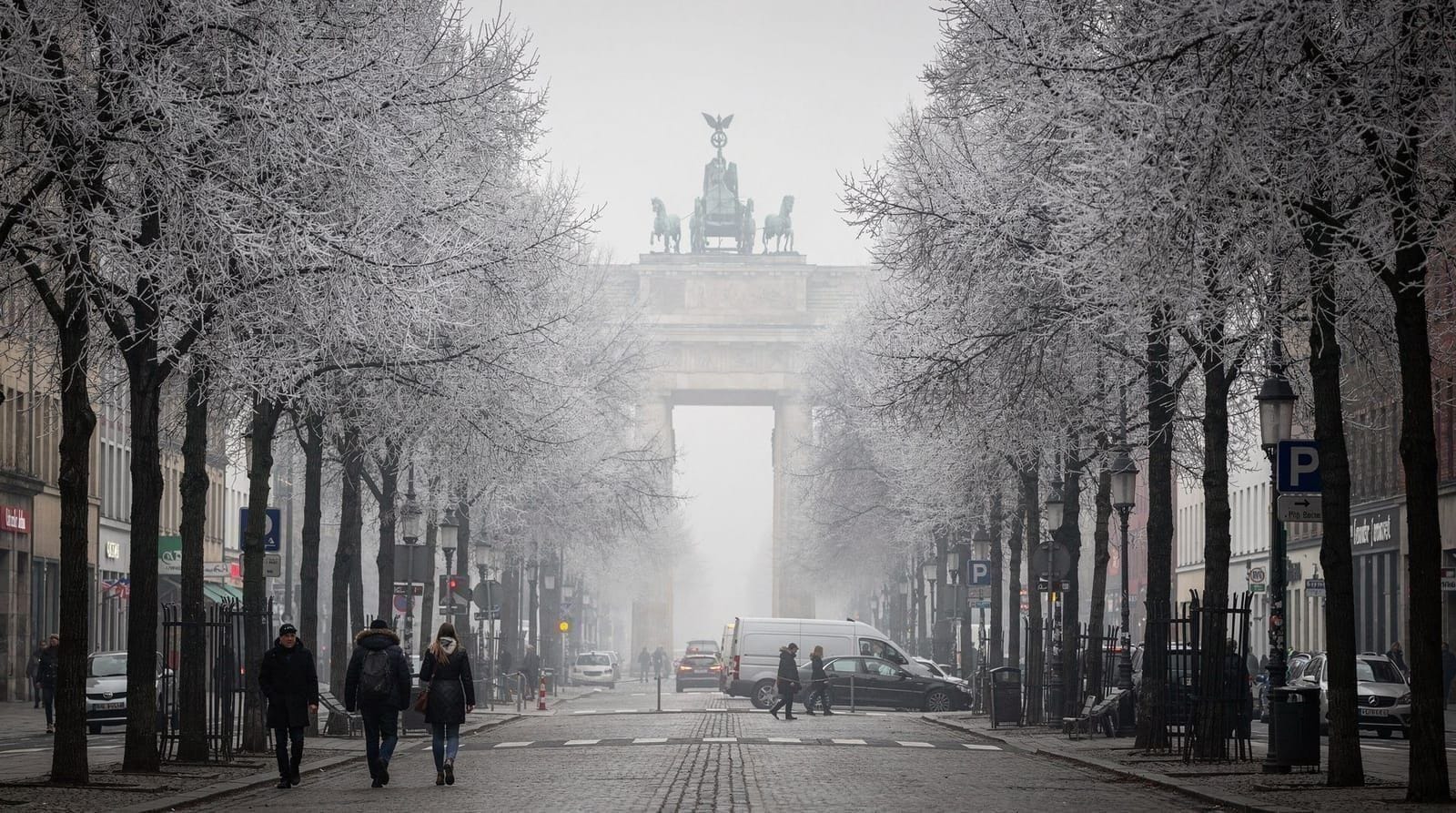
The Brandenburg Gate is the centrepiece of the festival. The projection here is typically one of the most technically ambitious pieces of the programme — full-facade animation covering all five gates and the Quadriga sculpture. Themes vary by year: historical imagery, abstract digital art, or commissioned artistic work.
The Pariser Platz in front of the Gate is heavily crowded during the festival, particularly on weekends. Arrive before 8 pm for a reasonable viewing position. The Gate is lit from approximately 7 pm until midnight.
For the best photographs, the east side (Unter den Linden axis) gives a longer-lens view without crowds in the immediate foreground. The west side (Tiergarten) is more atmospheric but darker.
Getting there: S-Bahn S1/S2/S25/S26 to Brandenburger Tor, or U55 to Brandenburger Tor.
Berlin Cathedral (Berliner Dom)
The Dom on the Lustgarten (Museum Island) is a recurring major site. The curved baroque dome and front facade take projection mapping well — the architectural detail creates visual texture for the animated imagery. The Lustgarten square provides good distance for viewing.
The Dom illumination is often thematically paired with what is happening on the Humboldt Forum across the river.
Getting there: S-Bahn to Hackescher Markt (10-minute walk), or U-Bahn U2 to Klosterstrasse (5 minutes).
TV Tower (Fernsehturm) at Alexanderplatz
The Fernsehturm’s sphere section is one of Berlin’s most recognisable silhouettes, and during the festival it is lit with projections that are visible from considerable distances across the city. The effect is best viewed from Karl-Marx-Allee to the east, or from the Spree riverbank to the west, rather than from directly below at Alexanderplatz (where the angle is too steep).
Charlottenburg Palace
Charlottenburg Palace in the western district of Charlottenburg receives significant illumination during the festival, including projection on its central bloc and wings. It is less crowded than the Mitte sites. The forecourt provides a good viewing distance.
Getting there: U7 to Richard-Wagner-Platz or bus M45 from Zoologischer Garten.
Kaiser Wilhelm Memorial Church (Gedächtniskirche)
The ruined tower of the Kaiser Wilhelm Memorial Church on Breitscheidplatz at the end of Kurfürstendamm is an effective light art subject — the open stonework and missing sections create shadow patterns when lit. The Breitscheidplatz is already a natural gathering point.
Site comparison — where to spend your evening
| Site | Crowd level | Best viewing time | Notes |
|---|---|---|---|
| Brandenburg Gate | Very high | Before 8pm | Most technically ambitious projection |
| Berlin Cathedral | High | 8–9pm | Pairs well with Museum Island |
| TV Tower | Medium | Any time | View from a distance, not directly below |
| Charlottenburg Palace | Low | 8–10pm | Quietest major site |
| Kaiser Wilhelm Church | Medium | 7:30–9pm | Natural gathering point on Ku’damm |
If a river view appeals more than standing in a crowd, an evening boat trip on the Spree also passes several illuminated landmarks from the water.
Berlin evening sightseeing cruise on the SpreeWalking routes during the festival
Route 1 — Mitte core (2–3 hours, approximately 4 km)
Start at Brandenburg Gate (U55 or S-Bahn). Walk east along Unter den Linden — the street itself may have additional installations in some years, and the proximity of the Opera House (Deutsche Oper) and State Library buildings adds illuminated density. Reach the Humboldt Forum on the island. Cross to the Berliner Dom. Walk along the south bank of the Spree toward Nikolaiviertel. Return to Alexanderplatz for the TV Tower, then S-Bahn home.
Route 2 — Western city (2 hours, approximately 3 km)
Start at Zoologischer Garten station (S-Bahn). Walk west along Kurfürstendamm — several major hotels and commercial buildings are illuminated. Breitscheidplatz and Kaiser Wilhelm Memorial Church. Continue to Schloss Charlottenburg by bus (30 minutes) or U-Bahn. Return via Spandauer Damm.
Combining both routes: The full festival circuit across Mitte and western Charlottenburg requires a full evening — approximately 4–5 hours. Best done over two evenings to give enough time at each major site. Route 1 largely retraces our Berlin Mitte guide after dark, so it’s worth reading that alongside this one if it’s your first time in the district. Route 2 sits inside the Charlottenburg neighbourhood guide area, useful if you want daytime plans for the same district.
Practical information
Dates 2026: The precise dates are announced on festival-of-lights.de by summer. Expect approximately 12–22 October 2026 (dates from previous years as a guide).
Transport: All main festival sites are in the Berlin AB zone. A day or evening ticket (€8.80) covers everything. The festival is most enjoyable on foot — driving is impractical due to crowds and limited parking near the sites.
Weather: October evenings in Berlin average 8–12°C, dropping to 5–7°C after 9 pm. A warm coat, hat, and possibly gloves are recommended. Rain is possible; the projections continue in light rain but heavy rain reduces visibility.
Crowds: Weekends are significantly more crowded than weekdays. If you can attend on a Tuesday or Wednesday evening, the Brandenburg Gate area is manageable. Weekend evenings, especially the opening and closing nights, are extremely congested.
Photography: A smartphone camera handles the brighter projection sites. For smaller installations and street-level effects, a camera with manual settings and the ability to shoot at higher ISO (1600–3200) is useful. A small tripod is worth carrying.
What the Festival of Lights is not
Not a unified art event: The festival mixes genuine light art commissions with extensive corporate sponsorship. Many “illuminated” buildings are simply advertising in coloured light. The artistic quality of individual installations ranges from impressive to banal.
Not intimate: Major sites have thousands of visitors simultaneously on peak evenings. If you dislike crowds, the festival experience at the main sites will be challenging.
Not a winter market: The Festival of Lights coincides with early autumn, before the Christmas market season begins. There are food and drink stalls near major sites, but this is not a Christmas market — the character is urban and art-focused rather than festive.
For the autumn Berlin experience more broadly, including what else is happening in October, see the Berlin autumn guide.
For seasonal comparison — Berlin in winter versus autumn — see the Berlin in winter guide.
Warming up between sites
October evenings are cold enough that most visitors need at least one indoor break. Nikolaiviertel, the small reconstructed old-town quarter near the Berliner Dom, has a cluster of traditional restaurants and bars that stay open late during the festival and get genuinely crowded — worth a stop mid-route on the Mitte circuit rather than a planned sit-down meal. Near the TV Tower, the Museum Island cafés close earlier than the festival hours, so plan any museum-side coffee stop before dusk rather than after. If your evening also touches Ku’damm, the bars and cafés covered in our Berlin nightlife neighbourhoods guide fill the gap around Breitscheidplatz.
For visitors building a full first Berlin trip around the festival dates, see the Berlin trip planning guide for how to slot an evening of light-viewing into a 3–4 day itinerary without exhausting yourself.
Frequently asked questions about Berlin Festival of Lights
Is the Berlin Festival of Lights free?
All outdoor projections and illuminations are free to view. There are paid options — some events, dinners, and guided tours carry charges — but the core experience of walking the illuminated city costs nothing beyond normal transport costs. A Berlin AB day ticket (€8.80) covers all the main sites.Which landmarks are illuminated during the Festival of Lights?
The exact programme changes each year, but consistent participants include the Brandenburg Gate, Berlin Cathedral (Berliner Dom), TV Tower, Charlottenburg Palace, the Victory Column (Siegessäule), and several major hotels including the Hotel Adlon. Corporate sponsors also illuminate their buildings. The full list is published on festival-of-lights.de before the event opens.What time do the Festival of Lights projections start and end?
Projections begin at dusk, which in mid-October in Berlin is around 6:30–7:00 pm. Most installations run until midnight. Arriving between 7:30 and 9:00 pm gives the best compromise between darkness (needed for the projections to be vivid) and manageable crowd levels at the main sites.How long does the Festival of Lights last?
The festival runs approximately 10 days, from around 12 October to 22 October. Exact dates are confirmed on the festival website (festival-of-lights.de) by summer of that year. Weekends are significantly more crowded than weekdays.Is the Festival of Lights suitable for families with children?
Yes. The outdoor nature, free entry, and visual spectacle make it accessible for all ages. The projected images are not scary or adult-oriented — they range from abstract light art to historical imagery and sponsor branding. Younger children may struggle with the late start time (darkness does not fall until 7 pm) and possible crowds at peak sites.Can you photograph the Festival of Lights easily?
Yes, and it is extremely popular for photography. A tripod is useful for longer exposures on less-lit locations, but the Brandenburg Gate and TV Tower projections are bright enough for handheld smartphone photography in good conditions. Crowds in front of major sites can make low-angle photography difficult on weekends.What is the best walking route for the Festival of Lights?
A logical route covers Brandenburg Gate (start), then walk east along Unter den Linden to Humboldt Forum and Berliner Dom, then south to Museum Island and along the Spree to Nikolaiviertel. This covers approximately 4 km in 2–3 hours. A second route covers the west city — from Charlottenburg Palace east through the Kurfürstendamm area to the Kaiser Wilhelm Memorial Church.Is there a good way to see the Festival of Lights without walking or crowds?
Yes — an evening sightseeing cruise on the Spree passes several illuminated landmarks from the water, avoiding the pavement crowds around Pariser Platz and the Berliner Dom. It's a good option for visitors who find standing in dense crowds unappealing, though it won't cover every major site the way a walking route does.Where can I warm up during the Festival of Lights?
Nikolaiviertel near the Berliner Dom has restaurants and bars that stay open late during the festival, and it sits conveniently on the Mitte walking route. On the western route, the cafés and bars around Ku'damm near Breitscheidplatz serve the same purpose. Museum cafés generally close before the evening viewing hours, so plan any museum-side break before dusk.