Berlin bike rental guide — stations, prices, apps, and cycling routes
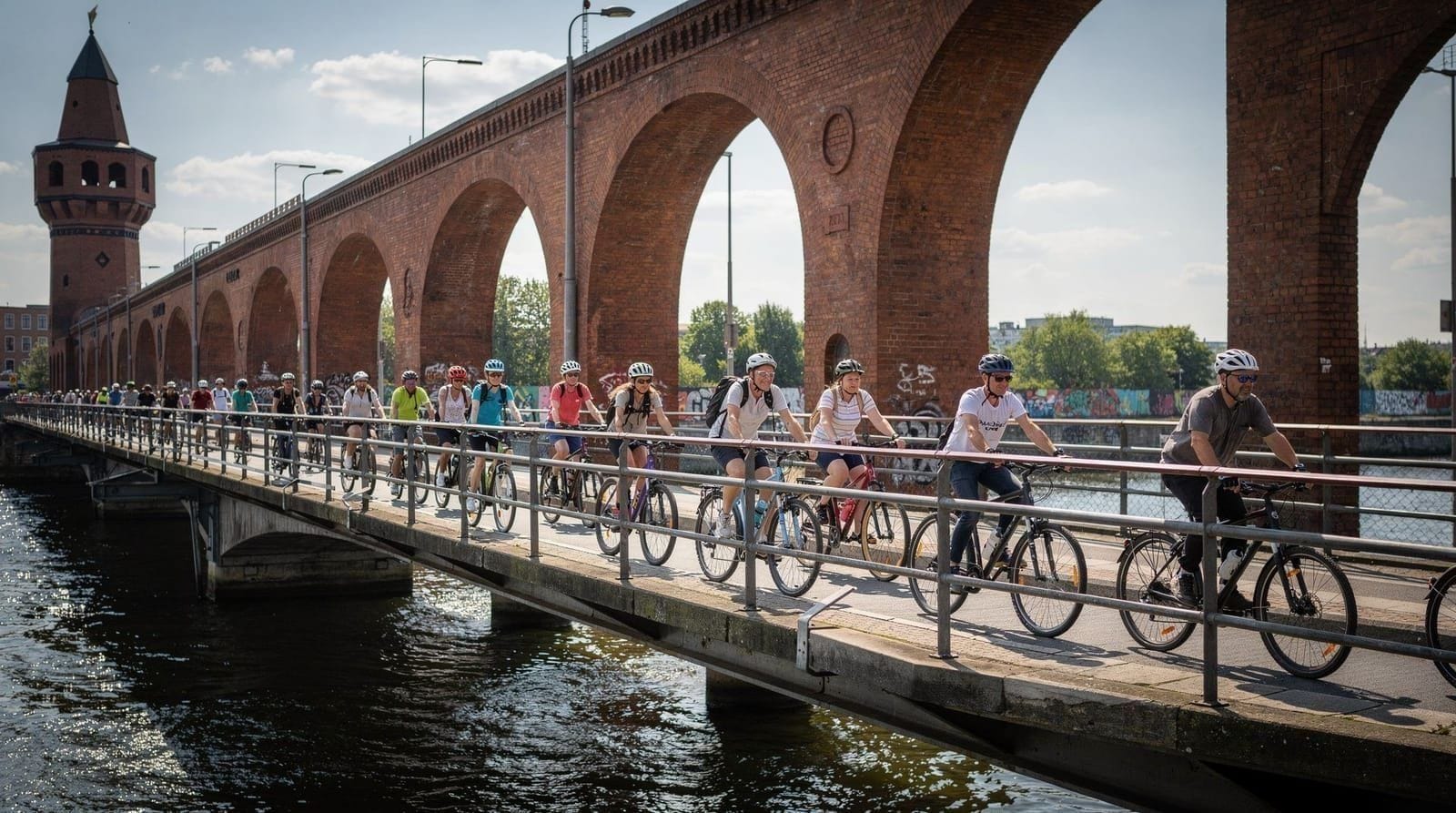
Berlin: Guided Bike Tour to Explore the Highlights
How do you rent a bike in Berlin?
The easiest options are Nextbike (station-based, €1/30 min via app), Donkey Republic (dockless, €3.50/hour via app), or a private rental shop from €10–15 per day. For a full day of sightseeing, a private shop rental is usually the best value. No advance booking is needed for either app; shops on popular streets have walk-in availability.
How do you rent a bike in Berlin? The fastest option is the Nextbike app (€1/30 min, available instantly), or Donkey Republic for dockless flexibility. For a full day of sightseeing, a private rental shop at €10–15 per day offers the best value — you get a properly maintained bike you can leave at your destination without worrying about returning it to a dock. No booking required at either option.
| Cost | around €10–15/day shop rental; €1/30 min or around €9/day Nextbike |
| Best for full days | private shop flat-rate rental |
| Best for short hops | Nextbike or Donkey Republic app |
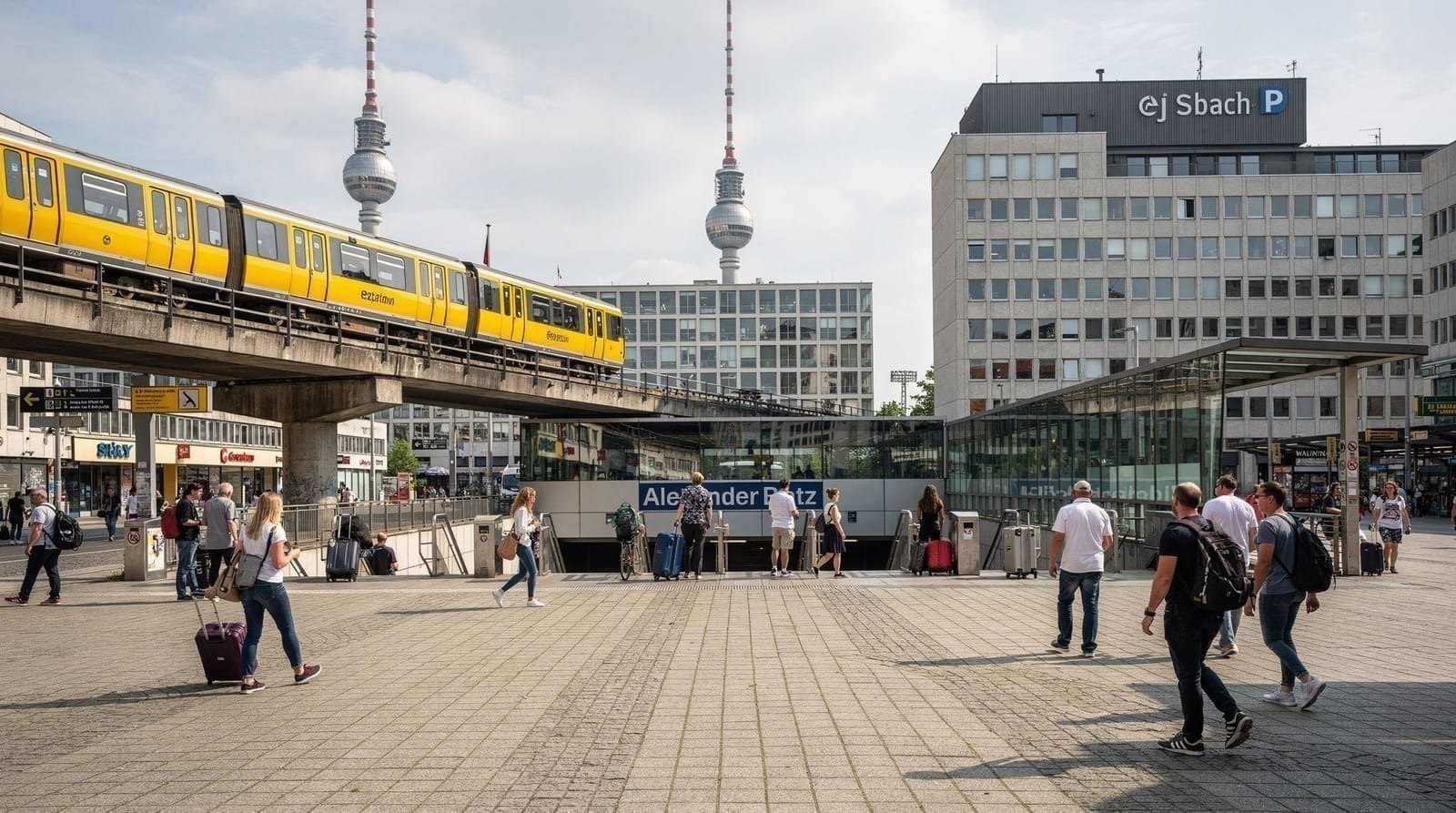
| Getting there | shops cluster near Alexanderplatz, Prenzlauer Berg, Friedrichshain |
| Best time | weekday mornings, before shop stock is picked over in peak season |
Berlin’s cycling infrastructure — the honest picture
Berlin has an extensive cycling network, but “extensive” does not mean “seamless.” The city’s cycling infrastructure was built over decades without consistent planning. The result is a mix of dedicated Radwege (marked cycle lanes), shared pedestrian-cyclist paths, painted lane markings on roads, and sections with no infrastructure at all.
Eastern Berlin (Friedrichshain, Prenzlauer Berg, Lichtenberg) has good dedicated lanes and a cycling culture that makes car drivers broadly cycle-aware. The Karl-Marx-Allee’s wide central lane is excellent. The Spree riverbank paths are smooth and clear.
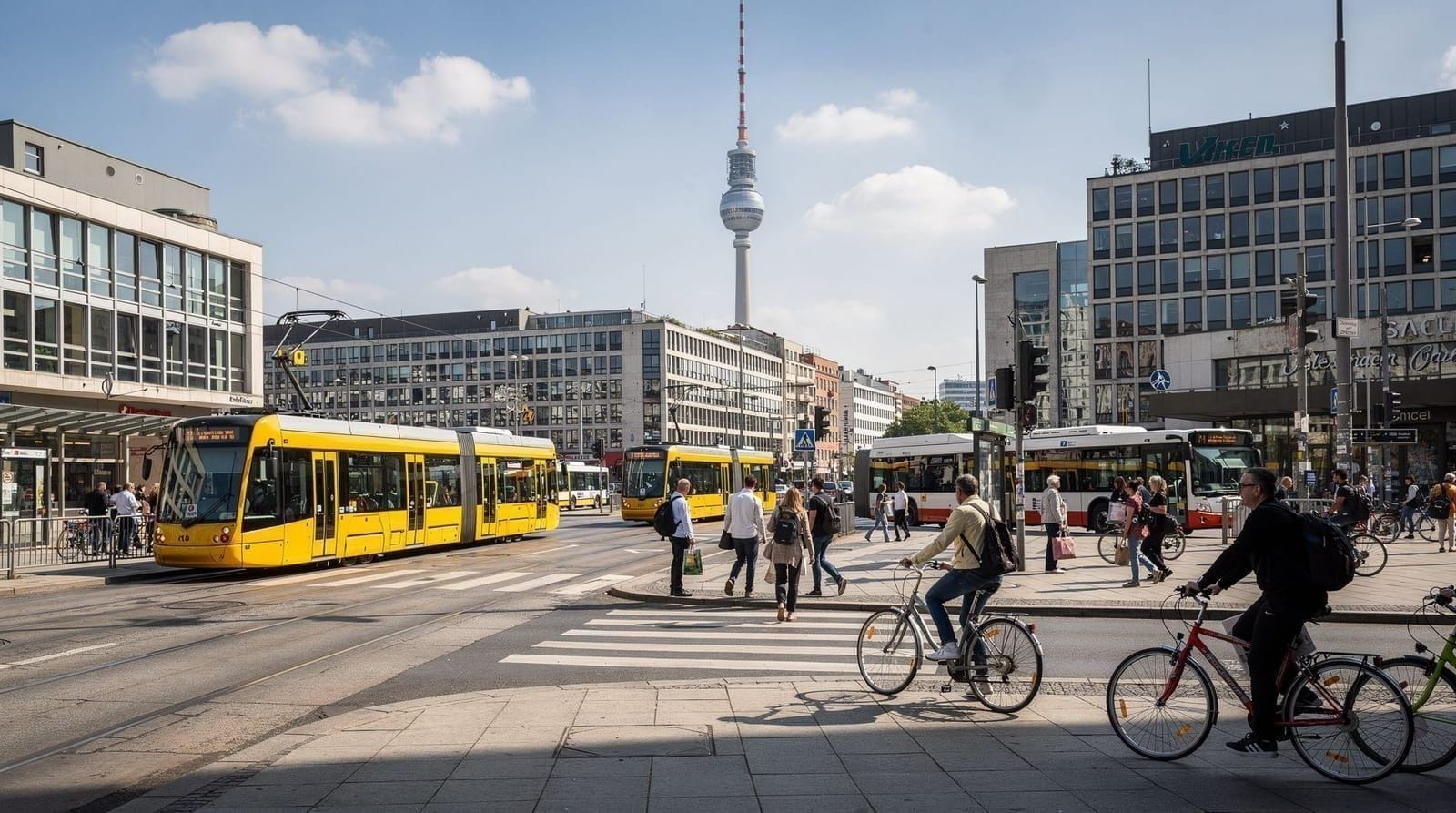
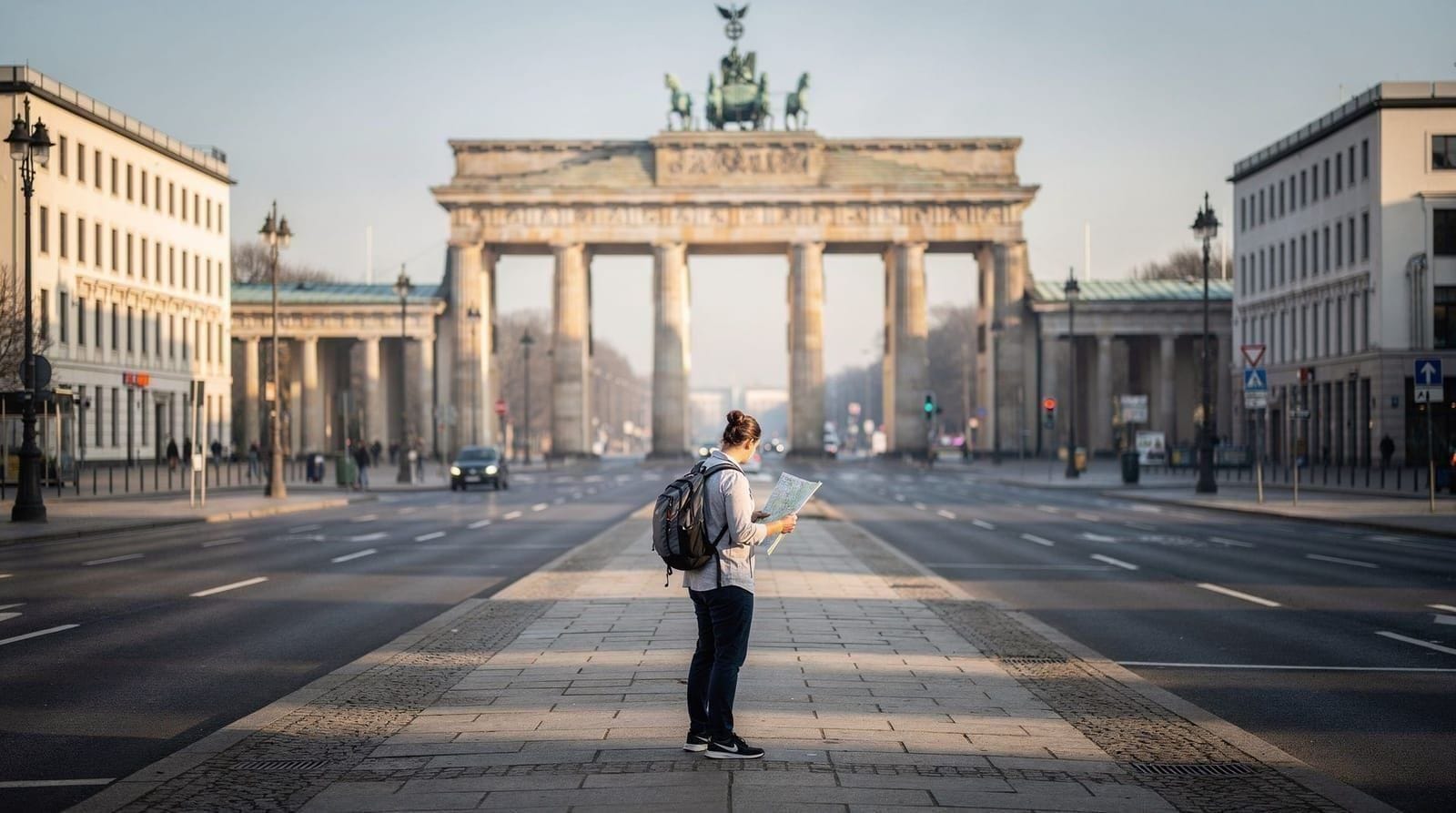
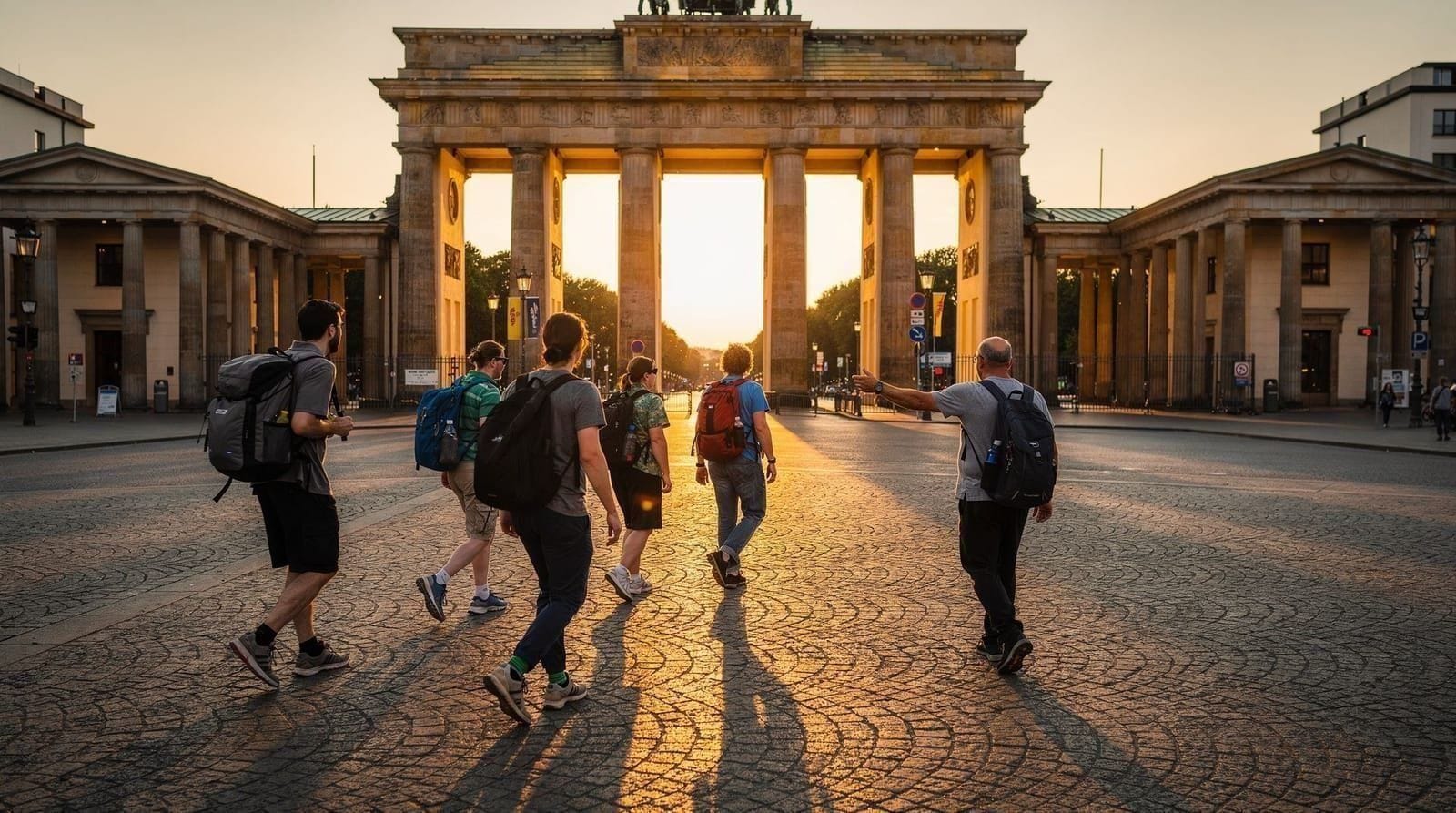
Central Mitte is more chaotic. The boulevard Unter den Linden has a good cycle lane, but intersections around Alexanderplatz require confident urban cycling. The tourist zones around Brandenburger Tor and Museum Island have a mix of narrow lanes, tourist foot traffic, and complex intersections.
Western Berlin (Charlottenburg, Tiergarten) is less cycling-friendly in the commercial areas but has the excellent Tiergarten park circuit, the canal paths along the Landwehrkanal, and good connections to Grunewald.
Tram tracks in eastern neighbourhoods (M10, M13, Straßenbahn lines) are a specific hazard. The rails catch front wheels if you cross at a shallow angle — always cross tram tracks at 90 degrees.
Nextbike — the station-based system
Nextbike (operated by Deutsche Bahn subsidiary Call a Bike) is Berlin’s primary public bike-sharing scheme. The network operates approximately 130 stations across central Berlin, Prenzlauer Berg, Friedrichshain, and Mitte.
How to use it:
- Download the Nextbike app (iOS/Android) and register with a credit or debit card
- Find the nearest station in the app map
- Scan the QR code on the handlebars or enter the bike number
- Unlock and ride
- Return to any Nextbike station and lock the bike to close your rental
Pricing:
- €1 per 30 minutes (pay-as-you-go)
- €9 for 24 hours (day pass, requires registration)
- Monthly pass: €15/month (useful if staying more than 2 weeks)
Honest assessment: Nextbike is convenient for short hops between fixed stations — getting from Museum Island to the East Side Gallery, or from Alexanderplatz to Prenzlauer Berg. The bike quality is adequate (3-speed city bike, heavy, reliable). For a full day of sightseeing across the city, the need to return to a station limits flexibility, and the 24-hour cost of €9 is only slightly cheaper than a private shop rental that gives you a better bike and full flexibility.
Station density: Good in Mitte and the inner districts. Thin in Kreuzberg south, Neukölln, and Wedding. Check the app map before planning a route that requires stations at both ends.
Donkey Republic — dockless alternative
Donkey Republic operates a dockless bike-sharing system (bikes can be left at any public area, not just stations) across several Berlin districts. Coverage is less extensive than Nextbike but growing.
Pricing (2026):
- €3.50 per hour
- €20 per day (24-hour pass)
- E-bike: €5 per hour / €35 per day
How it works: App-based (iOS/Android). Locate a nearby bike on the map, unlock via Bluetooth, ride, and park at any legal public location. No docking required. The e-bike option through Donkey Republic is one of the easier ways to access electric cycling in Berlin without a private rental shop.
Honest assessment: Donkey Republic is more flexible than Nextbike for tourists who want to leave the bike at their destination rather than riding back to a station. The day pass at €20 is competitive with private shops for e-bikes but more expensive than private shops for standard bikes.
Private rental shops — best for full-day touring
For a full day of exploration, a private bike rental shop typically offers better value, better bikes, and more flexibility than app-based options. Shops also provide lock, lights, and basic repair kit as standard.
Key rental shops (2026 prices):
Fat Tire Tours (Panoramastrasse 1a, near Fernsehturm): €18 per day for a city bike, €28 for an e-bike. Well-maintained fleet. Also runs guided tours. Open daily from 09:00. Walking distance from Alexanderplatz.
Berlin on Bike (Knaackstrasse 97, Prenzlauer Berg): €12 per day standard, €22 e-bike. Smaller operation, helpful staff, well-rated for bike quality. Near U2 Senefelder Platz.
Simple Rent (multiple locations): €10–13 per day standard city bike. No frills, reliable, good budget option. Central location near Mitte and Prenzlauer Berg.
Fahrradstation Friedrichshain (Revaler Strasse, Friedrichshain): €12 per day. Good for access to East Side Gallery, Karl-Marx-Allee, and Kreuzberg routes.
What to check before renting:
- Gear shifters work properly
- Brakes — front and rear
- Saddle height adjustment
- Lights (required by German law after dark)
- Lock included (always ask)
Key cycling routes in Berlin
Route 1 — Spree riverbank (5 km, 1.5 hours)
Start at Museum Island (Berliner Dom side), cycle east along the north bank of the Spree via Stralauer Ufer, crossing to the south bank at Oberbaumbrücke, and continuing along Mühlenstrasse to the East Side Gallery. Almost entirely on dedicated riverside paths. Smooth, scenic, no car traffic.
Best combined with a stop at the East Side Gallery (lock your bike at the stands on Mühlenstrasse — do not lean it against the murals). Return by S-Bahn from Ostbahnhof with your rental bike, or loop back along the south bank.
Route 2 — Inner Mauerweg (16 km, 3–4 hours)
The Berlin Wall trail (Berliner Mauerweg) follows the path of the Wall for its full 155 km. The inner-city section between Bernauer Strasse and the East Side Gallery is the most historically significant stretch. The route is well-signposted (green signs with a Wall icon) and largely on dedicated paths or quiet streets.
Start at Nordbahnhof (S-Bahn S1/S2/S25), cycle east via Bernauer Strasse (Wall Memorial), through Prenzlauer Berg, south through Friedrichshain, ending at the East Side Gallery. This segment covers approximately 16 km and 3–4 hours with stops. See the Berlin Wall guide for historical context along the route.
Route 3 — Tiergarten circuit (8 km, 1.5 hours)
The Tiergarten park has a well-maintained circular path around its perimeter (8 km) plus internal paths. This is the most relaxed urban cycling in Berlin — no traffic, tree cover, and access to the Soviet War Memorial, the Victory Column, and the Schloss Bellevue (Presidential Palace). Suitable for families.
Entry from the Brandenburg Gate side (east), the Hansaviertel (north), or the Tiergartenstrasse (south). The cycle path within the park is shared with pedestrians — ride at pedestrian pace on the inner paths. See the Tiergarten guide for what to see on foot along the way.
Route 4 — Grunewald and Wannsee (35 km round trip)
A full-day route from the city centre to the Grunewald forest and Wannsee lakes. Take the S-Bahn S1/S7 to Nikolassee or Wannsee with your rental bike, then cycle the lakeside paths. Wannsee is Berlin’s largest lake and has swimming beaches (Strandbad Wannsee, entry €5.50) accessible by bike.
The Grunewald forest trails are mostly unpaved and sandy — not suitable for standard city bikes unless they have wider tyres. E-bikes make this route comfortable for mixed-fitness groups.
Wannsee note: The Wannsee Conference Villa (Haus der Wannsee-Konferenz, Großer Wannsee 56–58), where the 1942 conference coordinating the Holocaust was held, is on this route. Free entry, open daily 10:00–18:00. See the Wannsee Conference Memorial guide for context.
Cycling safety in Berlin — practical rules
Traffic signals: Cyclists must stop at red lights. Running red lights (Rotlichtverstoß) attracts a €100 fine if caught, and enforcement has increased in Berlin since 2022.
Footpaths: Cycling on footpaths (Gehwege) is prohibited unless signed “Fahrrad frei.” The shared pedestrian-cyclist paths (marked with a red-white bicycle sign) are legal but require giving way to pedestrians.
Helmets: Not legally required for adults. Required for children under 16 in a cycling seat — but still only recommended, not legally mandated.
Lights: Required when cycling after dark. Front white light + rear red light. Rental bikes include lights; check they work before leaving the shop.
Tram tracks: See above. Cross at 90 degrees only. The M10 on Prenzlauer Allee, the M13 near Hackescher Markt, and the tram network in Friedrichshain are the most relevant hazard zones.
Locking: Berlin has a bike theft problem. Always use the provided lock through the frame (not just the wheel) and a fixed object. Private shops rent additional D-locks for €1–2/day — worth it for city centre parking.
Cycling with children in Berlin
Several rental shops offer child seats (Kindersitz) and cargo bikes (Lastenrad) for families with small children. Berlin on Bike and Fat Tire both rent child seats (€5–8/day extra). Cargo bikes that carry 2–3 children cost €30–40/day at specialist shops in Prenzlauer Berg and Mitte.
The Tiergarten circuit and the Spree riverbank route are the most family-friendly: flat, low traffic, with park access for breaks. The inner Mauerweg is manageable for older children (8+) on their own bikes but may be too long for younger ones as a full circuit.
What about guided bike tours?
If you are new to Berlin or prefer not to navigate independently, guided bike tours are a well-developed option. Operators such as Fat Tire Tours run daily guided circuits covering 15–25 km, including bike rental, for €25–38 per person. These cover the essential landmarks with historical commentary.
For comparison, see the Berlin bike tours guide which covers guided tour options in detail. The bike rental approach covered in this guide is for independent cycling at your own pace. If narration and route-planning matter more to you than saving a few euros, book the guided version instead.
Book a guided Berlin highlights bike tour with rental includedRenting for a self-guided day — realistic planning
If you’re renting independently rather than booking a tour, treat the Berlin self-guided walk highlights route as a starting reference for site sequencing, then adapt it to a bike pace rather than a walking pace — you’ll cover roughly three to four times the ground in the same time. For visitors also weighing tour options for their trip generally, the best tours for first-timers guide compares independent cycling against guided formats across the board, not just for bikes.
Frequently asked questions about Berlin bike rental guide
How much does bike rental cost in Berlin?
Nextbike charges €1 per 30 minutes (€9 for 24 hours with a subscription). Donkey Republic charges €3.50 per hour or €20 for a full day. Private rental shops charge €10–15 for a standard city bike for 24 hours, or €20–25 for e-bikes. Helmets are not included by default at most shops — ask specifically and budget €1–2 extra.Is cycling safe in Berlin?
Berlin is one of the better German cities for cycling, with an extensive but inconsistent network of dedicated lanes (Radwege). Central Mitte and Prenzlauer Berg have well-marked lanes. Friedrichshain and Kreuzberg are cycling-friendly. Watch for tram tracks in eastern neighbourhoods (front wheel can catch), car doors opening on parking lanes, and pedestrians using cycling lanes. Serious accidents are uncommon but do happen.Do I need a helmet when cycling in Berlin?
No. Helmets are not legally required for adults in Germany. However, given Berlin's mixed traffic and cobblestone areas, wearing one is sensible especially for visitors unfamiliar with the road layout. If a rental shop does not offer one, sports shops (Decathlon, Sport 2000) sell basic helmets from €15.What is Nextbike and how does it work?
Nextbike is a station-based bike sharing scheme operated in Berlin by the company Call a Bike (Deutsche Bahn subsidiary). Register via the Nextbike app (free) or website, add a payment method, and unlock bikes at designated stations by scanning the QR code. Bikes must be returned to a Nextbike station. The network covers approximately 130 stations across central Berlin.Can I take a rental bike on the S-Bahn or U-Bahn?
Yes, with a bicycle ticket. The BVG charges €2.00 extra per bike on top of your regular ticket (valid for 2 hours). Bikes are not permitted on S-Bahn or U-Bahn during rush hours (Mon–Fri 06:00–09:00 and 16:00–19:00). Space is limited to designated bike sections in carriages. Station-based Nextbike bikes are technically not permitted on public transport — check operator terms.Are there electric bikes (e-bikes) available for rent?
Yes. Most private rental shops offer e-bikes at €20–30 per day. E-bikes make sense for longer routes (Grunewald, Wannsee, Spreewald day-trips) or for riders who want to cover ground without fatigue. Donkey Republic and some Nextbike stations also offer e-bike variants in their fleets.What are the best cycling routes from the city centre?
The Spree riverbank path (eastward from Museum Island to the East Side Gallery) is the easiest and most scenic 5 km urban route. The Mauerweg (Berlin Wall trail, 16 km inner city section) is the most historically interesting. For longer rides, the Wannsee lakes route (35 km round trip via Grunewald) and the Müggelsee circuit in Köpenick (40 km) are the best day-long options.Which rental option is cheapest for a budget trip?
A private shop's flat daily rate (around €10–13) beats app-based pay-per-minute options for anyone cycling more than about two hours in a day. See the budget Berlin itinerary for how a day of independent cycling compares cost-wise to public transport and paid tours.Can beginners manage independent cycling in Berlin, or should they book a guided tour?
Confident cyclists comfortable with city traffic elsewhere can manage independently, especially on the Tiergarten circuit or Spree riverbank. Less confident riders, or anyone wanting historical commentary along the way, get more value from a guided tour — see the Berlin bike tours guide for options.