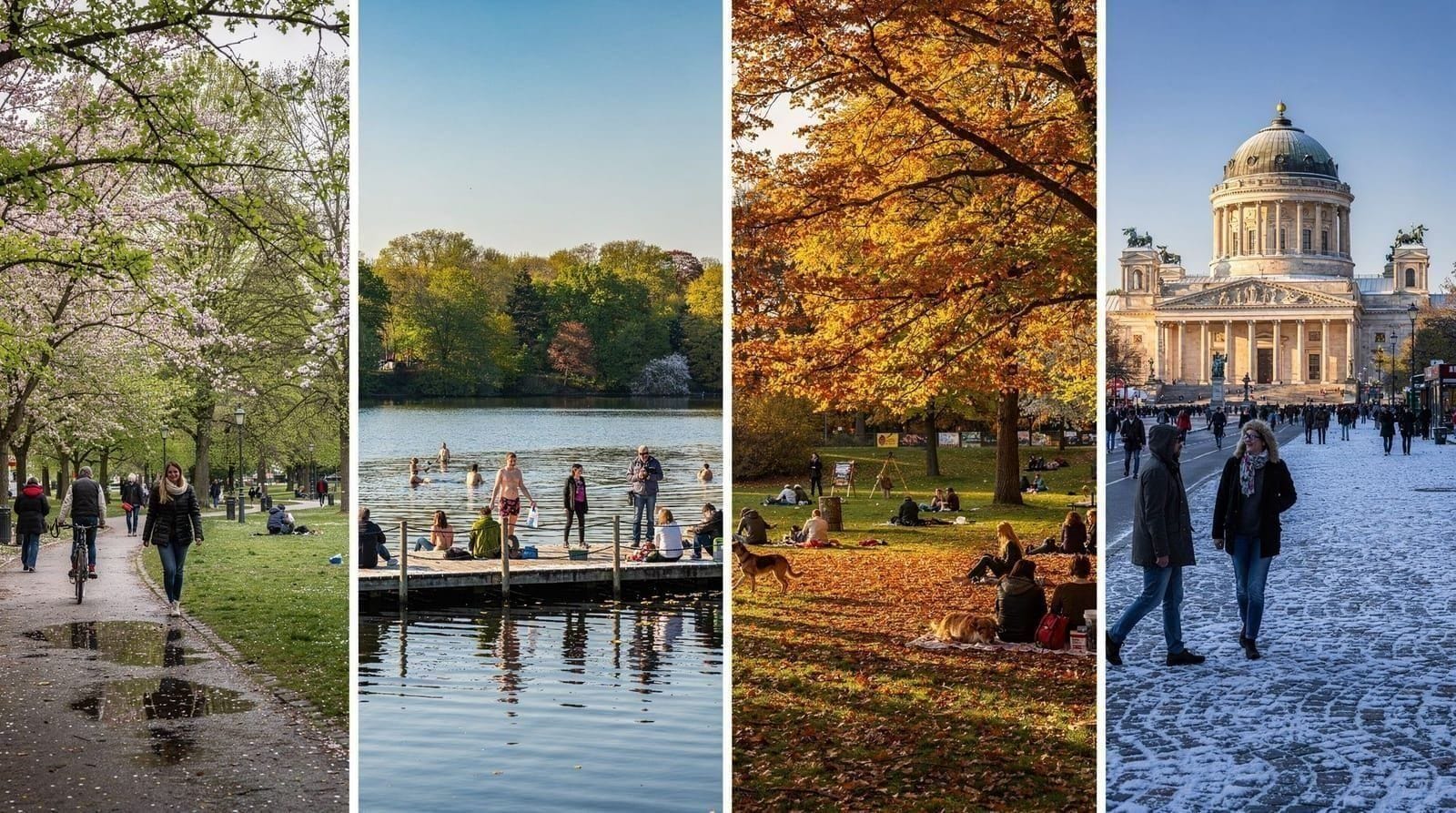
Best time to visit Berlin in 2026 (month-by-month breakdown)
Berlin rewards visitors year-round — but some months are dramatically better than others, and the difference isn’t just weather. Crowds, prices, daylight hours, and what’s actually open all shift significantly across the calendar. After spending serious time in this city across every season, here is the unvarnished breakdown for 2026. For the full data-heavy analysis with price charts and event calendars, see the canonical best time to visit Berlin guide.
| Best overall | May or late September |
| Best value | January–February or November |
| Avoid if crowd-averse | July–August in Mitte |
| Hotel price swing | Roughly €80–140/night (spring) to €180–260/night (July peak) |
| Pack for every month | A compact umbrella — rain is possible year-round |
January and February — cheap, cold, and surprisingly viable
January is Berlin’s least-visited month, and hotel rates reflect it: drop 30–40% compared to July peak. The catch is obvious. Temperatures hover between -3°C and 4°C. Daylight lasts barely eight hours. Some outdoor attractions are closed or running skeleton schedules.
What actually works well in the coldest months:
Museum Island without crowds. Neues Museum (Nefertiti, Egyptian antiquities), Altes Museum (Greek and Roman collection), Bode Museum (Byzantine art, medieval sculpture), and Alte Nationalgalerie (German Romantic painting) all run at maybe 30% of peak capacity. You can spend genuine time in front of the artefacts rather than being funnelled past them. This alone is a reason to consider January if museums are your priority.
The Berlinale film festival runs every February — typically the second or third week. International films, press screenings, and public screenings across 30+ cinemas. Tickets sell out for popular films, but the festival creates a genuine creative atmosphere across the city. If cinema matters to you, February is a legitimate reason to visit.
Indoor food culture. Berlin’s craft beer scene, wine bars, and food halls are year-round operations. Brlo Brwhouse near Gleisdreieck park has excellent brewery-fresh pours in a warm industrial space. Markthalle Neun in Kreuzberg (Tue/Fri/Sun) runs regardless of temperature. Street food in the cold has a different atmosphere — less performative, more local.
Restaurant availability. Booking a table at Berlin’s better restaurants in January requires less lead time than in May or September. Cookies Cream (vegetarian fine dining), Nobelhart und Schmutzig (hyperlocal, strict no-substitutions tasting menu), and Tim Raue require months of advance booking in summer. In January, two weeks is often sufficient.
What you’re giving up: Mauerpark flea market is at minimal capacity. Beer gardens are shut. Lake swimming is obviously not happening. Some outdoor memorials like Sachsenhausen have reduced hours.
The packing guide for Berlin has specifics on what you actually need for winter visits — the cold genuinely requires preparation.
March and April — spring awakening, still manageable
Mid-March to mid-April is arguably the best-kept secret for Berlin timing. Crowds run 40–50% of peak summer. Hotel prices are reasonable — €80–140/night for mid-range hotels in Mitte, compared to €180–250 in July. Temperatures climb from 8°C in early March to 16°C by late April.
The Tiergarten comes alive in April. Cherry blossoms along the Teltow Canal (S-Bahn: Rathaus Steglitz, then walk south) typically peak late March to early April — exact timing varies by year. The Berlin Spring Guide covers which parks and markets reopen and when, down to specific weeks.
This is the window when Berlin’s outdoor café culture tentatively restarts. Tables appear outside on the first warm day regardless of the actual temperature — Berliners have a different relationship with “warm enough” than visitors from more temperate climates.
Easter weekend (late March or April) brings a tourism spike that lasts about a week. Outside that window, March and April are genuinely quiet and reasonably priced.
May — the best single month
May is the highest-quality month for most visitors. Temperatures sit between 14°C and 21°C. Days stretch to 14–15 hours of daylight. Tourism starts building but doesn’t peak until June. Outdoor swimming at Müggelsee doesn’t start until June, but beer gardens are open from mid-April onward.
Karneval der Kulturen (Pentecost weekend, late May) is one of Berlin’s most authentic public festivals. Four days in Kreuzberg: Saturday and Sunday procession through Gneisenaustrasse and Hasenheide, music stages throughout Görlitzer Park, food vendors from across the world’s diaspora communities represented in the neighbourhood. It’s a genuine neighbourhood celebration rather than a tourist spectacle. The Karneval guide has logistics for the procession route and best viewing spots.
Budget advantage: May hotel rates are 15–20% below June peak. Book by February for central areas, particularly if you want anything in Mitte or Prenzlauer Berg under €120/night.
The risk in May is sudden cold snaps — Berlin weather can drop back to 8°C in the first two weeks. Pack a layer you can remove.
June through August — peak season with honest caveats
Summer in Berlin is genuine: long evenings well past 21:00, beer gardens at full capacity, outdoor cinema screenings (Freiluftkino Friedrichshain and Kreuzberg both run programmes from late May), lake swimming, rooftop bars, and a city that feels like it never sleeps.
The honest caveats:
July and August are crowded. The tourist density is highest in these months, drawing families on school holidays, festival-goers, and the full international wave. Central museums queue longer. The East Side Gallery gets so busy in midsummer that experiencing the murals quietly requires arriving before 09:00.
Hotel prices peak. Central Mitte hotels in July regularly exceed €200/night for mid-range options. Booking nine months ahead is not excessive for premium properties.
Berghain door rejection rates increase. The club’s admission policy responds partly to the increased proportion of tourist-mode visitors who queue in summer. If Berghain is a priority, late September or October is a better time to try than August.
What summer does well: Outdoor swimming at Müggelsee and Tegeler See is the killer argument. Müggelsee’s sandy beaches are reachable by S3 to Friedrichshagen, then tram 60/61 — it’s a proper urban lake escape 45 minutes from Alexanderplatz. Wannsee beach is more famous and correspondingly more crowded.
Berlin Museum Island multi-entry pass — essential to book ahead in summer, walk-up queues for individual tickets can be 45–60 minutes in JulyJune is slightly better than July or August: lower rates, less compression, weather still excellent, Berghain more accessible.
September and October — the underrated window
Late September through October is increasingly recognised by experienced Berlin visitors as the optimal window. Temperatures settle at 12–19°C. Tourism noticeably thins after school returns across Europe. Hotel prices drop 20–30% from August peak.
Festival of Lights typically runs in mid-October: projections on major Berlin landmarks (Brandenburg Gate, Berliner Dom, Bode Museum, Charlottenburg Palace) using large-scale light art. It’s a free spectacle spread across 10–14 days, impressive from the right vantage points, and gives the city a genuinely different atmosphere at night.
The Berlin Autumn Guide covers October specifics: foliage in Grunewald forest (peaking late October), the indoor gallery season reopening after summer, and the return of Berlin’s more serious cultural programming.
Nightlife context: Late October gives you a more authentic club experience than August. Promoters reset lineups after the tourist-heavy summer, regulars come back, and the ratio of “here for the music” to “here for the experience of being here” shifts noticeably.
November and December — Christmas market season
November is grey and cold (5–10°C, frequent rain), but the Christmas markets start opening by late November, typically around November 27–28. They run through December 23, with Gendarmenmarkt continuing through New Year’s Eve.
Berlin has dozens of Christmas markets. The ones worth your time:
Gendarmenmarkt: Set between the Konzerthaus and two cathedral facades, it’s visually exceptional at dusk. Entry costs around €1–2. Higher-quality stalls than most markets. Go on a Tuesday evening before December 15 to avoid weekend compression.
Charlottenburg Palace (Spandauer Damm): The largest market, split into a medieval section and a traditional market. Good for families. 250+ stalls.
RAW-Gelände (Friedrichshain): The market local Berliners actually attend. Smaller, less polished, vinyl records and screen-printed clothing alongside food. Runs weekends only — check 2026 dates.
Skip: Alexanderplatz — the largest, the least interesting. Generic rides and mass-produced souvenirs.
Hotel prices in November are at their annual low. A mid-range hotel in Prenzlauer Berg runs €70–100/night.
The Berlin New Year’s Eve guide covers December 31 logistics — the Brandenburger Tor event is massive but requires planning.
Month by month at a glance
| Months | Temp | Crowds | Hotel prices (Mitte, mid-range) |
|---|---|---|---|
| Jan–Feb | -3 to 4°C | Lowest | €80–120 |
| Mar–Apr | 8–16°C | Low-moderate | €80–140 |
| May | 14–21°C | Moderate, building | €100–160 |
| Jun–Aug | Warm, long days | Highest (Jul–Aug) | €180–260 (Jul peak) |
| Sep–Oct | 12–19°C | Thinning after August | €130–190 |
| Nov–Dec | 5–10°C | Low, except Christmas markets | €70–100 |
Matching timing to what you actually want to do
If your trip centres on outdoor activities — lake swimming, beer gardens, rooftop bars — the window narrows to May through September, and June specifically balances weather against crowds better than July or August. If it’s a history-and-museums trip, the calculation flips: Museum Island and Sachsenhausen are both better experienced with fewer people around, which points toward late autumn or the shoulder months. Nightlife-focused trips do best avoiding peak summer entirely — Berghain’s door gets noticeably harder in July and August as tourist-mode visitors flood the queue, and the Berlin techno scene guide is worth reading regardless of when you land.
The honest verdict for 2026
Best overall: May or late September
Best value: January–February or November
Best for summer atmosphere: June (accept the start of crowds)
Best for museums without queues: March–April or October
Avoid if you hate crowds: July–August in Mitte specifically
Practical notes that apply year-round
Weather: Berlin gets rain year-round — even summer months average 10–12 rainy days. A compact umbrella is worth packing regardless of month.
Transport: Berlin BVG day ticket is €9.50 (AB zones). The WelcomeCard covers transport and provides museum discounts — worth calculating whether it makes sense for your specific itinerary.
Infrastructure: Berlin’s transport network is in ongoing improvement through 2026. Check BVG.de for line disruptions and planned closures before booking accommodation near a specific station. The S-Bahn modernisation programme has created periodic line suspensions that affect tourist routes.
Events: Berlin’s event calendar is dense. The Berlin.de official site publishes the weekly events calendar. Significant festivals — Christopher Street Day (late June), Mayday protests (April 30), the Berlinale, Festival of Lights — affect hotel availability and crowds in specific neighbourhoods on specific weekends. Check dates before finalising plans.
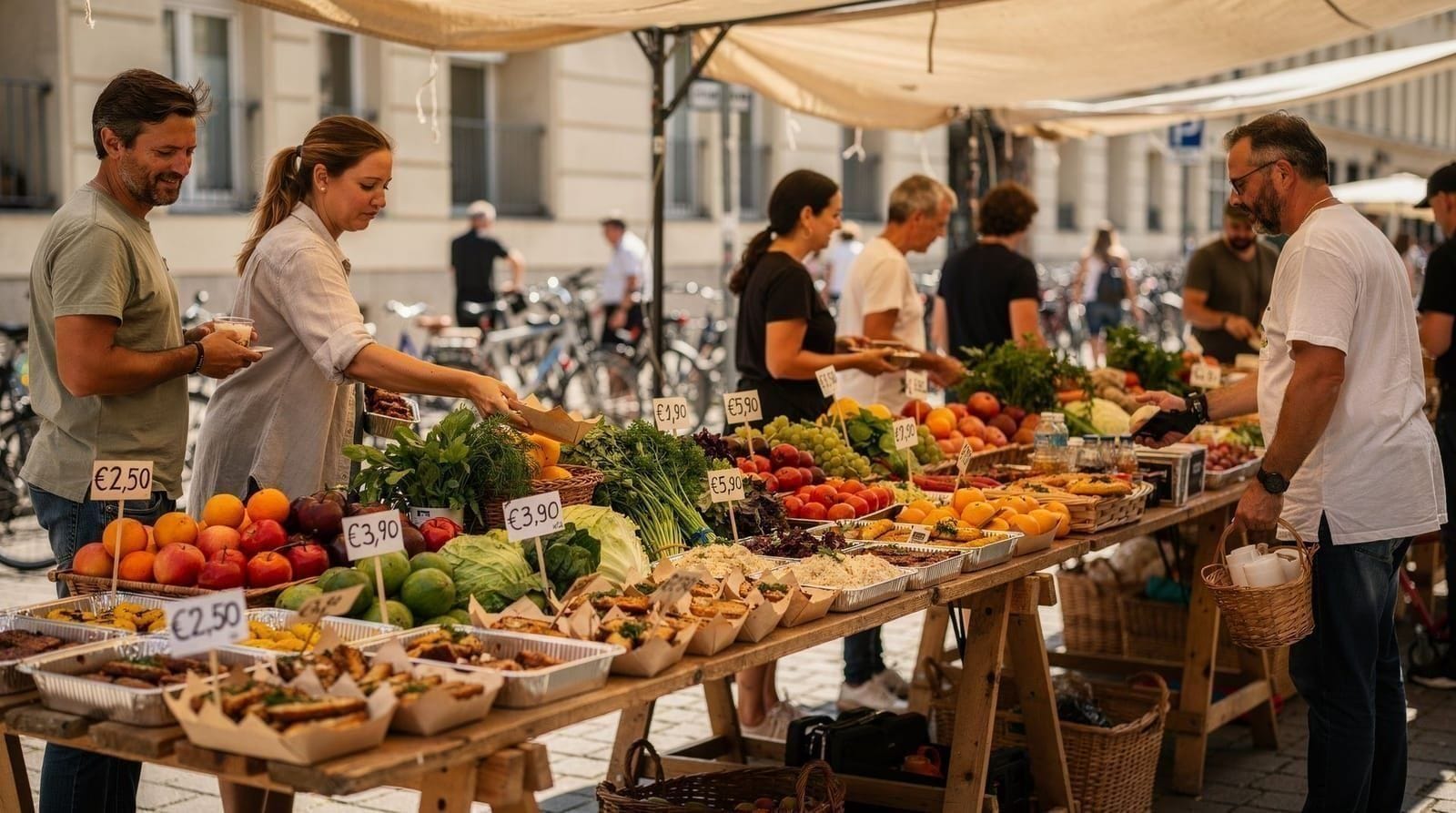
A structured orientation walking tour — useful on arrival day regardless of which month you visit, gets your bearings efficientlyOne aspect rarely mentioned in timing guides: Berlin’s food markets operate on specific schedules that don’t always align with tourist visit patterns. Markthalle Neun opens Tuesday, Friday, and Sunday only. The Turkish market on Maybachufer is Tuesday and Friday. Mauerpark flea market is Sunday only. If food markets are part of your itinerary, confirm the specific days align with your Berlin stay before booking flights.
The Berlin trip planning guide has the complete pre-trip checklist including booking timelines for Reichstag dome (reserve weeks ahead via bundestag.de), popular restaurants, and any tours that require advance reservation.
FAQ
What is genuinely the single best month to visit Berlin? May, on balance — warm enough for outdoor culture, long daylight hours, and crowds that haven’t yet reached the July-August peak. Late September is the closest runner-up.
Is Berlin worth visiting in winter? Yes, if your priorities are museums, indoor food and drink culture, or the Berlinale film festival in February. You give up beer gardens, lake swimming, and long daylight hours in exchange for 30-40% lower hotel prices and near-empty major museums.