Tegeler See guide — beaches, boating and Humboldt's lakeside estate
What is Tegeler See and is it worth visiting?
Tegeler See is a 4.5 km long lake in the Reinickendorf district of northwest Berlin, about 14 km from Mitte. It has a designated bathing beach (Strandbad Tegel), a 2.5 km waterfront promenade with cafés and boat hire, and the nearby Schloss Tegel estate redesigned by Schinkel for the Humboldt family. The lake is significantly quieter than Wannsee, water quality is tested regularly by the Berlin Senate, and access by U-Bahn is straightforward. It rewards a half-day to a full-day visit, especially between June and September.
Quick answer: Tegeler See is a 240-hectare lake in Reinickendorf, northwest Berlin, roughly 14 km from Mitte. It has a supervised bathing beach, a 2.5 km promenade with boat hire and café terraces, a Schinkel-redesigned castle connected to the Humboldt family, and a stream nature reserve that flows into its northern end. It is considerably quieter than Wannsee and takes about 25 minutes to reach by U6. The swimming season runs June to September; walking and cycling work year-round.
| Where | Reinickendorf, northwest Berlin, around 14km from Mitte |
| Cost | free to walk; around EUR 3-4 beach entry, EUR 12-15/hr boat hire |
| Time needed | half day to full day |
| Getting there | U6 to Tegel (Alt-Tegel), 15 min walk to the promenade |
| Best time | June-September for swimming; weekdays for fewer crowds |
Getting your bearings: Tegeler See in northwest Berlin
Tegeler See sits in the Reinickendorf district on the northwestern edge of the city. If you are oriented to Berlin by its central landmarks — the Brandenburger Tor, Alexanderplatz, the Tiergarten — Tegeler See feels remote. It is not. The U6 connects Friedrichstraße to the Tegel station (Alt-Tegel) in roughly 25 minutes. From the station to the Greenwichpromenade on the eastern shore is a 15-minute walk. Total door-to-door travel from Mitte to waterside: under 45 minutes.
The lake itself is 4.5 km long and up to 1.5 km wide, with a surface area of around 240 hectares and depths reaching 16 metres at the deepest point. It forms part of the broader Havel river system — Tegeler See connects to the Havel via a series of waterways and canals, and day-trip boat services from the lake run south to Spandau, where the Havel meets the Spree. This connectivity is one of the lake’s underappreciated qualities: arriving by U-Bahn and departing by boat toward Spandau is a genuinely pleasant way to structure a summer afternoon.
The lake occupies a geographical position in Berlin that was heavily shaped by the Cold War period. The former Tegel Airport (IATA: TXL), which operated immediately north of the lake, closed in November 2020 when Berlin Brandenburg Airport (BER) opened. The former airport site is currently undergoing a long-term transformation as the “Schumacher Quartier,” a planned mixed-use urban development expected to be built out over the coming decades. For visitors arriving now, the development is not yet visible from the lake itself, but the absence of the low-flying aircraft that characterised the Tegel area for generations is immediately noticeable. The lake is quieter — in every sense — than it was five years ago.
For a broader overview of Berlin’s natural and built landscapes, the lake fits into a northwest corridor of parks, forests and waterways that extends through Reinickendorf toward Spandau.
A brief history of Tegel as a place. The name “Tegel” predates the airport and the modern district by centuries — it derives from a Slavic root related to the surrounding marshland, a reminder that this corner of Berlin was wetland and forest long before Prussian settlement. The village of Tegel grew slowly around the lake through the medieval and early modern periods, remaining a rural outpost relative to the growing city to the south. It was the Humboldt family’s arrival in the early 19th century, and Schinkel’s redesign of the estate, that gave the area its first real architectural significance. Industrialisation reached Tegel later than central Berlin, and the district retained a semi-rural character well into the 20th century — a character that the airport’s closure in 2020 has, in some ways, begun to restore.
The Greenwichpromenade: the heart of the lakefront
The Greenwichpromenade is the 2.5 km waterfront walkway that runs along the eastern shore of Tegeler See. It is free to walk at any time and is the most active and visitor-facing part of the lake. The name carries a specific meaning: Tegel and the London Borough of Greenwich established a twin-town relationship historically connected by trade and navigation. The promenade name acknowledges that link.
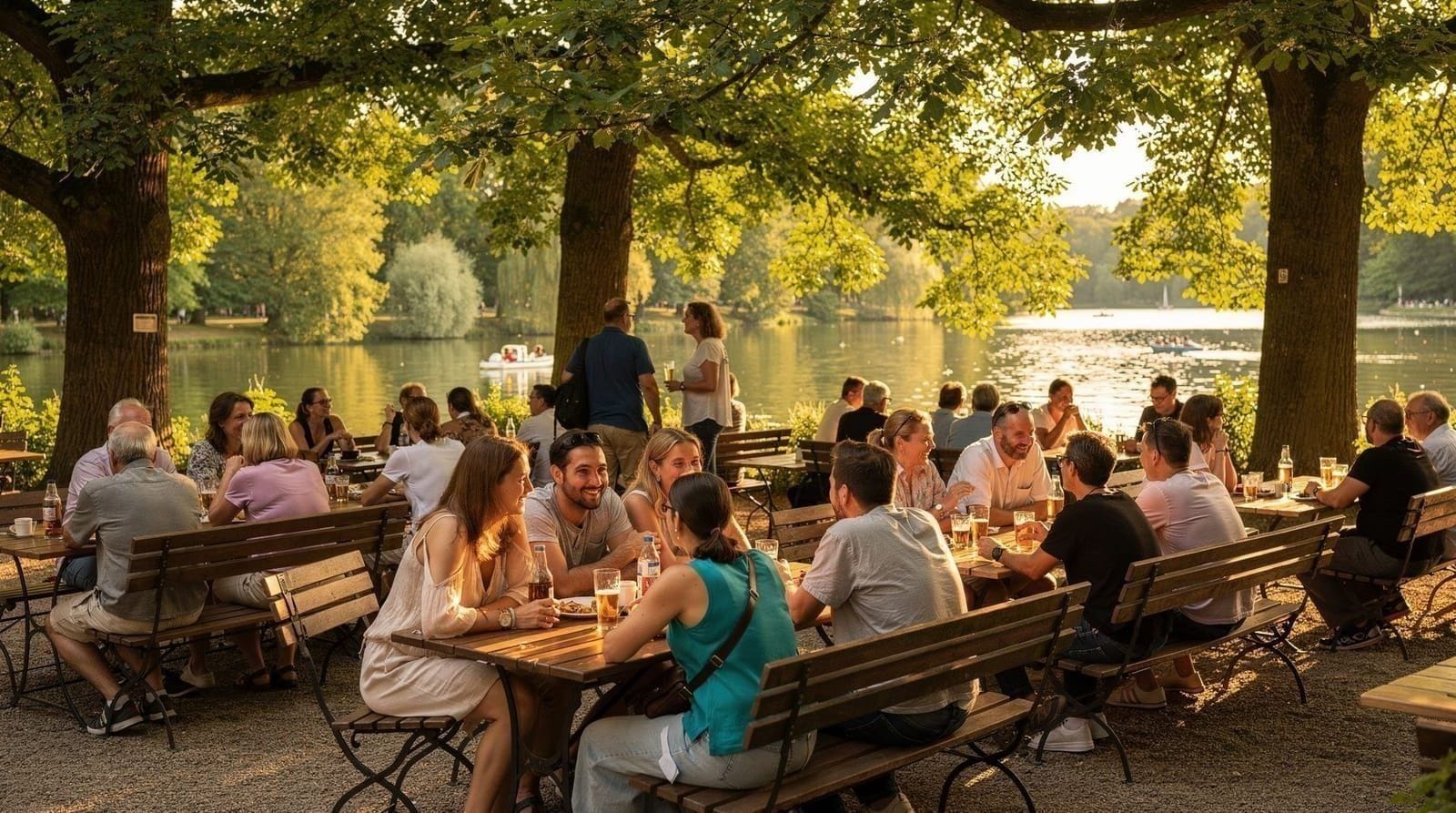
The character of the Greenwichpromenade is relaxed rather than formal. There are no large tourist infrastructure installations here — no branded visitor centres, no significant queues. What you find instead is a broad, flat walking path with open views across the water, café terraces and beer garden seating spaced along the route, grassy slopes where families spread out on warm days, and a boat hire area roughly midway along the promenade.
On warm summer weekends the promenade fills with local Berliners — families with children, older residents walking dogs, cyclists who have ridden out from Wedding or Reinickendorf, and groups of friends occupying the beer garden benches from early afternoon. It has the character of a neighbourhood amenity rather than a tourist attraction, which is both its main appeal and its main limitation for visitors expecting polished facilities.
The Café am Tegeler See, located on the promenade, is the most convenient option for food and drink. Prices are reasonable by Berlin standards. For families with children, it is one of the more practical lakeside eating options in the city — the setting is informal, there is outdoor seating with lake views, and it is not particularly oriented toward the evening dining market. Biergarten seating along the promenade offers additional options on warm days.
If you are spending a full day at the lake, the promenade works well as a base from which to walk north into the Tegeler Fließ nature reserve or south toward the Strandbad Tegel bathing beach. It is also the departure point for boat hire.
Swimming at Tegeler See
There are two main ways to swim at Tegeler See, and they suit different preferences.
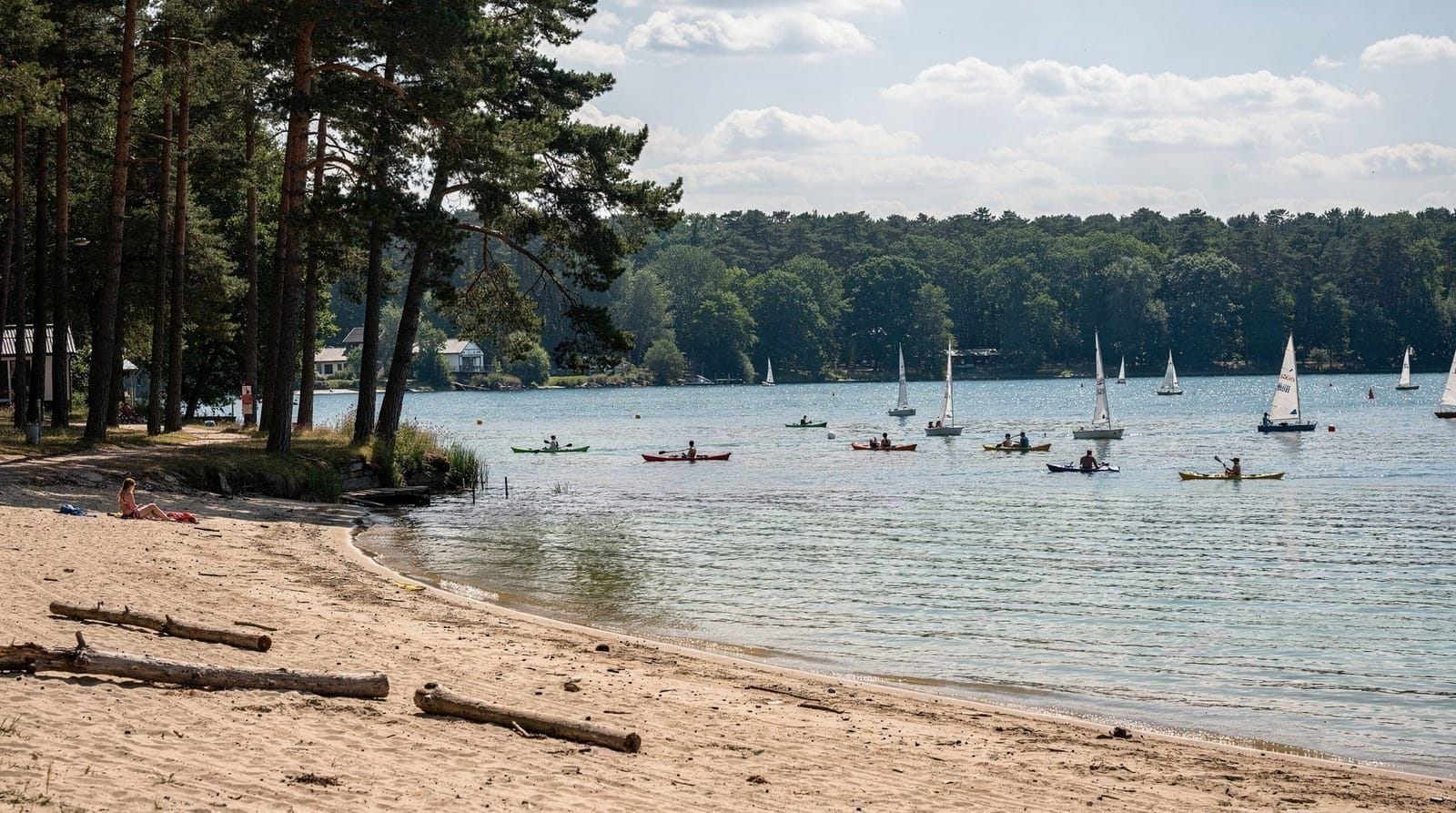
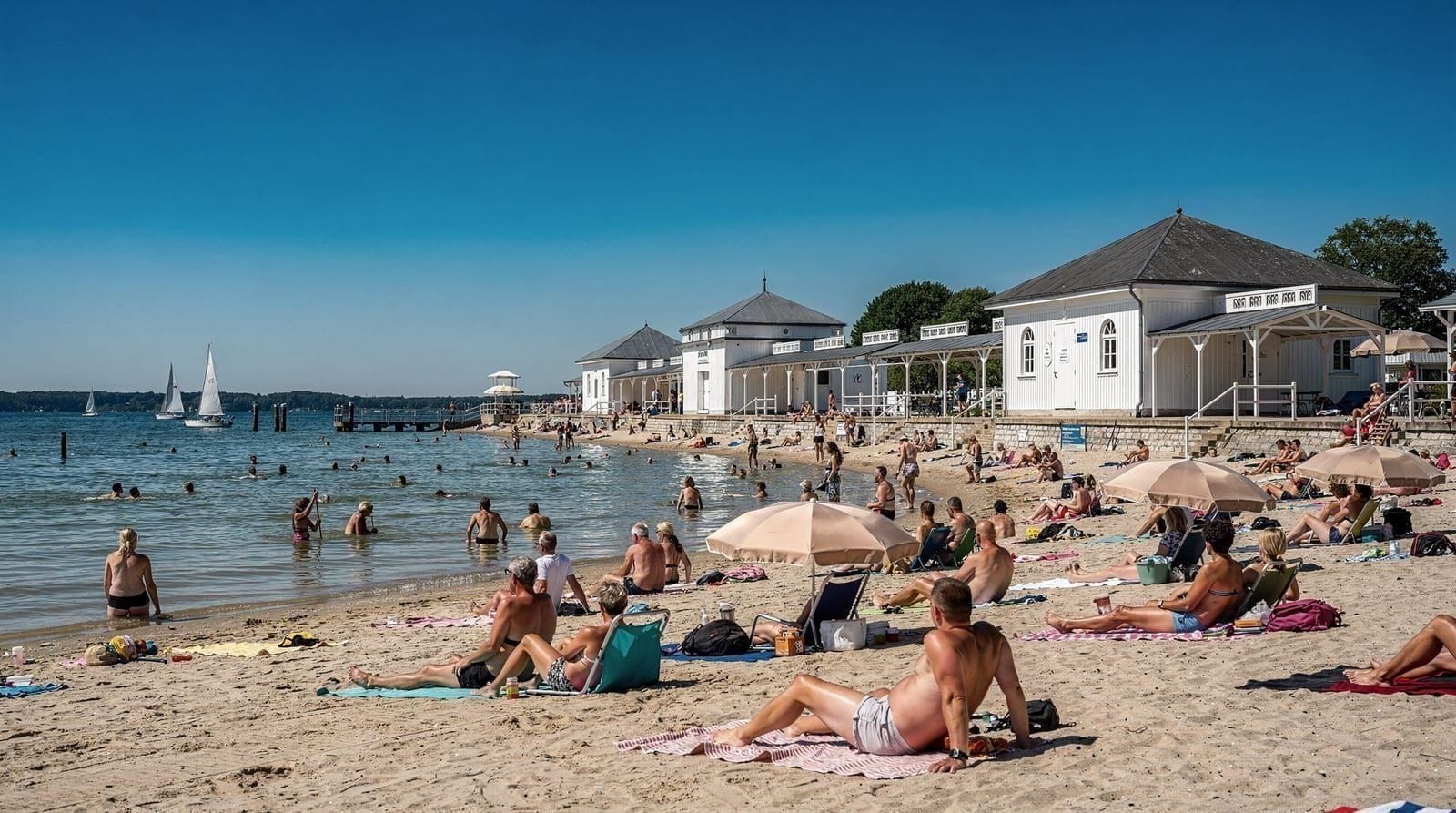
Strandbad Tegel is the official lido on the north side of the lake. It charges a small entry fee — around €3-4 per adult in recent seasons, though this should be confirmed on the day as municipal pricing can shift. In return you get changing rooms, shower facilities, and lifeguards on duty during the summer season (generally June to September, weather dependent). The bathing area has shallow entry points suitable for children. It is managed and tested regularly, making it the safer and more structured option, particularly for families with young children. If you are visiting on a hot summer weekend, arrive before 11 am to secure a good spot and avoid the longest queues.
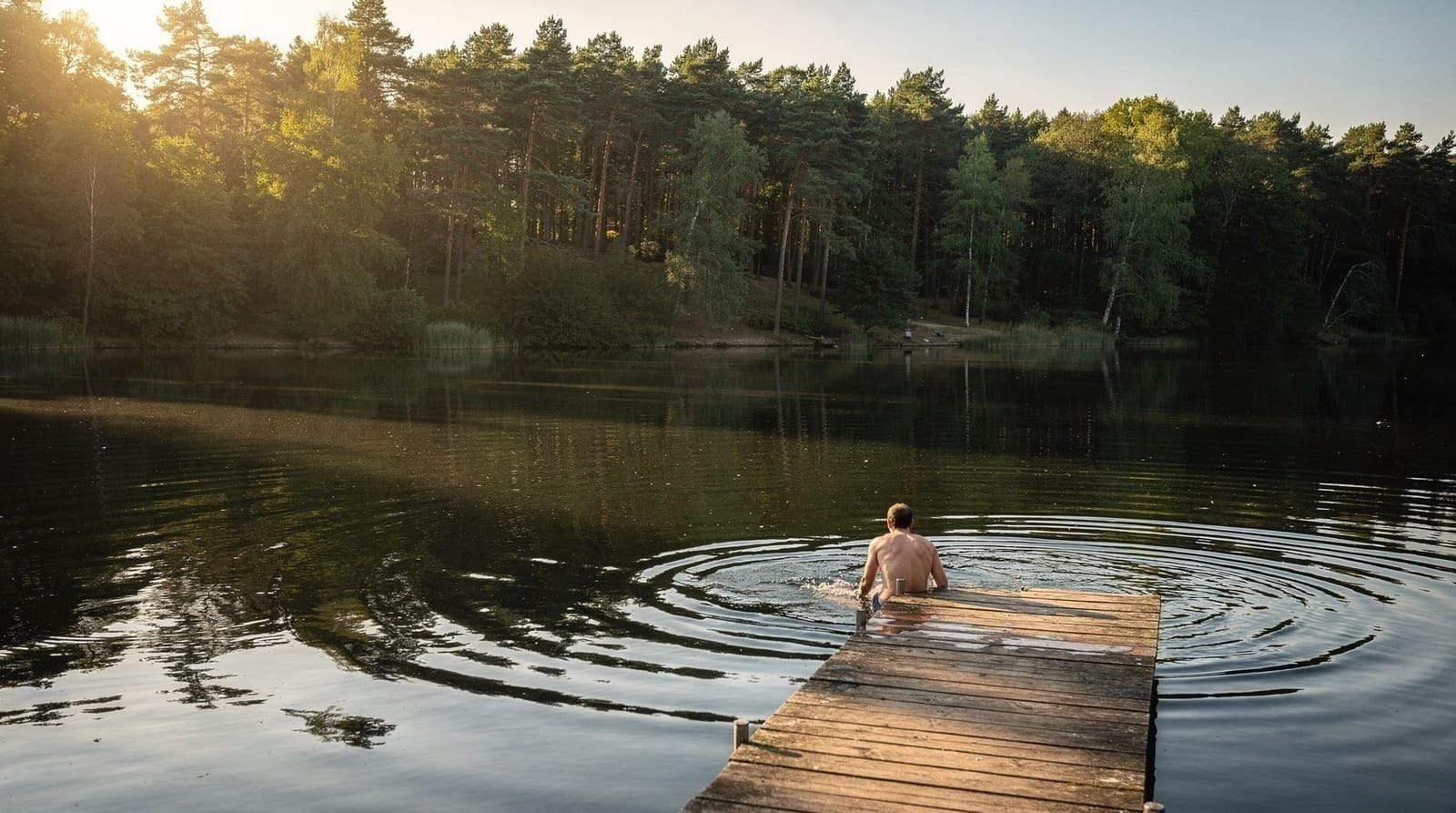
Free access points along the eastern bank, accessible from the Greenwichpromenade, are used by locals throughout the swimming season. These are informal rather than designated bathing spots, and they lack lifeguard supervision. They are perfectly practical for confident swimmers who are comfortable judging their own conditions.
Water quality at Tegeler See is monitored throughout the season by the Berlin Senate. Results — including any temporary advisories following heavy rainfall — are published at berlin.de/badeseen. This is worth checking before you travel on any day when there has been significant rain in the preceding 48 hours, as storm runoff can temporarily affect water quality at Berlin lakes.
The swimming season effectively runs from late June through August, with September viable on warm years. Outside these months, the lake is used primarily for walking, cycling and birdwatching rather than bathing.
For a full comparison of swimming options at Berlin’s lakes, Tegeler See sits alongside Müggelsee and Wannsee as one of the city’s principal bathing lakes, each with a distinct character and position.
Boat hire and getting out on the water
Pedalo and rowboat hire is available from the Greenwichpromenade from approximately May to September. Prices in recent seasons have run around €12-15 per hour, paid at the hire point. No special licence or experience is required — these are small-scale leisure craft for calm lake use. Payment is typically cash only at informal hire operations of this kind, so plan accordingly.
The lake is large enough to make an hour on the water feel genuinely spacious. The western shore is more forested and less developed than the eastern promenade side, and rowing or pedalling across to that shore and back gives a good sense of the lake’s scale. Cormorants, great crested grebes and mute swans are visible from the water throughout the season — the grebes in particular are present in numbers and can be watched at closer range from a boat than from the promenade shore.
If you have your own kayak or stand-up paddleboard, Tegeler See is navigable, though be aware of the motor launch traffic on the main channel routes connected to the Havel system. Keep to the edges and away from the marked navigation channels. Sailing and windsurfing clubs also operate on the lake, and their presence on breezy afternoons — particularly along the more open western stretch — adds visual interest even if you are not participating yourself.
The lake’s connection to the Havel also means that day-trip boat services operate toward Spandau from the lake during the summer season. If you are interested in combining a lake visit with a river trip, this is a pleasant option that avoids retracing your route by U-Bahn — you arrive at the lake by rail and leave by water, or vice versa.
Schloss Tegel: the Humboldt family estate
Schloss Tegel occupies a position on the northern shore of the lake that is easy to underestimate on a map but rewards the walk to reach it. The building’s history runs deeper than its current modest scale suggests.
The site was originally a hunting lodge dating to the 16th century. In the early 19th century it came into the possession of the Humboldt family — specifically Wilhelm von Humboldt, the linguist and educational philosopher whose ideas about the university as a space for both teaching and research shaped German higher education and continue to influence university models internationally. Humboldt approached Karl Friedrich Schinkel, then the most significant architect in Prussia, to redesign the building. Schinkel’s work was completed between 1820 and 1823, producing the compact neoclassical structure visible today: four corner towers, a frieze incorporating classical relief elements, and an interior that reflects Humboldt’s interest in antiquity and scholarship.
The estate has remained in Humboldt family ownership — unusually, given the passage of two world wars and the division of Germany — and is not a conventional public museum. Guided tours of the exterior and selected interior spaces run on a limited schedule, typically Sunday afternoons during the summer season, at a fee of around €10. The sculpture collection on the grounds, which includes classical and neoclassical pieces assembled by Wilhelm and his circle, is part of what the tours cover.
The practical implication for visitors is important: do not make the walk to Schloss Tegel the primary purpose of your trip without verifying that tours are running on the day you plan to visit. The schedule is not continuous and can change between seasons. Calling ahead is the only reliable way to confirm availability. If you arrive and tours are not running, the exterior of the building and the lake-facing grounds can be seen from outside the estate boundary, but the interior and the sculpture collection are not accessible without a tour.
This is a worthwhile stop for visitors interested in German intellectual history of the early 19th century — Humboldt’s ideas connect directly to debates about education and the university that remain current — but it requires some planning. It works well combined with the Greenwichpromenade and Tegeler Fließ in a full-day structure.
Wilhelm von Humboldt is buried in the estate’s small family cemetery, alongside his wife Caroline and other family members, in a quiet wooded corner of the grounds accessible during tour times. His brother, the naturalist and explorer Alexander von Humboldt — whose scientific expeditions across the Americas and whose name attaches to institutions, mountains, and even the Humboldt Current in the Pacific — is a more globally recognised figure, but it was Wilhelm’s educational reforms, conceived partly while resident at Tegel, that had the more direct and lasting institutional impact on Germany itself, most visibly in the founding principles of what is now Humboldt University in central Berlin.
Tegeler Fließ: the nature reserve at the northern inlet
The Tegeler Fließ is a stream and surrounding wetland that enters Tegeler See at its northern end. It is formally designated as a nature reserve and is among the ecologically most intact waterway environments within Berlin’s city boundaries.
The stream itself runs through alder woodland and transitions into reed beds where it approaches the lake. The combination of running water, standing wetland and mixed woodland within a compact area creates habitat diversity that supports an unusually wide range of bird species for an urban setting. Kingfishers are resident — spotting one perched above the water or flying low along the stream channel is not a rare occurrence here, which is unusual in a city environment. Grey herons are common throughout the year. Great crested grebes breed on the lake margins. In spring, reed warblers and other wetland passerines arrive. Cormorant colonies are visible on the lake itself.
Walking trails run along the stream from where it enters the lake northward. Entry to the reserve is free and no permit is required. There are no facilities — no café, no visitor centre, no marked map boards of significance. This is a genuine nature reserve in the practical sense: the appeal is the habitat itself and the wildlife within it, not infrastructure.
The best time to visit for birdwatching is early morning, particularly in spring and early summer when species are actively singing and breeding. A pair of binoculars significantly improves the experience but is not strictly necessary given how approachable some of the resident species are.
The Tegeler Fließ connects to a broader green corridor that runs north from the lake through the Bürgerablage area and toward the former Flughafensee — a smaller lake adjacent to the now-closed Tegel Airport site. This corridor is accessible on foot and extends the potential walking distance beyond the Greenwichpromenade for those who want a longer day.
Flughafensee itself deserves a specific mention for visitors extending their walk this far. Considerably smaller and quieter than Tegeler See, it sits directly against the former airport perimeter and has its own modest bathing area used mostly by locals rather than visitors. The contrast between the lake’s calm water and the flat, open former airfield beyond it — still visibly runway-shaped even as the Schumacher Quartier development proceeds — makes for a genuinely strange and interesting half-hour detour for anyone curious about how Berlin repurposes large infrastructure sites once they close.
Walking and cycling the lake
The lake is ringed by accessible paths, though a complete circuit is not straightforward because the western shore is less developed and not uniformly accessible by path. The eastern shore from the Greenwichpromenade is the most developed section. A comfortable half-day walk covers the promenade, a section of the Tegeler Fließ to the north, and the approach to Schloss Tegel — roughly 6-8 km depending on detours.
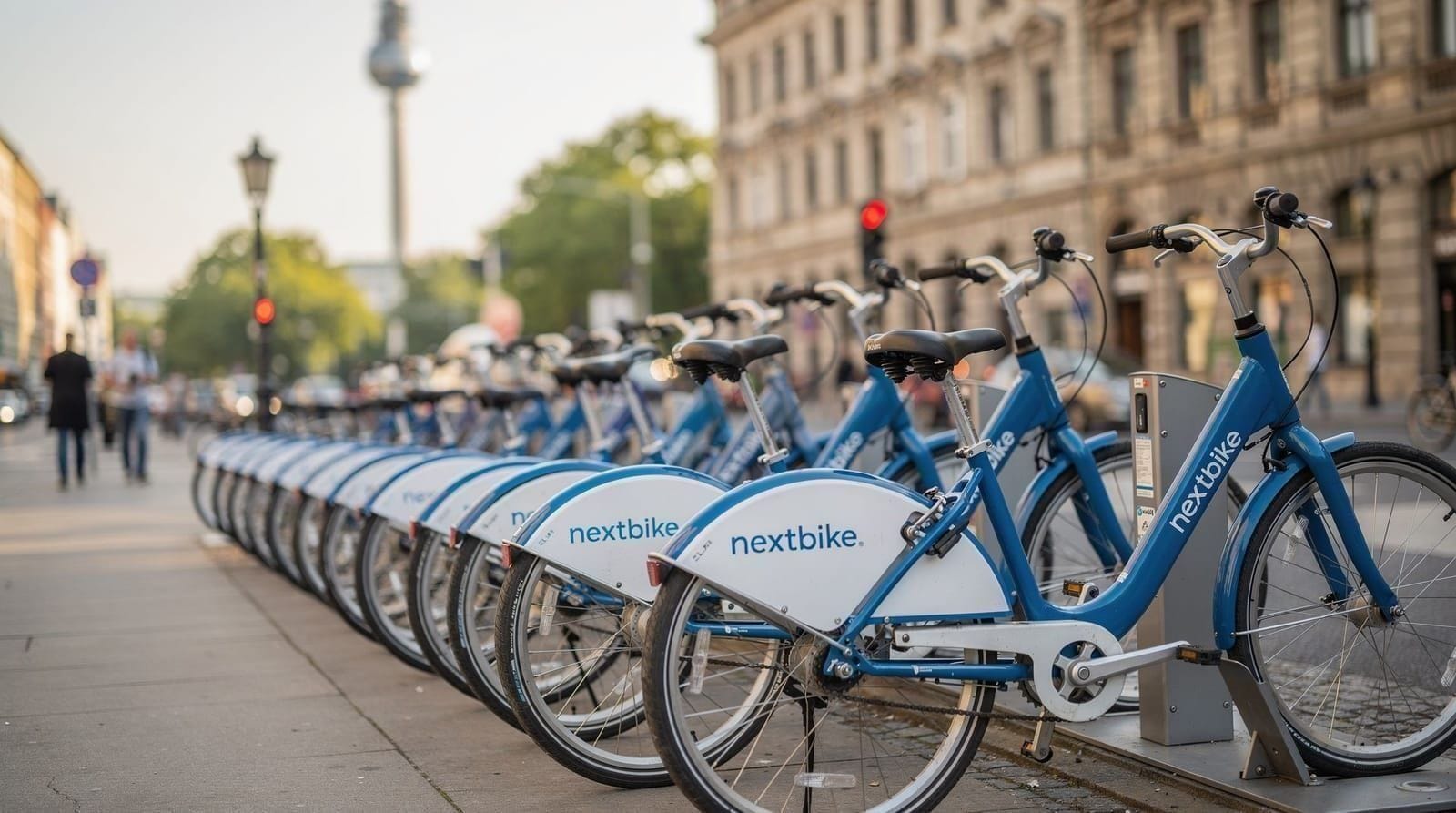
For cycling, the lake makes a viable destination from central Berlin. From Wedding, the route along the Humboldthafen corridor and through Reinickendorf is mostly flat and largely on marked cycle infrastructure. From Mitte the journey takes 45 minutes to an hour at a comfortable pace. Berlin’s bike rental network covers Reinickendorf to some extent, though availability of docked bikes at the lake end can be patchy — checking before you set out is advisable. Using your own hired bike from a more central location is the more reliable option.
In summer, the lake fits naturally into a cycling day that might also include the Grunewald forest (southwest Berlin, very different character) or the Tiergarten as an en-route rest. In terms of distance these are not practical on the same day by bike unless you are comfortable with 35-40 km of total riding.
For visitors without a bike of their own and unwilling to rely on patchy docked availability at the lake, a straightforward alternative is to walk the Greenwichpromenade section on foot and treat the wider cycling loop as an aspiration for a future, more equipped visit rather than something to force into a single day.
For a family cycling context, the Greenwichpromenade section is entirely flat and manageable with children. The route from Alt-Tegel U-Bahn station to the promenade involves standard urban streets. Berlin with kids has additional suggestions for family-oriented cycling and outdoor days across the city.
Wildlife at the lake
Beyond the birdwatching highlight of the Tegeler Fließ, the lake itself supports a year-round resident population of wildlife worth noting for visitors.
Mute swans are present in large numbers throughout the year and are accustomed to humans — this makes them highly photogenic but also means they actively approach anyone with visible food. Feeding swans is not advisable and at busy points on the promenade the swans can be assertive. Children should be supervised near groups of swans, particularly during the April-July breeding period when adults with cygnets can be territorial.
Great crested grebes are among the more visually distinctive birds on the lake. Their elaborate breeding display — a face-to-face head-shaking courtship ritual involving both partners — takes place in spring and is occasionally visible from the promenade. The species breeds on the reed margins and can be observed throughout summer with chicks riding on the back of the adults in early weeks.
Cormorants roost in numbers at Tegeler See, which remains a matter of some tension with the lake’s fishing community. The birds fish the lake throughout the day and are visible in long, low lines flying across the water surface, or standing on exposed branches with wings spread to dry.
Beyond the birdlife, the lake supports a healthy fish population — pike, perch, zander and bream are all present, and recreational angling is popular among locals with the correct German fishing licence (Angelschein), which visitors are unlikely to hold and should not attempt informal fishing without. Roe deer are occasionally sighted at dawn or dusk in the wooded sections of the western shore and around the Tegeler Fließ margins, though sightings are opportunistic rather than reliable. In late summer, dragonflies are abundant along the reed margins of the nature reserve, adding to the sense that this corner of Berlin functions as a genuine, if modest, wildlife refuge rather than a purely recreational amenity.
Practical information for your visit
Getting there: U6 to Tegel (Alt-Tegel), then 15 minutes on foot to the Greenwichpromenade. Bus 222 serves points along the lake for those who want to travel further north without walking.
When to go: Swimming season June to September; peak conditions July and August. Weekdays are significantly quieter than weekends — if your schedule allows, a Tuesday or Wednesday visit to a warm Tegeler See is a notably different experience from a Saturday in July. Walking and cycling at the lake are pleasant year-round, though the promenade café infrastructure closes or reduces hours outside the main season.
What to bring: Swimwear and a towel if visiting Strandbad Tegel or the free access points. Cash for boat hire and for smaller café operations. Binoculars are worth the weight if you plan to spend time in the Tegeler Fließ. Sunscreen in summer — the promenade and beach have limited shade.
Costs: Strandbad Tegel entry approximately €3-4. Boat hire approximately €12-15 per hour. Schloss Tegel guided tours approximately €10. The Greenwichpromenade, Tegeler Fließ nature reserve, and free lake access points cost nothing.
Water quality: Check berlin.de/badeseen before visiting if there has been recent rainfall. The Berlin Senate publishes current quality assessments for all designated bathing lakes including Tegeler See throughout the season.
Food: Café am Tegeler See and beer garden options along the Greenwichpromenade cover most needs. Both are affordable rather than fine dining. For a longer stay, bringing a picnic is entirely practical and very common among locals.
Accessibility: The Greenwichpromenade is flat, paved, and manageable for wheelchairs and pushchairs along its full 2.5 km length. Strandbad Tegel has designated accessible changing facilities. The Tegeler Fließ trails are less consistently surfaced and can be uneven after rain, so check conditions if mobility is a concern. Schloss Tegel’s grounds involve some uneven historic paving around the building itself.
Toilets: Public facilities are available at Strandbad Tegel and at several points along the Greenwichpromenade during the main season; provision is more limited outside summer months, so plan around café stops if visiting in the off-season.
Visiting outside summer: The lake is not a one-season destination. Autumn brings good light for photography along the promenade and fewer people on the Tegeler Fließ trails, making birdwatching easier without summer foliage obscuring sightlines. Winter visits suit walkers and cyclists comfortable with cold-weather outings; the promenade cafés reduce hours but rarely close entirely, and a walk to Schloss Tegel’s exterior remains possible year-round even when tours aren’t running.
For a broader summer itinerary, Berlin in summer covers the full range of seasonal options across the city. Family day trips from Berlin includes Tegeler See as a half-day option alongside destinations outside the city boundary.
How Tegeler See fits a Berlin visit
Tegeler See is not a site that belongs on a short first visit to Berlin. The city centre has a density of historical, cultural and architectural weight that is worth spending two or three full days absorbing before heading to the lakeland periphery.
For visitors on a longer stay — five days or more — or for those returning to Berlin and already familiar with the central sites, the lake represents one of the better uses of a spare afternoon or a full day. It gives access to a genuinely local, non-tourist-facing version of Berlin summer life that is absent from the Museumsinsel, Unter den Linden and the Wall memorial circuit.
It also works as a contrast to Müggelsee on the southeast side of the city. Both are large urban lakes with supervised bathing beaches and waterfront promenades. Müggelsee has stronger café infrastructure and is more developed for day visitors; Tegeler See is quieter and more naturalistic in character. If your itinerary allows both, they complement each other well. A three-day Berlin itinerary naturally focuses on the centre; a four-day visit with children is the kind of schedule in which a Tegeler See afternoon fits comfortably.
If you are walking the Berlin free walking tours circuit through the city centre and looking for a contrasting outdoor day, Tegeler See is the most complete lake option in northwest Berlin — one lake, one promenade, one nature reserve, one piece of Schinkel architecture, and enough space to feel like you have genuinely left the city for a few hours, even though you haven’t.
Tegeler See vs Wannsee vs Müggelsee
For visitors deciding which Berlin lake to prioritise, the honest comparison depends on what you want from the day:
| Lake | Crowds | Getting there | Best for |
|---|---|---|---|
| Tegeler See | Quiet, local | U6, around 25 min from Mitte | Quiet swim, Schloss Tegel, nature |
| Wannsee | Busiest, most touristy | S-Bahn, direct connections | First-time visitors, history |
| Müggelsee | Moderate | S-Bahn to Köpenick area | Café infrastructure, day-trip feel |
If you only have time for one lake and this is a short first visit, Wannsee’s stronger transport links and historical adjacency make it the more efficient choice. If you have a longer stay or have already covered the centre, Tegeler See rewards the extra travel time with a noticeably calmer atmosphere.
Frequently asked questions about Tegeler See guide
How do I get to Tegeler See by public transport?
Take the U6 to Tegel (Alt-Tegel) — the journey from Friedrichstraße takes around 25 minutes. From the station it is a 15-minute walk west to the Greenwichpromenade on the eastern shore. Bus 222 runs along the lake and is useful if you want to reach points further north without walking. There is no S-Bahn stop directly at the lake. If you are cycling, the lake is easily reached via the cycle network from Wedding or Reinickendorf within 30-45 minutes from central Berlin.Can you swim in Tegeler See?
Yes. The main official bathing area is Strandbad Tegel on the north side of the lake, which charges a small entry fee (around €3-4 in 2025; confirm current pricing on the day). It has changing rooms, showers and lifeguards on duty in summer. There are also free access points along the eastern bank where locals swim informally. Water quality is monitored by the Berlin Senate throughout the swimming season (June to September) and results are published at berlin.de/badeseen — it is worth checking before you go after heavy rainfall.What is the Greenwichpromenade?
The Greenwichpromenade is a 2.5 km lakefront promenade on the eastern shore of Tegeler See, the most developed and lively section of the lake. It is free to walk and has cafés, beer garden seating, a boat hire area, and open grassy stretches. The name comes from the London borough — Tegel and Greenwich are Berlin sister districts with a historical connection. The promenade is accessible within 15 minutes of the U6 Tegel station and is the natural starting point for any visit to the lake.Can I hire a boat on Tegeler See?
Yes. Pedalo and rowboat hire is available at the Greenwichpromenade from approximately May to September. Prices are typically around €12-15 per hour. This is a genuine family-friendly activity — the lake is calm, the traffic from motor launches is moderate, and the views back towards the wooded western shore are pleasant. No licence or prior experience is required for pedalo or rowboat hire. Arrive early on warm summer weekends as hire boats sell out by midday.What is Schloss Tegel and can I visit it?
Schloss Tegel is a small castle on the northern shore of Tegeler See, originally a hunting lodge redesigned between 1820 and 1823 by the architect Karl Friedrich Schinkel for Wilhelm von Humboldt — the linguist, philosopher and educational reformer whose work shaped modern universities across Germany. The estate has remained in Humboldt family hands and is not a public museum. Guided tours of the exterior and some interior rooms run on a limited schedule, typically on Sunday afternoons in summer, for a fee of around €10. It is strongly advisable to check current tour availability and call ahead before making the trip specifically to visit the castle, as schedules change between seasons.What is the Tegeler Fließ nature reserve?
The Tegeler Fließ is a stream and surrounding wetland nature reserve that flows into the northern end of Tegeler See. It is one of the most ecologically intact waterway systems within Berlin's boundaries. Walking trails run along the stream through alder woodland and reed beds — terrain that supports kingfishers, grey herons, great crested grebes and, in season, reed warblers. Entry is free. The reserve connects the lake to the broader Bürgerablage and Flughafensee areas. It is particularly good for birdwatching in early morning.How does Tegeler See compare to Wannsee?
Tegeler See is smaller, quieter and considerably less tourist-facing than Wannsee. Wannsee has a large lido with an established international profile and good S-Bahn connections from central Berlin. Tegeler See rewards visitors who want a more local, less crowded lake experience. The water quality at both is regularly tested and generally good. Wannsee has more direct historical significance (the Wannsee Conference villa is adjacent), while Tegeler See has Schloss Tegel and the Tegeler Fließ nature reserve as its main cultural and ecological draws.Is Tegeler See suitable for a family day trip?
Yes, it is one of the better family options in northwest Berlin. Strandbad Tegel has shallow entry points for children and supervised swimming in summer. Pedalo hire on the Greenwichpromenade keeps older children occupied. The promenade itself is flat and pushchair-friendly. The Café am Tegeler See and promenade beer gardens offer affordable food options that work for families. Walking the full promenade with a detour into the Tegeler Fließ is a reasonable half-day activity that does not require significant planning.