Third Reich and Cold War sites in one visit: how to combine Berlin's two darkest chapters
Berlin: Third Reich & Cold War 2.5-Hour Guided Walking Tour
Can you combine Third Reich and Cold War sites in a single day in Berlin?
Yes. The Topography of Terror (former Gestapo HQ) is 200 metres from a surviving Berlin Wall section. The Holocaust Memorial is beside the former government district. Checkpoint Charlie, the East Side Gallery, and Bernauer Strasse are all accessible from the same central area. A full day allows serious time at 4–5 sites from both periods. The two histories are physically intertwined across the same geography.
Can you combine Third Reich and Cold War sites in a single day in Berlin? Yes — and more than that: the two histories are physically inseparable in much of central Berlin. The Berlin Wall was built over Nazi ruins. The Soviet War Memorial was made from the marble of the demolished Reich Chancellery. The Cold War division exploited the geography of the Nazi state. Understanding either period in isolation means missing how Berlin’s twentieth century worked as a continuous, connected history.
This guide gives you the practical routing and historical connections to visit both coherently, whether you have a half day, a full day, or three days.
| Cost | free at almost every site; museums around EUR 8-15 |
| Time needed | half day (4-5h) to 2-3 days for real depth |
| Getting there | walkable core; U/S-Bahn between Wall sites |
| Best route | Topography of Terror to Holocaust Memorial to Checkpoint Charlie |
| Booking | Reichstag Dome and Berlin Story Bunker need advance tickets |
Why the two histories are geographically linked
When Soviet forces took Berlin in May 1945, they inherited the physical infrastructure of the Nazi capital. The ministries along Wilhelmstrasse — some partially surviving, some rubble — were either occupied by Soviet military administration or demolished. The government district that had housed the Gestapo, the SS headquarters, the Foreign Office, the Air Ministry, and the Reich Chancellery became the southern end of what would be East Berlin, or in some cases sat directly on the sector boundary.
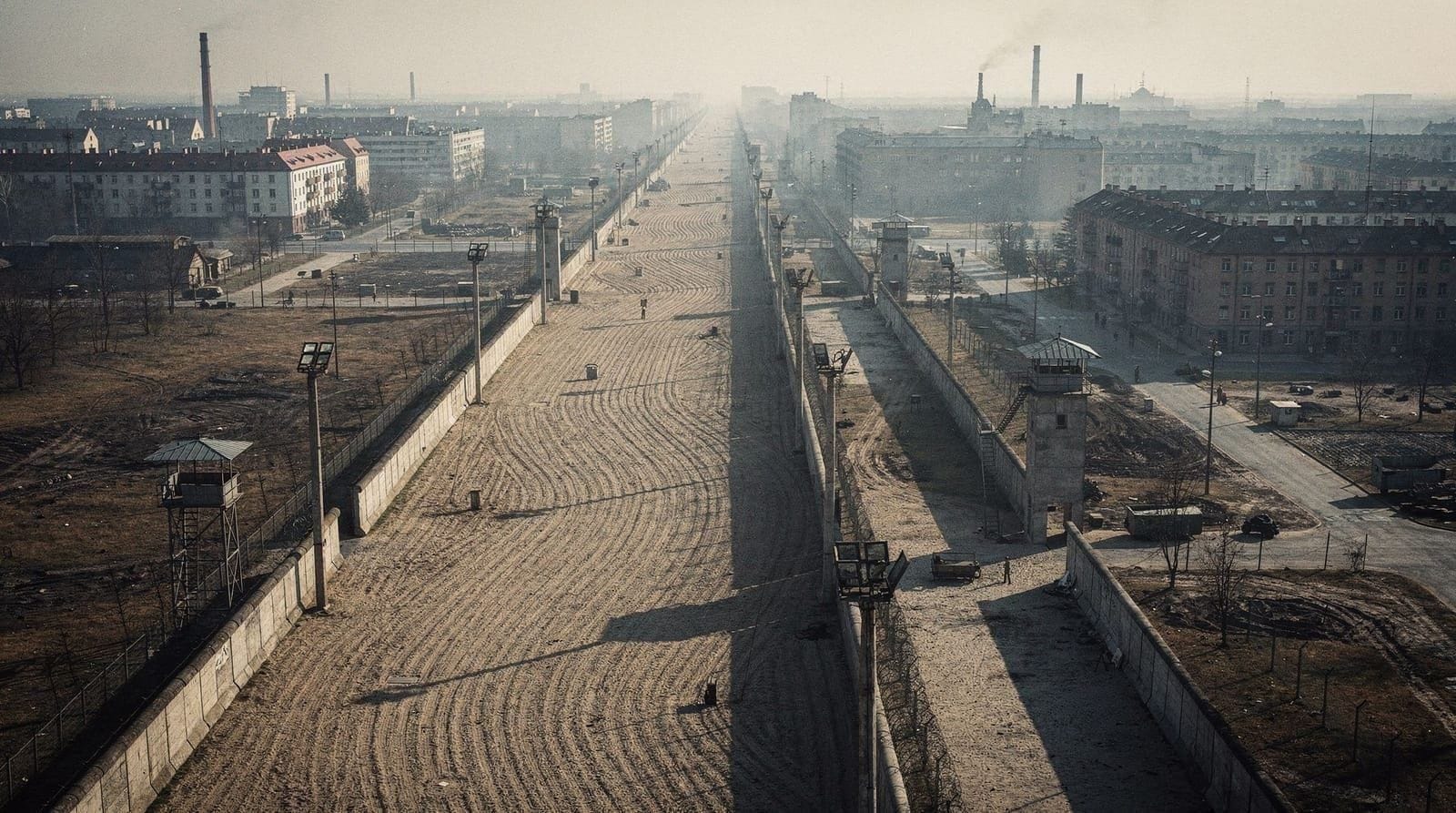
The Berlin Wall, when it was built in 1961, followed a path that in several places ran directly through or over Nazi-era ruins. Niederkirchnerstrasse, which marks the eastern edge of the Topography of Terror site, was formerly Prinz-Albrecht-Strasse — the address of the Gestapo headquarters. The Wall section that runs along that street today was built on the rubble of the buildings that housed the SS and Gestapo.
In Bernauer Strasse, the Wall cut through a residential street that had been ordinary working-class Berlin during the Nazi period. Some of the apartment buildings whose windows were bricked up in 1961 were themselves damaged or rebuilt after 1945.
At Treptower Park, the Soviet War Memorial inaugurated in 1949 used red granite and marble salvaged from the demolished Reich Chancellery — the physical material of Hitler’s government buildings repurposed for a Soviet victory monument.
These are not coincidences. They reflect how the physical city was inherited, transformed, and reused by each successive political order. Recognising this pattern changes how you read the city as you walk it — a plain modern building or a stretch of ordinary pavement is rarely just that in central Berlin; it usually sits on ground with a documented, and often layered, twentieth-century history.
Option 1: The half-day route (4–5 hours)
This route covers the most essential sites where the two histories directly overlap or stand in close proximity. It requires no transport — it is a continuous walk of approximately 2.5 km.
Start: Topography of Terror, Niederkirchnerstrasse 8
Allow 1.5–2 hours.
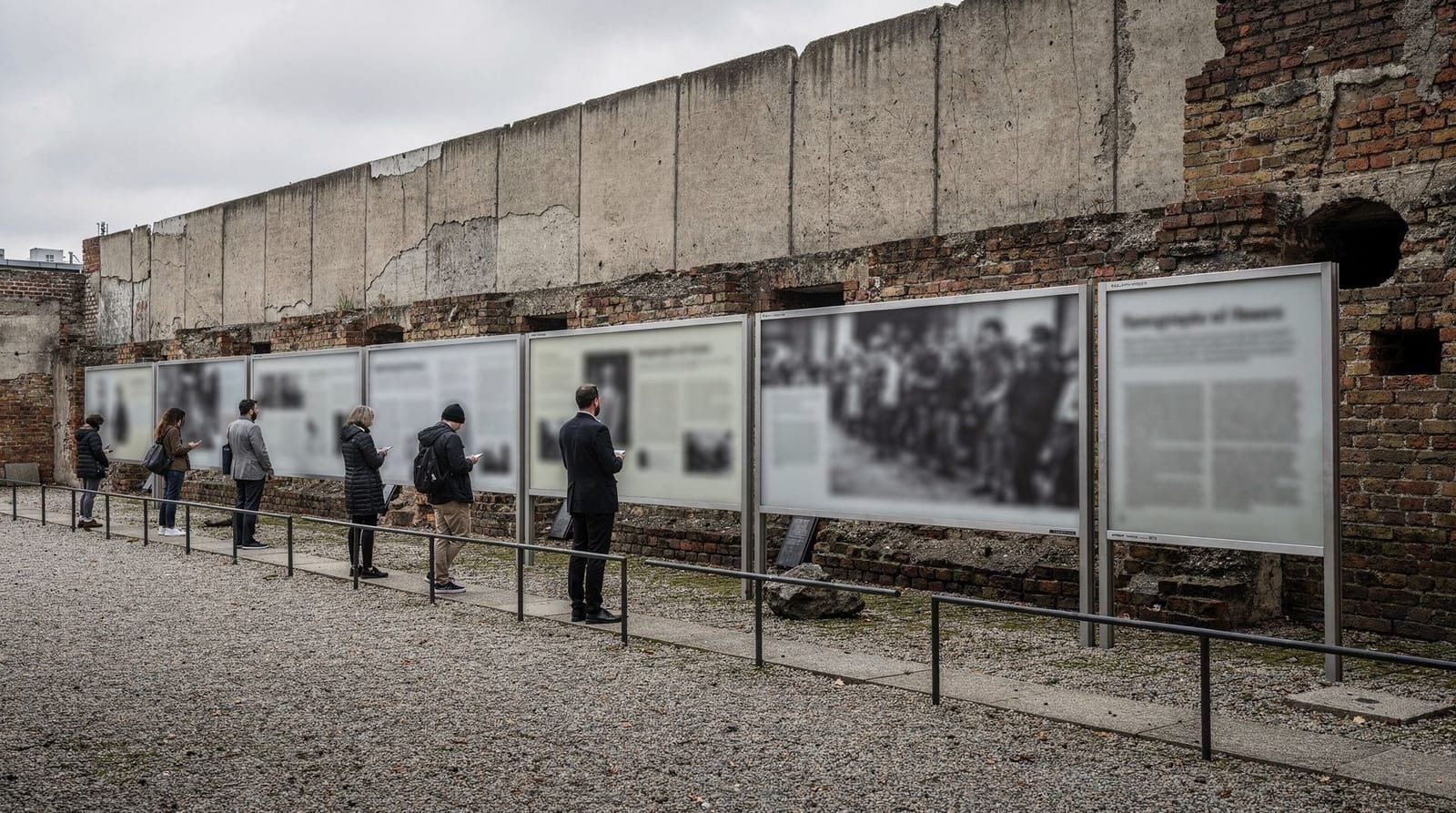
The Topography of Terror is the logical starting point for any combined Third Reich/Cold War visit. The indoor documentation centre covers the Nazi secret police apparatus. The outdoor installation runs along the excavated foundations of the Gestapo and SS complex.
On the east side of the outdoor exhibition, a surviving section of the Berlin Wall runs along Niederkirchnerstrasse. Standing here, you can see the Wall section while reading documentation about the Nazi organisation whose ruins it was built on top of. This physical layering is the most direct expression of the two histories’ connection available anywhere in the city.
The Wall section here is original — not reconstructed. It is one of the few remaining sections of the outer Wall in central Berlin. For the broader context of Berlin Wall history, see the Berlin Wall complete guide.
For the full history of the Gestapo site, see the Gestapo headquarters history guide.
Getting there: U6 Kochstrasse, or S1/S2 Anhalter Bahnhof.
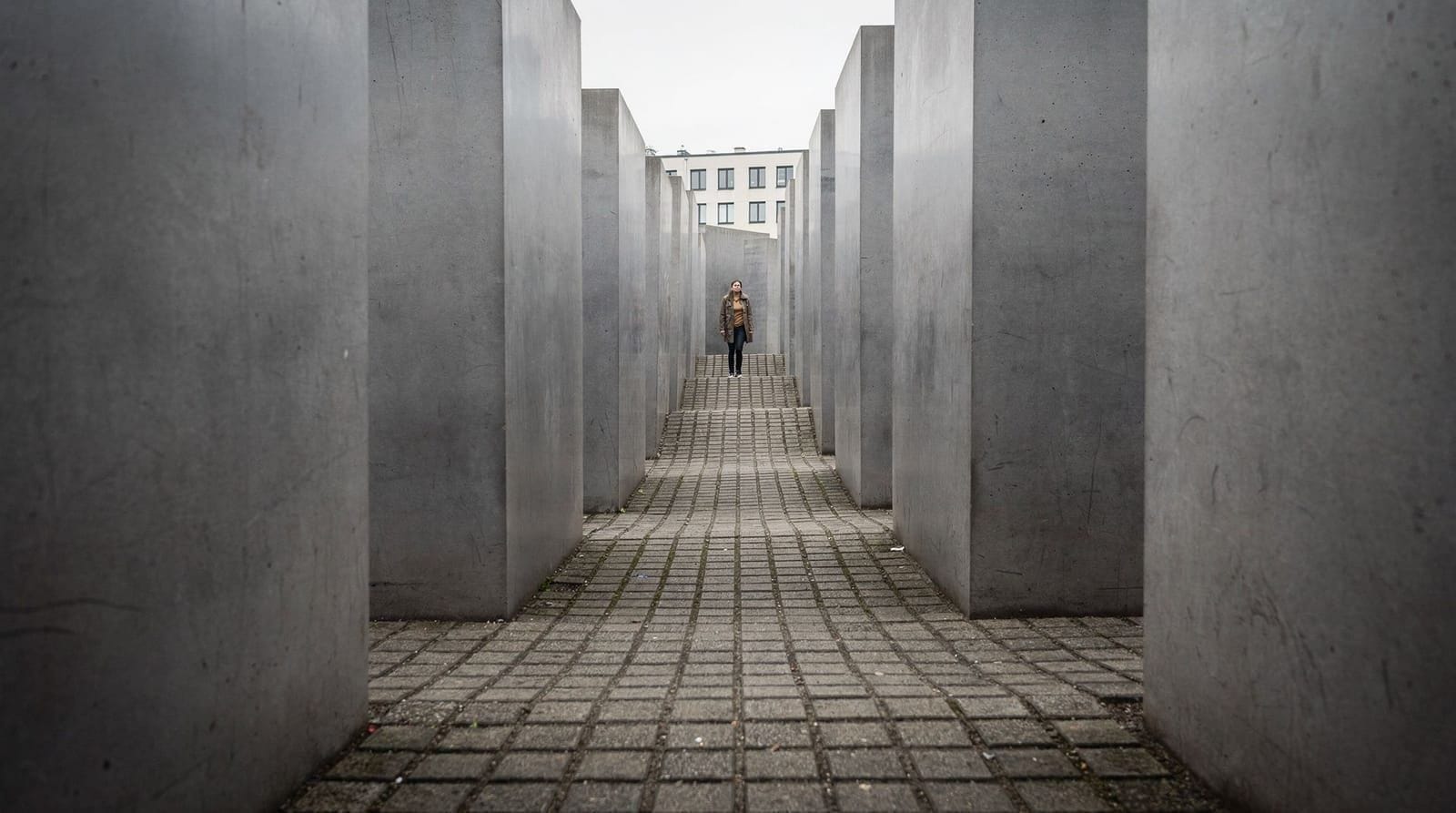
Walk north 10 minutes to: Holocaust Memorial (Denkmal für die ermordeten Juden Europas), Cora-Berliner-Strasse
Allow 45–60 minutes for outdoor stelae; add 1 hour for the underground information centre.
The Holocaust Memorial stands on what was, until 1989, a strip of wasteland near the Berlin Wall’s path in this area. The Western approach to the Brandenburg Gate was lined with the Wall; the ground south of the Gate was largely cleared.
The memorial’s location — adjacent to the ground once occupied by the Reich Chancellery garden, immediately south of the Brandenburg Gate — is a spatial statement about responsibility. The information centre beneath the stelae field (free entry) provides the specific historical content that the outdoor installation deliberately withholds through abstraction.
If time permits only one of the two elements, the information centre — especially the “Room of Names” and the “Room of Families” — provides more historically grounded context.
See the Holocaust Memorial guide for detailed visiting information.
Walk 8 minutes to: Checkpoint Charlie, Friedrichstrasse/Zimmerstrasse
Allow 30–45 minutes.
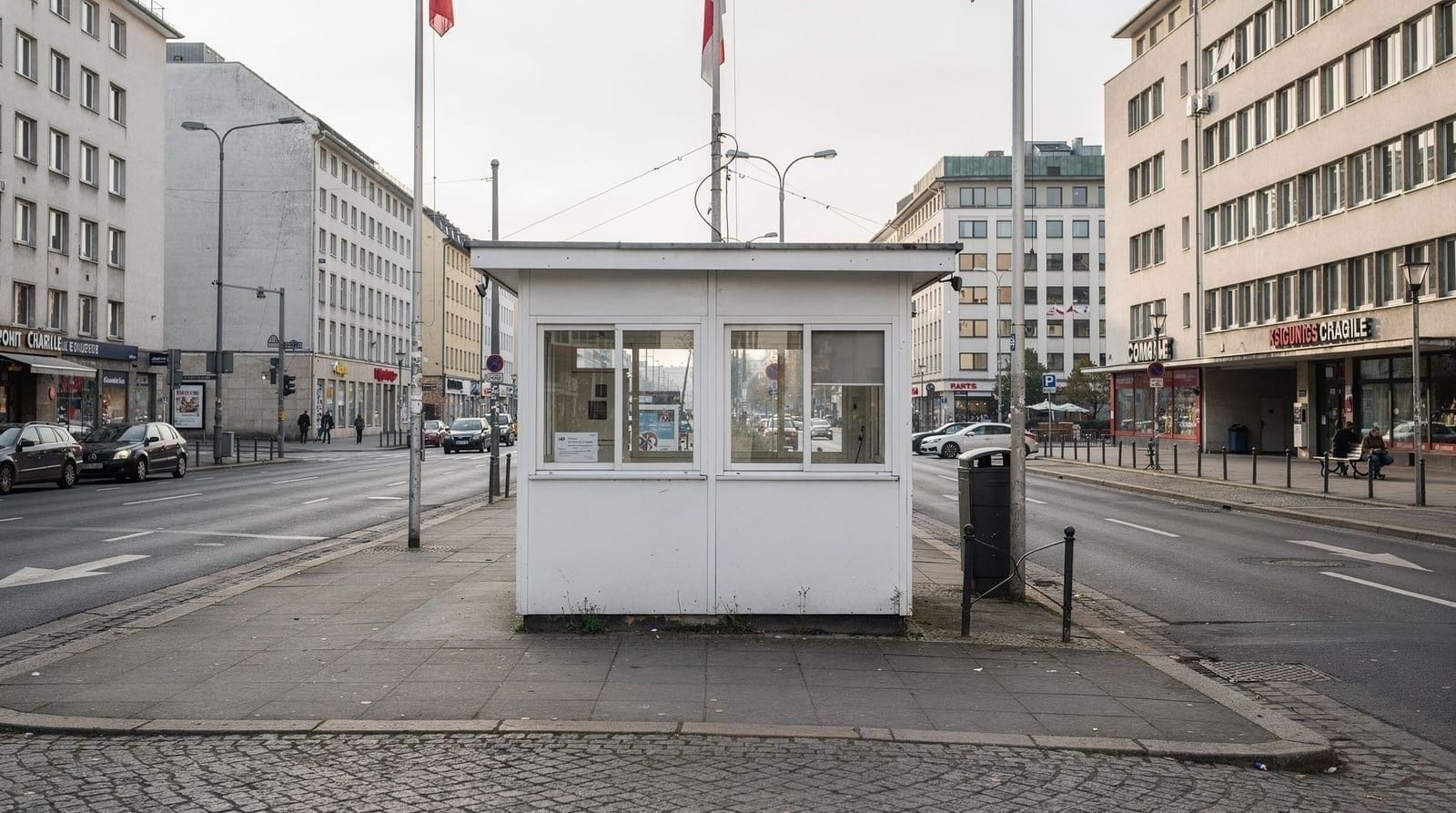
Checkpoint Charlie was the primary crossing point between the American and Soviet sectors of Berlin from 1961 to 1990. The current structure at the crossing is a replica — the original guardhouse was removed in 1990. The surrounding commercial development (souvenir shops, costumed “guards” charging for photographs) is heavy and should be navigated with appropriate scepticism.
What remains genuinely valuable is free: the open-air exhibition on Zimmerstrasse east of the crossing, which documents specific crossing attempts including escape vehicles. The information boards on site are detailed and honest.
The Checkpoint Charlie Museum (Mauermuseum) on the east side of Friedrichstrasse has genuine artefacts but charges admission (€15) and has been criticised for its commercial operation and outdated presentation. It is worth entering if you have not visited a dedicated Cold War museum elsewhere; skip it if you have.
For a full assessment, see the Checkpoint Charlie guide.
The Nazi connection here: Zimmerstrasse, on which Checkpoint Charlie sits, was in the Nazi government district. The US sector boundary ran through streets where Nazi ministries had stood. The crossing point was chosen partly for its central location in what had been the administrative heart of the Third Reich.
Combined Third Reich and Cold War tour — covers the key sites of both periods in 2.5 hoursOption 2: The full-day route (7–8 hours)
Adding the East Side Gallery and Bernauer Strasse to the above route creates a full day covering both Cold War Wall sites and Third Reich memorials. Use the U-Bahn to connect the halves.
Morning (4–5 hours): Follow Option 1 — Topography of Terror, Holocaust Memorial, Checkpoint Charlie.
Lunch: There are several reasonable options on Friedrichstrasse north of Checkpoint Charlie. Avoid the overpriced tourist cafés in the immediate area of the crossing. Walk 5 minutes north to find more realistic pricing. Budget 45-60 minutes for a proper sit-down break — the afternoon route covers more physical distance and benefits from starting well-fed rather than rushed.
Afternoon:
Take U6 north from Kochstrasse 3 stops to Stadtmitte, then walk east or take bus to Ostbahnhof.
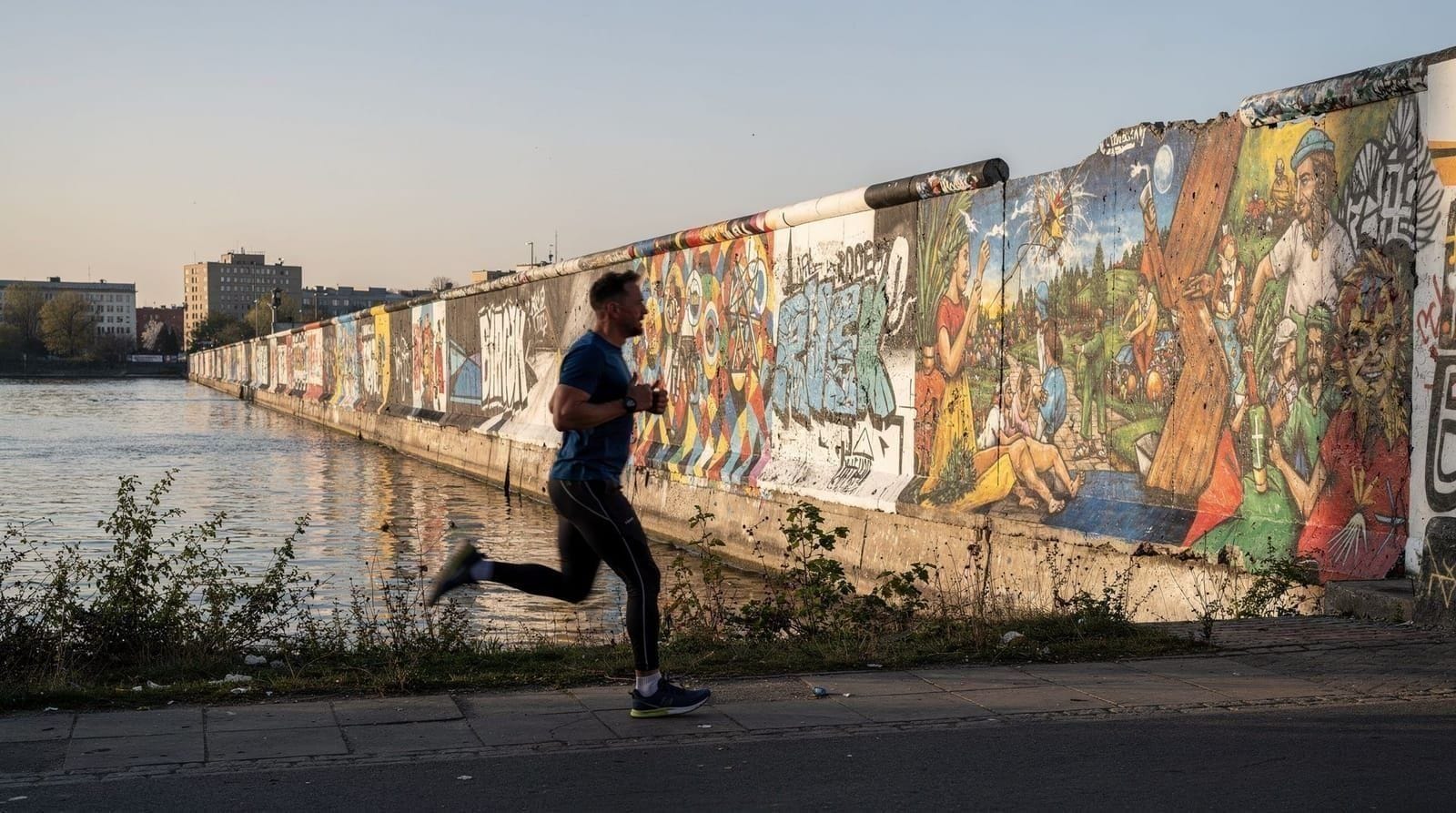
East Side Gallery, Mühlenstrasse — 1.3 km of original Berlin Wall along the Spree, painted by 118 international artists in 1990. The murals include Dmitri Vrubel’s famous fraternal kiss between Brezhnev and Honecker. Open 24 hours, free. Allow 1–1.5 hours.
The Third Reich connection at the East Side Gallery: The stretch of Wall along Mühlenstrasse passes through what was an industrial and working-class area of East Berlin. During the Nazi period, forced labourers from concentration camps worked in factories in this general area. The Wall’s location here was determined by the river geography, not specific Nazi associations — but walking the full Cold War history of any Berlin site means walking through a city that was, 15 years before, the capital of the Third Reich.
Take S-Bahn S5/S7/S9 from Ostbahnhof to Nordbahnhof for:
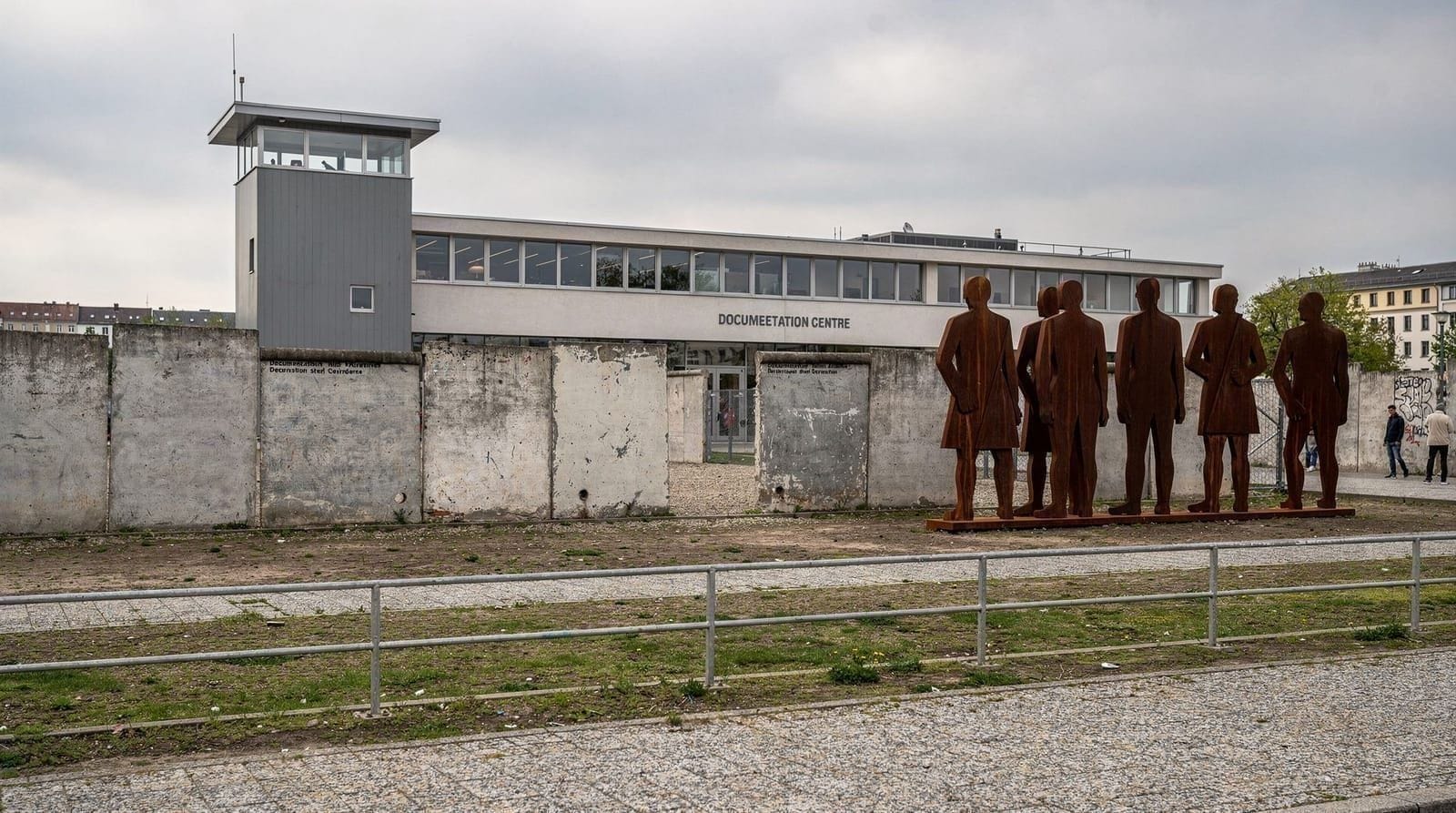
Gedenkstätte Berliner Mauer, Bernauer Strasse — The most complete surviving Berlin Wall site, with a 1.4 km open-air exhibition, an indoor documentation centre (free), a reconstructed watchtower, and the Chapel of Reconciliation. The site specifically documents the human impact of the Wall on residents of Bernauer Strasse — those whose buildings were incorporated into the border and who were subsequently evacuated.
Allow 1.5–2 hours. Last entry to the documentation centre at 17:30 (closes 18:00). See the Berlin Wall Memorial guide for full details.
Cold War, espionage and Berlin Wall tour — covers Checkpoint Charlie, Wall sites, and spy historyOption 3: Two or three days — depth over breadth
For visitors with 2–3 days focused on this history:
Day 1 — Third Reich core: Topography of Terror (2 hours) → Holocaust Memorial + information centre (2 hours) → Neue Wache on Unter den Linden (20 minutes) → Bebelplatz (15 minutes) → Führerbunker location (20 minutes). Full day with transit. See the third-Reich history trail itinerary for this routing with added detail.
Day 2 — Cold War core: East Side Gallery (1.5 hours) → Oberbaumbrücke (historical sector border bridge, 15 minutes) → DDR Museum on Karl-Liebknecht-Strasse (2 hours) → Checkpoint Charlie area (45 minutes) → Bernauer Strasse Memorial (1.5 hours). See the Cold War Berlin itinerary.
Day 3 — Day trips with combined historical dimension:
- Sachsenhausen (40 minutes from central Berlin by S-Bahn): Nazi concentration camp from 1936, and Soviet Special Camp Number 7 from 1945–1950. The site explicitly documents both periods — it is the most directly combined Third Reich and postwar history site accessible on a day trip from Berlin. See the Sachsenhausen day trip guide.
- Wannsee Conference Memorial (Wannsee, 30 minutes from central Berlin): The villa where the administrative coordination of the Holocaust was discussed in January 1942. A separate, focused memorial site with serious documentation. See the Wannsee conference memorial guide.
The sites that directly connect both periods
For visitors interested specifically in where the two histories intersect physically:
Topography of Terror + Berlin Wall (Niederkirchnerstrasse): Nazi HQ foundations directly beneath Wall section. The clearest spatial overlap in the city.
Sachsenhausen: Concentration camp 1936–1945 (Nazis); Special Camp No. 7 1945–1950 (Soviets). The same site, sequential use, documented at both.
Soviet War Memorial, Treptower Park: Built 1946–1949 with marble from the demolished Reich Chancellery. Physical material of the Nazi state repurposed as Soviet monument.
Berliner Unterwelten / Gesundbrunnen bunker complex (Wedding): WWII air-raid shelter that the Soviets briefly used and GDR authorities subsequently sealed. Now accessible via guided tours (book in advance).
The Brandenburg Gate: Nazi ceremonial point (torchlight parade January 30, 1933); Cold War boundary (Wall ran immediately to its east); reunification symbol (opened November 9, 1989). Three distinct historical moments compressed into a single monument.
Anhalter Bahnhof ruins: The fragment of facade surviving near the Topography of Terror is what remains of one of Berlin’s grandest prewar railway stations, badly damaged in Allied bombing and left standing as an unintentional ruin through both the Nazi collapse and the subsequent Cold War division — a physical marker of the transition between the two periods that many visitors walk past without registering its significance.
Transport between key sites
The central Third Reich/Cold War sites (Topography of Terror, Holocaust Memorial, Checkpoint Charlie) are within walking distance of each other.
Getting to the Wall sites:
- East Side Gallery: S5/S7/S9 to Ostbahnhof, or U1 to Warschauer Strasse
- Bernauer Strasse Memorial: U8 to Bernauer Strasse, or tram M10
- Mauerpark: U2 to Eberswalder Strasse
- Soviet War Memorial: S8/S9 to Treptower Park
The Berlin AB ticket (€3.50 single, or a day ticket) covers all these routes. You do not need the ABC ticket (which includes Potsdam) unless you are making day trips beyond the outer districts. For transport planning, see the Berlin public transport guide.
A day ticket is almost always better value than singles once you are visiting more than two sites requiring transport, given the number of short hops between Wall sites on a full-day route. Buy it at any U-Bahn or S-Bahn ticket machine before your first journey and validate it immediately — Berlin’s honour system relies on tickets being stamped before travel, and inspections do happen.
Guided tours — what to look for
A number of operators offer tours combining both periods. The best ones:
- Cover both Third Reich and Cold War in 3–4 hours minimum
- Are led by historian-trained guides, not general city guides
- Explain the connections between the periods, not just the chronological sequence
- Include the Topography of Terror as a starting point for the Nazi material
Tours that focus primarily on Checkpoint Charlie and the East Side Gallery, adding a 10-minute stop at the Holocaust Memorial, do not constitute serious engagement with either history.
Berlin’s most significant Third Reich sites — guided tour with historical contextChoosing self-guided vs guided for this combination
Both approaches work, and the right choice depends on how much context you want handed to you versus discovered through the free on-site documentation, which at sites like the Topography of Terror and Bernauer Strasse is genuinely thorough and written for a general audience without prior knowledge.
Self-guided suits you if: you read information panels carefully, prefer to set your own pace at each site, and are comfortable navigating on your own using U-Bahn and S-Bahn between locations. The core half-day route requires no transport at all and no booking beyond the Reichstag Dome if you add it.
Guided suits you if: you want the connections between the Nazi and Cold War periods actively explained rather than pieced together yourself, have limited time and want a route optimised by someone who does this daily, or are travelling with people who engage more with a live guide than with reading panels. A good historian-led guide will draw out connections — like the Topography of Terror’s Wall section standing on Gestapo foundations — that a first-time visitor might otherwise walk past without registering.
Many visitors do a hybrid: a guided morning covering the core Third Reich sites with expert framing, then a self-guided afternoon at the Wall sites using the guide’s context to inform independent exploration.
Frequently asked questions about Third Reich and Cold War sites in one visit
Why do Third Reich and Cold War history overlap so much in Berlin?
Because Berlin was the administrative capital of the Nazi state and then the divided capital of the Cold War. Many Cold War sites overlay Nazi ones — the Berlin Wall was built over Nazi ruins, the Soviet War Memorial used marble from the Reich Chancellery, the Checkpoint Charlie crossing point was in the former government district. The physical geography of the city encodes both histories in the same streets.What is the best route combining both histories in half a day?
For a half-day (4–5 hours) combining both periods, start at the Topography of Terror — it covers the Nazi secret police apparatus and has a Berlin Wall section on its eastern boundary. Walk 10 minutes north to the Holocaust Memorial. Then 15 minutes to Checkpoint Charlie. The route covers the core Third Reich and Cold War geography in a continuous walk of approximately 2 km.Is there a guided tour that covers both Third Reich and Cold War together?
Yes. Several operators offer combined tours of 3–4 hours covering both periods. The most coherent tours start with the Nazi-era sites (government district, Holocaust Memorial, Topography of Terror) and move to Cold War sites (Berlin Wall, Checkpoint Charlie) rather than mixing them randomly. Look for tours with historian-trained guides rather than general city guides.Which sites require advance booking?
The Reichstag Dome requires advance booking at bundestag.de (free but must be reserved). The Berlin Story Bunker requires ticket purchase. All other major sites on a combined Third Reich/Cold War tour — Topography of Terror, Holocaust Memorial, East Side Gallery, Bernauer Strasse Memorial, Soviet War Memorial — are free and require no advance booking.How many days does a serious engagement with both histories require?
For genuine depth at both the major Third Reich memorials and the principal Cold War sites, plan for 2–3 days minimum. Day 1 covers the central government district (Topography of Terror, Holocaust Memorial, Führerbunker area, Neue Wache, Bebelplatz). Day 2 covers the Wall and Cold War sites (East Side Gallery, Bernauer Strasse, Checkpoint Charlie, DDR Museum, Stasi Museum). Day 3 allows a day trip to Sachsenhausen or the Wannsee Conference memorial.Which Cold War sites directly relate to the Nazi period?
The Topography of Terror's Berlin Wall section directly overlays the Nazi ruins. The Soviet War Memorial at Treptower Park contains marble from the demolished Reich Chancellery. The Bernauer Strasse Wall Memorial is in the same district where residents were forcibly evacuated in 1961 from buildings that stood on the old border zone. Sachsenhausen concentration camp was used by the Soviets as Special Camp Number 7 from 1945–1950, incarcerating former Nazis and others.What is the most common mistake tourists make when planning this combination?
Trying to cover too many sites superficially. The Topography of Terror alone warrants 2–2.5 hours if read carefully; the Holocaust Memorial information centre takes another 1.5 hours; Bernauer Strasse takes 1.5 hours. A tourist who spends 20 minutes at each site will leave with a superficial impression. Better to choose 3–4 sites and spend real time at each.
Top experiences
Bookable activities with verified prices and instant confirmation on GetYourGuide.